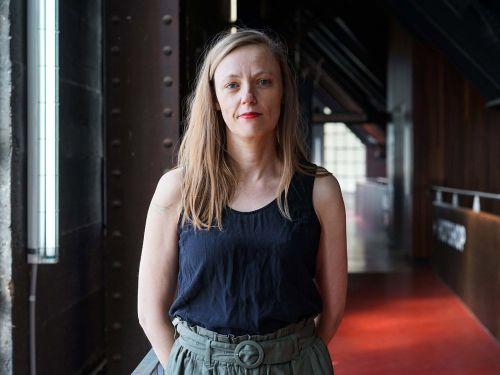
For a snapshot in time, we asked eight people around the country to reflect on Australia Now. Here, Aimee Frodsham, Artistic Director of Canberra Glassworks in the ACT, shares her thoughts on what the global pandemic has taught her.
Keep reading our Australia Now series here.
What do three-metre-long eel traps and a pair of cowboy boots have in common? They’re both currently on display at major Melbourne exhibitions: Maree Clarke: Ancestral Memories at the NGV and Patricia Piccinini’s A Miracle Constantly Repeated at Flinders Street Station. And they were both created in glass at Canberra Glassworks.
Working with some of Australia’s biggest names in art on commissions like these is one of many strands that Canberra Glassworks – Australia’s leading centre for contemporary glass art, craft and design – deals in. Housed in the historic Kingston Power House, which powered the early development of the city, it’s a place that simultaneously innovates and celebrates the centuries-old glassmaking tradition in all its multifarious forms.
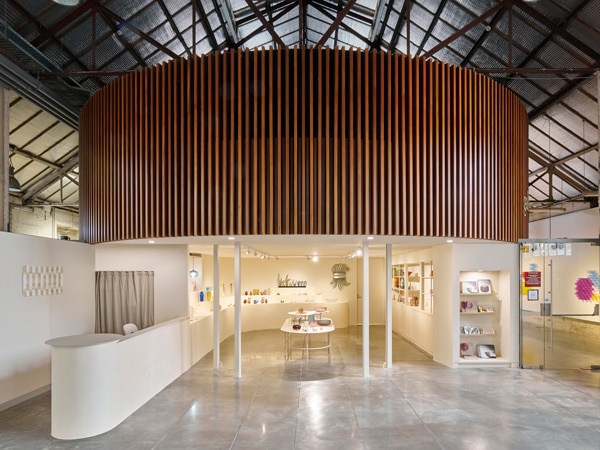
A day in the life of an artistic director
In her role as artistic director, Aimee Frodsham looks after the centre’s exhibition program and helps facilitate making in the studios (whether that’s the fabrication of work for exhibitions and commissions or glassmakers operating their own business from the centre).
A glassblower herself who trained at ANU School of Art & Design (then Canberra School of Art) during a febrile time in the 1990s, Aimee often finds herself on the floor working with the makers across the various areas, including the hot shop and kiln, helping to facilitate fabrication of works that take many forms and specialisms. (“I’d never ask a goblet maker to make a bead for me," she explains, to highlight the sheer diversity that exists within glassmaking.)
“I love the history, the tradition and the skill, and I love and admire the artists that have dedicated their whole careers to mastering one particular area," Aimee says of her passion for glasswork. “I think that is just so mind-blowing in this contemporary world; nothing that we do is done on the computer." Without these phenomenal makers, she says, these crafts would be lost: consider the neon signs we see everywhere from shopfronts to Sydney’s famous Coca-Cola billboard.
Need tips, more detail or itinerary ideas tailored to you? Ask AT.
AI Prompt
What she loves about glassmaking
The knowledge of this now-rare trade is at the risk of dying out, and the relationship Canberra Glassworks has forged with the industry is helping to fill the skills gap, demystify long-held secrets (that no longer need to be kept from a commercial sense), and turn the trade into an art form; as part of the National Portrait Gallery’s Australian Love Stories exhibition earlier in 2021, artist Harriet Schwarzrock created 120 sublime glass heart sculptures pumped full of neon.
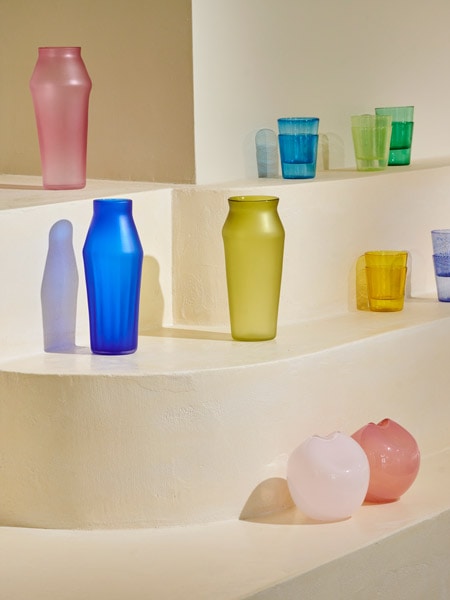
The skill and craft involved in glassmaking necessitates collaboration and breeds a tight-knit artistic community. “We all really love and support each other," says Aimee. “We have to, to be able to make our work." And this sense of community extends outwards, too, embracing the public through education programs and school tours (“For us it’s quite strategic, because it’s really important for the next generation to know that glassmaking is a career") or team-building exercises for, say, the local police force or volunteer firefighters post-Black Summer bushfires. And, of course, workshops, from jewellery-making to glassblowing, which were booked up for months in advance after the Netflix series Blown Away aired. “We really encourage people as hobbyists to come and learn and to make, and to be part of our community."
What the pandemic has taught her
Learning to be a better communicator, especially in terms of safety issues, and to be more agile within the organisation are some of the positive takeaways of the pandemic for Aimee. And missing having people around in the same way forged a different type of connection, by way of weekly Zoom sessions for the Australia-wide glassmaking community: “Every week another group of artists leads a conversation. They’re quite informal and a way for us to see each other and connect. We’ll keep going with those kinds of things because it has made me realise how fragile access can be, and providing access in different ways is really important. Zoom has given us the ability to reach out to people in our community who maybe felt isolated without us realising it."
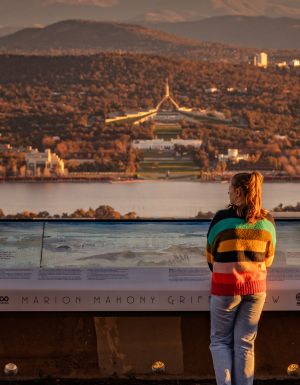
Aimee says she feels lucky to live in Canberra, which she found transformed upon her return in 2015 after living and working in London for 12 years. “It had grown into a really wonderful, exciting city that had lost quite a bit of that stigma around it being a public service town." The past 18 months have left her feeling in some ways more connected and rooted to Australia in general and optimistic that we’re leaders in the world for art: “I feel really connected to the arts community and the amazing things we’re doing here."
Want to see more stories from Australian Traveller in your Google search results?
- Click here to set Australian Traveller as a preferred source.
- Tick the box next to "Australian Traveller". That's it.

Australian Traveller
View profile and articles