hero media

Canberra museums: the best places to explore Australia’s history, culture and ideas

Add these landmark Canberra museums to the top of your cultural hit list in the nation’s capital.

Canberra museums are some of the most boundary-pushing in the country. When I lived in the nation’s capital, I spent a lot of time moving through them, sometimes with a plan, but often on impulse. What strikes me every time is how personal they feel. These are not dusty repositories. They’re places where national stories and big ideas collide.

From headline institutions to quieter museums locals return to again and again, Canberra museums offer a depth you don’t always expect from a weekend visit. This guide shares the museums I recommend along with practical tips on when to go, what to prioritise and how to build a day around them.

In short

If you only visit one museum in Canberra, make it the Museum of Australian Democracy at Old Parliament House. This Canberra museum feels like a film set because of the fact it played a leading role in the theatre of Australian politics. Book The Chifley Experience at Hotel Kurrajong, which includes a MoAD tour and is one of the best places to stay in Canberra.

1. National Museum of Australia
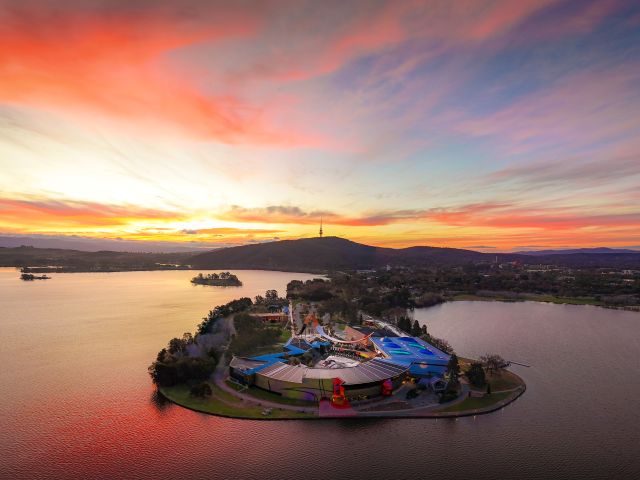
the National Museum of Australia on Lake Burley Griffin
NMA forms its own landscape of themes and colours. (Image: Grant O’Loughlan / VisitCanberra)

The National Museum of Australia (NMA) is stitched together into the terrain – all colour, form and symbolism. Set on its own peninsula, it announces itself in its sharp angles and clashing ideas. I keep coming back to the museum to visit the extensive First Australians gallery which lays bare the spectrum of multiple, evolving views about Aboriginal Australia. And I always exit via the gift shop to fossick for idiosyncratic pressies such as a resin vase from Dinosaur Designs and First Nations jewellery.

Address: Lawson Cres, Acton

2. Australian War Memorial
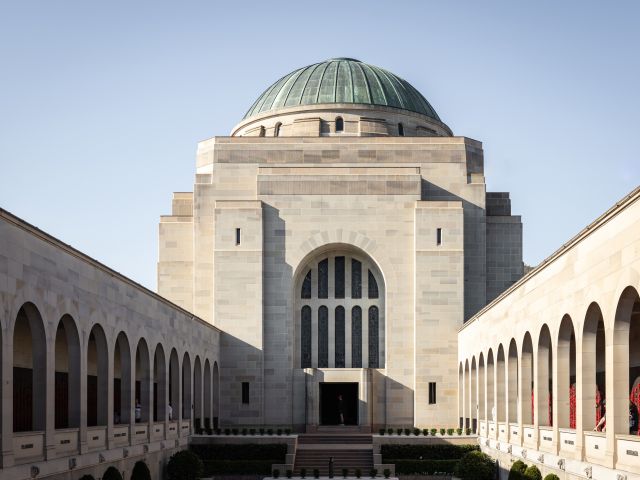
the Australian War Memorial in Canberra
Reflect on Australia’s experience in war. (Image: VisitCanberra)

The Australian War Memorial is a shrine, archive and museum where visitors can reflect on Australia’s experience in war. The poppy-strewn Roll of Honour has a profound effect on me: it bears the names of more than 103,000 fallen members of the Australian armed forces.  The memorial is designed to broaden its impact on visitors keen to learn about Australia’s involvement in conflict and its enduring impact on our society. This blending of military history and personal stories is what the AWM does so well.

Address: Treloar Cres, Campbell, ACT

3. National Library of Australia
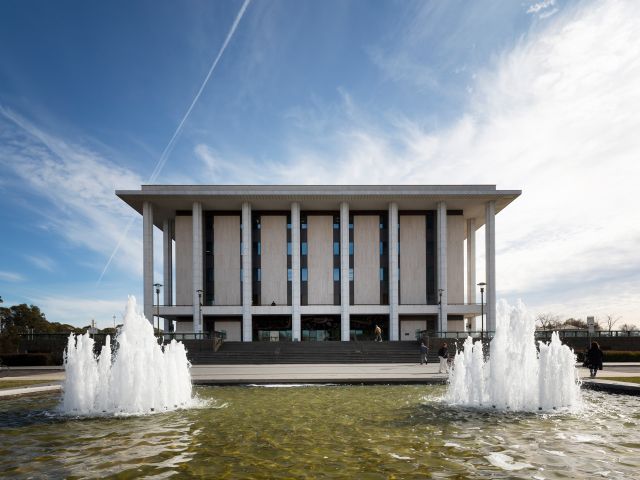
the National Library of Australia in Canberra
The National Library of Australia is a book temple and gallery in one. (Image: VisitCanberra)

I visit the National Library of Australia as much for the opportunity to press pause as the material. Part book temple, part gallery, part architectural statement, the library rewards slow wandering. The Treasures Gallery is a highlight, with everything from Olympic torches to ancient maps and Beethoven’s life mask. Even without opening a book, you can easily lose a couple of hours. There is an eclectic range of great cafes for brunch in Canberra. But not all of them have literary leanings. Bookmark Bookplate Cafe for that reason.

Address: Parkes Pl W, Canberra

Need tips, more detail or itinerary ideas tailored to you? Ask AT.

AI Prompt

4. Museum of Australian Democracy at Old Parliament House
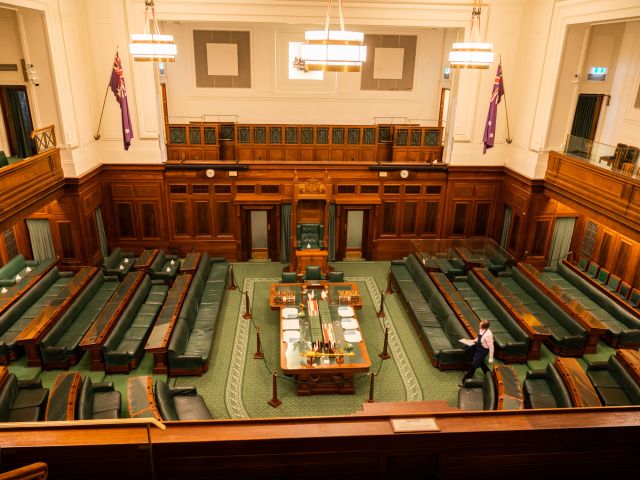
the House of Representatives Chamber at Old Parliament House in Canberra
The Museum of Australian Democracy now occupies the Old Parliament House. (Image: VisitCanberra)

Old Parliament House is like a film set from the 1980s, which makes sense because it did play a leading role in Australian politics as the home of Federal Parliament between 1927 and 1988. I always recommend taking the guided tour of The Museum of Australian Democracy; it’s the fastest way to understand how much of Australia’s political theatre played out inside these walls.  Expect amusing anecdotes from experienced officers who steer you toward rooms that present like portals into our political past.

Address: 18 King George Terrace, Parkes

5. Canberra Railway Museum
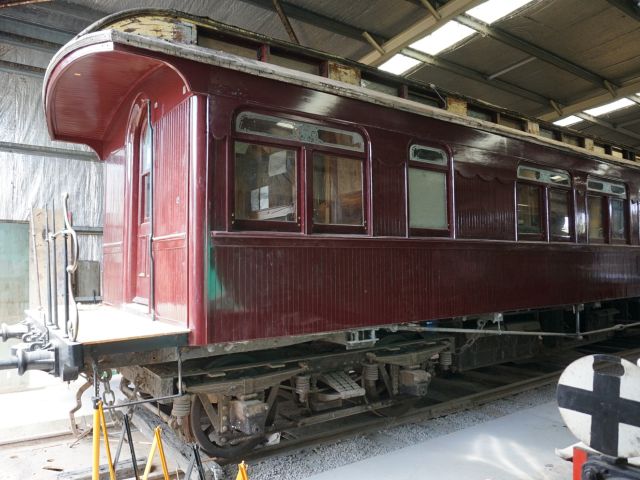
a heritage railway carriage at Canberra Railway Museum
See old locomotives and carriages at the Canberra Railway Museum. (Image: E Rohling)

Canberra Railway Museum celebrates the golden age of rail travel. Learn all about the locomotives and carriages that were the preferred mode of transport for politicians who were toing and froing from parliament. Forget Thomas the Tank Engine. Head here to teach your kids about the passage of time onboard a steam locomotive that brought the first train to Canberra in 1914. Or gauge how the style of the sleeping car evolved from a lavish 1901 Pullman to the stylish Art Deco Southern Aurora.

Address: 2 Geijera Place, Fyshwick, ACT

6. National Film and Sound Archive of Australia
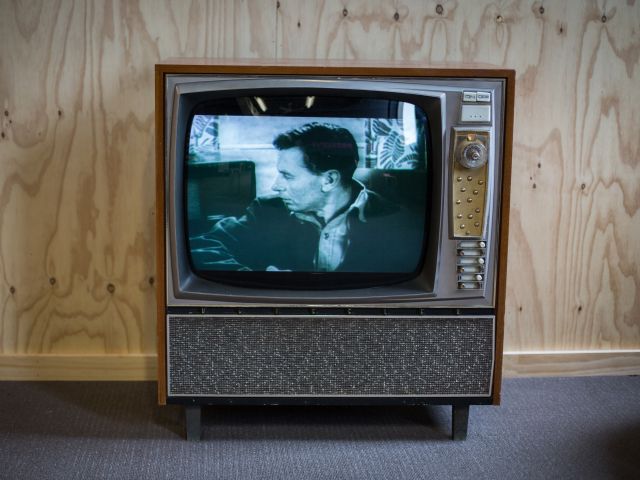
a vintage television at National Film and Sound Archive of Australia
The NFSA is dedicated to the preservation and documentation of motion pictures. (Image: VisitCanberra)

I love to visit Canberra’s lesser-known institutions such as the National Film and Sound Archive of Australia . The NFSA is dedicated to the preservation and documentation of motion pictures and recorded sounds. It contains archival footage, recordings from some of the country’s most prodigious talents as well as memorabilia that celebrates the rich history of Australian cinema. More than 4 million items are indexed within curated collections in the heritage-listed building in Acton.

Address: McCoy Cct, Acton, ACT (just a 10-minute walk from the city)

7. Questacon

a liquid nitrogen show at Questacon
Spark your curiosity at the spectacular liquid nitrogen show. (Image: Questacon)

Questacon is one of Canberra’s No. 1 family attractions. And, when my boys were in primary school, I would bring them to Questacon to engage their young minds to think about science, technology and innovation. There is a special learn and play centre at the national science and technology centre that helps to spark curiosity in kids. Here, children listen to inspired stories about science and innovation, make a stethoscope, put a magnet to the test and learn how Indigenous Australians make fire using friction.

Address: Questacon, Ngunawal Country, King Edward Terrace, Canberra, ACT

Weekly travel news, experiences
insider tips, offers, and more.

8. The Royal Australian Mint
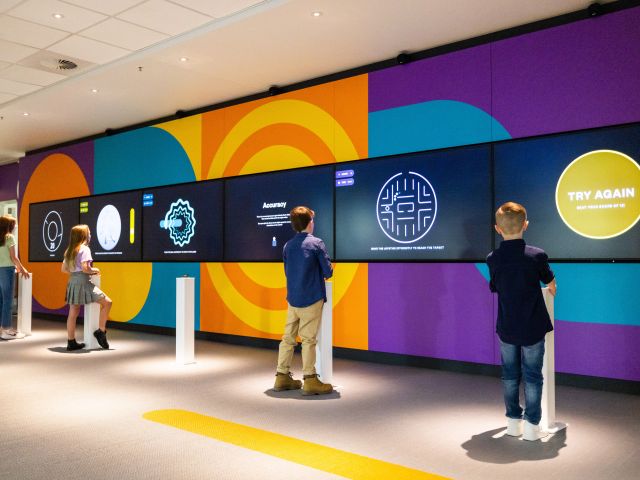
an interactive exhibition space at the Royal Australian Mint in Canberra
Kids can explore interactive exhibitions inside. (Image: Royal Australian Mint)

The multi-award-winning Royal Australian Mint has reopened after extensive renovations. The cultural attraction is both a working factory and Commonwealth Heritage site. The National Coin Collection is not just for collectors; visitors can mint their own coin and explore interactive exhibitions, too.  A visit to the RAM might just inspire the next generation of numismatists to start squirrelling away their Australian coins. Learn about the history of coin collecting, see commemorative coins made of gold and silver and antique coins that nod to nostalgia.

Address: Denison Street, Deakin

9. National Archives of Australia

Visiting the National Archives of Australia is like flicking through memories banked by the nation over centuries. Highlights within the heritage-listed space include the interactive digital wall and exhibitions that trace decisions that have helped to shape the nation. Don’t miss the large gallery of photos gleaned from the collection of past and present prime ministers. Research geeks can get help with their projects by booking ahead to view archives in the Research Centre. The collection includes information about immigration, the environment and the arts.

Address: Kings Avenue, Parkes

10. National Dinosaur Museum
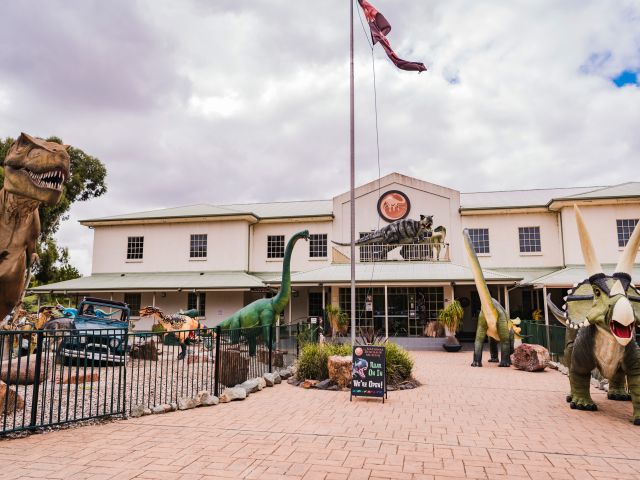
dinosaur replicas outside The National Dinosaur Museum, Canberra
The National Dinosaur Museum has an enormous collection of interactive dinosaurs. (Image: VisitCanberra)

There are a lot of great reasons to visit the ACT. The National Dinosaur Museum is one of them. The museum has one of the largest permanent collections of interactive dinosaurs in Australia, 23 complete skeletons and more than 300 displays of individual fossils. Yes, you will enhance your children’s appreciation of reptiles from the Mesozoic era. But the museum is not just about dinosaurs: it is aimed at anyone curious about the history of life on Earth. Budding palaeontologists will appreciate the trove of skulls, skeletons, fossils and interactive animatronic dinosaurs on display.

Address: 6 Gold Creek Rd, Nicholls

Carla Grossetti
Carla Grossetti avoided accruing a HECS debt by accepting a cadetship with News Corp. at the age of 18. After completing her cadetship at The Cairns Post Carla moved south to accept a position at The Canberra Times before heading off on a jaunt around Canada, the US, Mexico and Central America. During her career as a journalist, Carla has successfully combined her two loves – of writing and travel – and has more than two decades experience switch-footing between digital and print media. Carla’s CV also includes stints at delicious., The Sydney Morning Herald, and The Australian, where she specialises in food and travel. Carla also based herself in the UK where she worked at Conde Nast Traveller, and The Sunday Times’ Travel section before accepting a fulltime role as part of the pioneering digital team at The Guardian UK. Carla and has been freelancing for Australian Traveller for more than a decade, where she works as both a writer and a sub editor.
View profile and articles
hero media

Discovering East Arnhem: Australia’s most unique and rewarding corner

    Joanne Millares Joanne Millares

    Hard to reach and harder to forget, East Arnhem offers something rare in modern travel: the chance to slow down and experience Country on its own terms.

    The sky feels bigger in East Arnhem . It stretches wide and uninterrupted above rouged earth, stringybark woodland and beaches so empty they seem to belong to another era. The coastline curves for kilometres without a footprint and the horizon runs on forever.

    For comedian Lou Wall, the scale of the place was the first thing that hit them.

    “The sheer openness,” they say. “The sky feels infinite and the land stretches out endlessly. It’s pretty breathtaking visually.”

    But the physical landscape is only part of the story. The real reward isn’t only the scenery but the shift in perspective the journey brings. Visitors stop trying to tick off the destination and a real engagement takes over.

    “It made me never want to travel again,” Wall jokes. “In that I never wanted to leave East Arnhem.”

    Getting there

    Aerial shot of East Arnhem’s coastline as cars trace the curve of the shore.
    Sail along the remote coastline on an expedition cruise.

    Reaching East Arnhem is part of the adventure. Travellers typically fly into Gove Airport near Nhulunbuy via Darwin or Cairns, or arrive by expedition cruise along the remote coastline. Others make the journey overland along rutted dirt roads that cut through East Arnhem’s small pockets of monsoon forest.

    However you arrive, there’s a distinct feeling of crossing into somewhere different. Permits are required to visit the region, reflecting the fact that this is Yolŋu land where communities and traditional owners maintain deep cultural connections to Country.

    The extra planning becomes part of the experience. By the time visitors arrive, they understand they’re entering a place not just of respect, but also patience and curiosity.

    At one with nature

    East Arnhem’s  landscapes leave a strong imprint. For Wall, one place in particular still lingers in their memory: Ngalarrkpuy , also known as Lonely Beach, near Bawaka Homeland.

    “I genuinely felt like I was living inside an Instagram filter,” they say. “One of the most stunning feats of nature I’ve ever seen. The water was so clear I swear I could see even the fish smiling.”

    Across the region, natural experiences unfold at a slower pace. Fishing, beachcombing and island hopping reveal the rhythm of the coastline. The tides shape daily life and the vastness of the landscape makes even simple moments feel downright cinematic.

    For visitors with limited time, Wall says the Bawaka Homeland experience is unmissable.

    “I just left and I’m already planning when I can get back there.”

    The sense of remoteness is part of the appeal. In a country where many beaches are crowded and well-trodden, East Arnhem’s coastline still feels wonderfully wild.

    Immersing in local culture

    A visitor spends a meaningful moment alongside Yolŋu guides, gaining insight into their deep cultural knowledge and connection to the land.
    Experience authentic moments with the locals.

    Culture is woven through every experience in East Arnhem. Visitors have the opportunity to spend time on Country with Yolŋu guides and knowledge holders who share stories and traditions that have been passed down for generations.

    For Wall, one of the most powerful moments came during a conversation with a Yolŋu elder.

    “I got to meet a traditional elder, Mayalil, in Nhulunbuy,” they say. “Listening to her talk about her home made the land feel alive in ways I couldn’t have imagined.”

    The region is also home to internationally recognised Aboriginal art centres where artists shape works deeply connected to land and family knowledge.

    Music carries the same cultural energy. East Arnhem has produced globally recognised artists such as King Stingray and Baker Boy, blending Yolŋu language, storytelling and contemporary sound.

    Wall experienced this musical spirit first-hand.

    “A jam session around the fire was it for me,” they say. “Letting the deep joy and history of their music wash over me…  and meeting a few of the King Stingray musicians was unreal.”

    These moments of human connection often become the most memorable part of a visit.

    Spotting local wildlife

    An aerial view of the beach shows tiny figures lined up across the white sand, moving as if in a rhythmic dance.
    Step into a world where nature reigns.

    The wildlife of East Arnhem adds another layer to the experience. The region is home to an extraordinary range of animals, from waterbirds and turtles to dugongs, dolphins and the formidable saltwater crocodile.

    Wall admits they didn’t actually spot a croc during their visit.

    “Devastatingly, I didn’t see one,” they laugh. “But with all the stories from the locals I definitely gained a healthy respect for caution.”

    Some of the most memorable wildlife encounters can be surprisingly small., At Banubanu Beach Retreat on Bremer Island, Wall remembers walking along the beach one morning and watching it come alive.

    “As you walk through the sand you see hundreds of crabs scurrying into their holes as you pass by,” they say. “Such a small thing, but it was completely magical.”

    Moments like this reveal the quieter rhythms of East Arnhem, where even the smallest creatures seem to play a part in the landscape.

    Visitors who make the journey soon learn the most important travel tip of all.

    “Go in open-minded with a sense of curiosity,” Wall says. “Be prepared to ditch your plans. The land and the locals will guide you on an adventure no spreadsheets could ever compete with.”

    And most importantly, they add, don’t rush.

    “The land and people deserve your time and attention. You’ll be all the better for slowing down.”

    For more information on visiting East Arnhem, head to eastarnhem.com.au .