Ever feeling like shunning the powers that be and making your own rules? Here are four Australian ‘micronations’ who have done precisely that.
1. The Gay and Lesbian Kingdom of the Coral Sea Islands
In response to the government’s refusal to acknowledge gay marriage, a group of activists declared a cluster of Coral Sea islands off northeast Queensland a micronation in 2004. Anyone who is gay is granted citizenship and the islets even have their own national stamps.
2. The Murrawarri Republic
It may have only been declared in 2013, but for locals it’s been around for thousands of years. Claiming an 81-square-kilometre territory across the Queensland and NSW border (not yet recognised by the government), it’s the traditional land for the Murrawarri people and is open to both indigenous and non-indigenous.
3. Principality of Wy
What started as a dispute between artist Paul Delprat and Sydney’s Mosman Council turned into the makings of a micronation. The conflict began when Delprat was denied approval to construct a new driveway, an issue that dragged on for 11 years when his 750-square-metre property was seceded from Australia.
4. The Grand Duchy of Avram
Founded by anti-taxation campaigner and former state parliament member John Charlton Rudge, Avram began in the early ’80s. Although it doesn’t cover a physical land territory, the Royal Bank of Avram once resided in George Town on Tassie’s north coast, which saw Rudge in hot water for printing his own money.
September to April in the Northern Territory rewards those who seek adventure.
Sure, the Northern Territory shines during the high season, but did you know it transforms into lush magnificence in the summer low season? From September to April, hundreds of waterfalls roar into action, vegetation flourishes and natural pools swell, all thanks to spectacular storms. This is when some of the country’s best arts and cultural events hit the calendar, too.
Travelling at this time of year means you’ll also be rewarded with off-peak travel pricing on accommodation, tours and experiences, and can even enjoy many of the top sites all to yourself.
1. Kings Canyon is transformed
Kings Canyon transforms in the low season. (Image: Kassia Byrnes)
Kings Canyon’s towering sandstone domes and crevasses are a sight to behold year-round, but during the low season you can witness a rare phenomenon. This ancient outback wonder’s arid landscape bursts to life when it rains, temporarily transforming it with waterfalls that thunder down the cliffs. At the base of the canyon is the verdant Garden of Eden and its permanent watering hole.
2. John Hayes Rockhole is a natural wonder
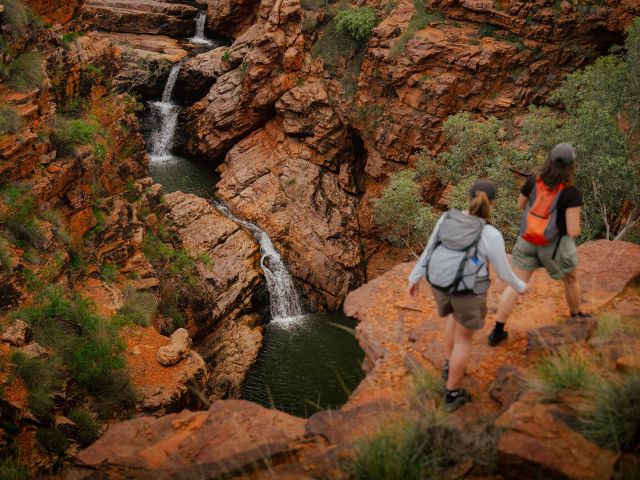
Hike to a desert oasis. (Credit: Tourism and Events NT)
Hidden in the Trephina Gorge Nature Park in the East MacDonnell Ranges, John Hayes Rockhole is an oasis waiting to be discovered. Visit the narrow canyon during the high season, and you may see only a sandy creekbed, but after rain in the low season the pool is full of cool water. It’s accessible via a 4WD-only track off the Ross Highway, or you can set out early and join the nine-kilometre Trephina Ridgetop Walk. The reward for undertaking the hike is worth every step, and there’s a dedicated, tent-only campground for those who’d like to soak up the serenity overnight.
3. The Red Centre Light Trail shines bright
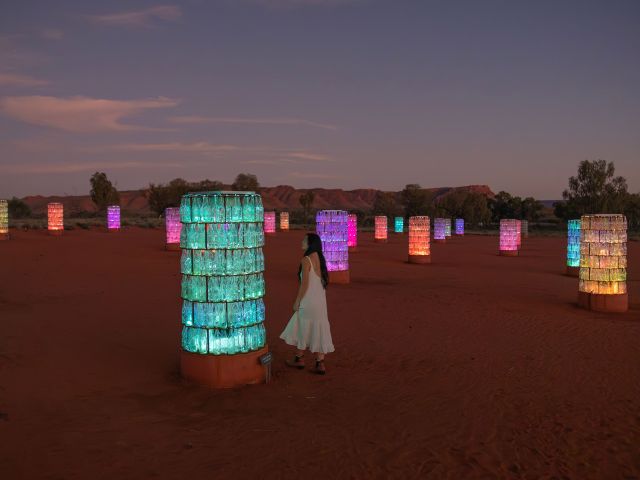
Watch the Outback light up after sunset. (Credit: Tourism and Events NT)
The Red Centre’s rich cultural heritage and lack of light pollution make it the ideal setting for immersive light shows, and you can experience the most iconic ones on an epic six-day road trip in April. Witness the Parrtjima cultural festival inMparntwe (Alice Springs) before heading to Kings Canyon for Bruce Munro’s Light-Towers, where 69 glowing towers shine to a celestial soundscape. At Uluṟu, Munro’s Field of Light blankets the red soil with glowing frosted-glass stems, and the Wintijiri Wiru drone show lights up the sky in front of the sacred cultural site. Along the way you’ll witness the changing landscapes of the desert from the West MacDonnell Ranges to the Valley of the Winds.
4. The Parrtjima festival lights up the Red Centre
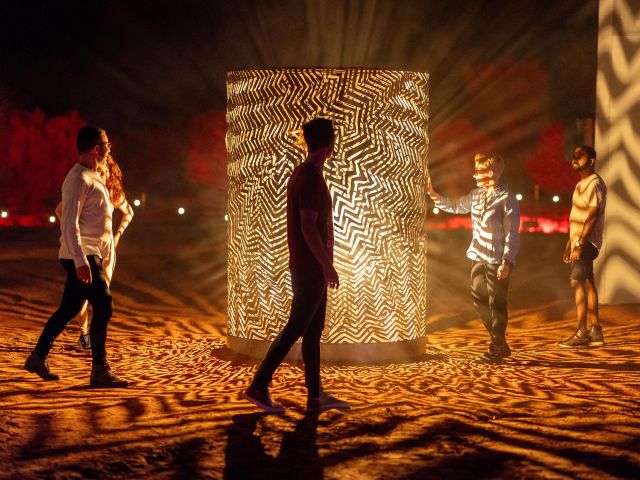
Witness the magic of Parrtjima. (Credit: Tourism and Events NT)
For 10 days every April, the Red Centre turns into a dazzling display of colour for the Parrtjima festival. Held at Alice Springs Desert Park, the unmissable celebration shines a spotlight on the world’s oldest living culture using modern technology. Artworks by local Aboriginal artists are transformed into large-scale illuminated installations with accompanying soundscapes, offering a unique opportunity to see the spectacular sunburnt landscapes, night skies and 300-million-year-old West MacDonnell Ranges in a new light. The jam-packed line-up of art and cultural events also includes workshops, markets, short films, talks and live music.
5. Cruising along Nitmiluk Gorge is breathtaking
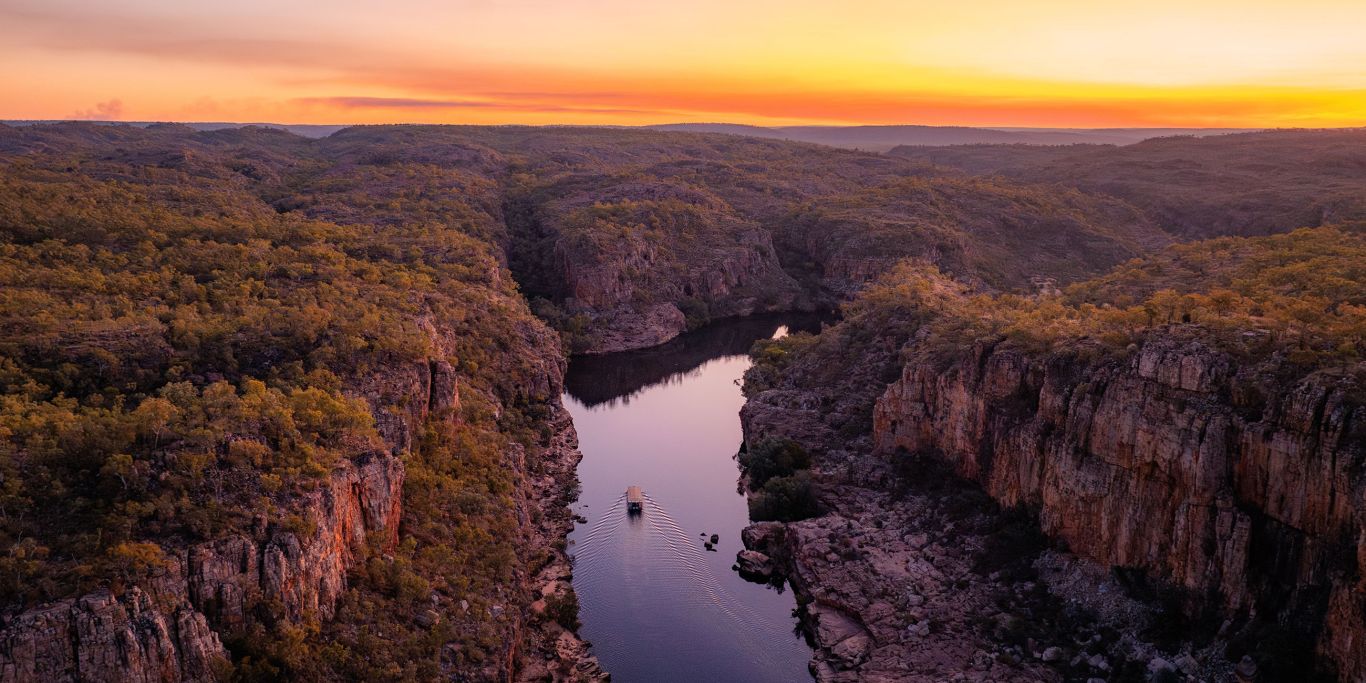
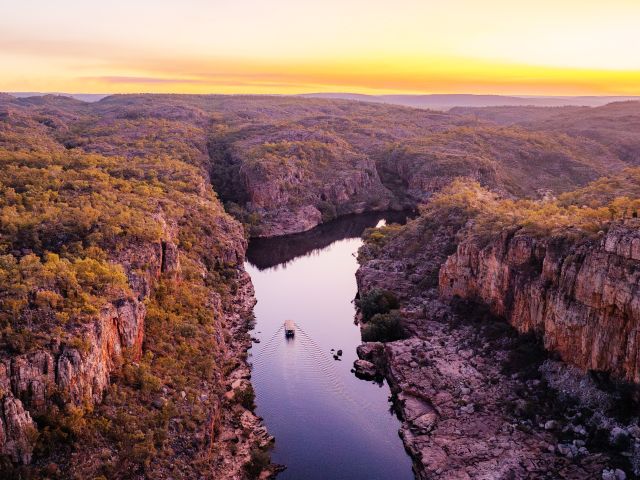
Sail between towering sandstone cliffs. (Credit: Tourism and Events NT/Nic Morley)
Drifting down the emerald waters of Nitmiluk (Katherine) Gorge between towering red sandstone cliffs carved over millions of years, all while waterfalls stream down around you, is an experience like none other. Nitmiluk Katherine’s two-hour NitNit Dreaming Two Gorge Tour sails through gorges past ancient rock art while a local guide imparts knowledge about the Jawoyn culture and significance of the landscape.
6. You can explore local culture on the Tiwi Islands
Immerse yourself in Tiwi culture. (Credit: Tourism and Events NT/Elise Cook)
Take an 80-kilometre ferry ride from Darwin to arrive at the Tiwi Islands, an archipelago of 11 picturesque islands and a haven for art lovers and anglers. On the Tiwi By Design walking tour you’ll be guided to the Tiwi Design Art Centre, one of Australia’s oldest art centres, to observe local artists in action and join a screen printing workshop.
If you’re more partial to sinking a line, book a stay at Tiwi Island Retreat in April. It’s one of the best months to fish for barramundi, and their world-class fishing adventures are your best chance at reeling in a prized catch.
7. Scenic flights over Kakadu’s waterfalls are jaw-dropping
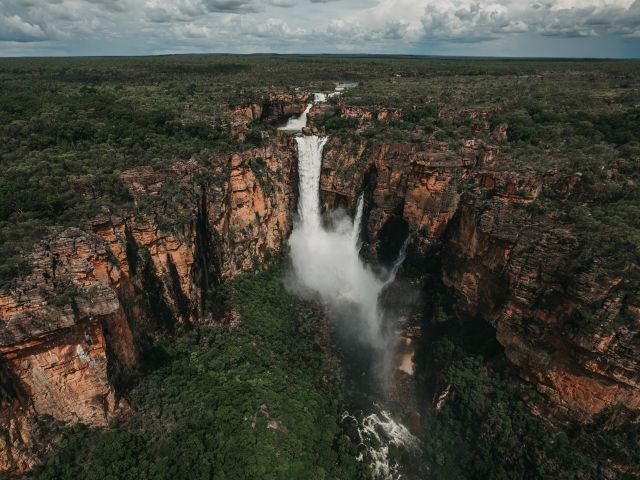
Soar above Jim Jim Falls. (Credit: Tourism and Events NT/Jarrad Seng)
Seeing Kakadu National Park’s gushing waterfalls and dramatic escarpments from above offers a dose of unparalleled beauty – and it’s all best witnessed in the low season.
Taking flight from Darwin, Kakadu Air Services offers an unforgettable experience, with doorless helicopters revealing unobstructed views of the 1.8-billion-year-old landscape. Soar above the untouched savannah that turns into a tropical green paradise, marvel at the thunderous Jim Jim Falls and Twin Falls, and whiz through ancient sandstone canyons. If you’re lucky, the scenery will look all the more dramatic with rolling tropical storm clouds in the distance.
8. Litchfield National Park is an amazing place to cool off
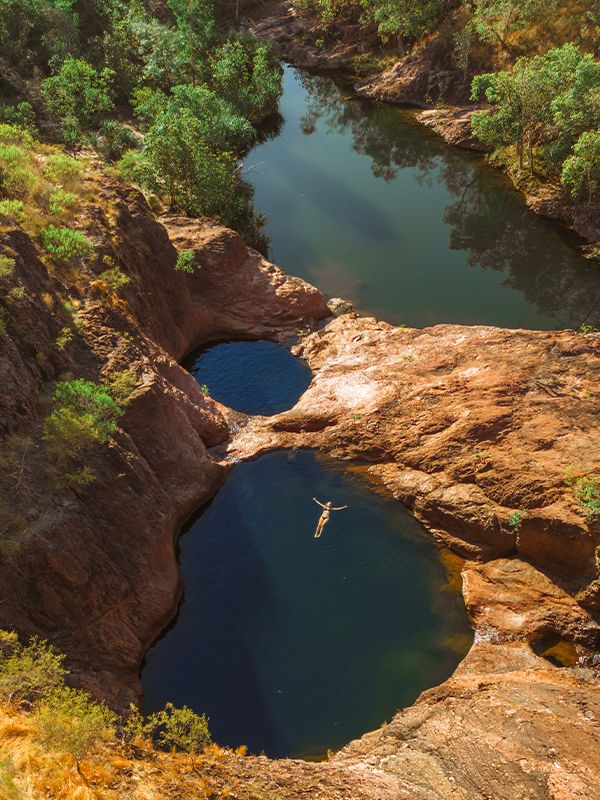
Dive into natural swimming holes. (Image: Tourism NT/Joshua Griffen)
Litchfield National Park is peppered with stunning natural swimming pools for you to beat the heat in. Take a refreshing dip in pristine, crocodile-free spots such as Buley Rockhole, a series of spring-fed cascading pools, and the nearby Florence Falls, which is enveloped by monsoon rainforest and features a crystal-clear plunge pool fed by a 15-metre-high waterfall. Be sure to check the Northern Territory Parks & Reserves website for closures before you go.