9 Australian outback towns with a twist

 By
hero media
From Australia’s UFO capital to the world’s most isolated pub, these outback towns deliver more than dusty horizons.

Wycliffe Well, NT

Venture 380 kilometres north of Alice Springs and you’ll land smack bang in the UFO Capital of Australia. After reading about sightings during the Second World War, one man by the name of Lew Farkas purchased the local roadhouse  and, after dropping a cool $4 million, created a gimmicky tourist attraction complete with kitsch UFO murals, spaceships, plastic green aliens and even (a now defunct) toy train.


There is a journal on display where visitors can record suspicious sightings by way of colourful lights that move and change shape, descend behind trees and quickly disappear; some of which have even followed cars.


Sceptics put it all down to aircraft and weather phenomena (or a few too many schooners at the pub), while believers think it’s Wycliffe Well’s geographical location and intense energy that draws these unique visitors in. Others think there’s a link to the nearby US military intelligence base Pine Gap. Whatever the reason, there have been no abductions… yet.
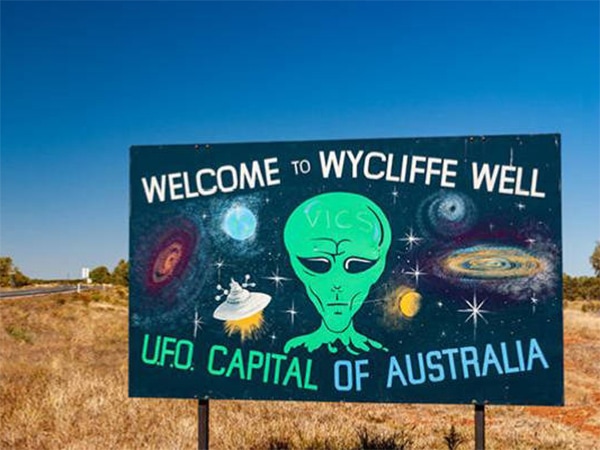
Australia's UFO capital.
Welcome to Australia’s UFO capital.

Hutt River, WA

As a result of the COVID-19 pandemic, Hutt River monarch, Prince Graeme Casley, made the decision to rejoin the Commonwealth of Australia as a result of “harsh times". However, that shouldn’t stop us from learning about Australia’s biggest Independent Sovereign State.


In 1970, the 7500-hectare wheat farm was seceded from Australia after its owner, the late Leonard George Casley (AKA His Royal Highness Prince Leonard the First), had disputes with the then state government over wheat quotas.


Prior to August 2020, the Hutt (population 26) was open to tourists who would come to visit the museum, see the ‘royal art collection’, have their passport stamped, and to meet members of the royal family.
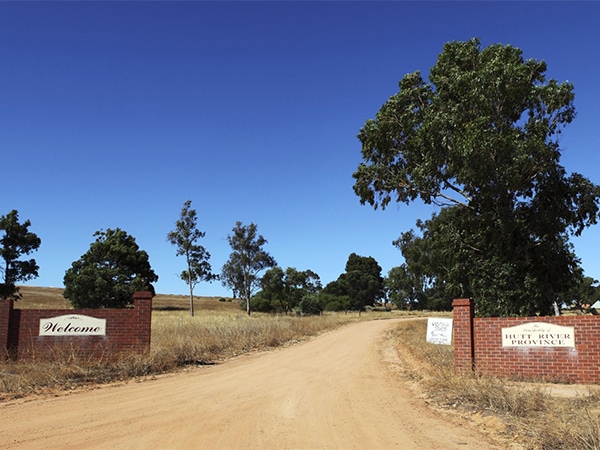
Hutt River
Enter Hutt River – Australia’s oldest micro nation.

William Creek, SA

Dry, dusty and sparse – three words that are excellent for describing the outback. And the lengthy look down the Oodnadatta, which seems almost endless from William Creek in far northern South Australia, isn’t too far from that description either.


With a population of three permanent residents and two workers, William Creek is officially the smallest town in South Australia. Despite that, it’s situated smack in the middle of the world’s largest working cattle property, Anna Creek Station, which is almost half the size of Tassie.


William Creek also has the world’s most isolated pub, which offers a surprising variety of services, including joy flights.
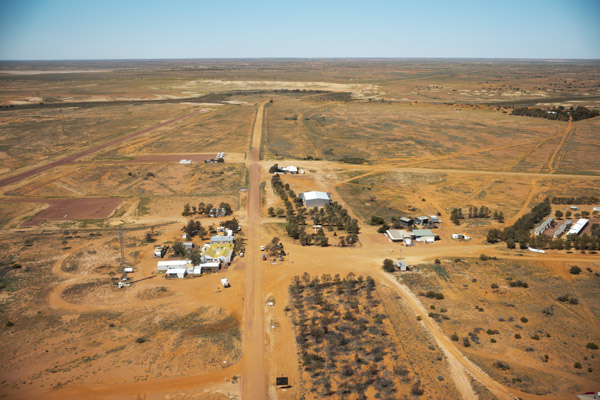
William Creek from the air scenic flight
Book your Wrightsair scenic flight over William Creek (photo: Jonathan Cami).

Victoria Settlement, NT

The Victoria Settlement was perhaps the first serious European settlement attempt in northern Australia. Established 1838 and disbanded 1849, the site was brought about by a plan of the British government and the East India Company to set up a military base and a point for shipping through Torres Strait.


Sadly, it quickly became known as ‘The Forsaken Settlement’, as nearly every single person who lived here died – though that didn’t stop the English from trying to settle the area again… and again. Eventually they succeeded nearby, with Darwin. Fifth time lucky.


Located in the now-dubbed Cobourg Peninsula in the Garig Gunak Barlu National Park, Victoria Settlement ruins are accessible only by boat (tours are available, book well in advance) and a permit is required to enter the Garig Gunak Barlu National Park.
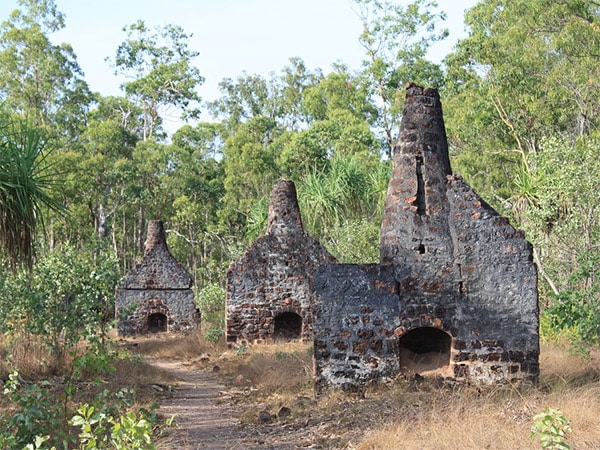
Victoria Settlement.
What remains of Victoria Settlement.

Cook, SA

Named after the sixth Prime Minister of Australia, Joseph Cook, Cook is home to a number of spooky landmarks worthy of a pit stop.


It is home to the longest stretch of straight railway in the world, extending for around 478 kilometres from Ooldea to Loongana. It is the only scheduled Nullarbor Plain stop for the Indian Pacific passenger train across Australia, and curious visitors are welcome to wander the ‘living ghost town’.


Despite the silence, Cook’s atmosphere is alive and well via a number of eerie abandoned buildings. The bush hospital keeps medical supplies in case of a train accident, signposted with the amusing catch cry: “If you’re crook come to Cook."


The handful of railroad working residents are a friendly bunch. Stop for a yarn and they may sell you a souvenir; official Nullarbor crossing certificates go for a fiver.
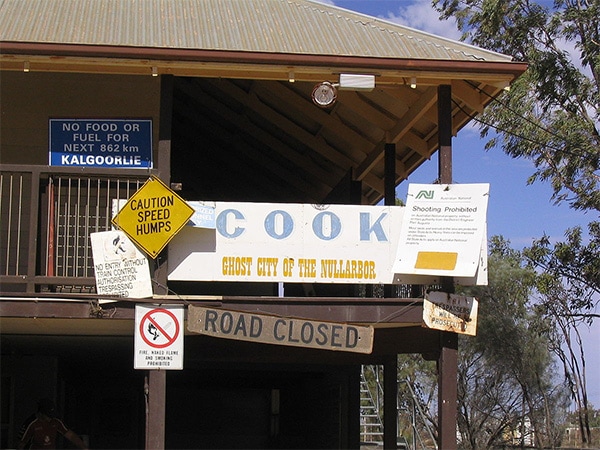
Cook South Australia
Cook is home to a number of spooky landmarks.

Gwalia, WA

The abandoned mining town of Gwalia is so off-the-beaten-track, that we – an authority in domestic travel – are yet to even write anything about it. Don’t hold that against us though.


It’s a trifecta of uniqueness that includes history, solitude and views. Gwalia is a living ghost town that once housed a young Herbert Hoover, former President of the US, on a geology expedition. Hoover was sent to WA to oversee burgeoning mining operations in 1897 and chose to set up shop in Gwalia, 230 kilometres north-east of Kalgoorlie.


The Sons of Gwalia mine closed down in 1963 and the population departed, leaving the town’s remains to serve as a living museum of one of Australia’s most successful mines.
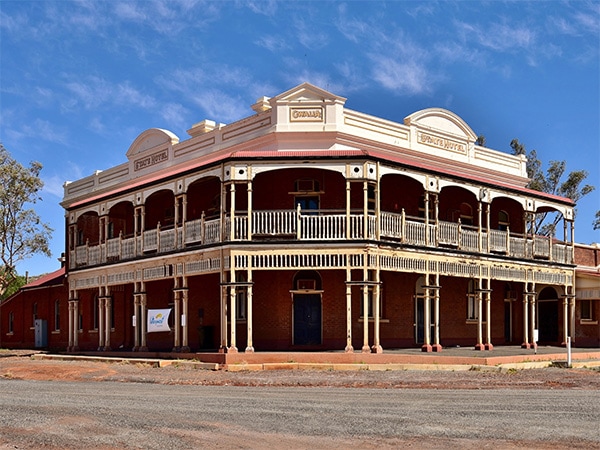
mining town of Gwalia.
The abandoned mining town of Gwalia.

Coober Pedy, SA

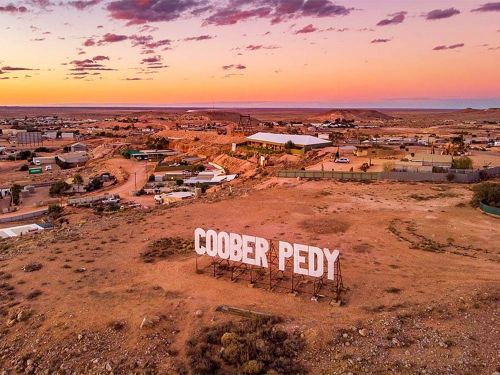
We hope this isn’t the first time you’re hearing about Australia’s opal capital. Far removed from the rest of the country, this delightfully strange place has a varying population from around 2000 to 4000, with 45 different nationalities.


After opals were discovered here in 1915, the Coober Pedy community got innovative and built their town underground. Four out of five residents live below the surface, and many dwellings come complete with swimming pools and entertainment rooms.


The stark landscape surrounding Coober Pedy, including the 40 kilometres or so in every direction that’s dotted with shafts and mullock heaps from opal workings, has formed the backdrop for films like Mad Max III, Priscilla, Pitch Black and Red Planet. Learn all about it with a visit to one of the underground museums.


The best time of the year to visit is between April and October, when the weather is mild and the nights are cold. You take your chances rocking up in summer, when it can reach a scorching 45ºC and dust storms can blow in from nowhere without much warning.
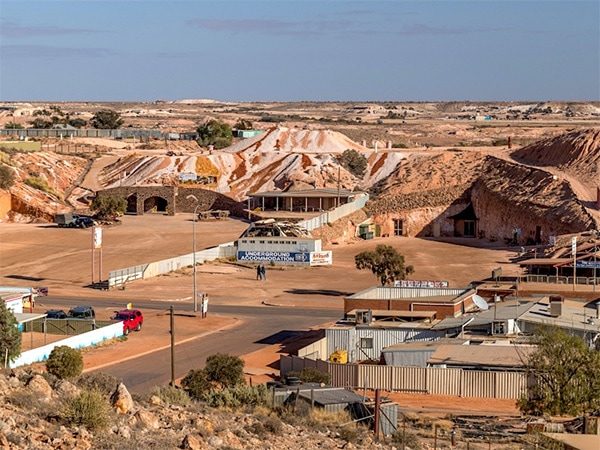
Coober Pedy.
Go underground in Coober Pedy.

White Cliffs, NSW

Usually living in the shadows of her more famous cousin in SA, White Cliffs proves there’s life underground elsewhere than in Coober Pedy.


Ever since roo shooters stumbled across a precious white opal here, a tight community of dreamers has called this deserted town home, with an estimated two-thirds of the 100 or so residents living underground to escape the lunar-level extremes.


While you’re here, go underground into a working mine with the Red Earth Opal Mine Tour  and try your hand at uncovering a glittering gem. And, you can’t go past a stay at the Underground Motel, with its rabbit warren of ever-expanding dugouts that will have little ones running amok for hours mind-mapping the place. After a long drive it’s a subterranean oasis in the otherwise scorched tundra of the Strzelecki Desert.
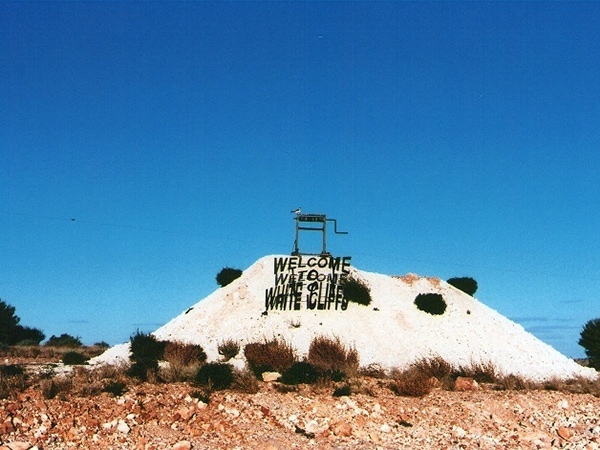
White Cliffs
White Cliffs proves there’s life underground elsewhere.

A rude place, NT

Giving a place a weird name is a very Australian thing. However, nowhere does it quite like the Northern Territory.


Humpty Doo, Bing Bong, Fannie Bay, Mount Unapproachable, Aaaa Road, Boggy Plain, Dirty Water Billabong – these are just the tip of the iceberg for Territorians. And we’re not the only ones that think so.


English company ST&G’s Marvellous Maps has immortalised this hilarity via its Marvellous Map of Actual Australian Place Names. The map points out all the funny and rude names of locations across the nation – classy from afar, and very classy up close.


Check it out here.

hero media

Why winter is the best time to be on the New South Wales coast

NSW’s beach towns take on a new kind of magic when the cooler months hit.

Autumn and winter cast a whole new light on the New South Wales coastline. The sun hangs lower, the shadows stretch longer and the air is crisp and fresh. The frenetic summer crowds are gone, and the rhythm slows to the pace of a leisurely winter bush walk through still, damp quiet. From wineries pouring winter reds to the annual whale migration up the ‘humpback highway’, here’s why winter on the New South Wales coast is better.

Winter on the NSW South Coast

Winter down south means misty dawns, sipping a flat white on the beach. The thrill of a whale spotting from the headlands and evenings spent slowly savouring Shoalhaven’s wines by the fire.

Start in Kiama, where waves crash into the famous Blowholes. This natural spectacle is achieved when underground pressure and swell unite, sending sea spray soaring above the basalt cliffs. This means, due to larger waves, you’re even more likely to see an explosive display in winter.

two people standing in front of kiama blowhole
See Kiama’s blowholes in full force. (Image: Destination NSW)

Inland, the Minnamurra Rainforest Walk in Budderoo National Park is all subtropical forest and trilling lyrebird song. Make sure to walk silently along the elevated boardwalks, past winter-swelled creeks and the tangled roots of fig trees. You might just hear one of the musically talented birds mimicking your footsteps.

Feeling adventurous? Book a session at Illawarra Fly Treetop Adventures for a wobbly walk through the canopy on Australia’s highest zipline.

Illawarra Fly Treetop Adventures on the new south wales south coast
Walk among the tallest trees. (Image: Destination NSW)

Next, it’s time to take the speed down a notch with a drive over to the historic village of Berry. It’s been a beloved stop for generations of Sydneysiders heading south, as has the obligatory stop at its famous doughnut van for crisped, cinnamon goodness. If you’re ready for something a little more chunky, stroll right past the boutiques (okay, go on, just one quick peek) to Milkwood Bakery . Their flaky pastries and all-day breakfasts are best enjoyed under cream-coloured fringed umbrellas.

Back in Kiama, you’ll also find modern Middle Eastern share plates at Miss Arda , and next-level burgers on The Hungry Monkey ‘s extensive menu: an ode to everything pattie-shaped.

End the day at The Sebel Kiama on the harbour. The apartment-style rooms come with full cooking facilities — a welcome addition for families looking to test out the local produce they picked up along the way. Including, but not limited to, vintages from nearby Crooked River Wines .

The Sebel Kiama exterior
Sleep by the harbour.

Winter on the Mid-North Coast

A trip up north is a gentle one at this time of year. You’ll still feel that sunshine warming your shoulders, but the lower temperatures make space for rainforest walks, vineyard lunches and long coastal hikes. All without that pesky humidity.

First stop? It has to be the town of Port Macquarie. Start by marking out a stretch of the nine-kilometre coastal walk you want to tackle (or do the whole thing), which winds from Town Beach to the lighthouse along rugged headlands and quiet beaches. Hot tip: binoculars. Don’t forget them if you want to partake in some close-up sightings of dolphin pods or whales migrating up the ‘humpback highway’.

Port Macquarie Coastal Walk, winter on the New South Wales coast
Wander the Port Macquarie Coastal Walk. (Image: Destination NSW)

Swap sea for canopy at the Sea Acres Rainforest Boardwalk , one of the last remaining pockets of coastal rainforest in the state. The accessible elevated trail passes under climbing ferns and tangled strangler figs, and is alive with scarlet robins, goannas and diamond pythons – if you’re lucky, you might see one slipping through the leaf litter.

Afterwards, lunch is sorted at Cassegrain Wines , where crisp whites and elegant reds are grown using a blend of French winemaking tradition and Australian innovation. After a tasting, saddle up for a horse ride through the estate.

port macquarie koala hospital
Meet Koala Hospital inhabitants at their temporary home. (Image: Destination NSW)

The beloved Koala Hospital is rebuilding, so meet its furry patients in their temporary bushland abode at Guulabaa – Place of Koala . Here, you can see rehabilitation up close and learn how one of Australia’s most iconic animals is being carefully rewilded and protected.

Back in town, Whalebone Wharf  serves up fine dining with serious views to go with your oysters. Prefer something breezier? Bills Fishhouse + Bar does everything from blue swimmer crab toast to zucchini noodles drizzled in basil and wattleseed pesto. Down by the waterfront, Little Shack slings ceviche, mushroom burgers and fish tacos with casual aplomb.

At the end of it all, check in to Mercure Centro Port Macquarie , right in the heart of town. From here, everything’s walkable. Just park the car, pop your keys in your pocket, and stroll down to the beach.

bed at Mercure Centro Port Macquarie
Check in to Mercure Centro Port Macquarie.

Winter on the Central Coast

On the Central Coast, expect to explore oyster farms that sit on estuaries, beaches that stretch empty for miles, and the kind of surprise sightings of whale sprays that can stop a hiker in their tracks.

The best way to settle into this slower rhythm is with the Bouddi Coastal Walk , an 8.5km trail that dips through rainforest and eroding cliffs. It’s made for unhurried walkers and long-lens photographers.

Up the coast in Terrigal, it’s prime time to spot humpbacks on the move. Join a cruise or find your own perch — Crackneck Lookout and Norah Head Lighthouse are both local favourites.

a humpback whale breaching on the central coast
Spot migrating humpback whales. (Image: Destination NSW)

Travelling with kids? It would be sacrilege not to visit the Australian Reptile Park . Here, Elvis the saltwater crocodile reigns supreme, and the venomous snake talk somehow manages to be simultaneously terrifying and fascinating.

If that isn’t enough to wear them out, zip and climb your way through Treetops Adventure Central Coast , a ropes course in the canopy of Ourimbah State Forest. Afterwards, steady your nerves with a garden tasting at Firescreek Botanical Winery , where fruit- and flower-infused wines are served under the trees.

Switch earth for sea and hop on a boat tour with Broken Bay Pearl Farm . Once you’re out on the water, you’ll learn how pearls are cultivated and have a hands-on lesson in grading and shucking.

woman holding a pearl at Broken Bay Pearl Farm
Get a hands-on pearl lesson. (Image: Destination NSW)

As the day winds down, grab a seat at Yellowtail in Terrigal , which takes seasonal native produce and presents it with Asian flair. Prefer something simple? Award-winning Mount White restaurant Saddles is a quintessential Australian dining destination. Find an impressive breakfast and lunch menu, dedicated to country-style cooking and seasonal produce.

Stay the night at Pullman Magenta Shores , between the ocean and the lake. There are plenty of ways to relax, with a massage at the day spa, a poolside beanbag and a round or two at the golf course.

restaurant at Pullman Magenta Shores central coast
Eat well at Pullman Magenta Shores’ restaurant. (Image: Destination NSW)

Winter in Wollongong

Wollongong does contrast pretty well. One moment you’re walking beneath an enormous Buddha, the next you’re ordering soju a few blocks from the surf. It’s a town where skydivers land on beaches, trails lead to paddocks and winter days stretch long and clear beneath the Illawarra cliffs.

If you’re coming from the north, start by crossing over the Sea Cliff Bridge. Curving dramatically out like a jutting ‘C’ out above the water means you won’t be able to resist pulling over (safely, in designated lookouts) to gaze down at the waves crashing on the cliffs below.

Just inland is the serenity of the Nan Tien Temple , the largest Buddhist temple in the Southern Hemisphere. You can trace the prayer path, explore the temple gardens and sip delectable Kam Quat Tea in the quiet light at the Dew Drop Inn Tea House.

monk teaching tai chi at Nan Tien Temple
Learn about Buddhist practices. (Image: Destination NSW)

Next, dust off that cowboy hat. It’s time for the Darkes Forest Riding Ranch . Take a guided canter via trail rides among peppermint gums and paddocks. If you’re happier to look at animals than ride them, Symbio Wildlife Park has red pandas dozing in trees, kangaroos that hop up to you and lessons on conservation.

The brave among you shouldn’t miss Skydive Australia – Wollongong . A free fall over the coast via tandem jumps before tumbling down to the sand is a breath-stopping thrill. Prefer to keep your feet on the ground? Check out the program at Wollongong Art Gallery , which delivers contemporary and Aboriginal exhibitions in the centre of town.

monkey at Symbio Wildlife Park
Hang out with the locals at Symbio Wildlife Park.(Image: Destination NSW)

As evening settles in, nab a table at Baby Face Kitchen . It has an ever-changing set menu, with dishes like hand-picked mud crab with white asparagus and salty brown butter, to sheep’s milk and honey ice cream. For something more casual, Dagwood Bar + Kitchen brings the fun with Korean fried chicken, sake cocktails and weekly all-you-can-eat bao buns.

Check in to Novotel Wollongong Northbeach , right by the sand. With a beachfront pool and ocean views, it’s an ideal base for whatever pace you choose.

Novotel Wollongong Northbeach
Fall asleep listening to the waves.

Winter on the New South Wales coast starts with a cosy place to stay. Start planning your adventure at all.com.