Australia’s top 10 farmers markets worth a visit

hero media
Visiting the local farmers’ market has become the cornerstone of a foodie’s weekend (and a nicer way to get your groceries than the supermarket). Stock up your pantry at these top 10 outings.

1. Adelaide Farmers’ Market Adelaide, SA

Marketplace details:
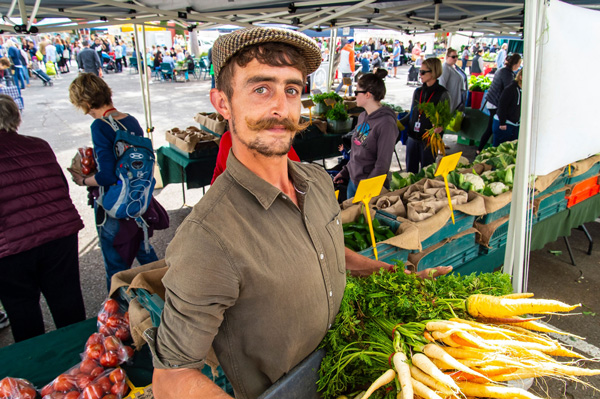
Adelaide Farmer's Markets.
A glimpse into Adelaide Farmer’s Markets.

Held outdoors at Adelaide Showground every Sunday from 9am – 1pm.

Market fact:


Each week cooking demonstrations are held inside the Market Kitchen at Adelaide Farmer’s Markets, using local produce to create mouth-watering dishes. You may recognise some of the faces from MKR and MasterChef.

Market special:


Ice-cream in flavours such as lemon myrtle, native mint, lilly pilly and wild ginger from Bushtucker Ice-cream.


2. Collingwood Children’s Farm/Melbourne Farmers’ Markets, Abbotsford, VIC

Marketplace details:
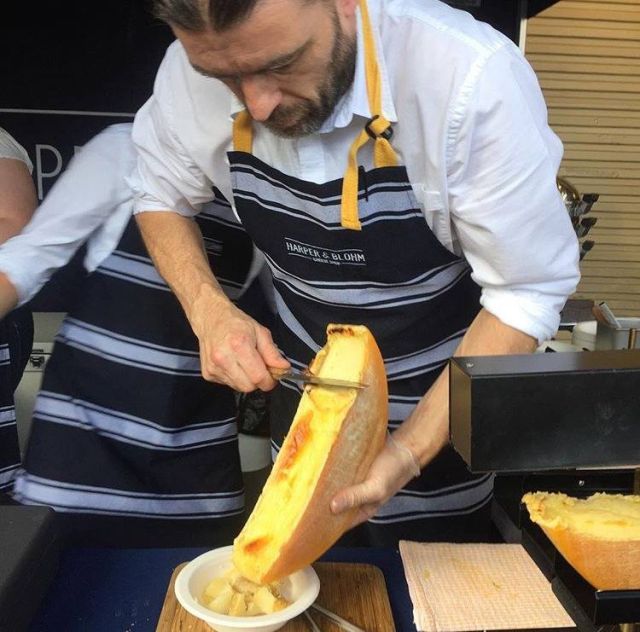
Melbourne Farmer's Market at Collingwood Children's Farm.
Delicious raclette cheese available at Melbourne Farmer’s Market at Collingwood Children’s Farm.

Melbourne Farmers’ Markets is held outdoors at Collingwood Children’s Farm on the second Saturday of each month, 8am – 1pm. There’s a $2 entry fee per adult (children are free), which supports projects at the farm. The kids will love getting to know the farm animals.

Market fact:


It’s completely plastic bag-free here, so don’t forget your canvas shopping totes.

Market special:


The pancake stall is run by volunteers and all funds raised support the Young Farmers program. Tuck in for a feel-good breakfast.


3. Eveleigh Market, Eveleigh, NSW

Mushrooms Eveleigh Markets.
Mushroom out from beneath the shade: Eveleigh Markets, Sydney.

Marketplace details: Undercover at Carriageworks, every Saturday (rain, hail or shine), 8am – 1pm.


Market fact: Eveleigh Market features well-known Sydney eateries Bourke Street Bakery, Sonomo and Billy Kwong have stands here – you may even see Miss Kylie Kwong herself serving up steamed pork buns!


Market special: Honey pollinated around the city from The Rocks to Marrickville at The Urban Beehive.


Need tips, more detail or itinerary ideas tailored to you? Ask AT.

AI Prompt

4. Farmgate Market, Hobart, TAS

Marketplace details: Outdoors at Bathurst Street every Sunday (rain, hail or shine) from 8:30am – 1pm.
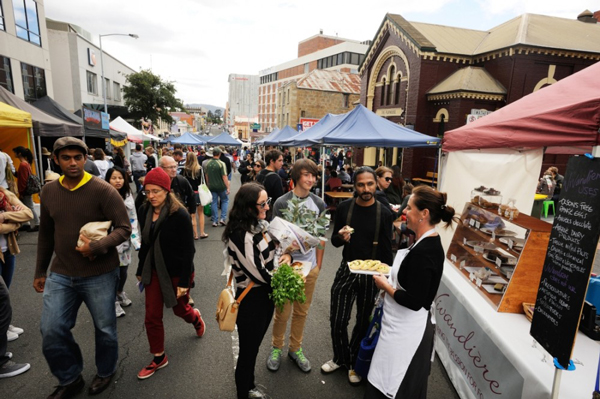
Farmgate Market in Hobart, Tasmania.
People perusing Farmgate Market in Hobart, Tasmania.

Market fact: At Farmgate Market, everything sold must be grown or produced in Tasmania and only the people who grow, raise, produce, extract or pluck the goods can trade.


Market special: Sourdough donuts filled with apple and cardamom jam or dark choc and salty pistachio.


5. Noosa Farmers’ Market, Noosa, QLD

Marketplace details: Outdoors at Noosa Australian Football Club every Sunday (rain, hail or shine), 7am – 12pm.
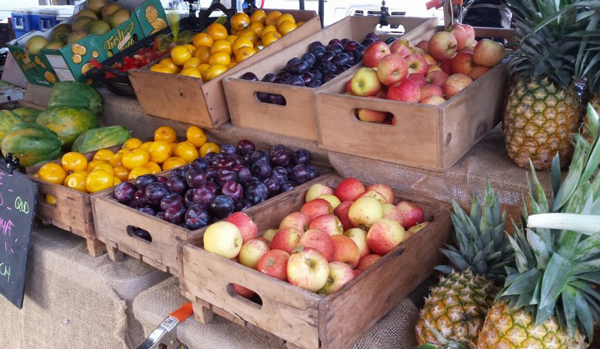
Noosa Farmer's Markets.
Fresh produce from Noosa Farmer’s Markets.

Market fact: Noosa Farmers’ Market organisers are also behind the Noosa Food ETrail – a website showcasing a behind-the-scenes-style exploration of the local food region through fruit picking, farm tours, cooking schools. Plus markets and farm gates.


Market special: Handmade quality olive oils, olive tapenade and fresh olives from Fat Hen Farm.


6. Capital Region Farmers’ Market Canberra, ACT

Marketplace details: Undercover at Exhibition Park, most Saturdays from 7:30–11:30am.
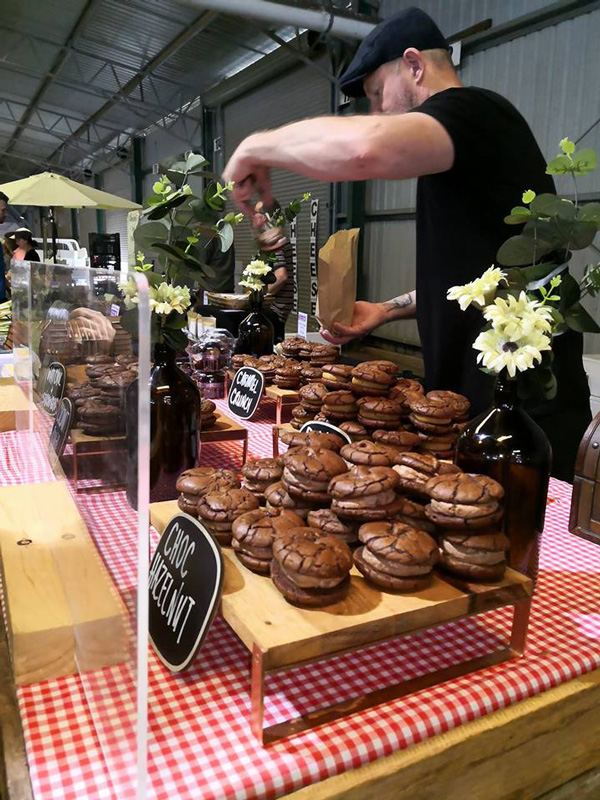
Canberra Farmers Markets?
Why not pick up a gooey brownie from stallholder, The Hungry Brown Cow at Capital Region Farmers’ Market Canberra?

Market fact: At Capital Region Farmers Market, the majority of produce at the market (excluding some specialty products) comes from less than 300 kilometres away. The distance travelled by each stallholder is listed on the market website.


Market special: The pâtés of Fine Terrines & Pâtés come in all sorts of flavours from free-range chicken to Porcini and port – but if those don’t tickle your fancy, they’ll try to make one especially for you.


7. Talbot Farmers’ Markets, Talbot, VIC

Marketplace details: Talbot Farmers’ Market is held outdoors at Scandinavian Crescent on the third Sunday of each month, from 9am – 1pm.
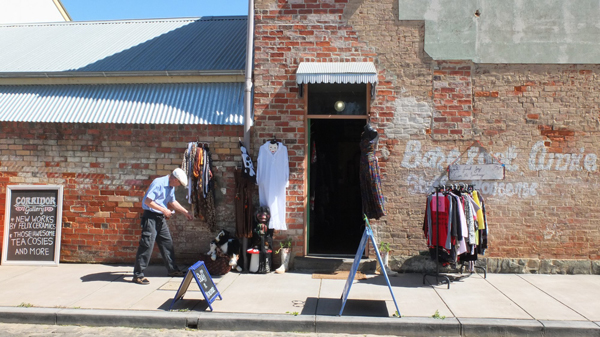
Talbot Markets in Victoria.
Browse vintage finds at Talbot Markets in Victoria.

Market fact: The Town Hall Market is held on the same day just adjacent to the farmers’ market – it sells books, toys, crafts, clothing and more.


Market special: The award-winning Cooks Treat Ripper Relish and BBQue Brew (both gluten free, too!).


Weekly travel news, experiences
insider tips, offers, and more.

8. Margaret River Farmers’ Markets Margaret River, WA

Marketplace details: This market is held at the Margaret River Education Campus on the third Sunday of every month, from 9am – 1pm.
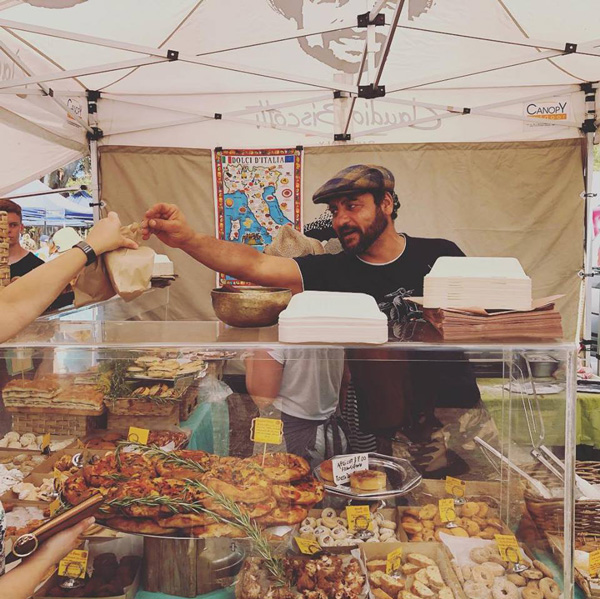
Margaret River Farmer's Market.
Pick up a treat at Margaret River Farmer’s Market.

Market fact: Stalls at Margaret River Farmers’ Market are given priority based on how ‘local’ the produce is: if it’s made by farmers within the Margaret River Region with their own produce, it takes priority over residents of the Margaret River Region using local produce and those who use products from outside of the area and so on.


Market special: Bahen & Co’s factory is not open to the public, so get your hands on the artisan chocolate handmade using cacao beans and raw sugar.


9. Barossa Farmers’ Markets Barossa Valley, SA

Marketplace details: Barossa Farmers’ Markets is held undercover in the Vinters Sheds, Angaston, every Saturday from 7:30–11:30am.
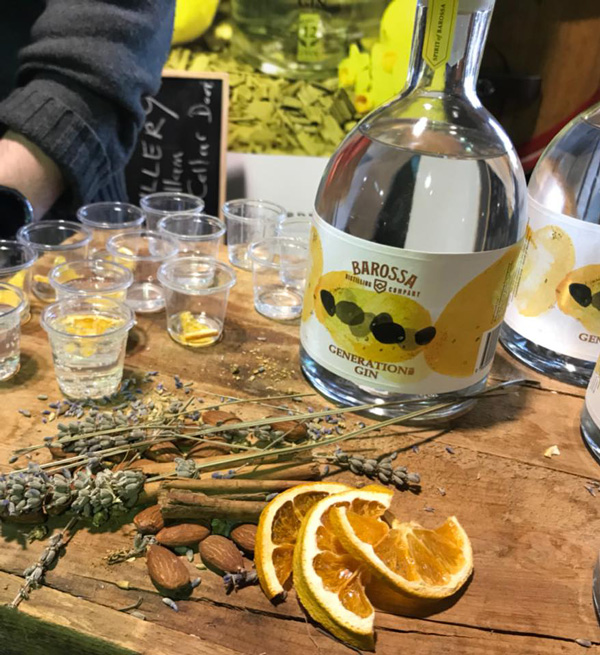
Barossa Valley Farmer's Markets.
Barossa Distilling Company flavouring the farmer’s markets.

Market fact: The farmers travel an average of just 15 kilometres to get here, so you know all the produce is local and super fresh.


Market special: Fill up for breakfast on the delicious egg and bacon Market Burger.


10. Gold Coast Organic Market, Miami, QLD

Marketplace details: Outdoors at Miami High State School every Sunday, 6–11:30am.

Gold Coast Organic Market.
Delicious freshly made Organic Vegan Museli, Bowls from Gold Coast Organic Market.

Market fact: All produce at Gold Coast Organic Market must be straight from the farm and Certified Organically grown. But it’s not just the food that’s organic, there are also cleaning products, cosmetics, clothing and bedding.


Market special: The fermented beverages from Buchi Kombucha, made from organic white, black or green teas (or a blend), organic raw sugar, and a symbiotic colony of bacteria and yeast, are meant to be ‘ridiculously good for you’. To sweeten the deal, they come in a variety of flavours including Ginger and Tumeric, Coffee, and Hibiscus Galangal Lime.


Want to see more stories from Australian Traveller in your Google search results?

  1. Click here to set Australian Traveller as a preferred source.
  2. Tick the box next to "Australian Traveller". That's it.
hero media

Inside Geelong’s glow-up from factory town to creative capital

    Chloe Cann Chloe Cann
    Abandoned mills and forgotten paper plants are finding second lives – and helping redefine a city long underestimated. 

    Just 15 years ago, Federal Mills was a very different place. Once among the most significant industrial sites in Victoria, the historic woollen mill was one of a dozen that operated in Geelong at the industry’s peak in the mid-20th century, helping the city earn its title as ‘wool centre of the world’. But by the 1960s global competition and the rise of synthetic fabrics led to the slow decline of the industry, and Federal Mills finally shuttered its doors in 2001. Within a few years, the abandoned North Geelong grounds had become makeshift pastoral land, with cows and goats grazing among the overgrown grass between the empty red-brick warehouses. It was a forgotten pocket of the city, all but two klicks from the bustle of the CBD.  

    Geelong cellar door wine bar
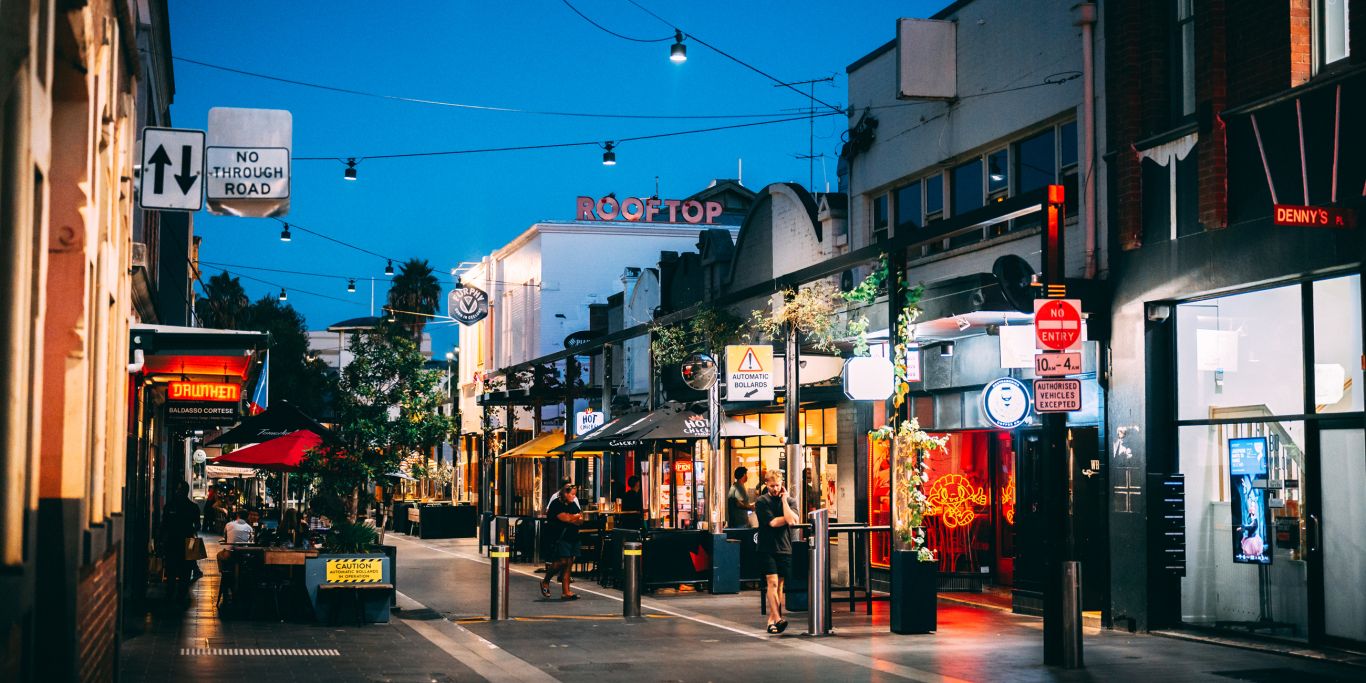
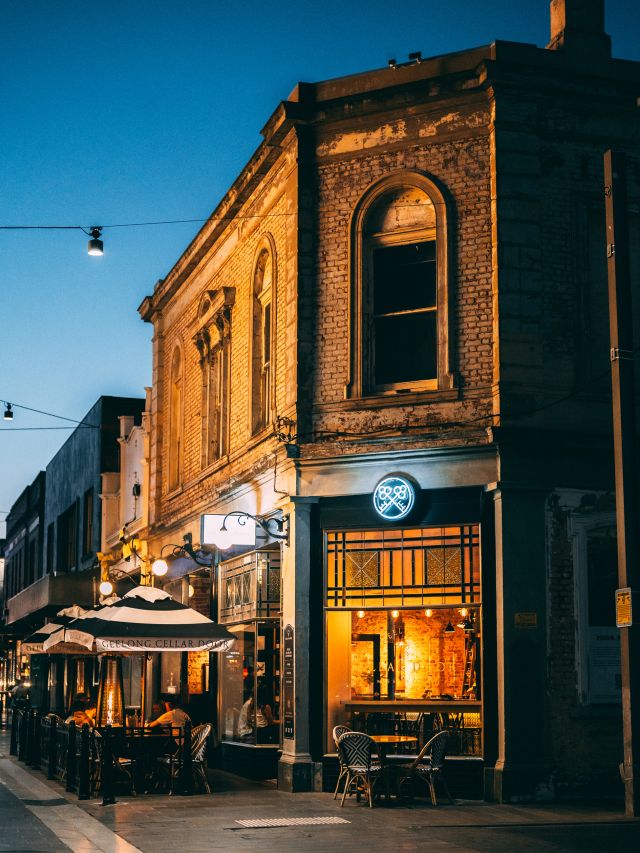
    Geelong has shed its industrial identity to become an innovative urban hub with reimagined heritage spaces. (Image: Ash Hughes)

    Federal Mills: from forgotten factory to creative precinct 

    Today, the century-old complex stands reborn. The distinctive sawtooth-roof buildings have been sensitively restored. An old silo is splashed with a bright floral mural, landscapers have transformed the grounds, and the precinct is once again alive with activity. More than 1000 people work across 50-plus businesses here. It’s so busy, in fact, that on a sunny Thursday morning in the thick of winter, it’s hard to find a car park. The high ceilings, open-plan design, and large multi-paned windows – revolutionary features for factories of their time – have again become a drawcard.  

    Paddock Bakery andPatisserie
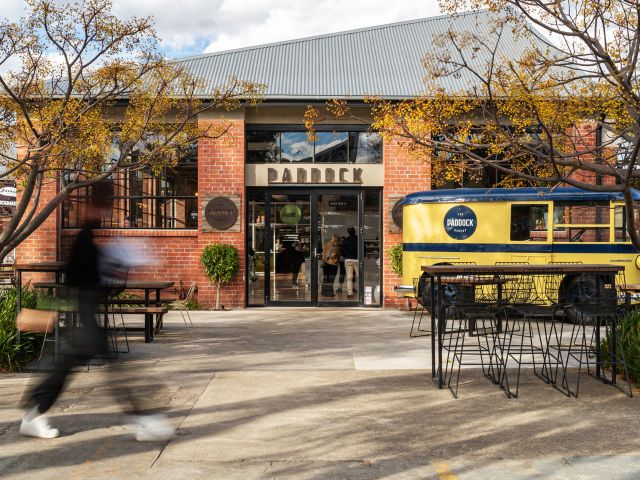
    Paddock Bakery and Patisserie is housed within the historic wool factory. (Image: Gallant Lee)

    At Paddock, one of the precinct’s newer tenants, weaving looms and dye vats have been replaced by a wood-fired brick oven and heavy-duty mixers. Open since April 2024, the bakery looks right at home here; the building’s industrial shell is softened by ivy climbing its steel frames, and sunlight streams through the tall windows. Outside, among the white cedar trees, families at picnic benches linger over dippy eggs and bagels, while white-collar workers pass in and out, single-origin coffee and crème brûlée doughnuts in hand. 

    Geelong: Australia’s only UNESCO City of Design 

    Paddock Bakery
    Paddock Bakery can be found at Federal Mills. (Image: Gallant Lee)

    “A lot of people are now seeing the merit of investing in Geelong,” says Paul Traynor, the head of Hamilton Hospitality Group, which redeveloped Federal Mills. A city once shunned as Sleepy Hollow, and spurned for its industrial, working-class roots and ‘rust belt’ image, Geelong has long since reclaimed its ‘Pivot City’ title, having reinvented itself as an affordable, lifestyle-driven satellite city, and a post-COVID migration hotspot.  

    And the numbers stand testament to the change. In March 2025, and for the first time in its history, Greater Geelong became Australia’s most popular regional town for internal migration, overtaking Queensland’s Sunshine Coast. Current forecasts suggest Geelong will continue to outpace many other Australian cities and towns, with jobs growing at double the rate of the population.

    Tourism is booming, too. The 2023-24 financial year was Geelong and The Bellarine region’s busiest on record, with 6.4 million visitors making it one of the fastest-growing destinations in the country. It’s not hard to see why: beyond the city’s prime positioning at the doorstep of the Great Ocean Road, Geelong’s tenacity and cultural ambition stands out.  

    As Australia’s only UNESCO City of Design, Geelong is swiftly shaking off its industrial past to become a model for urban renewal, innovation, sustainability and creative communities. The signs are everywhere, from the revitalisation of the city’s waterfront, and the landmark design of the Geelong Library and Heritage Centre and Geelong Arts Centre, to the growing network of local designers, architects and artists, and the burgeoning roster of festivals and events. That’s not even mentioning the adaptive reuse of storied old industrial buildings – from Federal Mills, to Little Creatures’ brewery ‘village’ housed within a 1920s textile mill – or the city’s flourishing food and wine scene.  

    The rise of a food and wine destination  

    boiler house
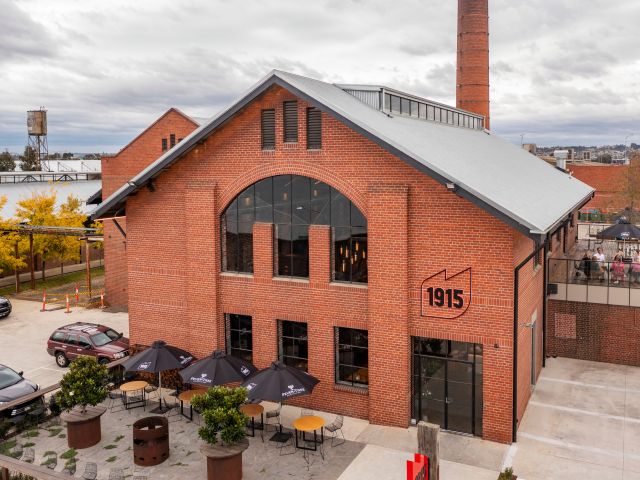
    Restaurant 1915 is housed within a restored former boiler house. (Image: Harry Pope/Two Palms)

    Traynor credits now-closed local restaurant Igni, which opened in 2016, as the turning point for Geelong’s hospo industry. “[Aaron Turner, Igni’s chef-patron] was probably the first guy, with all due respect, to raise the bar food-wise for Geelong,” he says. “People now treat it really seriously, and there’s clearly a market for it.” While Igni is gone, Turner now helms a string of other notable Geelong venues, including The Hot Chicken Project and Tacos y Liquor, all within the buzzy, street art-speckled laneways of the CBD’s Little Malop Street Precinct. Many others have also popped up in Igni’s wake, including Federal Mills’ own restaurant, 1915. Housed within the cavernous boiler house, 1915’s interior is dramatic: soaring, vaulted ceilings with timber beams, exposed brick, a huge arched window. The share plates echo the space’s bold character, playing with contrast and texture, with dishes such as a compressed watermelon tataki, the sweet, juicy squares tempered by salty strands of fried leeks, and charred, smoky snow peas dusted with saganaki on a nutty bed of romesco. 

    Woolstore
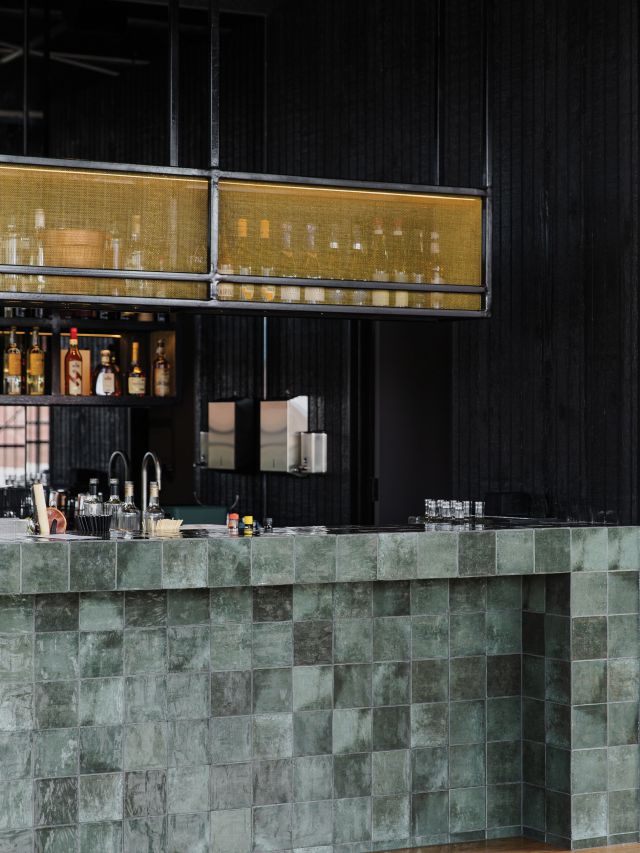
    The Woolstore is a new restaurant and bar housed within a century-old warehouse. (Image: Amy Carlon)

     The Woolstore, one of The Hamilton Group’s most recent hospo projects, opened in February. It occupies a century-old riverside warehouse and exudes a more sultry, fine dining ambience. Much like Federal Mills, the blueprint was to preserve the original brickwork, tallowwood flooring and nods to the building’s former life. That same careful consideration extends to the well-versed, affable waitstaff as well as the kitchen. Head chef Eli Grubb is turning out an eclectic mix of ambitious and indulgent mod Oz dishes that deliver: strikingly tender skewers of chicken tsukune, infused with hints of smoke from the parrilla grill, and glazed with a moreish, sweet gochujang ‘jam’; nduja arancini fragrant with hints of aniseed and the earthy lick of sunny saffron aioli; and golden squares of potato pavé, adorned with tiny turrets of crème fraîche, crisp-fried saltbush leaves, and Avruga caviar, to name but a few stand-out dishes.  

    Woolstore menu
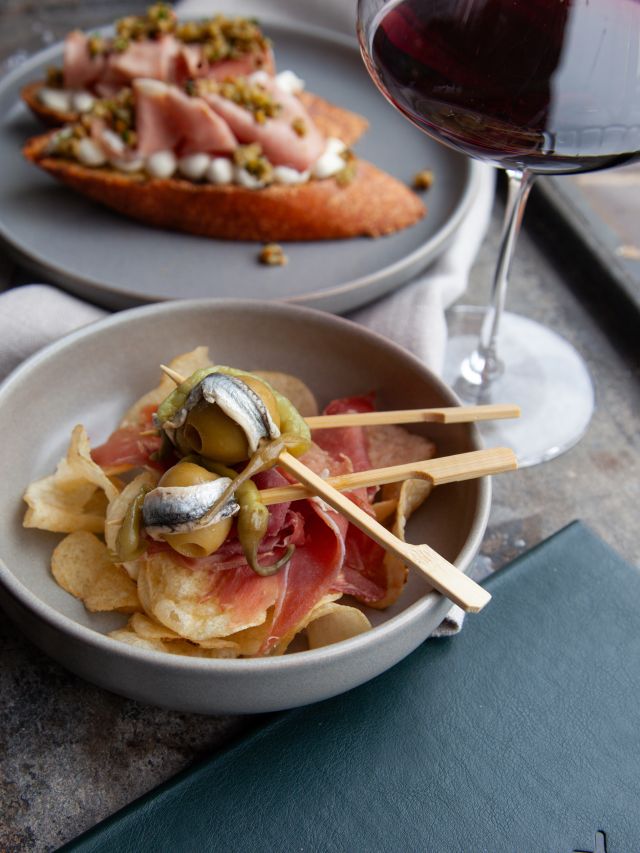
    Woolstore’s menu is designed for sharing.

    Breathing new life into historic spaces  

    On the city’s fringe, hidden down a winding side road with little fanfare, lies a long-dormant site that’s being gently revived. Built from locally quarried bluestone and brick, and dating back to the 1870s, the complex of original tin-roofed mill buildings is lush with greenery and backs onto the Barwon River and Buckley Falls; the audible rush of water provides a soothing soundtrack. Fyansford Paper Mill is one of few complexes of its time to survive intact. It feels steeped in history and spellbindingly rustic.  

    “We were looking for an old industrial place that had some charm and romance to it,” explains Sam Vogel, the owner, director and winemaker at Provenance Wines which moved here in 2018. When he first viewed the building with his former co-owner, it was in such a state of disrepair that the tradie tenant occupying the space had built a shed within it to escape the leaking roof and freezing winter temperatures. “To say it was run down would be an understatement,” he notes. “There was ivy growing through the place; the windows were all smashed. It was a classic Grand Designs project.” 

    Provenance Wines
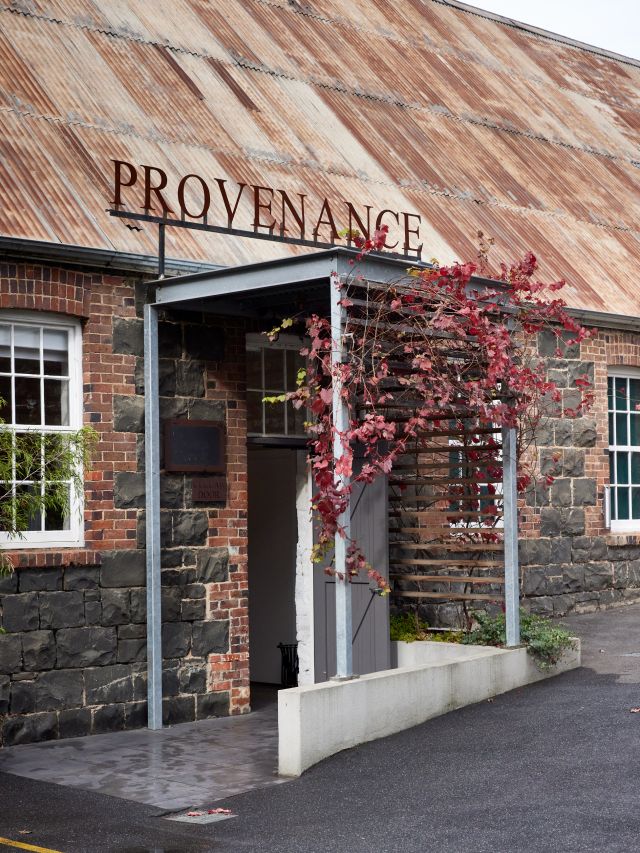
    Provenance Wines moved to Fyansford Paper Mill in 2018. (Image: Cameron Murray Photography)

    The team has since invested more than a million dollars into their new home. Where paper processing machinery once sat, wine barrels are now stacked. Vaulted cathedral ceilings are strung with festoon lights, and hidden in plain sight lies a shadowy mural by local street artist de rigueur Rone – one of only three permanent works by the artist.

    While the award-winning, cool-climate pinot noir, riesling and chardonnay naturally remain a key draw at Provenance, the winery’s restaurant is a destination in itself. Impressed already by whipsmart service, I devour one of the most cleverly curated and faultlessly executed degustations I’ve had in some time. It’s all prepared in a kitchen that is proudly zero-waste, and committed to providing seasonal, ethical and locally sourced meat and produce under head chef Nate McIver. Think free-range venison served rare with a syrupy red wine jus and a half-moon of neon-orange kosho, shokupan with a deeply savoury duck fat jus (a modern Japanese take on bread and drippings), and a golden potato cake adorned with a colourful confetti of dehydrated nasturtiums and tomato powder, and planted atop a sea urchin emulsion.  

    handcrafted pieces
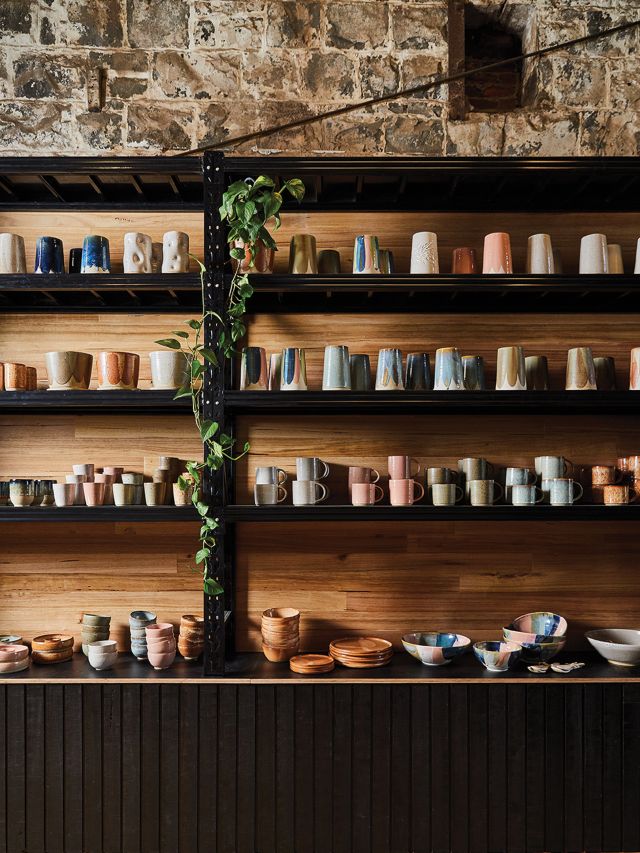
    Bell’s handcrafted functional pieces on display.

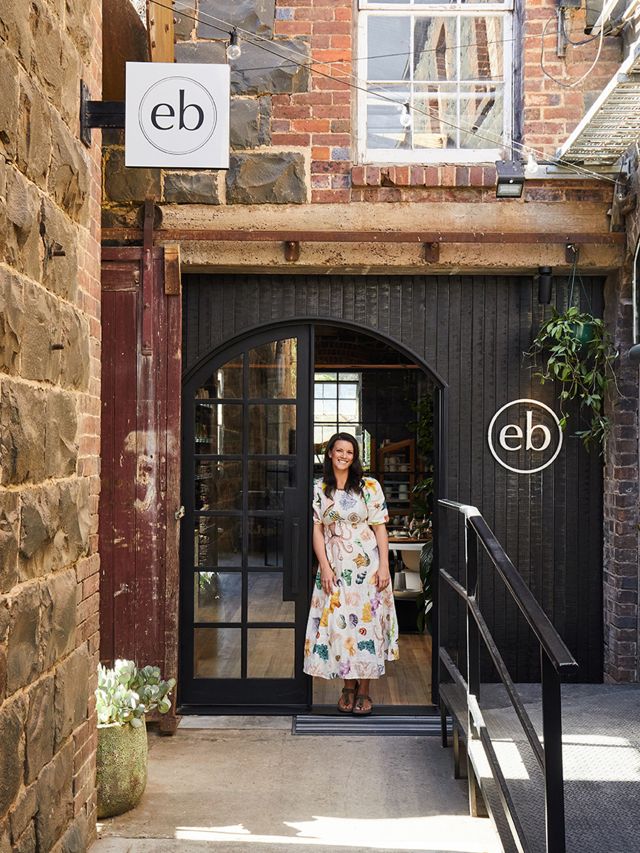
    The complex is home to a coterie of independent businesses, including a gallery, a jeweller, and its latest tenant, ceramicist Elizabeth Bell, drawn here by the building’s “soul”. “There’s so much potential for these buildings to have new life breathed into them,” says Bell, whose studio is housed within the old pump room. “Even people in Geelong don’t know we’re here,” she says. “It’s definitely a destination, but I like that. It has a really calming atmosphere.”  

    A Melbourne transplant, Bell now feels at home in Geelong, which offers something Melbourne didn’t. “If this business was in Melbourne I don’t think it would’ve been as successful,” she notes. “It’s very collaborative in Geelong, and I don’t think you get that as much in Melbourne; you’re a bit more in it for yourself. Here it’s about community over competition.”  

    Elizabeth Bell
    Ceramicist Elizabeth Bell has a store in Fyansford Paper Mill.