2 Aussie stays made Conde Nast’s best hotels list – we stayed at both

hero media
The two iconic hotels were the only Australian stays to make the annual list and we’ve stayed at both. Our editors weigh in on their stays.

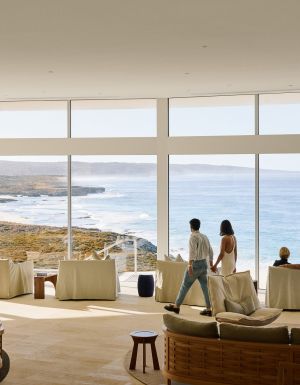
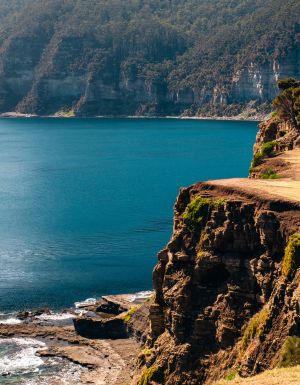
Condé Nast Traveller’s global editors have revealed their favourite places to stay across the world – and two Australian hotels have made the prestigious Gold List for 2025 . While the list includes some truly extraordinary properties from around the globe, what’s even more exciting is that we’ve stayed at both of the Aussie inclusions!

Here’s a glimpse into what it was like to stay at two of the best Australian hotels, shared through personal stories that bring these remarkable destinations to life.

Lizard Island
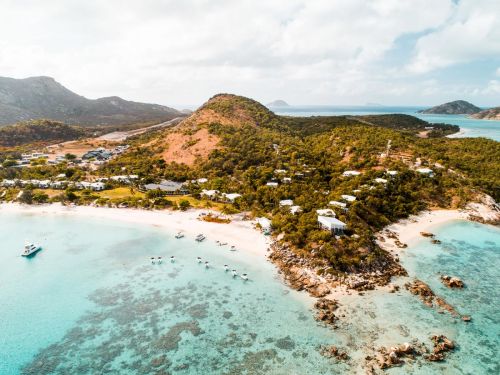
Lizard Island Great Barrier Reef Aerial
Do as much or as little as you like on Lizard Island. (Image: Supplied)

For Australian Traveller’s sub editor, Carla Grossetti, Lizard Island was more than just a luxury getaway – it was a homecoming. Growing up in Cairns, Carla spent her childhood snorkelling on the Great Barrier Reef, so the chance to revisit those waters in the lap of luxury was irresistible.

“You can do as much or as little as you like on Lizard Island. Launch yourself into the underwater environment and swim with turtles, snorkel over a giant clam garden and do your best impression of a starfish in Blue Lagoon," Carla says, who visited the Luxury Lodges of Australia property in 2024.

“The beauty of Lizard Island is that you can pamper yourself at the day spa, meet at the bar for sundowners and enjoy a world-class dining experience overlooking the waterfront," she says.

“I’m not surprised the resort featured on Condé Nast Traveller’s list of Best Hotels in Australia. It’s one of the best places I’ve stayed in the world and is the epitome of barefoot luxury."

Reflecting on her stay, Carla isn’t finished exploring this slice of paradise. “I’m currently manifesting a return visit: I’d like to go back in June to swim with minke whales during their annual migration," she concludes.
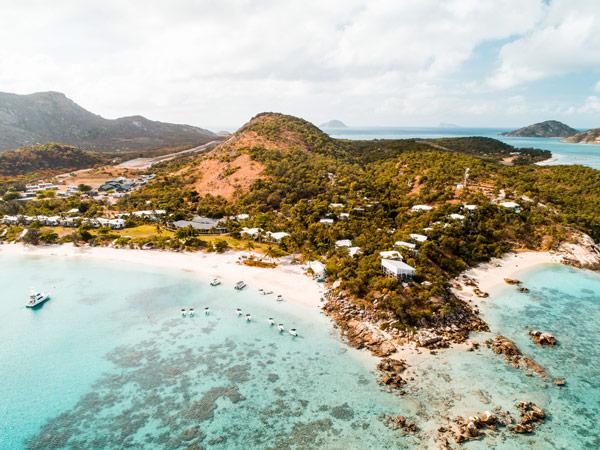
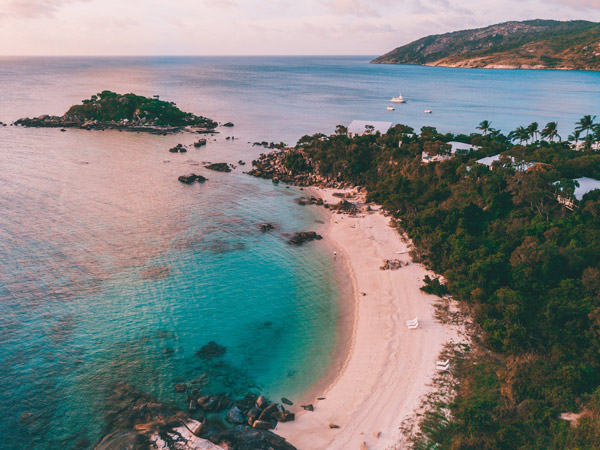
Lizard Island Great Barrier Reef Aerial Casuarina Beach and Blue Lagoon
Lizard Island is the epitome of barefoot luxury. (Image: Ken Butti)

Need tips, more detail or itinerary ideas tailored to you? Ask AT.

AI Prompt

Bullo River Station
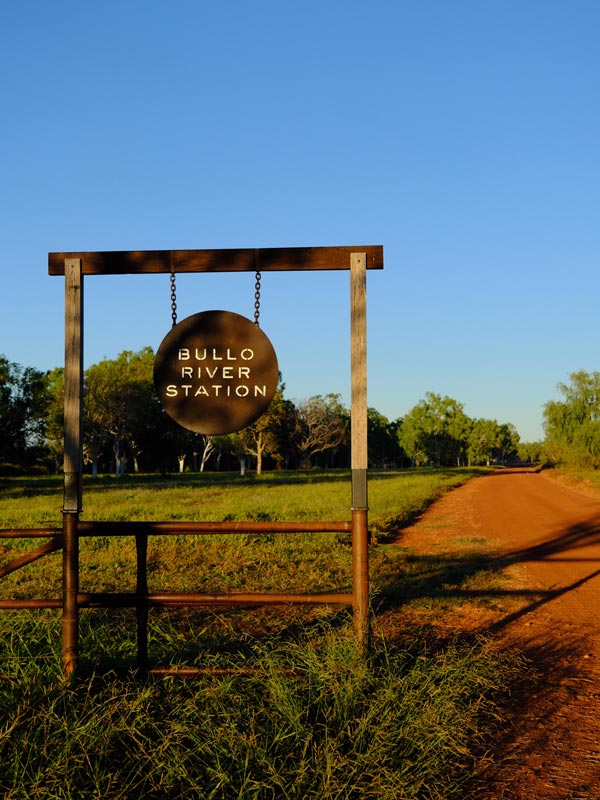
Bullo River Station sign
Bullo River Station is rooted in connection to the land and its stories. (Image: Imogen Eveson)

For Australian Traveller’s print editor, Imogen Eveson, Bullo River Station offered a completely different kind of luxury – one rooted in connection to the land and its stories. Situated on over 160,000 hectares of Miriwoong and Gajirrawoong Country straddling a space between the Top End and the Kimberley, Bullo is a working cattle station (and one of our favourite station stays) that blends pastoral activities with conservation.

“My stay at Bullo River Station was one of the best domestic travel experiences I’ve had," Imogen explains.

“For me, it encapsulated what is distinctive about luxury travel in Australia. Low-key, down-to-earth and relaxed but with every last detail considered and executed flawlessly."

When Imogen visited in June 2024, Bullo River Station had just been announced as the latest member of Luxury Lodges of Australia, a collection of exceptional properties in spectacular locations that each tell a unique Aussie story.
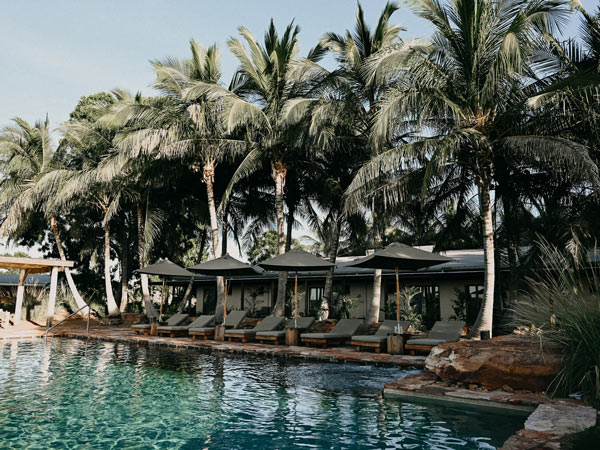
Bullo River Station pool
Bullo River Station joined Luxury Lodges of Australia last year.

Days here are filled with adventure. From waterhole swims and leisurely cruises down the Bullo River to station tours and scenic helicopter flights over a sandstone wilderness carved by waterfalls, gorges and the convergence of two rivers.

“I saw the most stunning sunrise of my life when our chopper pilot landed on a pinnacle overlooking it all," she says.

“Above all, luxury travel in Australia means the luxury of experience. The privilege of access to an extraordinary environment and the opportunity to learn about it from the passionate people charged with protecting it."

Current owners Julian and Alexandra Burt, who bought Bullo in 2017, have set the property on a path towards transformation again with a groundbreaking new approach to land management and a collaboration with the Australian Wildlife Conservancy (AWC). The vision is one where pastoral activities and conservation can thrive side by side, complemented by low-impact tourism that allows you to be totally immersed in the heart and soul of this place.
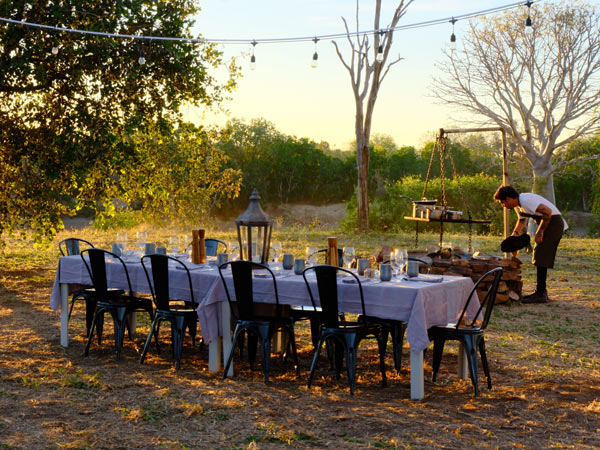
Bullo River Station outdoor dining experience
Days at Bullo River Station are filled with adventure. (Image: Imogen Eveson)

But the charm of Bullo lies in its quirks as much as its grandeur. Imogen recounted a moment of hilarity when her partner discovered a frog in the toilet.

“‘Ah, you’ve got a toilet frog!’ the staff chorused with a casual cheerfulness before instructing us, in such instances, to simply flush the loo and send the tiny tree frogs back where they came from; they are partial to the septic tank and don’t worry – we were assured it doesn’t harm them," Imogen recounts.

“I imagined all the traditional luxury hotels around the world where a commode cameo like this might provoke a freak-out among high-maintenance guests, and love knowing that Bullo is the kind of place that attracts likeminded people ready to throw themselves into the raw experience of it, frogs and all. And that to me feels so wonderfully Australian."
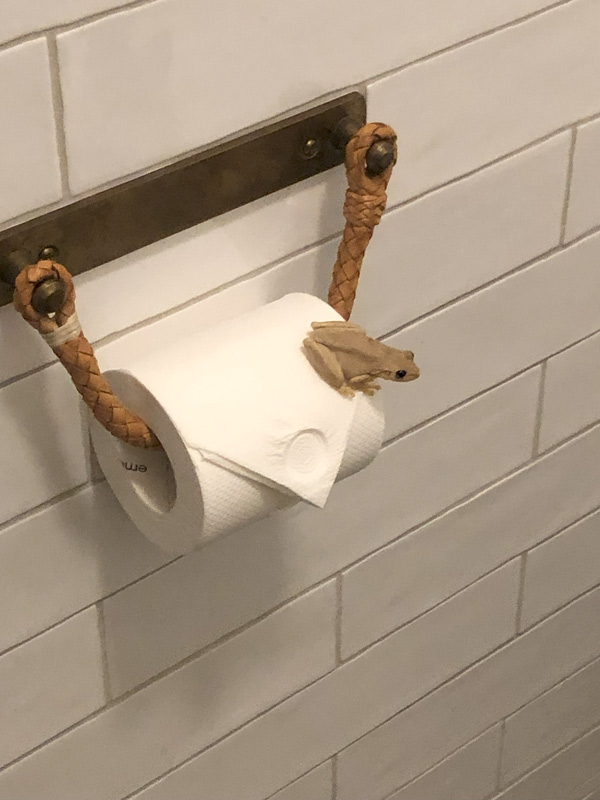
Bullo River Station toilet frog
Lucky the toilet frogs are cute. (Image: Imogen Eveson)

Weekly travel news, experiences
insider tips, offers, and more.

Emily Murphy
Emily Murphy is Australian Traveller's Email & Social Editor, and in her time at the company she has been instrumental in shaping its social media and email presence, and crafting compelling narratives that inspire others to explore Australia's vast landscapes. Her previous role was a journalist at Prime Creative Media and before that she was freelancing in publishing, content creation and digital marketing. When she's not creating scroll-stopping travel content, Em is a devoted 'bun mum' and enjoys spending her spare time by the sea, reading, binge-watching a good TV show and exploring Sydney's vibrant dining scene. Next on her Aussie travel wish list? Tasmania and The Kimberley.
View profile and articles

This luxe trawler tour is redefining Victoria’s seafood experience

    Chloe Cann Chloe Cann
    Victoria’s ‘mussel capital’ is the source of exceptional shellfish used by top chefs far and wide. Step aboard a beautifully refurbished trawler to see how these plump and juicy bivalves are sustainably cultivated.

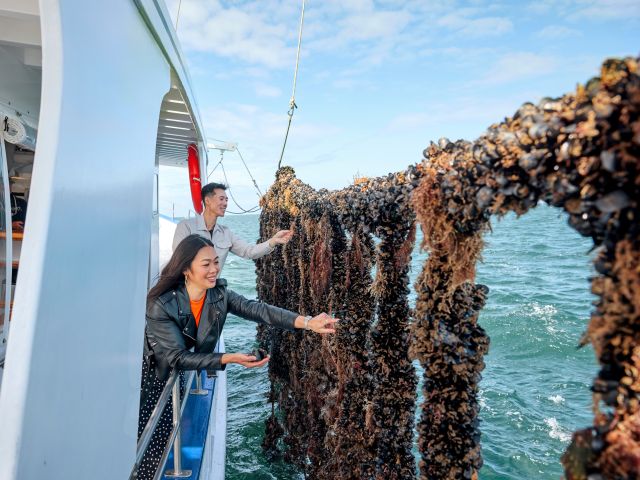
    A curtain is slowly winched from the placid, teal waters just off Portarlington , like a floating garland beside our boat. The ropes heave with blue mussels, the star attraction of our tour. But as we reach to pluck our own, it’s quickly clear they’re not alone; a mass of weird and wonderful creatures has colonised the ropes, turning them into a living tapestry. ‘Fairy’ oysters, jelly-like sea squirts, and tiny, wriggling skeleton shrimp all inhabit this underwater ecosystem.

    We prize our bivalve bounty from the ropes, and minutes later the mussels arrive split on a platter. The plump orange morsels are served raw, ready to be spritzed with wedges of lemon and a lick of chilli as we gaze out over the bay. They’re briny, tender and faintly sweet. “This wasn’t originally part of the tour,” explains Connie Trathen, who doubles as the boat’s cook, deckhand and guide. “But a chef [who came onboard] wanted to taste the mussels raw first, and it’s now become one of the key features.”

    A humble trawler turned Hamptons-style dreamboat

    inspecting bivalve bounty from the ropes
    Inspecting the bounty. (Image: Visit Victoria/Hannyn Shiggins)

    It’s a crisp, calm winter’s day, and the sun is pouring down upon Valerie, a restored Huon pine workhorse that was first launched in January 1980. In a previous life she trawled the turbulent Bass Strait. These days she takes jaunts into Port Phillip Bay under the helm of Lance Wiffen, a fourth-generation Bellarine farmer, and the owner of Portarlington Mussel Tours . While Lance has been involved in the fishing industry for 30-plus years, the company’s tour boat only debuted in 2023.

    holding Portarlington mussels
    See how these plump and juicy bivalves are sustainably cultivated.

    It took more than three years to transform the former shark trawler into a dreamy, Hamptons-esque vessel, with little expense spared. Think muted green suede banquettes, white-washed walls, Breton-striped bench cushions, hardwood tables, bouquets of homegrown dahlias, and woollen blankets sourced from Waverley Mills, Australia’s oldest working textile mill. It’s intimate, too, welcoming 12 guests at most. And yet there’s nothing pretentious about the experience – just warm, down-to-earth Aussie hospitality.

    As we cruise out, we crack open a bottle of local bubbles and nibble on the most beautifully curated cheese platter, adorned with seashells and grey saltbush picked from the water’s edge that very morning. Australasian gannets soar overhead, and I’m told it’s not uncommon for guests to spot the odd seal, pod of dolphins, or even the occasional little penguin.

    The sustainable secret behind Victoria’s best mussels

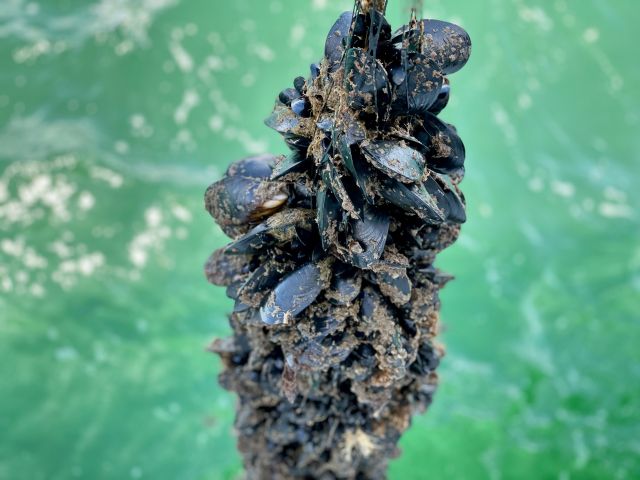
    blue mussels off Portarlington
    Blue mussels sourced just off Portarlington.

    Connie and Lance both extol the virtues of mussels. They’re delicious. A lean source of protein and packed with omega-3 fatty acids, vitamin B12, iron, selenium, and zinc. They’re cooked in a flash (Connie steams our fresh harvest with cider and onion jam). And they’re also widely regarded as one of the most sustainable foods in the world.

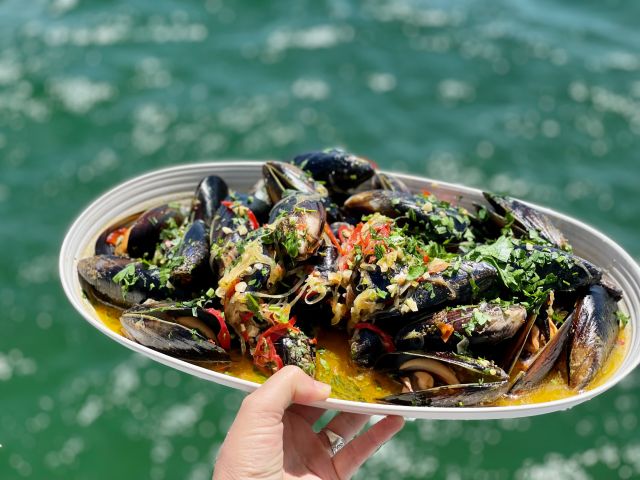
    Portarlington mussels with lemon and chilli
    Mussels served with lemon and chilli.

    “Aquaculture is [often] seen as destructive, so a lot of our guests are really surprised about how environmentally friendly and sustainable our industry is,” Lance says. “[Our mussels] would filter 1.4 billion litres of water a day,” he adds, explaining how mussels remove excess nitrogen and phosphorus from the water. “And through biomineralisation, we lock carbon into mussel shells.”

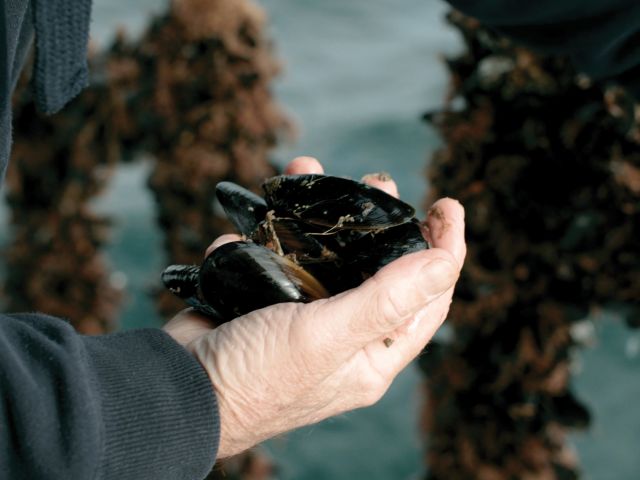
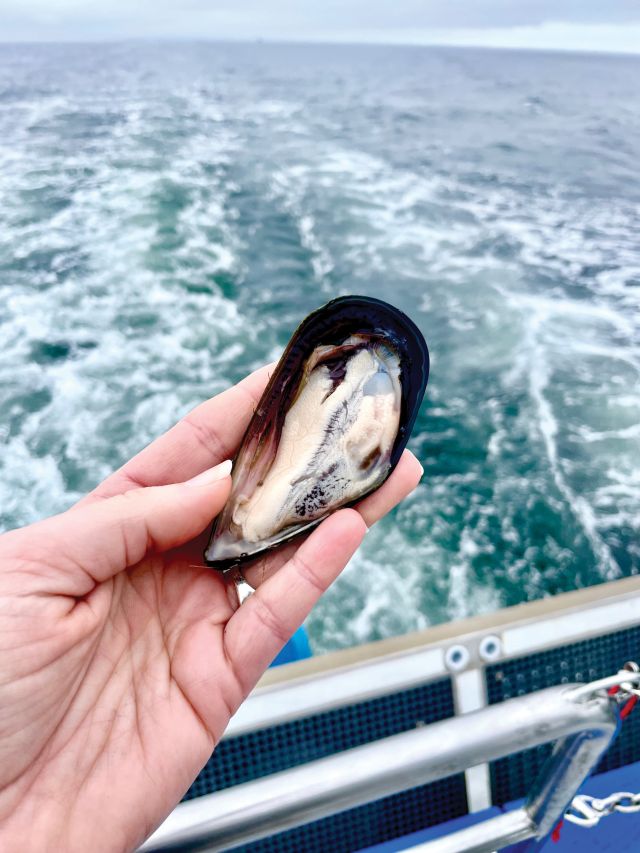
    a hand holding a Portarlington mussel
    Mussels are a sustainable food.

    Despite their glowing list of accolades, these molluscs have long been seen as the oysters’ poorer cousins. “It was a really slow start,” explains Lance, who says that in the early days of his career, “you could not sell mussels in Victoria”.

    But word has slowly caught on. Chefs as globally acclaimed as Attica’s Ben Shewry and even René Redzepi of Noma, Denmark, have travelled to these very waters just to try the shellfish at the source, sharing only the highest praise, and using Lance’s mussels in their restaurants.

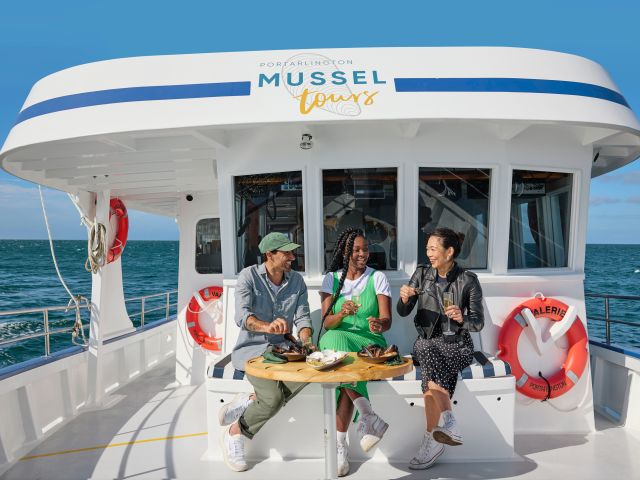
    guests sampling Portarlington mussels onboard
    Sampling the goods onboard. (Image: Visit Victoria/Hannyn Shiggins)

    According to Lance there’s one obvious reason why the cool depths of Portarlington outshine other locations for mussel farming. “The water quality is second to none,” he says, noting how other regions are frequently rocked by harvest closures due to poor water quality. “We grow, without a doubt, some of the best shellfish in the world.” And with Lance’s bold claims backed up by some of the industry’s greatest names, perhaps it won’t be much longer until more Aussies uncover the appeal of Portarlington’s mussels.