Discover the best Indigenous experiences in Australia – here is 49 to 57 of the 100 ways to holiday here this year.
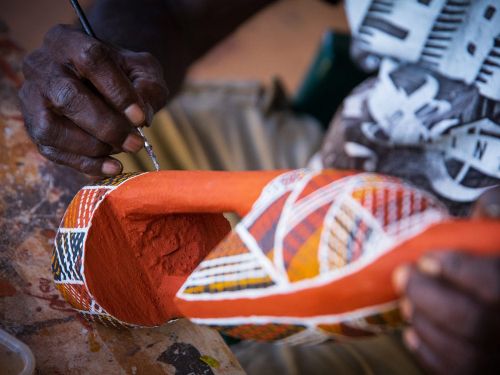
49. Buy art from Australia’s best Indigenous artists, NT
While the COVID-19 pandemic has curtailed the staging of the country’s vibrant Indigenous art fairs this year you can still add these fairs and centres to your dreaming list and visit the websites to keep track of virtual programs and 2021 dates.
Darwin Aboriginal Arts Fair (DAAF): Taking place on Larrakia Country at the Darwin Convention Centre, this annual fair held in August has become one of the largest gatherings of established and emerging Aboriginal and Torres Strait Islander artists in the country.
This year’s fair will be the first-ever completely digital offering, with sales and events taking place on the DAAF website and social channels – and 100 per cent of the money made through the sale of artworks (a total of $11.6 million in the last five years) goes to the artists and their communities. This year’s program will also include the inaugural National Indigenous Fashion Awards, a celebration of creativity and innovation in fashion and fabric design by Aboriginal and Torres Strait Islander designers and artists.
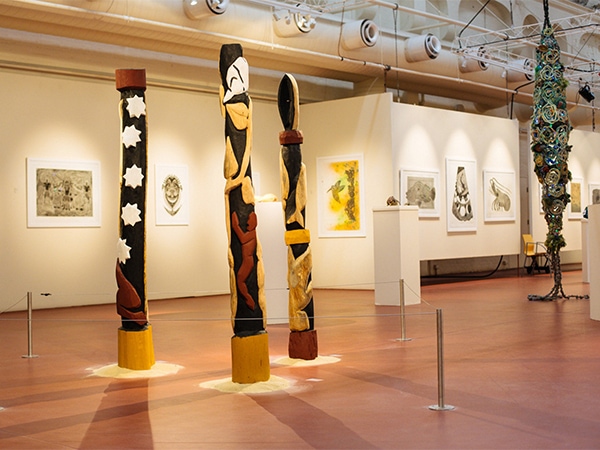
Desert Mob: This event takes place during September and October at the Araluen Arts Centre in Alice Springs and features works of art from the 35 Desart-member art centre from the desert regions and communities of the Northern Territory, South Australia and Western Australia. The event schedule includes artist talks, a day-long symposium, and an ethical art marketplace offering up affordable artworks.
Maruku: Owned and operated by Anangu, with 900 artists from 20 remote communities across the Central and Western deserts involved, visitors to Uluru can take part in dot painting workshops, join private art tours around the giant red rock mass and learn about the art of wood carving (punu).
Injalak Arts: Located in West Arnhem Land, this Aboriginal-owned art centre promotes the works of artists from Gunbalanya and surrounding outstations. Works include paintings, carvings and barks, and the centre is also the starting-off point for tours to nearby Injalak Hill to view its ancient rock art. Permits are needed to enter Arnhem Land and should be organised in advance.
Jilamara: Owned and operated by Tiwi artists from the Milikapiti community on Melville Island in the Timor Sea, visitors can tour this arts and craft association, and experience the serenity of the island and its landscape. Permits are required to visit the Tiwi Islands and can be organised through the Tiwi Land Council.
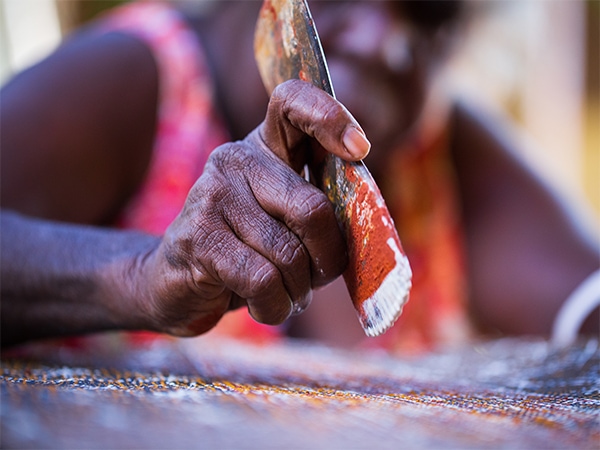
50. Trace an ancient songline on the Dampier Peninsula, WA
Acacias flower, raucous red-winged parrots breed and flocks of cockatoos feed on the bush onions during the dry Barrgana season on Western Australia’s Dampier Peninsula. Kangaroos are well-fed and fat, lizards hibernate underground and a sea mist moves inland on cool nights.
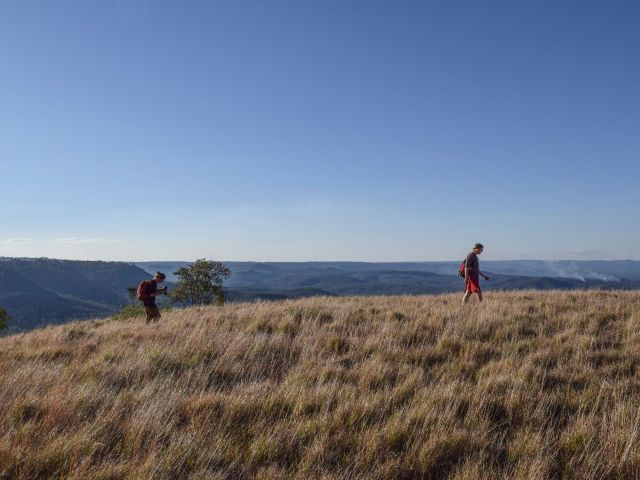
This is prime walking season for the Lurujarri Dreaming Trail, which travels north of Broome along the coast of the Dampier Peninsula just a few times per year between June and August. A nine-day walk with Goolarabooloo traditional owners following a songline, this is an exercise not in ‘arriving’ anywhere, but in experiencing what it is to live on Country. You’ll cook on fires, wash in the sea and use the same camping spots that have been used for thousands of years in a true example of sustainable living. You might even find yourself seeking out timber for impromptu carving workshops – and making anything from karli (boomerangs), coolamon (water bowls) or cumbuk (clapping sticks).
The Lurujarri Heritage Trail has been running for 32 years and was established by the author Paddy Roe to encourage the members of his Goolarabooloo community to start walking on Country again, to renew and stay connected to their roots and traditional skills by tracing this songline; think of it as an oral heritage map – something that keeps the body of cultural knowledge known as Bugarregarre, the Dreaming, alive. Right from the start, Roe sought to share this ancient culture with outsiders and in 1991 he was awarded an Order of Australia Medal for his facilitation of cross-cultural understanding.
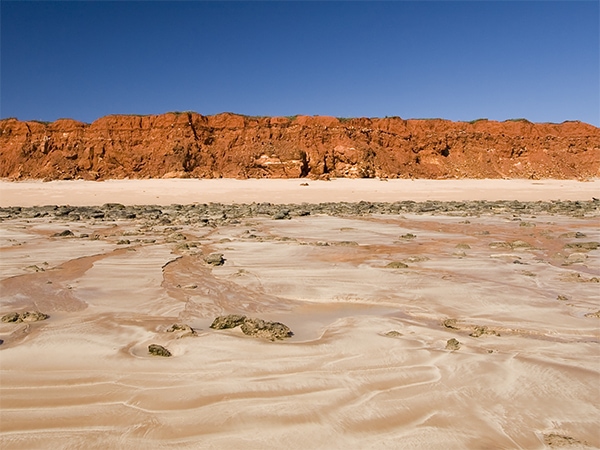
51. Join a women’s only tour in Arnhem Land, NT
The Yolngu people of Arnhem Land, located in the Top End of the Northern Territory, have a profound attachment to the land that has housed and nourished them for millennia. Indeed, they describe it as their mother. This relationship is at the centre of a visit to this area, and none more so than Lirrwi Tourism’s women’s only Gay’Wu dilly bag tour.
Conducted entirely by Yolngu women, the tour gives an insight into the strictly defined rituals and practices that women undertake within the society, and gives insight into the bush, the universe, the sky and the ancestors.
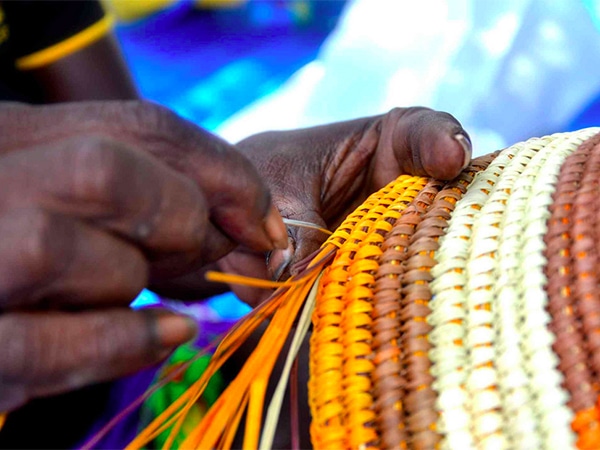
It also allows for a deeper connection with and appreciation of the environment, something that is definitely not culturally exclusive. During this five-day small-group tour, women and girls will learn about everything from bush medicine and weaving to kinship and astrology, and experience traditions like a crying ceremony and gathering mud crabs, and always finishes with a visit to the Buku-Larrnggay art centre in Yirrkala, considered one of the best in the country.
52. Do Geraldton’s Yamaji Drive Trail, WA
The seaside city of Geraldton on Western Australia’s Coral Coast supports a proud Indigenous culture and the Yamaji Drive Trail is testament to this. Looping together 14 sites of significance to local Aboriginal communities, the 195-kilometre trail takes in natural beauty, art and history and can be driven in one to two days at leisure, beginning at Champion Bay (Jambinu).
From the historic town of Greenough, amble along the Greenough River Nature Walk Trail and visit freshwater Bootenal Spring, believed to be the site of confrontations between local Aboriginal people and early settlers. Then head east to Ellendale Pool, a waterhole and campground that makes for a dreamy swimming and overnight spot; encased by giant gums and a rocky gorge, the site is watched over by Bimarra the Serpent.
Continue east to the wildflower town of Mullewa and the red-dirt landscapes of the lower Murchison; the tour ends at Butterabby Graves site, a place of conflict between First Nations people and pastoralists. Visit Geraldton Visitor Centre to pick up a trail map.
53. Explore the Flinders Ranges from a traditional perspective, SA
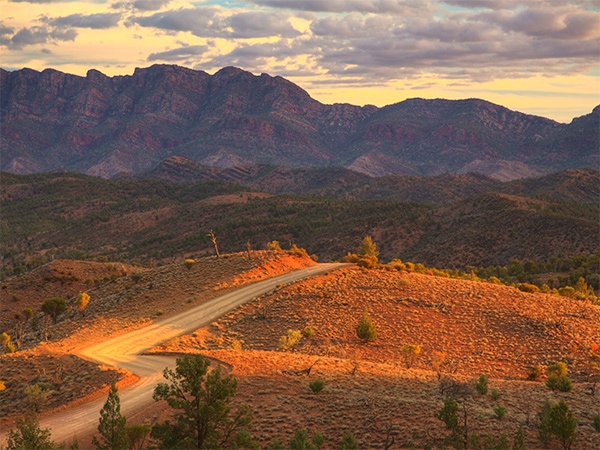
In 2016, the Flinders Ranges National Park was officially renamed Ikara-Flinders Ranges National Park to incorporate the traditional name, meaning ‘meeting place’, of its star attraction, Wilpena Pound. And with the only accommodation within the park, Wilpena Pound Resort, under the aegis of the traditional Adnyamathanha owners, you’re all but guaranteed an authentic immersion here.
Take part in any number of its Aboriginal Cultural Tours, from a Yura Udnyu stroll to Old Wilpena Station to a guided cultural walk to Sacred Canyon to see ancient rock engravings. And take a self-guided scenic drive to Arkaroo Rock – a particularly important Aboriginal art site in the Flinders Ranges featuring ochre and charcoal images depicting the creation of Wilpena Pound.
Some 200 kilometres north-east of here lies Vulkathunha-Gammon Ranges National Park. The spectacular terrain of this Northern Flinders Ranges park is crowned by a vast salt lake, Lake Frome – or Munda – which plays an important role in the lives of the Adnyamathanha people.
Hiking trails will take you deep into the heart of the rugged landscape, but your best bet is to sign up for a journey with Indigenous owned and operated Iga Warta, which has a range of tours and activities that shine a light on Adnyamathanha culture and the rules for living from the Muda (Dreaming).
St Mary Peak, the highest summit in the Flinders Ranges, is central to the Adnyamathanha creation story, as Uluru is to Anangu. And while its circuit trail is part of the popular Wilpena Pound circuit, its traditional owners prefer that visitors don’t climb the summit and advise stopping at Tanderra Saddle.
Need tips, more detail or itinerary ideas tailored to you? Ask AT.
AI Prompt
54. Catch an Indigenous festival
Australia has a raft of remarkable events that aim to share and preserve Aboriginal culture. The following festivals provide the chance to not only learn more about it, but fully immerse yourself in it, too.
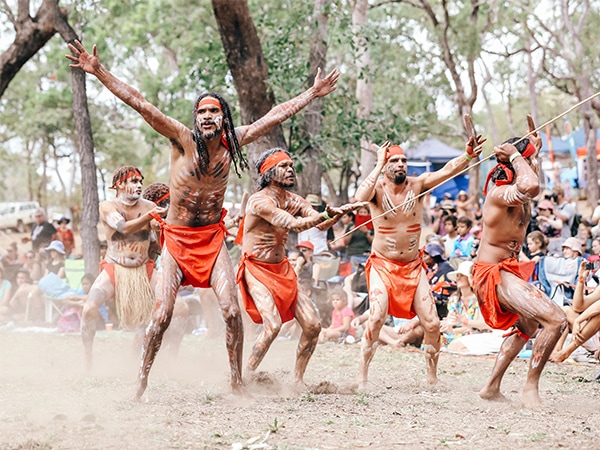
Eighty kilometres south-east of Katherine, the small Aboriginal community of Barunga plays host to a 4000-strong crowd for the Barunga Festival, a celebration of Indigenous music, sport, cultural activities and traditional arts. Visitors can learn to cook damper, make didgeridoos and spears, and learn about bush medicine. There’s also an art shed exhibiting work by local artists, and traditional music and dance performances throughout the weekend.
A four-day gathering that aims to address and improve social equity for Indigenous people, Garma is arguably the most significant cultural event in Australia. Held at a remote ceremonial meeting ground in north-east Arnhem Land, it attracts around 2500 political and business leaders from across the globe. Guests learn about Aboriginal Australia and the rich Arnhem Land Yolngu culture through talks, dance, arts and song, and camp under the stars.
Since the 1980s the Aboriginal people of Cape York have celebrated their culture through song and dance at the Laura Dance Festival. Held every two years, the much-anticipated festival draws in thousands of visitors to watch local dance groups from 20 communities vying for the winner’s shield.
Winds of Zenadth Cultural Festival sees the communities of the Torres Strait Islands descend on Thursday Island for a celebration of their diverse cultures. Over four days this small isle is buzzing with activities, from boat races to storytelling and a showcase of local island cuisine.
What really sets The Karijini Experience event apart is its location in the remote and simply breathtaking Karijini National Park. The four-day program features around 50 events such as meditation and yoga in the ancient rugged landscape, guided cultural walks, film screenings under the stars, bush tucker high tea and more.
Part of Byron Bay’s long-running Bluesfest, Boomerang Festival is a showcase of local and regional Indigenous music, with artists coming from all over the country, the Torres Strait Islands and even Papua New Guinea. Festival-goers can partake in musical workshops, watch dance rituals and join thought-provoking cultural exchanges.
Yalukut Weelam Ngargee is one of Melbourne’s largest cultural festivals. The busy one-day schedule features different spaces to watch cultural performances and cooking demonstrations of native foods, and to partake in craft workshops such as basket weaving and face painting. You can also browse the food and market stalls.
55. Join a rock art tour in Quinkan Country, Qld
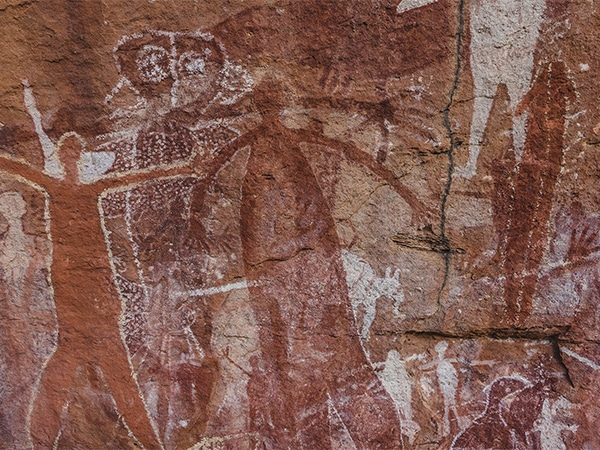
Jarramali Rock Art Tours might have only been operating for three years but the ground it covers, the Quinkan rock art sites found in the sandstone escarpments outside of Laura in Tropical North Queensland, is eternal.
Depart from Cairns or Port Douglas in a 4WD or fly in via a scenic helicopter ride from Cairns or Laura. Choose between a day trip or a one- or two-night experience, camping in what the family-owned operator describes as ‘five-billion-star accommodation’.
With a Kuku-yalanji traditional owner as your guide, you’ll learn about nature, heritage and spirituality and emerge with a true understanding of where you’ve been. Jarramali Rock Art Tours was established by Johnny Murison, who is a descendant of a Kuku-mini woman named Rosie Maytown Palmer.
Rosie became part of the Stolen Generations when she was snatched from her mother’s arms at five years old. Part of the reason Murison started his tours was because he wants people to “walk into our past, recognise, acknowledge, respect and feel the pain my old people went through. Then perhaps we can walk together into a brighter reconciled future," he explains.
56. Find Tasmania’s (not so) hidden Indigenous culture, Tas
On the west coast of Tasmania, you might come across depressions that were once Aboriginal huts: large beehive-shaped structures of wood and bark that would accommodate up to 14 people. This is just one fascinating example of the Indigenous culture that is hidden in plain sight in a state where a pervasive myth throughout much of the 20th century did its best to erase it. Today, the word palawa refers to Tasmanian Aboriginal people as a whole, but encompasses the many different groups from all around Tasmania. Here are ways you can experience this culture through both a contemporary and historical lens today.
ON TOUR
The wuklina walk was Tasmania’s first Indigenous owned and operated tourism venture. A four-day walk in the state’s north-east, around the spectacular landscapes of the larapuna/Bay of Fires and wukalina/Mt William areas.
Local and family-owned Kooparoona Niara Tours runs bespoke day trips through the Meander Valley near Launceston that combine visits to Aboriginal cultural sites and a view of contemporary Indigenous culture with a taste of the region’s standout produce.
AT MUSEUMS AND GALLERIES
The always-engaging Tasmanian Museum and Art Gallery (TMAG) is a good introduction to Tasmanian Aboriginal culture, heritage and current perspectives. The newly refreshed ningina tunapri presents 40,000 years of Tasmanian Aboriginal culture in a highly engaging way and Our land: parrawa, parrawa! Go away! is an affecting exhibition in the old Bond Store Galleries that tells the story of Aboriginal people and colonists following the invasion of lutruwita (Tasmania), focusing on the Black War. Not far from TMAG, Art Mob is a gallery that specialises in Tasmanian Aboriginal art with a number of rare pieces as well as prints and paintings by well-known Tasmanian Aboriginal artists.
IN YOUR HOTEL
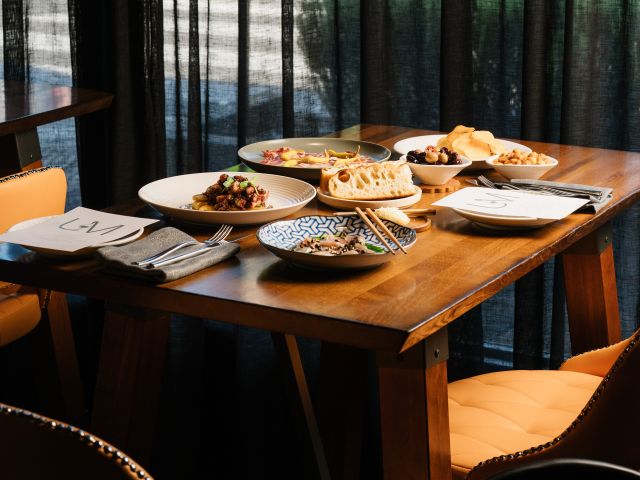
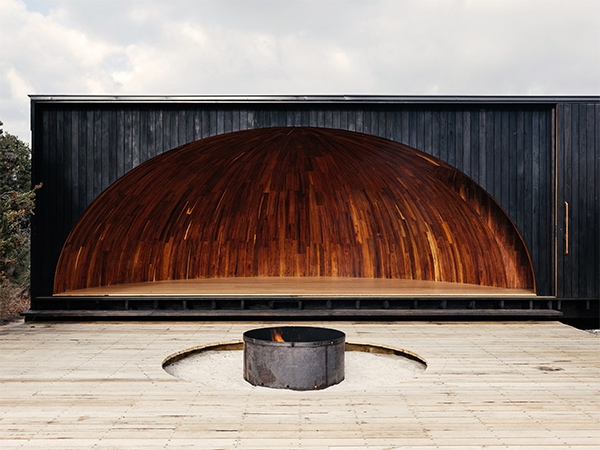
Check into MACQ 01 – on the traditional lands of the Mouhenneener people – for an immersive portal into Tasmania’s Indigenous history. This slickly designed hotel on Hobart’s waterfront is a storytelling hotel that brings together the tales of real-life characters who have played a role in Tasmania’s past, palawa inspirations among them.
Weekly travel news, experiences
insider tips, offers, and more.
IN THE WILD
The Takayna/Tarkine region of Tasmania’s north-west takes its name from the ancient culture of the Tarkiner people, who once occupied the coastal region near Sandy Cape. The coastal area of this rainforest wilderness area is strewn with artefacts that make this coastline one of the richest human archaeological zones on the planet. Follow the Tarkine Drive, packed with walking tracks, lookouts, cultural sites and picnic spots, or join a six-day walk of the Tarkine Coast with Tarkine Trails.
57. Have an urban Indigenous experience
You don’t have to go all the way to the outback to encounter Indigenous culture; our cities and urban areas can trace long and proud Aboriginal histories that are recounted and celebrated in a range of tours, walks and experiences.
MELBOURNE
Browse the exhibitions and collections before setting off on the two-hour Scar Tree Walk, which links the modern city to the ancient Aboriginal past that took place here.
Bunjilaka Aboriginal Cultural Centre
View the First Peoples exhibition, take a walk through the Indigenous garden and don’t miss the daily eel feeding.
Aboriginal Heritage Walk, Royal Botanic Gardens Victoria
Part of the land of the Kulin Nation, take a tour of the gardens with an Aboriginal guide to learn about the traditions and stories of the local Boonwurrung and Woiwurrung people.
SYDNEY
This all-day tour follows traditional songlines, walking through lush bushland, taking in rock art and ceremonial sites and learning about bush tucker, Dreamtime stories and bark painting.
An Indigenous rooftop farm in the heart of the inner-city suburb of Eveleigh, experiences include tours and talks and cocktail-making using native plants.
Join a 3.5-hour tour of Ku-ring-gai Chase National Park, learning the history of the Garigal people of Guringai nation; opt for the barbie lunch of kangaroo, emu, fish and damper.
BRISBANE
Learn Indigenous history through the music, dance and stories of the Yuggera Aboriginal dancers.
PERTH
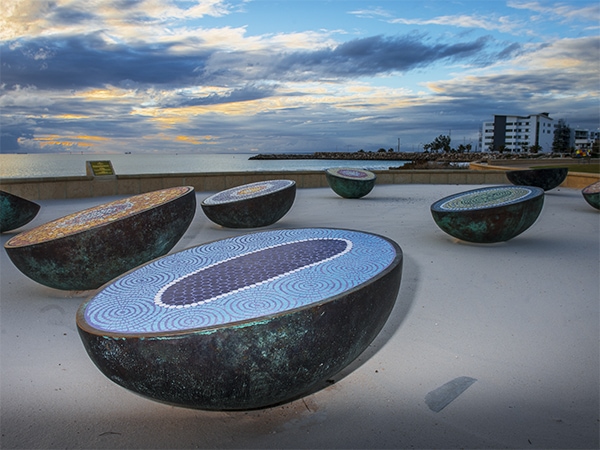
The 45-minute Dreaming in the Quay walking tour with a local Nyungar guide around the bright, shiny Elizabeth Quay development explores the near and ancient history of the people of the Swan River.
ADELAIDE
Tandanya National Aboriginal Cultural Institute
Australia’s oldest Aboriginal owned and managed multi-arts centre holds exhibitions, performances and art fairs exploring modern and traditional Indigenous culture.
Find more places to escape to this year in our guide to the top 100 ways to holiday here this year.
Want to see more stories from Australian Traveller in your Google search results?
- Click here to set Australian Traveller as a preferred source.
- Tick the box next to "Australian Traveller". That's it.

Australian Traveller
View profile and articles