It wouldn’t be an Australian road trip without a sighting of a Big Thing and we’ve put together a guide of Australia’s most iconic Big Things.
“Go big or go home", so the expression goes, and Australia certainly received the memo. Australia’s penchant for ‘Big Things’ dates back to the 1960s when Adelaide’s Big Scotsman and the Big Banana in Coffs Harbour were unveiled to oversized delight. Today there is said to be more than 150 Big Things across the country, with some sources reporting in excess of 300, although the figure depends strongly on one’s definition of ‘big’.
Although there are some bona fide medium-sized items on our list, checking them all off is one of many reasons to head out on the highway. The quirkier the better. Here, we highlight some of the most iconic larger-than-life attractions (ranked by state, not by order of appeal) as well as those that are lesser-known such as Larry the Lobster, located in Kingston, South Australia, which was recently crowned champion in a ‘Which Big Thing is the Best?’ poll conducted by ABC Rural’s Warwick Long.
Qld | SA | NSW | NT | Tas | Vic | WA
Queensland
The Sunshine State loves a Big Thing, judging by the sheer number of them you will find scattered around the state. From fruit and a giant gumboot to a cane toad, kangaroo and a giant easel, there is seemingly no “thing" too small to be transformed into a larger-than-life attraction. Here are nine of the best in Queensland.
1. The Big Pineapple
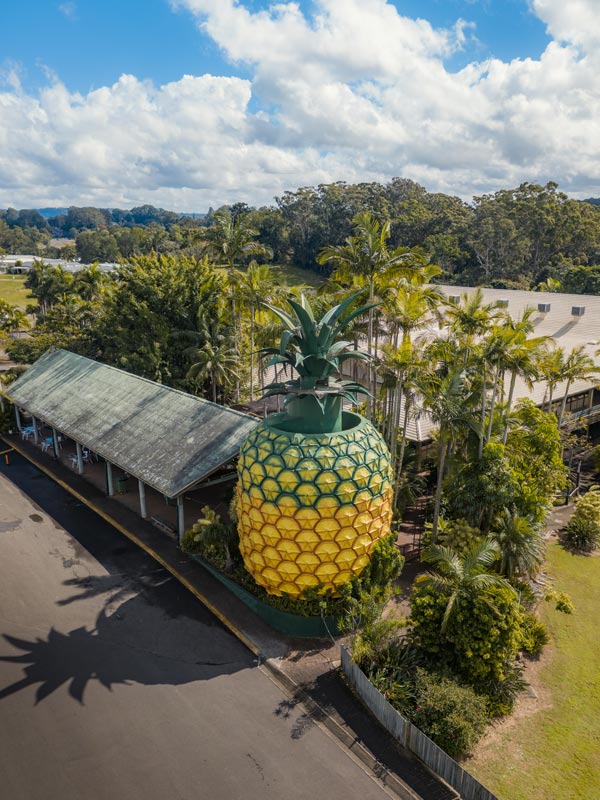
The Sunshine Coast’s Big Pineapple, located in Woombye, was once so iconic it made the cut as part of Prince Charles and Lady Diana’s 1983 Royal tour. Opened in 1971 on the existing Sunshine Plantation, located between Noosa and Caloundra, the 16-metre fibreglass pineapple attracted more than 1 million visitors a year at the peak of its popularity, and plans to return the heritage-listed landmark to its former glory are in progress.
The 170-hectare site includes attractions such as a ginger beer brewery, Diablo Co ., a water park , education programs and accommodation. There is already a Wildlife HQ zoo, a Tree Top Challenge with high ropes and zipline course, and regular events including the annual Big Pineapple Music Festival.
Part of the property’s footprint also includes Sunshine & Sons , a small-batch distillery that launched its Pineapple Parfait Gin in August 2021 to showcase the tropical fruit grown on the pineapple plantation and celebrate the 50th anniversary of the Big Pineapple. There is also a push for the Big Pineapple to become the official mascot for the Brisbane 2032 Olympics.
2. The Big Kangaroo
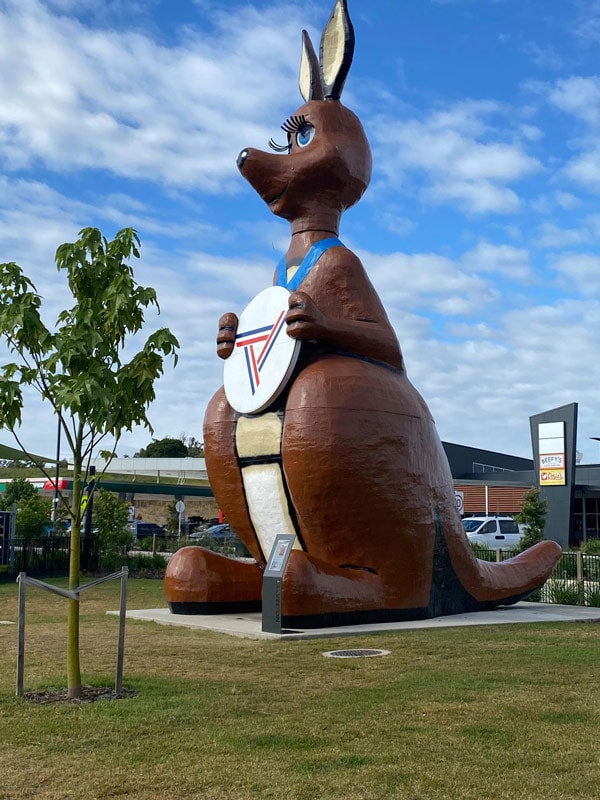
Matilda was the 13-metre tall kangaroo mascot from the 1982 Brisbane Commonwealth Games. The six-tonne Big Thing has since been upcycled and, ahem, roo-located several times from a water park on the Gold Coast to a truck stop in Kyborg, and today stands sentinel outside a petrol station in nearby Traveston, in the Gympie region of Queensland.
While the much-loved mascot used to be able to wiggle her ears, wink and blink, these days the icon simply manages to turn heads from her new position outside the new Chevron mega servo station on the Bruce Highway, which is even more accessible to road-trippers than her former Kyborg home.
3. The Big Cane Toad
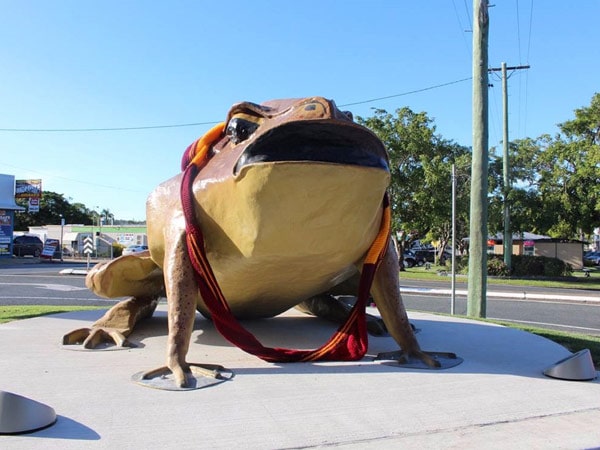
The locals have nicknamed the Big Cane Toad in Sarina ‘Buffy’ after the native tropical American tailless amphibian’s Latin name, Bufo marinus, and, love it or loathe it, it’s become a fibreglass fixture that celebrates the town’s cane farming history, warts and all. Big bold Buffy is located on the Bruce Highway, in the middle of the main road that slices through Sarina.
The cane toad was introduced to Australia as a pest control agent, but has become a pest itself. Originally crafted as the papier mache centrepiece to grace a float for a tropical sugar festival, the toad was cast in fibreglass in honour of the large, poisonous toad so prevalent in the region.
4. The Golden Gumboot
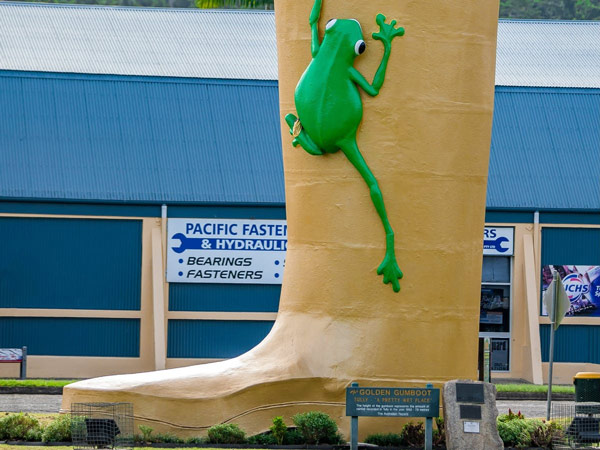
The township of Tully, located south of Cairns in Tropical North Queensland, has an average rainfall that exceeds four metres and, in 2003, a monument to the town’s unofficial status as Australia’s wettest town was erected in the form of a Golden Gumboot. Climbing up the gumboot is a white-lipped green tree frog.
After Cyclone Yasi roared through the town in 2017, the 7.9-metre-tall gumboot was given a facelift and it is now looking resplendent with its boot painted a golden hue and the fibreglass frog a vibrant shade of green.
5. The Big Bullock
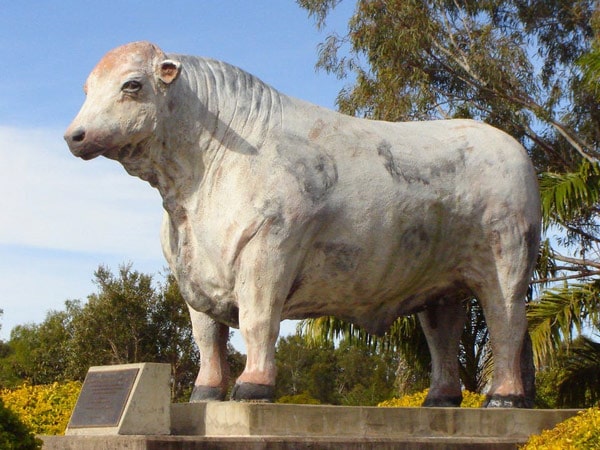
Rockhampton is home to the Big Bullock, a set of seven large statues that nod to the town’s triennial Beef Australia Expo. Vandals have been known to castrate the bulls’ balls, which are considered a trophy by local pranksters. The quirky statutes in the Beef Capital of Australia include a Brahman Bull at a roundabout on the southern entrance to the city and the Droughtmaster, at the entrance to the airport.
6. The Big Easel
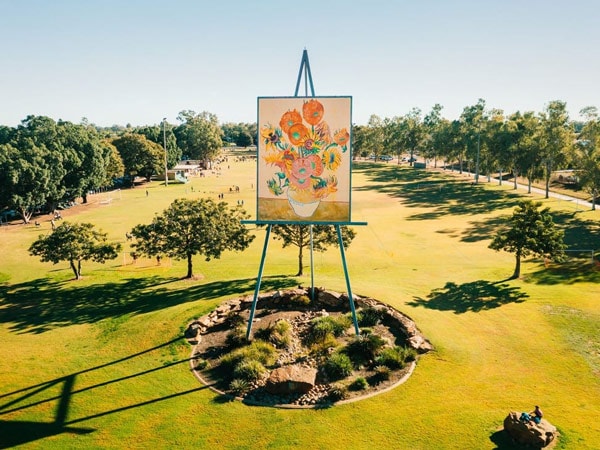
A drop of Tuscany meets the Central Highlands in Queensland with this mega artwork of Van Gogh’s sunflower painting. Artist Cameron Cross built the 25-metre high easel using about 13.6 tonnes of steel as part of his vision to construct seven Sunflower sculptures in seven different countries.
The painting, which punches the sky above Morton Park, was finished in 1999 and remains the world’s biggest rendition of a Van Gogh sunflower painting. The artwork is also a nod to Emerald’s proud history as a major producer of sunflowers. Visit the Emerald Visitor Information Centre to learn more about the awesome easel and return over Easter for the town’s annual Sunflower Festival.
7. The Big Barramundi
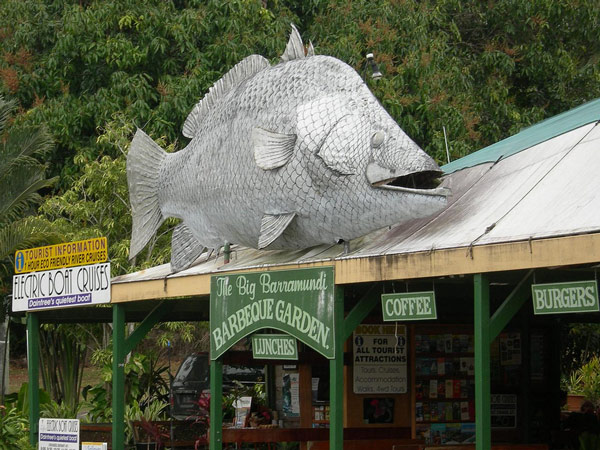
The Big Barramundi in Normanton is one of Queensland’s most famous big things. Constructed in honour of the elusive, large freshwater fish of the same name that is the most common species found in the Norman River, this Big Thing also celebrates the town’s status as the Barramundi Capital of the North.
Constructed in 1995, the six-metre-long sculpture is one of three dedicated to barramundi located around Australia. The small Shire of Carpentaria town is also home to an eight-metre-long fibreglass saltwater crocodile named Krys, the Savannah King, which is a replica of the largest recorded saltwater crocodile captured in the world.
8. The Big Cassowary
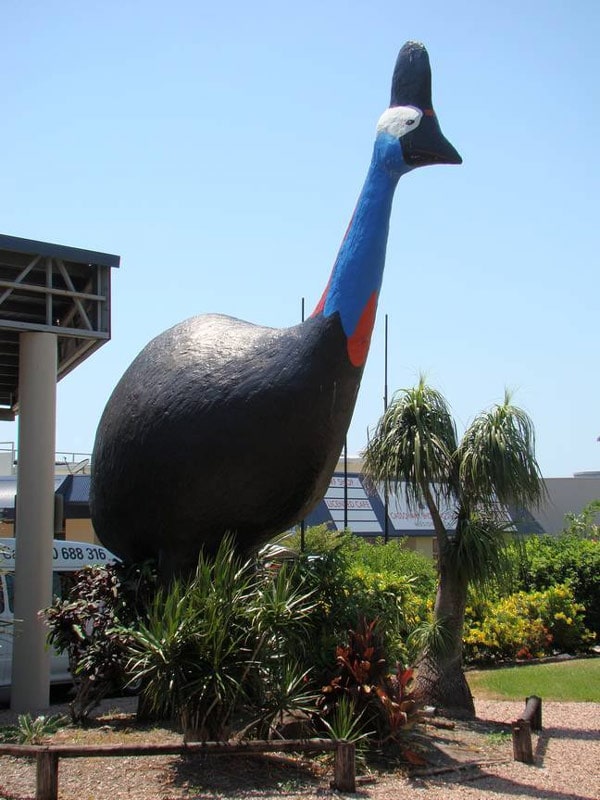
As anyone who has come face to casque with a cassowary will attest, these flightless birds are not to be trifled with. So instead of trying to snap a selfie with the real thing, you can head to Wongaling Beach Shopping Centre in Mission Beach to clock the big bird that gave the Cassowary Coast its name.
While the statue is five metres tall, the actual bird itself – known for their wondrous red and blue wattles – can reach up to 1.7 metres and weigh up to 76 kilograms. The rainforest-cloaked hills around Mission Beach provide the perfect habitat for the big birds, and there are several street signs that warn motorists to slow down in case of cassowaries crossing.
9. The Big Apple
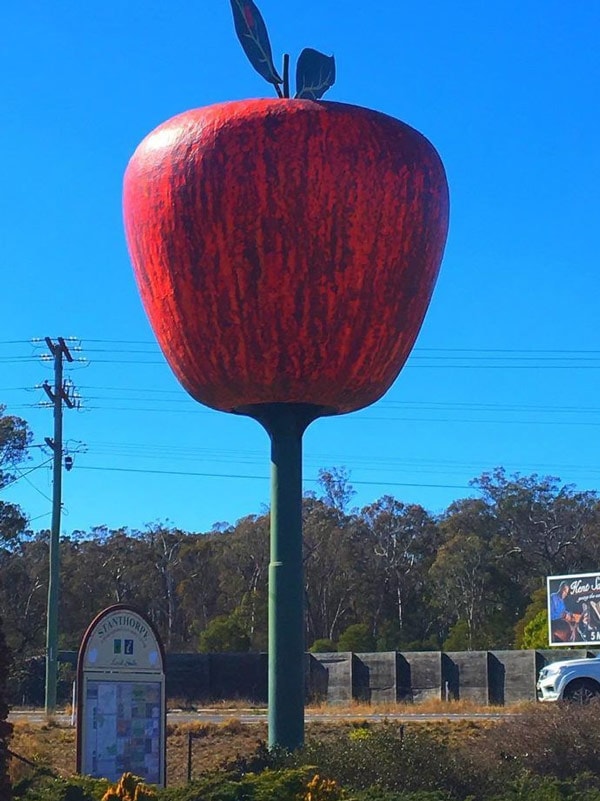
You will have to clock up a couple of hundred klicks on the Cunningham Highway to get to The Big Apple, located in the town of Stanthorpe. Located just 2.5 hours southwest of Brisbane, The Big Apple is about as far from New York as it gets, situated as it is in a region that is defined by its apple orchards, which sum up the seedy sculpture’s raison d’être.
The Big Apple is located in the Granite Belt, in apple country, in a region where the orchards are considered a core aspect of Queensland’s bounty. You will find apple pies and apple cider tastings across the road from the Big Apple in Sutton’s Juice Factory, Cidery and Café.
South Australia
Famed for its vineyards, beaches and festivals, South Australia hardly needs a Big Thing to convince us to visit. Yet it’s the Big Things that show up in the most unlikely of places (like the Big Galah perched at the halfway point across Australia) that make South Australia stand out in the Big Things stakes. Here are three of the best.
10. The Big Lobster
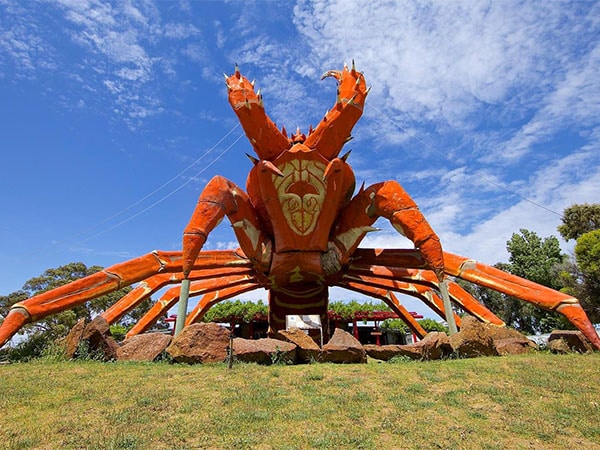
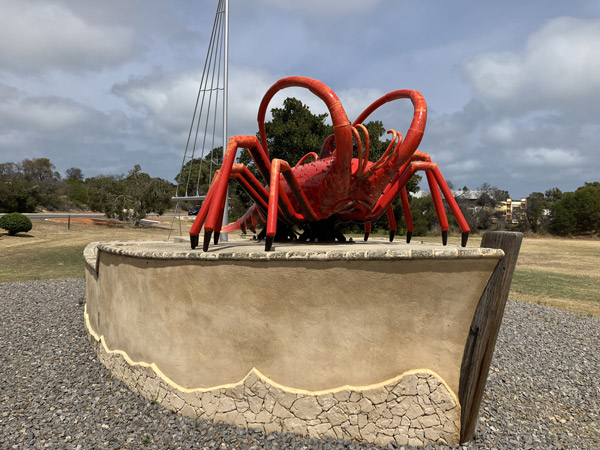
Foodies looking for a fix of fresh lobster know that South Australia’s Limestone Coast is well worth the journey, which is why a 17-metre-tall version of the crustacean was built in Kingston in 1979. Known as Larry the Lobster, the steel-and-fibreglass structure was designed to attract people to the adjacent restaurant and visitor centre.
The Big Lobster known locally as Larry the Lobster is one of the biggest of Australia’s Big Things, and was recently ranked No. 1 ‘Best Big Thing’ in an ABC Rural poll. There is now an old-school takeaway located in the lobster’s tail luring road-trippers off the Princes Highway near the entrance to Kingston for fish and chips and a selfie near the pincers.
Need tips, more detail or itinerary ideas tailored to you? Ask AT.
AI Prompt
11. The Big Rocking Horse
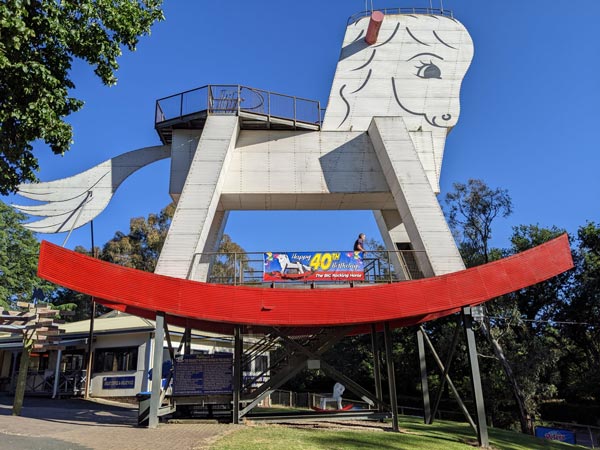
There’s something thrilling about seeing a soaring big thing when you’re a child. And the fact the Big Rocking Horse is actually the giant emblem for a wooden toy factory doubles this Big Thing’s appeal. Although the 18-metre-high horse doesn’t rock – it’s set into 80 tonnes of concrete – you can climb through the horse to look out from three vantage points, the rocker, saddle and horse’s head.
The world’s biggest rocking horse is located in Gumeracha, in the Adelaide Hills, and is a top spot to enjoy some retail therapy. Bring your own picnic and spread out in the shade at the adjoining wildlife park, where peacocks, wallabies, sheep, goats, kangaroos and alpacas roam.
12. The Big Galah
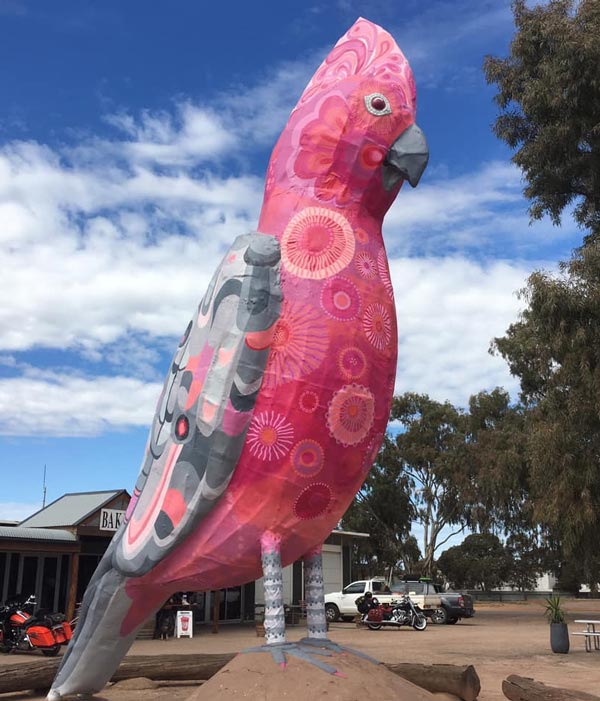
There are a few Australian colloquialisms that sum up our feelings toward the native galah. If you make a galah of yourself, you’re appearing foolish. If you’re ‘mad as a gum tree full of galahs’ you’ve gone completely cray-cray. Kimba’s Big Galah is a monument to the small Australian cockatoo that is coloured grey and pink, like bands of ‘80s eye shadow.
The giant eight-metre-high bush bird is perched out the front of a servo in Kimba that marks the halfway point across Australia. Today, the Big Galah is shadowed by the soaring 30-metre-high grain silos, which have been painted with murals and are now a major attraction in SA. The Big Kissing Galahs can also be found roosting in a concrete nest in Watson on the northern outskirts of Canberra in the ACT.
New South Wales
Home to arguably the most famous Big Thing of them all, the Big Banana, New South Wales punches above its weight in the Big Things arena. Here are five of the state’s best.
13. The Big Banana
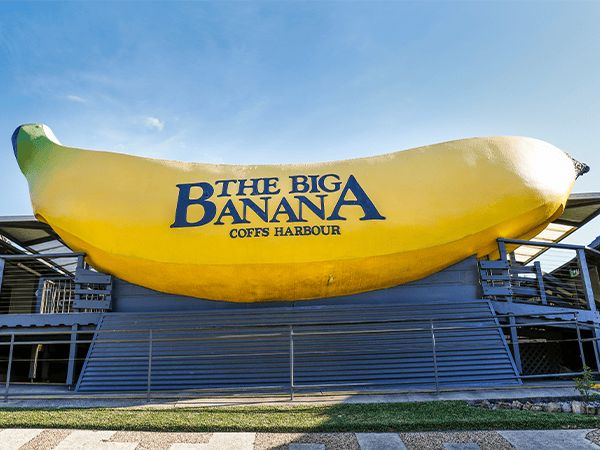
Opened in 1964, the Big Banana was one of the first, and remains one of the most popular, Big Things in Australia. A ‘you-can’t-miss-it’ position on the Pacific Highway in Coffs Harbour has aided the ‘na-na’s fame, but it is more than just an oversized piece of fruit for road-trippers to gawk at.
Although it originally had the simple role of marking the site of a banana plantation, the space has evolved over the years and the 13-metre-long landmark is now accompanied by an award-winning fun park with laser tag, a giant slide, mini golf, ice skating, a toboggan ride and a water park among other attractions.
The Big Banana also looms large for road-trippers, with the promise of a chocolate-coated banana or banana split keeping children happy for longer on their quest to get to Coffs Harbour. While there are many more stories to be told in Coffs Harbour these days, with the Mid North Coast town recently declared NSW’s first ECO destination, the Big Banana will always hold sway.
14. The Big Merino
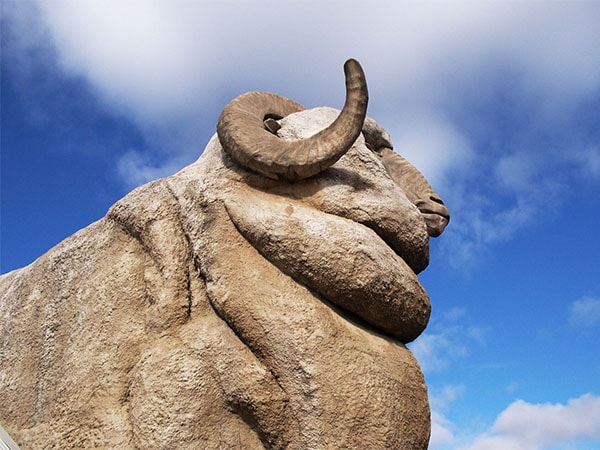
Built in 1985, The Big Merino is a monument to the Goulburn region’s fine wool industry. And ‘Rambo’ is a particularly big, big thing, weighing in at 100 tonnes and measuring 15.2 metres high and 18 metres long. Once a go-to pit-stop for those travelling through Goulburn, The Big Merino’s popularity initially suffered when the Hume Highway was re-routed to bypass the town in 1992.
But in 2007, Rambo was relocated 800 metres closer to the highway so he could once again enjoy the spotlight. Unlike most of Australia’s Big Things, Rambo is open for inspection and a go-to on a weekend getaway in Goulburn. His three-storey interior is home to a permanent exhibition on the 200-year history of wool in Australia as well as a gift shop and an observation area where visitors can experience the Rambo’s-eye view.
15. The Big Prawn
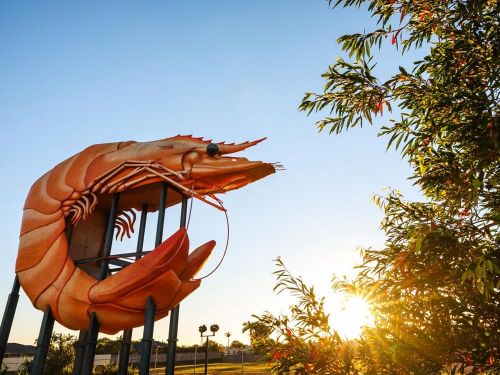
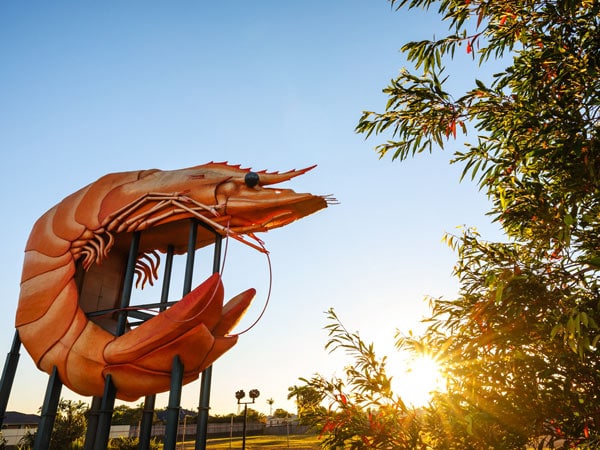
Ballina’s 33-tonne Big Prawn was constructed (tail-less for reasons unknown) in 1989 as a nod to the local prawning industry where it took up residence atop a local service station. The structure eventually fell into disrepair and faced demolition when the service station closed in 2010, but another Aussie icon, Bunnings Warehouse, came to the rescue.
When the hardware group moved in, it spent $400,000 restoring the 35-tonne prawn, which included the addition of a 16-metre tail. The Big Prawn now cuts a striking figure next to its saviour. After adding a few snapshots to your Snapchat, order seafood to-go from one of the stores across the road. There is also a Big Prawn located in Exmouth, on Australia’s Coral Coast.
16. The Big Pig
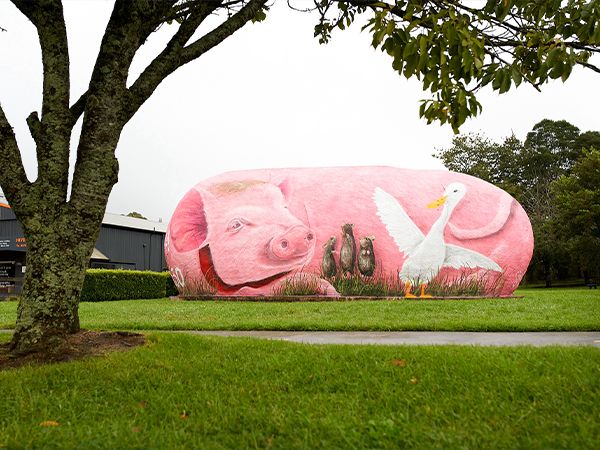
The rural idyll of Robertson in NSW’s Southern Highlands has been home to The Big Potato, since 1977. It was designed by local farmer Jim Mauger in order to celebrate the production of potatoes in the region, which is known for its rich, fertile soil and reliable rainfall. But this carby giant has recently undergone a refresh, having been transformed into The Big Pig. This whimsical makeover also pays tribute to the region, famously known as the filming location of the beloved movie Babe. Painted by Corrimal artist Samuel Hall, The Big Pig now features charming additions like Ferdinand the duck and the three singing mice.
Located off the Illawarra Highway, near the Robertson Supermarket, the giant pig measures 10 metres by four metres.
17. The Big Kookaburra
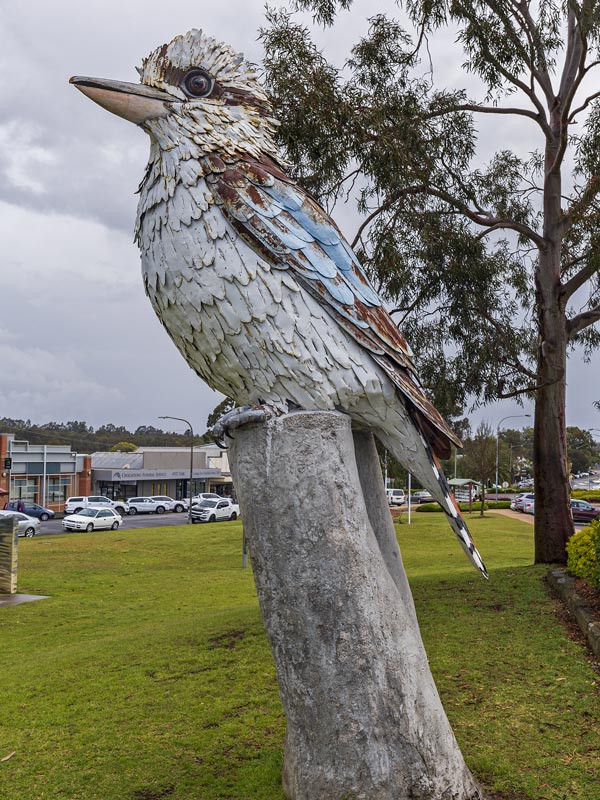
Pokolbin artist Chris Fussel created this king-sized kookaburra out of recycled steel, aluminium and copper and the giant bird is now an iconic sculpture and centrepiece of Kurri Kurri’s Col Brown Park. It’s one of Australia’s more low-key, lesser-known Big Things, but it’s worth getting in a flap about: it’s absolutely beautiful.
The 4.6-metre-high Big Kookaburra takes pride of place in Kurri Kurri where the bird is used as an emblem for several Kurri sporting and community organisations. The artist utilised old car bonnets to fashion the feathers and airstrip lights to create the kookaburra’s eyes. It’s one of Australia’s most considered Big Things.
Northern Territory
The Northern Territory is undoubtedly home to the best “rock" in the country but it also has its share of Big Things to attract you to it. Here are the top three to add to your list.
18. The Big Stubby
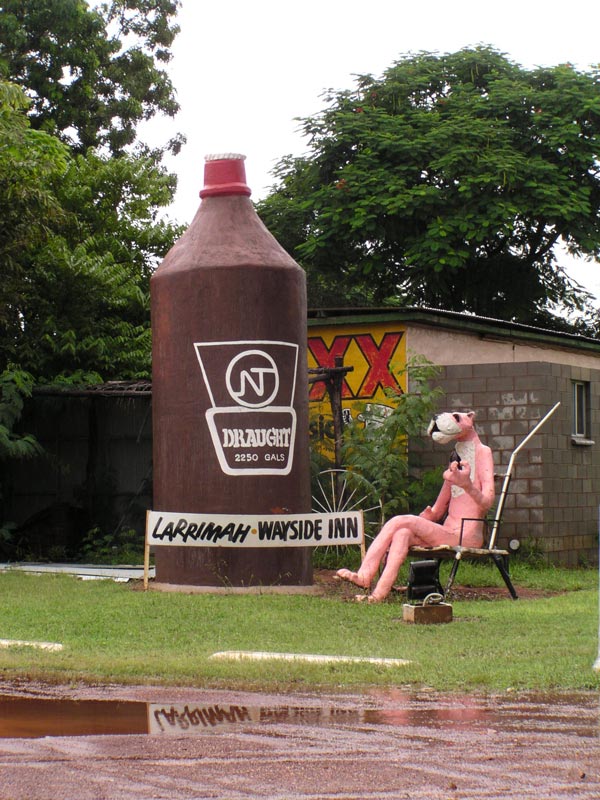
You will clock up a lot of kilometres on the road between Darwin and Alice Springs in the Northern Territory. You are also most likely to be lured off the road for a pot of beer at the Larrimah Hotel in the Northern Territory thanks to the placement of the Big Stubbie, which does what it says on the tin.
The Big Stubby is artfully placed next to a Pink Panther reclining in a chair outside the character-filled outback pub in Larrimah, which has one of the largest Second World War dirt airstrips in the country.
19. The Big Boxing Crocodile
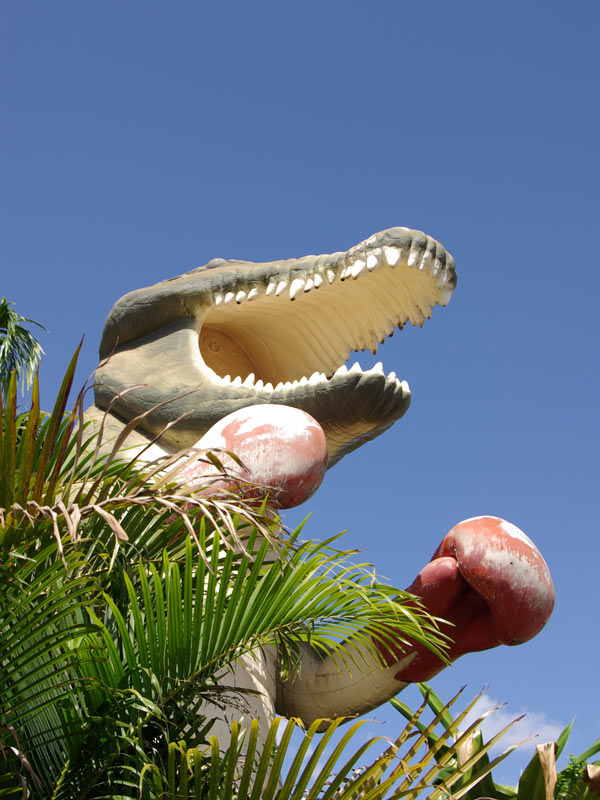
Never smile at a crocodile. Unless it’s outside Humpty Doo, in the Northern Territory. There’s more than a grain of truth to the tale that the town was founded on a post-war folly: to transform the surrounding flood plains into rice paddies.
When that plan went belly up, the town designed to build a representation of life in Humpty Doo in the form of an eight-metre-high crocodile.
The Big Croc is made comical with the addition of a pair of boxing gloves just in case it needs more in its tool kit than its crushing jaws to defend its territory on the Arnhem Highway, some 40 kilometres from Darwin. The Northern Territory is also home to The Giant Jumping Crocodile in Wak Wak, and George the Big Crocodile in Darwin.
20. Colin, The Big Turtle
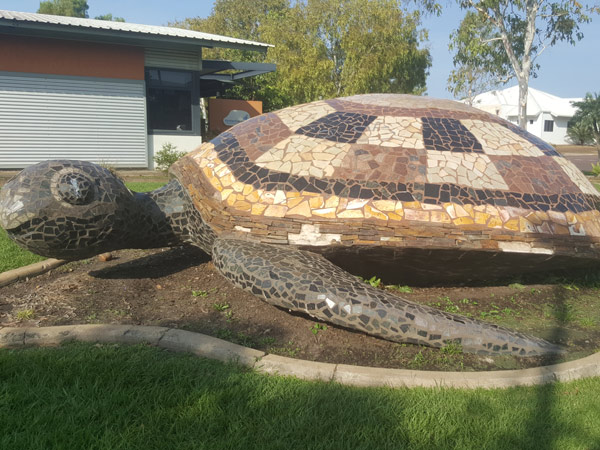
Artist Techy Masero, who is also behind the Big Barramundi (in Wanguri, not Normanton), created this mosaic masterpiece with help from local Indigenous artists. The four-metre-wide turtle is located in Garamanak Park near a community centre in the northern suburb of Lyons, in Darwin.
It’s one of the more obscure Big Things created by the Australian artist who was born in Chile and came to live in Darwin in 1985. Masero works mostly in cane and other natural materials, albeit on a monumental scale. You can learn more about Masero on a leaf mosaic path near the open-air cinema designed to celebrate Northern Territory women.
Tasmania
The Apple Isle gets our vote for the cutest Big Thing of them all in the form of a giant fairy penguin – one of two Big Things that made it into our pick of the most iconic in the state.
Weekly travel news, experiences
insider tips, offers, and more.
21. The Big Penguin
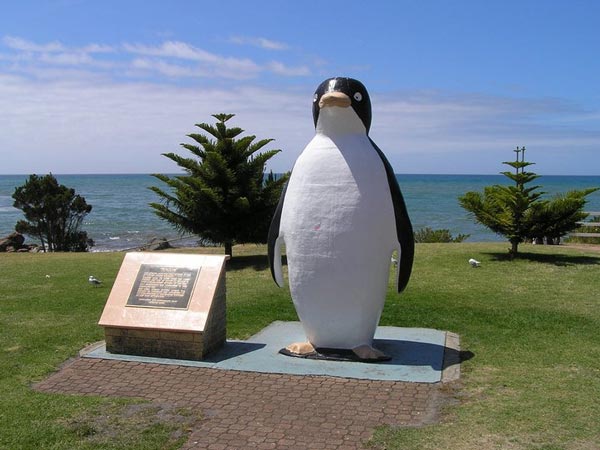
The aptly named town of Penguin in Tasmania comes into its own between the months of September and March, when a colony of fairy penguins descend on this corner of the island state’s north west. The birds are called fairy penguins because of their small size, and it’s wonderful to watch them parade past with their bluish plumage on show during breeding season.
The Big Penguin is made from fibreglass and cement and locals love to dress it up in military fatigues, to commemorate Anzac Day, and in a Santa suit during the festive season making the town one of the top spots to stop on a Tassie road trip. Penguin’s penguin theme also runs hot in the souvenir stores and in the penguin-shaped rubbish bins on the town’s foreshore.
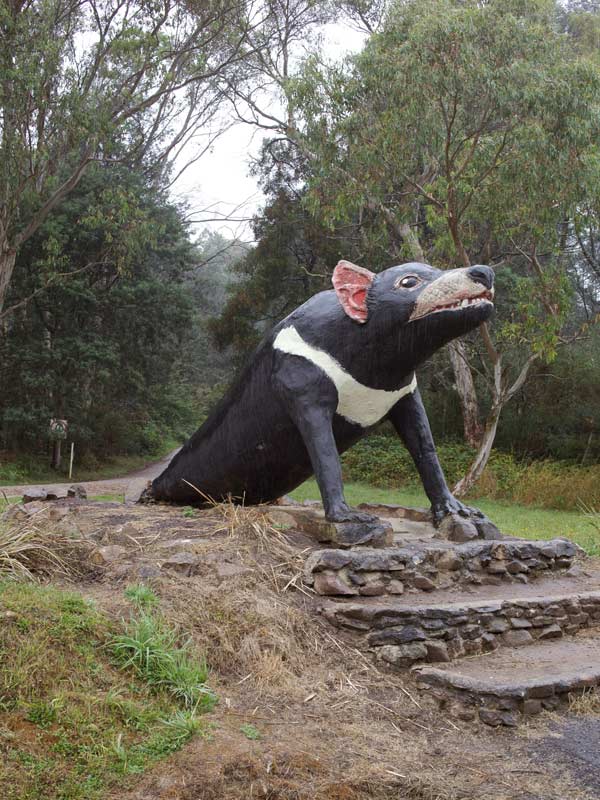
22. The Big Tassie Devil
There’s nothing comedic about the giant Tassie devil guarding the entrance to Trowunna Wildlife Park Sanctuary. In fact, it stands as a poignant reminder of the breeding programs in place at this privately owned park which has been at the forefront of conservation and education in the State since it first started caring for Tasmania’s native animals in the late 70s.
Wildlife conservation is indeed, a Big Thing at the park, at the foot of Cradle Mountain which also offers great scenery, walking trails and outdoor activities.
Victoria
The list of Big Things in Victoria is long, but they’ve one-upped the other states and built a “Giant" thing in the form of Australia’s most beloved marsupial, a koala. Here, find five to put on your bucket list.
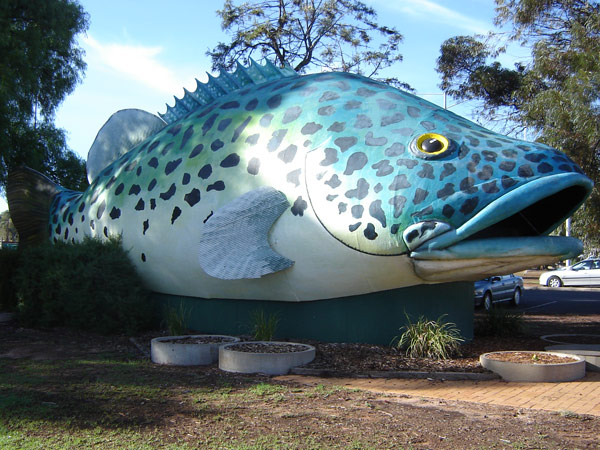
23. Giant Murray Cod
Keen anglers already in the know don’t need a Giant Murray Cod to alert them to the presence of the 11-metre-long blue-and-green Australian freshwater fish in the waterways that snake around Swan Hill, located on a bend of the Murray River between Robinvale and Kerang.
The 11-metre-long replica, dubbed the Giant Murray Cod, is actually a former movie prop from the 1992 feature film, Eight Ball, and it’s located near the Burke & Wills Moreton Bay fig tree, one of nature’s Big Things that is believed to be the largest tree of its kind in Australia.
24. Giant Koala
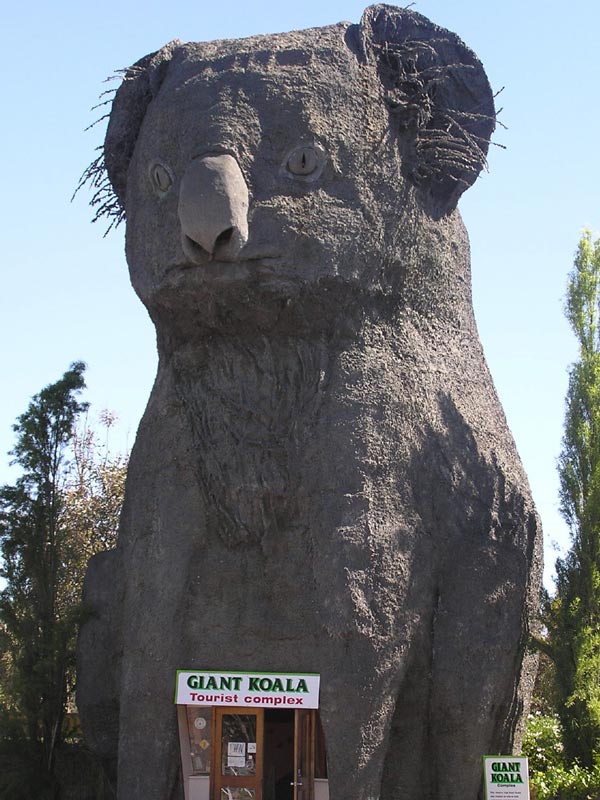
The soaring marsupial known as Sam was constructed in honour of the koala that made headlines the world over when it was photographed drinking from a water bottle offered by a firefighter in burned bushland in 2009. Located in Wimmera, in western Victoria, the giant marsupial is made from 12 tonnes of fibreglass, steel and bronze.
The Giant Koala is located in Dadswell Bridge, between Horsham and Stawell, and is a top spot to break up a road trip as there is a restaurant, ice creamery and wildlife park located on the property.
25. The Big Strawberry
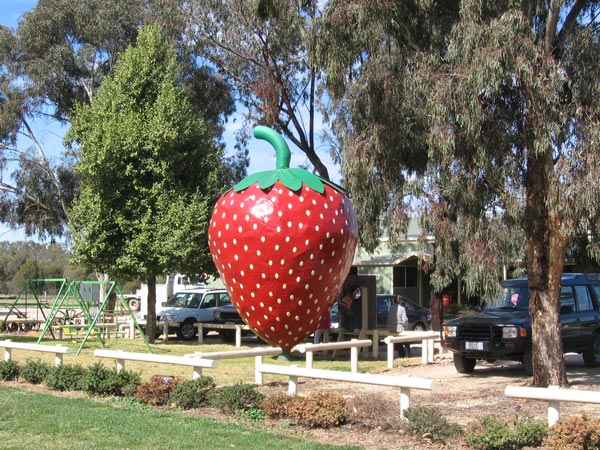
This enormous ode to the sweet soft red fruit so revered around the world brightens the darkest of days in Koonoomoo thanks to its eternally rosy disposition. The Big Strawberry , which survived a tornado in 2013, stands six metres tall and five metres wide and was a sweet collaboration between Competition Kayaks, which supplied the fibreglass, and Barry Dickson Paint & Panel, which rendered the sculpture Monza red.
This Victorian Big Thing is a draw for families who want to take their children strawberry picking. Order scones with strawberry jam and cream at the café and stock up on strawberry-themed souvenirs at the gift shop.
26. Big Ned Kelly
History buffs will stop dead in their tracks outside the Glenrowan Tourist Centre when they catch sight of the giant monument of Ned Kelly that nods to the outlaw’s suit of heavy armour forged from old farm ploughs. The rugged high country around Glenrowan is rich in gold rush and bushranger heritage and the Big Ned Kelly marks the site of the Kelly Gang’s last stand.
Visit the monument to learn more about the shootout that resulted in the deaths of three police officers who were murdered in Mansfield by the Kelly Gang.

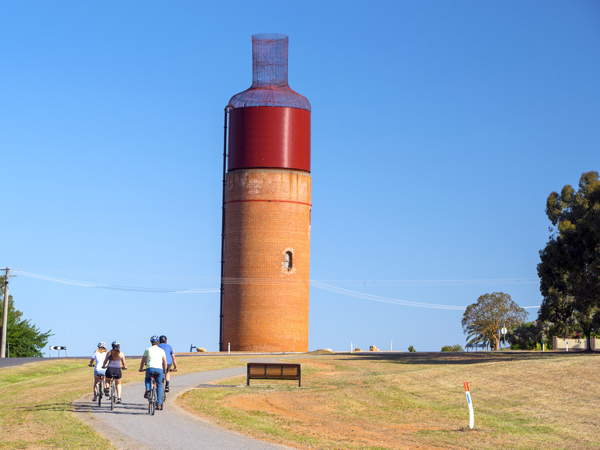
27. Big Wine Bottle
Let’s get real: the town of Rutherglen is a magnet for oenophiles who are drawn to the region for its history and vineyards, not its oversized wine bottle. Regardless, the Big Wine Bottle stands like a beacon on the landscape, signalling the fact there are a growing number of award-winning cellar doors scattered around Tower Hill on the fringes of town.
This giant roadside attraction has a disused water tank on its top, which was originally the community’s second water supply. The Wine Bottle became a big thing in 1969 when a mesh top section was added to the wine bottle, which put it on the map as part of the town’s Winery Walkabout.
Western Australia
Australia’s largest state has its fair share of Big Things to brag about, but if you really want to get the kids excited to see a Big Thing on a road trip, then take them to the largest free-standing Big Lollipop in the world – and they can stock up on lollies while they’re there.
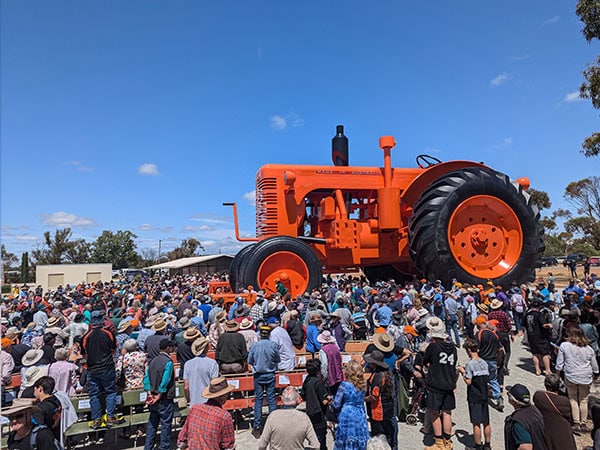
28. The Big Tractor
The newest Big Thing to make it on the list is The Big Tractor in the West Australian town of Carnamah, 300 kilometres north of Perth. The monument is a scaled replica of the Chamberlain 40k tractor, a nod to the agrarian history and identity of WA’s Wheatbelt. Standing at 11.5 metres tall and 16 metres long, the steel monument lays claim to being the biggest tractor sculpture in the world. The 400-person strong town hopes the mega-replica, which cost $750,000 and took 60 people 17 months to build, will attract much-needed visitors to the WA town.
29. The Big Lollipop
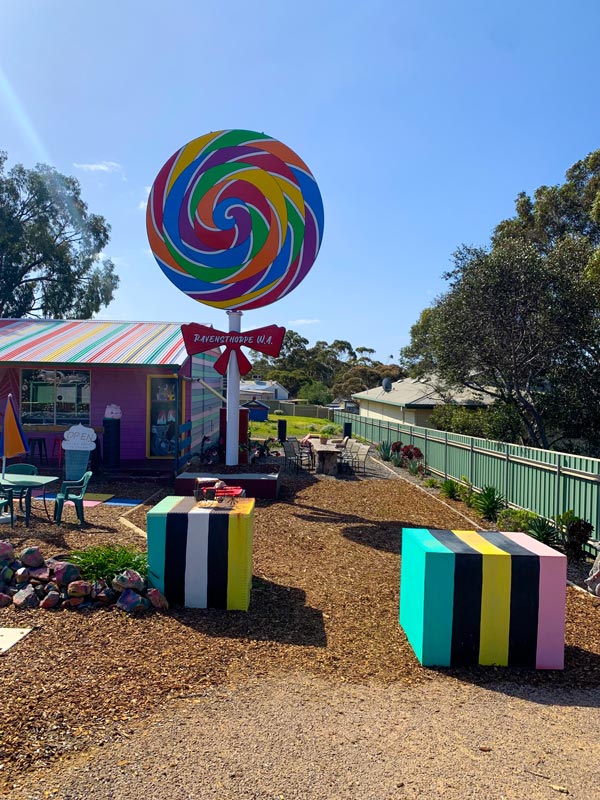
“If you build it, they will come." This quote is based on a line from Kevin Costner’s Field of Dreams but instead of building a baseball field, the owners of The Yummylicious Candy Shack, Belinda and Darrin Mcharge thought they’d suck it and see, self-funding The Big Lollipop in order to attract more tourists to this part of WA. Families are now suckers for Ravensthorpe, which has been home to the largest free-standing lollipop in the world since 2019.
30. The Big Orange
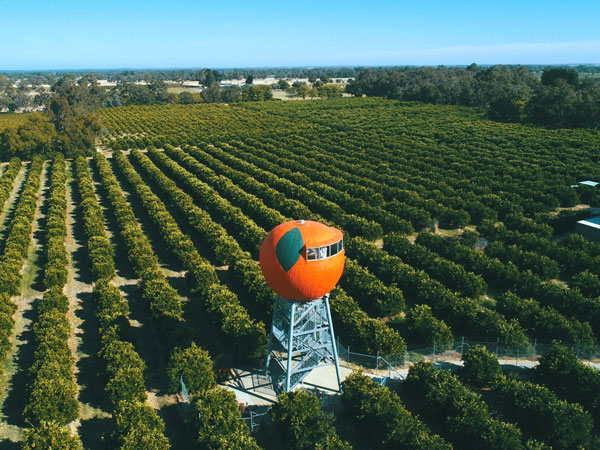
Fans of James and the Giant Peach by British author Roald Dahl will appreciate the fact the owners of Harvey Fresh went out on a limb in order to celebrate the citrus fruit grown in the surrounding orchards. Harvey now rests on a 10-metre-high tower at the Harvey River Estate and, for a small fee, you can climb up into the giant piece of fruit to discover information about the history of Harvey.
31. The Big Western Rock Lobster
Western rock lobsters are only found on the continental shelf off the Western Australia coastline. This is not a hands-off kind of sculpture. In fact, visitors often climb onboard the giant marine crustacean to get their photo taken. While the icon has become an attraction in its own right, don’t forget the real reason you’re in Dongara Port Denison: to scoff seafood.
Honourable Mentions
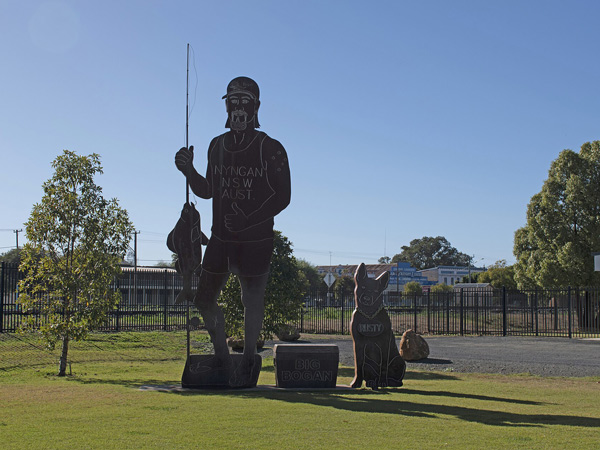
Of course, not all of Australia’s Big Things are well known. But we think there are some that simply cannot be ignored. Nyngan’s Big Bogan in NSW is the first to spring to mind. Complete with a mullet, stubbies and a Southern Cross tattoo, the five-metre-tall ‘Maaaaaate’ was unveiled in 2015. Nyngan, it is important to mention, is in the Bogan Shire.
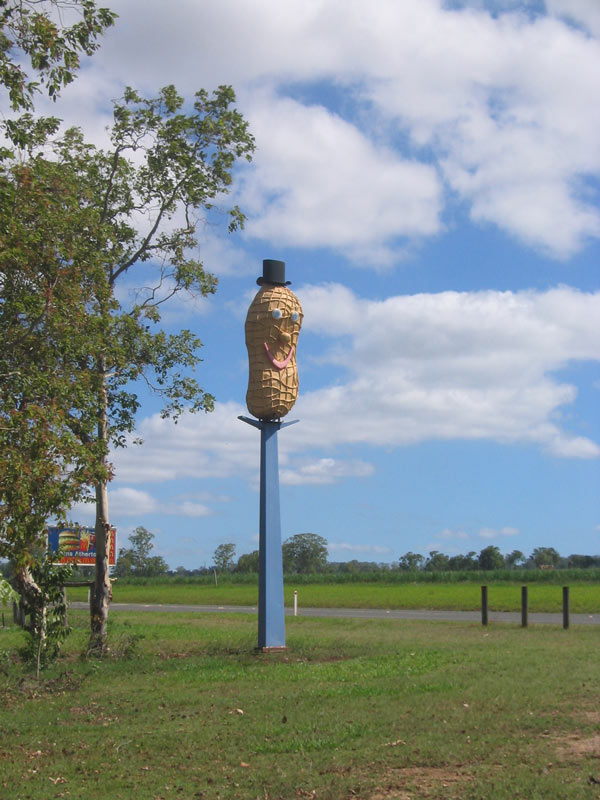
In Tropical North Queensland, we’d like to give a shout-out to the Big Peanut, in Tolga, which looks like a Mr Potato Head on a kipfler. But it’s pretty big, so it counts.