Steve Irwin to RM Williams: the most memorable outback characters

hero media
In the red dusty expanse, single-minded, eccentric and sometimes utterly insane personalities thrive. And without question it’s the people who have formed a special bond with the outback that make it so wonderful and unique. Sol Walkling looks at just a few of the amazing people out there who have made the outback what it is today.

Ian Conway

Those born into the seemingly inhospitable wilderness hundreds of kilometres from what most people would consider civilisation consider themselves lucky and rarely leave the place. Some, like Ian Conway, have become modern-day pioneers. The son of an Arunta woman and a Kidman boss drover, Ian grew up on Angas Downs station, three hours southwest of Alice Springs. As a boy, he learned everything there was to know about camels from his Aboriginal grandmother – and transformed that traditional knowledge into his daily bread when he decided to invite tourists in for a cuppa and some bush tucker at his Kings Creek homestead to share his love for the land.


Today, the outback camel station and eco lodge owner is the leading exporter of camels in Australia (he also co-founded the Camel Industry Association), plays host to regular documentary film crews as well as tourists and has even retraced Ernest Giles’ steps on his favourite camel, Atwa. It mightn’t seem like a traditional life, but Ian considers himself a keeper of the land – here to look after it until he’s gone – like those before him.
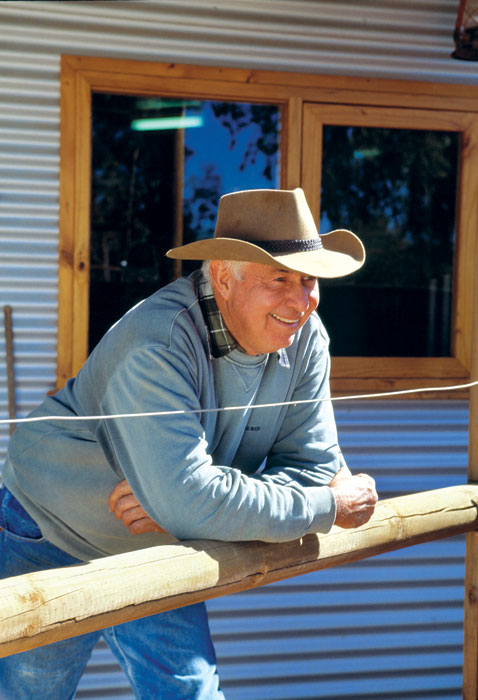
Ian Conway at Kings Canyon
Ian Conway at Kings Canyon. (Image: Tourism NT)

Robyn Davidson

Tracks, A Woman’s Solo Trek Across 1700 Miles of Australian Outback, is the title of a travelogue by this adventuress extraordinaire, whose story also involves camels. Her preparations and taming of the temperamental animals took two years, not counting the countless hours spent looking for them every morning before each day’s ride. Robyn set out on her dangerous and crazy-sounding journey in 1977 practically by herself – dog and four camels aside – to learn about the desert and its traditional owners. She came back an infamous hero who’d walked at times clothed in nothing but her own skin.
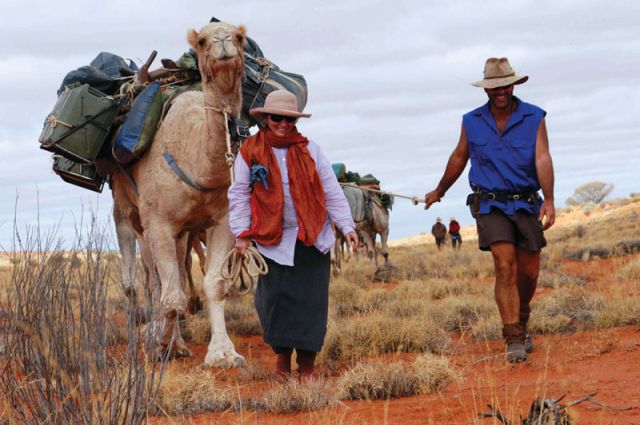
Solo trekker Robyn Davidson
Solo trekker Robyn Davidson and Andrew Harper on the Western Simpson Desert Trek. (Image: Camel Tracks)

Burke and Wills

In 1860, Robert O’Hara Burke and William John Wills famously attempted to cross Australia from Melbourne to the Gulf of Carpentaria in order to become the first Europeans to open up the uncharted territory at the heart of Australia. Despite being pretty inexperienced bushmen, they actually completed the north-south part of the journey with their 18-strong team, before perishing on the return journey in June 1861 at Coopers Creek.


Although seven people died and only John King, who was in charge of the camels, made it all the way back to Melbourne, the expedition did serve to increase our knowledge of central Australia – and at least disproved once and for all the fanciful notion of an inland sea.
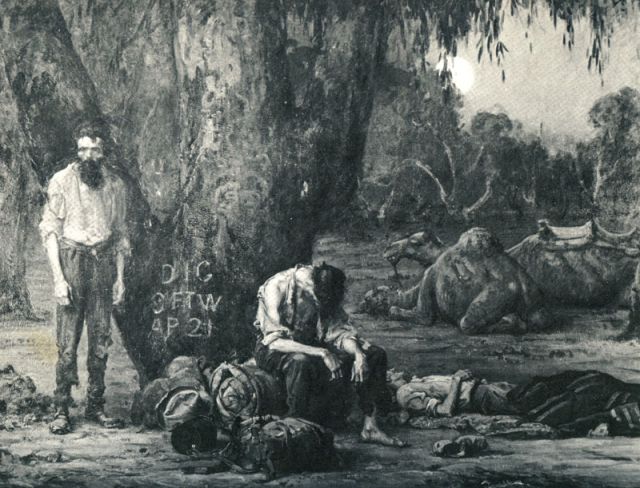
Burke and Wills at the Dig Tree
Burke and Wills at the Dig Tree, painted by Sir John Campbell Longstaff in the late 1800s.

Steve Irwin

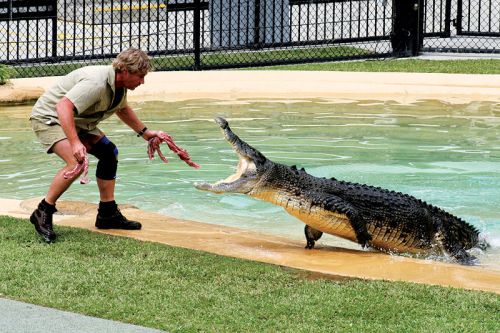
A more recent tragic hero’s death in Queensland moved the world, not just Australia. Our beloved Crocodile Hunter, conservationist and self-proclaimed Wildlife Warrior’s rare gift with animals and his larger than life personality earned him worldwide recognition. With his “Crikey" catchcry, broad smile and sparkling eyes, he captured TV audiences and sparked an interest in his conservationist message.


He died in 2006 after a stingray’s spine pierced his chest. (Interestingly, a series of suspected revenge attacks on stingrays along the Qld coast soon followed, with several found with their spine-tails severed.)


Steve’s daughter, Bindi, who seems to have inherited Dad’s sunny personality, wowed audiences at his memorial service at Australia Zoo, the family’s home, when she gave a speech in front of more than 5000 people, beginning with the words: “My Daddy was my hero." Bindi has since become a celebrity in her own right – just as her father had predicted – with her own TV show, DVD, appearances on US chat shows, and as the youngest ever front-page model for New Idea in 2006. She is also a zookeeper at Australia Zoo and continues her father’s conservation work.
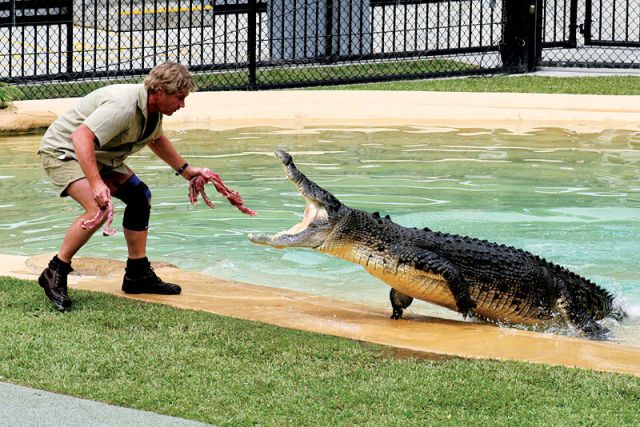
The one and only Steve Irwin, RIP. Image by Paul Williams, www.sardrabbit.com

RM Williams

To survive in the outback it helps to be a jack-of-all-trades. Reginald Murray Williams was born over a century ago, in May 1908, and it was during one of his first jobs in WA – helping to establish a mission for Aboriginals – that he found the inspiration for his life: the Indigenous Australians’ mastery over their environment.


His job descriptions were as varied as the outback is vast, ranging from horse breeder to miner to stonemason, author and entrepreneur. If it hadn’t been for a chance encounter with a man known as Dollar Mick, who knew how to make pack saddles, RM would’ve likely stayed a very successful (but far lesser-known) well-sinker.


Together with Dollar, he perfected the art of boot making using only a single piece of leather, before opening a workshop in Adelaide. His skills must have been rather extraordinary as his first overseas order came from no less than the King of Nepal. In combination with a successful gold mining venture at Tennant Creek, his business quickly turned RM into a multi-millionaire. He must have been quite a sight when he staggered down the street to the bank with bags of gold, shotgun on each side. He passed away in 2003, aged 95, as the nation mourned the end of an era.
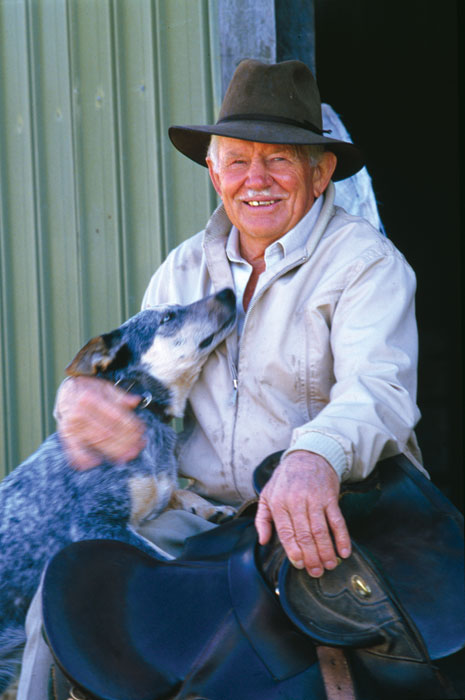
The quintessential outback hero, Reginald Murray Williams
The quintessential outback hero, Reginald Murray Williams. (Image: National Archives of Australia)

John Flynn

Born two weeks after Ned Kelly was hung, the life of John Flynn couldn’t have been more different from the famed outlaw’s. Trained as a minister, Reverend Flynn’s defining moment was his arrival in outback Beltana, SA, in 1911. Moved by the hardship of life in the bush, in particular the lack of medical help, his moving report to the Presbyterian Church the following year led to his appointment as head of its “bush department", the Australian Inland Mission.


When Flynn started his work, only two doctors served a total area of 1,8000,000km2, using bush hospitals, hostels and ministers-cum-boundary riders on camel or horseback. Faced with the problematic vast distances in the outback, Flynn’s solution came in the form of a letter from Lieutenant Clifford Peel, a young Victorian medical student with an interest in aviation.


Even though radios and planes were very much in their infancy in 1917, Peel’s letter impressed the reverend and was the first step towards the establishment of the Royal Flying Doctors Service, and today more than 20 bases span the length and breadth of Australia.
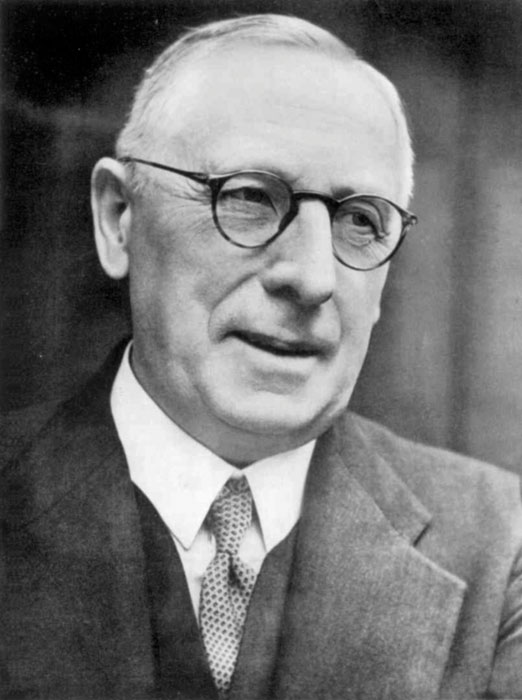
The Reverend John Flynn
The Reverend John Flynn. (Image: Royal Flying Doctors Service)
hero media

The road trips and trails you need to experience in Victoria now

Wind through fern tunnels, stop for a wine in a tram bar, or chase giant murals across the wheatbelt. These drives and rides prove Victoria’s best stories are found off the straight and narrow. 

There’s something unmistakably Australian about a road trip: car packed, playlist on, landscapes shifting. Travelling down the highway toward Healesville, in Victoria’s Yarra Valley , the mountains rise, flanking me on both sides. I feel its embrace, a silent invitation to explore what lies beyond.  

Moss-covered embankments rise on either side, and towering mountain ash trees form a green tunnel overhead. Road signs warn of wombats and cyclists but with giant ferns lining the roadside, the landscape feels prehistoric, as if a dinosaur might suddenly emerge. This, the Black Spur , is one of my favourite road trips. 

The Black Spur 

The Black Spur drive
Through the forested canopy of The Black Spur drive that winds from Healesville to Narbethong. (Image: Neisha Breen)

Location: Yarra Ranges
Duration: 30 kilometres / 30 minutes 

The Black Spur is short compared to other Victorian road trips, just 30 kilometres, stretching from Healesville to Narbethong. But what it lacks in distance, it makes up for in scenery. Just outside Healesville, Maroondah Dam offers bushwalks and scenic views. However, if pressed for time, Selover’s Lookout is an easy roadside stop offering uninterrupted views of the dam.  

In Narbethong, close to the Marysville’s snowfield, is the Black Spur Inn , a charming double-storey brick hotel that’s been welcoming travellers since 1863. Here, diners cosy up by the roaring fire or gaze through the floor-to-ceiling windows, imagining horse-drawn coaches carrying hopeful gold seekers to the eastern goldfields.   

Victoria’s Silo Art Trail 

Silo Art Trail
The Silo Art Trail in the Wimmera Mallee region. (Image: Visit Victoria/Anne Morely)

Location: Various towns across the Wimmera Mallee region
Duration: More than 200 kilometres / 4–5 hours but best over a minimum of three days  

What began as a way to draw travellers back into town bypassed by highways – places such as Nullawil, Sea Lake and Patchewollock – has grown into a celebrated outdoor art movement. The Silo Art Trail now includes 23 silos, each transformed with large-scale mural portraits sharing local stories, celebrating community heroes, Indigenous history, farming life, or regional identity.  

The Nullawil silo, for example, is a portrait of a local farmer in a chequered flannelette shirt alongside his loyal kelpie, painted by artist Sam Bates (AKA Smug). And the silos at Albacutya in the Grampians, painted by artist Kitt Bennett, depict her joyful memories of growing up in the countryside. Many of the murals sit right in the heart of small towns, such as Rochester and St Arnaud , making them perfect spots to pause for a country pub meal or something sweet from a local bakery.   

Metung to Mallacoota  

Gippsland lakes
Gippsland Lakes. (Image: Visit Victoria/Josie Withers)

Location: Gippsland
Duration: Approximately 220 kilometres / 4 hours  

The Gippsland Lakes are a much-loved holiday spot in Victoria, but road-tripping further east reveals much more. Begin in Metung and time your visit with the monthly farmers’ market, or simply linger over lunch on the lawn of the Metung Hotel. Twenty minutes away is Lakes Entrance , where you can watch the fishing boats return with their catch. 

Lakes Entrance
Lakes Entrance. (Image: Visit Victoria/Iluminaire Pictures)

Continue to Marlo, where the Snowy River spills into the sea, and Cape Conran for its many beaches and walks. If needing to stretch your legs, Croajingolong National Park is home to the historic Point Hicks Lighthouse and the Wilderness Coast Walk. Birdwatching and rainforest trails near Bemm River are worth a pit stop before arriving in Mallacoota, where the forest meets the sea. 

Great Ocean Road 

12 Apostles on the Great Ocean Road
The 12 Apostles on the Great Ocean Road. (Image: Tourism Australia/Two Palms/Harry Pope)

Location: South-west Victoria, from Torquay to Allansford
Duration: Approximately 250 kilometres / 4–5 hours but best over a minimum of three days  

Victoria’s most famous road trip delivers it all: world-class surf breaks, rainforest walks, clifftop lookouts and wildlife encounters. The journey begins in Torquay, the state’s surf capital, then hugs the coast past Anglesea and Lorne to Apollo Bay, before curving inland through the lush rainforest of the Otways. Stop at Cape Otway Lightstation or take to the treetops at Otway Fly.  

Between Cape Otway and Port Campbell lies the most photographed stretch – seven of the Twelve Apostles still standing, alongside the golden cliffs of Loch Ard Gorge. Further west, Warrnambool is a winter whale-watching hotspot, before the road winds to Port Fairy, a charming fishing village of whalers’ cottages, walking trails and offshore seal colonies further along the coast. 

Bellarine Taste Trail 

Terindah Estate
Terindah Estate. (Image: Visit Victoria/Emily Godfrey)

Location: Bellarine Peninsula
Duration: Approximately 80 kilometres / 2–3 hours  

The Bellarine Taste Trail is a feast for the senses, winding through coastal towns, past boutique wineries and artisan producers. It’s a choose-your-own-adventure style trail – simply grab a map and build your own delicious journey.  

You might wander historic, seafront Queenscliff, sip wine in a converted tram bar at Terindah Estate , sample a locally distilled whisky at The Whiskery in Drydale or pick up a jar of honey at Wattle Grove in Wallington. Seafood lovers can head to Portarlington, famous for its mussels. Eat them fresh at local restaurants or head out on the water with Portarlington Mussel Tours. 

O’Keefe Rail Trail – Bendigo to Heathcote 

Pink Cliffs Reserve
Pink Cliffs Reserve in Heathcote can be seen on the O’Keefe Rail Trail. (Image: Visit Victoria/Emily Godfrey)

Location: Central Victoria
Duration: Approximately 50 kilometres / 4 hours cycling 

Travellers first journeyed between Heathcote and Bendigo in 1888, when the railway line was built to link the towns. Trains stopped running in 1956, but today the route has a new life as the O’Keefe Rail Trail . The path is mostly level for easy riding, and along the way you’ll cycle past bushland, waterways and reserves. There are plenty of places to picnic, birdwatch, and if you’re lucky, spot a platypus.  

The trail is well supported with water stations, bike repair points, shelters, and signage. Axedale makes a great halfway stop, with the pretty Campaspe River Reserve for a rest and local cafes for refuelling. Begin in Heathcote, known for its wineries and cafes, or in Bendigo, which is easily reached by train from Melbourne/Naarm. Shorter sections, such as Heathcote to Axedale, are also popular. 

Goldfields Track – Ballarat to Bendigo 

Location: Central Victoria
Duration: Approximately 210 kilometres / 2–3 days cycling  

The Goldfields Track traces a route once so rich in gold it made Melbourne one of the wealthiest cities in the world. Starting at Mt Buninyong, south of Ballarat, the trail leads mountain cyclists and walkers north through Creswick, Daylesford and Castlemaine before finishing in Bendigo. Along the way, you’ll encounter granite outcrops, eucalypt forests, rolling farmland and remnants of the region’s mining past.  

As it passes through the lands of the Dja Dja Wurrung and Wadawurrung people, the track shares gold rush history and Indigenous stories brought to life by interpretive signs. Walk or ride the full trail or choose from one of its three distinct sections. With cosy stays, cafes and pubs, it’s easy to mix wilderness with comfort.