14 places to see penguins in Australia

hero media
Australia is home to the smallest of any of the world’s penguins. This is where to find them.

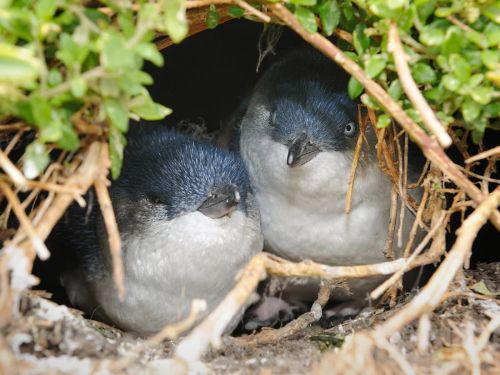
Endemic penguins in Australia might all be the same species, but between our shores and New Zealand, it’s the only place in the world to spot adorable (and aptly named) little penguins. So-called for their small stature (at only 36 to 43 centimetres tall, they’re some of the smallest aquatic birds in the world), you’ll mostly find their colonies on islands just off the (mostly southern) coast. But that doesn’t mean they haven’t found their way to other states.

We’ve rounded up some of the best places to see little penguins in the Australian wild.

1. Phillip Island, Vic

It would be wrong to start this list with anything other than Phillip Island, home to one of the largest little penguin colonies in the world. Just a 90-minute drive from Melbourne and connected to mainland Victoria by a bridge, not only is it easy to get to, but the famous Penguin Parade is an adorable nightly event, tickets to which also support more research into and care for these waddly creatures. Elevated boardwalks make for perfect viewing points as a controlled number of visitors watch these feathered locals return to their burrows every night as the sun goes down.
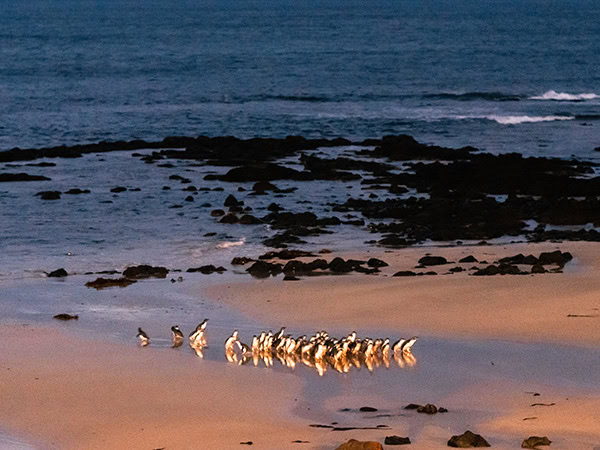
little penguins return to their burrows during Phillip Island penguin parade
Buy a ticket to the Penguin Parade. (Image: Visit Victoria)

2. St Kilda, Vic

Then again, you don’t need to leave Melbourne at all to spot little penguins. Head to St Kilda Beach and stop by Breakwater (the rocky outcrop at the end of the pier) to spot this local colony. To protect the penguins, there are three nightly viewings of the penguins between February and April run by the local council. Tickets are free but you do need to register . Penguin Rangers patrol the area for everyone’s safety.
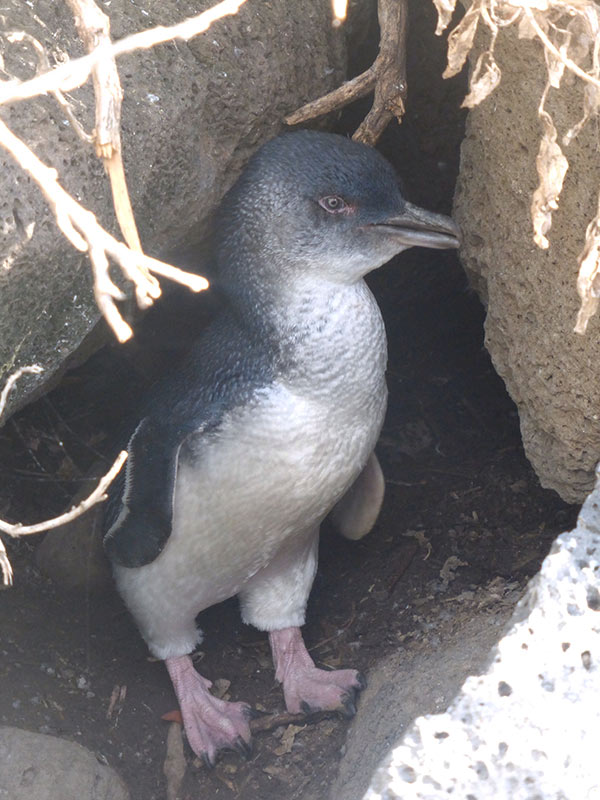
St Kilda Penguin hiding in breakwater rocks
Spot penguins hiding in the rocks of the breakwater. (Image: Eric Fortin)

3. Middle Island, Warrnambool, Vic

Further south, little penguins also call Middle Island home, off the coast from Warrnambool along the Great Ocean Road. Sadly, numbers were dwindling by 2006 after foxes made their way from the mainland to hunt during low tide. These days, after the installation of famously protective Maremma guard dogs on the island, the penguin population is soaring. Each summer, visitors can meet these pawed penguin pals on a ‘Meet the Maremma Tour’ and learn about the Penguin Protection Project .
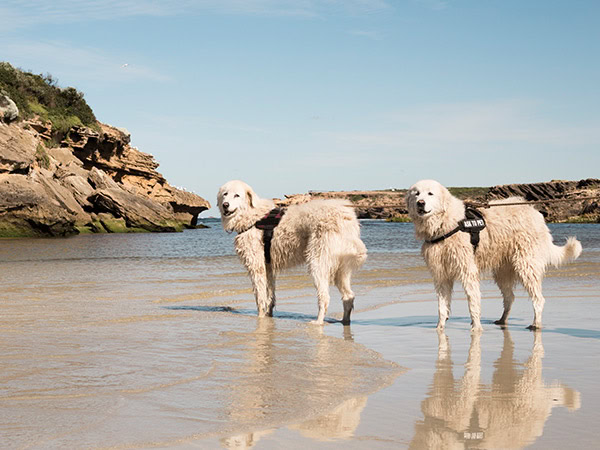
maemma dogs protect little penguins on Middle Island victoria
See maemma dogs on duty at Middle Island. (Image: GOR Regional Tourism)

4. Penguin Island, WA

As the name suggests, Penguin Island is home to the largest little penguin colony in Western Australia. Visits to this pristine island are limited and only available during specific daylight hours in mid-September to early June. But it’s worth nabbing one of these tickets as the island is also home to pelicans, sea eagles and albatross. Guided wildlife walks are also available to book.
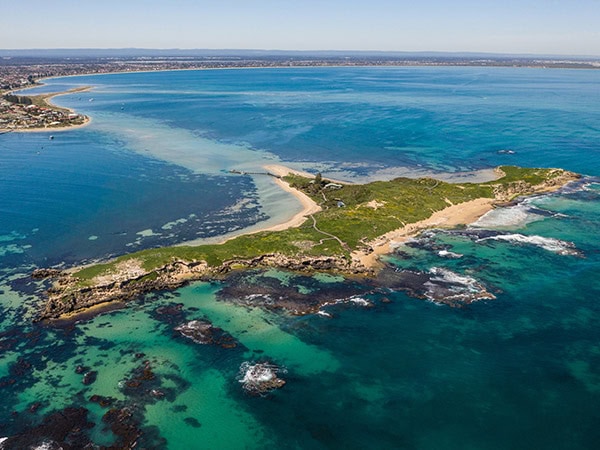
aerial shot of Penguin Island in western australia
Nab a ticket to Penguin Island. (Image: Tourism Western Australia)

5. Kangaroo Island, SA

Kangaroo Island already has a reputation as something of a sanctuary for Australian Wildlife, and it’s no different for little penguins. As the last operational penguin centre in South Australia, Penneshaw Penguin Centre runs nightly tours throughout the year. Seeing as the colony can be difficult to find on your own, it’s recommended to book in. Plus you’ll likely get a bit of astronomy thrown in.
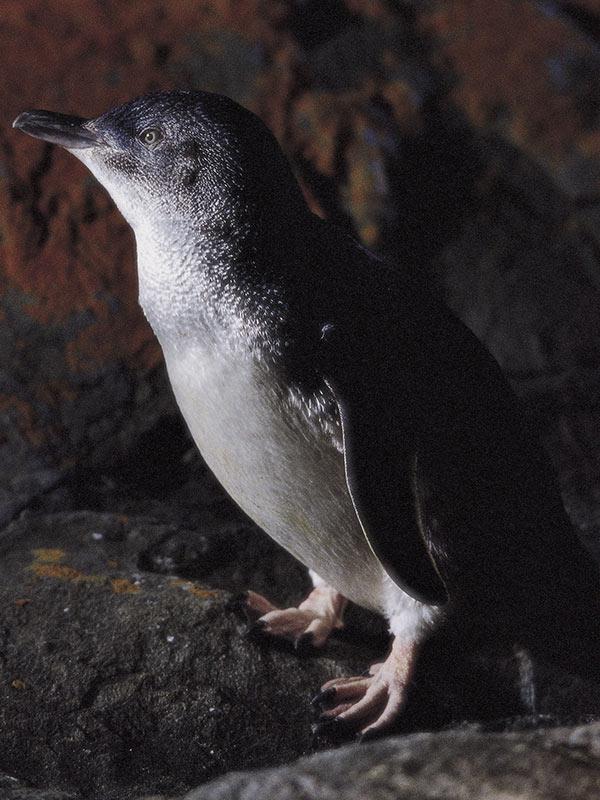
little penguin spotted during Penneshaw Penguin Centre tour on Kangaroo Island
Go on tour with Penneshaw Penguin Centre. (Image: Milton Wordley)

6. Victor Harbor, West Island, SA

Victor Harbour – some 80 kilometres south of Adelaide – hosts little penguins across many of its islands (it’s also one of the best places to go whale-watching), but the best place to spot them is Granite Island. Sitting inside the Encounter Marine Park, penguin numbers have been struggling in recent years – so be sure to keep the fox-proof gate shut when you visit. If you’re not lucky enough to see a penguin, dolphins leafy sea dragons and seals all await. To increase your wildlife spotting success, check out Big Duck Boat Tours .
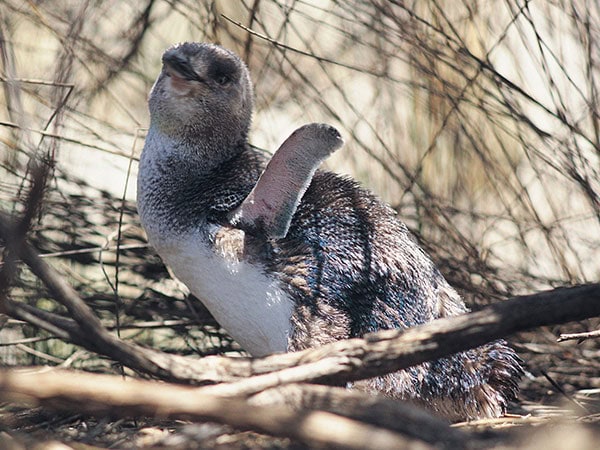
little penguin in Granite Island conservation area
Head into Granite Island’s Encounter Marine Park to spot little penguins. (Image: Fleurieu Peninsula Tourism)

7. Lion Island, NSW

Off the coast of Broken Bay sits Lion Island, the ironically named home of a little penguin colony. A joint project between National Parks and Wildlife and Taronga Zoo has been going since early 1990 to support the colony, which has now grown to about 300 breeding pairs. As a highly protected sanctuary, you’ll have to try and spot these cuties from a boat at a respectful distance.
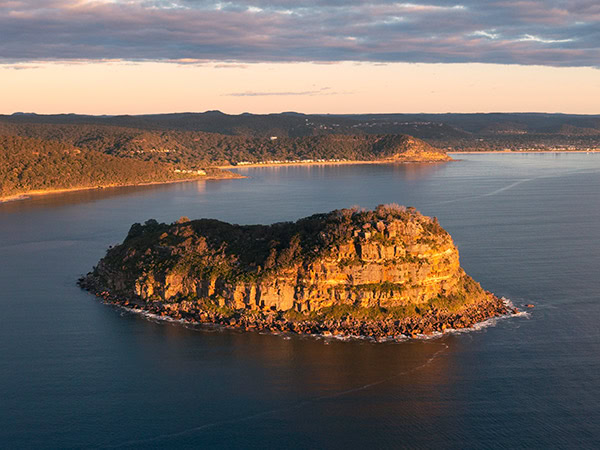
Lion Island off the coast of Broken Bay
Spot penguins from the water around Lion Island. (Image: DNSW)

8. Manly, NSW

Sydney’s second-most famous beach suburb, Manly, is also home to its only little penguin breeding colony. While these penguins are known to forage for food throughout Sydney Harbour and along the Sydney coast, every May to February they return to the nesting boxes at Shore Beach in Manly to have their babies. Not accessible by land, kayak is generally the best way to get to the beach. As it’s a smaller population, it’s not guaranteed to see them – but if you do, keep a respectful distance, never bring your dog and don’t use flash photography as it disorientates them.
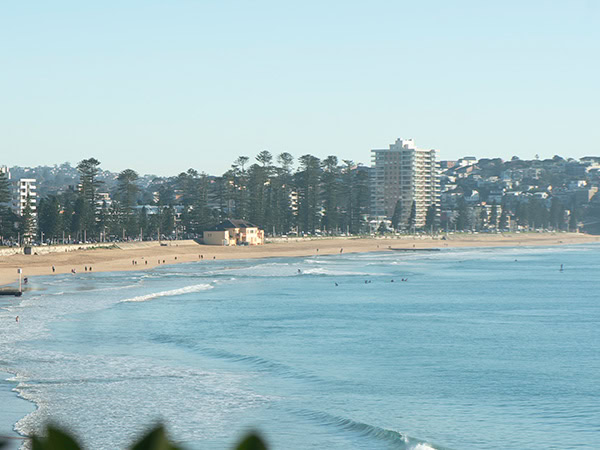
manly beach aerial shot
Watch penguins return to their nesting boxes at Shore Beach. (Image: DNSW)

9. Jervis Bay, NSW

Bowen Island – at the entrance to Jervis Bay – may be small. In fact, this sandstone island is only about a kilometre long and half as wide. But it packs a little penguin punch with around 5000 breeding pairs calling it home. Every night from dawn to an hour before dusk they head out in search of food, before returning to their burrows before they lose all daylight.
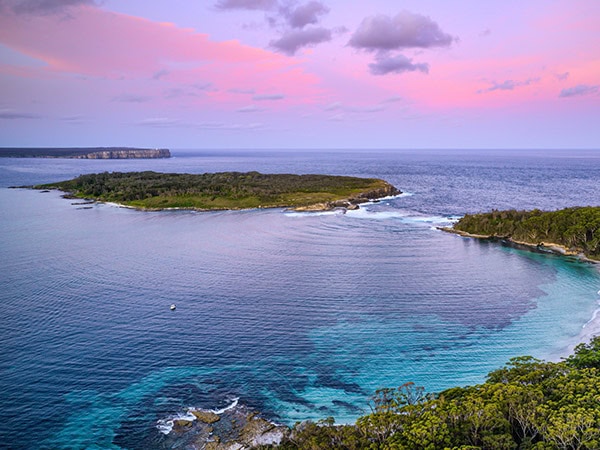
aerial shot of Bowen Island
Circle the tiny Bowen Island to spot a large penguin colony. (Image: DNSW)

10. Stanley, Tas

Stanley might be most famous for a giant rock formation known as The Nut. But its little penguins are a strong second. Head to Godfrey’s Beach for a wheelchair-friendly penguin viewing platform, or book a cabin at BIG4 Stanley Holiday Park to watch the little critters walking along Tatlow Beach.
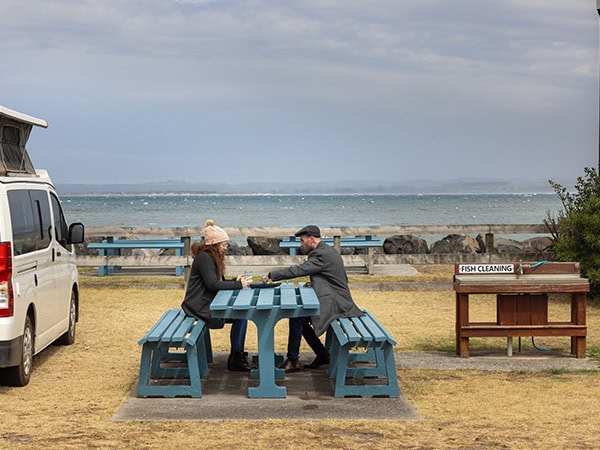
a couple sits on picnic bench at Tatlow Beach, BIG4 Stanley Holiday Park
Book a spot at BIG4 Stanley Holiday Park to watch little penguins along Tatlow Beach. (Image: Jess Bonde)

11. Penguin, Tas

Yes, the town named Penguin in Tasmania is home to plenty of little penguins. Here, they’re so proud of their feathery locals that they’ve even erected a ‘big penguin’ statue. See real-life ones when you head toward the southern end of Penguin Beach, or pop over to the next beach, eastways.
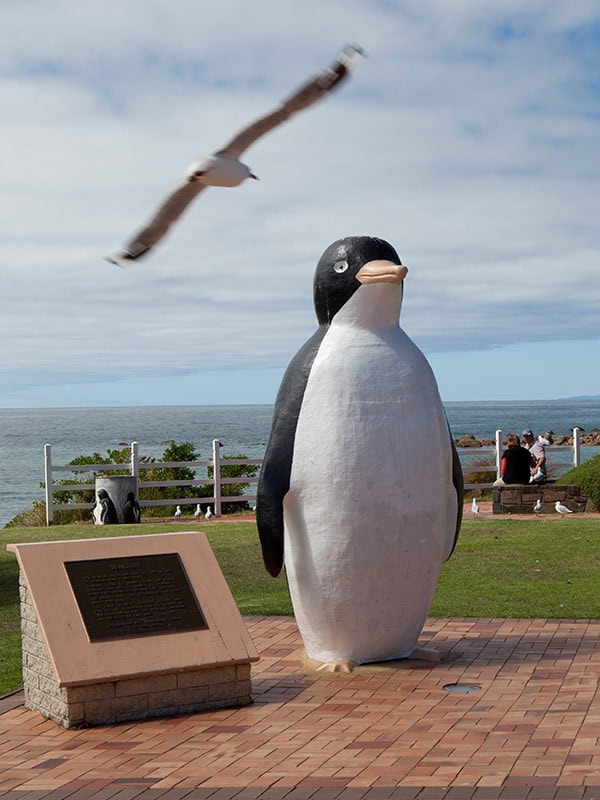
big penguin statue in penguin township tasmania
See the big penguin, then look for little ones. (Image: Adrian Cook)

12. Bicheno, Tas

The bustling town of Bicheno on Tasmania’s east coast is worth a visit for several reasons. Top of the list is their little penguins on Redbill and Waubs beaches. Both are easy to get to by foot (the latter is even in the middle of town) so you won’t be the only person setting up a picnic blanket before dusk to watch the local penguins head home for the night. You can also join Bicheno Penguin Tours for access to a private property loved by penguins that other tourists can’t.
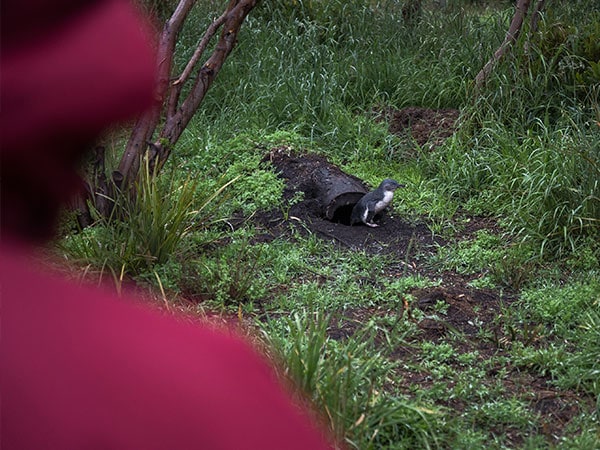
woman watching wild little penguin during Bicheno Penguin Tours
Join Bicheno Penguin Tours. (Image: Tourism Australia)

13. Low Head, Tas

Just a 45-minute drive from Launceston, Low Head is home to a conservation area where hundreds of local little penguins like to breed between November and February. As the area closes before dusk, you’ll need to join Low Head Penguin Tours Tasmania for access.
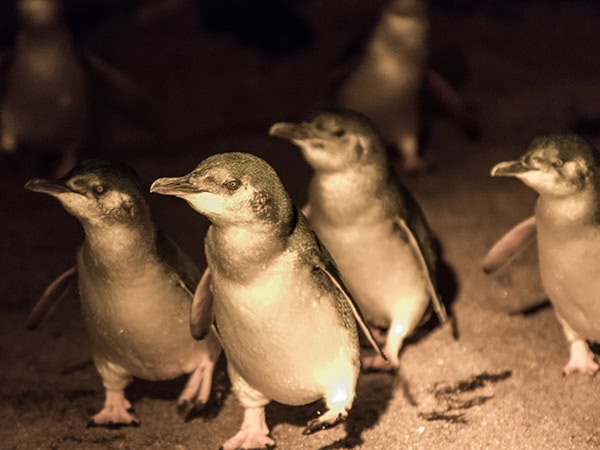
little penguins on low head beach in tasmania
Book a tour to see the little penguins of Low Head conservation area. (Image: Florian Rohart)

14. Devonport, Tas

Lillico Beach Conservation Area is something of a local secret for penguin spotting. From late September to early April, head to the eastern end of the beach to watch little penguins from the viewing platform. Guides will be patrolling the area and ready to answer your penguin-related questions.
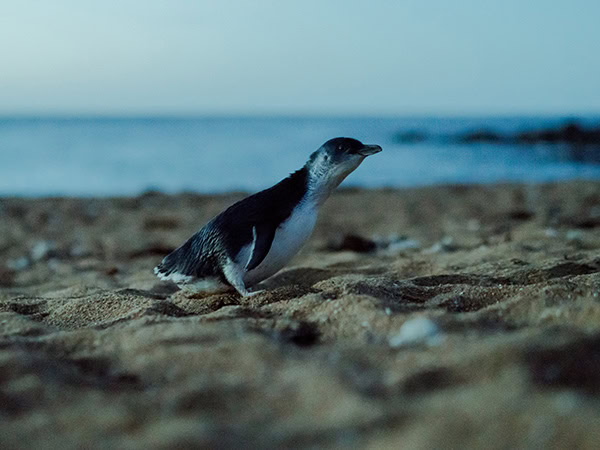
a little penguin scurries across a beach in tasmania
Join locals for penguin spotting. (Image: Chi Kueng Renault Wong)
Kassia Byrnes
Kassia Byrnes is the Native Content Editor for Australian Traveller and International Traveller. She's come a long way since writing in her diary about family trips to Grandma's. After graduating a BA of Communication from University of Technology Sydney, she has been writing about her travels (and more) professionally for over 10 years for titles like AWOL, News.com.au, Pedestrian.TV, Body + Soul and Punkee. She's addicted to travel but has a terrible sense of direction, so you can usually find her getting lost somewhere new around the world. Luckily, she loves to explore and have new adventures – whether that’s exploring the backstreets, bungee jumping off a bridge or hiking for days. You can follow her adventures on Instagram @probably_kassia.
See all articles
hero media

Unforgettable First Peoples tours and experiences in Victoria

From ancient aquaculture systems to sacred rock art shelters, Victoria’s First Peoples cultural experiences offer a powerful connection to one of the world’s oldest living cultures – where every site, story and smoking ceremony invites a deeper understanding of the land beneath your feet. 

Victoria’s sweeping landscapes hold stories far older than any road map can trace – stories etched into stone, sung through generations and woven into every bend of river and rise of hill. From the lava flows of Budj Bim to the ancient middens of Moyjil/Point Ritchie and the volcanic crater of Tower Hill, the state is home to some of the most significant First Peoples cultural sites in Australia. These places, along with other immersive experiences, offer not only a window into a 60,000-year legacy, but a profound way of understanding Country itself. As more travellers seek connection over checklists, guided tours by Traditional Owners offer respectful, unforgettable insights into a living culture that continues to shape the land and the people who walk it. 

Budj Bim cultural landscape  

Budj Bim Cultural Landscape
Budj Bim Cultural Landscape is on Gunditjmara Country. (Image: Visit Victoria)

Venture beyond the surf and sand of the Great Ocean Road to discover a deeper story etched into the volcanic landscape. At Budj Bim , ancient aquaculture channels built by the Gunditjmara people to trap, store and harvest kooyang (short-finned eel) reveal one of the world’s oldest living cultures. While you’re in the area, head over to the state-of-the-art Tae Rak Aquaculture Centre, where you can observe the eels in a special tank, wander the shores of Tae Rak (Lake Condah), and enjoy a bite at the Bush Tucker Cafe. Also nearby is Tower Hill, a dormant volcano reborn as a wildlife reserve, offering trails through bushland teeming with emus and koalas. 

eel tank
The kooyang (eel) tank at Tae Rak. (Image: Visit Victoria)

Dumawul Kooyoora Walking Tour 

Dumawul walkingtour
Guests are guided through Kooyoora State Park on the Dumawul walking tour. (Image: Visit Victoria)

Step into a timeless landscape with Dumawul’s guided tour through Kooyoora State Park, around an hour’s drive west of Bendigo in north-central Victoria. Led by Djaara guides, this immersive half-day journey breathes life into Country, weaving together stories, bush tucker and ancient rock art. Known to the Dja Dja Wurrung people as Guyura – the ‘mountain of light’ – this dramatic granite range is rich with cultural and spiritual significance.  The adventure begins with a meet-up at the Bridgewater Hotel on the banks of the Loddon River, before guests are welcomed onto Country with a traditional Smoking Ceremony – a powerful ritual that honours ancestors and cleanses those who walk the land. From there, it’s a gentle wander through rugged outcrops and open bushland, with sweeping vistas unfolding at every turn. Along the way, guides share their knowledge of how the Dja Dja Wurrung peoples have cared for and adapted with this land for generations, offering a rare and moving window into an ancient way of life that continues to thrive today.  

Kooyoora walking tour
Knowledge of the Dja Dja Wurrung is shared on the trail. (Image: Visit Victoria)

Kingfisher Cruises  

Kingfisher Cruises
Cruising the Murray with Kingfisher Cruises. (Image: Visit Victoria)

Glide quietly through the Barmah-Millewa forest – the nation’s largest river red gum ecosystem – on a scenic journey along the Murray River and into the Barmah Lakes with Kingfisher Cruises . Led by passionate guides who share stories of the cultural significance of this ancient landscape, these cruises reveal the stories, totems and traditional knowledge of the Yorta Yorta people. As you navigate narrow waterways and spot native birds, you’ll gain a richer understanding of how First Peoples have lived in harmony with this floodplain for tens of thousands of years. It’s a gentle, immersive experience that leaves a lasting impression – one where every bend in the river carries echoes of culture, connection and Country.  

wawa biik 

 Taungurung leaders
Exploring Nagambie with Taungurung leaders. (Image: Visit Victoria)

Translating to ‘hello, Country’ in the language of the First Nations People and Custodians of the rivers and mountains of Taungurung Country in Central Victoria, wawa biik guides a range of authentic and deeply immersive experiences. Leaving from either Nagambie or Euroa, the tours are woven with ancient stories of the Taungurung, telling how a sustained connection and responsibility ensures the continued health of biik – benefitting the people, animals and plants that live in and around the Goulburn River. During the wawa Nagambie experience, guests participate in a Welcome Smoking Ceremony, and enjoy lunch and conversation with two Taungurung leaders as they cruise through the wetlands of tabilk-tabilk (place of many waterholes). The 4.5-hour tour begins at Tahbilk Winery, which is set in the wetlands of Nagambie on Taungurung Country and collaborates with Taungurung Elders to share knowledge of biik. 

Bataluk Cultural Trail  

Bataluk Trail
Cape Conran on the Bataluk Trail. (Image: Visit Victoria)

The Bataluk Cultural Trail winds through East Gippsland like a thread stitching past to present, tracing the deep connection between the Gunaikurnai people and their land. Starting at the Knob Reserve in Stratford, visitors walk among scarred trees and ancient stone tools once used for survival and ceremony. At the Den of Nargun near Mitchell River, the earth holds stories of women’s sacred spaces, cloaked in myth and legend. Further along, Legend Rock at Metung tells of greed and consequence, its surface etched with ancient lore. At Cape Conran, shell middens lie scattered like breadcrumbs of history – 10,000 years of gatherings, stories and saltwater songs still echoing in the wind.  

Healesville Sanctuary  

echidna at Healesville Sanctuary
Get up close with a resident echidna at Healesville Sanctuary. (Image: Visit Victoria)

Set on the historic grounds of Coranderrk Aboriginal Station, Healesville Sanctuary honours the Wurundjeri people of the Kulin Nation through immersive storytelling and connection to Country. Along Wurundjeri Walk, visitors are invited to reflect on the land’s rich First Peoples history, with native plants revealing their traditional uses. Wurundjeri Elder and educator Murrundindi shares culture in-person with the Wominjeka Aboriginal Cultural Experience every Sunday, and most days during Victorian school holidays. Murrundindi’s smoking ceremonies, storytelling and bush tucker knowledge reveal the sacred relationship between people, animals and the environment. Bird-lovers can’t miss the incredible Spirits of the Sky show featuring native birds daily at 12pm and 3pm. 

The Grampians 

Rock art at Bunjil Shelter in The Grampians
Rock art at Bunjil Shelter in The Grampians. (Image: Visit Victoria)

Known as Gariwerd to Traditional Owners, the Grampians is a place of immense cultural and spiritual significance. This rugged landscape holds more than 80 per cent of Victoria’s known First Peoples rock art, offering a powerful window into the region’s deep heritage. Visitors can respectfully explore five remarkable rock art sites: Billimina and Ngamadjidj in the Wartook Valley, Manja Shelter near Hamilton, Gulgurn Manja shelter near Laharum, and the Bunjil Shelter near Stawell, where the creator spirit is depicted. Each site tells a unique story of connection to Country, shared through ancient handprints, dancing figures and Dreaming narratives etched into stone.