And like that, the second decade of the 21st century is done and dusted.
It feels like the last 10 years have been a lightspeed jump through hyperspace, as we moved from 2010 to 2020. To commemorate the occasion, we started compiling the major travel milestones from the last decade. Just like that, it all came rushing back to us. The high highs, and the low lows.
But when you have access to all this information, the question arises: what do you do with it? Well, in true Australian Traveller fashion, we thought we’d write it all down. But then a new question arose: do we rank them? Many went to pieces at the thought of having to dutifully complete such a task, the pressure of recognising each one’s significance a little too tough to bear.
And so the task fell to co-founder and Managing Director, Quentin Long.
What he found, however, was that no good list comes without some valiant competitors. So first, here are a few honourable mentions outside our official top 10:
-The formation of the Luxury Lodges of Australia (2010)
-Qualia recognised as the best resort in the world (2012)
-The closing of Hyams beach thanks to booming popularity (2019)
-Tourism Australia’s iconic Dundee 3 campaign/stunt (2018)
–Jackalope opening and the rise of the high-end winery stay (2017)
-Aussie dollar hits new record high , breaks through 110 US cents (2011)
Now without any further adieu, behold Australian Travellers ranking of the biggest things to happen in travel over the past 10 years.
10. The Commonwealth Games
It was called ‘a flop’, ‘a coastal eyesore’, a catastrophic killer for small businesses. But the statistics on the Gold Coast 2018 Commonwealth Games paint a very different picture. In 2010 the Queensland Premier announced the Government’s intention to bid for the 2018 Commonwealth Games, competing against Hambantota, in Sri Lanka.
On November 12, 2011, the vote was cast and the Gold Coast was named host of the 21st Commonwealth Games.
When the day arrived, more than 6600 athletes and officials from 71 Commonwealth nations and territories took to the mighty GC for 11 days of competition from April 4 to 15, 2018.
Over 1.2 million tickets were sold to more than 550 events, alongside more than 1 million free attendances. The event celebrated the largest para-sport program in the Commonwealth Games’ history, a ground-breaking Reconciliation Action Plan and an equal number of medals for both women and men – a first for the Games.
The Commonwealth Games also provided a $2.5 billion economic boost to Queensland, including a $1.8 billion boost to the Gold Coast, supporting tens of thousands of jobs along the way. It was also the largest multi-sport spectacle event held in Australia this decade, and the first in a regional city.
9. Canberra’s Renaissance
Australia’s capital city grew up in the last decade. In 2018, it took out the No. 3 spot on the Lonely Planet’s list of must-see cities , and in 2019 Canberra recorded a 7.1 per cent rise in international visits – three times higher than the average across other states and territories. How did they do it?
Could it have been the allure of housing affordability? Or perhaps the humble milkshake is to blame. In 2016, Griffith cafe Patissez concocted, created and coined the ‘Freakshake’ – a dessert-drink hybrid that took the social media world by storm. Media outlets from the US and UK reported on the phenomenon, causing the trend to trickle across venues around the globe.
Speaking to the ABC in 2015 , Visit Canberra director Ian Hill said the “freakshake phenomenon" encouraged people to think differently about the ACT.
“It’s showing another side of Canberra, it’s entrepreneurial and so many people are being creative and doing great things in the food and wine scene."
An accommodation boom also didn’t hurt, initiated by the opening of Hotel Hotel in 2014. The design-led space was the result of an intense collaboration between more than 50 designers, architects and artists. Described by Australian Traveller as “more avant-garde than old-guard, Hotel Hotel is a breath of original air in a gorgeous piece of architecture". While the property was bought and rebranded by the Ovolo Group in January 2018, the legacy of the property remains.
Increased foot traffic led to the demand for new, trendier hangouts. Suburbs like Fyshwick, Red Hill, Dickson and Braddon became capitals of cool, helping the territory gain 6.8 domestic visitors for every resident. By contrast, the average across the states and territories is about 4.5. They also opened a light-rail earlier in 2019, with plenty of proposed residential and commercial developments to follow.
Whatever the reason, the past decade truly was a perfect storm for Canberra.
8. Tasting Australia
In the 1980s, Adelaide’s food scene became a zeitgeist for the decade. Thanks to cuisine masters and future household names, Cheong Liew, Maggie Beer and Phillip Searle, Australia’s southern capital was pumping with culinary energy and innovation. Tasting Australia launched in 1997 in an attempt to harness this ingenuity.
In its early days, the event was media-focussed but it took on a new direction in 2014 and opened up to the public under Events South Australia – the SA Government’s major events arm. Under the leadership of chef and TV personality Simon Bryant, wine expert Paul Henry and Australian food icon Maggie Beer, Tasting Australia put the State’s food scene in the spotlight.
Australia’s best beverages and inimitable eating and drinking experiences are all on the menu at Tasting Australia today. Visitors can explore more than 140 events across 12 regions and more than 70 Michelin-starred and award-winning chefs and beverage champions.
With eyes back on the State’s culinary offerings. The accolades followed. For the first time in two decades, Adelaide took the title of Gourmet Traveller’s Restaurant of the Year , which was awarded to Orana. The Australian’s Hottest Chef title also went to the restaurant’s executive chef, Jock Zonfrillo.
While it’s hard to draw a parallel between one single food festival and the explosion of a culinary scene, it would be remiss not to acknowledge the impact a platform of this scale can have.
Need tips, more detail or itinerary ideas tailored to you? Ask AT.
AI Prompt
7. Field Of Light
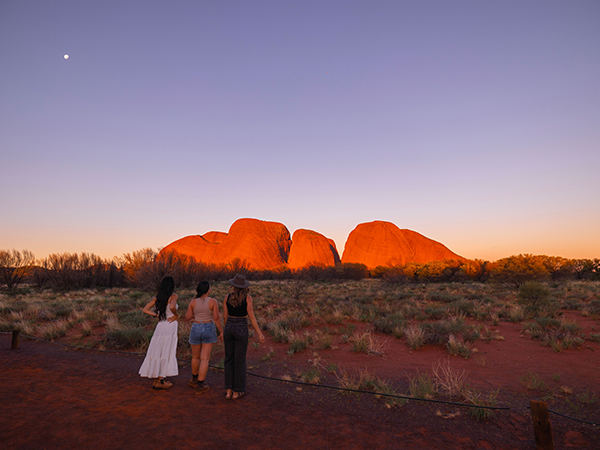
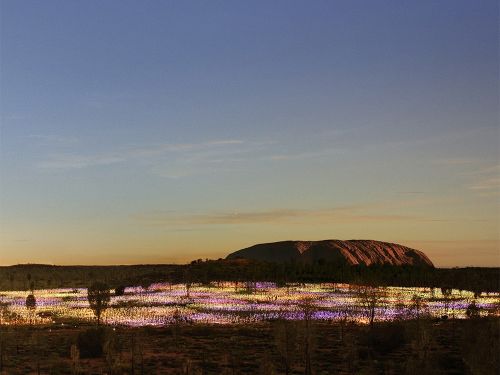
It’s hard to put a finger on what makes internationally acclaimed artist Bruce Munro’s Field Of Light so impactful. When Munroe first came to Uluru in 1992, he felt an overwhelming connection to the energy, heat and brightness of Central Australia’s beating heart.
“I’d made all these notations in my diaries and sketchbooks," he told Australian Traveller earlier this year. “When I was about 40 I worked out I could create art about these experiences. I’ve been doing that ever since."
In 2016, Munro returned to the very place that inspired him, creating the first Field of Light installation for Voyagers at Ayers Rock Resort.
Overwhelming in size, covering more than seven football fields, it invites immersion in its fantasy garden of 50,000 spindles of light, the stems breathing and swaying through a sympathetic desert spectrum of ochre, deep violet, blue and white.
“[Uluru] speaks very clearly to you," he says. “I’m extremely happy just being there, seeing that massive rock. It’s an ageless piece of sculpture. It’s magic.
Since then, according to Tourism Northern Territory, Field Of Light has attracted more than 450,000 people and boosted flights to the region by 15 per cent.
6. Halcyon House opening
The Euro-flavoured Halcyon House, Cabarita Beach, is a hotel like few others.
Originally built as the Cabarita Hideaway Motel, sisters Elisha and Siobhan Bickle purchased the old-school surf property in 2011 with the dream of turning it into a refuge to house their families on holiday. But it wasn’t long until it grew into a vision of a beachside escape that could be shared with guests.
“Our vision was to create something that was completely different to what was being offered in Australia, a boutique hotel with a low-key Australian feel," says Elisha.
After two years of planning and 15 months of construction, Halcyon House opened its beautiful doors in 2015. Led by Sydney-based architect Virginia Kerridge, the property’s 21 boutique rooms were each designed by Brisbane interior designer Anna Spiro.
In the five years since, Halcyon has opened its hatted, award-winning restaurant Paper Daisy, as well as a day spa, and received an extensive array of accolades.
5. The Uluru climbing closure
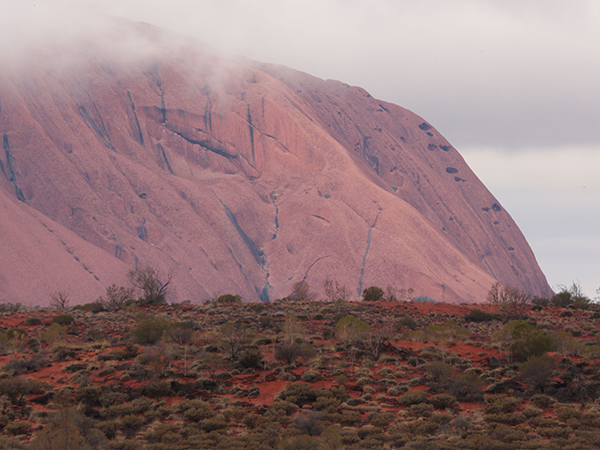
Climbing the monolith has been a tourist attraction since a chain was installed on Uluru’s steep western face in 1964. But doing so was discouraged by the Anangu people who have long urged visitors to refrain from the activity due to cultural ¬and safety reasons. So far, 35 people have died attempting the feat, and many others have been injured.
On Wednesday, November 1, 2017, in consultation with the tourism industry, Uluru-Kata Tjuta National Park made the landmark decision to close the climb on October 26, 2019 based on three preconditions: it was unanimously satisfied adequate new visitor experiences have been successfully established, the proportion of visitors climbing had fallen below 20 per cent, and cultural and natural experiences on offer remained critical factors luring visitors to the park.
Earlier this year, Anangu artist Malya Teamay – whose artwork appears on the entry ticket to Uluru-Kata Tjuta National Park – said he has never liked seeing people run the risk of injury or worse by attempting to scale Uluru. “Anangu are very sad whenever anybody gets hurt or dies on the climb," he says. “It’s better if they take a photo."
On October 26, 2019, almost 34 years to the day since the site was handed back to the traditional Anangu owners, the climbing ban came into effect. It was a mighty step towards reconciliation with our First Nations people.
4. QANTAS
It’s been a massive decade for Australia’s biggest airline. A quick Google search for Qantas’ biggest news story will glean a mixed bag of results; it’s almost hard to pick a favourite story.
The company began the decade on a high, announcing that in Partnership with Tourism Australia, it would fly the entire audience of The Oprah Winfrey Show to Australia in December 2010. Buzz was generated; good times were had.
Then came 2011 and Qantas made the landmark decision to ground its entire fleet in response to the union’s industrial action. Disputes initially began in late 2010, when the airline commenced bargaining for new enterprise agreements. Following a few highly publicised disputes, and an application by the Federal Minister for Workplace Relations, Fair Work Australia terminated the industrial action, which came into effect on October 31, 2011.
In 2014, Qantas brought Modern Family to Australia to film a special episode, before making greener plans a little closer to home. In an effort to expand the airline’s commitment to a more sustainable aviation industry, it announced it will reach “net-zero carbon emissions by 2050". Through doubling the number of flights being offset, capping net emissions from 2020 onwards, and investing $50 million over 10 years, The Qantas Group spent the decade aligning itself with a more environmentally friendly future.
The biggest development came in 2019 when Project Sunrise saw the execution of three ultra-long test flights with aircrafts flying non-stop from Australia’s eastern capitals to London and New York. Qantas also became the first airline to launch non-stop flights to Britain when its Perth-London route took off in March 2018.
Weekly travel news, experiences
insider tips, offers, and more.
3. The rise and rise of Indigenous tourism
With a history predating at least 50,000 years, Indigenous Australians are the world’s oldest living culture. However, because they comprise only about 3 per cent of Australia’s total population, many people have little or no interaction with our First Nations people.
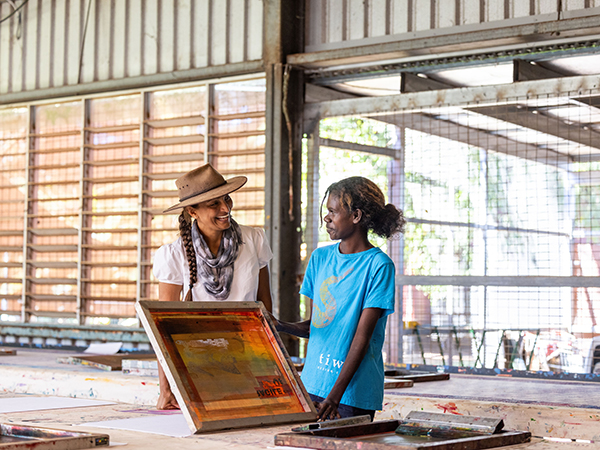
One way in which we fostered reconciliation this decade was through Indigenous tourism endeavours. Not only does this encourage Aboriginal and Torres Strait Islanders to showcase their cultural knowledge and history, but it also gives them a certain degree of autonomy and financial independence by facilitating their own employment narrative.
According to the Department of Foreign Affairs and Trade, the number of Indigenous tourism visitors has surged by an average of nine per cent per year since 2013. In 2013, 679,000 visitors participated in an Indigenous tourism activity; last year the number spiked to 963,000.
Many Indigenous Australians have identified these opportunities in the tourism industry and created Indigenous-focused businesses that are thriving.
The Wukalina Walk that opened in 2018 is a great example: the State’s first Indigenous-owned and operated tourism venture takes guests for a guided hike along the Bay of Fires, a region rich in Aboriginal heritage.
As writer Jocelyn Pride wrote in an article for Australian Traveller last year: “Even though the Wukalina Walk is a four-day hike amid the ridiculously spectacular north-east region of Tasmania, it’s also an awakening. A cultural celebration. A journey of discovery."
One of Australia’s largest tourism operators, Experience Co, also invested in Indigenous tourism this decade with the launch of Dreamtime Dive & Snorkel . This unique, educational and commemorative Great Barrier Reef experience allows visitors to appreciate the world’s largest coral reef system through the world’s oldest surviving culture.
The opening of Lirrwi Tourism in Arnhem Land was also significant. Founded in 2010, this body aims to develop, support and promote Yolnu tourism in one of Australia’s great untouched wilderness areas.
Timmy ‘Djawa’ Burarrwanga, of Bawaka homeland, was a driving force for the initiative, and Lirrwi owes its existence largely to his determination and vision: to create a new economy for Yolŋu people in Arnhem Land through tourism opportunities, bringing Aboriginal and non-Aboriginal people together to share Yolŋu culture.
2. The MONA effect
It’s hard to remember Hobart minus MONA . Like the Guggenheim in Balboa, the MONA effect was a lightning rod, catapulting a small city to the forefront of the country’s arts and cultural scene. Noted for its central themes of sex and death, there has been innumerable reasons to scribble MONA onto your bucket list this decade.
Opening on January 21, 2011, MONA has become the largest privately funded museum in the Southern Hemisphere, housing ancient, modern and contemporary art from Tasmanian millionaire David Walsh’s collection. Described by Walsh as a “subversive adult Disneyland", the space also plays host to a winery, brewery, restaurants and hotel. Visitors also flock to the annual Mona Foma, which has relocated to Launceston, and Dark MOFO music and arts festivals, which showcase large-scale public art and live performances.
David Walsh’s wife and American contemporary art curator, artist, and practitioner of sustainable architecture, Kirsha Kaechele, spoke on the first-hand MONA effect to Australian Traveller in 2018. “It set an example for what can happen and where it can happen and has helped re-contextualise a small town into an interesting place for making art," she said.
In the year ending September 2018, Tasmania received 1.3 million visitors. According to Tourism Tasmania , about 27 per cent of visitors said they visited MONA on their trip. It also ranked as the second most visited tourist attraction in the State behind the Salamanca Market.
1. Instagram launching
There is no doubt this social media app has been responsible for one of the greatest changes to the global cultural landscape over the last decade. Impacting numerous industries: from fashion and beauty, to charity, the world of small business. This brings us to travel.
It is hard to measure the impact this single app has had on the way audiences trot across the globe. Travel influencers became a term we all had to learn, for better or for worse. The platform jumpstarted careers, providing an outlet for seemingly anonymous human beings to build a personal brand. Far-flung communities could connect with like-minded travellers, cultivating a rise (and rise) of ordinary people hungry for visual travel content.
Drone photography, GoPros, Selfie Sticks, vlogging – the ways in which we could document and showcase our travel experiences became an endless stream of opportunity. We could search Geotags for destinations we dreamed of going, browse #hashtags that piqued our interest, or scour the feed of a café to see what was on the menu that morning.
Take Australia’s own Hamilton Island for example. Alice Doré, the social media and content editor for the Island, calls the app “word of mouth, but on steroids".
“Instagram is integrated into the way many of our guests travel and experience our location. We know how important it is for us to use it as a tool to communicate our destination, but also enable our guests to share their own Hamilton Island stories as a way of amplifying their experience to potential guests."
It wasn’t long until destinations began to pre-empt this activity, tailoring their experiences to become more ‘Instagrammable’ with the hope of blowing up, and becoming a full-fledged photographic tourist attraction.