A new survey by Saily shows unsupervised children and uncovered coughing are among the travel habits that annoy Aussies most.
Ironically, few things unite travellers more than their shared irritation towards other people. The toddler running up and down the plane aisle. The stranger talking at a volume normally reserved for emergency announcements. And – how could we forget – the classic poolside manoeuvre of reserving a sun lounger with a towel for hours without actually using it.
A new survey commissioned by Travel eSIM app Saily has revealed exactly which travel habits Australians find hardest to tolerate – and, rather awkwardly, how many of those habits they admit to committing themselves. The app asked more than 16,000 people across 17 countries which travel behaviours annoy them most, including more than 1000 Australians. But not everyone casting judgment is entirely blameless.
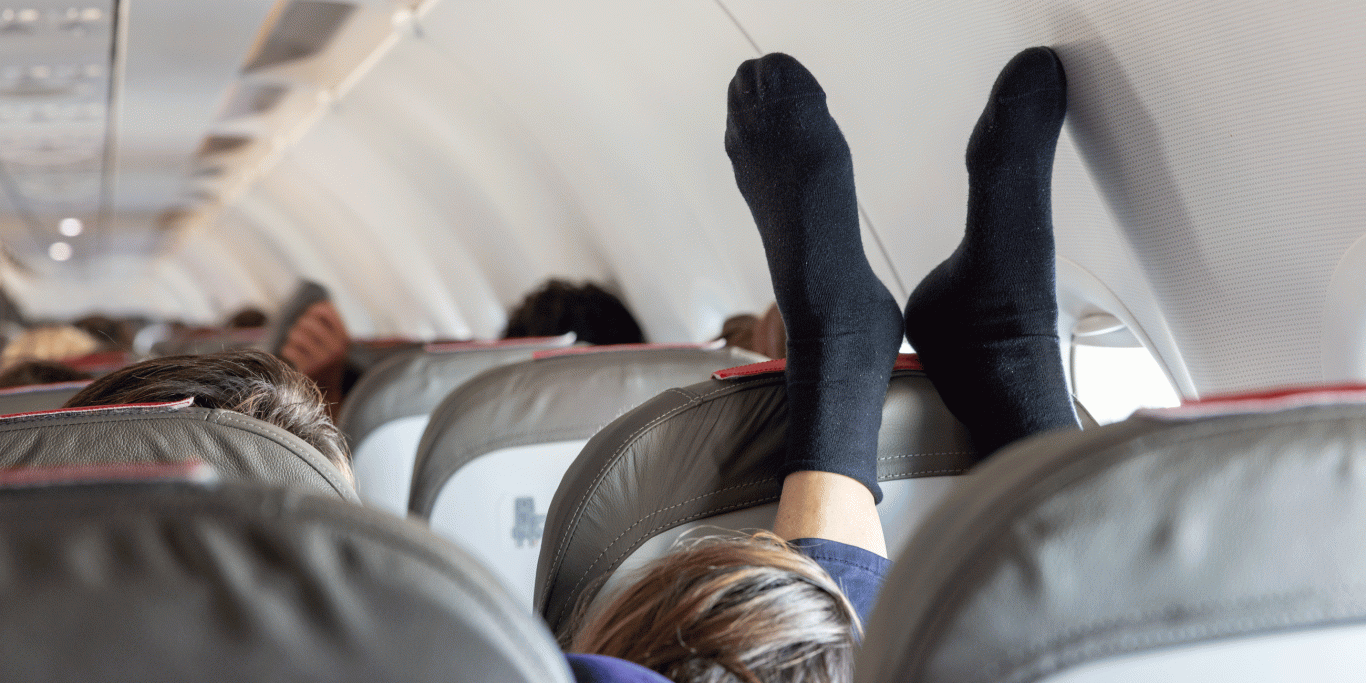
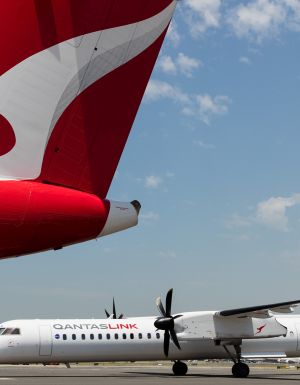
Many of our top travel grievances occur on planes. (Credit: Getty/Simon Skafar)
Unsupervised children and uncovered coughs and sneezes share the dubious honour of topping the list, each getting under the skin of 50 per cent of Aussies surveyed. The former was also the leading travel irritation globally, coming in at 52 per cent. Loud arguments, reclined seats and people talking at full volume round out the top five pet peeves among Aussies in transit.
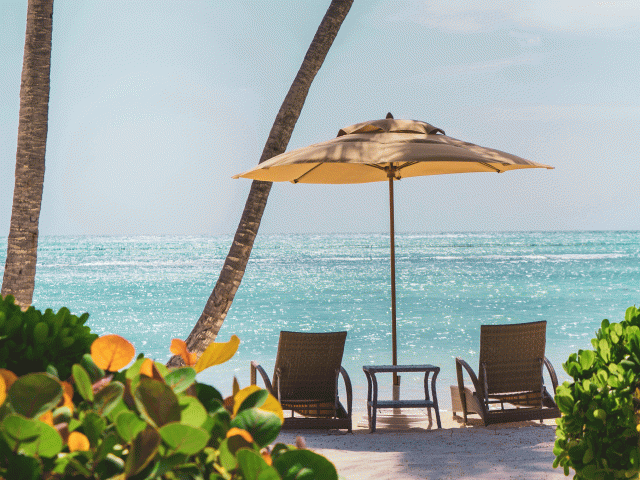
Once the holiday actually begins, the irritations shift from the plane cabin to the beach and pool. Leaving rubbish on the sand is the biggest offence, cited by 51 per cent of Australian respondents, followed by unsupervised children at 43 per cent. Loud voices in quiet places, blaring music in public and hogging a pool chair with a towel for hours are also among the holiday habits that irk our population the most.
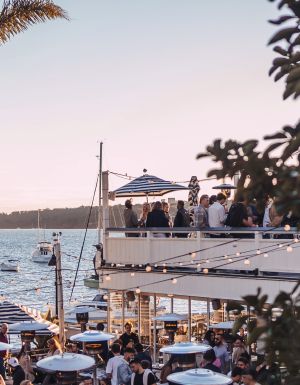
Placing items on a beach chair to reserve a spot is one of the habits that gets under Aussie travellers’ skin. (Credit: Unsplash/Luigi Comba)
But there is a wrinkle in all this righteous indignation: while it is easy to point fingers, Australians are not entirely innocent themselves. According to the survey, nearly half (48 per cent) admit to chatting to strangers on a journey. More than a third take off their shoes on planes. And almost a quarter are on their feet before the plane has properly stopped moving.
And these are just the self-reported habits. So, before judging the person loudly discussing their holiday plans three rows back, it may be worth checking whether you are, in fact, the issue.
“We surveyed more than 16,000 people to find out which travellers test our patience the most. Most people don’t think they are the problem, but many of us admit to habits that could easily become somebody else’s story about an awful flight," says Vykintas Maknickas, CEO of Saily.
There is another revealing detail in the survey results. For all our irritation, Australians are not especially keen on doing anything about it. Only one in eight Australian respondents would actually ask someone to stop their annoying habit and 34 per cent said they would never intervene. In short, it seems we’d rather seethe in silence than speak up.
Need tips, more detail or itinerary ideas tailored to you? Ask AT.
AI Prompt
Australia’s top 5 travel pet peeves
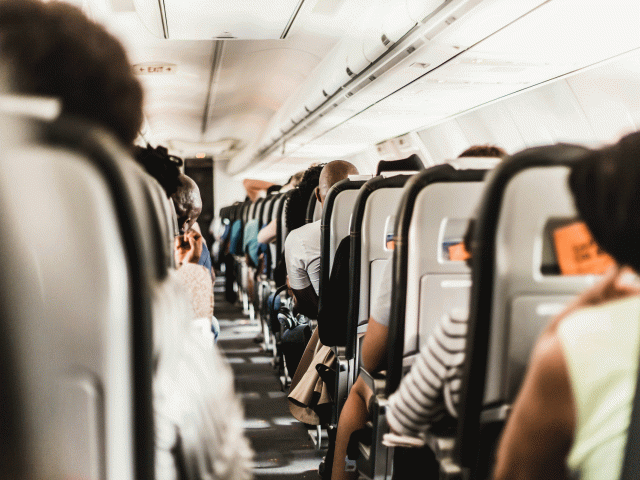
Unsupervised children are one of the top travel pet peeves among Australians. (Credit: Unsplash/Gerrie van der Walt)
Unsupervised children (50%)
Coughing or sneezing without covering up (50%)
Arguing loudly (49%)
Reclining their seat too far back (48%)
Talking at full volume (47%)
Australia’s top 5 pet peeves while on holidays
Leaving rubbish on the beach (51%)
Unsupervised children (43%)
Talking loudly in quiet places (40%)
Playing music loudly in public spaces (36%)
Claiming pool chairs with towels for hours without using them (34%)
Want to see more stories from Australian Traveller in your Google search results?
Tick the box next to "Australian Traveller". That's it.
Eleanor Edström is Australian Traveller’s Associate Editor. Previously a staff writer at Signature Luxury Travel & Style and Vacations & Travel magazines, she's a curious wordsmith with a penchant for conservation, adventure, the arts and design. She discovered her knack for storytelling much earlier, however – penning mermaid sagas in glitter ink at age seven. Proof that her spelling has since improved, she holds an honours degree in English and philosophy, and a French diploma from the University of Sydney. Off duty, you’ll find her pirouetting between Pilates and ballet classes, or hunting down Sydney's cosiest cafes.
Wind through fern tunnels, stop for a wine in a tram bar, or chase giant murals across the wheatbelt. These drives and rides prove Victoria’s best stories are found off the straight and narrow.
There’s something unmistakably Australian about a road trip: car packed, playlist on, landscapes shifting. Travelling down the highway toward Healesville, in Victoria’s Yarra Valley, the mountains rise, flanking me on both sides. I feel its embrace, a silent invitation to explore what lies beyond.
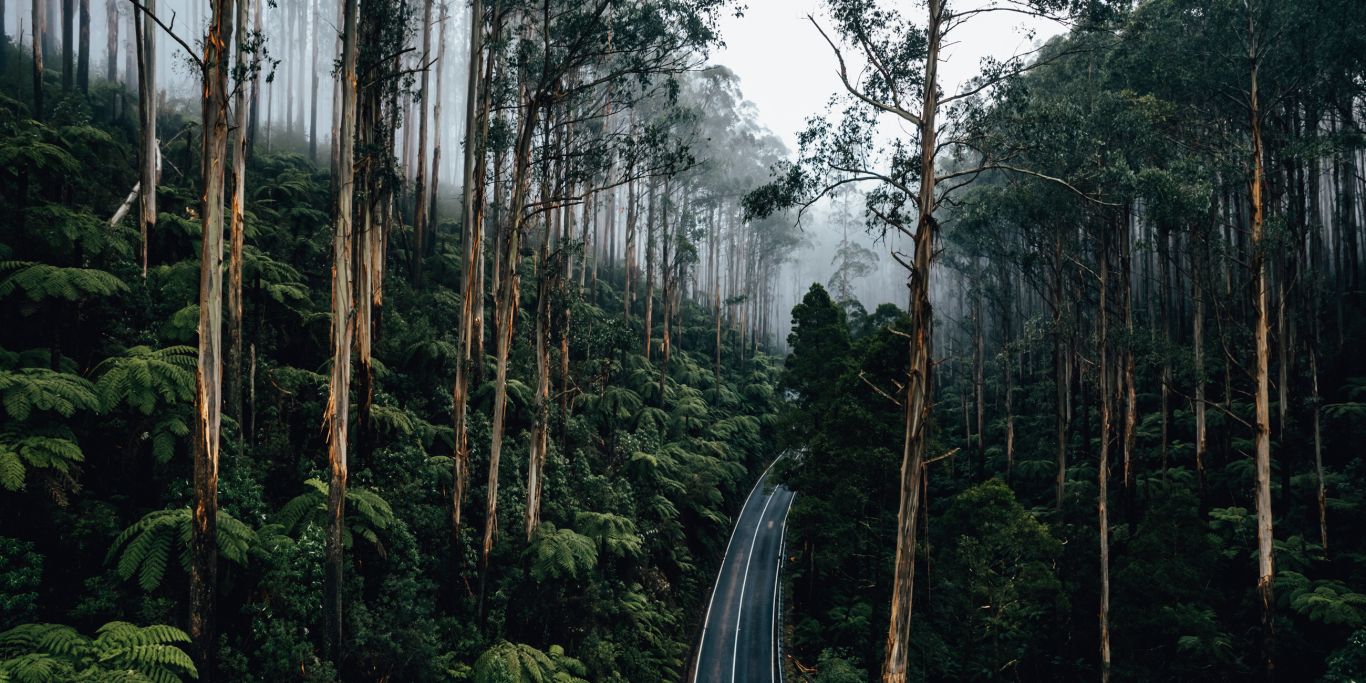
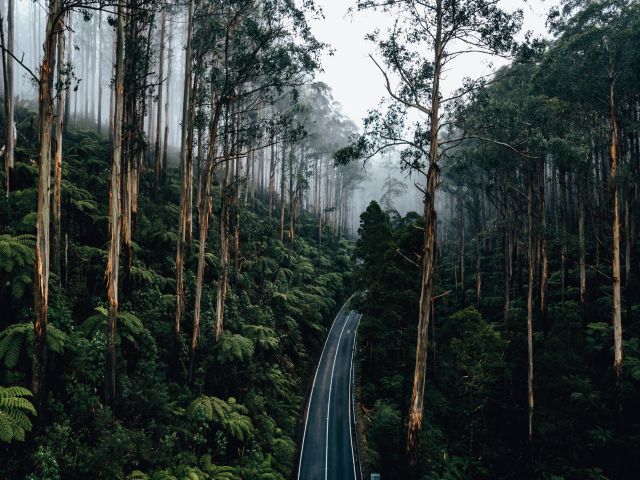
Moss-covered embankments rise on either side, and towering mountain ash trees form a green tunnel overhead. Road signs warn of wombats and cyclists but with giant ferns lining the roadside, the landscape feels prehistoric, as if a dinosaur might suddenly emerge. This, the Black Spur, is one of my favourite road trips.
The Black Spur
Through the forested canopy of The Black Spur drive that winds from Healesville to Narbethong. (Image: Neisha Breen)
The Black Spur is short compared to other Victorian road trips, just 30 kilometres, stretching from Healesville to Narbethong. But what it lacks in distance, it makes up for in scenery. Just outside Healesville, Maroondah Dam offers bushwalks and scenic views. However, if pressed for time, Selover’s Lookout is an easy roadside stop offering uninterrupted views of the dam.
In Narbethong, close to the Marysville’s snowfield, is the Black Spur Inn, a charming double-storey brick hotel that’s been welcoming travellers since 1863. Here, diners cosy up by the roaring fire or gaze through the floor-to-ceiling windows, imagining horse-drawn coaches carrying hopeful gold seekers to the eastern goldfields.
Victoria’s Silo Art Trail
The Silo Art Trail in the Wimmera Mallee region. (Image: Visit Victoria/Anne Morely)
Location: Various towns across the Wimmera Mallee region Duration: More than 200 kilometres / 4–5 hours but best over a minimum of three days
What began as a way to draw travellers back into town bypassed by highways – places such as Nullawil, Sea Lake and Patchewollock – has grown into a celebrated outdoor art movement. The Silo Art Trail now includes 23 silos, each transformed with large-scale mural portraits sharing local stories, celebrating community heroes, Indigenous history, farming life, or regional identity.
The Nullawil silo, for example, is a portrait of a local farmer in a chequered flannelette shirt alongside his loyal kelpie, painted by artist Sam Bates (AKA Smug). And the silos at Albacutya in the Grampians, painted by artist Kitt Bennett, depict her joyful memories of growing up in the countryside. Many of the murals sit right in the heart of small towns, such as Rochester and St Arnaud, making them perfect spots to pause for a country pub meal or something sweet from a local bakery.
Location: Gippsland Duration: Approximately 220 kilometres / 4 hours
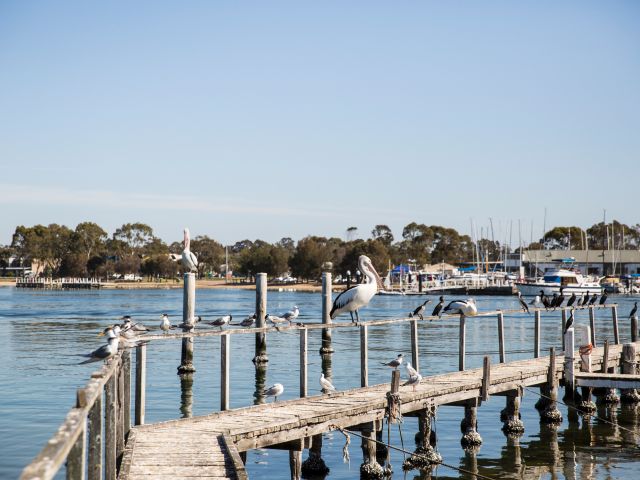
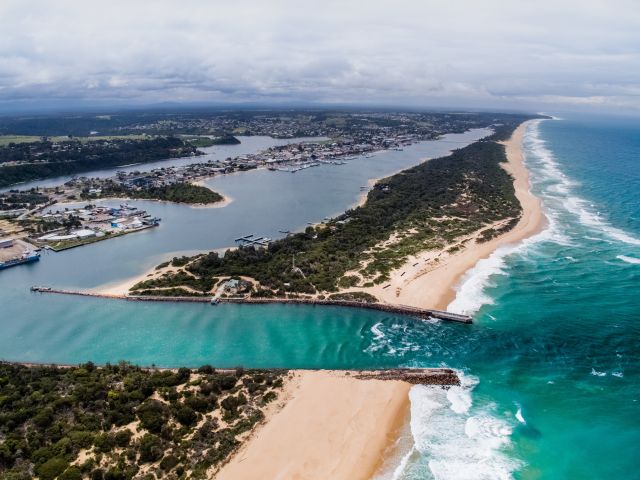
The Gippsland Lakes are a much-loved holiday spot in Victoria, but road-tripping further east reveals much more. Begin in Metung and time your visit with the monthly farmers’ market, or simply linger over lunch on the lawn of the Metung Hotel. Twenty minutes away is Lakes Entrance, where you can watch the fishing boats return with their catch.
Continue to Marlo, where the Snowy River spills into the sea, and Cape Conran for its many beaches and walks. If needing to stretch your legs, Croajingolong National Park is home to the historic Point Hicks Lighthouse and the Wilderness Coast Walk. Birdwatching and rainforest trails near Bemm River are worth a pit stop before arriving in Mallacoota, where the forest meets the sea.
Great Ocean Road
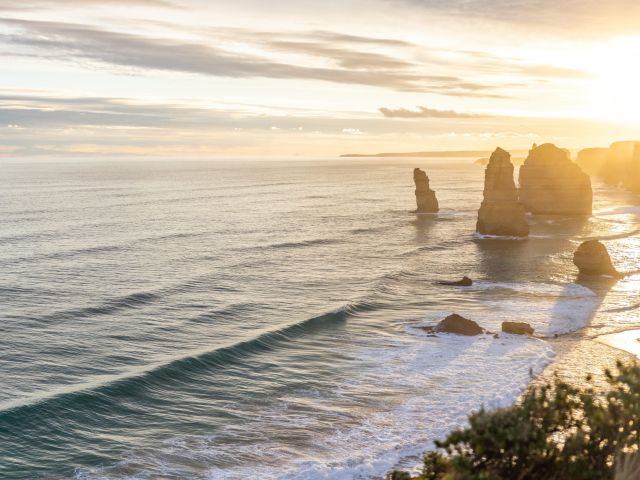
The 12 Apostles on the Great Ocean Road. (Image: Tourism Australia/Two Palms/Harry Pope)
Location: South-west Victoria, from Torquay to Allansford Duration: Approximately 250 kilometres / 4–5 hours but best over a minimum of three days
Victoria’s most famous road trip delivers it all: world-class surf breaks, rainforest walks, clifftop lookouts and wildlife encounters. The journey begins in Torquay, the state’s surf capital, then hugs the coast past Anglesea and Lorne to Apollo Bay, before curving inland through the lush rainforest of the Otways. Stop at Cape Otway Lightstation or take to the treetops at Otway Fly.
Between Cape Otway and Port Campbell lies the most photographed stretch – seven of the Twelve Apostles still standing, alongside the golden cliffs of Loch Ard Gorge. Further west, Warrnambool is a winter whale-watching hotspot, before the road winds to Port Fairy, a charming fishing village of whalers’ cottages, walking trails and offshore seal colonies further along the coast.
Location: Bellarine Peninsula Duration: Approximately 80 kilometres / 2–3 hours
The Bellarine Taste Trail is a feast for the senses, winding through coastal towns, past boutique wineries and artisan producers. It’s a choose-your-own-adventure style trail – simply grab a map and build your own delicious journey.
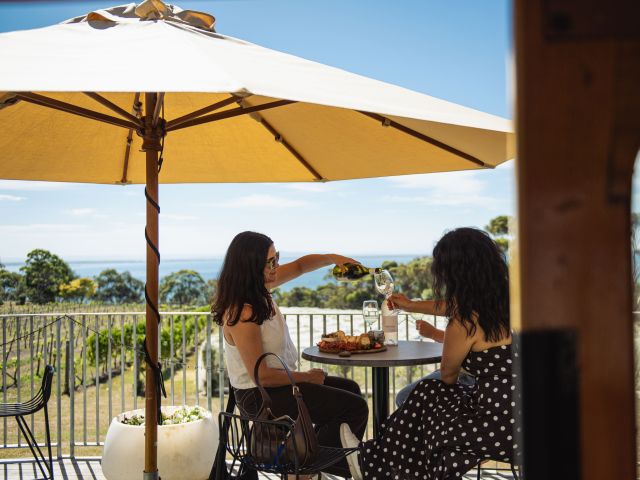
You might wander historic, seafront Queenscliff, sip wine in a converted tram bar at Terindah Estate, sample a locally distilled whisky at The Whiskery in Drydale or pick up a jar of honey at Wattle Grove in Wallington. Seafood lovers can head to Portarlington, famous for its mussels. Eat them fresh at local restaurants or head out on the water with Portarlington Mussel Tours.
O’Keefe Rail Trail – Bendigo to Heathcote
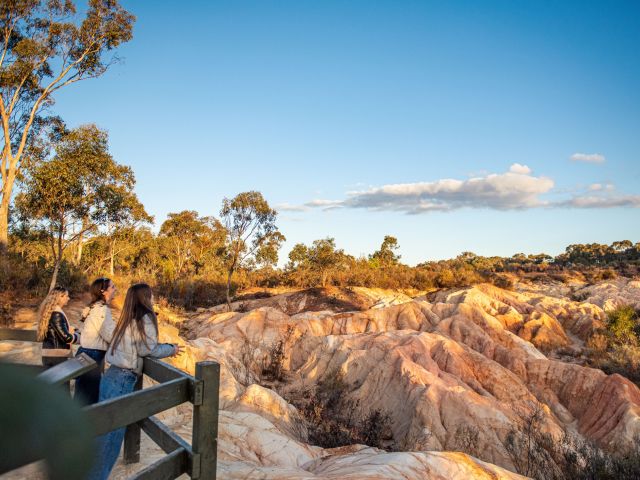
Pink Cliffs Reserve in Heathcote can be seen on the O’Keefe Rail Trail. (Image: Visit Victoria/Emily Godfrey)
Location: Central Victoria Duration: Approximately 50 kilometres / 4 hours cycling
Travellers first journeyed between Heathcote and Bendigo in 1888, when the railway line was built to link the towns. Trains stopped running in 1956, but today the route has a new life as the O’Keefe Rail Trail. The path is mostly level for easy riding, and along the way you’ll cycle past bushland, waterways and reserves. There are plenty of places to picnic, birdwatch, and if you’re lucky, spot a platypus.
The trail is well supported with water stations, bike repair points, shelters, and signage. Axedale makes a great halfway stop, with the pretty Campaspe River Reserve for a rest and local cafes for refuelling. Begin in Heathcote, known for its wineries and cafes, or in Bendigo, which is easily reached by train from Melbourne/Naarm. Shorter sections, such as Heathcote to Axedale, are also popular.
Goldfields Track – Ballarat to Bendigo
Location: Central Victoria Duration: Approximately 210 kilometres / 2–3 days cycling
The Goldfields Track traces a route once so rich in gold it made Melbourne one of the wealthiest cities in the world. Starting at Mt Buninyong, south of Ballarat, the trail leads mountain cyclists and walkers north through Creswick, Daylesford and Castlemaine before finishing in Bendigo. Along the way, you’ll encounter granite outcrops, eucalypt forests, rolling farmland and remnants of the region’s mining past.
As it passes through the lands of the Dja Dja Wurrung and Wadawurrung people, the track shares gold rush history and Indigenous stories brought to life by interpretive signs. Walk or ride the full trail or choose from one of its three distinct sections. With cosy stays, cafes and pubs, it’s easy to mix wilderness with comfort.