Four ways to experience an incredible Blue Mountains winter

hero media
With crisp air and vast landscapes, winter is the perfect time for a Blue Mountains adventure. Here’s four reasons why you need to visit.

1. Come out of your winter hibernation

Things only get better here during winter – the days may be cold and crisp but the sky is usually blue and clear, with visibility out to the Great Dividing Range. In the upper villages, ice and frost cover the ground with the occasional snowfall, creating a winter wonderland (and the perfect excuse to cosy up in front of a fire!). But when you get out and about, the best winter day is spent exploring Scenic World.

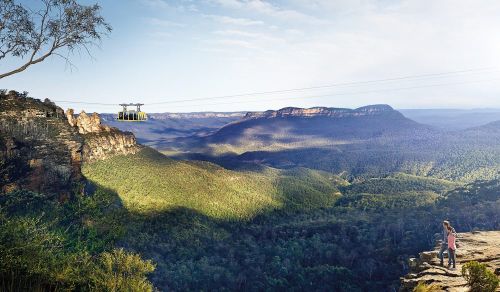
Start with an early ride on the Scenic Skyway to see the amazing views over Katoomba Falls and the Jamison Valley. Hop off at the Skyway’s eastern anchorage to get some photos from the lookout and stroll along the Prince Henry Cliff Walk to Echo Point to see the famous Three Sisters. Return to the main building by Skyway and from here take the steep iconic Scenic Railway down to the valley.

At the bottom walk along the Scenic Walkway over the Jamison Valley floor – during the colder months, and even in the rain, the colours of the rainforest surrounding the walkway are magnificent: mist shrouds the towering cliffs above, raindrops cling to the lush green leaves and birdlife is more active. From here, take the 545-metre ride up the Scenic Cableway to the top of the escarpment, enjoying views of the Three Sisters, Orphan Rock, Mt Solitary and Katoomba Falls as you go.
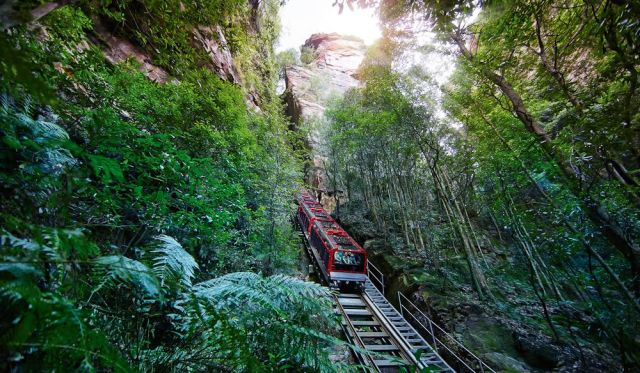
Steep: the Scenic Railway, Blue Mountains.

2. Get your walking shoes on

Take advantage of the free all-day parking at Scenic World, a great base to have an all-day walking adventure! Take the Scenic Skyway from the main building across the valley (suspended 270 metres in the air) to the east anchorage and enjoy the leisurely Prince Henry Cliff Walk.

Take in the spectacular views of the Jamison Valley as you meander along the escarpment which leads to the iconic Three Sisters. From here, take the Giant Staircase which winds down alongside the Three Sisters to the Jamison Valley floor. The Federal Pass in the Blue Mountains National Park will take you from here through the rainforest, via Katoomba Falls, and ends at the base of Scenic World.

From here, you can either get your heart pumping and climb the 1000 Furber Steps or take the Scenic Railway to the top. It will take around two hours from start to finish, though you may take longer when you see the views.

Need tips, more detail or itinerary ideas tailored to you? Ask AT.

AI Prompt

3. Celebrate a milestone

September marks the 70th anniversary of the Blue Mountains’ iconic Scenic World, which first opened in 1945 when Harry Hammon acquired the lease of the former historic Katoomba Coal Mine. Driven by visitors’ fascination of the steep railway that led into the rainforest, Hammon saw a wonderful opportunity to convert the old coal skips and tracks into a passenger train, which was to be the steepest in the world.

It still holds that esteemed title today, giving visitors unparalleled access to the World Heritage-listed Blue Mountains. Run by the same family, now in their third generation, Scenic World is the country’s most visited privately owned tourist attraction. To celebrate over 25 million visitors creating memories here, there are a number of special events planned to acknowledge this wonderful occasion.
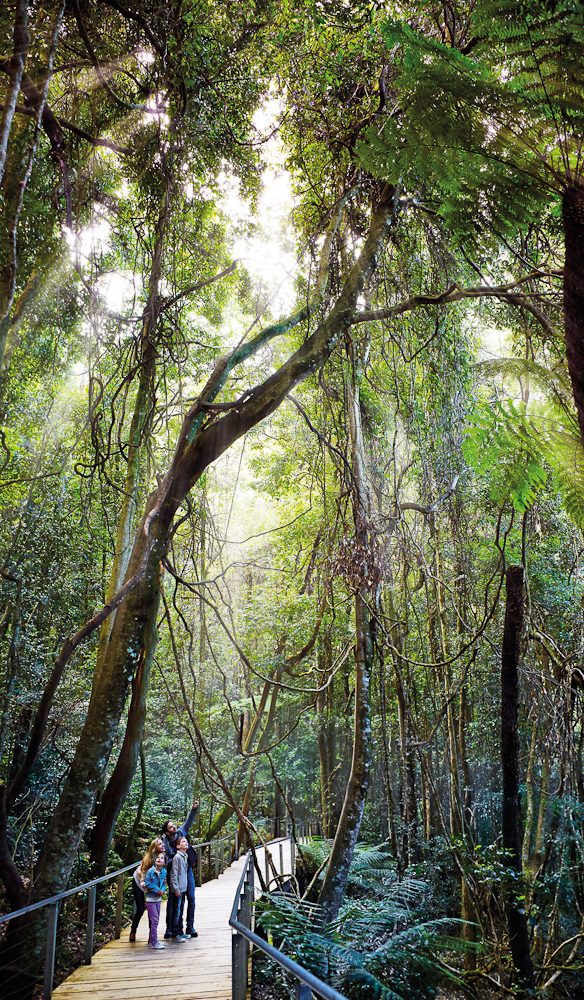
Enveloped by rain forest canopy, Blue Mountains.

4. Capture the perfect shot

If you’re a keen amateur photographer, the Blue Mountains is the perfect backdrop to test out your skills. Blue Mountains local and professional photographer Gary P. Hayes suggests the best spots to get snap happy on Scenic World’s blog. But we’ve listed our favourites here:


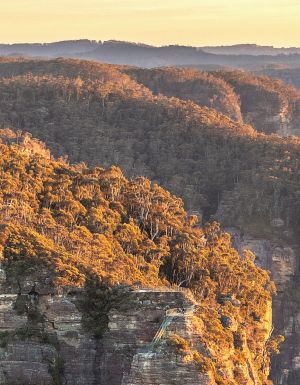
Middle Platform, Katoomba Falls: A great spot for sunset photos as the cliffs glow red – you get the close-up of the falls on your left and views into Jamison Valley and Mount Solitary.

Sublime Point, Leura: An easily accessible lookout which is great at sunrise, which lights up Mt Solitary and the back of the Three Sisters on the right.

Govett’s Leap, Blackheath: Hayes suggests this is the easiest but best vista lookouts with spectacular views, again best photographed at sunrise when the rays highlight the frequent valley mist.

Valley of the Waters, near Wentworth Falls: Take the descent into a deep gorge along the ridge from Conservation Hut for stunning waterfalls and great vistas. It’s an all-day walk but worth it!

Want to see more stories from Australian Traveller in your Google search results?

  1. Click here to set Australian Traveller as a preferred source.
  2. Tick the box next to "Australian Traveller". That's it.
hero media

This new tour takes you to the best and most unexpected parts of NSW’s outback

Credit: Destination NSW

    Dilvin Yasa Dilvin Yasa

    The outback is calling, and the adventure is made all the easier with this hot new AAT Kings’ tour.

    It’s the desert palette of rust-red earth and vast cobalt sky that calls you at first, for where better to get away from it all than the outback? Of course, once you start driving, taking note of all the weathered pubs, dusty tracks and tiny towns held together with humour, resilience and more corrugated iron than ever deemed possible, something else grabs a hold of you: the idea that far from the celebrated icons and landmarks associated with Australia, you’re finally immersed in an authentic slice of local life that few have ever experienced.

    Ancient landscapes, proud pastoral histories, ghost towns, culinary powerhouses and a rich Indigenous heritage; there are plenty of facets to life on the land. The best way to experience all of the above with both ease and like-minded friends? AAT Kings’ new Outback New South Wales Adventurer, a 9-day small group tour. This Sydney-return itinerary is designed to connect travellers not only with iconic outback destinations, but with the characters, culture and experiences that bring each place to life.

    Highlights? The Adventurer has more than a few, but here are eight to start.

    1. Broken Hill

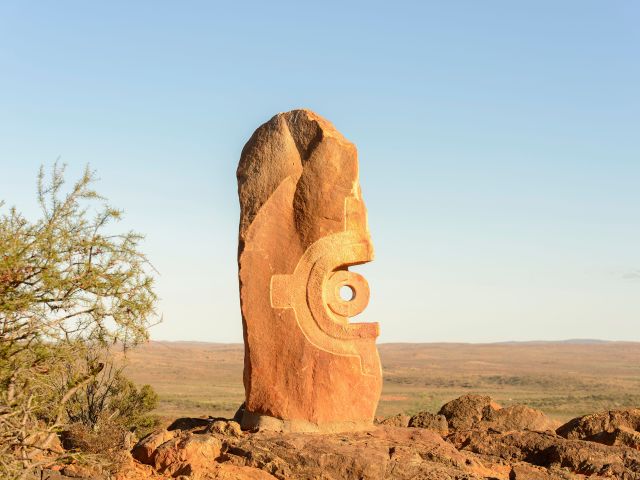
    See the striking art at Living Desert and Sculptures. (Credit: Destination NSW)

    Welcome to Broken Hill, where mining history, outback eccentricity and a surprisingly rich arts scene unite in a rusty desert landscape. In Australia’s first heritage-listed city, exploration is quickly rewarded. Begin with a guided walking tour taking in the city’s grand Victorian and Art Deco architecture. Later, enjoy visits to both the Broken Hill City Art Gallery and the Living Desert and Sculptures – the perfect place to enjoy the changing colours of an outback sunset. Of course, no visit to Broken Hill is complete without a stop at the historic Palace Hotel Broken Hill, famous for its role in The Adventures of Priscilla, Queen of the Desert. Happily, it makes for the perfect spot for dinner.

    2. White Cliffs

    people in a mine in white cliffs nsw
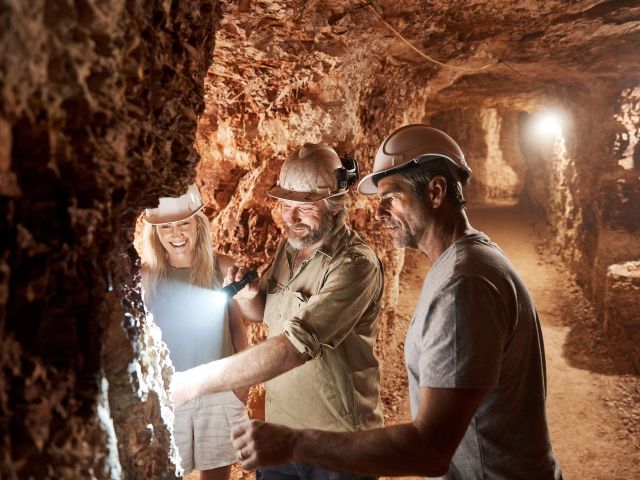
    Strap on your hardhat and head underground. (Credit: Destination NSW)

    Strap on your hardhat and start spending your imaginary fortunes; White Cliffs, Australia’s oldest commercial opal field, is begging you to come in search of rare pineapple opals. Admittedly, you’re much more likely to find white opals, but the true gems of White Cliffs – where much is built underground to escape the desert heat – are everywhere.

    Here, you’ll descend 13.5 metres underground into a working mine to learn about the region’s heritage, and observe how miners continue the search for these prized gemstones. Perhaps you’ll even find a couple yourself?

    3. Mungo National Park

    mungo national park nsw outback
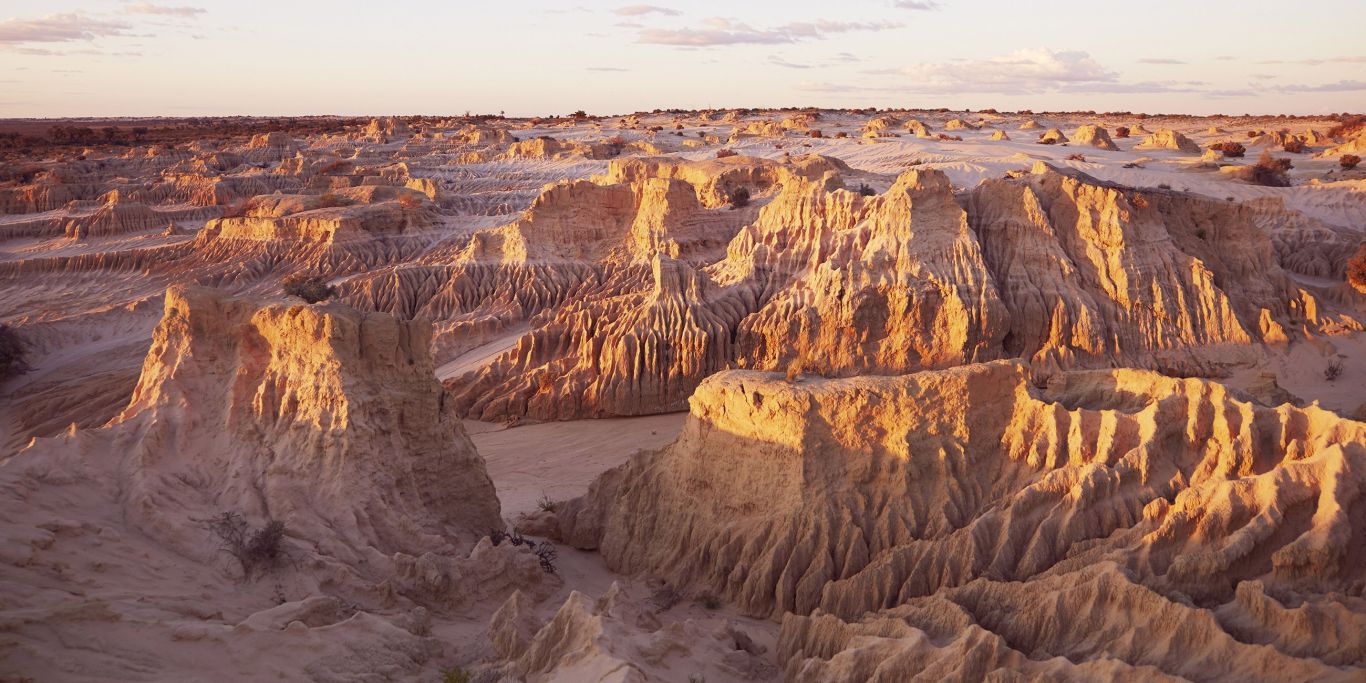
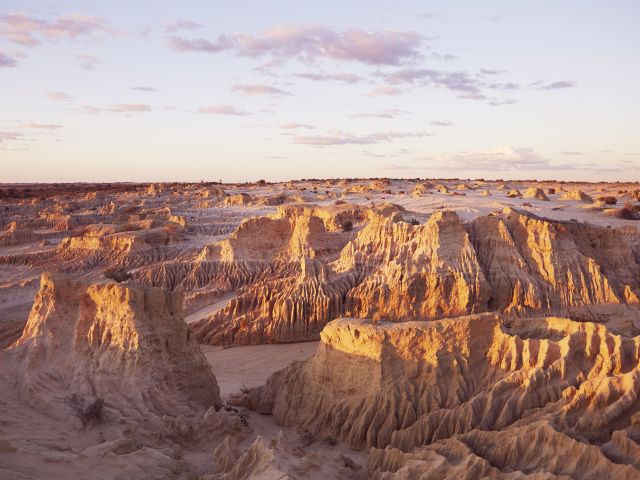
    Spend time in the striking, lunar-like landscape of Mungo National Park. (Credit: Destination NSW)

    With its lunar-like landscape made up of ancient, dried lake basins and sculpted sand and clay formations, a drive into UNESCO World Heritage-listed Mungo National Park is somehow two things all at once: uniquely Australian with vast outback skies, and somehow otherworldly, as though you’ve been dropped off by spaceship. At its heart lies the iconic Walls of China, a 30-kilometre sand-and-clay lunette shaped by thousands of years of erosion.

    Understanding more than 40,000 years of Barkindji, Mutthi Mutthi and Ngiyampaa history begins with a visit to the Visitor Centre, and concludes with a sunset tour led by local Aboriginal guides. A key experience? Learning about the discovery of Mungo Man and Mungo Lady. At 40,000+ years old, these are among the oldest human remains found anywhere in the world.

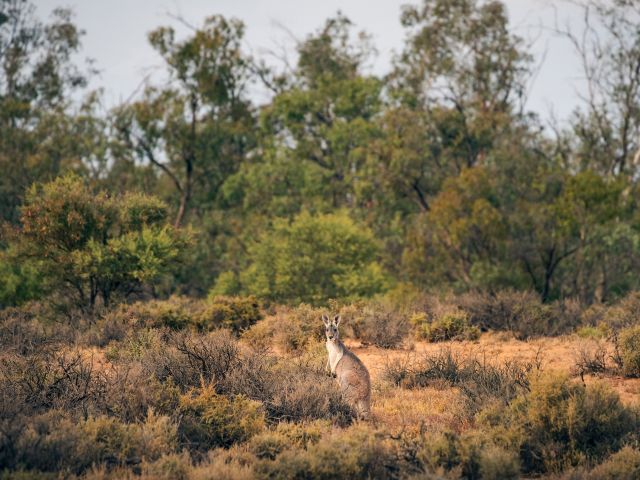
    4. Kinchega National Park

    kangaroo in Kinchenga National Park nsw
    Meet the locals of Kinchega National Park. (Credit: Destination NSW)

    Some come to Kinchega National Park for its iconic Darling River landscapes full of birdlife and haunting river red gums; others visit for its rich First Nations and pastoral history. Your visit will encompass all of the above, with a guided tour (part of AAT Kings’ MAKE TRAVEL MATTER Experience) designed to give a deeper understanding of Barkindji cultural heritage, history and traditions.

    Walk with local guide David as he shares ancestral knowledge and creation stories, and explains how native plants – through bush food and bush medicine – have sustained Indigenous communities for thousands of years. Then sit back and enjoy those views alongside native tea and sweet treats.

    5. Griffith

    chef at zecca restaurant in griffith
    Treat your tastebuds to ‘the food bowl of Australia’. (Credit: Destination NSW)

    How can you say no to a visit to a destination widely regarded as ‘the food bowl of Australia’? Shaped by fertile farmland and home to approximately 75 per cent of New South Wales’ wine grapes, this is a day to roll up your sleeves and enjoy the best gastronomy the state has to offer. Think vineyards, cellar doors, cafes and restaurants largely shaped by its multicultural heart (Griffith is not only home to over 60 nationalities, but has the highest proportion of Italian ancestry anywhere in Australia).

    6. Mudgee

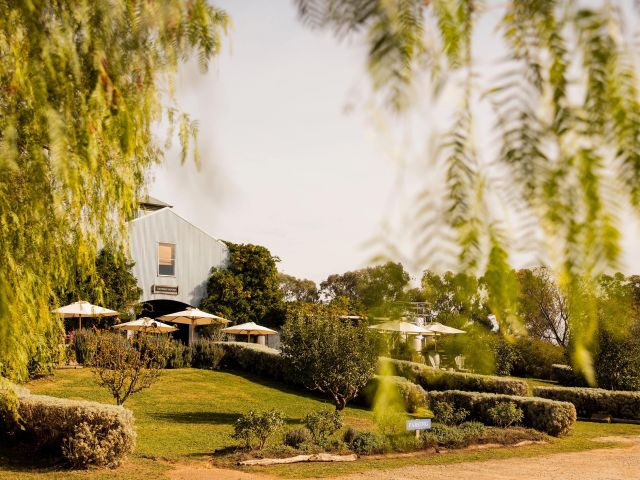
    exterior of lower wines in mudgee nsw
    Visit some of Mudgee’s best wineries. (Credit: Destination NSW)

    Nestled by the Cudgegong River, Mudgee packs a big punch for a heritage country town, having carved a reputation for itself as one of the country’s leading (and award-winning) wine regions, a key epicurean destination, and a regional arts centre growing in both visibility and vibrancy.

    Take a moment to enjoy the town’s 19th-century charm before heading to Lowe Family Wine Co. for a guided tasting of organic and biodynamic wine, followed by a relaxed lunch featuring a feast of homegrown and local produce. Will you walk away with bottles of Mudgee’s iconic reds under your arms? It’s a distinct possibility.

    7. Silverton

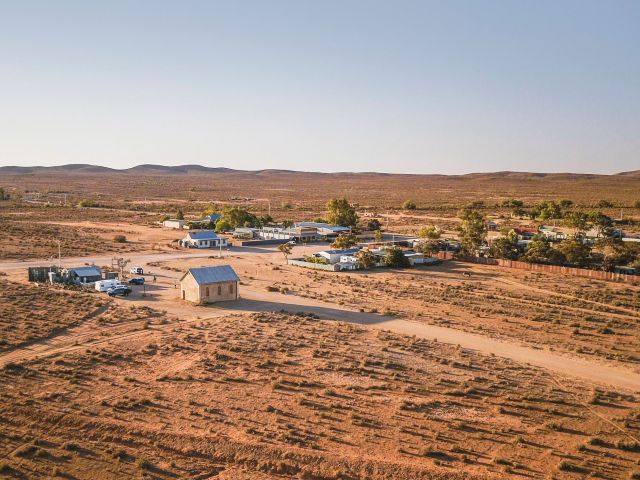
    see the living ghost town of silverton on AAT Kings new NSW outback tour
    See the living ghost town of Silverton.(Credit: Destination NSW)

    A once-booming silver mining hub, the dystopian setting for Mad Max 2, and now a tranquil settlement that’s home to around 50 people; Silverton is considered a living ghost town and remains a sight to behold.

    Take time to explore its heritage streets (and perhaps take a look at the quirky Mad Max 2 Museum) and the Silverton Hotel, an iconic outback pub, before a visit to Silverton Gaol & Historical Museum. It’s home to a wealth of colonial artefacts, early mining equipment and stories from the outback’s pioneering past which will serve to anchor you firmly in place.

    8. Shear Outback

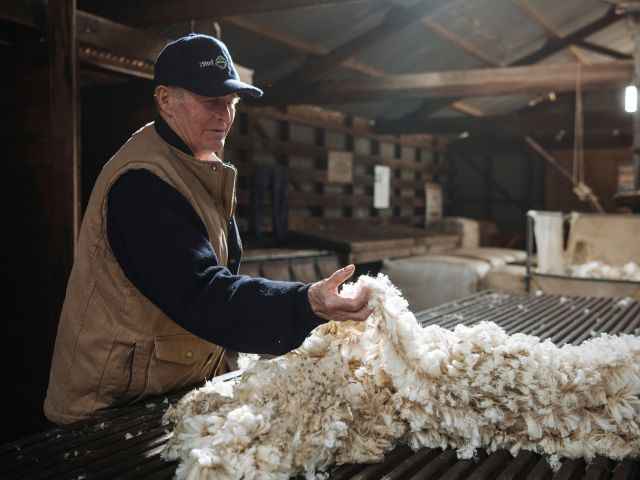
    man working at shear outback in nsw
    Get a glimpse behind the wool curtain. (Credit: Destination NSW)

    If you ever find yourself singing, “click go the shears boys, click, click, click…”, you’ve come to the right place. Shear Outback, an award-winning tourist and education attraction located in Hay, brings to life the traditions and stories of one of the outback’s most enduring industries: sheep shearing.

    Here, in the heart of the Riverina, you’ll enjoy live shearing demonstrations, meet the shearers, shedhands, sheepdogs and yes, sheep, who come together to show guests exactly what it takes to provide Australians with all that glorious wool.

    Discover more of Outback NSW with AAT Kings. Visit aatkings.com.