
Discover secrets amid rolling splendour with our guide to the best Blue Mountain hikes.
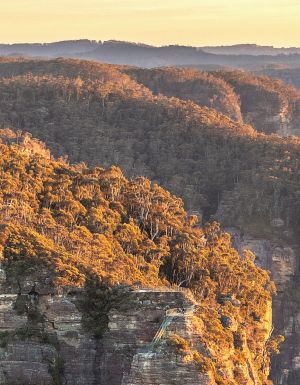
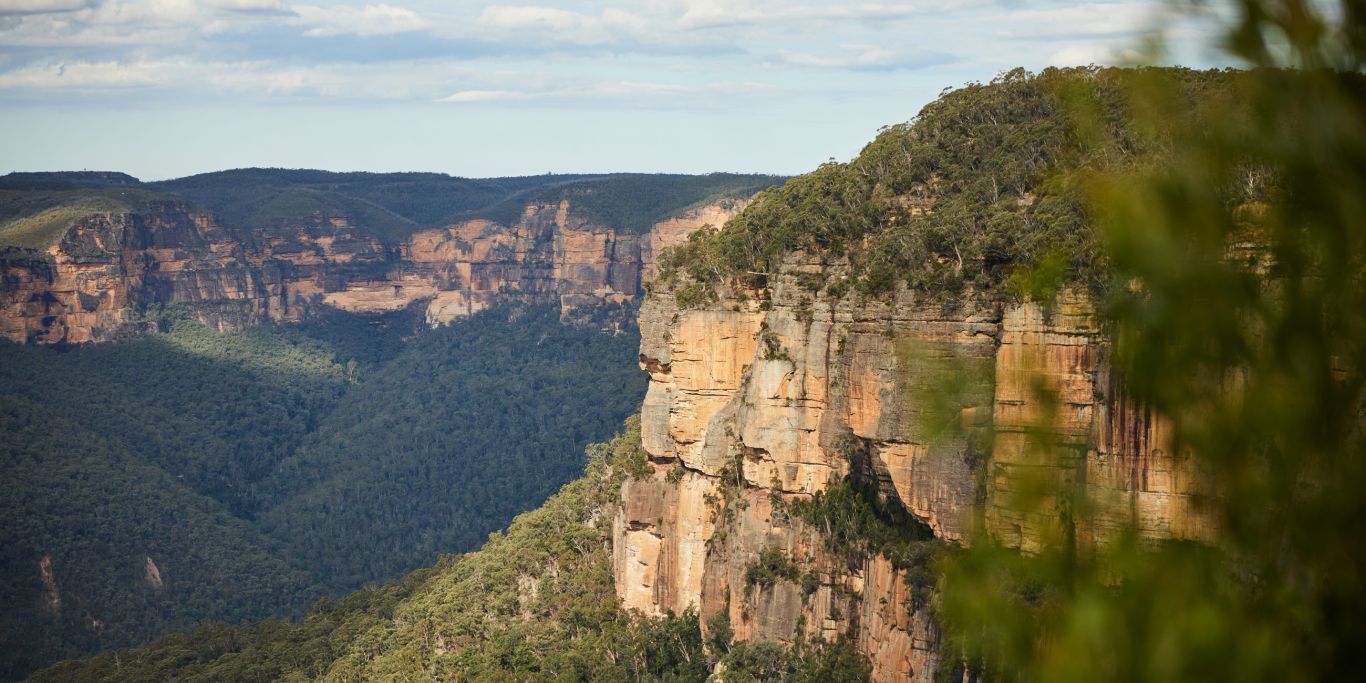
Stretching across one million hectares, the World Heritage-listed Blue Mountains is home to the most visited national park in New South Wales. Notching up a record-breaking 7.8 million visitors between 2025 and 2026 alone, the Blue Mountains National Park is a playground for serene step-counting. Offering a vast web of walks that trail soaring sandstone cliffs, tranquil pockets of both eucalypt forest and rainforest, and unceasing waterfalls, the best Blue Mountains hikes dial up heart rates while simultaneously dazzling. Here’s my pick of the unmissable routes.
In short
If you only have time for one of the best Blue Mountains hikes, make it the Grand Canyon Track for its diverse, jaw-dropping scenery across such a short expanse. Waterfalls, high-drama cliffs, lush forest – you name it, it’s here waiting for you.
1. Grand Cliff Top Walk
Where: Wentworth Falls to Katoomba
Distance: 19 kilometres
Difficulty: Grade 3 – some bushwalking experience is needed
Accessibility: While the track itself doesn’t cater to visitors with access needs, type Jamison lookout, Gordon Falls picnic area, Echo Point lookout and Cliff View lookout into Maps because they’re each accessible and offer disability parking spots.
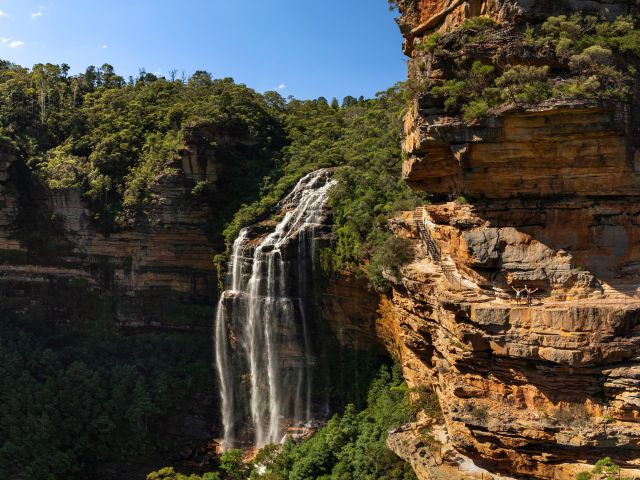
If time is on your side, the two-day Grand Cliff Top Walk is the newest pick of the Blue Mountains hiking crop and worthy of every effort given its valiant European Camino Santiago village-to-village vibes. The latest addition to NSW National Parks’ Great Walks, it combs the Jamison Valley escarpment to offer vast, yawning views (stretching out past 50 kilometres on a good day) from Wentworth Falls Station to Katoomba’s Scenic World. Pack your PJs and toothbrush with your usual day hike items before seizing local accommodation for the night. You can expect an established single track peppered with both natural and landscaped steps.
Tip: Don’t miss the Pool of Siloam waterfall and lookout. It’s an idyllic spot to tuck into a snack or few.
2. The Cox’s Cave Circuit
Where: Mount Victoria
Distance: 1.6 kilometres
Difficulty: Grade 3 – some bushwalking experience is needed
Accessibility: This track does not cater to visitors with access needs
A brief-but-sweet Blue Mountains hike with a serious adventurous streak, the Cox’s Cave Circuit takes you from the Mount Piddington Lookout into what feels like a hidden pirate’s cave. Your imagination will run rampant as you climb an exposed ladder and enter the hidden grotto, but visitors should note that part of the trail was closed mid-2026 so you’ll need to climb back up a steep hill as opposed to trailing the currently closed loop back.
Tip: Go for seriously grippy shoes as the trail is often wet, muddy and overgrown throughout the year.
3. Grand Canyon Track
Where: Blackheath
Distance: 6.3-kilometre loop
Difficulty: Grade 3 – some bushwalking experience is needed
Accessibility: This track does not cater to visitors with access needs
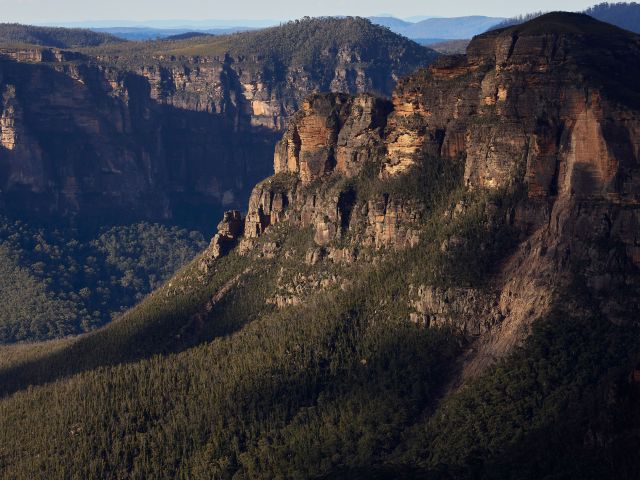
The award-winning Grand Canyon Track will take you down through sandstone cliffs and an array of habitats, all to the sound of an ancient waterway. Typically taking three to four hours to complete, the Blue Mountains hike feels like a storybook brought to life as sandstone blocks provide stepping stones and small tunnels beg to be explored. Countless shades of green will envelop you while every visit is rewarded with dramatic views across the Grose Valley. Expect a well-maintained track that can be slippery and uneven in parts, and some stairs.
Tip: If you start this Blue Mountains hike from the Grand Canyon Carpark (which has a toilet) and walk in an anticlockwise direction towards Neates Glen, you’ll score vistas from Evans Lookout at the end of a steep ascent.
4. Empire Pass Track via Dantes Glen
Where: Lawson
Distance: 5.5-kilometre loop
Difficulty: Grade 3 – some bushwalking experience is needed
Accessibility: This track does not cater to visitors with access needs
One of Lawson’s local secrets, the Empire Pass Track is littered with magical rock pools and water holes for the most serene of swimming during the warmer months. Hugging a small cliff overhang, a short section of steps leads down to beautiful Dantes Glen. Keep walking along a verdant trail for St Michaels Falls and Frederica Falls, too. This is a great Blue Mountains hike for active kids to join their parents.
Tip: Look for an old, ruined tower as you drive through North Lawson to the trail’s start; it’s the remains of the Blue Mountain Sanatorium.
5. Fairfax Heritage Walking Track
Where: Blackheath
Distance: 1.8 kilometres one-way
Difficulty: Grade 1 – no bushwalking experience is needed
Accessibility: This track welcomes guests with access needs, including wheelchairs, as there are no steps
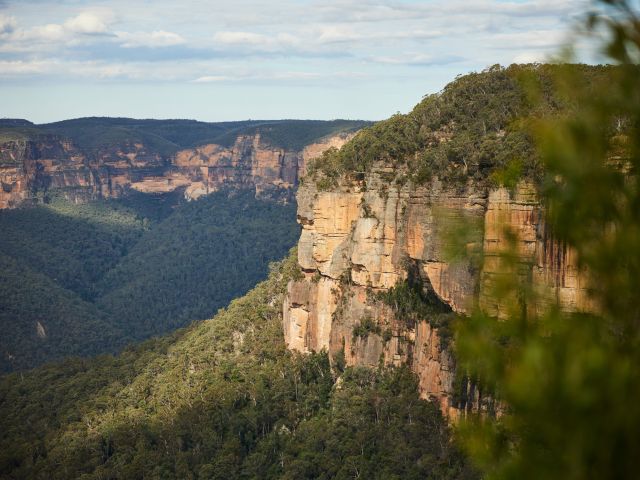
If you’re staying in Blackheath and need to walk off indulging at one of its most charming restaurants, the Fairfax Heritage Walking Track is a tiny-but-mighty choice. Also popular among families hoping to connect young ones with nature, this Blue Mountains hike is so gentle that you’ll struggle to break a sweat. Start at the National Parks Visitors Centre, near Govetts Leap lookout, before meandering through eucalypt forest towards views across the Grose Valley from George Phillips Lookout and Govetts Leap. Expect a sealed, well-formed trail for easy outdoor exploration all year round.
Tip: If you visit in October, you’ll likely spy erupting waratahs to vividly illuminate your adventure.
6. Porters Pass and Colliers Causeway Loop
Where: Blackheath
Distance: 6 kilometres
Difficulty: Grade 3 – some bushwalking experience is needed
Accessibility: This track does not cater to visitors with access needs
A local’s secret amid beautiful Blackheath, the Porters Pass and Colliers Causeway Loop is a hit with both local nature lovers and sporty rock climbers. Starting at the Centennial Glen car park, just 1.2 kilometres from Blackheath Station, the track descends hand-carved rock steps beside the waterfalls and cascades of Centennial Glen Creek. As this hike swings away from the creek, you’ll gaze up at sandstone cliffs before the Kanimbla Valley opens before you. Rainforest gullies, dripping with green life, draw you upwards through well-formed paths before you wander back to the car. Be cautious while navigating uneven and slippery surfaces.
Tip: Seize a toilet stop at the end of Centennial Glen Road before you take off.
Need tips, more detail or itinerary ideas tailored to you? Ask AT.
AI Prompt
7. Victoria Falls Walking Track
Where: Mount Victoria
Distance: 4 kilometres return
Difficulty: Grade 4 – there are many steps and some bushwalking experience is needed
Accessibility: This track does not cater to visitors with access needs
If your knees are strong and scrambling up behind a waterfall is your idea of a good time, the Victoria Falls Walking Track is made for you. The hike, which typically takes about 2-2.5 hours to complete in full, starts at Victoria Falls Lookout before descending a well-defined bush track to the Victoria Creek Cascades and gorgeous Victoria Falls. Soak up a refreshing dip because you’ll need to start cool before hitting the lung-busting 300-metre vertical ascent back to the car park.
Tip: It’s a sensational scene down at the bottom, particularly on a warm day, but visitors should note that the walk back up takes at least an hour on average – only those with serious tickers should get involved.
8. Six Foot Track
Where: Katoomba to Jenolan Caves
Distance: 42 kilometres one way
Difficulty: Hard – experienced bushwalkers only
Accessibility: This track does not cater to visitors with access needs
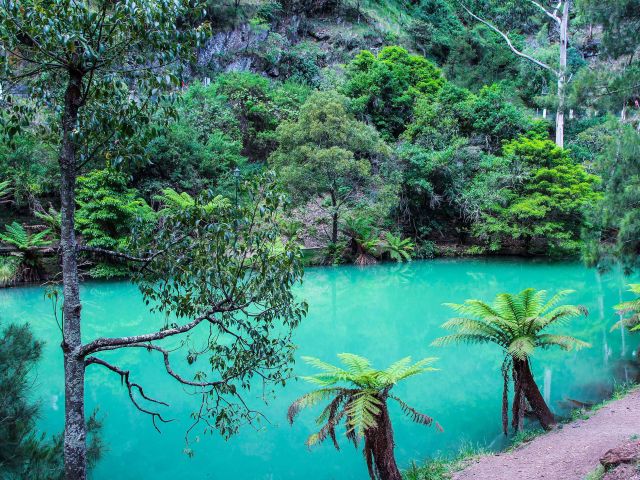
Arguably one of the most famous Blue Mountains’ multi-day hikes (it takes three days to complete), the Six Foot Track route starts in Katoomba and winds all the way to Binda Bush Cabins on Jenolan Caves Road. It once ended at Jenolan Karst Conservation Reserve, but the stunning preserve is currently closed. Labelled for its six-foot width, originally intended to accommodate horse and carts, the well-established trail is full of steep ascents and descents through ancient woodlands.
Tip: If you’re capable of carrying a pack on your back, this Blue Mountains hike is dotted with many overnight camping spots. Check out the National Parks website for permit costs and details.
9. Walls Cave
Where: Blackheath
Distance: 1.8 kilometres return
Difficulty: Grade 3 – there are some steep stairs
Accessibility: This track does not cater to visitors with access needs
It’s not surprising that voices dissolve into whispers upon approaching Walls Cave. The spot was a significant habitation site for the local Darug people, and its hallowed, wave-like sandstone roof feels like an embrace from the past. Expect to take about 45 minutes in total, and stretch your hamstrings before you set off as this Blue Mountains hike taps into one serious leg session.
Tip: If you’re sure-footed on slippery tracks, take the side trip to the right to discover a hidden canyon.
10. Lyrebird Dell Walking Track
Where: Katoomba
Distance: 1.7km loop
Difficulty: Grade 3 – some bushwalking experience is needed
Accessibility: This track does not cater to visitors with access needs
The short Lyrebird Dell Walking Track is perfect for anybody who’s craving a hit of natural wonder before returning in time for afternoon scones and tea. Taking on average about an hour to complete, the well-signposted Blue Mountains hike is littered with tree ferns, babbling brooks and waterfalls, kicking off at Gordon Falls Reserve before following a soothing creek, waterfalls and a historic picnic cave, ahead of winding down to the magical Pool of Siloam waterhole.
Tip: The picnic cave, which even provides tables, deserves a dedicated spread to recreate the frequent 1930s gatherings of honeymooners and languid weekenders.
11. Nature Track
Where: Wentworth Falls
Distance: 3.3-kilometre loop
Difficulty: Grade 3 – some bushwalking experience is needed
Accessibility: This track does not cater to visitors with access needs
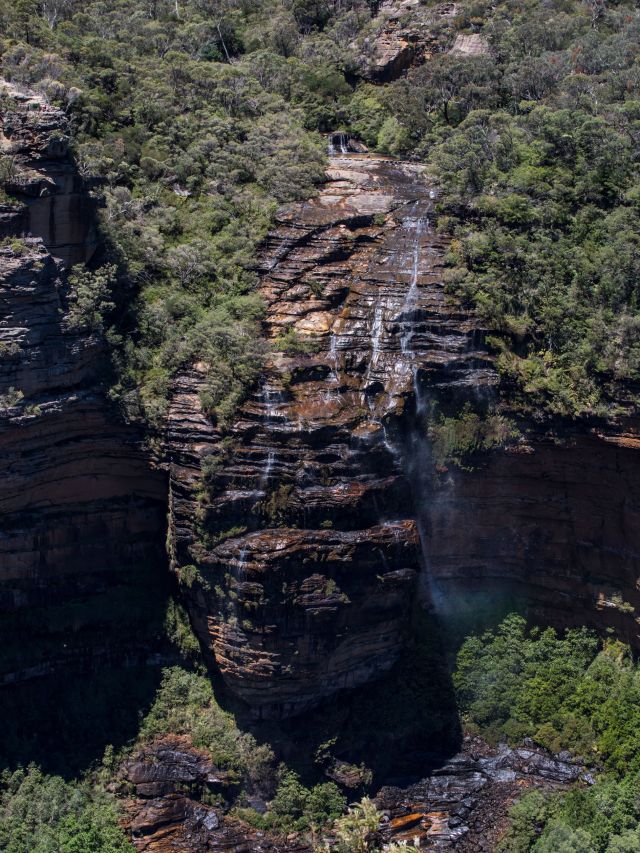
The beautiful Nature Track near Wentworth Falls offers cooling off within mountain creeks, views across enclosed gullies, and glimpses into Empress Canyon. Framed by the constantly changing vegetation of mountain heath and ironstone banded cliffs, this walk really treats you to a bit of everything. Expect an established walking track with some uneven steps.
Tip: On a hot day, you’ll be glad you wore your bathers underneath because dipping into the trail’s pretty rockpools feels pure idyllic.
12. Lockley Pylon Walking Track
Where: Blackheath
Distance: 7 kilometres return
Difficulty: Grade 3 – some bushwalking experience is needed
Accessibility: This track does not cater to visitors with access needs
Crossing to the remote northern end of Leura, the Lockley Pylon Walking Track will see you drive out on a fire trail, best accessed by AWD or 4WD vehicle. Heading out from a tiny car park, the Blue Mountains hike ventures along an undulating ridgetop with commanding views from every angle. As you approach the summit, you’ll be gob-smacked by a serious top-of-the-world feeling. Expect an uneven single track that should be avoided after heavy or prolonged rain as Mount Hay Road may become impassable.
Tip: It’s a birdwatching haven all year round but if you’re there in spring, you’ll also spy spectacular wildflowers like red lambertia shrubs and the pink flannel flower.
12. South Lawson Waterfall Circuit
Where: Lawson
Distance: 3 kilometres
Difficulty: Grade 2 – mostly flat with occasional steps
Accessibility: This track does not cater to visitors with access needs
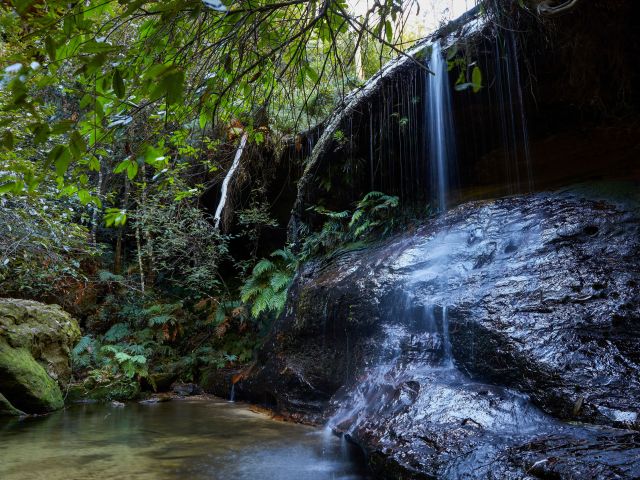
Any landscape photographer worth their salt has heard of the South Lawson Waterfall Circuit, a trail through South Lawson Park which dates back to the 1870s. It links five picturesque waterfalls on an established but – in parts – slippery trail and remains popular with locals as a dog-friendly bushwalk. Start at the trailhead near 95 Honour Avenue in Lawson.
Tip: If you’re bringing your four-legged pal, always keep them on a leash.
Weekly travel news, experiences
insider tips, offers, and more.
13. Blue Gum Swamp and Shaws Ridge Loop
Where: Winmalee
Distance: 13.5 kilometres
Difficulty: Grade 3 – some bushwalking experience is needed
Accessibility: This track does not cater to visitors with access needs
Suitable for hiking, trail running or mountain biking, the 13-kilometre loop (including an optional add-on to the spectacular Grose Mountain Lookout) Blue Gum Swamp and Shaws Ridge Loop scratches all the itches. Think giant trees, a breathless ascent to inflate the lungs, and quiet views across the lesser-visited lower Grose River.
Tip: Take the loop anticlockwise to avoid coming down a steeper switchback.
14. Red Hands Cave Walking Track
Where: Glenbrook
Distance: 8-kilometre loop
Difficulty: Grade 3 – some bushwalking experience is needed
Accessibility: This track does not cater to visitors with access needs
Marvel in some of the best examples of Indigenous stencil art across the Sydney Basin along the Red Hands Cave Walking Track. A quiet gully that draws abundant bird life, the Blue Mountains hike trails you beside Campfire Creek, where you’ll spy axe-grinding grooves as the gentle trickle of water flows towards Glenbrook Creek and Jellybean Pool.
Tip: Expect a well-formed walking track for the most part, but there are some stairs and uneven surfaces so wear grippy boots.
Tips for tackling the best Blue Mountains hikes
The easiest way to keep safe is by abiding by the acronym TREK:
T = Take what you need
R = Register your intentions (tell someone where you’re going)
E = Emergency communications (mobile phones won’t always work, so grab a Personal Locator Beacon if you’re heading somewhere remote)
K = Know your route and stick to it
The best Blue Mountains lookouts
By its very nature – a gradually rising plateau – the Blue Mountains is fringed with dramatic lookouts and viewpoints. Get across the best outlooks, and which valleys they lie in, to capture incredible sights every time of the day.
Blue Mountains lookouts to the north: Grose Valley (Blackheath, Medlow Bath, North Leura)
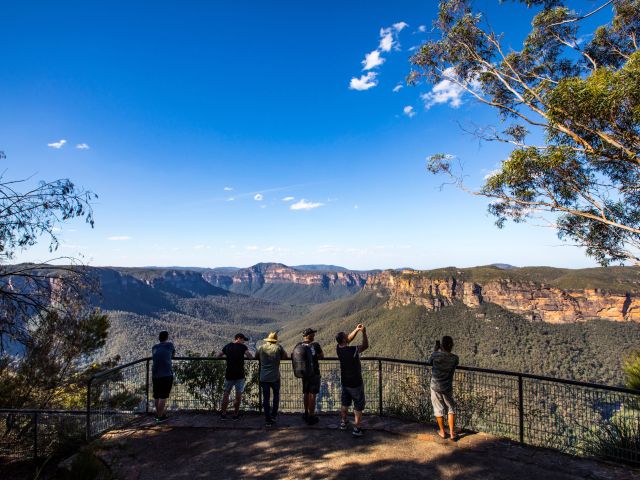
Anvil Rock (via Perry’s Lookdown Road)
Baltzer Lookout with views to Hanging Rock
Govetts Leap (which is wheelchair accessible)
Evans Lookout (which is wheelchair accessible)
Mount Banks (via Bells Line of Road)
Walls Lookout (via Bells Line of Road)
Blue Mountains lookouts to the south-west: Megalong Valley (Blackheath, Katoomba)
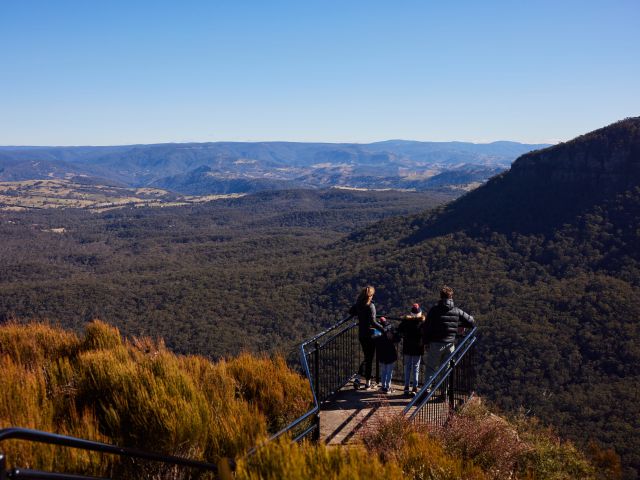
Hargraves Lookout (end of Shipley Road, Blackheath)
Cahills Lookout (Cliff Drive, Katoomba)
Narrowneck Lookout (Cliff Drive, Katoomba)
Blue Mountains lookouts to the south: Jamison and Kedumba Valleys (Katoomba, Leura)
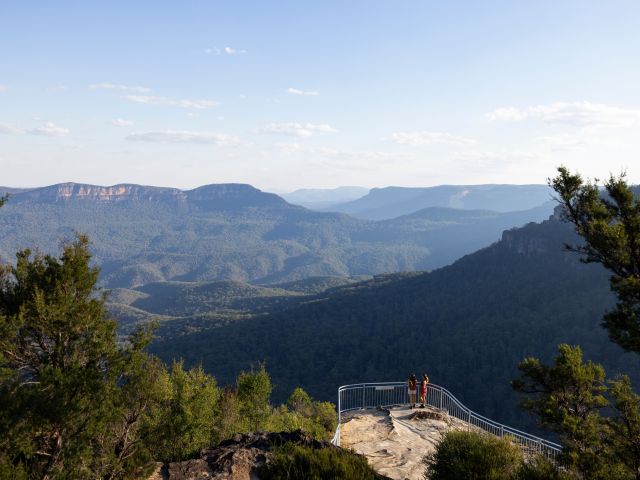
Cliff View Lookout (Prince Henry Cliff Top Walk, near Scenic World)
Echo Point (Three Sisters)
Olympian Rock (via Olympian Parade)
Sublime Point (end of Sublime Point Road)
Fletchers Lookout with views of Wentworth Falls (via Wentworth Falls Picnic Area)
Want to see more stories from Australian Traveller in your Google search results?
- Click here to set Australian Traveller as a preferred source.
- Tick the box next to "Australian Traveller". That's it.