First look: We found Australia’s first bubbletent in a tree

hero media
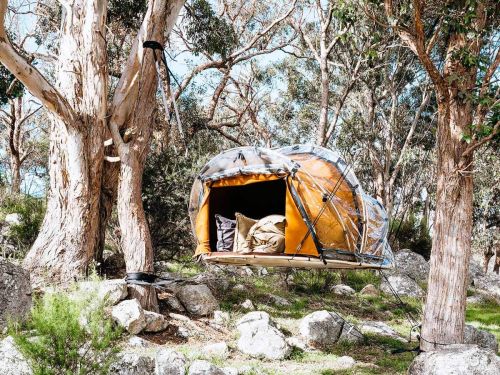
Suspended between gum trees in New England high country, this tiny bubbletent is one of three new ways to sleep under the stars.

The GlamSwag

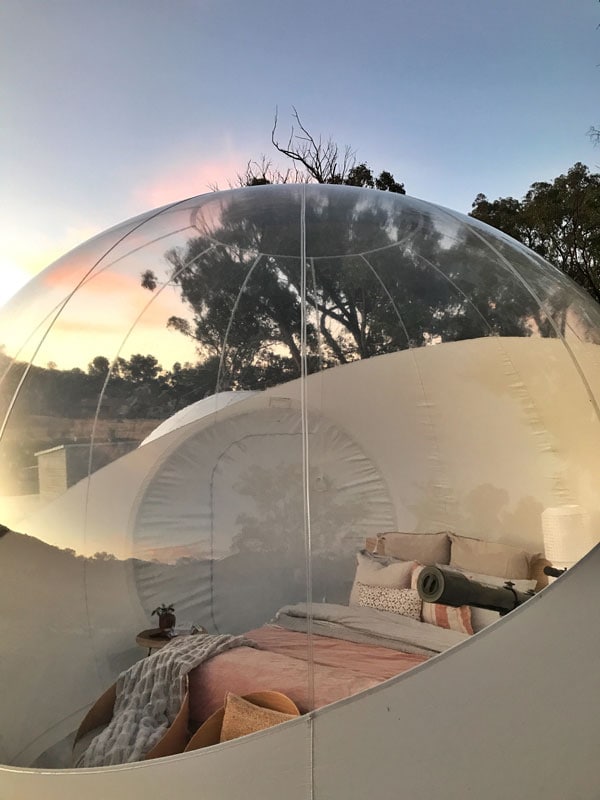
As I hop up into the baby bubbletent I feel like a kid who’s discovered a strange new treehouse. At first the tent wiggles with me but when I stop moving about and laughing it quickly stabilises and I’m floating in the air between the trees.
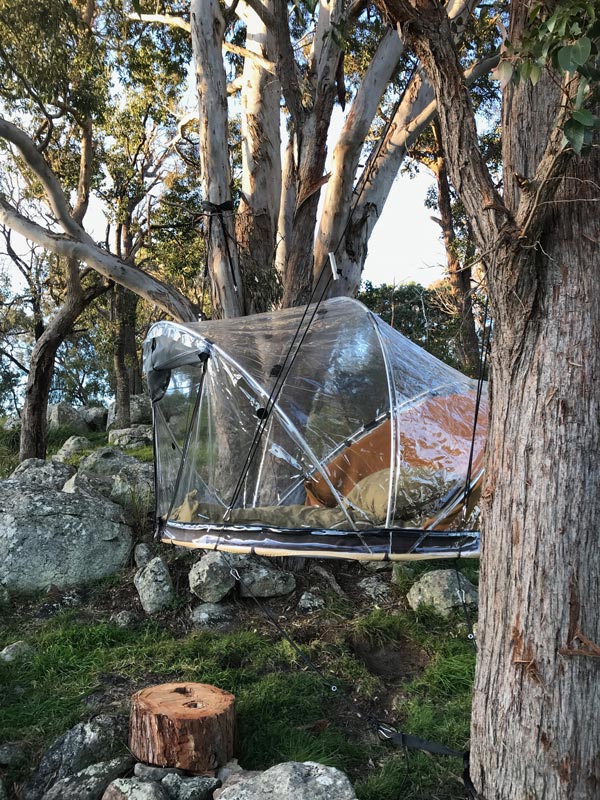
The tiny Mary Ann Bugg bubbletent
The tiny Mary Ann Bugg bubbletent at Mirumiru is suspended between two trees. (Image: Amanda Woods)

My feather-filled, linen-covered GlamSwag adds to the floating on a tiny cloud feeling and while I could go for privacy and extra warmth by keeping the inner frame raised I quickly disconnect it and push it to the back of the tent so I can see everything around and above me.
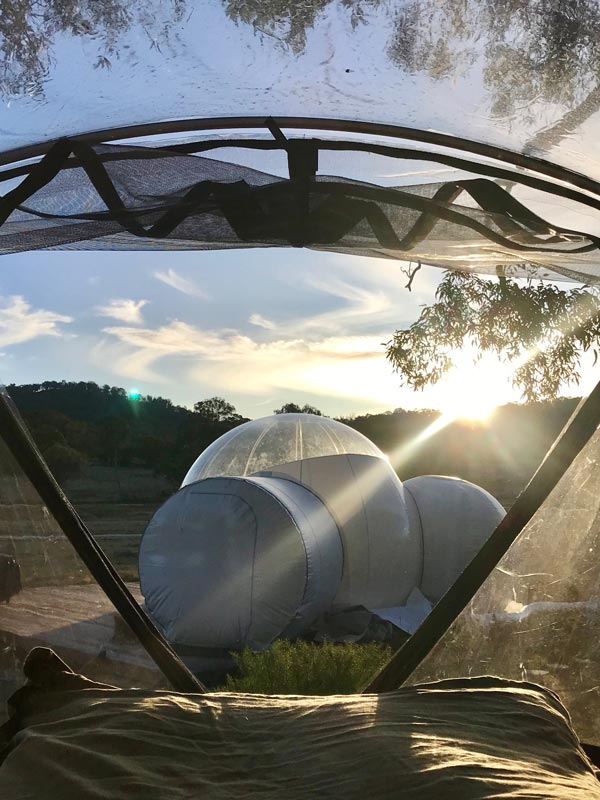
Mirumiru Mary Ann Bugg suspended bubbletent
The view looking out from the Mary Ann Bugg suspended bubbletent at Mirumiru. (Image: Amanda Woods)

I could stay here all night, but as we’re just outside of Tenterfield in New England NSW and heading for sub zero temperatures I decide to save that for the warmer months. Instead, I soak up the afternoon sun and watch the sun set before climbing back down to solid ground and moving into the bigger bubble where cashmere sheets over an electric blanket await.

The Mirumiru story

When Cathryn van der Walt and her husband Brad Middleton travelled the world together they would always make time to look up at the stars. Creating a luxury star gazing experience on their family farm became a passion project and after pushing through COVID-19 and other challenges Mirumiru Bubbletent opened in April 2022.
Closeup of Mirumiru bubbletents
Means bubble in Aotearoa (Maori). (Image: Amanda Woods)

In a nod to Brad’s home country of New Zealand Mirumiru (pron: me-roo me-roo) means bubble in Aotearoa (Maori), and the tents are named after bushrangers who used the granite countryside as cover in years gone by: Captain Moonlite, Captain Thunderbolt, and one of Australia’s first female bushrangers and Thunderbolt’s partner, Mary Ann Bugg.

As well as providing a special way to stay, Cathryn is committed to working with local artisans, artists and service providers to help give back to this part of regional Australia.
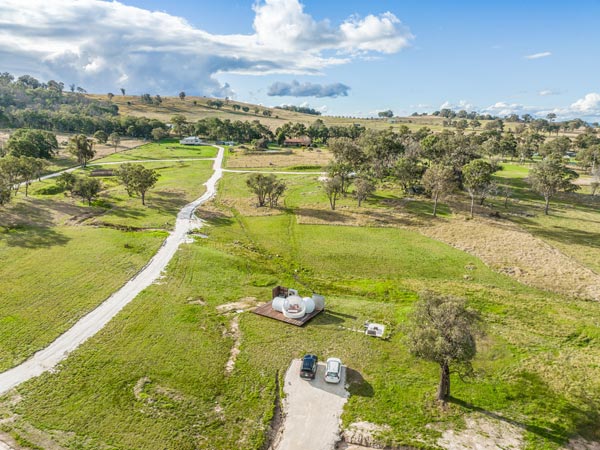
Aerial view of Mirumiru bubbletents
The owners of Mirumiru brought their dream of creating a luxury star gazing experience on their family farm to life. (Image: Sera Wright)

The Bubbletents

“It’s like a submarine," Cathryn explains as she unzips the first door. “You need to step inside and close one door before you can open the next one."

In the inflated hallway a small wardrobe holds fresh towels, slip on shoes, games and a first aid kit, and provides both hanging and shelf space for clothes. There’s a cooler style fridge for food and drink, and a cocktail making kit for guests to whip up their favourite tipple.
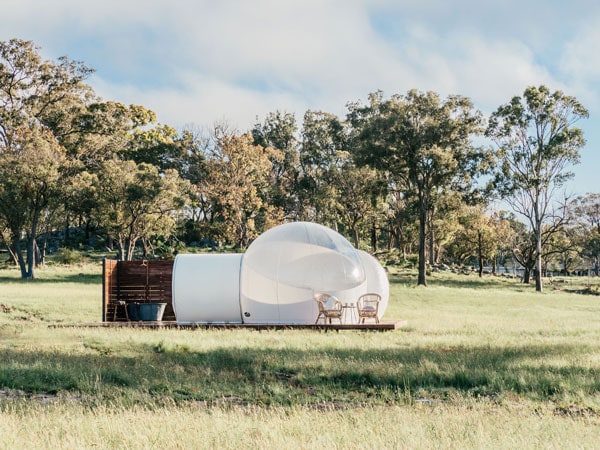
Captain Moonlite Mirumiru Bubbletent
The writer opts to stay in one of the larger bubbletents for her winter stay. (Image: Sera Wright)

The room

Through the next zipped doorway in the main bedroom I find a queen bed made up with luxury linens, a bedside table, lamp and reading lights, and a telescope for a closer look at the moon and planets above. On the other side of the bedroom a third bubble within the bubble holds the bathroom with a composting toilet and hand basin with a pump tap.
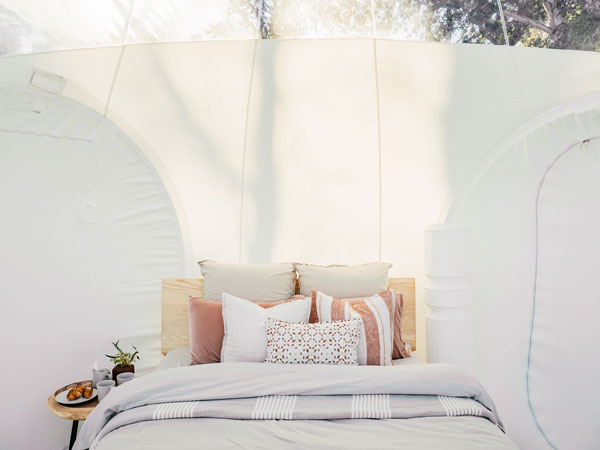
Inside Captain Thuderbolt Mirumiru Bubbletent
Luxe bedding features in the main bedroom.(Image: Sera Wright)

The amenities

The two big bubbletents, Captain Thunderbolt and Captain Moonlite are the same size and have an outdoor bathtub with hot and cold running water, a kitchenette with a gas stove and kettle, cooking pots and a fry pan and crockery and cutlery.
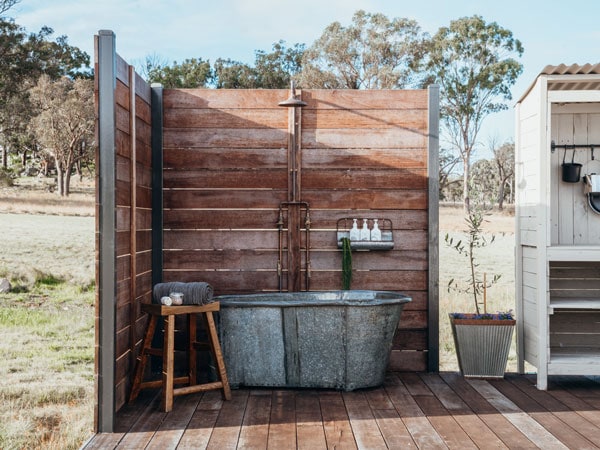
Outdoor tub at Mirumiru
Soak up the views from the private outdoor tub. (Image: Sera Wright)

Number of guests

The big bubbletents sleep two adults each but thanks to the mini bubbletent the Thunderbolt and Mary Ann Bugg combo can sleep two adults and three children. Or possibly two adults in the big bubble and another adult or two in the mini Mirumiru, which has a 200kg limit.

Highlights

I may be accustomed to sleeping in new beds around the world but when I sleepily wonder where I am at 3am and then look up and see stars I know there’s no chance I’ll be falling straight back to sleep.

Stargazing

With the rise in astrotourism an increasing number of travellers are chasing star filled skies. Lying back in my warm bed I can see the Southern Cross and countless other stars in the Milky Way and just as I’m thinking how appropriate the word stargazing is, a shooting star streaks across the sky.
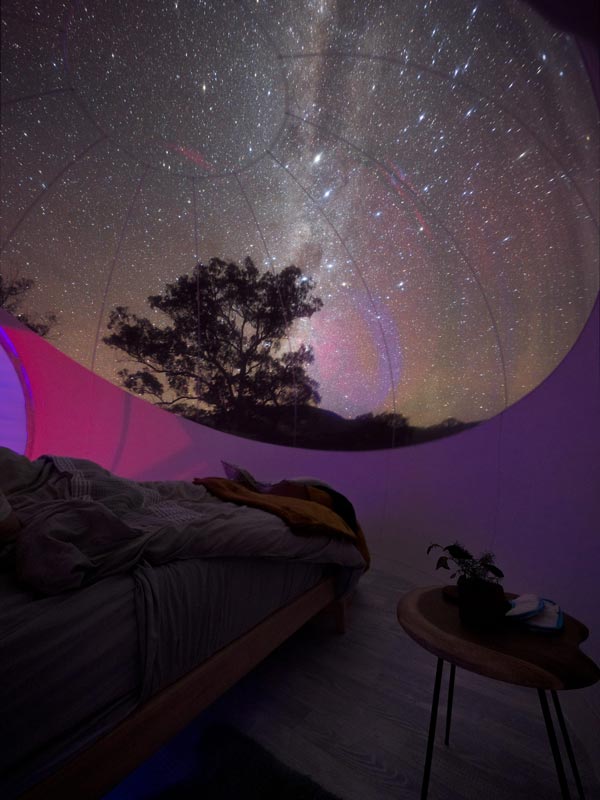
Stargazing at Mirumiru from inside the bubbletent
Wake to see a star-filled sky from the comfort of your own bubbletent. (Image: Peitao Tan)

Disconnecting from the world

Even before those stars come out at night, escaping into a private bubble away from the rest of the world is a special kind of bliss. While wi-fi is provided and phone signal is strong, it’s easy to put all devices down and disconnect.

Luxe local products

The attention to detail and sense of place provided by local products also raises the bar at Mirumiru. Guests drink tea from Tenterfield’s Little Echidna Home, and as well as using gumleaf cheeseboards by Manual Arts DEpt they can have personally monogrammed ones made as a souvenir.

Cathyrn works with a range of local businesses to offer add ons including White Cottage floral bouquets and eye masks infused with hyaluronic acid and argan oil by Lunalux, while also offering French wine and champagne truffle chocolates.

And while all of the linens are high quality you can also upgrade your bed with cashmere sheets for an even more luxurious lie-back-and-look-at-the-stars night.
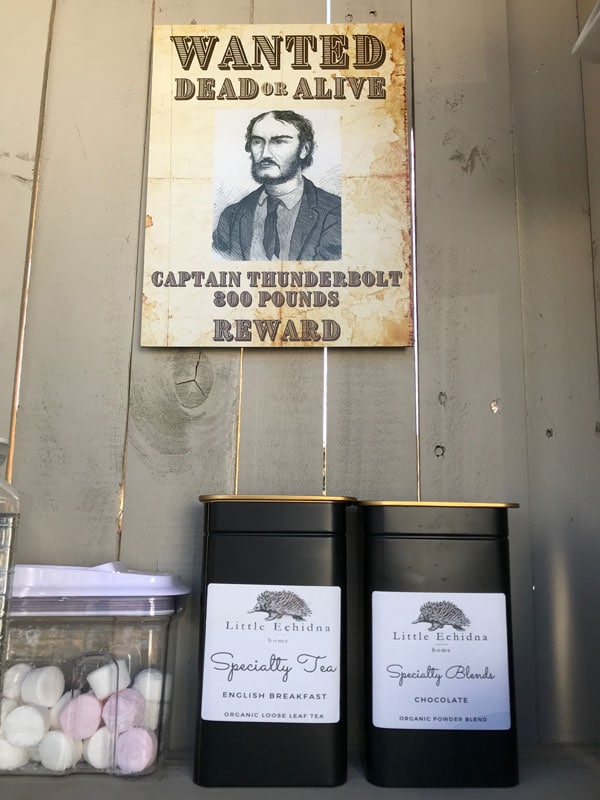
Tea and coffee at Mirumiru
Luxe local products are used wherever possible. (Image: Amanda Woods)

Sustainable notes

Sustainability was front of mind from the start at Mirumiru where the bubbletents are entirely off grid.

All electricity comes from solar power, while filtered rainwater is used in the outdoor showers and vintage baths, and the internal composting toilet saves thousands of litres of water per year.

To help regenerate the land over 500 natives have already planted including a bush tucker garden, and there will be no cattle or sheep on the property until the land has had a chance to fully recover.

Best time to stay

Tenterfield has four very distinct seasons which means the best time to come depends on the sort of holiday you’d like to have.

Winter

Winter is the best time for stargazing anywhere in the world. The earth’s atmosphere doesn’t have as much moisture in the colder months making it clearer and easier to spot fainter stars and nebulae in that crisp cold air.

But winters in New England are also cold and when the sun goes down the bubbles can get cold too. There are electric blankets and small fan heaters in the big bubbles to take the edge off, and sleeping bags rated to -5 degrees for the mini bubbletent.

During my winter stay while I’m not cold when I’m in bed I do sleep with a beanie on when the temperatures dip below zero overnight. But longer nights mean more star time and when I wake up to glittering frost in the morning I soon forget about the cold.
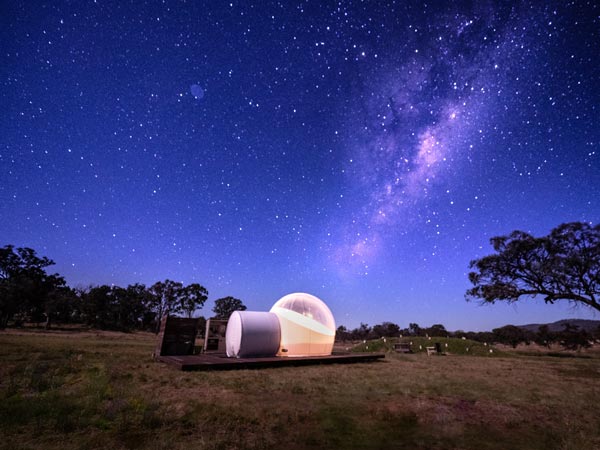
Stargazing at Mirumiru Bubbletents
Winter is the best time of year for stargazing. (Image: Sera Wright)

Spring

Spring is blossom season and Tenterfield has streets lined with flowering plum and cherry trees. Enjoy a blossom walk around town and through Millbrook Park before coming back to your bubble.

Summer

In summer December is the most spectacular month to stay with green grass, a mix of blue skies and misty rainfall and spectacular sunsets. Native lilies, waratahs and flannel flowers can be found in the surrounding National Parks.
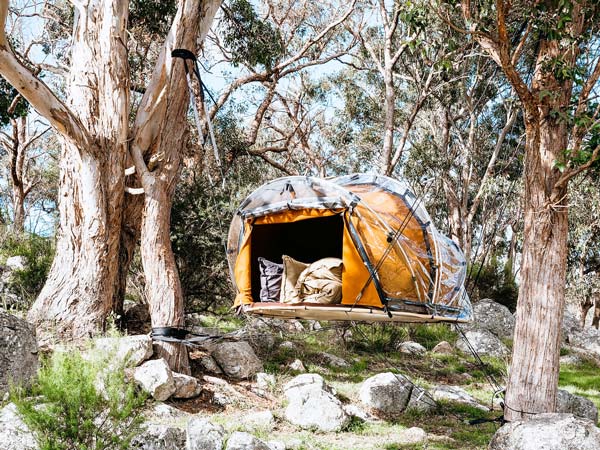
Mini bubbletent Mirumiru
Save the mini bubbletent for the warmer weather when heating isn’t required. (Image: Sera Wright)

Autumn

Meanwhile, March and April are the best months in autumn when the trees change colour and bright orange and red leaves can be found on New England country drives.
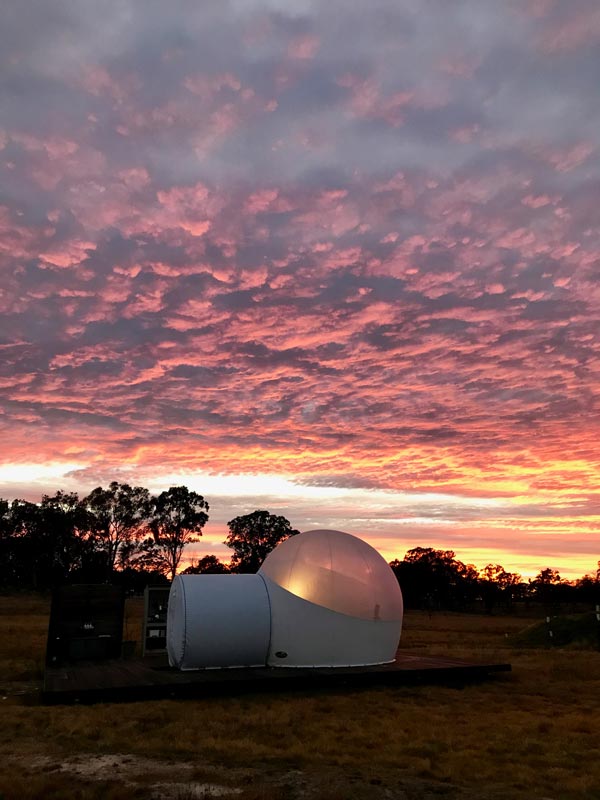
Sunrise at Captain Moonlite Mirumiru Bubbletents
The gorgeous sunrises can be enjoyed all year round. (Image: Amanda Woods)

What to bring

As the bubbletents are self-catering you’ll need to bring anything you’d like to eat or drink during your stay. Or if you plan and ask ahead, Cathyrn can also provide some groceries.

Enclosed shoes are best all year round and throw in some hiking boots too if you’d like to get out onto the National Park trails, and while bath towels are provided it’s BYO beach towels if you’re planning to swim in waterholes.

Sunscreen and lip balm are a must any time of year as you’ll feel the sun and wind in the New England high country. And if you’re coming in winter bring all of your winter layers including thermals, puffer jackets, warm winter socks and a beanie.

Organic hand soap, hair and body wash, and conditioner are all provided. If you prefer to use your own keep in mind that at Mirumiru they filter the water to use on plants so only use products that are kind to the environment.

The Mirumiru Bubbletent guidebook can be saved on your device as an app and includes a list of what they provide in the tents, along with handy guides for everything from how to use the compostable toilet to the furry and feathered friends you might meet on the farm.

Getting there

Mirumiru is just a few minutes outside of Tenterfield, which is around three and a half hours drive from Brisbane and the Gold Coast and just under eight hours from Sydney.

The nearest airports are Armidale and Lismore (both two hours away).

Amanda Woods
Amanda Woods is a travel writer based in New England high country in NSW. She’s travelled from Antarctica to the Arctic and loves to inspire people to get out and explore this big beautiful world of ours. She has a passion for regenerative, sustainable and mindful travel and has some big Australian travel dreams for the future.
See all articles
hero media

7 great day trips from your Coffs Coast homebase

Make this dazzling stretch of beaches and natural wonders your home base for a grand adventure

Whether you’re setting out solo, bringing a mate, or packing in the whole family, no road trip along Australia’s East Coast is complete without at least a few days spent exploring the Coffs Coast. A stunning stretch of NSW coastline nestled between ancient high-elevation rainforests and magnificent, undiscovered beaches, Coffs offers amazing biodiversity, stunning natural beauty, and heaps of local charm, without the crowds. Pull up in Coffs Harbour , your perfect home base for these unforgettable day-trips.

1. Southern Beaches

The Coffs region boasts 30 of Australia’s most beautiful, unspoiled beaches, directly abutting a dramatic tableau of mountains and rainforests. Drive South of Coffs Harbour to find up-and-coming surf destinations where it’s still possible to catch an empty wave. First up is the picturesque Sawtell village . Wander the famous fig-tree-lined main street packed with laid-back places to eat and drink. Enjoy panoramic views and seasonal whale sightings at Bonville Headland on the Southern end of the beach.

Nearby Bongil Bongil National Park boasts seven kilometres of empty beach, along with hiking and cycling trails through beachfront rainforests – keep an eye out for koalas living in the trees. Boambee Beach and Boambee Creek Reserve are great for families, with shallow waters perfect for kayaking and SUPing, plus an off-leash dog beach.

family eating lunch in sawtell
Experience small-town charm in Sawtell.

2. Orara Valley Tourist Trail

The Orara Valley Tourist Trail has it all: hinterland bushwalks, birdwatching, horse riding, pristine swimming holes and rolling green pastures dotted with dairy farms and historic villages. And it’s only 15 minutes west of Coffs Harbour.

Sample produce at a roadside stall, stop into Coramba Hotel for a quintessential country pub lunch, or try the Idle in Cafe in Nana Glen for coffee and scones. Then spend the afternoon kayaking the Orara River or mountain biking on Mt Coramba. If you’re feeling adventurous, follow the 4WD touring route along the Orara Escarpment in Bindarri National Park , a rugged landscape with dazzling views that winds through untouched eucalypt rainforests and waterfalls.

A family sitting by the Orara Valley Tourist Trail.
Explore the green heart of Coffs.

3. Dorrigo National Park

Enjoy a classic day trip from Coffs to forest bathe in some of the oldest subtropical rainforests in the world at Dorrigo National Park, part of the World Heritage-listed Gondwana Rainforests. These million-year-old ecosystems promise rare bird sightings, towering strangler figs, and epic walking tracks and picnic spots. Try the 6.6 km Wonga Walk to experience dreamy Crystal Shower Falls (where you can walk behind the falls) and the Skywalk Lookout, which offers spectacular views of the valley and coast. Then stop in Dorrigo town for a homey lunch. It’s worth noting that a section of the road between Ulong and Dorrigo – which dates to the 1880s – is unsealed, adding to the area’s end-of-the-earth allure but making travel difficult in adverse weather conditions. Alternatively, head to Dorrigo via the delightful township of Bellingen .

Three people standing at the SkyWalk lookout.
Wander the Skywalk.

4. Northern Beaches

For another tranquil expanse of sun, sand and surf breaks, head north to Woolgoolga (Tourism Australia’s Best Mainland Beach for 2025. Taste the coffee and local-produce breakfast at one of several cafes, then spot whales during their migration season along the Woolgoolga Whale Trail to the headland. Emerald Beach offers clear blue waters and another headland walk, perfect for taking in views of South Solitary Island, a dramatically rocky-cliffed island with a historic lighthouse. Red Rock, some 40km north of Coffs and named for its striking coastal rock formations, boasts a gorgeous estuary reserve that’s perfect for languorous days spent picnicking, swimming, fishing, and connecting with the relaxed local pace.

Freshly caught seafood by the beach, with sparkling ocean views.
Enjoy fresh seafood overlooking Woolgoolga Beach.

5. Jetty precinct

You could easily spend a whole day exploring the Jetty precinct – from its foreshores to the marina to Muttonbird Island. Start with fresh fish and chips from local institution Coffs Harbour Fisherman’s Co-op , before browsing the popular Harbourside Markets held every Sunday on the foreshores.

Take a scenic walk along the breakwall to Muttonbird Island , a cultural and ecological treasure with panoramic views and rich Gumbaynggirr heritage. The Giidany Miirlarl Education Space shares the island’s ancient stories, or join a guided moonlight tour to see the seasonal return of the muttonbirds.

Back at the Jetty Strip, find a buzzing mix of cafes, bars and restaurants with cuisines from around the world, open from morning until late. Don’t miss The Jetty Pavilion , a favourite for its unique menu blending modern Australian cuisine with vibrant world flavours.

walk to muttonbird island from coffs harbour
Walk the path where land meets sea and sky.

6. Grafton

Head inland from mid-October to early November to catch Grafton’s jacaranda season, when the town’s streets and parks are covered in purple. Even better, time your trip between 24 October and 2 November to attend the famous Jacaranda Festival, with special food items, performances and more. At any time of year, follow the self-guided Grafton Heritage Trail to discover the town’s historic buildings, landmarks and stories. Or get the blood pumping with a trip along the longest mapped white-water trail in Australia – the Clarence Canoe and Kayak Trail. Book a tour with Exodus Adventures .

woman walking through jacaranda trees in grafton
Time your Grafton trip to see the jacarandas in full bloom. (Image: @myclarencevalley)

7. Nambucca

Just south of Coffs Harbour sits Nambucca, the ideal town for a relaxed, coastal day trip. Hire a canoe, kayak or boat to explore over 80 kilometres of waterways stretching from the hinterland to the ocean. For those who prefer to stay on dry land (or double up their adventure for the day), stretch your legs along the V-Wall – a scenic coastal walk along the Nambucca River – dotted with boulders painted by the community, sharing messages, art and local stories. Stop along the way to buy Sydney rock oysters direct from local farmers, or try your own hand at fishing. Before heading back to Coffs, refuel on fresh seafood and wood-fired pizzas at Matilda’s in Nambucca .

a boat zooming through Nambucca Heads
Explore Nambucca’s waterways. (Image: Seen Australia)

Visit coffscoast.com and download the Coffs Coast Explorer App for more daytrips and trails.