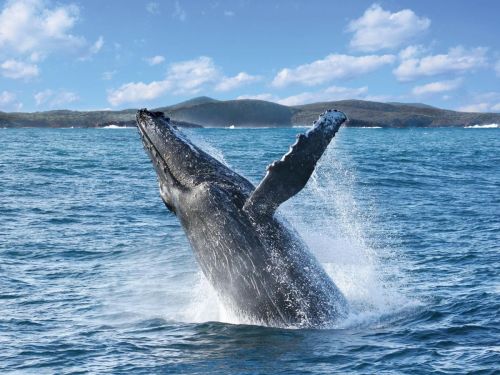
A guide to Port Stephens whale watching

hero media
Increase your chances of spotting whales (and dolphins!) in Port Stephens with this handy guide.

Port Stephens is an aquatic wonderland, home to the Great Lakes Marine Park whose waters are thriving with marine life including hundreds of bottlenose dolphins who are often seen playfully frolicking in the local waters, sea turtles and more than 200 species of fish.
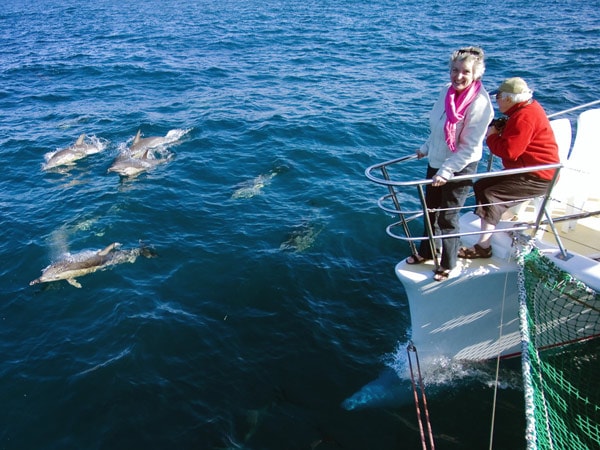
A woman and a man on a boat watching dolphins in the ocean.
Port Stephens is home to observing dolphins in the wild. (Image: The Legendary Pacific Coast)

Each year, it also becomes a temporary thoroughfare – known as the Humpback Highway – as whales make the great migration north, providing visitors with many excellent opportunities to spot these majestic mammals. Here is the ultimate guide to Port Stephens whale watching.
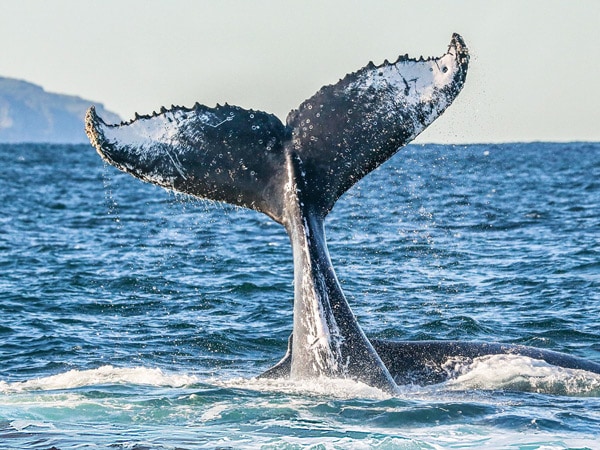
A humpback whale's tail coming out of the water.
Discover the splendid marine life of Port Stephens. (Image: Destination NSW)

When can you see whales in Port Stephens?

Every year, tens of thousands of humpback whales leave Antarctica and begin an epic journey of up to 10,000 kilometres along the east coast to the warmer waters of northern Australia. They mate and calve there, before returning along the same route towards the Southern Ocean. Port Stephens whale watching is usually best between June to August and September to October.
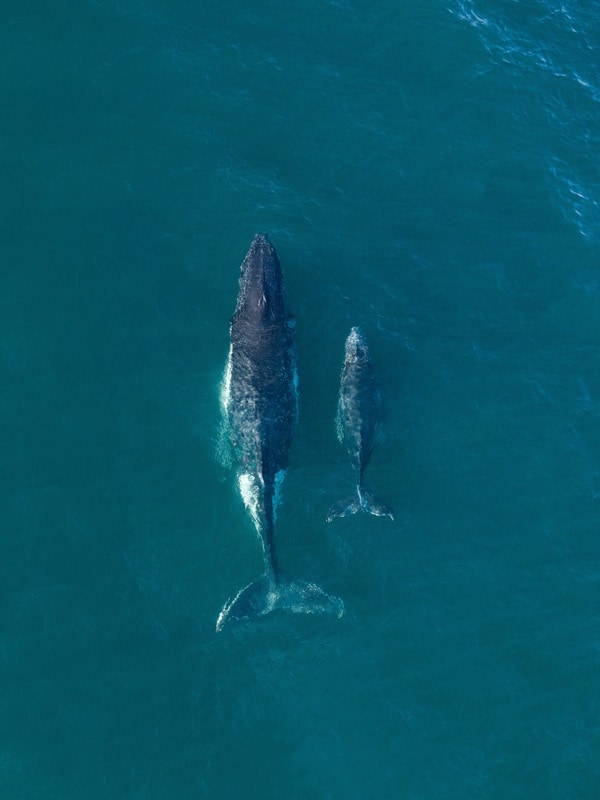
Mother and calf whales swimming in the ocean.
Discover majestic whales on your next holiday to Port Stephens. (Image: Destination NSW)

Where can I see whales in Port Stephens?

Spotting whales in Port Stephens is easy and can be done either from land or sea. You can join a whale watching cruise from d’Albora Marina, right in the heart of Nelson Bay (see below for more information), or you can head to one of the many Port Stephens lookouts for panoramic ocean views.
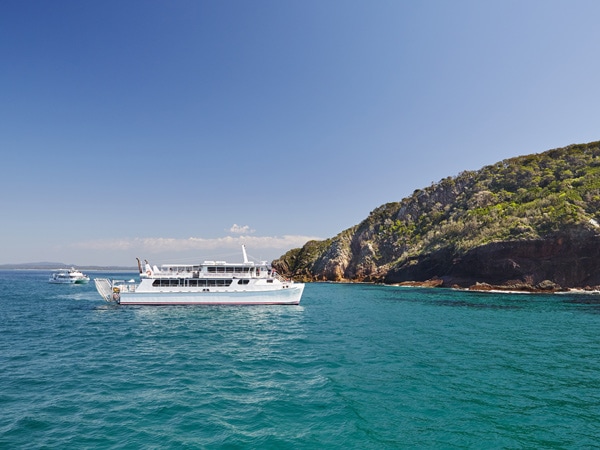
A boat in the ocean navigating to a beach.
Hop on a boat and cruise your way to one of Port Stephen’s best spots to witness amazing marine life with your own eyes. (Image: Destination NSW)

Tomaree Head Summit

Some of the best whale watching spots in Port Stephens include Tomaree Head Summit, located in Tomaree National Park.
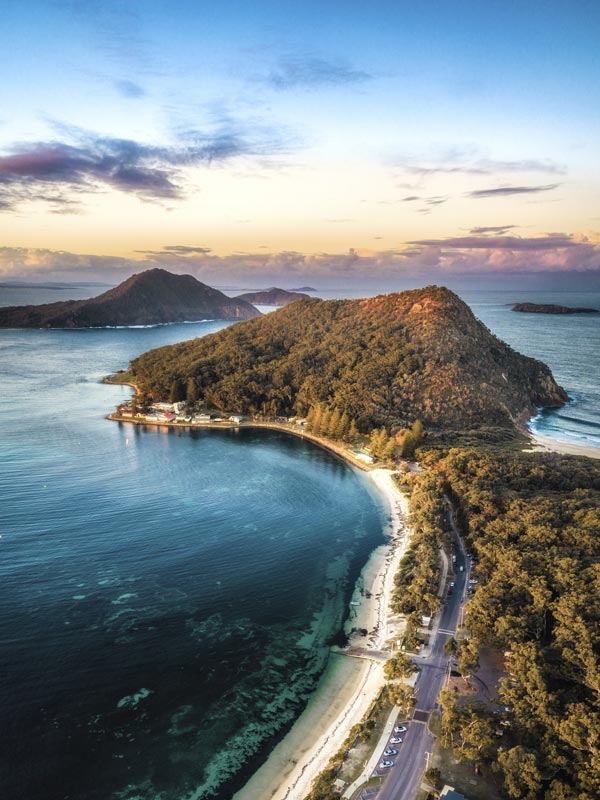
A mountain with the ocean and roads.
Keep your eyes peeled for whales at Tomaree Head in Port Stephens. (Image: Jarryd Salem)

Take the short but Tomaree Head Summit Walk, which can take between one-and-a-half to two hours return. Follow the track through bushland dotted with gums, grass trees and banksia (you may even see koalas if you’re lucky). At the top, panoramic views across Port Stephens and the ocean are well worth the effort, and it’s an excellent vantage point to spot a pod of whales.
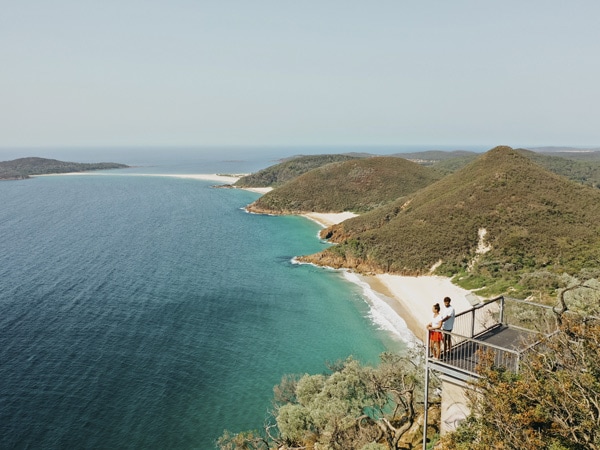
Two people standing on a platform overlooking the ocean and mountains.
The Tomaree Head Summit Walk offers rewarding views of the ocean. (Image: Destination NSW)

Barry Park

Humpbacks can also be seen from Barry Park, which has a specially built whale watching platform, at Fingal Bay Beach. Fingal Bay is also home to an 1862-built lighthouse, which is only accessible by boat.
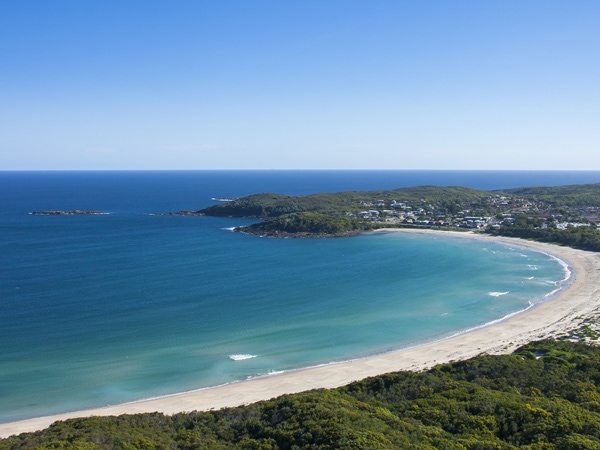
An aerial view of the ocean.
Fingal Bay and its paradisaic beach are a must-see when visiting Port Stephens. (Image: Destination NSW)

Need tips, more detail or itinerary ideas tailored to you? Ask AT.

AI Prompt

Boat Harbour headland

Drive to Boat Harbour headland on Noamunga Street, just 15 minutes’ drive from Nelson Bay, and take the easy walk to Boat Harbour Whale Watching Lookout, following the signs from the car park.

Birubi Beach

Birubi Beach in Anna Bay is another great whale watching spot; grab a coffee from Crest Birubi Beach at the surf club and keep your eyes peeled for humpbacks off the beach.
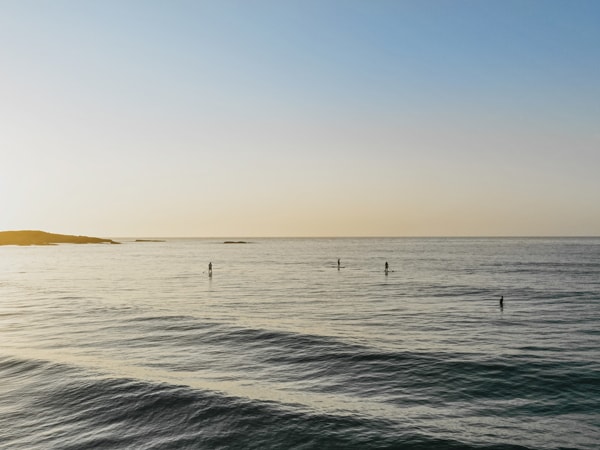
People on stand up paddleboarding in the ocean.
Spend some time in Anna Bay and get down to Birubi Beach to spot some whales. (Image: Destination NSW)

Iris Moore picnic area

Pack some lunch and head to Iris Moore picnic area in Fishermans Bay. This grassed area has sweeping views of Birubi Beach and Worimi Conservation Lands and is a comfy spot to settle in for whale watching.

What time of day is whale watching best?

You can spot whales any time of the day, but calmer conditions – often early in the morning before winds and waves increase – is usually best so they are easier to see.

A whale coming out of the water.
Watch whales throughout the day in Port Stephens. (Image: Moonshadow TQC Cruises)

Sunrise and sunset are also good times because this is said to be when they are most active, breaching and slapping their pectoral fins for show; the soft light also provides a beautiful backdrop for photography.
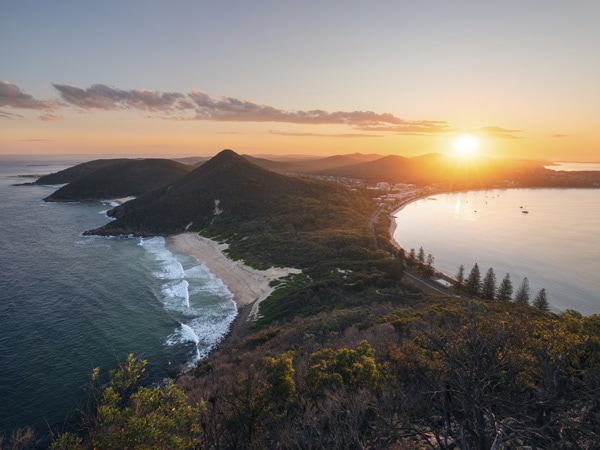
Mountains and the ocean at sunset.
Get up early for sunrise or stay up for sunset for your chance to see whales, and get your camera out to take your best shot. A win-win. (Image: Destination NSW)

Of course, spotting whales is never guaranteed, and conditions are always dependent on the weather.

Best cruises for whale watching

Departing from d’Alboro Marina, these Nelson Bay whale watching cruises make spotting whales easy.

Moonshadow – TCQ Cruises

Moonshadow – TCQ Cruises has been running cruises for more than 40 years and has seven different vessels for whale watching, dolphin watching, historical cruises, dinner cruises and more.
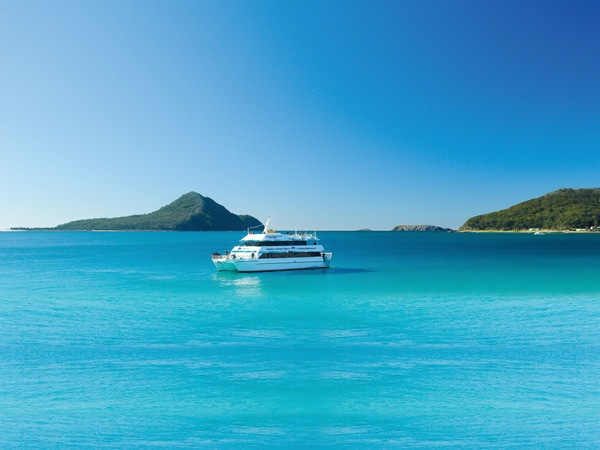
A boat in the ocean.
Cruises are the perfect opportunity for whale watching. (Image: Moonshadow TQC Cruises)

Departing daily from Nelson Bay, the whale watching cruises run for two-and-a-half to three hours between May and November. There is a fully licensed bar onboard for snacks and drinks.
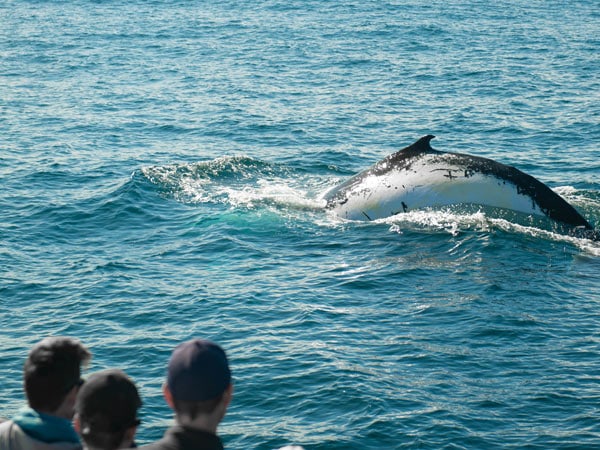
People watching a whale in the ocean.
Get close to whales in Nelson Bay. (Image: Moonshadow TQC Cruises)

Weekly travel news, experiences
insider tips, offers, and more.

Imagine Cruises

Another long-running cruise operator is ecotourism Imagine Cruises, which offers whale watching, dolphin watching, snorkelling, eco walks, dinner cruises and more. It runs daily 90-minute express whale watching cruise on board a 40-foot power cat run by AquaMarine Adventures, as well as a daily three-hour-plus whale and dolphin watching cruise on a 53-foot catamaran.
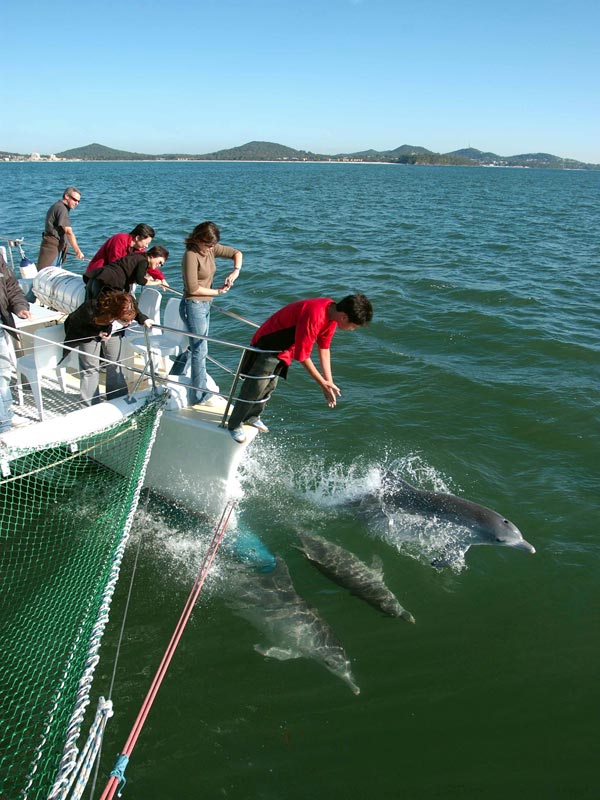
People on a boat watching and photographing dolphins in the water.
In Nelson Bay, you can also spot dolphins. (Image: Imagine Cruises)

Blue Water Sailing

If you’d prefer a private whale watching charter, where you don’t have to hustle for a good view of a whale breaching, check out Blue Water Sailing. It has luxury yachts available for a three-hour cruise for up to six people.

What to bring and other tips

Because whale watching occurs over the winter months, you’ll need to wear warm clothes.

Consider packing a wind jacket, as it can get windy out on the ocean, and a waterproof jacket is a good idea in case of wet weather or ocean spray.

Pack a hat and sunscreen, as even during winter the sun can burn, especially when reflecting off the water.

Take binoculars with you, especially if you’re trying to spot whales from the land.

If you’re heading out on a boat, and you’re prone to sea sickness, prepare yourself by taking sea sickness tablets and taking a sick bag (though many cruise operators will have these on board in case of the unfortunate event that you do get sick!).

If you’re heading up to Tomaree Head Summit, be sure to wear some good walking shoes.

Download the Wild About Whales app, which has been developed by the Office of Environment and Heritage NSW, so you can track sightings and learn about whale species at the same time.

Want to see more stories from Australian Traveller in your Google search results?

  1. Click here to set Australian Traveller as a preferred source.
  2. Tick the box next to "Australian Traveller". That's it.
Megan Arkinstall
Megan Arkinstall is a freelance travel writer who you’ll often find at the beach, bushwalking or boating with her young family. She loves reliving travel memories through writing, whether that be sipping limoncello in a sun-drenched courtyard of Monterosso or swimming with green turtles in the aquamarine waters of Tropical North Queensland.
View profile and articles
hero media

This stretch of Sydney beaches topped the annual Best Australian Beaches list

    Carla Grossetti Carla Grossetti
    Bate Bay’s sweep of beaches has been crowned Australia’s best for 2026, placing Sutherland Shire in the spotlight as a top coastal destination just south of Sydney’s CBD.

    The beaches fringing Bate Bay – Cronulla, North Cronulla, Wanda, Elouera and Greenhills – have topped Tourism Australia’s 2026 list of best Australian beaches (as curated by Beach Ambassador Brad Farmer). For locals, it’s less revelation, more recognition.

    The mood shifts from the moment you step off the T4 train service from Central to Cronulla and catch a glimpse of the ocean. At dawn, the Esplanade is already buzzing with regulars, and by mid-morning, parents have staked out a toasty spot on Cronulla Beach where excited toddlers clamber over rocks, and the Jellybean swim squad at Oak Park have donned their bright pink caps while singing Oh, What a Beautiful Mornin’.

    By the afternoon, towels are being collected from across the sand as visitors wander back to Cronulla in loose formation.

    North Cronulla beach
    Dive into the world’s best beaches.

    That’s the thing about Bate Bay beaches. This isn’t a story about a single beach. This long, uninterrupted sweep of sand and sea, where you can walk for kilometres without breaking stride, is not just enjoyed over summer; it’s a year-round destination. Here, Cronulla’s buzz gives way to Wanda’s wild edges, before stretching out to the quieter reaches of Greenhills.

    But while Bate Bay’s beaches may have taken top honours in the 2026 Best Australian Beaches list, they’re only part of the drawcard. Sutherland Shire stacks up as a full-spectrum coastal escape, where good food, national park adventures and on-the-water experiences sit within easy reach of the shoreline. Whether you’re planning a long weekend or stretching out a stay, here’s how to make the most of Cronulla beyond the sand, sea and surf.

    Beyond the beaches

    Dining

    the dining room at Pippis Cronulla
    Enjoy a sundowner by the sea at Pippis Cronulla.

    The Sutherland Shire dining scene delivers from early morning to late at night with a mix of vibrant cafes, bars and pubs. Start your day at Grind Espresso, where the coffee comes strong and fast. From there, drift towards HAM for pastries, best eaten buttery warm.   

    By midday, locals linger across sun-lit tables. Loaf and Next Door appeal to the surfers who come in for snacks after chasing waves. Blackwood’s Pantry and The Press are also popular for breakfast and lunch, while Pilgrim’s continues to hold a special place in the hearts of vegans.

    Newer arrivals signal where Cronulla is heading: Homer Rogue Taverna is being hailed as one of the best restaurants in Cronulla, with the confidence that comes from understanding what locals want. Ask a local to reveal their favourite restaurant for a special occasion, and it’ll likely be Pino’s Vino e Cucina al Mare, Yalla Sawa or Alphabet Street. Summer Salt, Sealevel, Benny’s, Bobbys and Pippis are a few of the best waterfront restaurants in the Shire.

    Finally, when most places are winding down, Duke’s Providore shifts gears to become Duke’s After Hours – a low-lit romantic spot perfect for a date night. Parc Pavilion, Northies Cronulla and bars The Blind Bear, Las Chicas and Low & Lofty’s are also part of Cronulla’s identity.

    Visit Bundeena

    Bundeena Ferry Wharf
    Catch a ferry to Bundeena.

    A short ferry ride from Cronulla, Bundeena offers a counterpoint to Cronulla’s mighty surf beaches. If Cronulla is the Shire’s social heart, Bundeena – or Bundenesia, as it’s affectionately known – is the place to go to exhale and unwind.

    Hop on the ferry from Cronulla, and within 30 minutes, you’ll be inhaling the eucalyptus-scented air. Check the creative pulse of the local community by timing your visit with the Bundeena Maianbar Art Trail on the first Sunday of every month.

    One of the best things to do in Bundeena is paddle into Cabbage Tree Basin with Bundeena Kayaks. Follow the five-kilometre Jibbon Beach Loop Track that leads past quiet coves to ancient Indigenous rock art, or simply find a stretch of pearl-white sand to relax on.

    Pristine walking trails

    Royal National Park Cape Baily Walking Track
    Cool off with a coastal stroll.

    Beyond the coastline, Sutherland Shire offers myriad ways to shift gears. Royal National Park – the oldest national park in Australia – sits just minutes from the surf. Clifftop walks trace the edge of the continent, the rugged bushland is threaded with creeks and hidden waterfalls, and a network of tracks rewards those willing to go a little further.

    Take the Coast Track, where the land drops cleanly into the ocean over sheer cliffs that have been stacked together like giant Jenga. Or veer inland, where pockets of forest cool the air and filter the light. It’s a reminder of how close nature sits to the bustle of suburbs in the Sutherland Shire.

    Enjoy whale watching

    humpback whale sighting noosa experiences
    Spot whales from May to October. (Credit: The Edit Suite)

    Twist your binoculars until the ocean is in focus, stretched like a creased blue sheet all around.  Come May, the East Coast becomes the humpback highway. Thousands of whales migrate along this stretch of coastline each year, their movements tracked by keen eyes from vantage points like the Cape Solander platform in Kamay Botany Bay National Park, one of the best places for whale watching in Australia. There’s something quietly thrilling about seeing that first telltale spout or the arc of a breaching body against the vastness of the sea. From June to October, whale-watching cruises depart from Cronulla, offering a closer look at the migration.

    Awards come and go. But places like Cronulla endure because they belong as much to the visitors as they do the early-morning swimmers, walkers and surfers.

    Plan your escape at visitsutherlandshire.com.au.