A thrill seeker’s guide to exploring the Stockton sand dunes

hero media
Surf, bike or journey camel-back through Port Stephens’ otherworldly natural phenomenon — the Stockton sand dunes.

Like something out of a Hollywood film set, the Stockton Bight sand dunes stretch 32 kilometres between Birubi Beach and Stockton in Port Stephens. A mountainous valley of powder as far as the eye can see, they’re the largest coastal sand dunes in the Southern Hemisphere.

The staggering natural wonder (more commonly referred to as the Stock sand dunes, no Bight) sits within the 4,200-hectare Worimi Conservation Lands, a joint expanse managed by both the NSW National Parks and Wildlife Service and local Traditional Owners. What does that mean for visitors? Your exploration options won’t harm the dunes, plus they’re surprisingly immense, spanning speedy drives, gentle animal-backed trails, Aboriginal cultural tours and more.

As one of the best things to see and do in Port Stephens, let’s dive into every way to navigate the Stockton sand dunes.

Exploring the dunes

The Stockton sand dunes are constantly evolving as wind, sea levels and other natural factors shift slopes and stability at any given time. Dating as far back as the Pleistocene era, the moon-like landscape is best explored now while tour operations (and access) prosper.

1. 4WD and Beach Driving
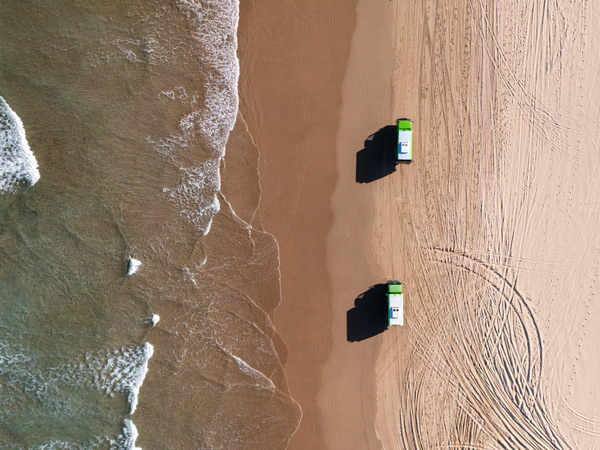
an aerial view of 4WD on the beach, Stockton Sand Dunes
Drive to the beach on a 4WD. (Image: Destination NSW)

One of the most popular ways to explore the Stockton sand dunes is via a set of appropriate wheels. Beach and dune driving in a 4WD is a cinch given the wider Worimi Conservation Lands allows 4WD access to more than 22 kilometres of Stockton beachfront and 350 hectares of dunes.

One of the largest coastal dune-driving hot spots in NSW, entry is found via Lavis Lane in the south or Gan Gan Road in the north. There’s also a 4WD-only entrance at Fern Bay’s Fern Bay Seaside Village.

Don’t leave home without securing your permit as all vehicles entering the Worimi Conservation Lands must display one after registering with the Port Stephens Visitor Information Centre (60 Victoria Pde, Nelson Bay). A three-day beach permit costs $33 and an annual permit costs $88. Visit the Worimi Conservation Lands website for further information.

Don’t have a 4WD but keen to get amongst it? That’s no issue. Go adventuring with Sand Dune Safaris, who offer popular Toyota LandCruiser charters.

2. Sandboarding Adventures

a couple enjoying sandboarding at Stockton SandDunes
Slide down the coastal dunes. (Image: Destination NSW)

Try your luck at stand-up sandboarding with the team at Sand Dune Safaris again. These guys really are pros as they’ve been touring the Stockton sand dunes for more than 20 years.

Your sandboarding escapade starts by combing the dunes in a custom-built 4WD to reach a private sandboarding area in the heart of Stockton Bight. There, you’re invited to trial a range of hand-crafted sandboards, including some built for stand-up styling.

Keen snowboarders can also opt for a board with bindings, while couples can tackle the sand slopes in tandem. Tours depart on weekends at 9am during summer and 9:30am in winter.

Need tips, more detail or itinerary ideas tailored to you? Ask AT.

AI Prompt

3. Quad Biking Experiences

Quad biking experience on the Stockton Sand Dunes
Experience the thrilling slopes of Stockton sand dunes. (Image: Destination NSW)

Desperate to fly? You can’t go wrong with Quad Bike King, a Stockton sand dunes tour company that knows its way around all the highlights. Secure your spot on their one-hour-and-45-minute ‘Safari Tour’ which encourages visitors to open the throttle in search of dusty horizons. The team know it’s an unforgettable experience, which is why they make time for a photo opportunity down at the beachfront.

Beginners can go a little slower on the ‘Scenic Safari Tour’ which runs for the same amount of time but recruits multiple guides to ensure you’re stickybeaking the sights safely.

Unique Experiences

While racing along the Stockton sand dunes is an adrenaline junkie’s dream, there are also several ways to explore with a steady heart rate. From trotting along on the back of a new four-legged friend to seeing things from an entirely unique perspective, slower-paced touring experiences provide beautiful holiday moments.

1. Camel and Horse Riding
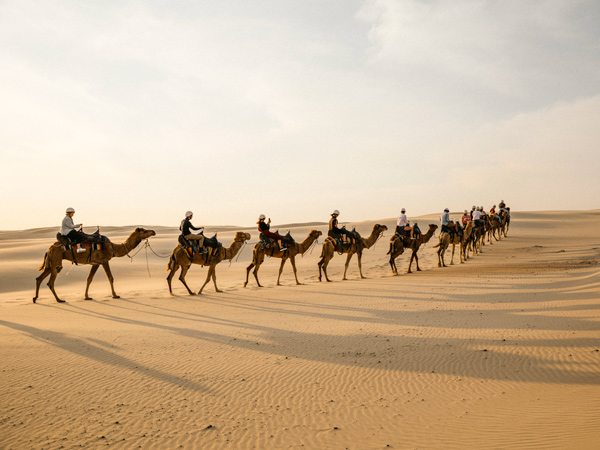
riding camels at Stockton Sand Dunes
Take a scenic camel ride through Port Stephens’ otherworldly natural phenomenon. (Image: Destination NSW)

Hug the Hunter coast’s curves on a tour with Oakfield Ranch Camel Rides. You won’t see as much as the quad bikers or 4WDers but you’ll still marvel in the dunes’ beauty over from Birubi Beach at the northern end of the stretch. The camel caravan route winds from bush to beach along a river of sand that passes through great swathes of country home to the Worimi Nation, the traditional owners of the land.

The best time to explore this area is at dusk, when the sea resembles a piece of glittering tin foil. See large birds of prey wheeling in circles above while you bounce along with your guides.

Budding equestrians who love wide, open spaces will take stock in the vast emptiness while travelling horseback. Friendly guides from Sahara Trails Horse Riding will lead you along the shoreline towards the base of the Stockton sand dunes. Book a tour at dawn when the dunes are lit up in the early light and the beach is a paradise of crashing waves and salty air. You’ll meander along the beach as it tapers north, taking your trusty steed into the surf for a swim.

Weekly travel news, experiences
insider tips, offers, and more.

2. Aboriginal cultural tours

a guide briefing visitors before the quad bike tour, Sand Dune Adventures
You’ll navigate the slopes with a local Aboriginal guide. (Image: Destination NSW)

The Worimi people welcome visitors to the Stockton sand dunes and there are many visible signs that demonstrate a connection to the Worimi Nation, which consisted of up to 18 clans. The Worimi were hunter-gatherers, as evidence around the dunes confirm—but there’s so much more history to soak up.

Self-navigation is one option, so long as you follow the rules applied to land. “Leave footprints and take only memories," says Worimi Aboriginal Land Council CEO, Andrew Smith. There’s also the crew at Sand Dune Adventures, who run a 1.5-hour ‘Aboriginal Cultural, Sand Boarding and Quad Bike Tour’ with a local Aboriginal guide. Pop on your high-vis vest and helmet and listen up, as knowledge of the landscape flows while you ride the ridged sand mountains. Your guide will point out middens, where Aboriginal people feasted on fish and shellfish, hammer stones used as tools and teach you about bush food such as ninang (oysters) and makurr (fish).

It’s worth noting that The Worimi Local Aboriginal Land Council also work with other local tour operators to ensure the land maintains its world-renowned pristine, untouched quality. Check out their website for affiliated tour companies.

3. A detour to Tin City
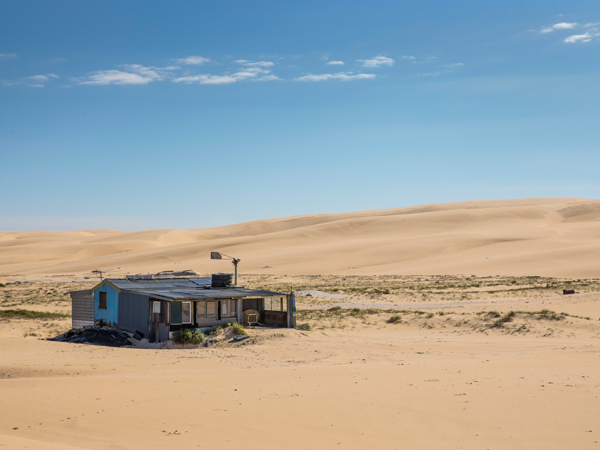
a fishing shack in the Tin City on Stockton Beach
The Tin City is the last legal squatter settlement in Australia. (Image: Destination NSW)

It’s technically located on Stockton Beach but a visit to the Stockton sand dunes is a great excuse to push your adventure towards Tin City. Jump on board Sand Dune Safaris’ ‘Tin City Safari’ which leads you right to a series of iron-roofed shacks steeped in history.

Dating back to the early 1900s when the ocean did its worst and wrecked a ship offshore, Tin City began to accommodate the shipwreck’s survivors and, during the Great Depression of the 1930s, expanded its ramshackle reach to include more than 36 huts.

There are 11 still standing, representing the last legal squatter settlement in Australia. Fascinating stuff worth putting some time into while you’re in this extraordinary neck of the woods.

Need somewhere to stay? Discover the best accommodation in Port Stephens

Want to see more stories from Australian Traveller in your Google search results?

  1. Click here to set Australian Traveller as a preferred source.
  2. Tick the box next to "Australian Traveller". That's it.
Kristie Lau-Adams
Kristie Lau-Adams is a Gold Coast-based freelance writer after working as a journalist and editorial director for almost 20 years across Australia's best-known media brands including The Sun-Herald, WHO and Woman's Day. She has spent significant time exploring the world with highlights including trekking Japan’s life-changing Kumano Kodo Pilgrimage and ziplining 140 metres above the vines of Mexico’s Puerto Villarta. She loves exploring her own backyard (quite literally, with her two young children who love bugs), but can also be found stalking remote corners globally for outstanding chilli margaritas and soul-stirring cultural experiences.
View profile and articles
hero media

This surprising regional town is making its mark on the culinary world

(Image: Visit Griffith)

    Carla Grossetti Carla Grossetti
    With more than 60 nationalities calling it home and a century of Italian influence shaping its paddocks and plates, Griffith is a regional Australian town with serious culinary cred.

    It might feel surprising to learn that Griffith is one of Australia’s leading food destinations. In-the-know Italians have understood this for generations, drawn to the Riverina region’s fertile soils that reminded them of the terrain they’d left behind more than a century ago. These days, Griffith supplies much of the nation’s pantry: 95 per cent of Australia’s prunes come from the region, it’s the country’s largest citrus-growing area, and it’s a leading producer of almonds and walnuts. Even the pickles in every McDonald’s burger nationwide are produced in Griffith. This is not just a farming town; the Griffith food scene is leading the way.

    Here, culinary confidence is rooted in migration. Italian families began arriving from 1913, with a second wave settling after the Second World War. Today, Griffith has the highest proportion of Italian ancestry of any Local Government Area in Australia. Add to that more than 60 nationalities represented across the community and you have a town where food is driven not by trends, but by tradition. Griffith’s motto, ‘Taste our culture’, isn’t marketing spin; it’s the reality.

    Where the vines tell a story

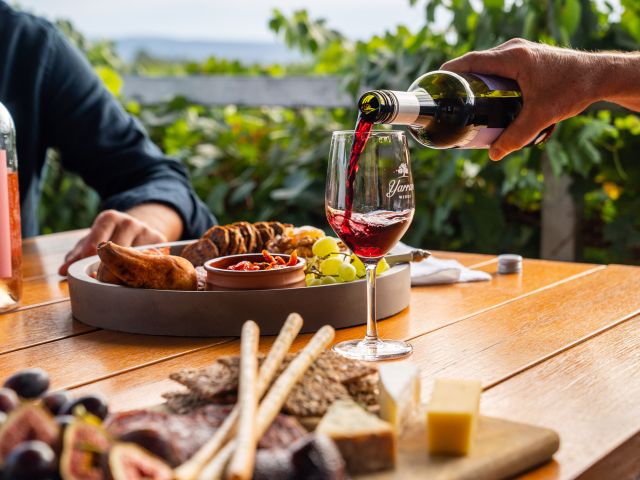
    A hand pouring wine into a glass, with a table filled with food.
    Uncover the stories behind every glass. (Image: Destination NSW)

    The Riverina has long been dubbed the food bowl of Australia, but it’s also a wine region that remains largely under the radar. What sets Griffith apart is that every one of its wineries is family-owned, many spanning generations.

    Calabria Family Wines is one of the region’s standard-bearers. The Calabria story began in 1945 when Francesco Calabria planted his first vines; today, the family continues to shape the region’s identity while also stewarding the historic McWilliam’s Wines brand. McWilliam’s was the first winery to plant vines in the area, and its barrel-shaped cellar door – complete with a soaring stained-glass window – remains one of the most distinctive in regional NSW.

    Yarran Wines, run by the Brewer family, showcases estate-grown fruit across Mediterranean varietals that thrive in the warm climate. Expect bold reds and textured whites that reflect both heritage and innovation.

    Set inside the old ambulance station, Harvest HQ is owned and operated by the Riverina Winemakers Association and pours a rotating selection of local wines under one roof. It also features spirits from The Aisling Distillery, reinforcing the region’s collaborative approach to craft.

    At the table

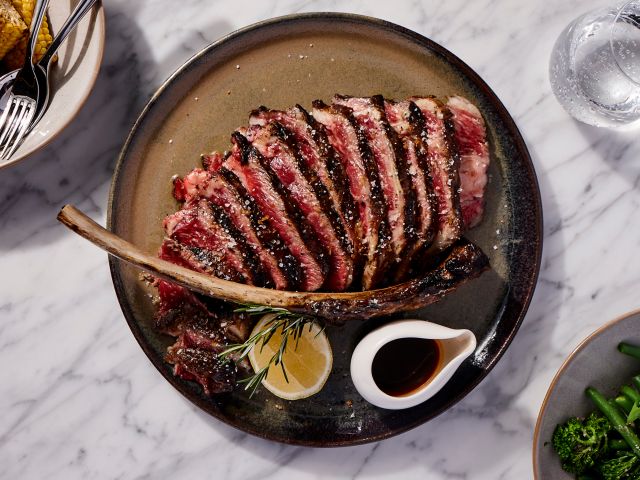
    A flat lay of a steak.
    Dine where tradition meets a bold new generation. (Image: Visit Griffith)

    If the vineyards tell one story, the dining rooms tell another. Griffith’s restaurants are where tradition and next-gen confidence meet.

    Zecca Handmade Italian occupies the former Rural Bank building, an imposing Art Deco landmark from the late 1930s. ‘Zecca’ means money print, and the name is a nod to the Zecca di Venezia in Venice. Here, find the Riverina’s only producer of dried artisan pasta and traditional Italian recipes. Importantly, the growers and producers supplying the kitchen are listed on the menu as a transparent expression of the region’s farm-to-table ethos.

    Established in 1977 and still run by the Vico family, La Scala puts authentic Italian cuisine on centre stage. Expect handmade pasta, traditional wood-fired pizzas, slow-cooked sauces and dishes that follow recipes guarded like family heirlooms. For something more contemporary, Bull & Bell in Gem Hotel is a shrine to the Euro-style steakhouse that works closely with local farmers and artisans to showcase Riverina produce.

    And then there are the institutions. Bertoldo’s Pasticceria, now in its third generation, draws locals daily for cannoli, biscotti, crostoli and house-made gelato, alongside classic sausage rolls and potato pies. La Piccola Grosseria feels like stepping into an Italian alimentari, its shelves lined with continental goods that wouldn’t feel out of place in Puglia.

    Meanwhile, Limone celebrates local and seasonal produce across breakfast and lunch menus, enriched by the produce and stories of Piccolo Family Farm. Find pastries and sourdough baked daily, and pop into the onsite retail pantry for products from regional producers – including the Piccolo family’s own wine range, Caro Piccolo.

    From the source

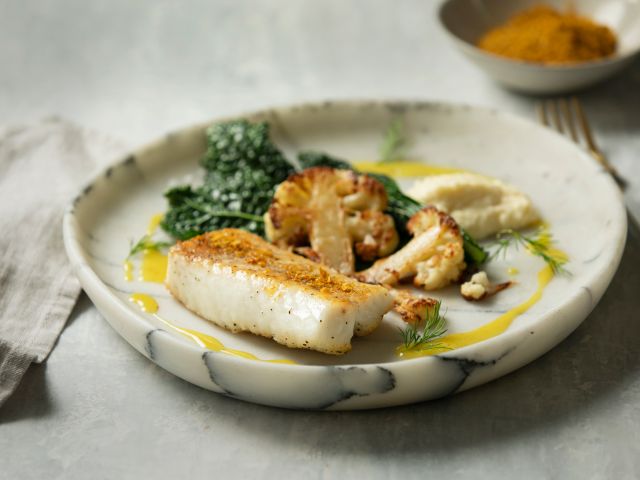
    A plated Aquna Sustainable Murray Cod dish.
    Taste world-renowned Aquna Sustainable Murray Cod, straight from its source. (Image: Visit Griffith)

    Behind every menu is a producer. Aquna Sustainable Murray Cod is perhaps Griffith’s most high-profile export; the brand’s Murray cod and Aquna Gold Murray Cod Caviar have achieved global recognition. In October 2024, Aquna presented its products to King Charles III and Queen Camilla at the NSW Premier’s Community BBQ in Parramatta. Impressed by the producer’s sustainable farming practices, the King requested the cod be sent to Buckingham Palace – not bad for a fish farm in regional NSW.

    Mandolé Orchard champions almonds grown on a family-run farm, transforming them into almond milk and value-added products. At Morella Grove, olives are pressed into premium olive oil and pantry staples that speak to Griffith’s Mediterranean heart. These producers are not peripheral; they are central to the town’s culinary ecosystem. Learn about local sustainable farming practices during a farm tour.

    Mark your calendar

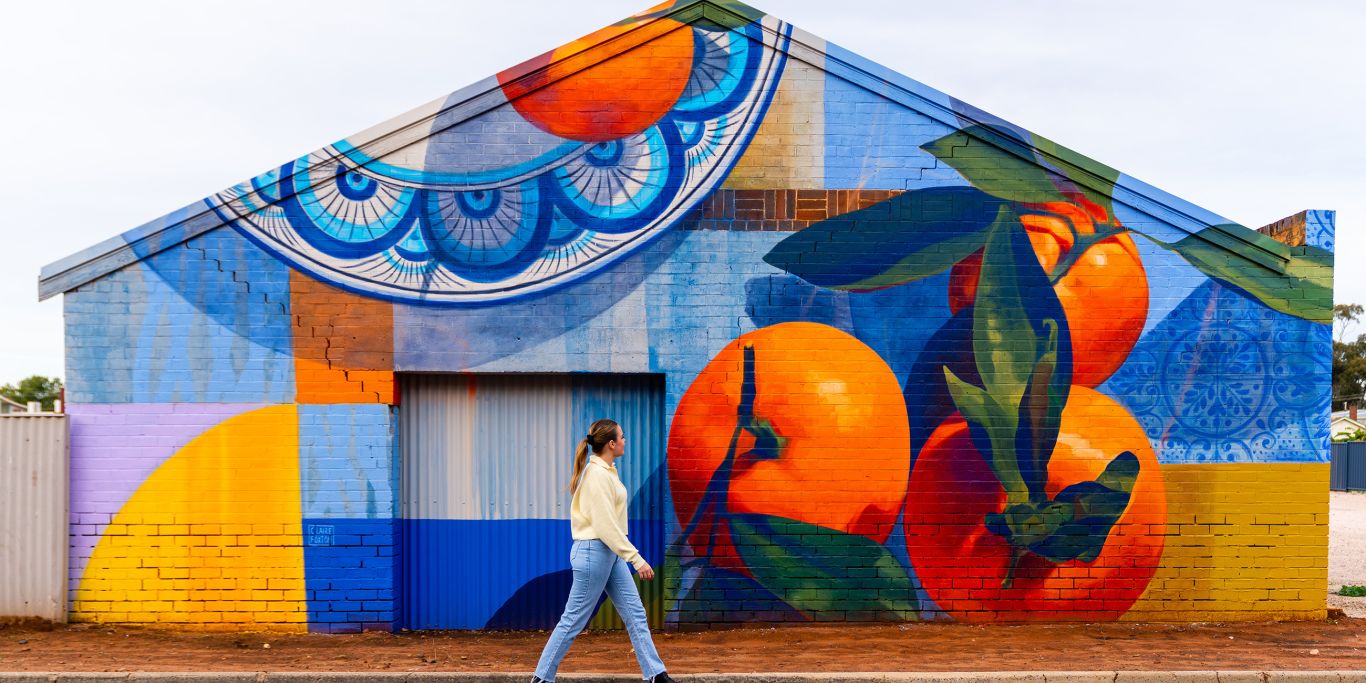
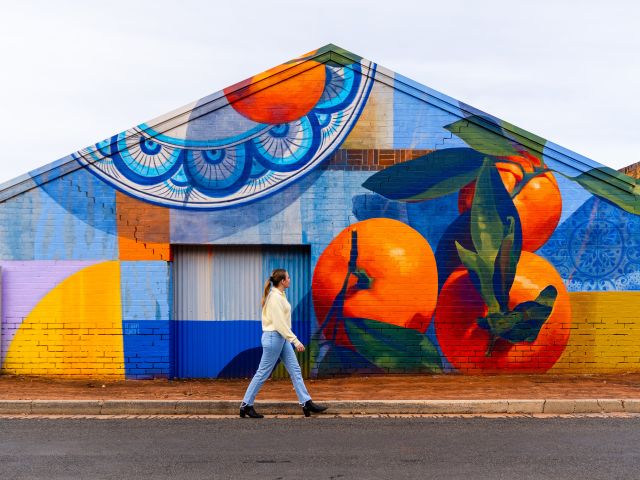
    A woman walking past a food mural, something you can spot during A Taste of Italy Griffith.
    Plan your visit around A Taste of Italy Griffith. (Image: Visit Griffith)

    For a town that helps stock Australia’s supermarkets, Griffith has remained curiously absent from the national dining conversation. That’s beginning to change. If you’ve been searching for a regional food destination with substance, heritage and a clear sense of identity, you’ll find it here in the Riverina, right under your nose.

    Time your visit to the Riverina region to coincide with A Taste of Italy Griffith, held every August. This week-long celebration of Italian heritage and culture offers a wide range of Italian-inspired events and experiences to enjoy. Expect long-table lunches, wine tasting experiences, cooking classes and a Makers in the Piazza market. The headline event is a ticketed long lunch – Festa delle Salsicce (Salami Festival) – where winners of the best salami are announced.

    Start planning your foodie getaway at visitgriffith.com.au.