hero media

This vintage steam train journey returns with new dates this August

Credit: Kiama Picnic Train

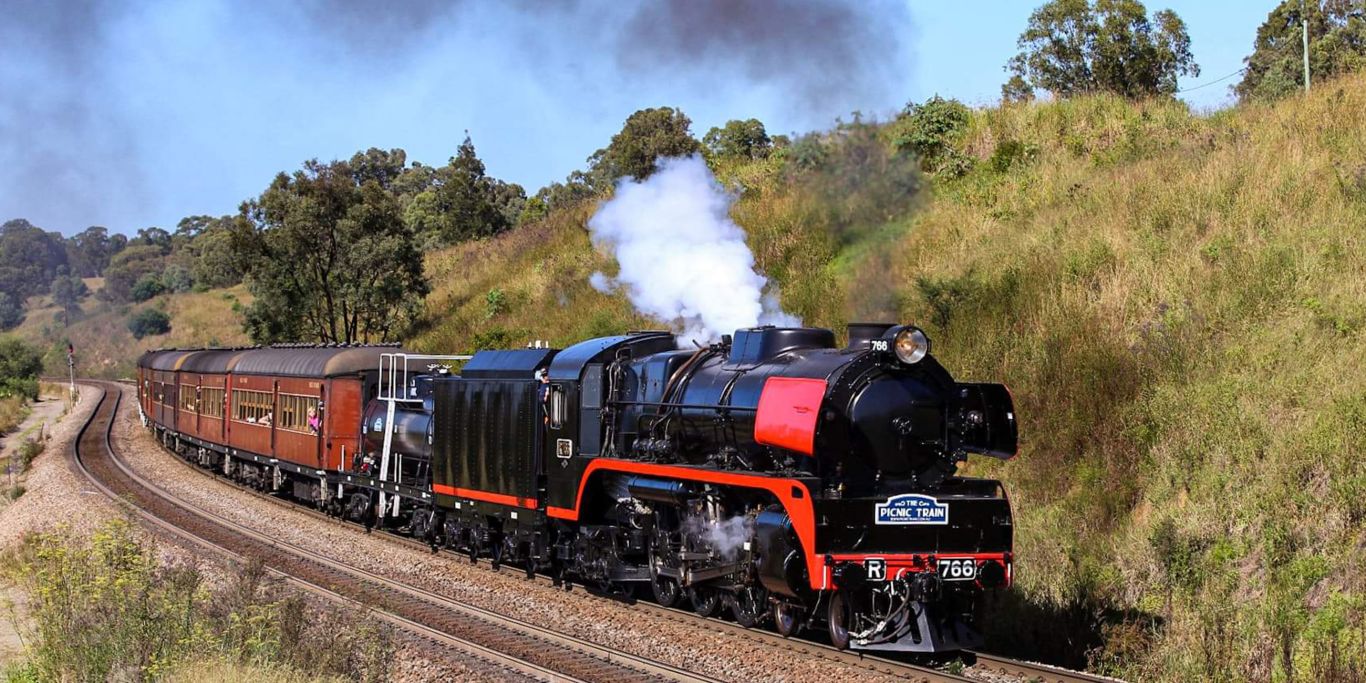
Step back in time aboard the completely intoxicating vintage Kiama Picnic Train – a living museum on rails returning for two more winter departures this year.

Forget Opal, Myki and Go cards, or apps showing delayed schedules. The golden era of rail travel – think mid-19th century glamour with lacy gloves and parasols – soared train rides to the height of sophistication. Did you know the New South Wales coastline captures that enchanting vintage energy today?

The Kiama Picnic Train is a steam locomotive ride that runs scattered return services during the cooler months. Departing Sydney, the adventure sends you back in time, inviting you to bring your own picnic hamper (or snap up their morning high tea service) to enjoy in glamorous dining carts while soaking up coastal views and dropping into Kiama. Here’s everything to know to catch the Kiama Picnic Train’s next onward journey.

When does the Kiama Picnic Train operate?
Kiama train
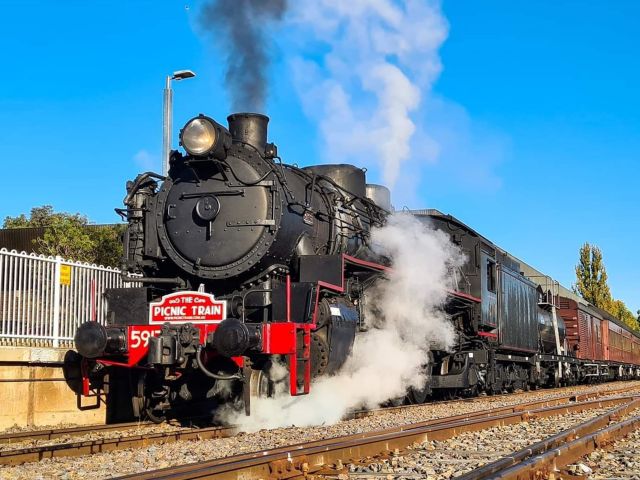
Kiama’s traditional steam train sends you back in time. (Credit: The Picnic Train)

You’re transported to an era where rapid technology didn’t exist, so fittingly, the Kiama Picnic Train’s timetable is just as leisurely. The next services are as follows:

  • Saturday 15th August 2026 (Departing from Tempe or Sutherland)
  • Sunday 16th August 2026 – Kiama Seaside Markets (Departing from Tempe or Sutherland)

To get across future dates, stay across the team’s Instagram and Facebook pages, which are both regularly updated. You can also sign up to their mailing list via the website to be the first to know.

Looking for more opportunities to hop onboard a picnic train through NSW? The following departures on other trains are also available:

  • Moss Vale Picnic Train: Saturday 1st August 2026 (Departing from Sydney Central Station to Bowral or Moss Vale)
  • Blue Mountains Picnic Train: Sunday 2nd August 2026 (Departing from Sydney Central Station to Katoomba or Mount Victoria)
  • Goulburn Picnic Train: Saturday 29th August 2026 & Sunday 30th August 2026 (Departing from Sydney Central Station)

Where does the Kiama Picnic Train travel to?
Kiama train
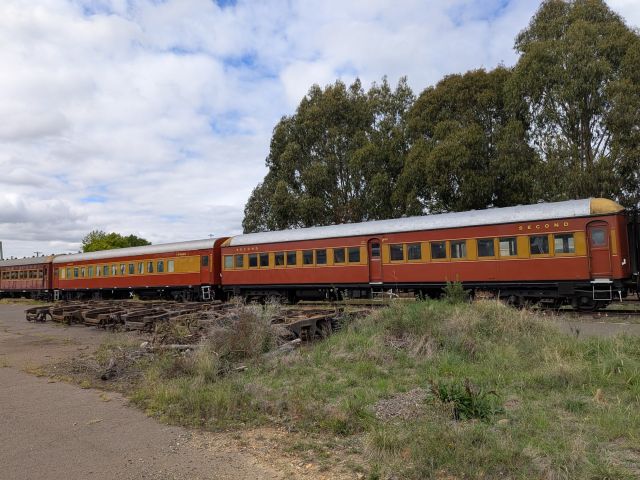
The steam locomotive ride runs through the Royal National Park. (Credit: Supplied)

While the train runs various journeys throughout the state, including a return Sydney to Moss Vale expedition, the Kiama Picnic Train commences from either Sydney’s Central Station, Tempe, Sutherland or Wollongong. For specific departure times, check the website’s scheduling.

No matter where you hop on, the route winds through the Royal National Park, sweeping up expansive Pacific Ocean and escarpment views before hitting Kiama anywhere between 12.30pm and 1.10pm. Guests will spend about three to four hours exploring Kiama’s magnetism before jumping back on board to depart at 4.20pm. Guests will arrive back at their return stop just after 7pm.

Need tips, more detail or itinerary ideas tailored to you? Ask AT.

AI Prompt

What should I bring on a Kiama Picnic Train journey?
Kiama train
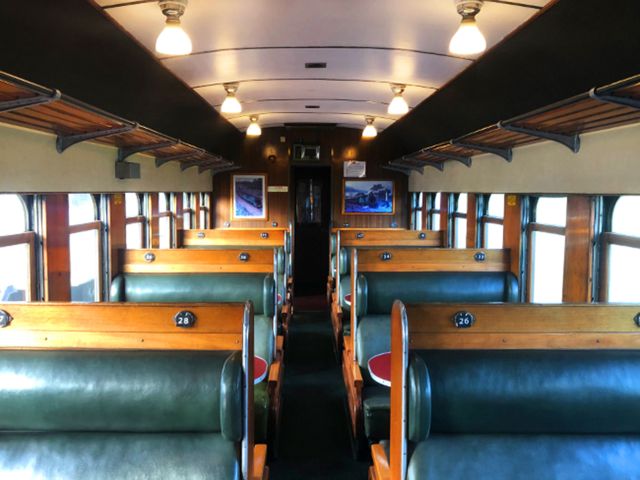
The ‘N’ type carriage has ample, comfortable seating. (Credit: Supplied)

A picnic is highly advised, plus it’s a cost-effective way to bring the entire clan on board this magical experience. In even better news, you can BYO alcohol but keep it classy – large Eskys aren’t allowed.

Guests should note that the Kiama Picnic Train also features a buffet carriage selling light snacks and drinks, and a morning high tea service was introduced in mid-2025, but we’ll get to all that yumminess further below.

Keen to capture so many snaps you’ll likely drain your phone battery? Bringing an external battery charger is highly advised as there are no charging points in any of the train’s carriages.

What can I expect on the Kiama Picnic Train?
Kiama picnic train
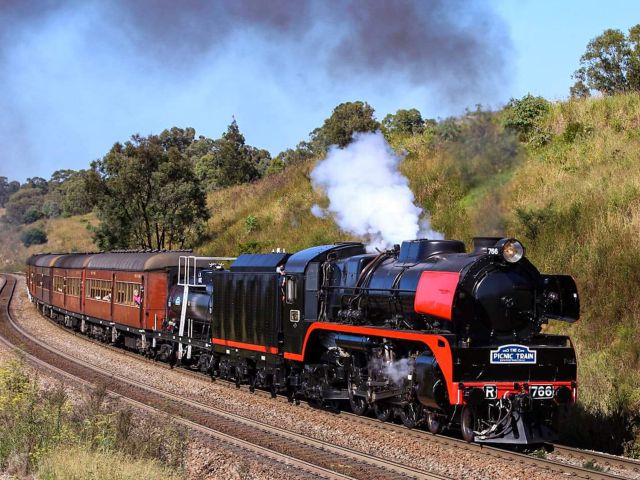
Soak up coastal and hinterland views. (Credit: The Picnic Train)

Pure magic, in the form of the heritage-listed locomotive 5917, which completed a one-year overhaul and restoration process in 2025. The ex-NSW Government Railways vehicle was built in Philadelphia and started running in 1953, and luckily, the restoration has only enhanced its original beauty.

As the driver sounds the steam whistle –  a highly anticipated and nothing-short-of-delightful moment for all ages – additional operators will physically shovel coal from the train’s tender into a firebox. It’s authentically old-school and worlds away from the train rides you’d typically undertake at home.

What is the vibe onboard the Kiama Picnic Train?
Kiama train red lounge
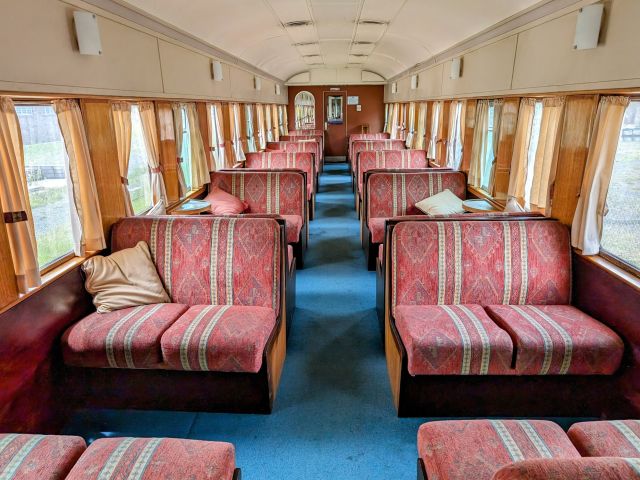
The Red Lounge is fitted with plush seats and bright blue carpeting. (Credit: Supplied)

Before you even step foot inside one of its carriages, locomotive 5917 dazzles at sheer sight. Jet-black at the operational front end and fire-engine red at the back carriages, not a single stroke of graffiti is spied, leaving this bad boy well and truly in a bygone era.

Inside, the most impressive carriages are fitted with leather booths and polished timber panelling, setting you even further back in time. There are even timber shelves built above for belongings, and tables provide compact room for your family’s delicious spread if you pick the right carriage type.

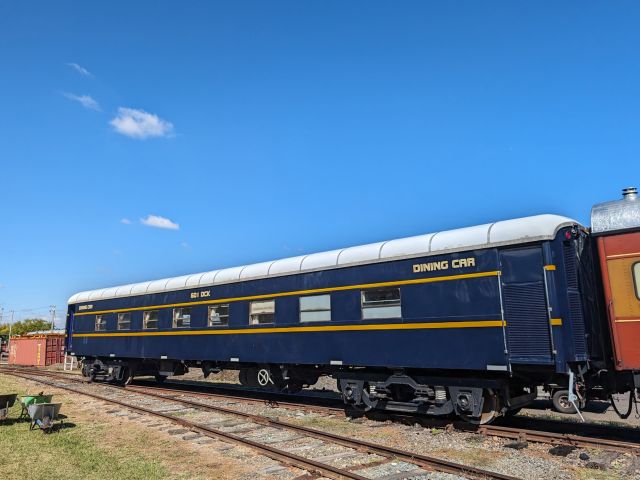
Speaking of which, there are a few on offer. At the more basic end of the spectrum, the Open Seating Car is without tables and leather, offering cushioned chairs while still maintaining good air-conditioning. The Dining Car is also air-conditioned; however, tables are included between double seats either side (so four people per booth) – but the shiny timber panels and rich leather are omitted.
 Kiama Picnic Train dining car
The air-conditioned Dining Car of the Kiama Picnic Train. (Credit: Supplied)

Climbing up the ladder is the First Class Duo, fitted with romantic two-person configurations with tables, red leather seats and openable windows. Vintage prints and carpeting dial up the nostalgia. The mac daddy of the lot is the Four Seater Booth dining cart, offering air-conditioning, windows that open, spacious tables and all that coveted polished decor we covered just before.

There’s also Private Compartments with tables that cater for up to eight adults (consider this the party zone) and include tables and openable windows, plus a Red Lounge (sans tables) that throws up a different vibe entirely thanks to an in-carriage bar, plush fabric seats and bright blue carpeting.

A second bar is found within the Blue Lounge and First Class Duo, an air-conditioned space with armchairs and soft lounges.

Facilities span toilets in most of the carriages, but guests should note that they’re not for use while stopping in Kiama. Additionally, small collapsible prams can be brought along but large prams and mobility equipment aren’t allowed, unfortunately.

Weekly travel news, experiences
insider tips, offers, and more.

What type of food is available onboard the Kiama Picnic Train?

The most exciting offering is the morning high tea service that runs on the journey to Kiama. The service operates out of the Dining Car and the Four Seater Booth dining cart on most Kiama Picnic Train services and includes an afternoon cheese and fruit platter, plus all-day tea and coffee. It’s priced at $320 per group of two passengers, or $600 per group of four passengers.

There’s also a buffet carriage which sells hot and cold drinks, plus light bites like pies and sausage rolls. Alcoholic drinks can also be purchased.

How much does the Kiama Picnic Train cost?
Kiama picnic train exterior
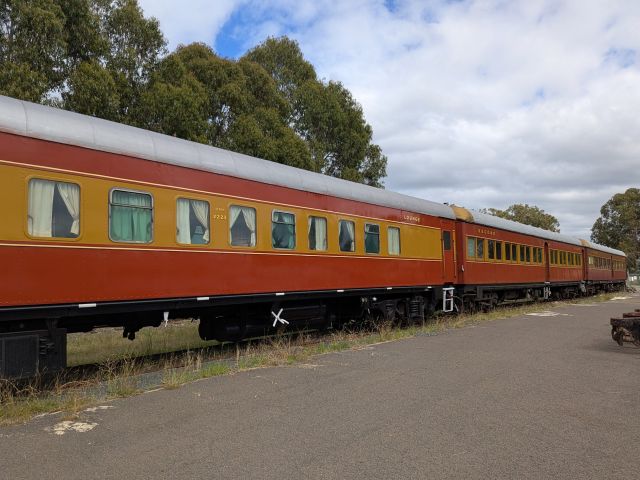
Step back in time aboard the vintage Kiama Picnic Train. (Credit: Supplied)

A single ticket with high tea costs $179, which places you in the First Class Duo carriage where you’ll share a space with three other solo guests. Groups of four seats together in an air-conditioned carriage cost $360 per group, while a Private Compartment will set your group back $550 in total (maximum eight guests).

Babies and toddlers who don’t require a seat of their own ride for free.

Want to see more stories from Australian Traveller in your Google search results?

  1. Click here to set Australian Traveller as a preferred source.
  2. Tick the box next to "Australian Traveller". That's it.
Kristie Lau-Adams
Kristie Lau-Adams is a Gold Coast-based freelance writer after working as a journalist and editorial director for almost 20 years across Australia's best-known media brands including The Sun-Herald, WHO and Woman's Day. She has spent significant time exploring the world with highlights including trekking Japan’s life-changing Kumano Kodo Pilgrimage and ziplining 140 metres above the vines of Mexico’s Puerto Villarta. She loves exploring her own backyard (quite literally, with her two young children who love bugs), but can also be found stalking remote corners globally for outstanding chilli margaritas and soul-stirring cultural experiences.
View profile and articles
hero media

This surprising regional town is making its mark on the culinary world

(Image: Visit Griffith)

    Carla Grossetti Carla Grossetti
    With more than 60 nationalities calling it home and a century of Italian influence shaping its paddocks and plates, Griffith is a regional Australian town with serious culinary cred.

    It might feel surprising to learn that Griffith is one of Australia’s leading food destinations. In-the-know Italians have understood this for generations, drawn to the Riverina region’s fertile soils that reminded them of the terrain they’d left behind more than a century ago. These days, Griffith supplies much of the nation’s pantry: 95 per cent of Australia’s prunes come from the region, it’s the country’s largest citrus-growing area, and it’s a leading producer of almonds and walnuts. Even the pickles in every McDonald’s burger nationwide are produced in Griffith. This is not just a farming town; the Griffith food scene is leading the way.

    Here, culinary confidence is rooted in migration. Italian families began arriving from 1913, with a second wave settling after the Second World War. Today, Griffith has the highest proportion of Italian ancestry of any Local Government Area in Australia. Add to that more than 60 nationalities represented across the community and you have a town where food is driven not by trends, but by tradition. Griffith’s motto, ‘Taste our culture’, isn’t marketing spin; it’s the reality.

    Where the vines tell a story

    A hand pouring wine into a glass, with a table filled with food.
    Uncover the stories behind every glass. (Image: Destination NSW)

    The Riverina has long been dubbed the food bowl of Australia, but it’s also a wine region that remains largely under the radar. What sets Griffith apart is that every one of its wineries is family-owned, many spanning generations.

    Calabria Family Wines is one of the region’s standard-bearers. The Calabria story began in 1945 when Francesco Calabria planted his first vines; today, the family continues to shape the region’s identity while also stewarding the historic McWilliam’s Wines brand. McWilliam’s was the first winery to plant vines in the area, and its barrel-shaped cellar door – complete with a soaring stained-glass window – remains one of the most distinctive in regional NSW.

    Yarran Wines, run by the Brewer family, showcases estate-grown fruit across Mediterranean varietals that thrive in the warm climate. Expect bold reds and textured whites that reflect both heritage and innovation.

    Set inside the old ambulance station, Harvest HQ is owned and operated by the Riverina Winemakers Association and pours a rotating selection of local wines under one roof. It also features spirits from The Aisling Distillery, reinforcing the region’s collaborative approach to craft.

    At the table

    A flat lay of a steak.
    Dine where tradition meets a bold new generation. (Image: Visit Griffith)

    If the vineyards tell one story, the dining rooms tell another. Griffith’s restaurants are where tradition and next-gen confidence meet.

    Zecca Handmade Italian occupies the former Rural Bank building, an imposing Art Deco landmark from the late 1930s. ‘Zecca’ means money print, and the name is a nod to the Zecca di Venezia in Venice. Here, find the Riverina’s only producer of dried artisan pasta and traditional Italian recipes. Importantly, the growers and producers supplying the kitchen are listed on the menu as a transparent expression of the region’s farm-to-table ethos.

    Established in 1977 and still run by the Vico family, La Scala puts authentic Italian cuisine on centre stage. Expect handmade pasta, traditional wood-fired pizzas, slow-cooked sauces and dishes that follow recipes guarded like family heirlooms. For something more contemporary, Bull & Bell in Gem Hotel is a shrine to the Euro-style steakhouse that works closely with local farmers and artisans to showcase Riverina produce.

    And then there are the institutions. Bertoldo’s Pasticceria, now in its third generation, draws locals daily for cannoli, biscotti, crostoli and house-made gelato, alongside classic sausage rolls and potato pies. La Piccola Grosseria feels like stepping into an Italian alimentari, its shelves lined with continental goods that wouldn’t feel out of place in Puglia.

    Meanwhile, Limone celebrates local and seasonal produce across breakfast and lunch menus, enriched by the produce and stories of Piccolo Family Farm. Find pastries and sourdough baked daily, and pop into the onsite retail pantry for products from regional producers – including the Piccolo family’s own wine range, Caro Piccolo.

    From the source

    A plated Aquna Sustainable Murray Cod dish.
    Taste world-renowned Aquna Sustainable Murray Cod, straight from its source. (Image: Visit Griffith)

    Behind every menu is a producer. Aquna Sustainable Murray Cod is perhaps Griffith’s most high-profile export; the brand’s Murray cod and Aquna Gold Murray Cod Caviar have achieved global recognition. In October 2024, Aquna presented its products to King Charles III and Queen Camilla at the NSW Premier’s Community BBQ in Parramatta. Impressed by the producer’s sustainable farming practices, the King requested the cod be sent to Buckingham Palace – not bad for a fish farm in regional NSW.

    Mandolé Orchard champions almonds grown on a family-run farm, transforming them into almond milk and value-added products. At Morella Grove, olives are pressed into premium olive oil and pantry staples that speak to Griffith’s Mediterranean heart. These producers are not peripheral; they are central to the town’s culinary ecosystem. Learn about local sustainable farming practices during a farm tour.

    Mark your calendar

    A woman walking past a food mural, something you can spot during A Taste of Italy Griffith.
    Plan your visit around A Taste of Italy Griffith. (Image: Visit Griffith)

    For a town that helps stock Australia’s supermarkets, Griffith has remained curiously absent from the national dining conversation. That’s beginning to change. If you’ve been searching for a regional food destination with substance, heritage and a clear sense of identity, you’ll find it here in the Riverina, right under your nose.

    Time your visit to the Riverina region to coincide with A Taste of Italy Griffith, held every August. This week-long celebration of Italian heritage and culture offers a wide range of Italian-inspired events and experiences to enjoy. Expect long-table lunches, wine tasting experiences, cooking classes and a Makers in the Piazza market. The headline event is a ticketed long lunch – Festa delle Salsicce (Salami Festival) – where winners of the best salami are announced.

    Start planning your foodie getaway at visitgriffith.com.au.