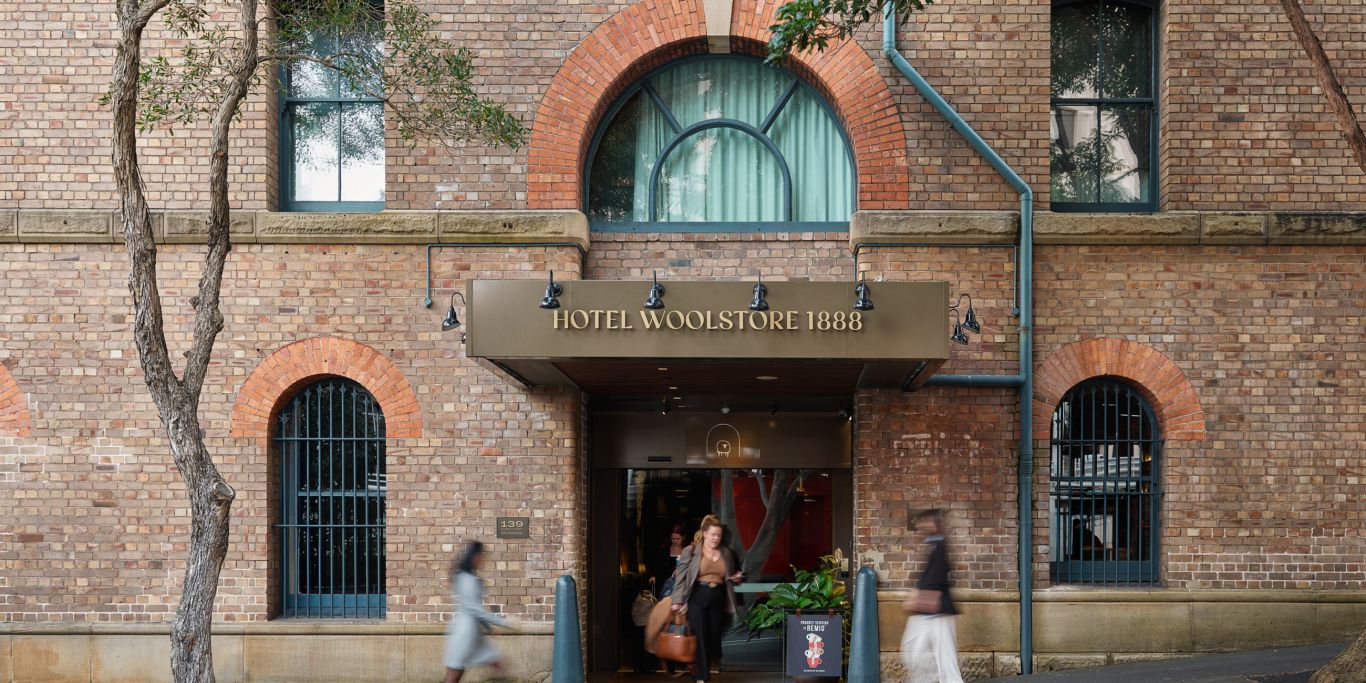

During a stay at Hotel Woolstore 1888, two strangers separated by more than a century forge an unexpected connection.
When I was 15 years old, I carved my name into the Eiffel Tower. Despite hundreds of names and initials already chiselled into the steel balustrade, the act felt brave, bold, defiant even. In reality, it was an impulsive decision made by two young girls on a student exchange trip, fuelled by the thrill of doing something we shouldn’t.
More than a decade later, I feel a flush of guilt whenever I think about it, aware that I contributed to an ever-growing catalogue of vandalism. But I’d be lying if I said I regretted it. The friend beside me that day has since passed on, and I now find comfort in knowing that our names are immortalised on the iconic Paris monument forever.
It’s this memory that finds me as I look out the window of room 413 at Hotel Woolstore 1888. I’ve just checked into the five-star property and I’m looking forward to a quiet night of indulgence. But while admiring the city skyline, I notice a name etched in the sandstone on the other side of the glass.
It’s a small detail, almost hidden in plain sight, but it’s enough to spark my curiosity. What had this place once been? Who had stood here before me? Just like that, my short overnight stay became a journey through time, revealing a history far richer than I expected.
For history buffs, this Sydney stay is worth a closer look. Dating back to 1888, Hotel Woolstore 1888 still wears its past proudly, with original timber beams, exposed brick, sandstone details and remnants of its former life as a working wool store.
Where is Hotel Woolstore 1888?
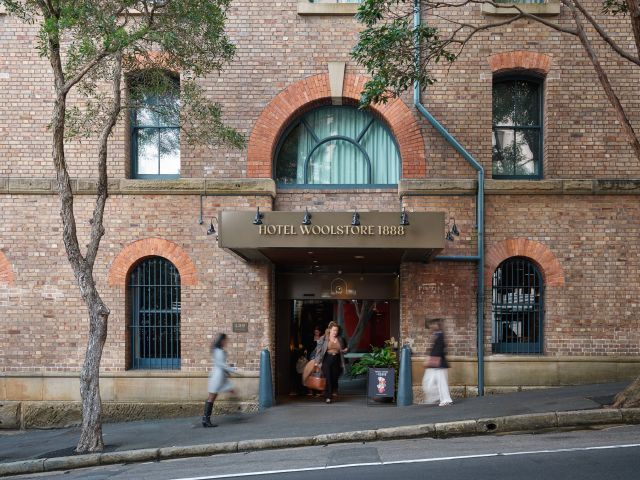
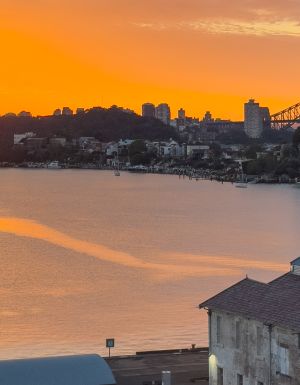
Hotel Woolstore 1888 is located on the corner of Murray Street in Pyrmont. Just 10 minutes from Sydney’s CBD, it’s within walking distance to some of the city’s top sights, including Darling Harbour, Barangaroo and the recently renovated Sydney Fish Market.
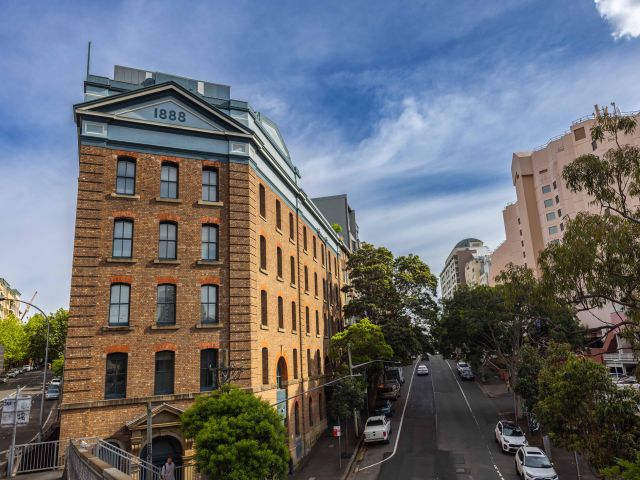
Today, Pyrmont is characterised by bustling cafes, leafy streets and high-rise apartment blocks, where young professionals and small families enjoy city living at a slower pace. But it didn’t always look like this.
The suburb has its origins in the Victorian era, and it looked quite different back then. Sydney was on the cusp of an economic boom. Exports like gold, coal, leather and wool were hot commodities, and Australia was richly endowed with such resources.
Due to its position between major regional railway lines and Sydney Harbour’s shipping docks, Pyrmont quickly became an industrial hub for the wool trade. Brought in via rail from the country’s interior, the product was then transported by sea to feed England’s burgeoning textile mills.
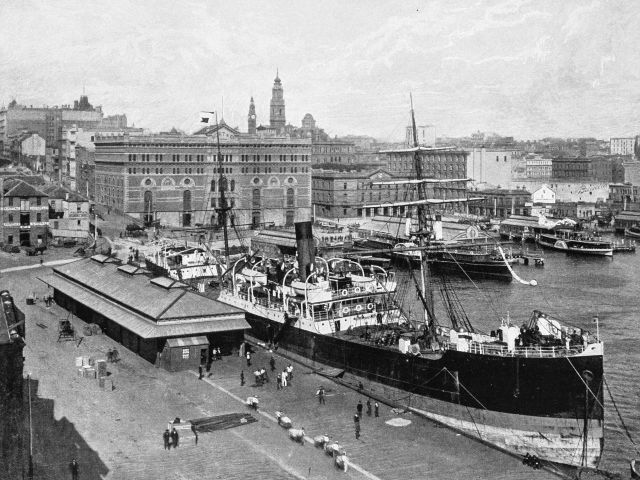
Of course, all that wool needed to be held somewhere while waiting for exportation. As a result, more than 20 wool stores were constructed across Pyrmont to store and sort the incoming goods. One of the very first opened on the corner of Murray Street in 1888. Sound familiar?
Style and character
The building’s first iteration was designed by architects Morell and Kemp on commission from wool industry pioneer J.H. Geddes, who first introduced mechanical shearing equipment to Australia. Strategically crafted to fit its distinct wedge-shaped block, the original structure remains mostly intact today.
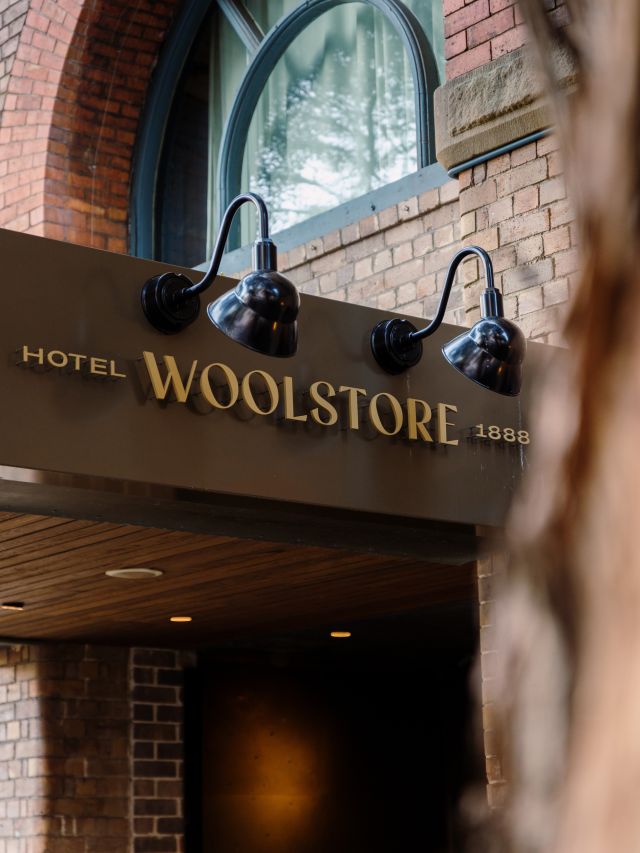
It catches my eye almost immediately as I pass through the Mannerist-style entrance and into the hotel lobby. The space opens up completely, its architectural bones on full display.
Each of the four guest floors have been built along the hotel’s perimeter, creating a centralised atrium that reveals the entire vertical span of the building’s structure. A sliver of blue sky peeks through a window in the roof, bathing the space in natural light.
While the interiors have clearly been updated to suit contemporary tastes, history is stitched into every layer, weaving past and present into a visual journey through time. Underfoot, a wooden track embedded in the floor traces the original cart path used to load and unload wool.
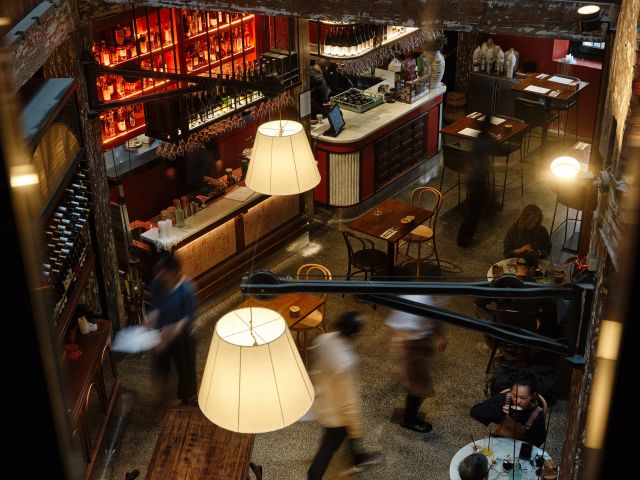
Overhead, wooden beams the size of Roman columns contrast beautifully against polished timber. All around me, exposed brick walls allow more refined details to shine; a plush brown leather couch, a brass candleholder caked with wax, a felt hat sitting atop an attaché-style briefcase.
Rather than painting over its industrial past, Hotel Woolstore 1888 proudly showcases it. Deliberately designed to work with original features rather than replace them, the property ensures its storied past is an integral part of its modern-day identity.
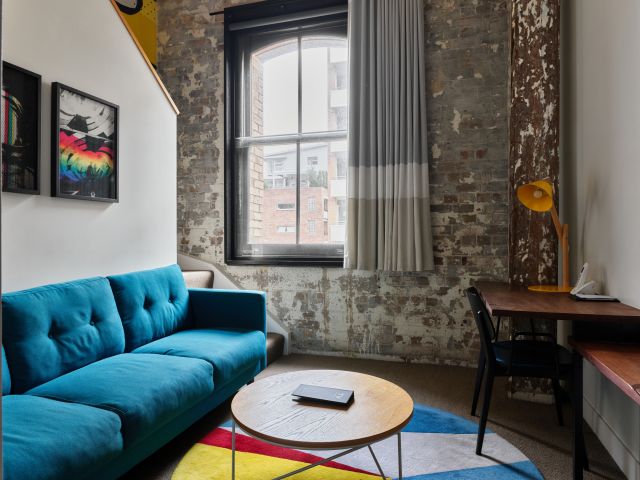
Today, it is the oldest surviving wool store in Sydney with a saw-tooth roof, one of just 21 remaining heritage-listed examples. From Pyrmont sandstone and ironbark timber to salvaged materials thoughtfully repurposed, every effort has been made to preserve what remains of its former life.
It’s fitting then, to find Hotel Woolstore 1888 among Accor’s Handwritten Collection. One of just 50 global stays chosen for their unique character, historic charm and bespoke design, it certainly meets the brief.
Need tips, more detail or itinerary ideas tailored to you? Ask AT.
AI Prompt
The rooms
Hotel Woolstore 1888 comprises 90 rooms and suites, with configurations to suit a range of occasions and budgets. Standard room types such as Coopworth and Romney are perfect for a fuss-free stay, while specialty suites like the Corriedale Loft and High Country Suite make for a more luxurious experience.
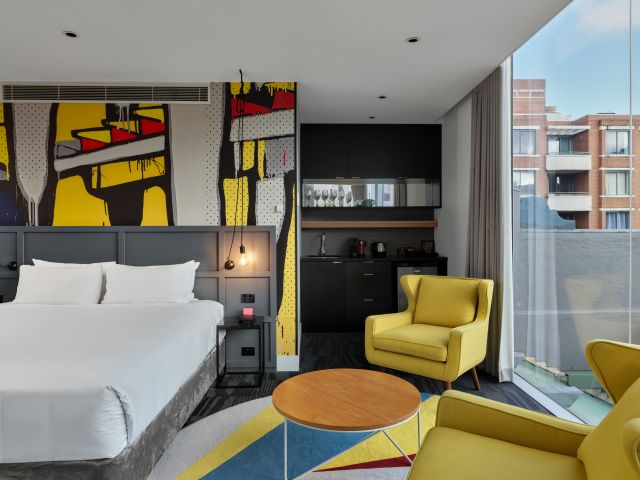
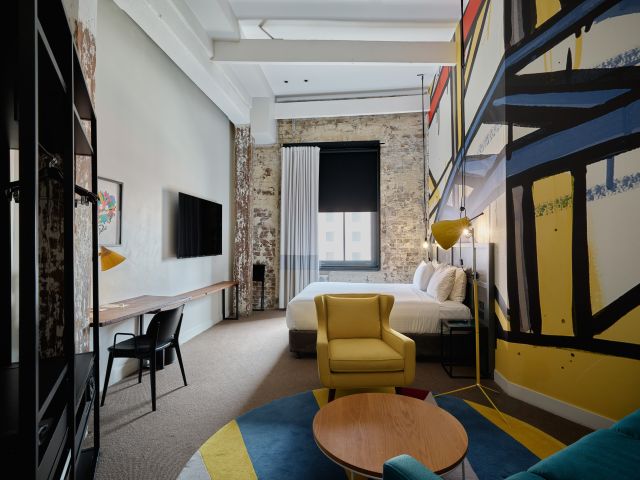
From the lobby, I take one of two custom-built glass elevators to level four, watching the light change as I rise into the atrium. I’m staying in room 413, also known as the Shearer’s Suite, another playful nod to the hotel’s industrial roots.
As if by fairy godmother, my wish for a little indulgence is granted the moment my door unlocks. The stylish suite features a wooden work bench, wall-mounted flatscreen TV, Nespresso coffee machine, curated snack box, minibar and cosy lounge area with custom furnishings. High ceilings amplify the room’s spacious layout and allow for an abundance of natural light.
The king-sized bed takes pride of place, framed by a vibrant Jasper Knight mural stretching the wall’s length. A separate en suite bathroom contains everything I’d want and more, from a walk-in rain shower and freestanding tub to plush bathrobes and bespoke personal-care products.
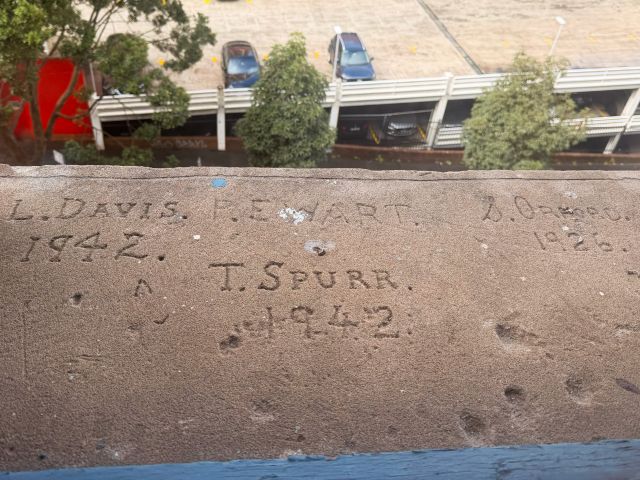
Being a brisk winter’s day in Sydney, I instinctively gravitate towards a patch of sun by the window. I’m enjoying its warmth when I spot the engravings; four names, two dates. But it’s the one in the centre that catches my eye; huge capital letters cut boldly next to smaller cursive and softened by the weight of time: P. EWERT.
The facilities
Ever the amateur sleuth, and with a few hours to spare before dinner, I decide to do a little digging. My quest leads me back down to the lobby, where the morning bustle has given way to a more relaxed rhythm.
I wander into the ground-floor conference room, a sleek, well-appointed space designed to host everything from intimate gatherings to corporate events. One of two meeting rooms, it features a lounge area, centrepiece table with chairs and wall-mounted TV, separated from the lobby by a heavy curtain.
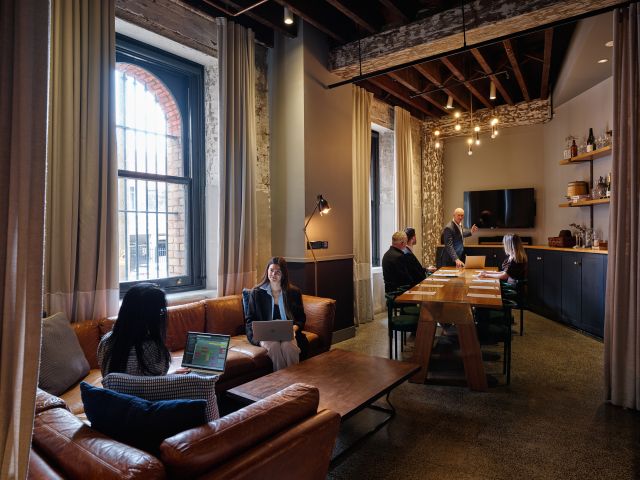
I’m studying the collection of curiosities lining its walls when an attentive staff member asks if I’m looking for anything in particular. When I inquire about the windowsill engraving, she beams. “This is one of my favourite stories to tell."
Turns out, P. EWERT. is James Percy Edward Ewert. Born in Redfern in 1891, he dedicated his working life to the wool trade in Pyrmont, earning a living as a wool classer at the Murray Street address during the early 20th century.
Historic records paint Percy as a man of cheeky charm and quick wit. Rarely seen without his trademark trilby hat, he enjoyed a quiet smoke, a glass of wine and a game of cards with neighbourhood friends.
As a skilled supervisor, he spent most of his days on the wool store’s fourth floor, inspecting, grading and sorting raw fleece to ensure it met market standards. It’s here that he eventually carved his name into the sandstone windowsill of what would become room 413. Over the years, three others followed suit.
Back in the present and beyond the conference room, Hotel Woolstore 1888 also offers a range of services that add an extra layer of comfort. Guests can expect practical amenities like air conditioning, complimentary wi-fi, daily housekeeping and room service, as well as fitness centre access at an additional cost.
Restaurants and bars
Come evening, I put my detective hat aside in favour of something a little more elegant before heading to the hotel’s onsite restaurant. Walking into the ground-floor dining space, I can’t help but smile when I clock its name.
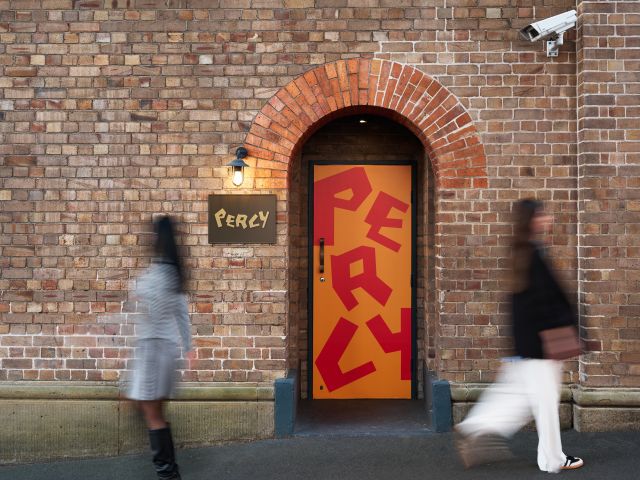
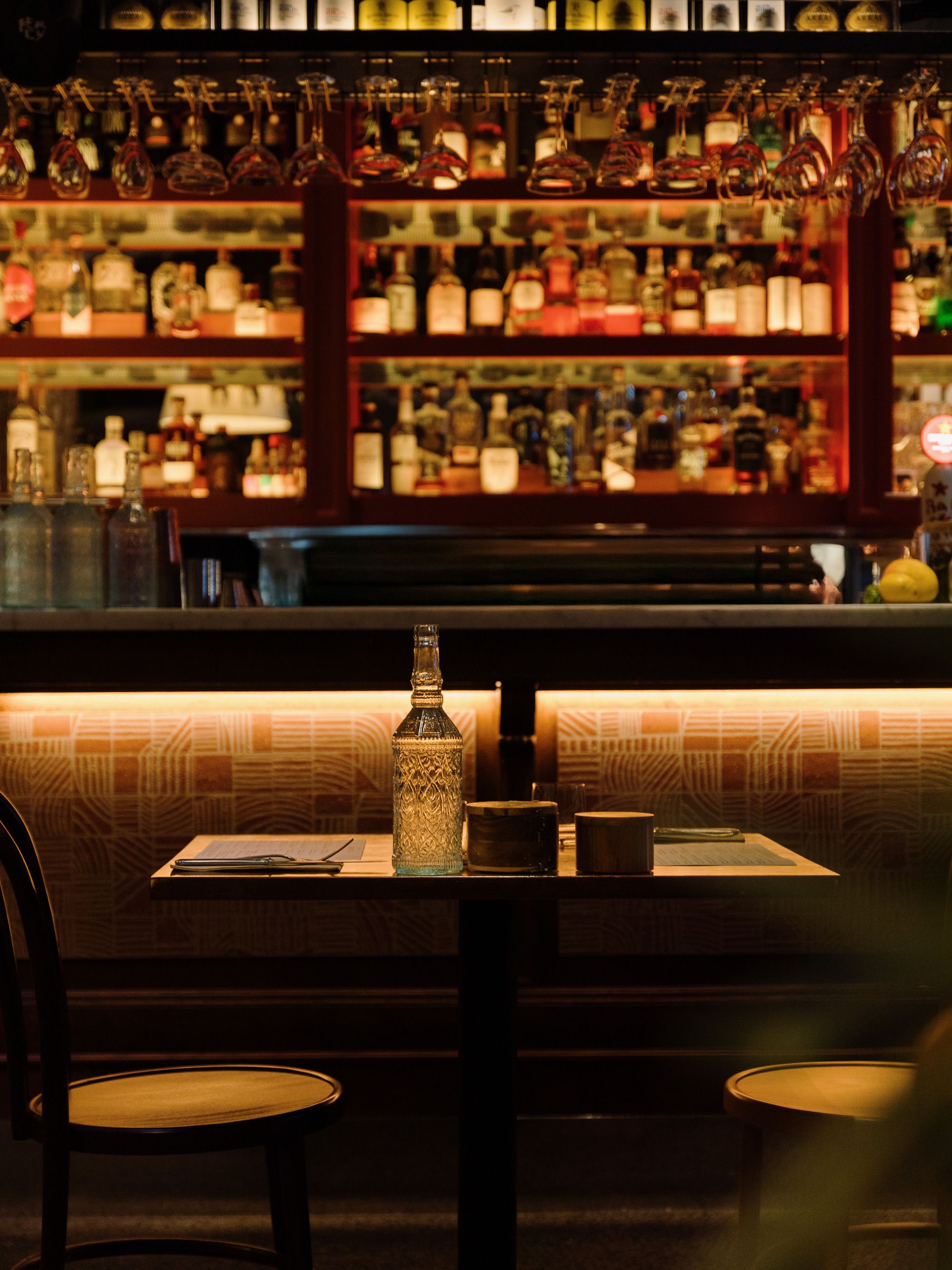
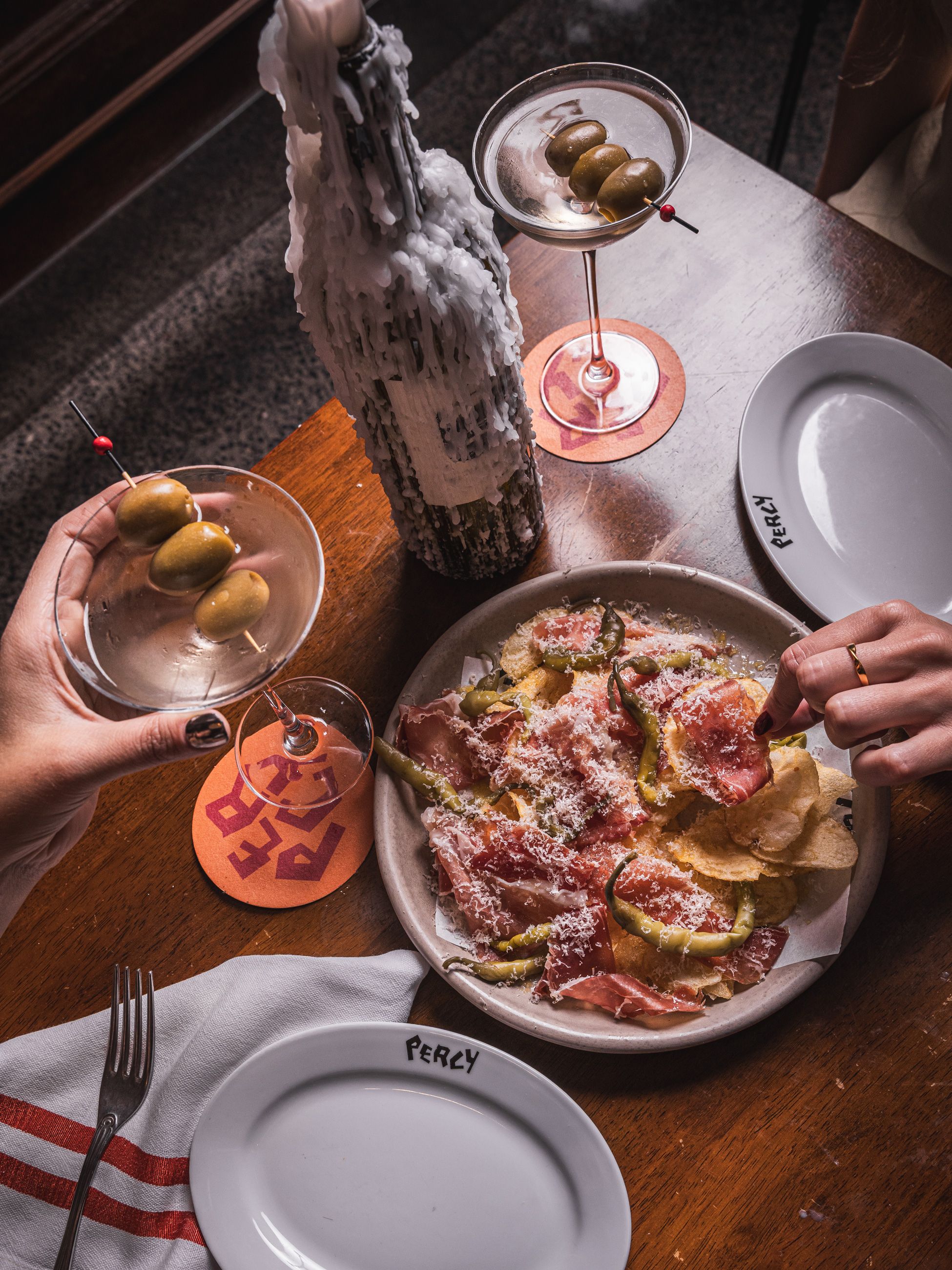
A trendy neighbourhood haunt serving Spanish-style tapas to both hotel guests and public walk-ins, PERCY is part restaurant, part wine bar. Its concept is inspired by the lively pintxos of Barcelona, evident everywhere from the menu to the decor.
Dimly lit by warm pendant lighting and candles dripping wax down wine bottles, the room is moody, the vibe effortlessly cool. Soft music with an upbeat tempo fills the air, punctuated by lively dinner chatter and the bartender slinging drinks nearby.
Executive chef Eli Lozada has curated a dynamic à la carte menu that captures the simplicity and joy of Spanish dining. I tuck into everything from a perfectly tender Riverina sirloin with just the right amount of char to butifarra blanca, a traditional pork sausage from Catalonia served alongside radicchio and prune puree.
Weekly travel news, experiences
insider tips, offers, and more.