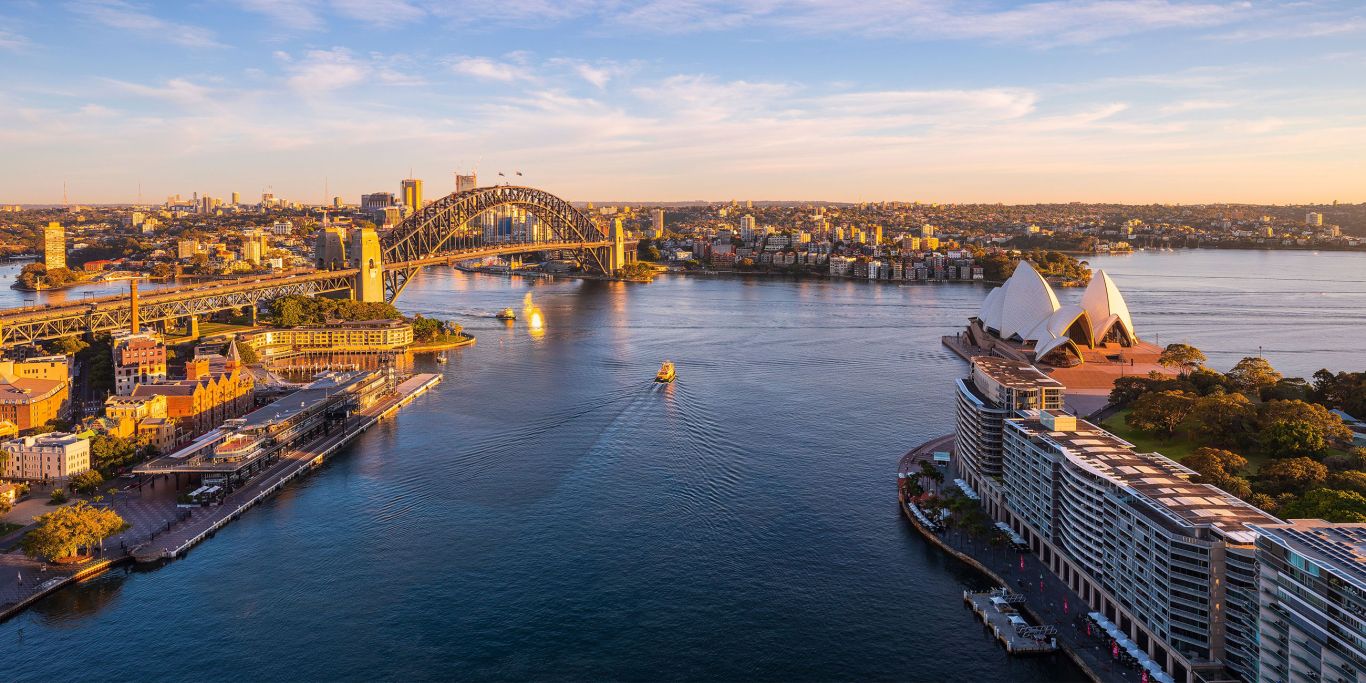

It’s been photographed a billion times and crossed by millions – but Australia’s most iconic steel arch still holds a few surprises.
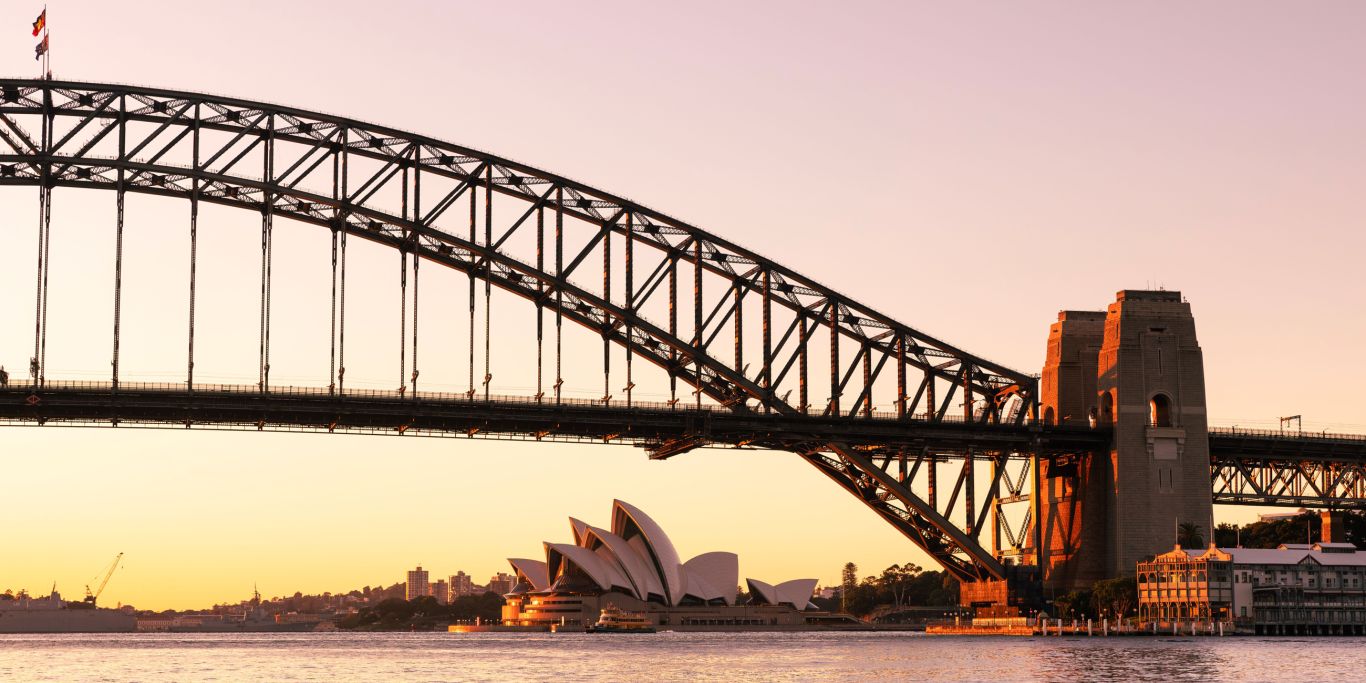
On 19 March 1932, the Sydney Harbour Bridge opened to a fanfare that included, rather unexpectedly, a sword. More than nine decades on, the ‘Coathanger’ remains one of the world’s great feats of engineering – and one of Australia’s most-loved landmarks. You know the silhouette. You’ve seen the New Year’s Eve fireworks. But how well do you really know the bridge?
1. The sword that stole a premiere’s moment
NSW Premier Jack Lang never quite got his ribbon-cutting moment. Just as the official opening ceremony was about to begin on 19 March 1932, Francis De Groot – a member of the right-wing paramilitary New Guard – barged through on horseback and slashed the ribbon with a sword, declaring the bridge open “in the name of the decent and respectable people of New South Wales." He was arrested on the spot, fined £5 after a psychiatric assessment confirmed he was sane, and later successfully sued the Commissioner of Police for wrongful arrest. The ribbon was hastily retied, and Lang performed the official ceremony.
2. The longest bridge that never was
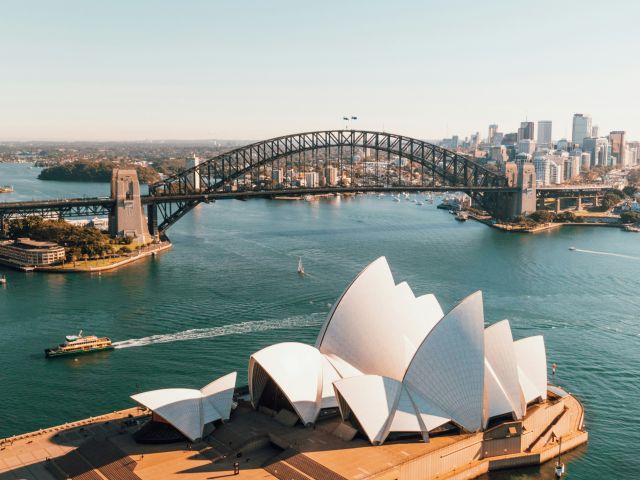
For decades, Australian schoolchildren were taught that the Sydney Harbour Bridge was the world’s longest single-arch bridge. It was never true – the Bayonne Bridge in New Jersey pipped it at the time of construction – and the myth has aged further: the record now belongs to the Port Mann Bridge in Canada. The Coathanger is, however, the world’s largest steel arch bridge by total weight and width of road deck. A consolation prize, but not a small one.
3. Six million reasons to respect a rivet
The bridge is held together by almost six million hand-driven rivets. Every single one was driven in by hand – a team of four workers per rivet: one to heat it, one to catch it, one to hold it, and one to drive it home. In an era before automation, it was gruelling, skilled work performed hundreds of metres above Sydney Harbour.
Need tips, more detail or itinerary ideas tailored to you? Ask AT.
AI Prompt
4. The arch that came apart on its big night

The joining of the two halves of the arch on 19 August 1930 was cause for celebration – briefly. The two sides met in the afternoon to great fanfare, but as the temperature dropped that evening, the steel contracted and the halves separated again. Workers had to rejoin the arch later the same night, under lights, before the milestone could be properly declared.
5. The fall that shouldn’t have been survivable
Only two people are known to have survived falling from the Harbour Bridge. The first was Vincent Kelly, an Irish-born worker who plunged from the road level during construction. According to legend, he survived by dropping his toolbelt into the water just before impact, breaking the surface tension and slightly softening his entry. 16 workers died during the bridge’s construction overall; their names are recorded at the Pylon Lookout.
6. Four pylons that do absolutely nothing
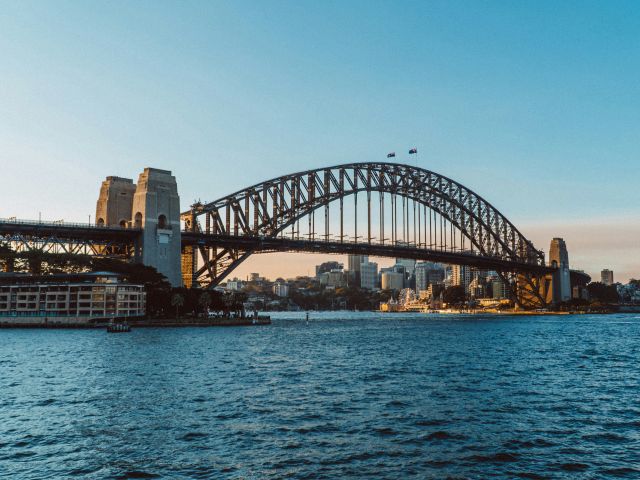
Those four imposing granite pylons at each corner of the bridge? Entirely decorative. They support nothing structural whatsoever – the arch does all the work. They were added purely for visual effect, to give the bridge the monumental gravitas its designers felt the occasion demanded. The granite itself was quarried near Moruya on the NSW South Coast.
Weekly travel news, experiences
insider tips, offers, and more.
7. The 28 volumes of maths behind the steel
The engineering calculations required to design the bridge filled 28 volumes. Chief engineer John Bradfield and his team worked for years on the maths before a single rivet was driven – all done by hand, long before computers existed. The detailed design work was ultimately carried out by British engineer Ralph Freeman, whose contribution to the project was disputed by Bradfield but is now widely recognised.
8. Why the bridge is grey (it’s not glamorous)
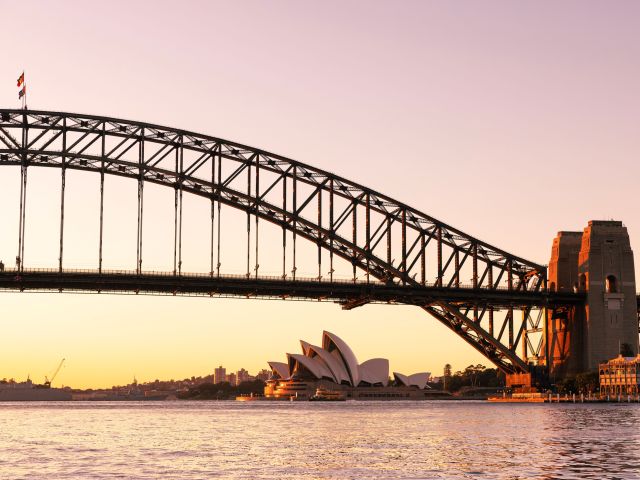
The bridge is grey because, at the time of construction, grey was the only paint colour available in sufficient quantities to coat the entire structure. The initial three coats alone required 272,000 litres of paint – enough to fill an Olympic-sized swimming pool. The bridge is repainted continuously; there is never a point at which the job is truly finished.
9. Four million climbers and counting
Since BridgeClimb opened in October 1998, more than four million people have made the journey to the summit – 134 metres above Sydney Harbour. Famous climbers include Oprah Winfrey, Nicole Kidman, Prince Harry, Will Smith, Matt Damon, Cate Blanchett and Robert De Niro. Over 5000 couples have gotten engaged at the top. The oldest person to complete the climb was 100 years old.
10. What to know before you make the trip
If you decide to climb, set aside around three hours for the full Summit Climb experience – including preparation, a breathalyser test, and getting kitted out in a regulation climber’s suit (no loose items, no phones). For those who prefer to stay earthbound, a new step-free cycleway ramp has opened, finally making it possible to ride across the bridge without navigating a steep staircase – a small but significant upgrade to one of the world’s great commutes.