hero media

Discovering East Arnhem: Australia’s most unique and rewarding corner

Hard to reach and harder to forget, East Arnhem offers something rare in modern travel: the chance to slow down and experience Country on its own terms.

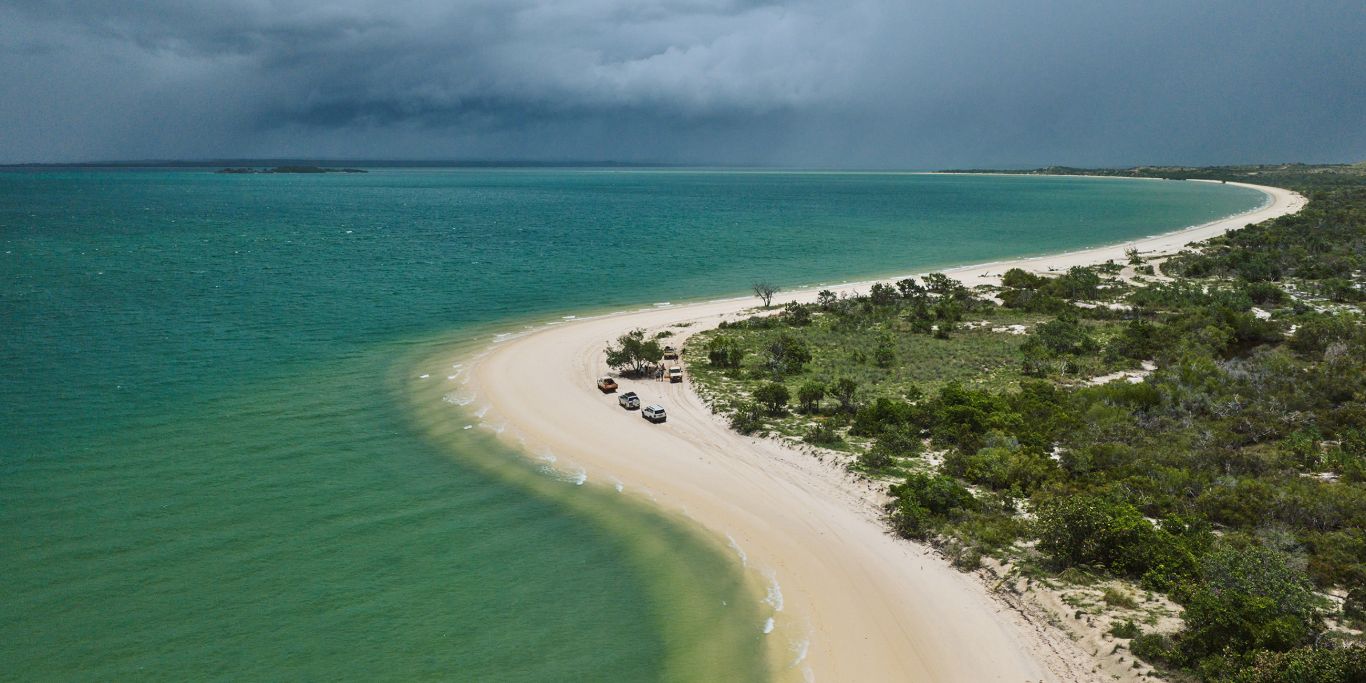
The sky feels bigger in East Arnhem. It stretches wide and uninterrupted above rouged earth, stringybark woodland and beaches so empty they seem to belong to another era. The coastline curves for kilometres without a footprint and the horizon runs on forever.

For comedian Lou Wall, the scale of the place was the first thing that hit them.

“The sheer openness," they say. “The sky feels infinite and the land stretches out endlessly. It’s pretty breathtaking visually."

But the physical landscape is only part of the story. The real reward isn’t only the scenery but the shift in perspective the journey brings. Visitors stop trying to tick off the destination and a real engagement takes over.

“It made me never want to travel again," Wall jokes. “In that I never wanted to leave East Arnhem."

Getting there
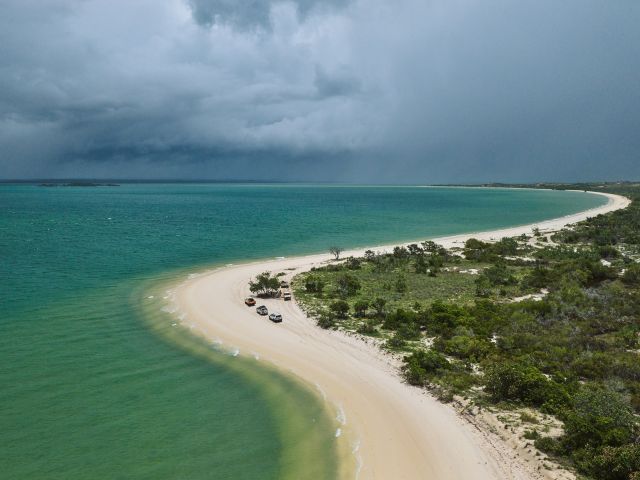
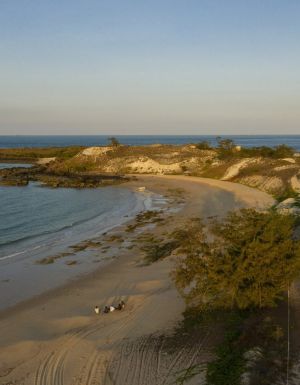
Aerial shot of East Arnhem’s coastline as cars trace the curve of the shore.
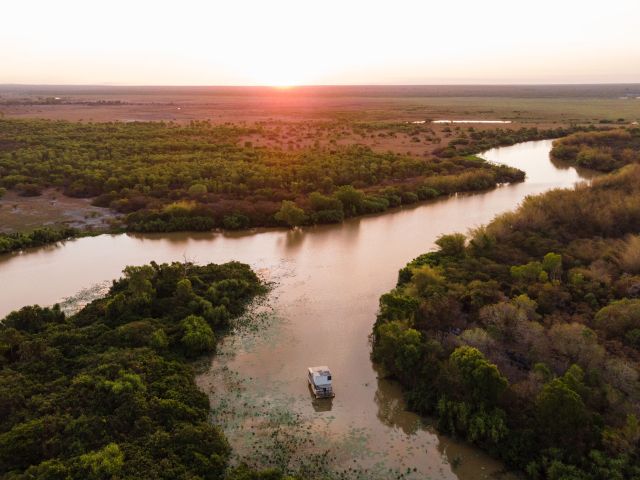
Sail along the remote coastline on an expedition cruise.

Reaching East Arnhem is part of the adventure. Travellers typically fly into Gove Airport near Nhulunbuy via Darwin or Cairns, or arrive by expedition cruise along the remote coastline. Others make the journey overland along rutted dirt roads that cut through East Arnhem’s small pockets of monsoon forest.

However you arrive, there’s a distinct feeling of crossing into somewhere different. Permits are required to visit the region, reflecting the fact that this is Yolŋu land where communities and traditional owners maintain deep cultural connections to Country.

The extra planning becomes part of the experience. By the time visitors arrive, they understand they’re entering a place not just of respect, but also patience and curiosity.

At one with nature

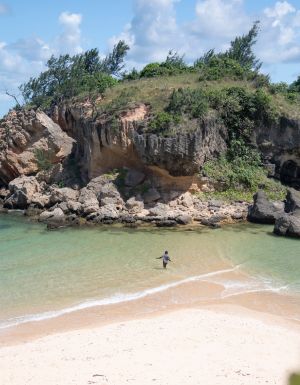
East Arnhem’s  landscapes leave a strong imprint. For Wall, one place in particular still lingers in their memory: Ngalarrkpuy, also known as Lonely Beach, near Bawaka Homeland.

“I genuinely felt like I was living inside an Instagram filter," they say. “One of the most stunning feats of nature I’ve ever seen. The water was so clear I swear I could see even the fish smiling."

Across the region, natural experiences unfold at a slower pace. Fishing, beachcombing and island hopping reveal the rhythm of the coastline. The tides shape daily life and the vastness of the landscape makes even simple moments feel downright cinematic.

For visitors with limited time, Wall says the Bawaka Homeland experience is unmissable.

“I just left and I’m already planning when I can get back there."

The sense of remoteness is part of the appeal. In a country where many beaches are crowded and well-trodden, East Arnhem’s coastline still feels wonderfully wild.

Need tips, more detail or itinerary ideas tailored to you? Ask AT.

AI Prompt

Immersing in local culture
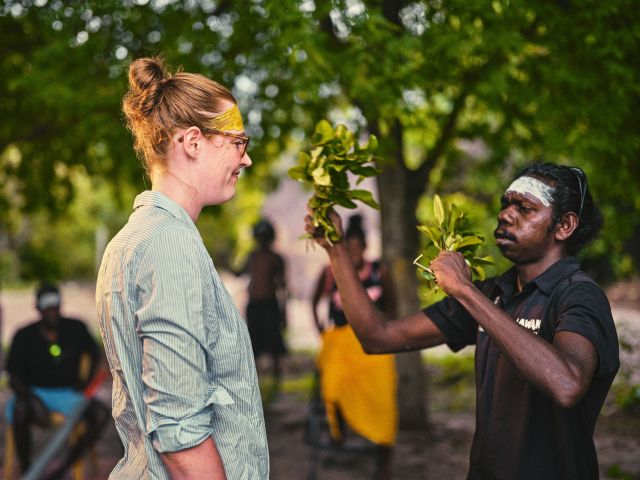
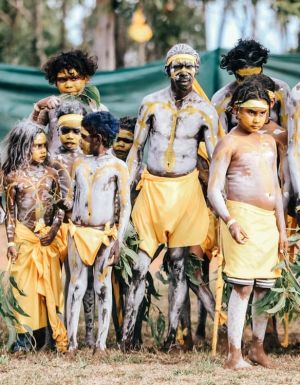
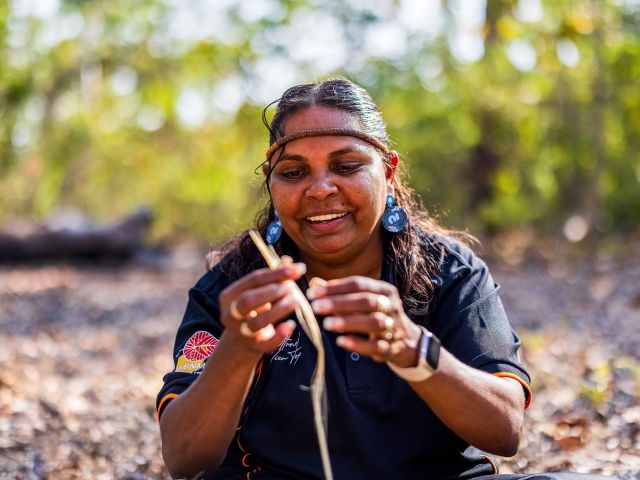
A visitor spends a meaningful moment alongside Yolŋu guides, gaining insight into their deep cultural knowledge and connection to the land.
Experience authentic moments with the locals.

Culture is woven through every experience in East Arnhem. Visitors have the opportunity to spend time on Country with Yolŋu guides and knowledge holders who share stories and traditions that have been passed down for generations.

For Wall, one of the most powerful moments came during a conversation with a Yolŋu elder.

“I got to meet a traditional elder, Mayalil, in Nhulunbuy," they say. “Listening to her talk about her home made the land feel alive in ways I couldn’t have imagined."

The region is also home to internationally recognised Aboriginal art centres where artists shape works deeply connected to land and family knowledge.

Music carries the same cultural energy. East Arnhem has produced globally recognised artists such as King Stingray and Baker Boy, blending Yolŋu language, storytelling and contemporary sound.

Wall experienced this musical spirit first-hand.

“A jam session around the fire was it for me," they say. “Letting the deep joy and history of their music wash over me…  and meeting a few of the King Stingray musicians was unreal."

These moments of human connection often become the most memorable part of a visit.

Spotting local wildlife
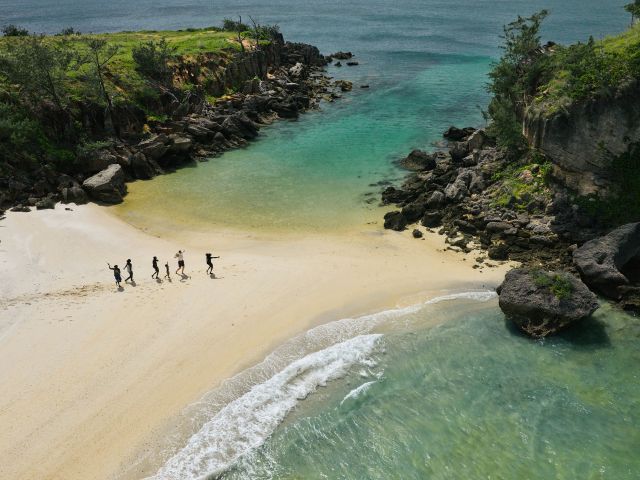
An aerial view of the beach shows tiny figures lined up across the white sand, moving as if in a rhythmic dance.
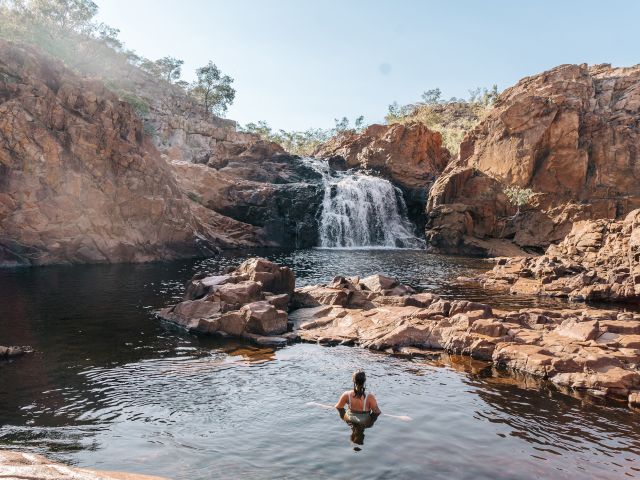
Step into a world where nature reigns.

The wildlife of East Arnhem adds another layer to the experience. The region is home to an extraordinary range of animals, from waterbirds and turtles to dugongs, dolphins and the formidable saltwater crocodile.

Wall admits they didn’t actually spot a croc during their visit.

“Devastatingly, I didn’t see one," they laugh. “But with all the stories from the locals I definitely gained a healthy respect for caution."

Some of the most memorable wildlife encounters can be surprisingly small., At Banubanu Beach Retreat on Bremer Island, Wall remembers walking along the beach one morning and watching it come alive.

“As you walk through the sand you see hundreds of crabs scurrying into their holes as you pass by," they say. “Such a small thing, but it was completely magical."

Moments like this reveal the quieter rhythms of East Arnhem, where even the smallest creatures seem to play a part in the landscape.

Visitors who make the journey soon learn the most important travel tip of all.

“Go in open-minded with a sense of curiosity," Wall says. “Be prepared to ditch your plans. The land and the locals will guide you on an adventure no spreadsheets could ever compete with."

And most importantly, they add, don’t rush.

“The land and people deserve your time and attention. You’ll be all the better for slowing down."

For more information on visiting East Arnhem, head to eastarnhem.com.au.

Weekly travel news, experiences
insider tips, offers, and more.

Want to see more stories from Australian Traveller in your Google search results?

  1. Click here to set Australian Traveller as a preferred source.
  2. Tick the box next to "Australian Traveller". That's it.
Joanne Millares
Joanne Millares is a campaigns executive, fueled by a lifelong love for travel. Beyond her professional pursuits, she indulges her senses in the culinary world, always on the hunt for the perfect coffee or the next delicious meal. Outside the office, she's a regular explorer, navigating the winding streets to discover hidden gems in the cafe scene.
View profile and articles
hero media

8 reasons why the low season is the best time to explore the Northern Territory

Credit: Tourism and Events NT

September to April in the Northern Territory rewards those who seek adventure.

Sure, the Northern Territory shines during the high season, but did you know it transforms into lush magnificence in the summer low season? From September to April, hundreds of waterfalls roar into action, vegetation flourishes and natural pools swell, all thanks to spectacular storms. This is when some of the country’s best arts and cultural events hit the calendar, too.

Travelling at this time of year means you’ll also be rewarded with off-peak travel pricing on accommodation, tours and experiences, and can even enjoy many of the top sites all to yourself.

1. Kings Canyon is transformed

Kings Canyon Rim Walk Garden Of Eden in the rain
Kings Canyon transforms in the low season. (Image: Kassia Byrnes)

Kings Canyon’s towering sandstone domes and crevasses are a sight to behold year-round, but during the low season you can witness a rare phenomenon. This ancient outback wonder’s arid landscape bursts to life when it rains, temporarily transforming it with waterfalls that thunder down the cliffs. At the base of the canyon is the verdant Garden of Eden and its permanent watering hole.

2. John Hayes Rockhole is a natural wonder

Two women hiking to John Hayes Rockhole, one of the unforgettable experiences during the best time to explore the NT.
Hike to a desert oasis. (Credit: Tourism and Events NT)

Hidden in the Trephina Gorge Nature Park in the East MacDonnell Ranges, John Hayes Rockhole is an oasis waiting to be discovered. Visit the narrow canyon during the high season, and you may see only a sandy creekbed, but after rain in the low season the pool is full of cool water. It’s accessible via a 4WD-only track off the Ross Highway, or you can set out early and join the nine-kilometre Trephina Ridgetop Walk. The reward for undertaking the hike is worth every step, and there’s a dedicated, tent-only campground for those who’d like to soak up the serenity overnight.

3. The Red Centre Light Trail shines bright

A woman admiring The Light Towers, one of the must-see attractions during the best time to explore the NT.
Watch the Outback light up after sunset. (Credit: Tourism and Events NT)

The Red Centre’s rich cultural heritage and lack of light pollution make it the ideal setting for immersive light shows, and you can experience the most iconic ones on an epic six-day road trip in April. Witness the Parrtjima cultural festival in Mparntwe (Alice Springs) before heading to Kings Canyon for Bruce Munro’s Light-Towers, where 69 glowing towers shine to a celestial soundscape. At Uluṟu, Munro’s Field of Light blankets the red soil with glowing frosted-glass stems, and the Wintijiri Wiru drone show lights up the sky in front of the sacred cultural site. Along the way you’ll witness the changing landscapes of the desert from the West MacDonnell Ranges to the Valley of the Winds.

4. The Parrtjima festival lights up the Red Centre

Festival lights illuminating the Northern Territory, showing why the best time to explore the NT is during festival season.
Witness the magic of Parrtjima. (Credit: Tourism and Events NT)

For 10 days every April, the Red Centre turns into a dazzling display of colour for the Parrtjima festival. Held at Alice Springs Desert Park, the unmissable celebration shines a spotlight on the world’s oldest living culture using modern technology. Artworks by local Aboriginal artists are transformed into large-scale illuminated installations with accompanying soundscapes, offering a unique opportunity to see the spectacular sunburnt landscapes, night skies and 300-million-year-old West MacDonnell Ranges in a new light. The jam-packed line-up of art and cultural events also includes workshops, markets, short films, talks and live music.

5. Cruising along Nitmiluk Gorge is breathtaking

Aerial view of Nitmiluk Gorge, showcasing its dramatic cliffs and waterways.
Sail between towering sandstone cliffs. (Credit: Tourism and Events NT/Nic Morley)

Drifting down the emerald waters of Nitmiluk (Katherine) Gorge between towering red sandstone cliffs carved over millions of years, all while waterfalls stream down around you, is an experience like none other. Nitmiluk Katherine’s two-hour NitNit Dreaming Two Gorge Tour sails through gorges past ancient rock art while a local guide imparts knowledge about the Jawoyn culture and significance of the landscape.

6. You can explore local culture on the Tiwi Islands

A quick boat ride from Darwin lies the peculiarly pink shores of Melville Island, Tiwi Islands. Populated by the hilariously cheeky Indigenous Tiwis, stepping onto the Islands is like stepping back in time. Sweeping rusty dirt roads meander through the eucalypt forest and are interspersed only by small communities and freshwater springs.
Immerse yourself in Tiwi culture. (Credit: Tourism and Events NT/Elise Cook)

Take an 80-kilometre ferry ride from Darwin to arrive at the Tiwi Islands, an archipelago of 11 picturesque islands and a haven for art lovers and anglers. On the Tiwi By Design walking tour you’ll be guided to the Tiwi Design Art Centre, one of Australia’s oldest art centres, to observe local artists in action and join a screen printing workshop.

If you’re more partial to sinking a line, book a stay at Tiwi Island Retreat in April. It’s one of the best months to fish for barramundi, and their world-class fishing adventures are your best chance at reeling in a prized catch.

7. Scenic flights over Kakadu’s waterfalls are jaw-dropping

Jim Jim Falls from above during a wet season helicopter tour. Covering nearly 20,000 square kilometres, Kakadu National Park is teeming with wildlife, home to important Aboriginal rock art sites, and takes in diverse and exotic landscape.
Soar above Jim Jim Falls. (Credit: Tourism and Events NT/Jarrad Seng)

Seeing Kakadu National Park’s gushing waterfalls and dramatic escarpments from above offers a dose of unparalleled beauty – and it’s all best witnessed in the low season.

Taking flight from Darwin, Kakadu Air Services offers an unforgettable experience, with doorless helicopters revealing unobstructed views of the 1.8-billion-year-old landscape. Soar above the untouched savannah that turns into a tropical green paradise, marvel at the thunderous Jim Jim Falls and Twin Falls, and whiz through ancient sandstone canyons. If you’re lucky, the scenery will look all the more dramatic with rolling tropical storm clouds in the distance.

8. Litchfield National Park is an amazing place to cool off

Litchfield National Park
Dive into natural swimming holes. (Image: Tourism NT/Joshua Griffen)

Litchfield National Park is peppered with stunning natural swimming pools for you to beat the heat in. Take a refreshing dip in pristine, crocodile-free spots such as Buley Rockhole, a series of spring-fed cascading pools, and the nearby Florence Falls, which is enveloped by monsoon rainforest and features a crystal-clear plunge pool fed by a 15-metre-high waterfall. Be sure to check the Northern Territory Parks & Reserves website for closures before you go.

Start planning your low season adventure of a lifetime at northernterritory.com.

Top Things to Do in East Arnhem: Explore Culture & Nature