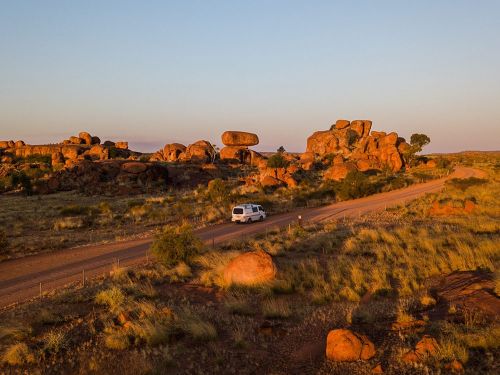
As many young parents focus on settling down, a growing number of others are throwing caution to the wind and embracing caravan trips of a lifetime through Australia’s outback. If you’re itching to join them and have one, three or six months up your sleeve, here’s where you should go.
Getting to the NT
The outback is a huge land mass that paints 1.3 million square kilometres of the Northern Territory burnt red and scorching orange. This sea of bull dust, towering escarpments and spinifex infiltrates cities and rural communities to create a unique destination that’s worth sharing with the kids, no matter their ages.
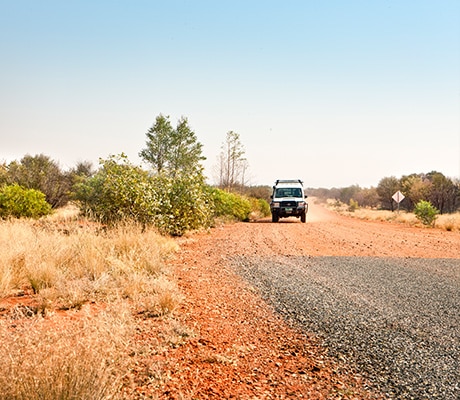
Most caravanners will be tracking up National Highway A87 , better known as the Stuart Highway, from South Australia; travelling along Highway 66 from Queensland; or entering the Northern Territory from the west, along Highway 1. We recommend families start on the northern edge of the outback, in Katherine, making Uluru their final stop. You are driving the Explorers Way in the reverse to our essential guide.
Katherine
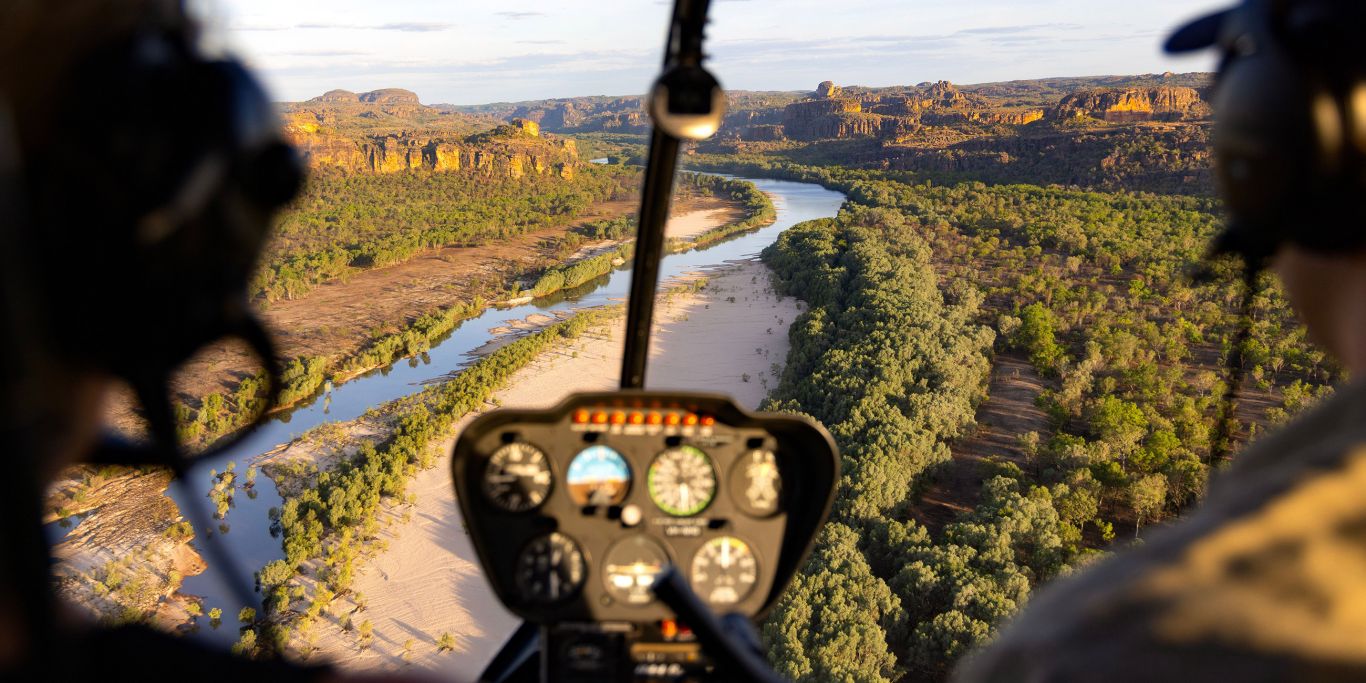
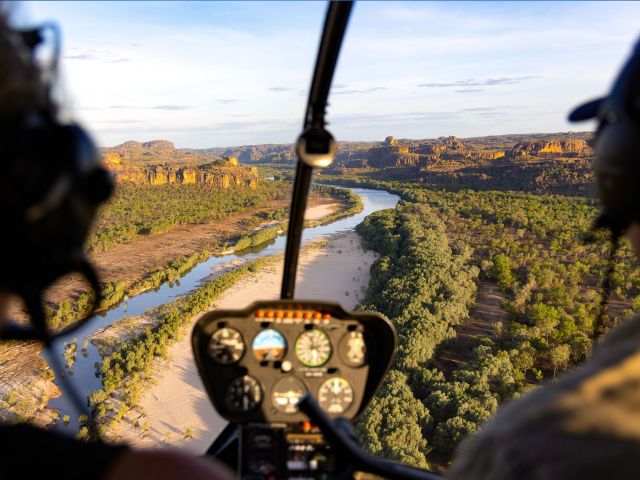
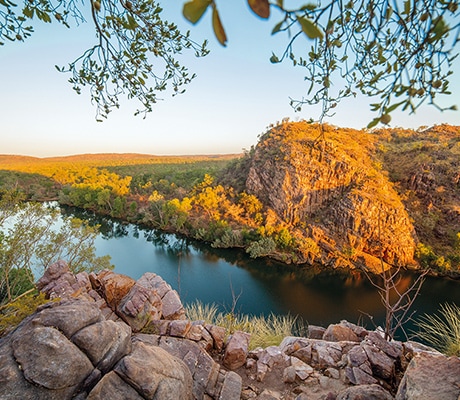
As far as introductions go, Katherine will ease you into the NT’s outback. Stop at one of the grocery stores in Katherine to re-stock the caravan cupboards before heading to Nitmiluk Gorge, where you’ll be mesmerised by the towering sandstone walls. There are 13 gorges in Nitmiluk National Park, 29 kilometres north of town, and you can lap up their beauty on a self-guided canoe trip, a helicopter flight, or boat tour. Book your tours in advance at Nitmiluk Tours.
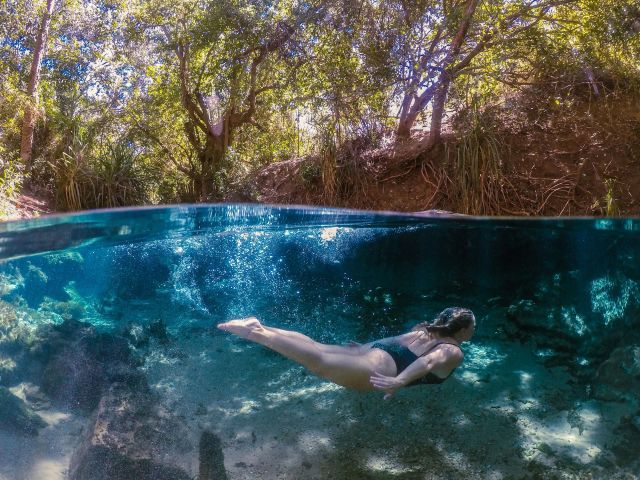
If you have more time, go for a swim at Leliyn (Edith Falls), visit Katherine Hot Springs, and drive 107 kilometres south to Mataranka Thermal Pool, in Elsey National Park. Mataranka is a popular stop, with the water an inviting 30 degrees. Take a pool noodle for floating. A short drive away is Bitter Springs, a thermal creek where a gentle current takes you downstream to a footbridge. Kids will love doing laps.
Katherine camping
Our pick in the area is Nitmiluk Campground, as it makes exploring the national park easy. There are powered and unpowered sites for all types of campers, plus a swimming pool, restaurant, barbecues and camp kitchens. There is also a huge number of sites at Mataranka Homestead, which is the entry point to the springs.
Stay longer
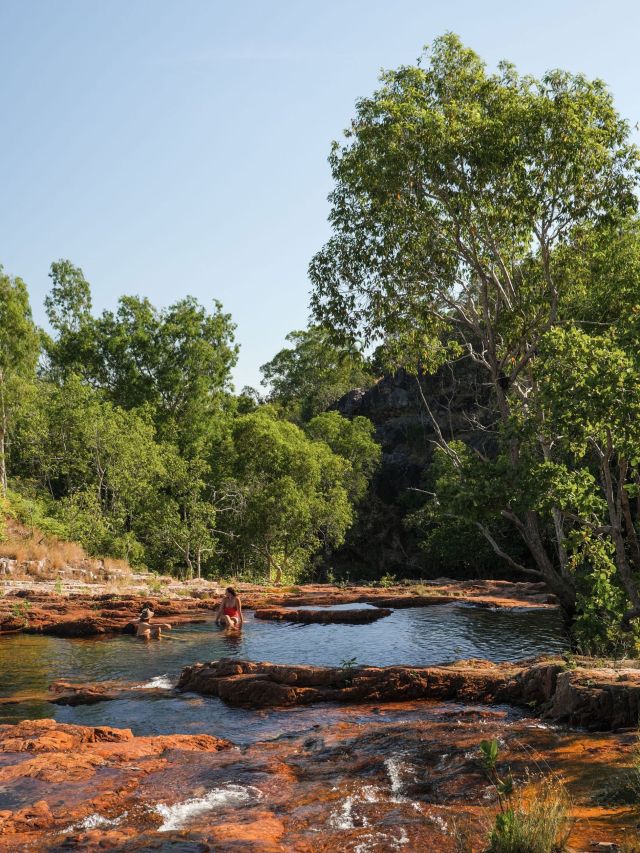
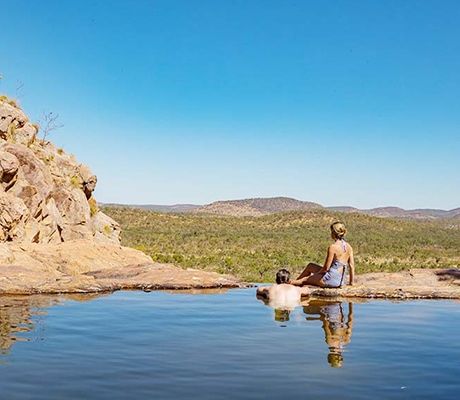
Families who’ve packed up the house for an extended holiday can pop into the southern corner of Kakadu National Park, via Kakadu Highway. You will easily be able to reach Gunlom and Maguk waterfalls – two of the most popular attractions. Gunlom has a steep but manageable trail to tiered plunge pools at the top of the waterfall, while Maguk follows a sandy track to a clear swimming hole. Swimming is a common practice between April and October.
Tennant Creek
With sprawling cattle stations, gold-mining history and Aboriginal culture, Tennant Creek is a raw outback town. Attractions include the old stone telegraph station that was a refuge for tired travellers and telegraph linesmen; the Nyinnka Nyunyu art and cultural centre; and Battery Hill Mining Centre, where you can go on an underground mine tour and learn about the 1930s’ gold rush.
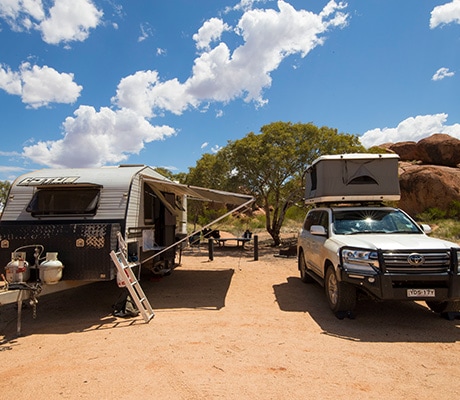
When you’re ready to move on, make a beeline for Karlu Karlu (Devils Marbles), about 95 kilometres south. Karlu Karlu translates to ’round boulders’ and is shared by the Kaytete, Warumungu, Warlpiri and Alyawarra traditional owners of the area. Like Uluru, these rocks have significant cultural meaning to the traditional owners who respectfully ask that the karlu (marbles) are not climbed. (To find out why it’s not a good idea to climb these sites, check out our story Why closing the rock climb is a good idea).
Need tips, more detail or itinerary ideas tailored to you? Ask AT.
AI Prompt
Tennant Creek camping
If you’re short on time, head straight to Devils Marbles Conservation Reserve, where there are caravan and tent sites, toilets and picnic tables. There are also basic campgrounds for overnighting in Tennant Creek. Barkly Homestead caters to every man and his dog, with plenty of space, while the Outback Caravan Park is a good option if you want to hang around for a few days.
Stay longer
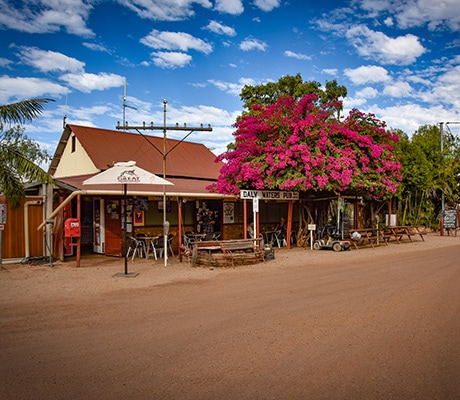
Call into The Daly Waters Pub on your way from Katherine to Tennant Creek. The historic outback watering hole is a sight to behold, with bras hanging above the bar and walls covered in foreign money. Sit on the verandah under blooms of bougainvillea and indulge in a bout of people-watching while enjoying a burger and a beer.
Alice Springs
Once you reach Alice Springs, 412 kilometres south of Karlu Karlu, you’re in the heart of the Red Centre. There are tonnes of things to do, but our top three for families include: Alice Springs Reptile Centre, where you can meet a saltwater crocodile, thorny devils, and venomous snakes; The Royal Flying Doctor Service, a great educational stop for older children to learn about remote medical assistance; and Alice Springs Desert Park, where you can wow the kids at the birds of prey show and teach them about bush tucker.
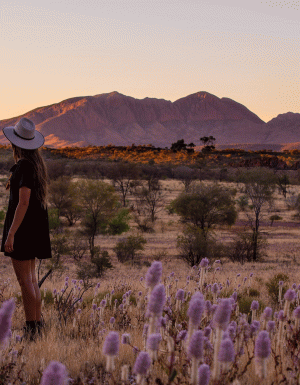
If you have active teenagers, you may also like to explore the East and West MacDonnell Ranges. Set out on hiking trails, enjoy dips in natural waterholes, wander through chasms and spot wildlife.
Alice Springs camping
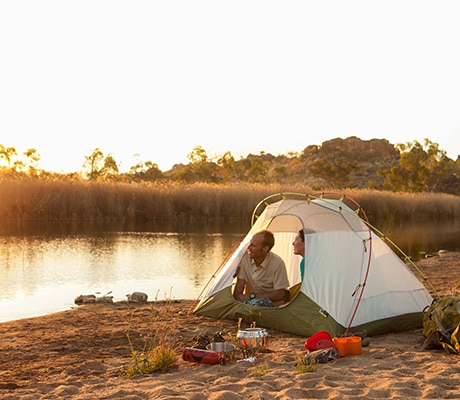
With a jumping pillow, waterslide, pools, go-karts and a BMX track, our pick of Alice campgrounds is the BIG4 MacDonnell Range Holiday Park, south of town. Here, you will find all the facilities you’d expect from a BIG4, plus a parents’ room and gym.
Stay longer
Alice hosts a number of fantastic events, including the Alice Springs Beanie Festival. The knitted hat extravaganza is enough to make your granny proud, with more than 4000 toques on display every June. The Alice Springs Street Art Festival is also held in June, when the walls of the CBD are transformed into wonderful depictions of outback life.
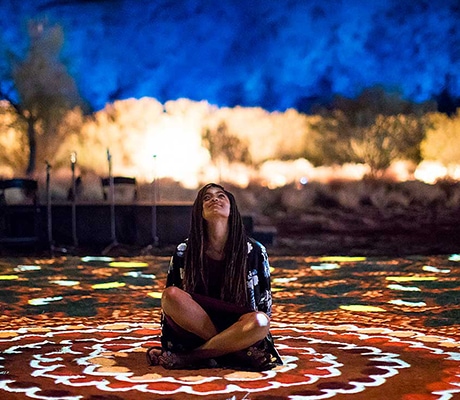
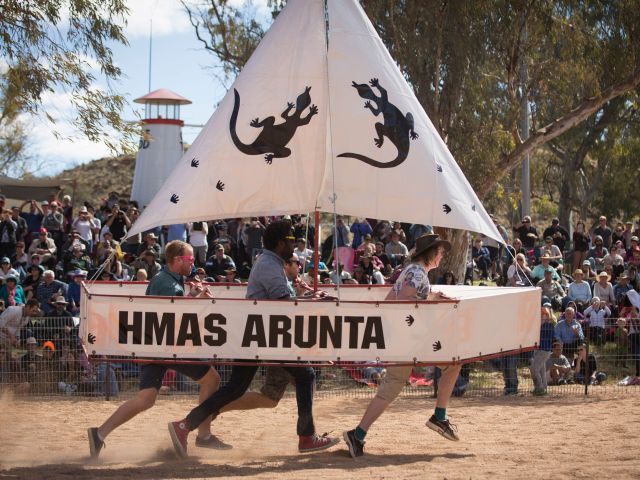
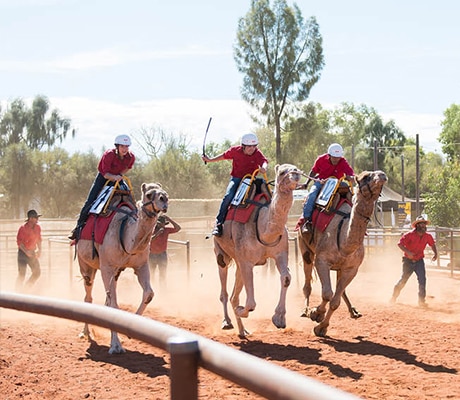
The Apex Camel Cup is the most iconic Alice event. Held in July, it’s been running since 1970 and involves camel races, rickshaw races, rides and entertainment. The Rotary Henley on Todd Regatta, in August, is another fun one, with competitors racing down a dry riverbed in bottomless boats, while the Parrtjima festival, a light and art event in the desert, is also worth checking out.
Watarrka National Park
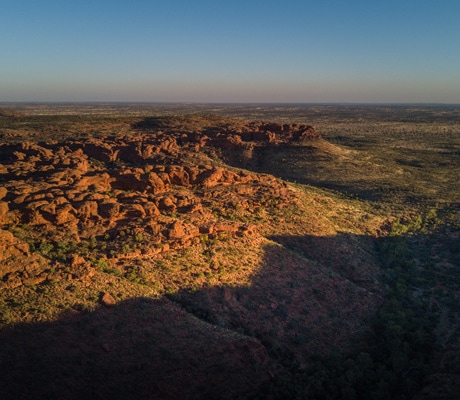
Home to Kings Canyon, Watarrka National Park is a great side trip on the Red Centre Way, promising plenty of adventure for caravanners on three-to-six-month-long sabbaticals. If you have a teen that loves a challenge, take them on the six-kilometre Kings Canyon Rim Walk. It’s a slog at the start thanks to about 500 steps, but the views are spectacular. Younger families are better suited to the gentle 2.6-kilometre Kings Creek Hike.
Kings Creek Station also runs tours, including helicopter flights that start from five minutes. The more affordable option for families, however, is a tour of the working cattle and camel station.
Weekly travel news, experiences
insider tips, offers, and more.
Watarrka camping
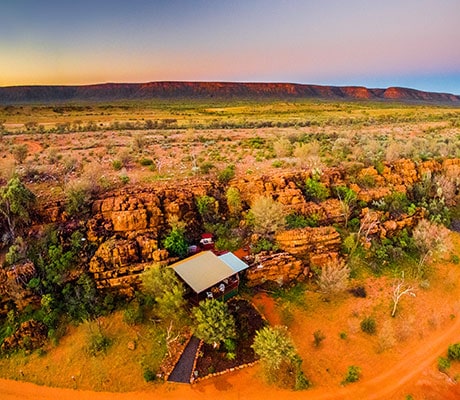
Unhitch at Kings Canyon Resort and Holiday Park or Kings Creek Station. The resort is close to the park gates and has powered and ensuite sites, as well as grass tent sites and family glamping tents if you’re in the mood for a change.
Kings Creek Station is a little farther away (36 kilometres) but offers insight into life on a working cattle and camel station. How’s that for the school of life? You can even dine on camel burgers if curiosity gets the better of you. Accommodation includes powered and unpowered sites, canvas safari-style cabins, glamping tents and even a bush swag camp in case mum or dad need a night to themselves.
Uluru
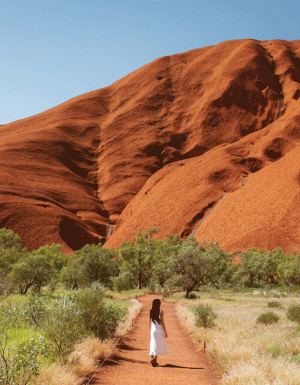
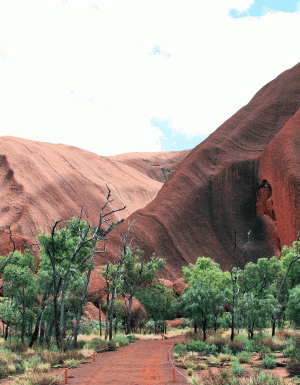
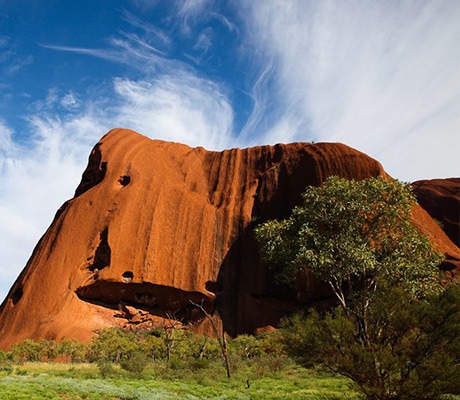
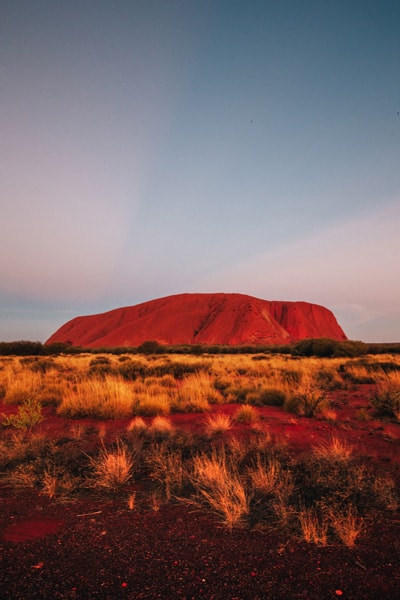
Rounding out your mammoth outback caravan trip is the star of the region, Uluru. Awash with cultural significance, it’s the perfect destination to deepen your understanding of Australia’s desert before pointing the 4WD toward home. First things first: no you can’t climb Uluru anymore and here’s why. But there are plenty of other ways to get to know this 348-metre-high UNESCO World Heritage-listed monolith. First on every family’s list should be a ranger-guided walk around the base, or at least a fraction of it.
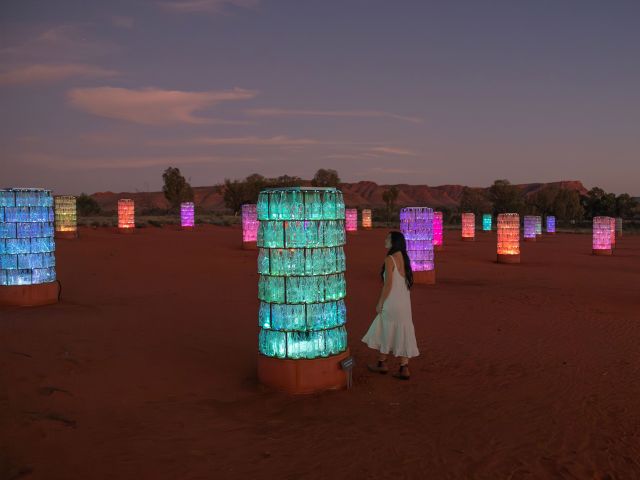
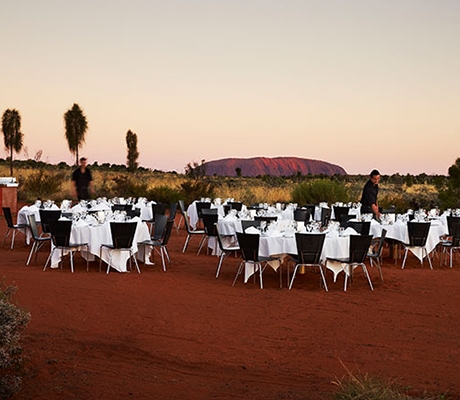
Learn how important Uluru is to the Anangu people at the Uluru-Kata Tjuta Cultural Centre, where there are free presentations, art galleries and community-owned shops. Other fun activities include camel rides and didgeridoo workshops. For an extra special family experience, head along to the beguiling Field of Light Uluru art installation where the desert is illuminated by 50,000 lights. You’ll need a Field of Light Pass ($43 per adult; $30 per child) and should pre-book.
The national park is open year-round but temperatures (and flies) can be unbearable over summer, so families will enjoy it most between May and October.
Uluru camping
Ayers Rock Campground at Ayers Rock Resort is the penultimate in budget family accommodation close to Uluru. There are powered sites for vans and shaded grass sites for tents, and you’ll thank your stars for the swimming pool and playground. Hop aboard the resort’s free shuttle to check out the complimentary activities. Children will especially enjoy the Aboriginal storytelling time about weapons and bush tucker.
Stay longer
The 36 domes of Kata Tjuta, formerly known as the Olgas, are also worth seeing. They are about 40 minutes’ drive from Ayers Rock Resort and you can get up close on two marked walking trails. Families will prefer the 2.6-kilometre (return) track to Walpa Gorge.
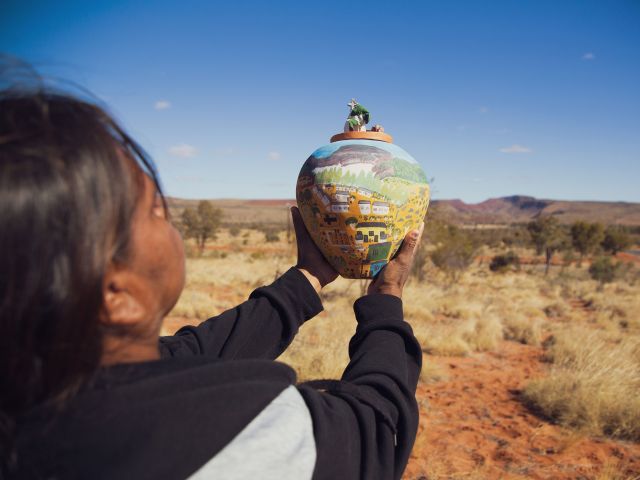
Wrap up your outback adventure by creating your own souvenir in a dot painting workshop, which are run daily through Ayers Rock Resort. The workshops are great fun for little kids who love exploring with colour and a nice way to remind them of their epic outback adventure and introduce them to Indigenous art.
For more information visit Tourism Northern Territory.
Want to see more stories from Australian Traveller in your Google search results?
- Click here to set Australian Traveller as a preferred source.
- Tick the box next to "Australian Traveller". That's it.