The ultimate Darwin to Uluṟu road trip guide

hero media

The drive from Darwin to Uluṟu is no ordinary road trip – it’s a bucket list journey through some of Australia’s most unforgettable landscapes. Wind your way past towering termite mounds, lush tropical bush, and that deep red earth the Northern Territory is famous for, with roadhouses, hot springs, art centres and shady plunge pools breaking up the kilometres.

This guide covers the best stops, driving distances, road conditions, accommodation options, and insider tips to help you plan the perfect trip.

Best time to take a Darwin to Uluṟu road trip
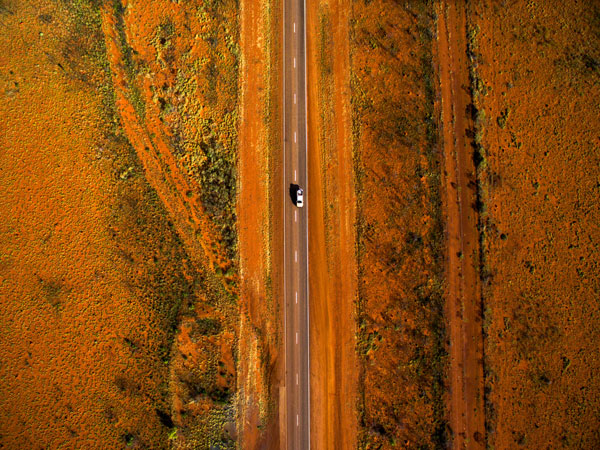
a road trip through the Northern Territory
Embark on an epic road trip through the Northern Territory. (Image: Tourism NT/Sam Earp)

The dry season (May to September) is the best time for a Darwin to Uluṟu road trip, offering clear skies, cooler temperatures and fewer road closures. The wet season (November to April) can bring flooding, intense heat and unpredictable road conditions, making travel more challenging.

Darwin to Uluṟu distance and drive time

Total distance: 1,950 km

Recommended duration: 7 to 14 days

Road conditions: Fully sealed highways, with some unsealed detours if you venture off the Stuart Highway

Darwin to Katherine (320 km, about 3.5 hours)
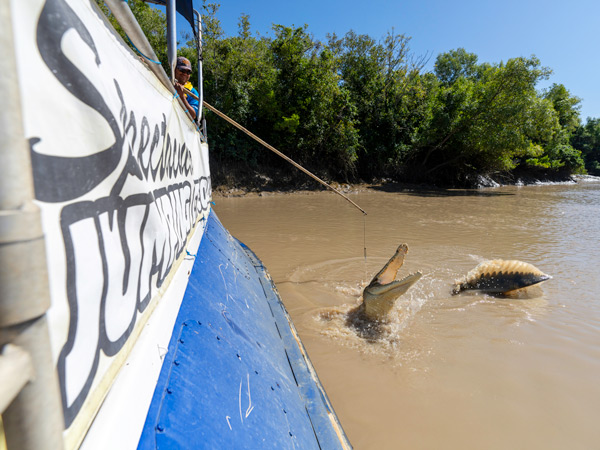
feeding crocodiles during a Jumping Croc Cruise, Adelaide River
See salties up close on a Jumping Croc Cruise. (Image: Tourism NT/Tourism Australia)

Wave goodbye to Darwin’s sea breeze and head south – first stop, Litchfield National Park, home to croc-free swimming spots like Wangi Falls and Buley Rockhole, where cool cascades and shady pools deliver instant relief from the heat. Further down the track, the Adelaide River region offers two contrasting pit stops: get your heart racing on a Jumping Croc Cruise, where salties launch from the water just metres from the boat, or slow things down at the beautifully kept Adelaide River War Cemetery, a moving tribute to those who served in WWII.
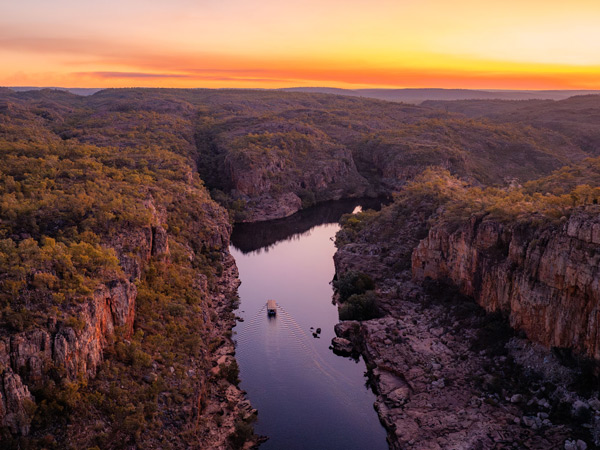
an aerial view of Nitmiluk (Katherine) Gorge
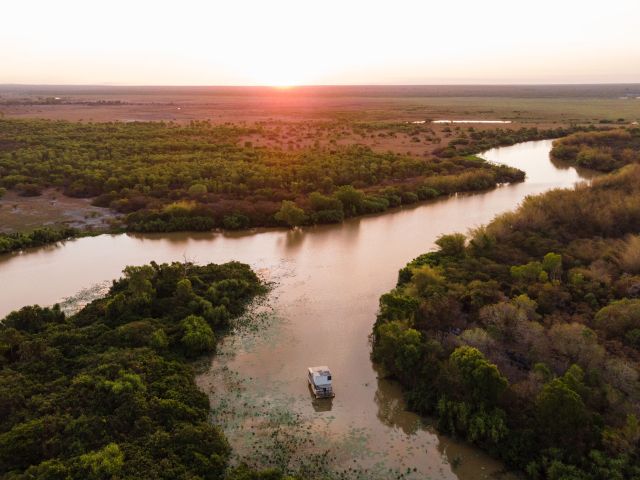
A scenic river cruise past stunning sandstone cliffs at Nitmiluk Gorge. (Image: Tourism NT/Nic Morley)

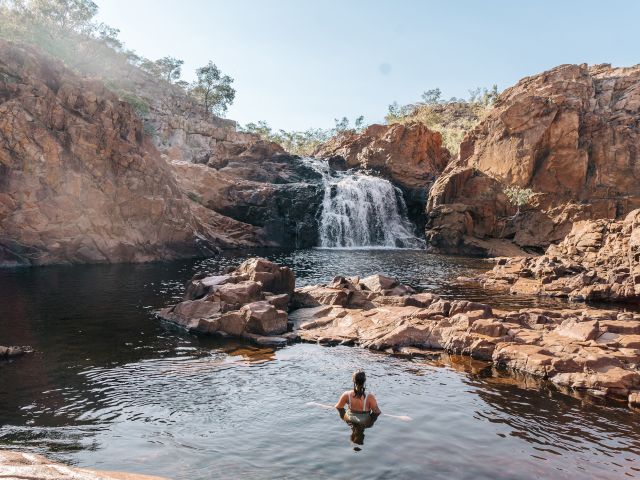
Just before Katherine, take a detour left to Edith Falls (Leliyn) boasting gorgeous swimming holes framed by red cliffs, grassy banks and a series of waterfalls. Once in Katherine, drift through the warm, glassy hot springs, where little turtles paddle alongside and kids launch into the main pool with cannonball flair. Then it’s on to Nitmiluk (Katherine) Gorge, where towering cliffs and a winding river set the scene for boat cruises, overnight kayaking trips or scenic hikes with views that are well worth the effort.

Where to stay

sunset view at the pool, Cicada Lodge, Darwin
Cicada Lodge at sunset. (Image: Tourism NT/Peter Eve)

For a luxe stay right in the heart of nature, Cicada Lodge delivers – think elegant rooms, stunning views, and a close connection to the surrounding landscape of Nitmiluk National Park. If you’re after something mid-range, Knotts Crossing Resort is a solid pick – comfortable, close to town, and with a pool that’s a lifesaver in the heat. Travelling on a budget or keen to camp? Discovery Parks – Katherine has you covered with shady sites, a relaxed vibe and fresh, well-equipped two-bedroom cabins if you’re after a bit more comfort.

Need tips, more detail or itinerary ideas tailored to you? Ask AT.

AI Prompt

Katherine to Tennant Creek (675 km, about 7 hours)
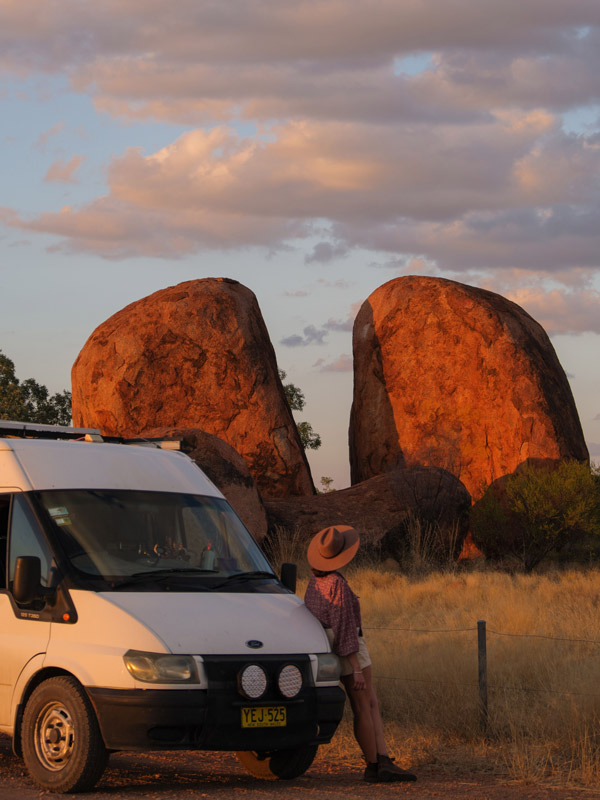
a 4WD stopping by the Karlu Karlu/Devils Marbles
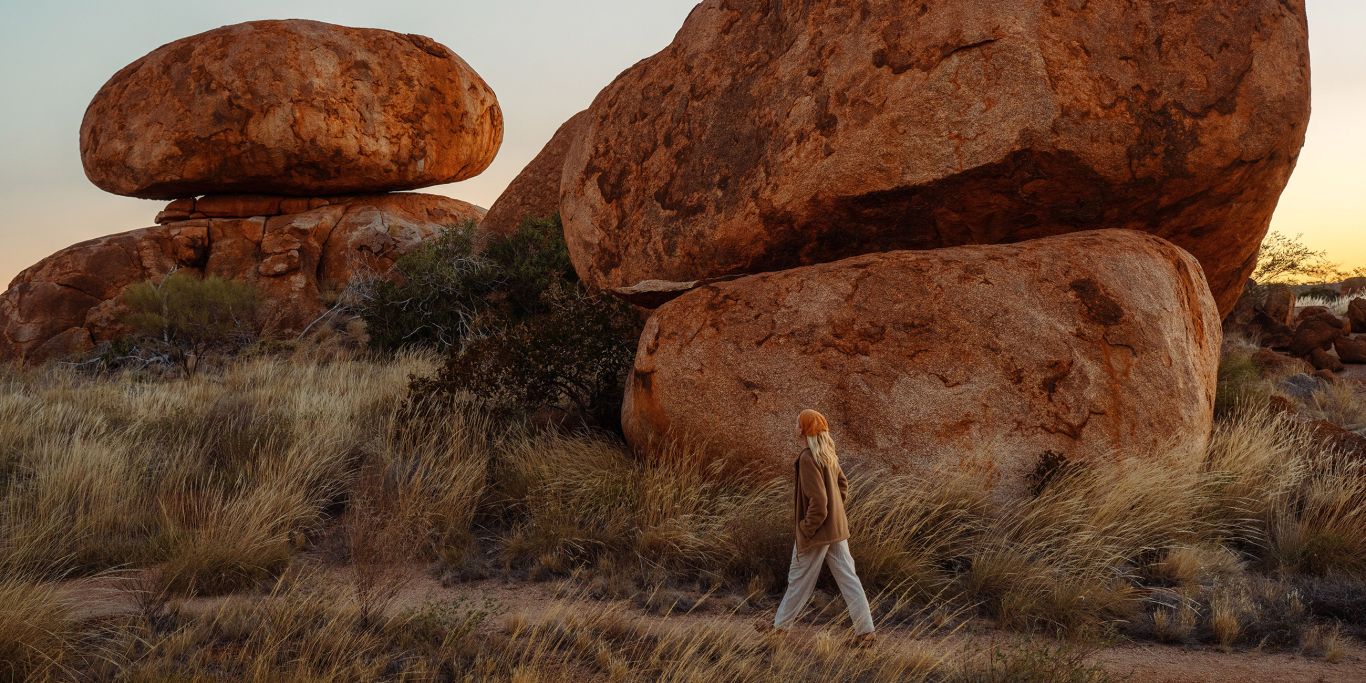
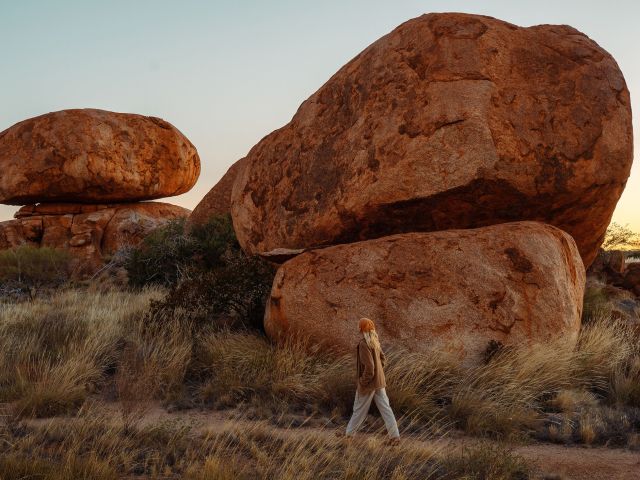
The iconic Devils Marbles (Karlu Karlu). (Image: Tourism NT/@betsybiglap)

The drive south leads to Mataranka, home to the stunning thermal pools surrounded by lush palms, where you can float in warm, crystal-clear water before heading to the famous Daly Waters Pub. This legendary outback watering hole is adorned with bras, banknotes, and road trip memorabilia, making it an essential stop for a burger and a cold drink in true Territory style. Further down the highway, Karlu Karlu (Devil’s Marbles) appears as giant, rounded boulders seemingly stacked by nature itself.

Where to stay

the pub exterior of Daly Waters Pub
Daly Waters Pub is a vibey pit stop serving NT beef and barra. (Image: Tourism NT/Sean Scott)

Accommodation is sparse between Katherine and Tennant Creek, but Daly Waters Pub offers a lively overnight stop with quirky rooms and a classic roadhouse atmosphere. In Tennant Creek, Bluestone Motor Inn is a reliable mid-range option, providing comfortable rooms and a pool. For a more rugged experience, Banka Banka Station offers budget-friendly camping and cabins on a working cattle station.

Tennant Creek to Alice Springs (510 km, about 5 hours)
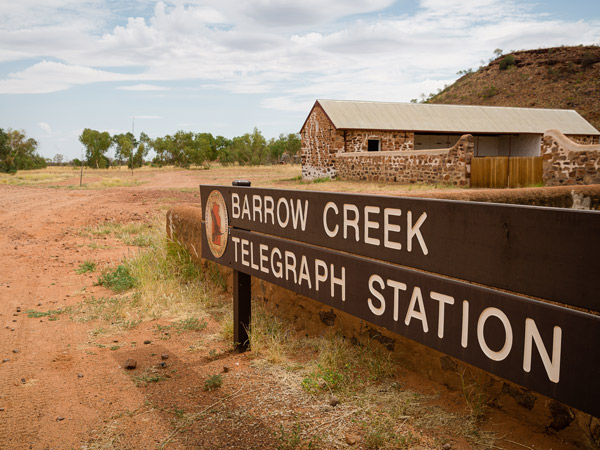
the Barrow Creek Telegraph Station signage
The Barrow Creek Telegraph Station used to be a staging camp for army convoys. (Image: Tourism NT/Kate Flowers)

The vast outback stretches ahead, with Barrow Creek Telegraph Station offering a glimpse into Australia’s early communication history, complete with eerie remnants of the past. Further south, the Tropic of Capricorn Marker signals the transition into the arid heart of the country, where the landscape becomes more dramatic and the horizon stretches endlessly. Closer to Alice Springs, Simpsons Gap in the West MacDonnell Ranges is a must-visit, with towering cliffs framing a peaceful waterhole that often attracts black-footed rock wallabies.

Where to Stay

cocktail drinks by the pool, Crowne Plaza Alice Springs Lasseters
Sip on refreshing cocktails by the pool at Crowne Plaza Alice Springs Lasseters. (Image: Tourism NT/Christopher Nayna)

For a dose of top-end comfort, Crowne Plaza Alice Springs Lasseters delivers with 205 roomy stays, multiple dining spots, a superb pool and a fitness centre that’s basically a gym lover’s dream. Nearby, DoubleTree by Hilton offers 228 sleek rooms and those signature warm cookies on check-in – plus prime access to the casino and convention centre. Travelling light on the wallet? Discovery Parks – Alice Springs has you covered, with a well-equipped, family-friendly caravan park that doesn’t skimp on amenities.

Alice Springs to Kings Canyon (330 km, about 3.5 hours)
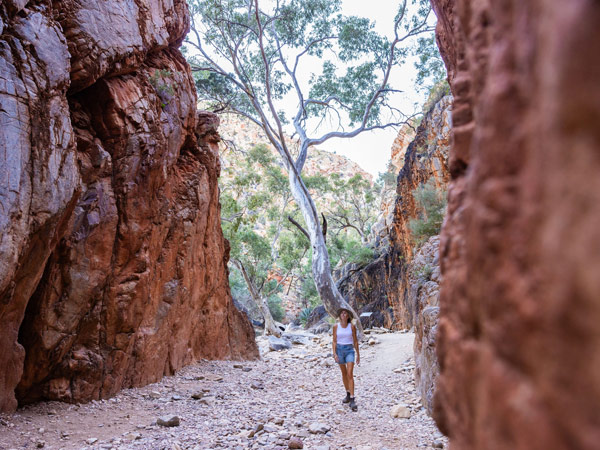
a woman walking past sheer red cliffs at Simpsons Gap
Stroll past sheer red cliffs at Simpsons Gap. (Image: Tourism NT/Sean Scott)

The road west leads into the breathtaking West MacDonnell Ranges, home to the formidable 223-kilometre Larapinta Trail – a demanding, multi-day trek that ranks among Australia’s toughest.

Along the way, you’ll stumble upon some unmissable spots: Simpsons Gap, where sheer red cliffs loom overhead and black-footed rock wallabies dart between shadows; Ellery Creek Big Hole, offering a bracing (read: freezing) dip in its serene waterhole; and Standley Chasm, which blazes fiery red when the midday sun hits just right.
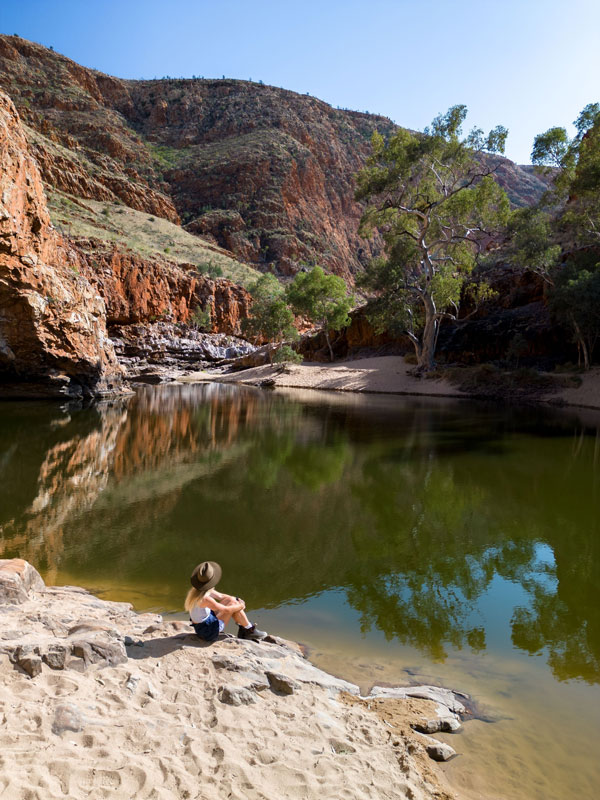
a woman sitting on a rock at Ormiston Gorge
The natural pool at Ormiston Gorge beckons for a dip. (Image: Tourism NT)

The historic Ochre Pits deserve a detour for their vivid earth pigments, while Ormiston Gorge and Glen Helen provide a double hit of dramatic cliffs and cool, swimmable waters. Don’t miss the four-hour Kings Canyon Rim Walk, a challenging yet unforgettable hike offering panoramic views over the canyon’s rugged landscape.

Weekly travel news, experiences
insider tips, offers, and more.

Where to stay
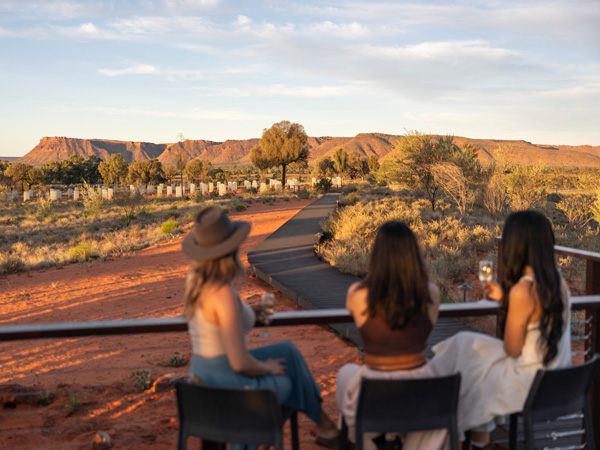
three women looking out the scenic landscape at Discovery Resorts - Kings Canyon
Soak up sweeping desert views from Discovery Resorts – Kings Canyon. (Image: Tourism NT)

If you’re after a resort-style escape, Discovery Resorts – Kings Canyon serves up hotel rooms and glamping tents with outback views that do all the talking. For something more rugged, Kings Creek Station – a working cattle station 36km from Kings Canyon – offers safari tents, cabins and classic camping under the stars, along with buggy tours that kick up some serious red dust.

Kings Canyon to Uluṟu (330 km, about 3.5 hours)
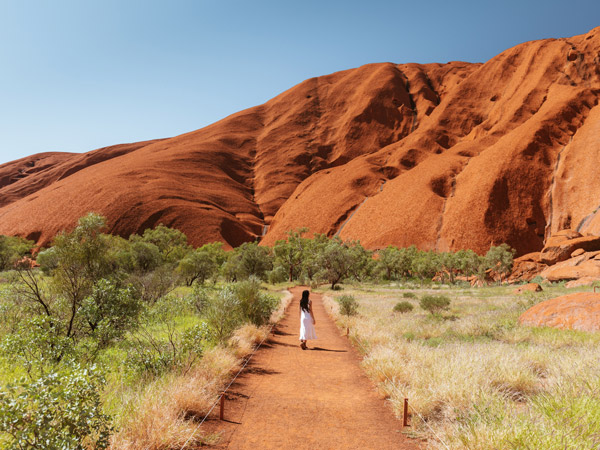
a scenic landscape at Uluru-Kata Tjuta National Park
See another side to Uluru-Kata Tjuta National Park. (Image: Tourism NT/Lola and Jira/Uluru-Kata Tjuta National Park)

The final leg to Uluṟu hums with anticipation, but don’t speed past Mt Conner – this flat-topped giant often fools first-timers, looming large on the horizon before giving way to the real thing. As you near Uluṟu, the landscape shifts, the red earth deepening in tone, the monolith slowly rising into view like something from another world.

Once inside Uluṟu-Kata Tjuṯa National Park, take your time on the base walk, tracing the rock’s contours and weathered grooves. Then head to Kata Tjuṯa, where the towering domes of Walpa Gorge serve up one of the region’s most dramatic walks. Whether you ride, fly, Segway, cycle, walk or jog – there are plenty of ways to experience this extraordinary place.

Where to Stay

For a luxurious experience, Sails in the Desert offers 228 lavish rooms, fine dining and art displays. Desert Gardens Hotel provides a mid-range option with comfortable rooms and great views of Uluṟu. For those wanting to camp or stay on a budget, Ayers Rock Campground offers powered sites and cabins just a short drive from the rock.

Road conditions and essential supplies
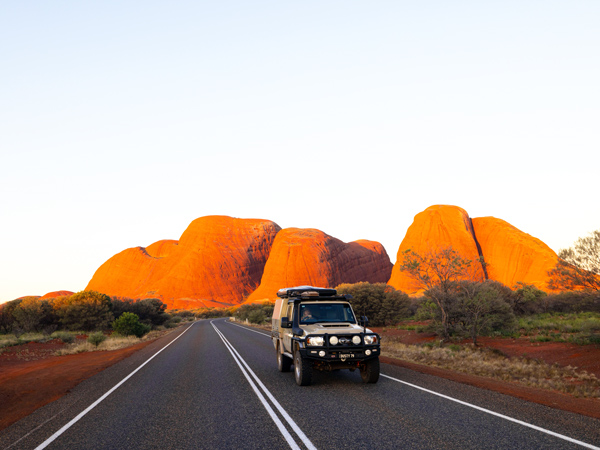
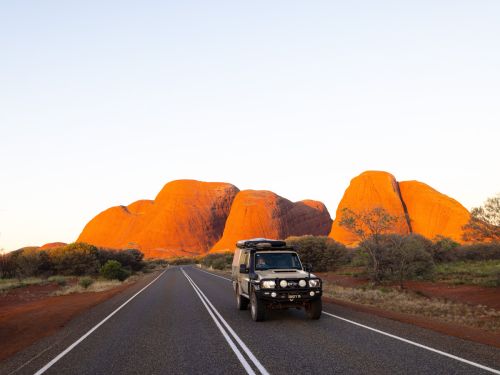
a 4WD driving to Kata Tjuṯa
A road trip in true Northern Territory style. (Image: Tourism NT/Sean Scott)
  • The Stuart Highway is fully sealed but can be remote in sections, so it’s best to refuel at every major town to avoid running low.
  • Phone reception is limited outside of main stops, so consider carrying a satellite phone or UHF radio for emergencies.
  • Supplies are available in larger towns like Katherine, Tennant Creek and Alice Springs, but carrying extra water, snacks and a first-aid kit is essential for a safe and smooth journey.

Discover the best things to do when you’re in Uluṟu

Want to see more stories from Australian Traveller in your Google search results?

  1. Click here to set Australian Traveller as a preferred source.
  2. Tick the box next to "Australian Traveller". That's it.
Leah McLennan
Leah McLennan is a freelance writer based in Darwin. She was a journalist in Sydney for over a decade and counts her time as travel editor for Australian Associated Press as one of the highlights of her career. From exploring remote campsites in the Top End with her family, to seeking out new art galleries in faraway cities, she’ll grab an adventurous or arty travel experience within her reach.
View profile and articles
hero media

8 reasons why the low season is the best time to explore the Northern Territory

Credit: Tourism and Events NT

September to April in the Northern Territory rewards those who seek adventure.

Sure, the Northern Territory shines during the high season, but did you know it transforms into lush magnificence in the summer low season? From September to April, hundreds of waterfalls roar into action, vegetation flourishes and natural pools swell, all thanks to spectacular storms. This is when some of the country’s best arts and cultural events hit the calendar, too.

Travelling at this time of year means you’ll also be rewarded with off-peak travel pricing on accommodation, tours and experiences, and can even enjoy many of the top sites all to yourself.

1. Kings Canyon is transformed

A woman reaching out to touch a natural waterhole at Kings Canyon during the best time to explore the NT.
See Kings Canyon at its most spectacular. (Credit: Tourism and Events NT)

Kings Canyon’s towering sandstone domes and crevasses are a sight to behold year-round, but during the low season you can witness a rare phenomenon. This ancient outback wonder’s arid landscape bursts to life when it rains, temporarily transforming it with waterfalls that thunder down the cliffs. At the base of the canyon is the verdant Garden of Eden and its permanent watering hole.

2. John Hayes Rockhole is a natural wonder

Two women hiking to John Hayes Rockhole, one of the unforgettable experiences during the best time to explore the NT.
Hike to a desert oasis. (Credit: Tourism and Events NT)

Hidden in the Trephina Gorge Nature Park in the East MacDonnell Ranges, John Hayes Rockhole is an oasis waiting to be discovered. Visit the narrow canyon during the high season, and you may see only a sandy creekbed, but after rain in the low season the pool is full of cool water. It’s accessible via a 4WD-only track off the Ross Highway, or you can set out early and join the nine-kilometre Trephina Ridgetop Walk. The reward for undertaking the hike is worth every step, and there’s a dedicated, tent-only campground for those who’d like to soak up the serenity overnight.

3. The Red Centre Light Trail shines bright

A woman admiring The Light Towers, one of the must-see attractions during the best time to explore the NT.
Watch the Outback light up after sunset. (Credit: Tourism and Events NT)

The Red Centre’s rich cultural heritage and lack of light pollution make it the ideal setting for immersive light shows, and you can experience the most iconic ones on an epic six-day road trip in April. Witness the Parrtjima cultural festival in Mparntwe (Alice Springs) before heading to Kings Canyon for Bruce Munro’s Light-Towers, where 69 glowing towers shine to a celestial soundscape. At Uluṟu, Munro’s Field of Light blankets the red soil with glowing frosted-glass stems, and the Wintijiri Wiru drone show lights up the sky in front of the sacred cultural site. Along the way you’ll witness the changing landscapes of the desert from the West MacDonnell Ranges to the Valley of the Winds.

4. The Parrtjima festival lights up the Red Centre

Festival lights illuminating the Northern Territory, showing why the best time to explore the NT is during festival season.
Witness the magic of Parrtjima. (Credit: Tourism and Events NT)

For 10 days every April, the Red Centre turns into a dazzling display of colour for the Parrtjima festival. Held at Alice Springs Desert Park, the unmissable celebration shines a spotlight on the world’s oldest living culture using modern technology. Artworks by local Aboriginal artists are transformed into large-scale illuminated installations with accompanying soundscapes, offering a unique opportunity to see the spectacular sunburnt landscapes, night skies and 300-million-year-old West MacDonnell Ranges in a new light. The jam-packed line-up of art and cultural events also includes workshops, markets, short films, talks and live music.

5. Cruising along Nitmiluk Gorge is breathtaking

Aerial view of Nitmiluk Gorge, showcasing its dramatic cliffs and waterways.
Sail between towering sandstone cliffs. (Credit: Tourism and Events NT/Nic Morley)

Drifting down the emerald waters of Nitmiluk (Katherine) Gorge between towering red sandstone cliffs carved over millions of years, all while waterfalls stream down around you, is an experience like none other. Nitmiluk Katherine’s two-hour NitNit Dreaming Two Gorge Tour sails through gorges past ancient rock art while a local guide imparts knowledge about the Jawoyn culture and significance of the landscape.

6. You can explore local culture on the Tiwi Islands

A quick boat ride from Darwin lies the peculiarly pink shores of Melville Island, Tiwi Islands. Populated by the hilariously cheeky Indigenous Tiwis, stepping onto the Islands is like stepping back in time. Sweeping rusty dirt roads meander through the eucalypt forest and are interspersed only by small communities and freshwater springs.
Immerse yourself in Tiwi culture. (Credit: Tourism and Events NT/Elise Cook)

Take an 80-kilometre ferry ride from Darwin to arrive at the Tiwi Islands, an archipelago of 11 picturesque islands and a haven for art lovers and anglers. On the Tiwi By Design walking tour you’ll be guided to the Tiwi Design Art Centre, one of Australia’s oldest art centres, to observe local artists in action and join a screen printing workshop.

If you’re more partial to sinking a line, book a stay at Tiwi Island Retreat in April. It’s one of the best months to fish for barramundi, and their world-class fishing adventures are your best chance at reeling in a prized catch.

7. Scenic flights over Kakadu’s waterfalls are jaw-dropping

Jim Jim Falls from above during a wet season helicopter tour. Covering nearly 20,000 square kilometres, Kakadu National Park is teeming with wildlife, home to important Aboriginal rock art sites, and takes in diverse and exotic landscape.
Soar above Jim Jim Falls. (Credit: Tourism and Events NT/Jarrad Seng)

Seeing Kakadu National Park’s gushing waterfalls and dramatic escarpments from above offers a dose of unparalleled beauty – and it’s all best witnessed in the low season.

Taking flight from Darwin, Kakadu Air Services offers an unforgettable experience, with doorless helicopters revealing unobstructed views of the 1.8-billion-year-old landscape. Soar above the untouched savannah that turns into a tropical green paradise, marvel at the thunderous Jim Jim Falls and Twin Falls, and whiz through ancient sandstone canyons. If you’re lucky, the scenery will look all the more dramatic with rolling tropical storm clouds in the distance.

8. Litchfield National Park is an amazing place to cool off

Litchfield National Park
Dive into natural swimming holes. (Image: Tourism NT/Joshua Griffen)

Litchfield National Park is peppered with stunning natural swimming pools for you to beat the heat in. Take a refreshing dip in pristine, crocodile-free spots such as Buley Rockhole, a series of spring-fed cascading pools, and the nearby Florence Falls, which is enveloped by monsoon rainforest and features a crystal-clear plunge pool fed by a 15-metre-high waterfall. Be sure to check the Northern Territory Parks & Reserves website for closures before you go.

Start planning your low season adventure of a lifetime at northernterritory.com.