Everything you need to know about ethically buying Aboriginal Art

hero media
Investing in Aboriginal art is about more than just finding something to hang on your wall.

For an art form with traditions and practices stretching back multiple millennia, the Aboriginal and Torres Strait Islander art movement is having a moment right now in the global market. With dedicated followers such as actor Steve Martin (who famously loaned 10 paintings from his collection to the influential Gagosian Gallery in New York in 2019 as part of its Desert Painters of Australia exhibition) and renowned international museums including London’s Tate Modern adding pieces to its permanent collections, this is a bona fide contemporary art movement steeped in ancient history. But the good news is that investing in it does not require a Hollywood-sized bank balance; in fact, every visitor to the Northern Territory can buy a unique piece of art all their own.
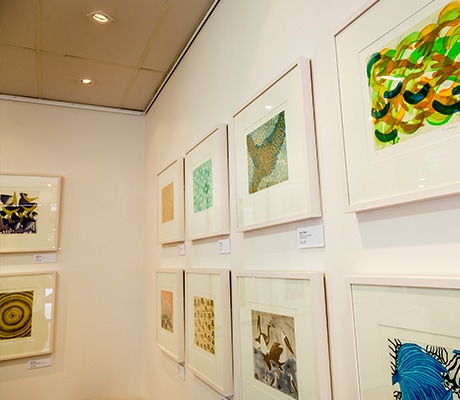
Aboriginal artwork at Nomad Art, Darwin
Nomad Art is a gallery specialising in limited edition artworks by artists from Indigenous art centres. (Image: Tourism NT/Nick Pincott)

While Aboriginal and Torres Strait Islander art has been called ‘Australia’s greatest cultural gift to the world’, buying it here in Australia, and specifically on a trip to the Northern Territory, offers an irresistible opportunity to go beyond the mere provenance of a piece. It allows buyers to meet and interact with the artists themselves and experience the country, the colours, the sounds, the mood and the traditions that have influenced and shaped it.
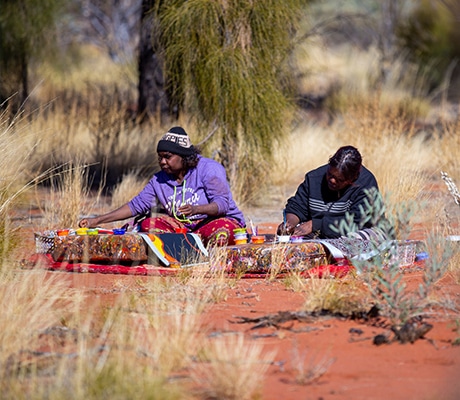
Women painting Desert art at Maruku, Uluru
An art form with traditions and practices stretching back multiple millennia. (Image: Tourism NT/Felix Baker)

It is estimated that Aboriginal and Torres Strait Islander art contributes up to $100 million to the Australian economy each year, but on a much more human level, the sale of art through Indigenous owned and operated art centres and any number of art fairs held across the country each year not only provides an invaluable source of income for artists, families and remote communities, but also allows them to take pride in continuing the traditions of the world’s oldest living culture.
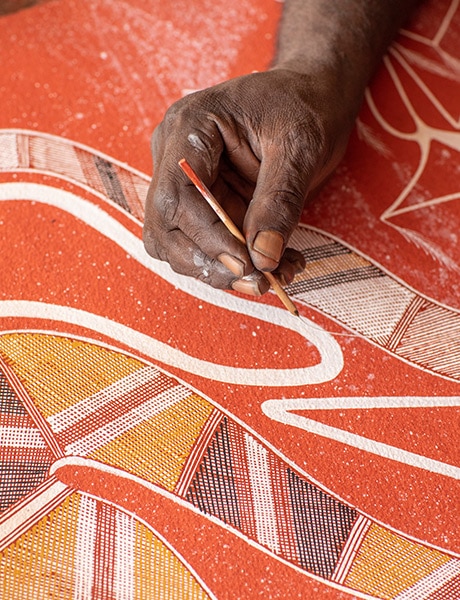
Artwork at Venture North's 4 Day Arnhem Land and Cobourg Peninsula Tour
Aboriginal and Torres Strait Islander art contributes up to $100 million to the Australian economy each year. (Image: Tourism NT/James Fisher)

With so much significance woven into the act of buying a piece of art, it is important to be respectful of the process, do the research and make informed decisions in order to end up with a work that is both authentic and ethical, and that you can also take pride in owning.
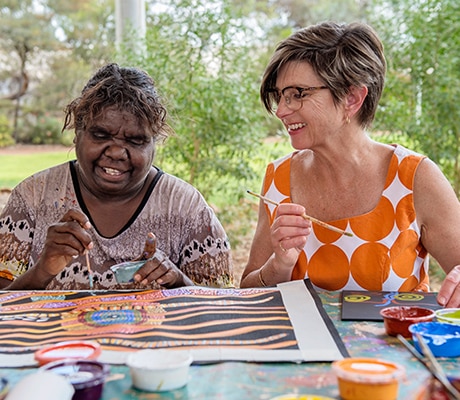
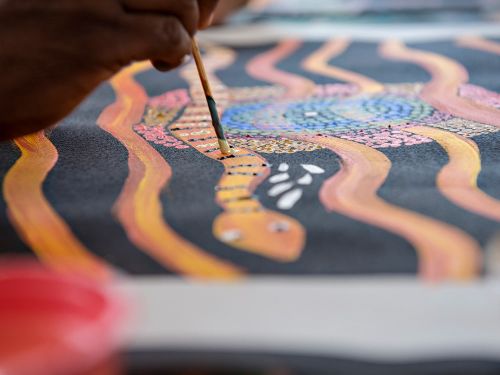
Women dot painting
Buying in Australia allows buyers to meet and interact with the artists themselves. (Image: Tourism NT/Shaana McNaught)

Need tips, more detail or itinerary ideas tailored to you? Ask AT.

AI Prompt

Do your research

While most people considering buying a piece of Aboriginal or Torres Strait Islander art to commemorate a trip to the Northern Territory will imagine themselves returning with a painting, there are myriad styles and mediums to choose from: mesmerising contemporary dot paintings on canvas, traditional bark paintings, sculpture, woven fibre art, digeridoos, works on paper, prints and cultural regalia.

Decide the style you are interested in and seek out artists and community art centres in regions and locations that specialise in them, from the ochre paintings on bark that are typical of Arnhem Land to the intricate woven fibre art produced by the female Tjanpi artists of the remote Central and Western desert regions (Tjanpi Desert Weavers, a social enterprise of the Ngaanyatjarra Pitjantjatjara Yankunyytjatjara [NPY] Women’s Council, also has a public gallery in Alice Springs).
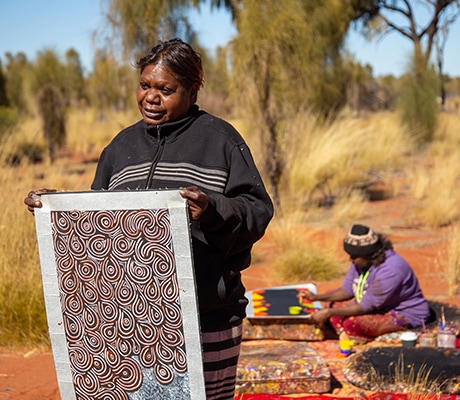
Women holding art work at Desert art at Maruku, Uluru
There are myriad styles and mediums to choose from. (Image: Tourism NT/Felix Baker)

Connect with the artist

Buying art in an ethical way means you are contributing to the sustainability of Aboriginal art into the future and showing respect for the artists themselves and the rich history that influences their work. According to the Indigenous Art Code, developed to establish a set of standards between dealers and artists to ensure fair and ethical trade in artwork, buyers should not be afraid to be inquisitive, whether buying from a gallery, at auction or at an art fair; the three questions you should be asking when making a purchase are: ‘Who is the artist?"; ‘Where are they from?’ And ‘How are they paid?’
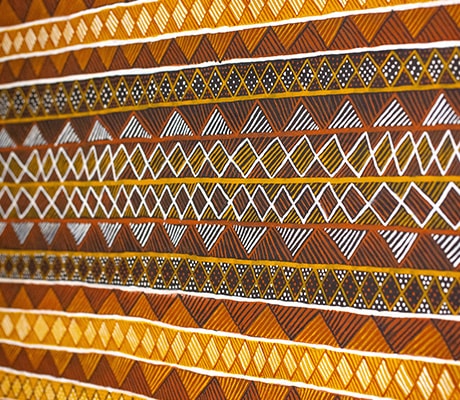
Aboriginal art, Godinymayin Yijard Rivers Arts and Culture Centre
Be inquisitive, whether buying from a gallery, at auction or at an art fair. (Image: Tourism NT/Felix Baker)

It is also important to establish provenance, a record of ownership that confirms that an artwork is authentic and has been traded in an ethical way, including fair payment for the artist. The Indigenous Art Code advises that any piece of Aboriginal or Torres Strait Islander art bought for more than $250 at an art centre should come with an authentication certificate; you should always ask for one if it is not offered.
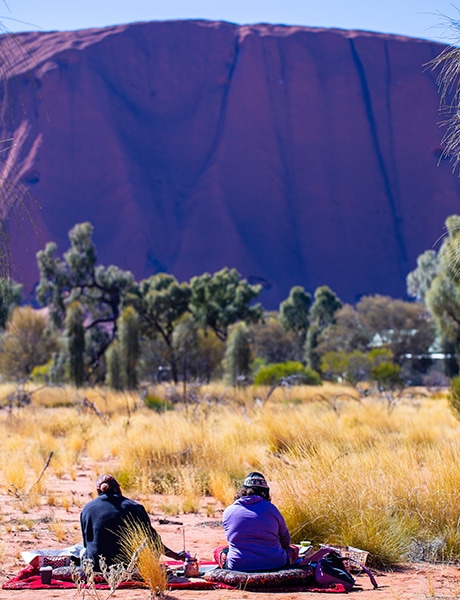
Women painting with Uluru in the background
Buying art in an ethical way means you are contributing to the sustainability of Aboriginal art. (Image: Tourism NT/Felix Baker)

Weekly travel news, experiences
insider tips, offers, and more.

Buy (really) local

While it is possible to buy Aboriginal art from dealers, the most ethical way to purchase is from Indigenous-owned and operated art centres, including the likes of Injalak Arts in Gunbalanya, Jilamara Arts and Crafts Association on Melville Island, Karungkarni Art and Culture in Katherine and Aaruku Arts in Uluru, owned and operated by Anangu of the Central and Western Desert. Non-profit cooperatives run by artists and communities, in addition to offering direct access to the artists, offering the chance to see first-hand how artworks are made and the inspiration behind them, these community art centres allow you to be confident the art you are buying is authentic and that the artists benefiting from all sales.
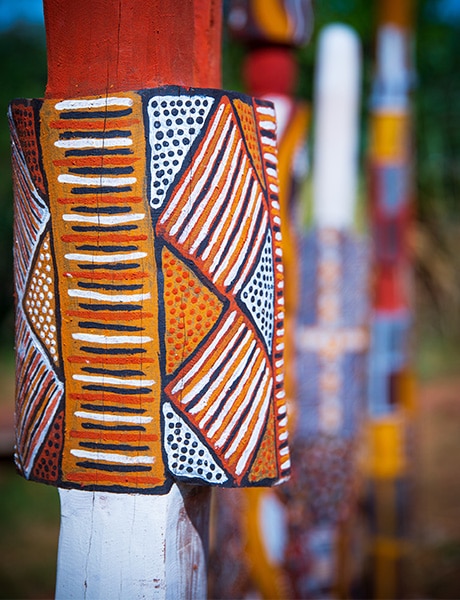
Aboriginal art for sale at Jilamara Arts and Craft Association
Contemporary Aboriginal art for sale at Jilamara Arts and Craft Association. (Image: Tourism NT/Felix Baker)

Art fairs are another great way to buy Aboriginal art straight from the source. There are a number of fairs held each year in the Northern Territory including Desert Mob in Alice Springs, presented by Araluen Arts Centre and Desart and representing Aboriginal arts and crafts centres of the Central Desert, and the Darwin Aboriginal Art Fair (DAAF). Staged by the not-for-profit Darwin Aboriginal Art Fair Foundation, DAAF does not attach commission to works sold, which means 100 per cent of the money made (some $11.6 million in the last five years) goes directly to the artists and their communities.
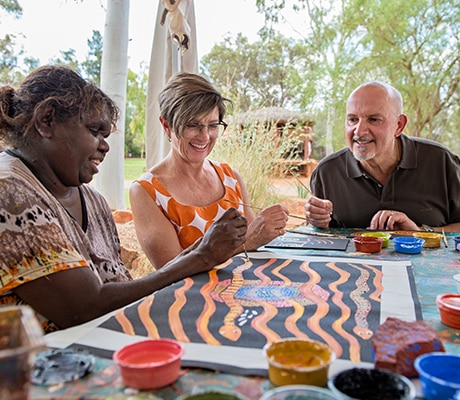
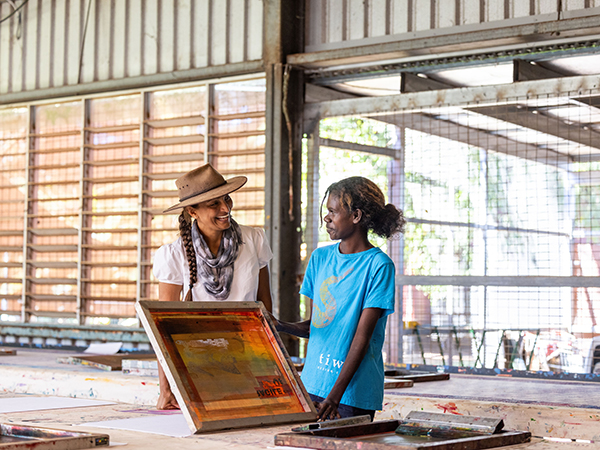
Artist teaching couple to dot paint
The most ethical way to purchase is from Indigenous-owned and operated art centres. (Image: Tourism NT/Shaana McNaught)

Enjoy the experience

In the homogenised, mass-produced world in which we live, being able to source artworks directly from the artists producing them and gaining insight into the creative process is not just unusual, it’s a privilege. Going straight to the source to buy Aboriginal art when visiting the Northern Territory, interacting with the artists and hearing their stories, is as much an experience as seeing Uluru or exploring Kakadu. Take the time, make the effort and you will be richly rewarded.
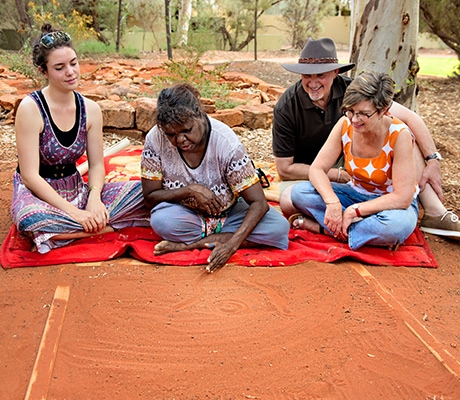
Learning to dot paint with artist
Interacting with the artists and hearing their stories, is as much an experience as seeing Uluru. (Image: Tourism NT/Shaana McNaught)
Australian Traveller

Australian Traveller

View profile and articles
hero media

8 experiences to restart and inspire your senses for 2026

    Katie Dundas Katie Dundas
    Be invigorated by the sights, sounds and landscapes of the Northern Territory.

    If your 2026 travel goals focus on visiting inspiring and meaningful destinations, look no further than the Northern Territory. Rich in Indigenous culture, national parks and unique local cuisine, a journey deep into the Red Centre and Top End will awaken all your senses and leave you with lifelong memories. But you don’t need to do it on your own, as AAT Kings’ Small Group tours offer expertly led itineraries. They’re designed to take the guesswork out of travel planning and help you access remote regions in comfort while connecting with fellow guests, allowing you to delve deeper into destinations with insights from knowledgeable Travel Directors and local Indigenous guides.

    As Small Group tours with AAT Kings have an average of just 16 guests, there’s ample opportunity to ask questions and make meaningful connections on every visit. Here are just a few of the experiences on offer, with adventures designed to invigorate every sense.

    1. Under a Desert Moon dinner

    Under a Desert Moon dinner in northern territory
    Watch the stars come out over five courses.

    Over five courses, dine under the stars during an unforgettable Outback dining experience. As day fades to night, lit only by the moon and the crackling fire, this outdoor dinner features locally sourced seasonal produce, matched with Australian wines.

    It’s an intimate experience, showcasing the quiet grandeur of the Outback after nightfall. As you dine, feel connected to the land and its unique flavours, introduced by your impeccable waitstaff.

    Part of the Northern Territory Dreaming tour, the Under a Desert Moon dinner is the ideal way to connect with your small group of fellow travellers after an invigorating day in the Red Centre.

    2. Karrke Aboriginal Cultural Experience

    Karrke Aboriginal Cultural Experience
    Learn stories of the Red Centre at Karrke. (Image: Tourism & Events NT/ 75vibes)

    The best way to learn the stories of the Red Centre is by connecting with the land’s Traditional Owners. At the Karrke Aboriginal Cultural Experience, visited on AAT Kings Northern Territory Dreaming and Outback Contrasts tours, you’ll meet with members of the local Wanmarra community in Kings Canyon.

    On this immersive AAT Kings MAKE TRAVEL MATTER® Experience you’ll walk on Country to learn firsthand about bush tucker, Indigenous medicine, wooden artefacts and the art of dot painting. Passionate guides will share stories that have been passed down for generations.

    3. Kungkas Can Cook

    Kungkas Can Cook set up at Simpson's Gap
    Taste local bush delicacies. (Image: Tourism & Events NT/ Mel Brautigam)

    The powerful senses of smell and taste are awakened on this exclusive experience led by Indigenous chef Rayleen Brown. Included in the Northern Territory Dreaming and Outback Contrasts tours, this is a unique opportunity to savour local bush delicacies and learn about Indigenous culture through the lens of food.

    Brown, a recipe author and guest judge for MasterChef Australia, works solely with native ingredients directly harvested by women from the Alice Springs community. It’s a 100 per cent Indigenous owned and run business.

    4. Karlu Karlu (Devils Marbles)

    woman walking by Karlu Karlu (Devils Marbles)
    See striking Karlu Karlu. (Image: Tourism & Events NT/ Dom And Jesso)

    Appearing out of nowhere, the huge granite boulders of Karlu Karlu seem to precariously balance on the barren Outback landscape. You’ll come across these geological formations as you cruise the Stuart Highway on the Northern Territory Explorer tour.

    Your AAT Kings Travel Director will share expert insight on the history and culture of Karlu Karlu, recognised as a sacred site of the Warumungu people. As you walk in awe amongst these stunning formations, formed many millennia ago, you’ll hear some of the stories behind why this place is so important to Indigenous storytelling and culture.

    5. Pudakul

    Pudakul Aboriginal Cultural Tours
    Experience this family-owned Indigenous experience. (Images: Tourism & Events NT/ Helen Orr)

    Make authentic cultural connections when you visit Pudakul, a family-owned Indigenous experience on the Adelaide River Flood Plains. On your Small Group Northern Territory Explorer tour your senses will be inspired by the sounds of First Nations music, the taste of local bush tucker and the beauty of art.

    This AAT Kings MAKE TRAVEL MATTER® Experience is designed to take you deeper into the destination, helping guests learn from the people of the Limilngan-Wulna Land.

    6. Corroboree Billabong Wetland Cruise

    Corroboree Billabong Wetland Cruise
    Spot the wildlife of the billabong. (Image: Tourism & Events NT)

    Observing the unique wildlife of the Northern Territory – from formidable crocs to hearing gentle melodies from the many endemic bird species – is always one of the most memorable parts of your Northern Territory Dreaming tour.

    Travel in the comfort of your premium coach, taking in the stunning landscapes, before arriving at Corroboree Billabong. This special place is part of the Mary River Wetlands and is home to the world’s largest concentration of saltwater crocodiles. Your comfortable boat is designed to maximise wildlife viewing, giving you a front row seat to this spectacular ecosystem.

    7. Aboriginal Bush Traders

    artist at Aboriginal Bush Traders in darwin
    Visit for the art, stay for a bite. (Image: Tourism & Events NT/ Shaana McNaught)

    A visit to Aboriginal Bush Traders is the ideal introduction to the vibrant city of Darwin. This non-profit gallery, cafe and retail space supports Indigenous employment and is the perfect place to find a curated selection of ethical Indigenous gifts, including artwork and organic skincare.

    Your Northern Territory Top End National Parks and Northern Territory Dreaming tours include an exclusive native flavour tasting, offering cultural insight before travelling deeper into the Top End.

    8. Leliyn (Edith Falls)

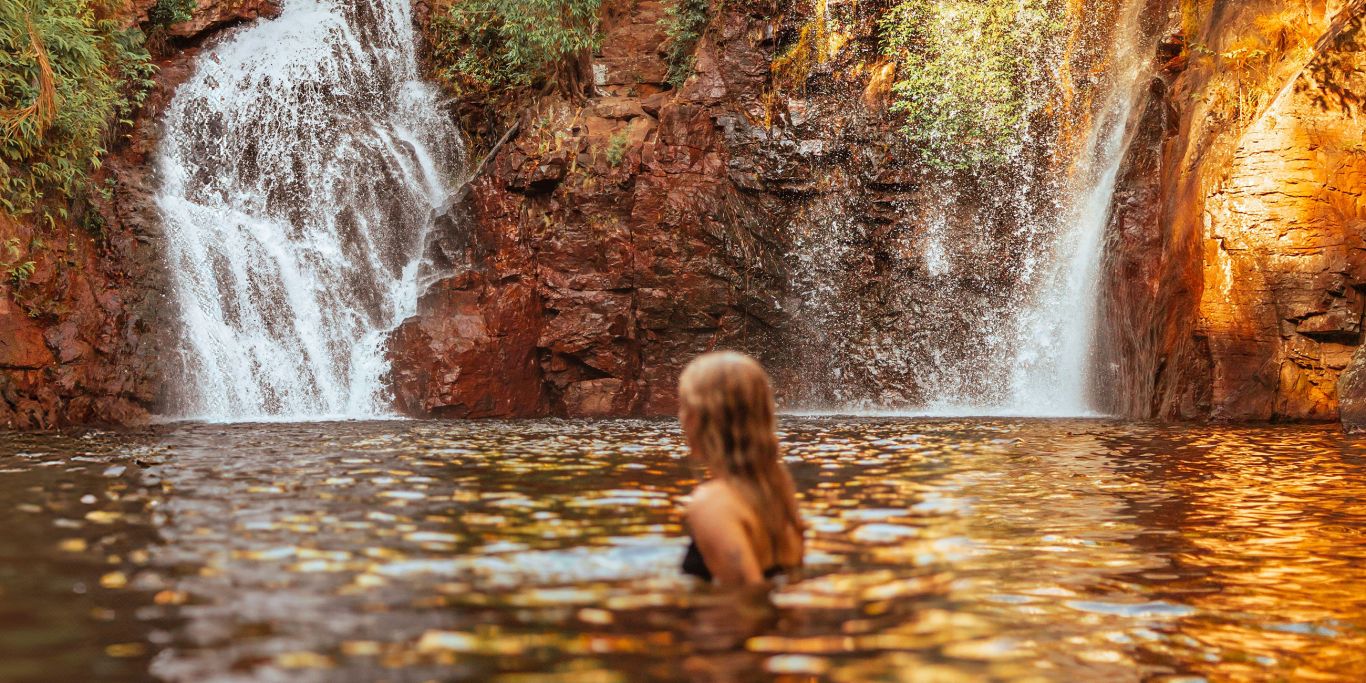
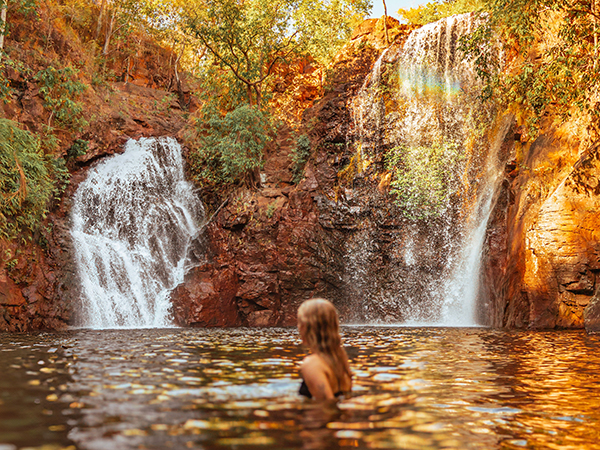
    woman swimming in Leliyn (Edith Falls)
    Cool off at Leliyn (Edith Falls). (Image: Tourism & Events NT/ As We Wander)

    There’s something about a mighty waterfall that invigorates the soul like nothing else, with the picturesque Leliyn (Edith Falls) the perfect place to refresh on a hot day.

    On your Northern Territory Top End National Parks and Northern Territory Dreaming visit to Nitmiluk National Park, known for its epic sandstone gorges, you’ll pay a visit to the oasis that is Leliyn. It’s the ideal place for a swim, but it’s also home to ancient Indigenous rock art. And as your Travel Director will explain, it’s an impressive place of cultural significance, too.

    Make 2026 the year to discover the flavours, culture and beauty of the Northern Territory at aatkings.com.