Going wild doesn’t have to mean roughing it. Here are all the best accommodation options in and around Kakadu.
Kakadu National Park sings with natural beauty and Bininj/Mungguy culture. When it comes to Kakadu accommodation, there’s something for every style of traveller. Options range from luxury stays nestled in awe-inspiring nature to comfortable caravan parks loaded with amenities. Discover everything you need to know about Kakadu National Park before you go, then follow our guide on where to stay.
1. Cooinda Lodge
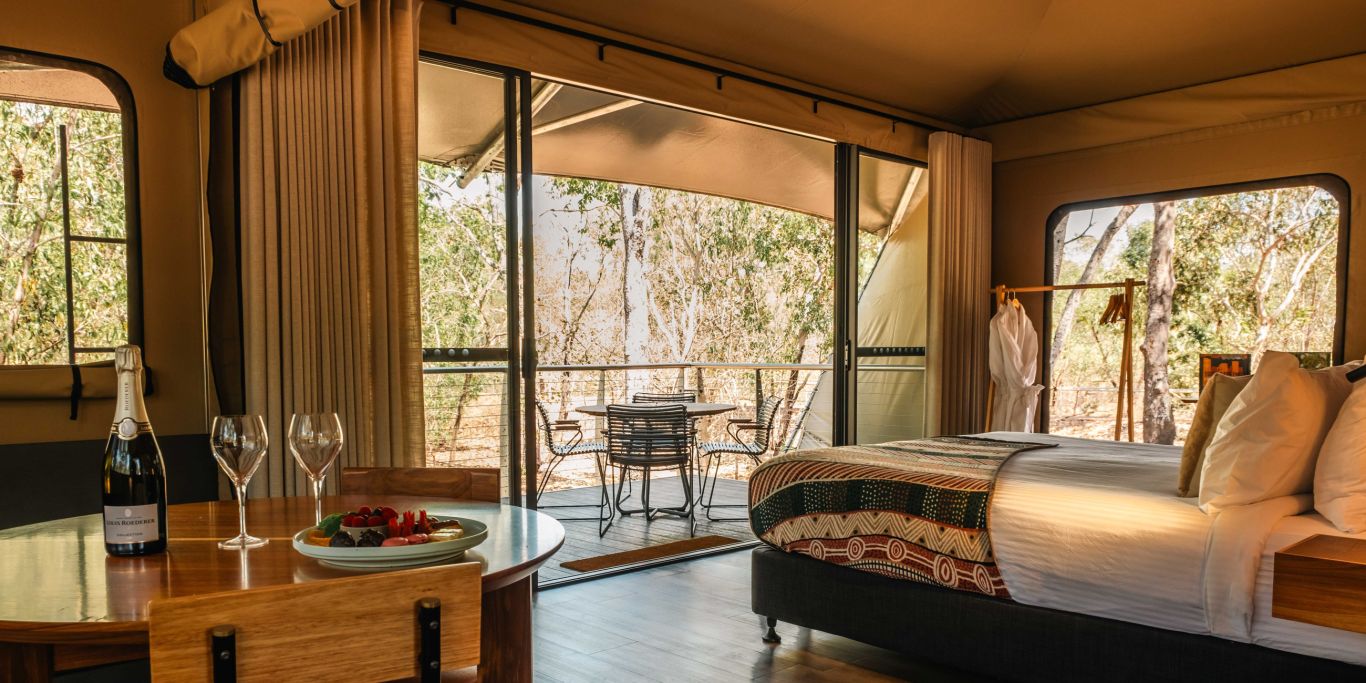
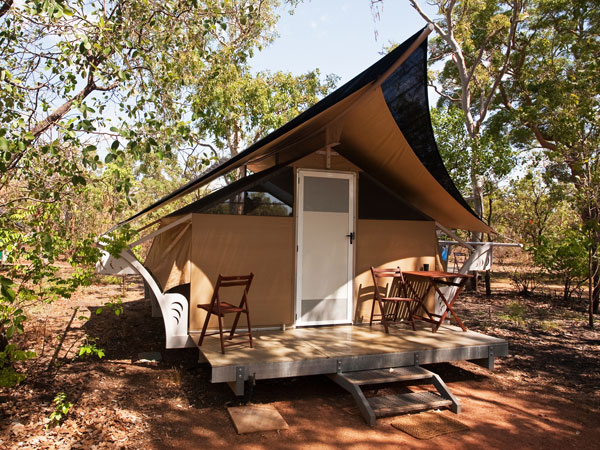
Each glamping retreat opens out to a private terrace. (Credit: Tourism NT/Kakadu Tourism)
Best for: Every style of stay – luxury, budget, caravans, camping or glamping.
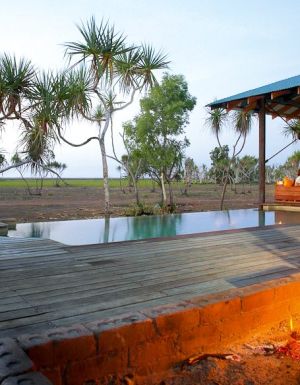
Kakadu’s Cooinda Lodge is an Indigenous-owned property that’s popular with locals. Sitting pretty on the banks of Yellow Water Billabong (Ngurrungurrudjba), the lodge offers a comfortable place to unwind with its tropical lagoon pool and top-notch bistro.
Accommodation offerings run the gamut here, ranging from no-frills campsites to spacious glamping-style tents, affordable lodges and luxury villas. Located in the heart of Kakadu, Cooinda Lodge is in a prime position for exploring some of the park’s stunning waterfalls and the ancient rock art at Burrungkuy (Nourlangie) and Ubirr. If you’re looking for activities to fill your itinerary, explore our guide on things to do in Kakadu.
Cooinda Lodge’s Yellow Water Villas are its luxury offering. An oasis surrounded by paperbark and pandanus, the villas evoke eco-luxe with well-appointed rooms decorated with local Indigenous designs. The more low-key twin and queen lodges offer comfort at affordable prices, with ensuite bathrooms and an outdoor dining area.
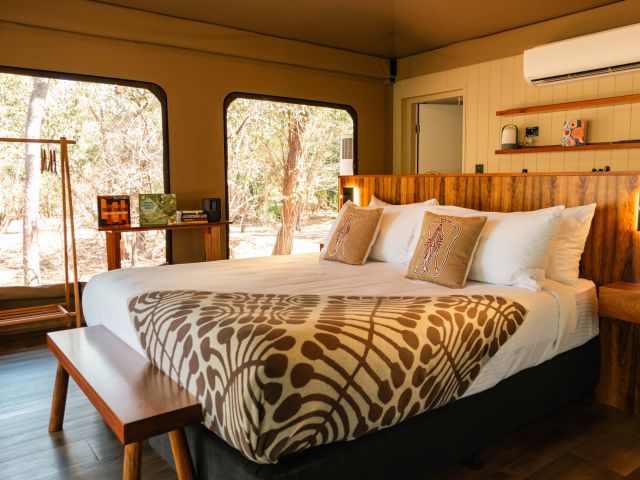
Cooinda’s Outback Retreats are breezy glamping tents where visitors can feel immersed in nature while also retaining the comforts of air conditioning and plush bedding. Here, you’ll have a private and spacious room to get some R&R, with access to a shared toilet/shower block and cooking facilities.
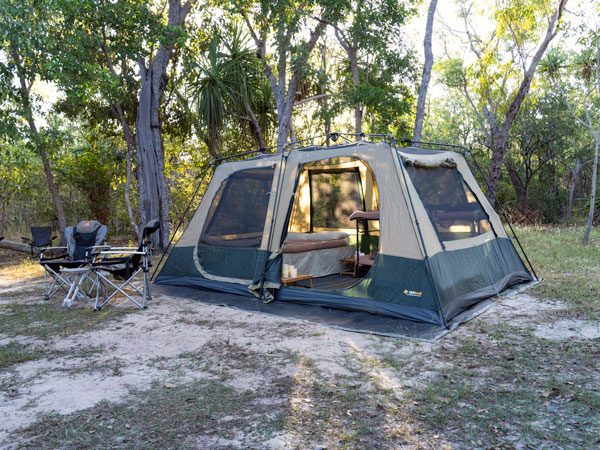
The shady Yellow Water campground next to Yellow Water Billabong on the grounds of Cooinda Lodge is bound to ensure a slew of happy campers looking for low key Kakadu accommodation. There are powered and unpowered sites offering a picturesque place to park up a caravan or pitch a tent.
Campers can access all lodge facilities, including a shower and toilet block, shared kitchen, laundry, bar and pool to cool off during the heat of the day.
Bed down in an all-inclusive wilderness camp. (Credit: Tourism NT/Charlie Bliss)
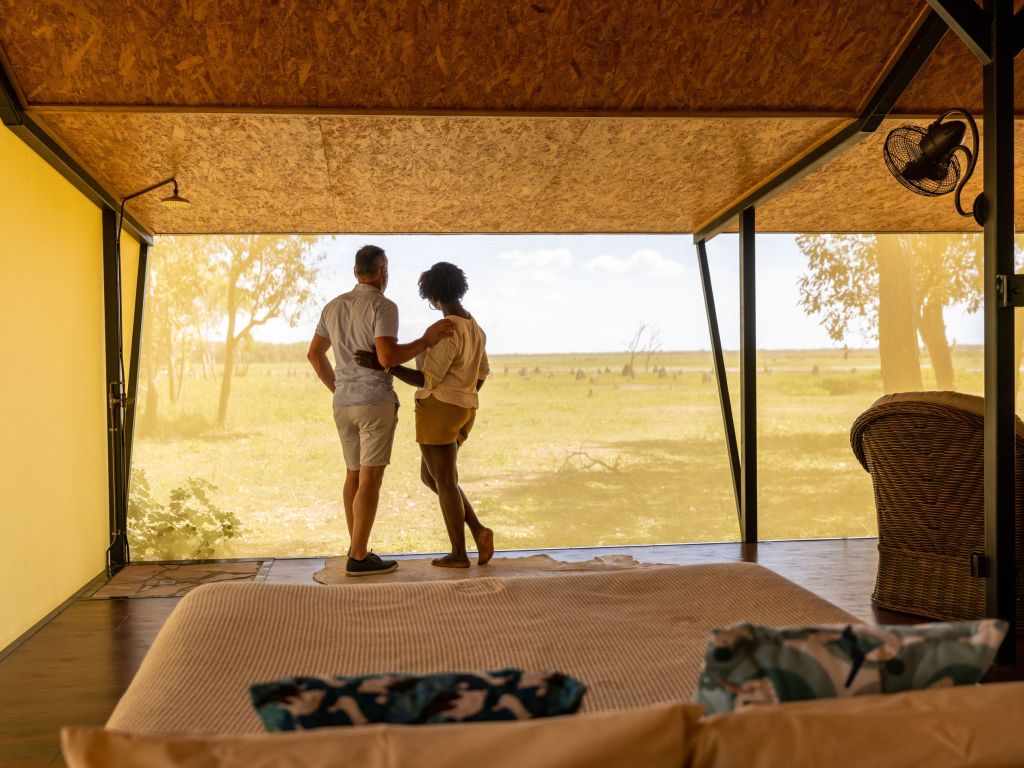
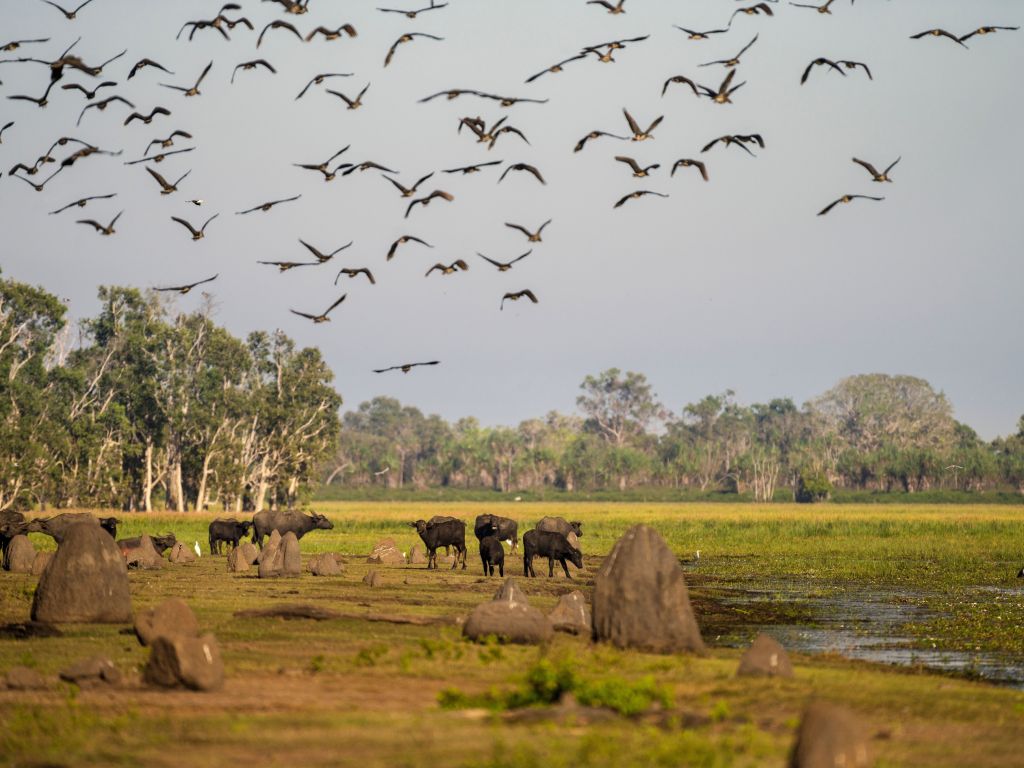
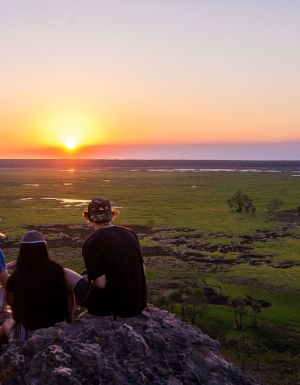
The wildlife-rich floodplains at Bamurru. (Credit: Tourism NT/Shaana McNaught)
Best for: Luxury
Bamarru Plains offers all-inclusive luxury accommodation on the edge of Kakadu National Park. It offers the wildness of a remote bush camping trip with all the comforts of a luxury getaway. It’s located in the Mary River Wetlands on a 300-square-kilometre working buffalo station, just on the edge of Kakadu National Park.
The resort echoes an African wilderness camp; within minutes of arrival, you could be viewing wild brumbies, agile wallabies and what seems like an entire field guide of Australian birds. Meals and drinks are included in your stay, so you can lay back and leave your worries at the door.
Guests can immerse themselves in the bush, gaze out at feeding wildlife, sip champagne by the pool, and choose from an array of guided activities included in their stay, like wilderness safaris and crocodile-spotting river cruises. This Kakadu accommodation allows you to experience the landscape in its entirety; there are no telephones, TVs, or internet to distract you.
Address: Bamurru Plains, Swim Creek Station, Kakadu NT 0836
Need tips, more detail or itinerary ideas tailored to you? Ask AT.
AI Prompt
3. Mercure Kakadu Crocodile Hotel
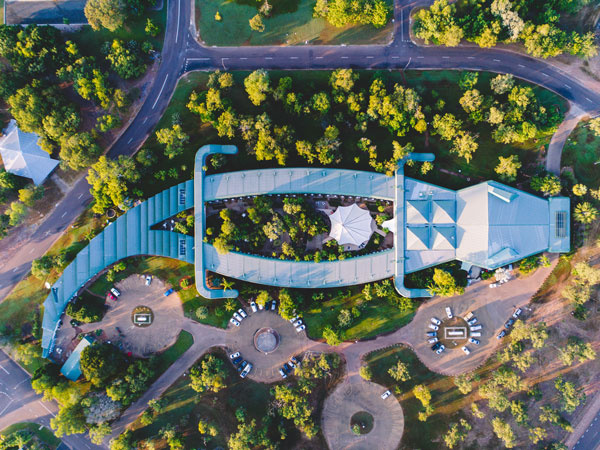
The croc-shaped Mercure Kakadu pays homage to the national park’s famous inhabitant, the saltwater crocodile. (Credit: Tourism NT/Salty Wings)
Best for: Budget
The famous crocodile hotel, Mercure Kakadu Crocodile Hotel, is not nearly as kitsch as the exterior would lead you to believe. The iconic salty-shaped inn is a very comfortable four-star Indigenous-owned Kakadu accommodation option with all the mod cons, tasteful decor, a relaxing swimming pool, a great restaurant, and a collection of quality Indigenous art.
The hotel is also in a prime location in the township of Jabiru. Jabiru is a gateway to the northern end of Kakadu and is home to a few must-see cultural attractions. For example, Marrawuddi Arts and Culture Centre is just a croc’s waddle away, the perfect place for a cuppa and a glimpse at some exquisite local art. It’s also just a 30-minute drive to Ubirr and the popular crocodile-spotting location, Cahills Crossing. At the time of publishing this hotel is up for sale.
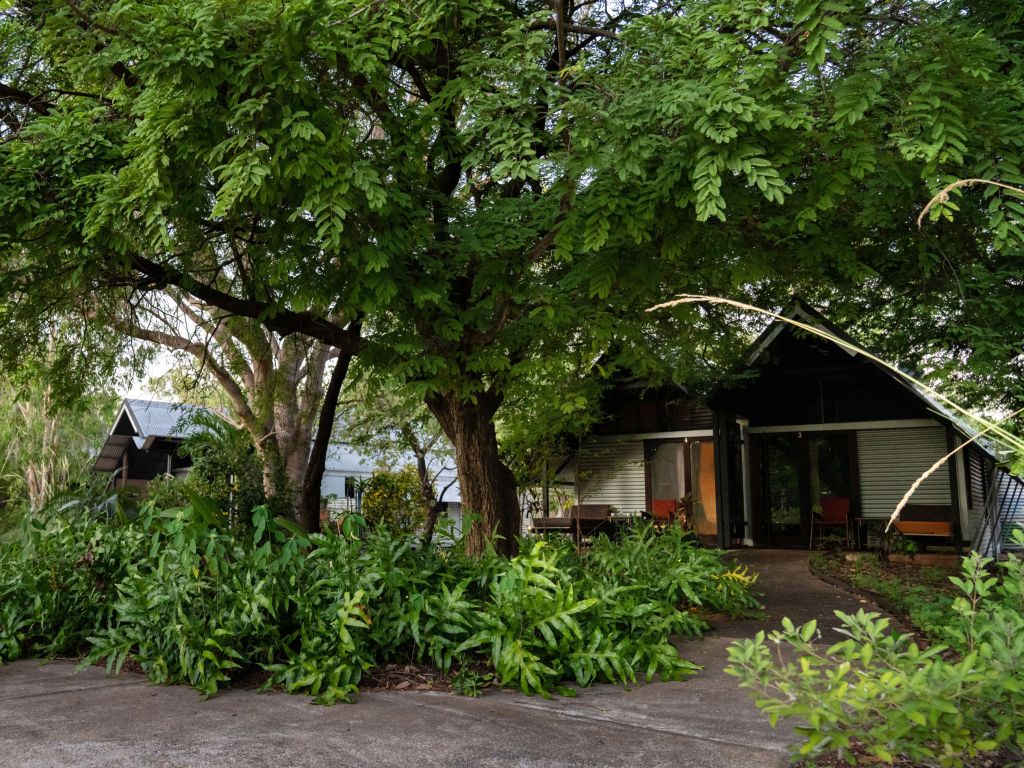
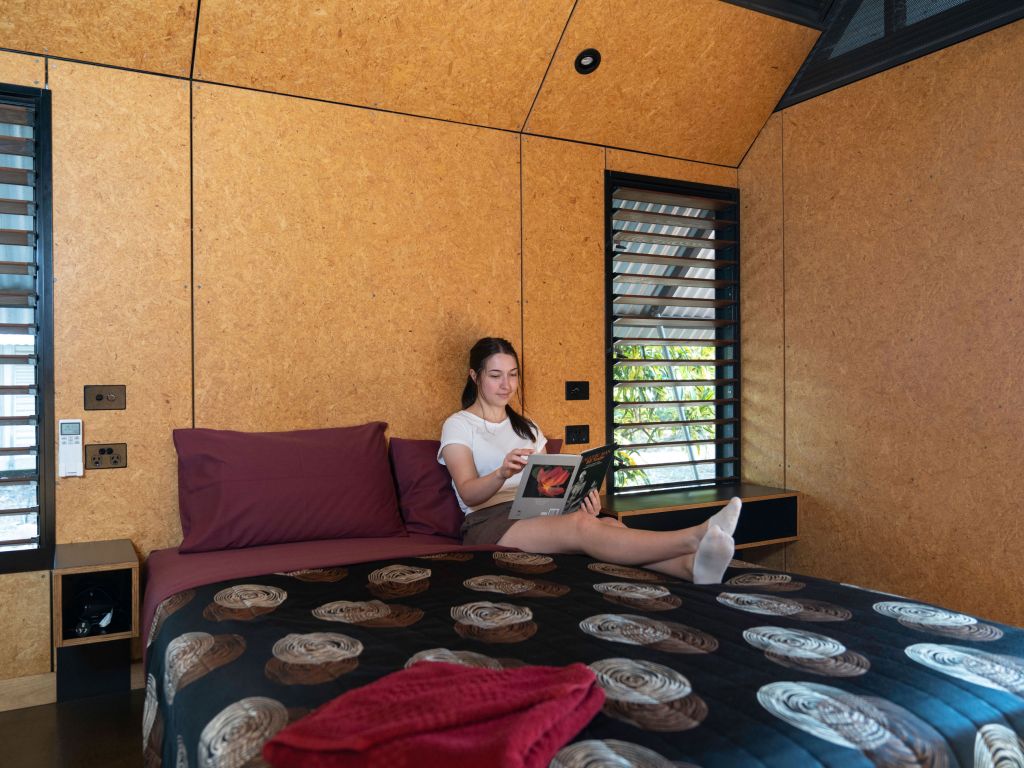
With self-contained cabin offerings, Anbinik Kakadu Resort is the perfect retreat for families, groups and budget-savvy travellers. There are different styles of accommodation, ranging from ultra-basic rooms with shared bathrooms to suites with a touch of luxe, including ensuite outdoor showers. The two-bedroom suites are great for families travelling with teens, sleeping up to five in total.
The accommodation is rustic but breezy, clean, and comfortable. It is conveniently located in Jabiru town near shops and attractions. There’s a local IGA, but visitors might want to consider shopping before arrival. Don’t miss the on-site restaurant serving Asian cuisine—the outdoor seating under tropical palms will make you feel truly relaxed. Alternatively, guests can cook up a storm in the camp kitchen or communal BBQ.
A stay at Aurora Kakadu Lodge and Caravan Park puts you in the middle of the World Heritage-listed Kakadu National Park.
Best for: Budget, caravan and camping
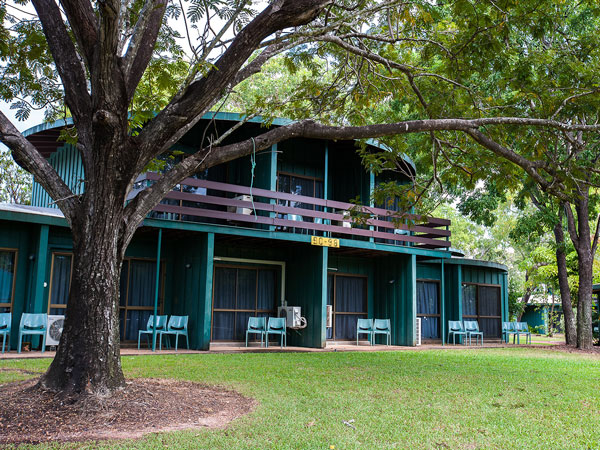
Surrounded by tropical, landscaped gardens, Aurora Kakadu Lodge and Caravan Park is a tranquil oasis. With a lagoon-style pool and poolside bar, Aurora is the perfect Kakadu accommodation to kick back and cool off in the afternoon. Located in Jabiru town, it’s also a convenient base from which to venture out into Kakadu National Park. Along with peaceful outdoor spaces, Aurora offers powered and unpowered sites for campers and self-contained lodges. The two-bedroom cabins sleep up to seven people, perfect for larger families or groups.
If you’re camping or caravanning, the park doesn’t take reservations, but with 100 unpowered campsites and 186 powered caravans and campsites, there’s always plenty of space available.
Weekly travel news, experiences insider tips, offers, and more.
6. Hawk Dreaming Wilderness Lodge
Hawk Dreaming Wilderness Lodge is nestled within a restricted area of Kakadu National Park. (Credit: Hawk Dreaming Wilderness Lodge)
Experiencing Kakadu National Park by staying in a remote, restricted area is definitely a once-in-a-lifetime event that should be on your bucket list. Hawk Dreaming Wilderness Lodge is Kakadu accommodation that makes that happen in both a culturally and environmentally sensitive fashion.
Situated in Cannon Hill, a stay at the lodge is part of a three-day adventure with Kakadu Cultural Tours that includes two nights accommodation in tented cabins, two sunset tours, one 4WD day tour and a Guluyambi cruise, plus meals.
Cabins offer all the mod cons needed like ensuites and a beautiful deck to while away the afternoon hours. Transfers to the lodge are included.
The unique experience will have you seeing the park in a way that many visitors don’t have access to, and is a great opportunity to escape the beaten track.
Camping in Kakadu is best for unplugging and unwinding. (Credit: Tourism NT/Tourism Australia)
For lovers of the outdoors, there is perhaps no better way to experience Kakadu than at a campsite. For those who prefer the adventure of pitching a tent or pulling up to an unpowered spot, we’ve collated the best places to camp around Kakadu.
In terms of amenities, some sites just have little more than a composting toilet. They’re ultra-basic, but they’re free!
Some campsites such as Merl, Muirella Park, Mardugal and Gunlom have flush toilets and solar-powered showers and cost around $15 per night.
If you’re camping, it’s important to be prepared and bring enough drinking water. For more information, consult the Parks Australia website.
Originally written by Elizabeth Whitehead with updates by Melissa Mason
Elizabeth Whitehead is a writer obsessed with all things culture; doesn't matter if it's pop culture or cultures of the world. She graduated with a degree in History from the University of Sydney (after dropping out from Maths). Her bylines span AFAR, Lonely Planet, ELLE, Harper's BAZAAR and Refinery 29. Her work for Australian Traveller was shortlisted for single article of the year at the Mumbrella Publishing Awards 2024. She is very lucky in thrifting, very unlucky in UNO.
Hard to reach and harder to forget, East Arnhem offers something rare in modern travel: the chance to slow down and experience Country on its own terms.
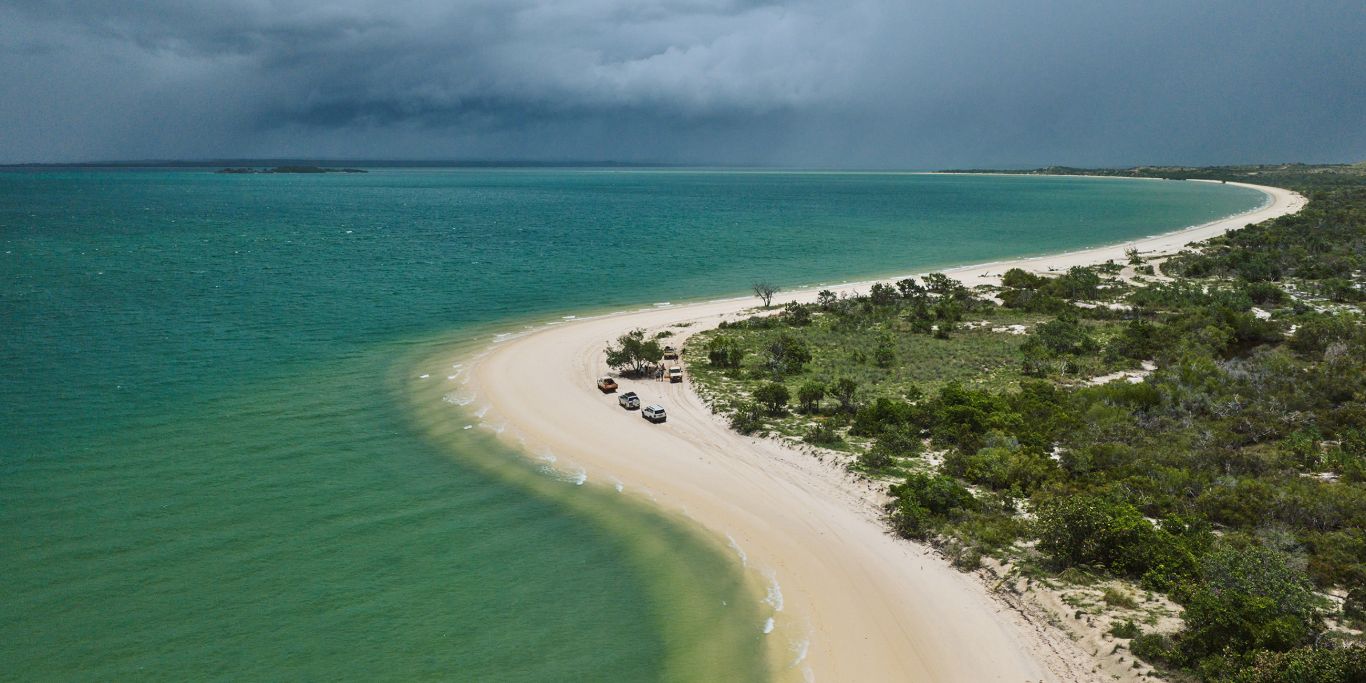
The sky feels bigger in East Arnhem . It stretches wide and uninterrupted above rouged earth, stringybark woodland and beaches so empty they seem to belong to another era. The coastline curves for kilometres without a footprint and the horizon runs on forever.
For comedian Lou Wall, the scale of the place was the first thing that hit them.
“The sheer openness,” they say. “The sky feels infinite and the land stretches out endlessly. It’s pretty breathtaking visually.”
But the physical landscape is only part of the story. The real reward isn’t only the scenery but the shift in perspective the journey brings. Visitors stop trying to tick off the destination and a real engagement takes over.
“It made me never want to travel again,” Wall jokes. “In that I never wanted to leave East Arnhem.”
Getting there
Sail along the remote coastline on an expedition cruise.
Reaching East Arnhem is part of the adventure. Travellers typically fly into Gove Airport near Nhulunbuy via Darwin or Cairns, or arrive by expedition cruise along the remote coastline. Others make the journey overland along rutted dirt roads that cut through East Arnhem’s small pockets of monsoon forest.
However you arrive, there’s a distinct feeling of crossing into somewhere different. Permits are required to visit the region, reflecting the fact that this is Yolŋu land where communities and traditional owners maintain deep cultural connections to Country.
The extra planning becomes part of the experience. By the time visitors arrive, they understand they’re entering a place not just of respect, but also patience and curiosity.
At one with nature
East Arnhem’slandscapes leave a strong imprint. For Wall, one place in particular still lingers in their memory: Ngalarrkpuy , also known as Lonely Beach, near Bawaka Homeland.
“I genuinely felt like I was living inside an Instagram filter,” they say. “One of the most stunning feats of nature I’ve ever seen. The water was so clear I swear I could see even the fish smiling.”
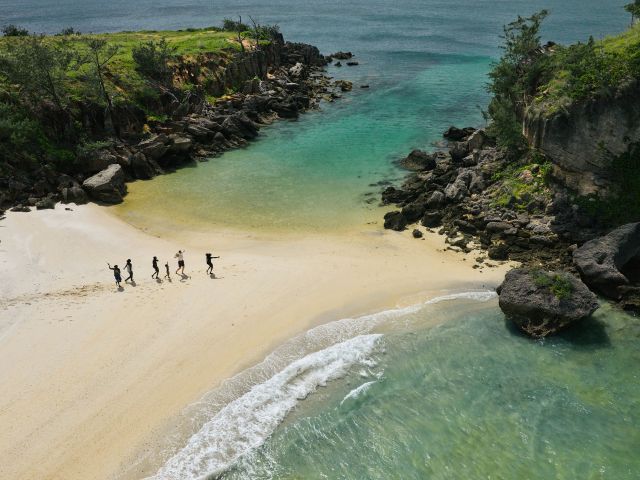
Across the region, natural experiences unfold at a slower pace. Fishing, beachcombing and island hopping reveal the rhythm of the coastline. The tides shape daily life and the vastness of the landscape makes even simple moments feel downright cinematic.
For visitors with limited time, Wall says the Bawaka Homeland experience is unmissable.
“I just left and I’m already planning when I can get back there.”
The sense of remoteness is part of the appeal. In a country where many beaches are crowded and well-trodden, East Arnhem’s coastline still feels wonderfully wild.
Immersing in local culture
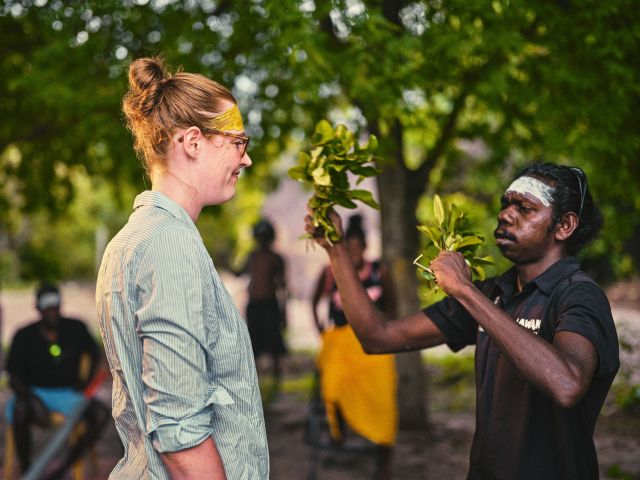
Experience authentic moments with the locals.
Culture is woven through every experience in East Arnhem. Visitors have the opportunity to spend time on Country with Yolŋu guides and knowledge holders who share stories and traditions that have been passed down for generations.
For Wall, one of the most powerful moments came during a conversation with a Yolŋu elder.
“I got to meet a traditional elder, Mayalil, in Nhulunbuy,” they say. “Listening to her talk about her home made the land feel alive in ways I couldn’t have imagined.”
The region is also home to internationally recognised Aboriginal art centres where artists shape works deeply connected to land and family knowledge.
Music carries the same cultural energy. East Arnhem has produced globally recognised artists such as King Stingray and Baker Boy, blending Yolŋu language, storytelling and contemporary sound.
Wall experienced this musical spirit first-hand.
“A jam session around the fire was it for me,” they say. “Letting the deep joy and history of their music wash over me…and meeting a few of the King Stingray musicians was unreal.”
These moments of human connection often become the most memorable part of a visit.
Spotting local wildlife
Step into a world where nature reigns.
The wildlife of East Arnhem adds another layer to the experience. The region is home to an extraordinary range of animals, from waterbirds and turtles to dugongs, dolphins and the formidable saltwater crocodile.
Wall admits they didn’t actually spot a croc during their visit.
“Devastatingly, I didn’t see one,” they laugh. “But with all the stories from the locals I definitely gained a healthy respect for caution.”
Some of the most memorable wildlife encounters can be surprisingly small., At Banubanu Beach Retreat on Bremer Island, Wall remembers walking along the beach one morning and watching it come alive.
“As you walk through the sand you see hundreds of crabs scurrying into their holes as you pass by,” they say. “Such a small thing, but it was completely magical.”
Moments like this reveal the quieter rhythms of East Arnhem, where even the smallest creatures seem to play a part in the landscape.
Visitors who make the journey soon learn the most important travel tip of all.
“Go in open-minded with a sense of curiosity,” Wall says. “Be prepared to ditch your plans. The land and the locals will guide you on an adventure no spreadsheets could ever compete with.”
And most importantly, they add, don’t rush.
“The land and people deserve your time and attention. You’ll be all the better for slowing down.”
For more information on visiting East Arnhem, head to eastarnhem.com.au.