Going wild doesn’t have to mean roughing it. Here are all the best accommodation options in and around Kakadu.
Kakadu National Park sings with natural beauty and Bininj/Mungguy culture. When it comes to Kakadu accommodation, there’s something for every style of traveller. Options range from luxury stays nestled in awe-inspiring nature to comfortable caravan parks loaded with amenities. Discover everything you need to know about Kakadu National Park before you go, then follow our guide on where to stay.
1. Cooinda Lodge
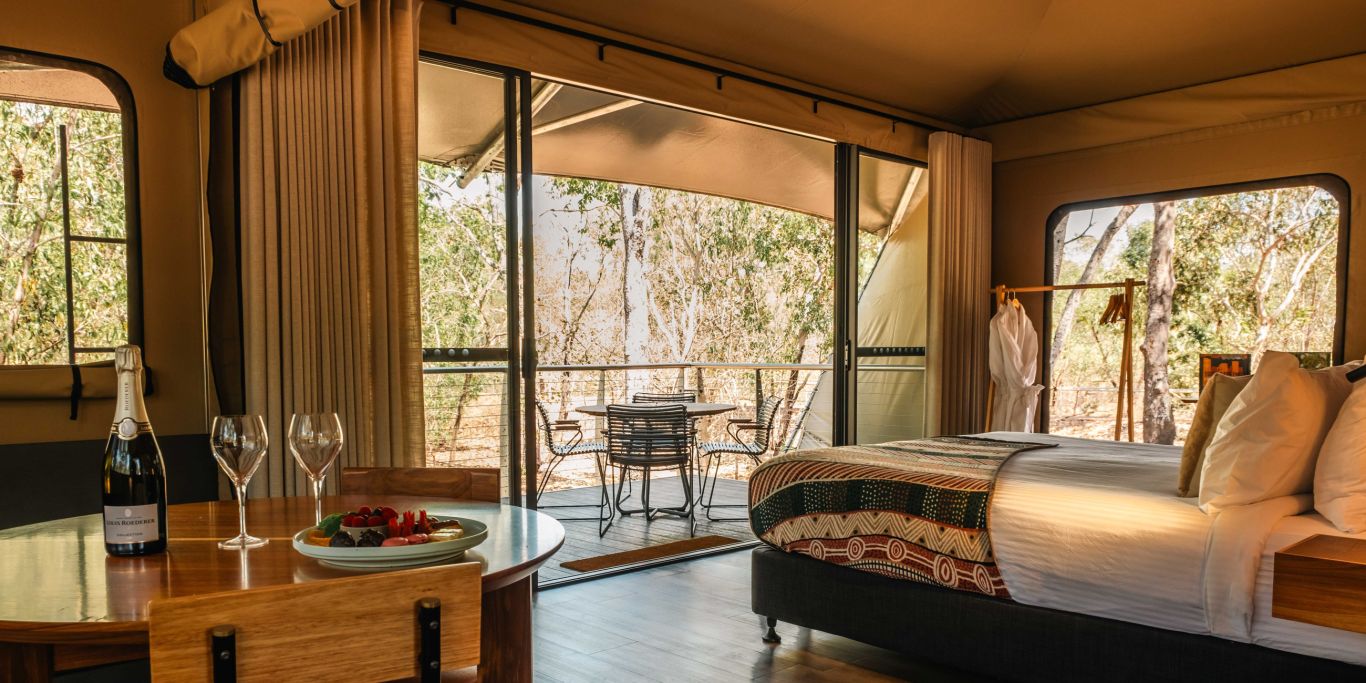
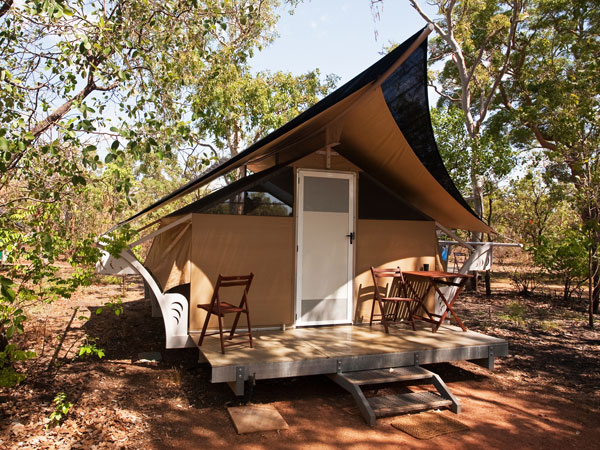
Each glamping retreat opens out to a private terrace. (Credit: Tourism NT/Kakadu Tourism)
Best for: Every style of stay – luxury, budget, caravans, camping or glamping.
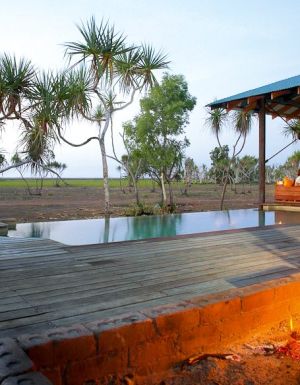
Kakadu’s Cooinda Lodge is an Indigenous-owned property that’s popular with locals. Sitting pretty on the banks of Yellow Water Billabong (Ngurrungurrudjba), the lodge offers a comfortable place to unwind with its tropical lagoon pool and top-notch bistro.
Accommodation offerings run the gamut here, ranging from no-frills campsites to spacious glamping-style tents, affordable lodges and luxury villas. Located in the heart of Kakadu, Cooinda Lodge is in a prime position for exploring some of the park’s stunning waterfalls and the ancient rock art at Burrungkuy (Nourlangie) and Ubirr. If you’re looking for activities to fill your itinerary, explore our guide on things to do in Kakadu.
Cooinda Lodge’s Yellow Water Villas are its luxury offering. An oasis surrounded by paperbark and pandanus, the villas evoke eco-luxe with well-appointed rooms decorated with local Indigenous designs. The more low-key twin and queen lodges offer comfort at affordable prices, with ensuite bathrooms and an outdoor dining area.
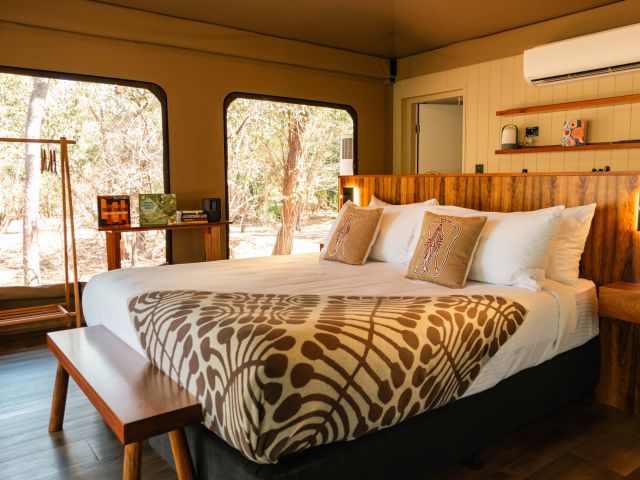
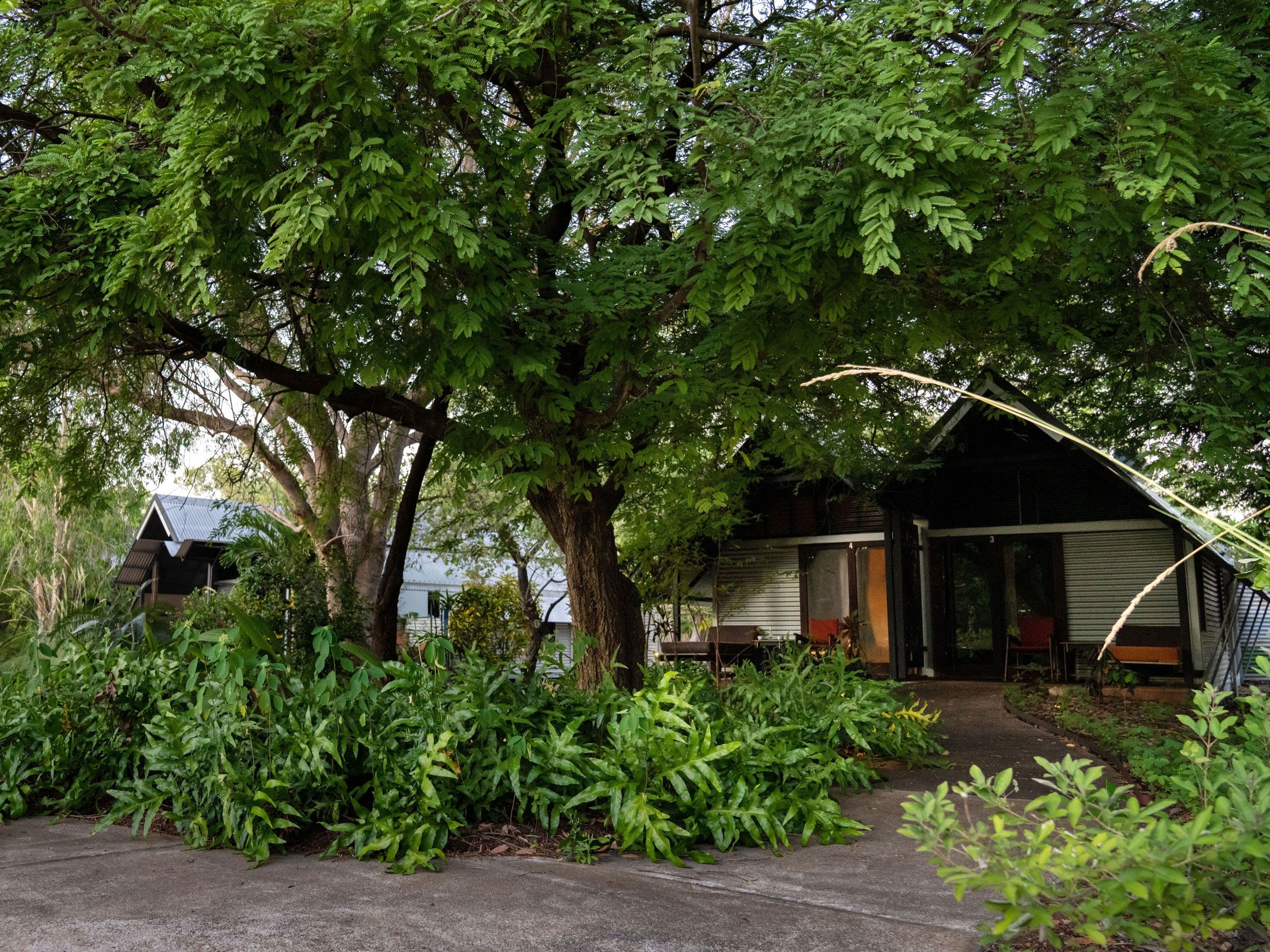
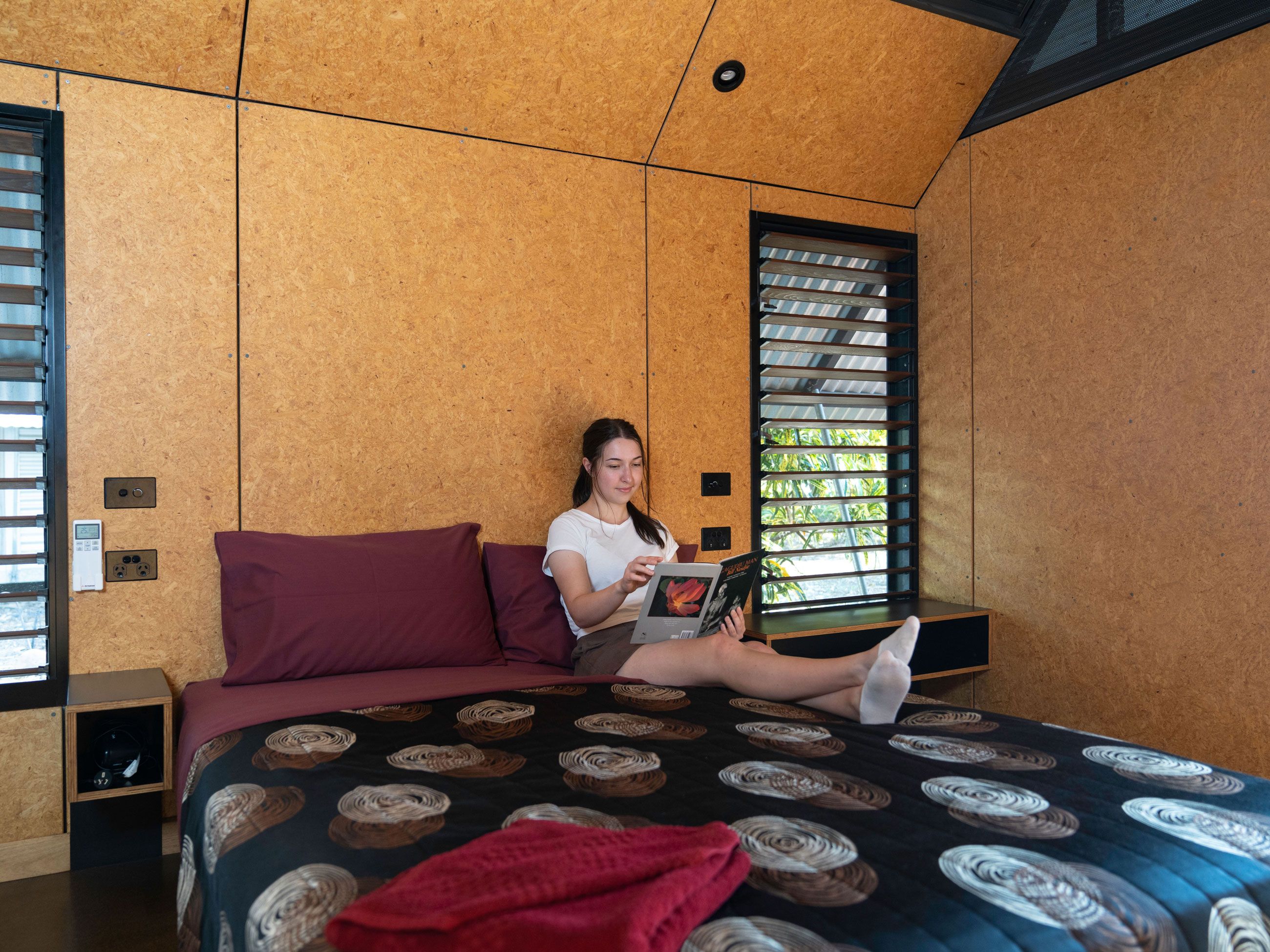
Cooinda’s Outback Retreats are breezy glamping tents where visitors can feel immersed in nature while also retaining the comforts of air conditioning and plush bedding. Here, you’ll have a private and spacious room to get some R&R, with access to a shared toilet/shower block and cooking facilities.
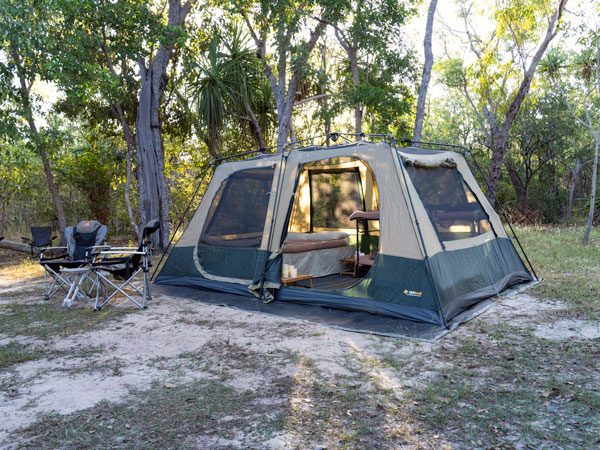
The shady Yellow Water campground next to Yellow Water Billabong on the grounds of Cooinda Lodge is bound to ensure a slew of happy campers looking for low key Kakadu accommodation. There are powered and unpowered sites offering a picturesque place to park up a caravan or pitch a tent.
Campers can access all lodge facilities, including a shower and toilet block, shared kitchen, laundry, bar and pool to cool off during the heat of the day.
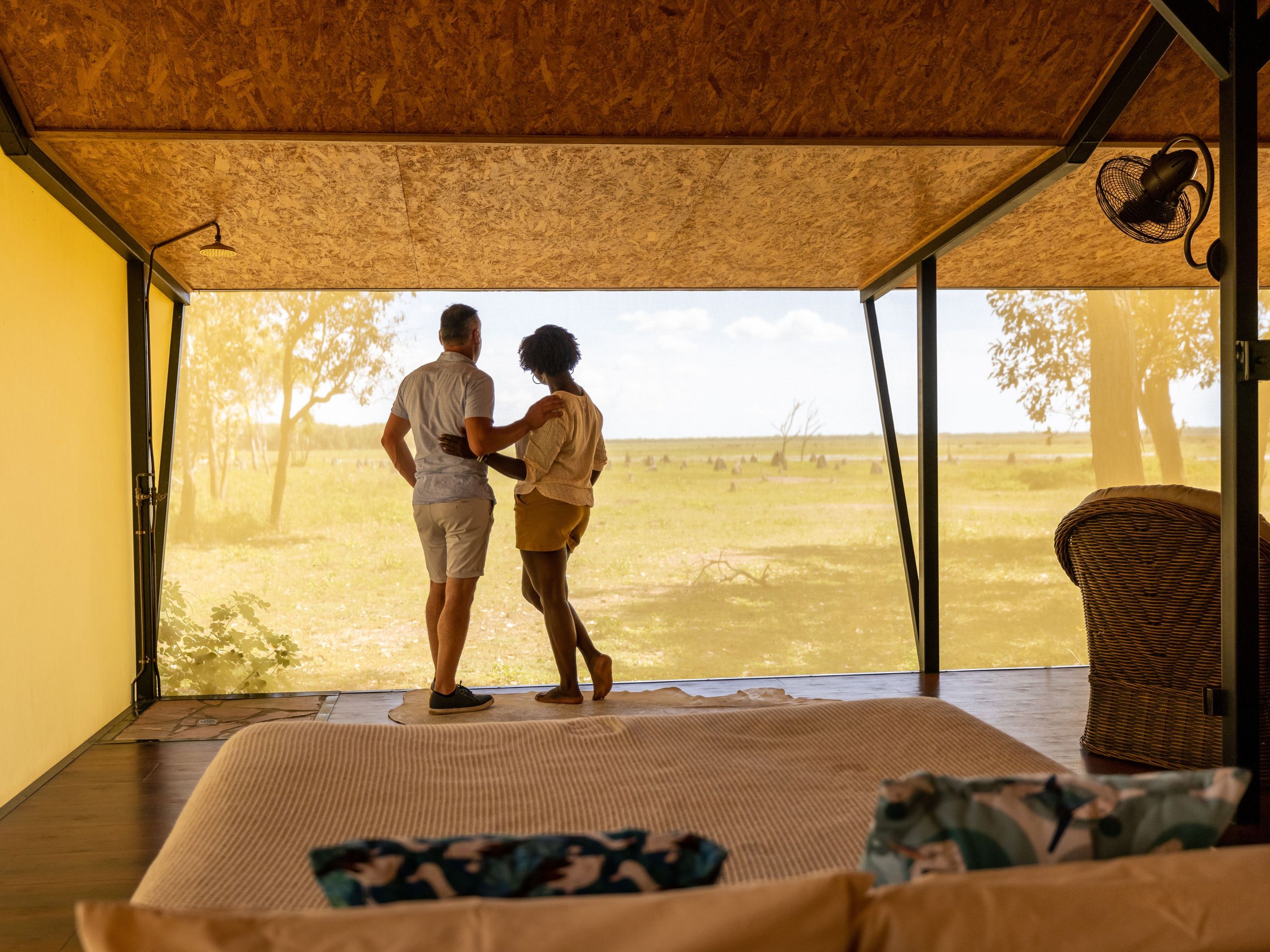
Bed down in an all-inclusive wilderness camp. (Credit: Tourism NT/Charlie Bliss)
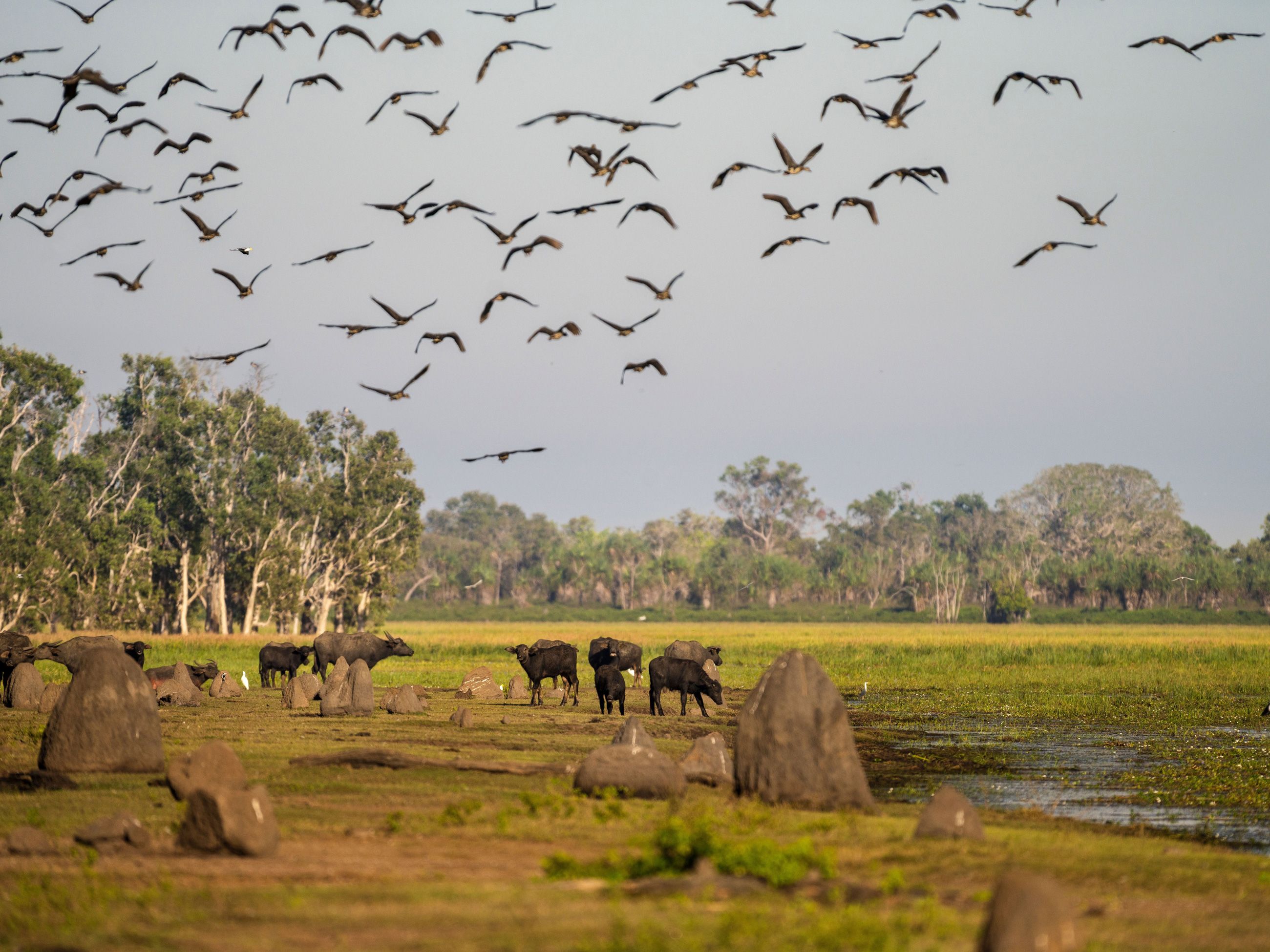
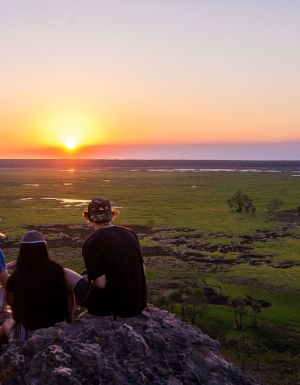
The wildlife-rich floodplains at Bamurru. (Credit: Tourism NT/Shaana McNaught)
Best for: Luxury
Bamarru Plains offers all-inclusive luxury accommodation on the edge of Kakadu National Park. It offers the wildness of a remote bush camping trip with all the comforts of a luxury getaway. It’s located in the Mary River Wetlands on a 300-square-kilometre working buffalo station, just on the edge of Kakadu National Park.
The resort echoes an African wilderness camp; within minutes of arrival, you could be viewing wild brumbies, agile wallabies and what seems like an entire field guide of Australian birds. Meals and drinks are included in your stay, so you can lay back and leave your worries at the door.
Guests can immerse themselves in the bush, gaze out at feeding wildlife, sip champagne by the pool, and choose from an array of guided activities included in their stay, like wilderness safaris and crocodile-spotting river cruises. This Kakadu accommodation allows you to experience the landscape in its entirety; there are no telephones, TVs, or internet to distract you.
Address: Bamurru Plains, Swim Creek Station, Kakadu NT 0836
Need tips, more detail or itinerary ideas tailored to you? Ask AT.
AI Prompt
3. Mercure Kakadu Crocodile Hotel
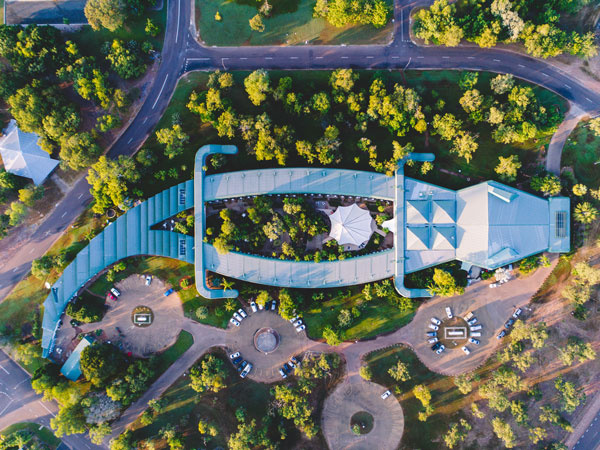
The croc-shaped Mercure Kakadu pays homage to the national park’s famous inhabitant, the saltwater crocodile. (Credit: Tourism NT/Salty Wings)
Best for: Budget
The famous crocodile hotel, Mercure Kakadu Crocodile Hotel, is not nearly as kitsch as the exterior would lead you to believe. The iconic salty-shaped inn is a very comfortable four-star Indigenous-owned Kakadu accommodation option with all the mod cons, tasteful decor, a relaxing swimming pool, a great restaurant, and a collection of quality Indigenous art.
The hotel is also in a prime location in the township of Jabiru. Jabiru is a gateway to the northern end of Kakadu and is home to a few must-see cultural attractions. For example, Marrawuddi Arts and Culture Centre is just a croc’s waddle away, the perfect place for a cuppa and a glimpse at some exquisite local art. It’s also just a 30-minute drive to Ubirr and the popular crocodile-spotting location, Cahills Crossing. At the time of publishing this hotel is up for sale.
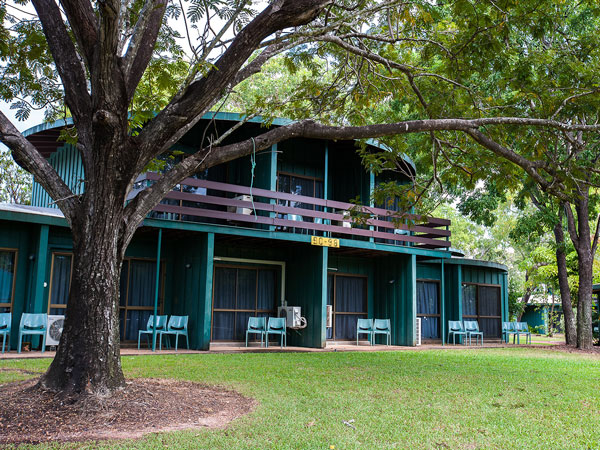
With self-contained cabin offerings, Anbinik Kakadu Resort is the perfect retreat for families, groups and budget-savvy travellers. There are different styles of accommodation, ranging from ultra-basic rooms with shared bathrooms to suites with a touch of luxe, including ensuite outdoor showers. The two-bedroom suites are great for families travelling with teens, sleeping up to five in total.
The accommodation is rustic but breezy, clean, and comfortable. It is conveniently located in Jabiru town near shops and attractions. There’s a local IGA, but visitors might want to consider shopping before arrival. Don’t miss the on-site restaurant serving Asian cuisine—the outdoor seating under tropical palms will make you feel truly relaxed. Alternatively, guests can cook up a storm in the camp kitchen or communal BBQ.
A stay at Aurora Kakadu Lodge and Caravan Park puts you in the middle of the World Heritage-listed Kakadu National Park.
Best for: Budget, caravan and camping
Surrounded by tropical, landscaped gardens, Aurora Kakadu Lodge and Caravan Park is a tranquil oasis. With a lagoon-style pool and poolside bar, Aurora is the perfect Kakadu accommodation to kick back and cool off in the afternoon. Located in Jabiru town, it’s also a convenient base from which to venture out into Kakadu National Park. Along with peaceful outdoor spaces, Aurora offers powered and unpowered sites for campers and self-contained lodges. The two-bedroom cabins sleep up to seven people, perfect for larger families or groups.
If you’re camping or caravanning, the park doesn’t take reservations, but with 100 unpowered campsites and 186 powered caravans and campsites, there’s always plenty of space available.
Weekly travel news, experiences insider tips, offers, and more.
6. Hawk Dreaming Wilderness Lodge
Hawk Dreaming Wilderness Lodge is nestled within a restricted area of Kakadu National Park. (Credit: Hawk Dreaming Wilderness Lodge)
Experiencing Kakadu National Park by staying in a remote, restricted area is definitely a once-in-a-lifetime event that should be on your bucket list. Hawk Dreaming Wilderness Lodge is Kakadu accommodation that makes that happen in both a culturally and environmentally sensitive fashion.
Situated in Cannon Hill, a stay at the lodge is part of a three-day adventure with Kakadu Cultural Tours that includes two nights accommodation in tented cabins, two sunset tours, one 4WD day tour and a Guluyambi cruise, plus meals.
Cabins offer all the mod cons needed like ensuites and a beautiful deck to while away the afternoon hours. Transfers to the lodge are included.
The unique experience will have you seeing the park in a way that many visitors don’t have access to, and is a great opportunity to escape the beaten track.
Address: Cannon Hill, Kakadu
Set within a restricted area of Kakadu National Park, Hawk Dreaming Wilderness Lodge offers a rare glimpse of the Top End beyond the usual tourist trail. Spend two nights in a secluded tented cabin, venture out on sunset and 4WD tours, and cruise the East Alligator River.
Camping in Kakadu is best for unplugging and unwinding. (Credit: Tourism NT/Tourism Australia)
For lovers of the outdoors, there is perhaps no better way to experience Kakadu than at a campsite. For those who prefer the adventure of pitching a tent or pulling up to an unpowered spot, we’ve collated the best places to camp around Kakadu.
In terms of amenities, some sites just have little more than a composting toilet. They’re ultra-basic, but they’re free!
Some campsites such as Merl, Muirella Park, Mardugal and Gunlom have flush toilets and solar-powered showers and cost around $15 per night.
If you’re camping, it’s important to be prepared and bring enough drinking water. For more information, consult the Parks Australia website.
Tick the box next to "Australian Traveller". That's it.
Elizabeth Whitehead is a writer obsessed with all things culture; doesn't matter if it's pop culture or cultures of the world. She graduated with a degree in History from the University of Sydney (after dropping out from Maths). Her bylines span AFAR, Lonely Planet, ELLE, Harper's BAZAAR and Refinery 29. Her work for Australian Traveller was shortlisted for single article of the year at the Mumbrella Publishing Awards 2024. She is very lucky in thrifting, very unlucky in UNO.
The Northern Territory isn’t just different – it’s a whole new world. From the friendly locals and varied landscapes to its cultural layers, there’s nowhere else in Australia quite like it.
The Northern Territory has to be experienced to be believed. The majesty of Uluṟu doesn’t quite hit until you’re standing before it. The untouched beauty of Arnhem Land strikes the heart in a way you can’t imagine. The quirky and friendly locals and the festivals they throw impart stories that won’t be forgotten. And that’s just the beginning. From natural hot springs and local larrikins to deep cultural ties and ancient stories, these are the experiences to be discovered only in the NT.
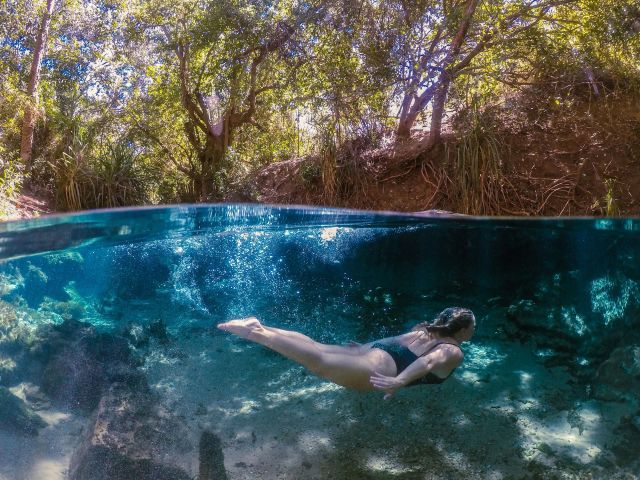
The NT’s natural hot springs are truly picturesque. Katherine’s crystal clear thermal springs sit on the banks of the Katherine River, framed by nature. Picnic grounds and scenic walking tracks make it easy to linger.
In Elsey National Park, the teal waters of Bitter Springs have long been popular with locals. It’s not uncommon to spot turtles as you drift with the gentle current, palm trees waving on the banks. The park also contains Mataranka Thermal Pool, a sandy-bottomed swimming hole sitting at a cosy 34°C year-round.
2. Explore the Red Centre Light Trail
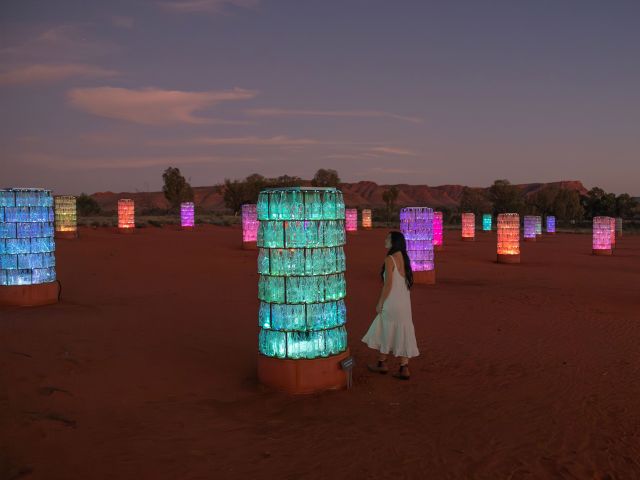
Head to Kings Canyon to see the Light Towers. (Credit: Tourism & Events NT)
Uluṟu-Kata Tjuṯa National Park is more than just a place; it’s earned its name as Australia’s cultural heart. Here, a wealth of stories is held by its Traditional Owners, the Aṉangu. And while there are many ways to connect, in more recent years, the Red Centre Light Trail has offered visitors one more way to interpret all this landscape holds.
Wander the Light Towers at Kings Canyon and watch the Field of Light transform the land before Uluṟu as day turns to night. Also, be sure to take in Wintjiri Wiṟu by light artist Bruce Ramus, sharing the Aṉangu’s Mala story.
Arrive in April to experience Parrtjima, a free annual 10-night festival of light, featuring installations, workshops and more.
3. See unrivalled views from a helicopter
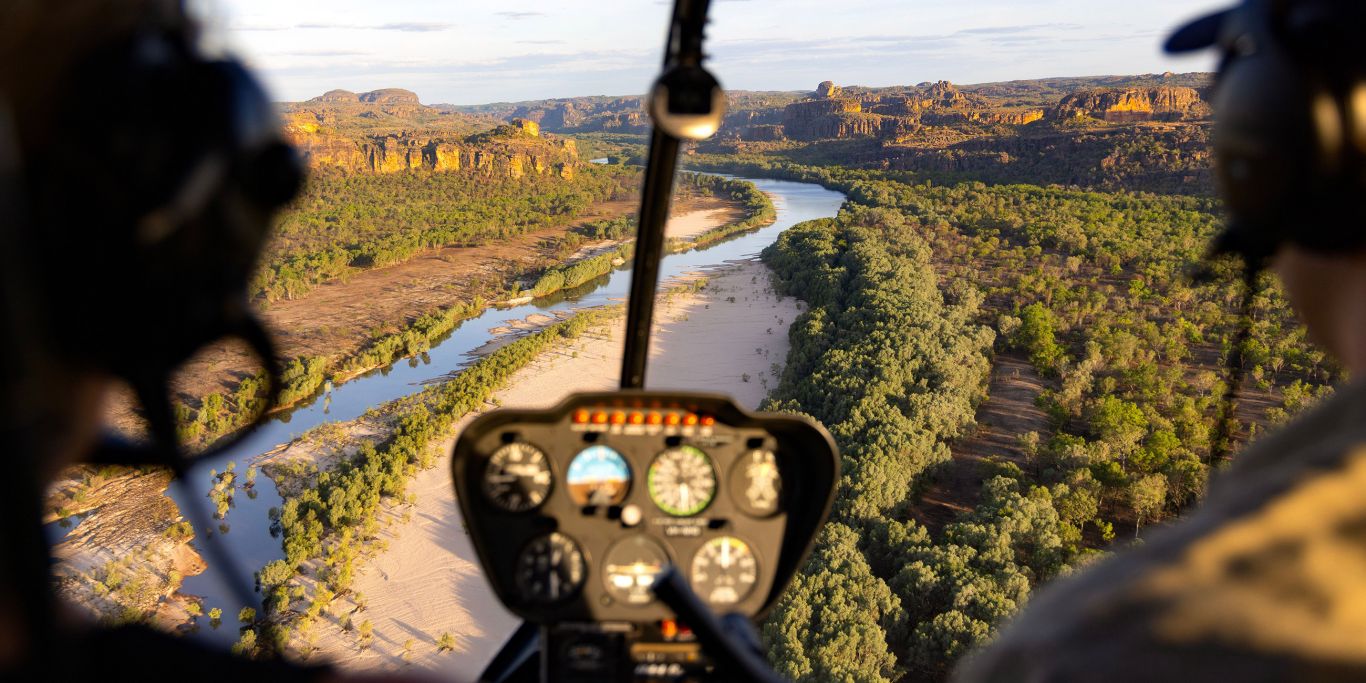
See Kakadu from the air. (Credit: Tourism & Events NT/ Sean Scott)
There’s no better place in the world to hit the skies in a helicopter. Soar over thundering waterfalls, world-famous wetlands and the floodplains of Kakadu National Park. A bird’s-eye view brings a special type of magic to this one-of-a-kind landscape.
You can also meet local characters on the pub crawl of a lifetime as you fly between some of the NT’s best and most remote pubs.
4. Discover the start of Western Arrarnta art
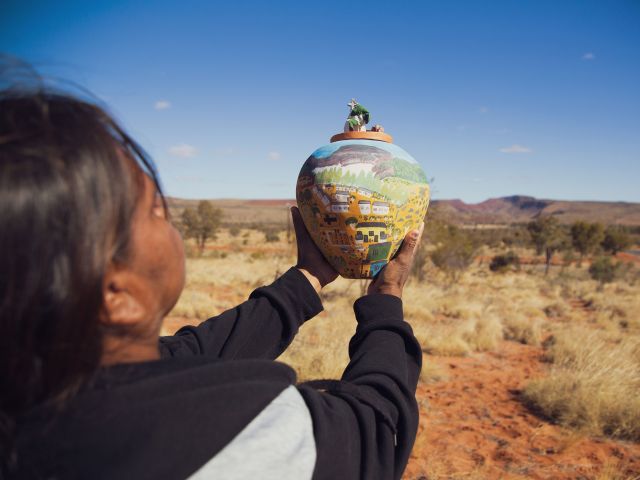
Book ahead to visit Hermannsburg Potters. (Credit: Tourism & Events NT/ Felix Baker)
Hermannsburg is one of the most unique towns in Australia. This historic mission town holds several claims to fame, including being the birthplace of Western Arrarnta art – a renowned style of Indigenous art using vibrant, naturalistic watercolours to depict Central Australian desert landscapes. Book ahead from April to September to visit Hermannsburg Potters, a collective of dedicated Western Arrarnta artists.
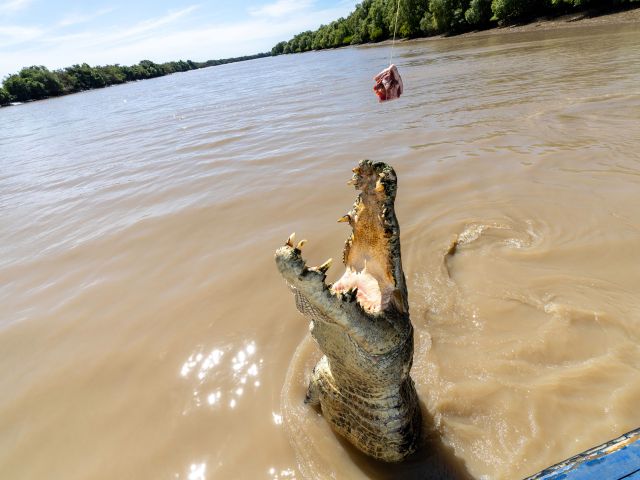
Spot wild crocs up close. (Credit: Tourism Australia)
The NT is the only territory that feeds wild crocs, putting the ‘wild’ in wildlife spotting experience. Join a cruise along the Adelaide River, just an hour from Darwin, to see these not-so-gentle prehistoric giants in their natural habitat.
Be sure to stop into Humpty Doo or Noonamah for lunch on your way back to Darwin. Here, you’ll experience a real NT roadhouse.
6. Experience local Indigenous cultures
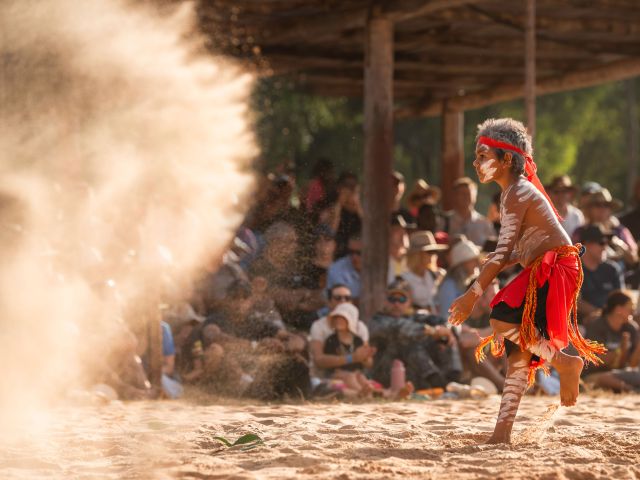
Time a trip to Nhulunbuy for the Garma Festival. (Credit: Tourism & Events NT)
The NT offers some of the best opportunities to experience the world’s most ancient living culture. Head to Nhulunbuy in East Arnhem mid-year for the Garma Festival, Australia’s largest Indigenous gathering, with four days of song, dance and art sharing Yolngu culture. Stop into Buku-Larrnggay Mulka Centre in nearby Yirrkala while you’re there, current home of the Yirrkala Church Panels. Painted in 1963, they form one of the first ‘title deeds’ to Country.
Join a celebration of Indigenous music, art, culture and sport at the Barunga Festival, 80 kilometres from Katherine, every June. And year-round, book an Indigenous-led tour through Ubirr, one of the oldest rock art sites in Australia.
7. Meet the larrikins of Alice Springs
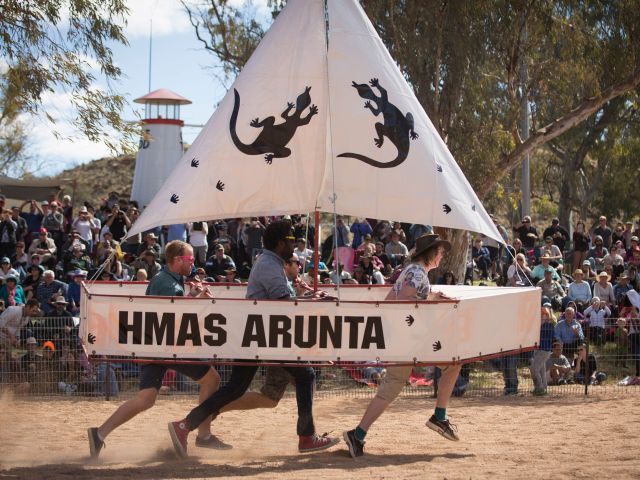
Henley on Todd Regatta might be one of the NT’s whackiest events. (Credit: Tourism & Events NT/
Head to Alice Springs at any time of year and you’ll be guaranteed to meet some colourful locals. But to really get to the heart of the eccentricities, mark a few dates on your calendar.
March brings one of the best Pride events in the world, fabAlice. Inspired by the iconic Aussie movie The Adventures ofPriscilla, Queen of the Desert, which was filmed in Alice Springs over 25 years ago, the festival has a strong focus on the art of drag and celebrates LGBTQI+ communities, as well as self-expression in general.
Come August, Todd River’s typically dry, sandy bed comes alive with the world’s only dry river boating event, the Henley on Todd Regatta.
8. Swim in a waterfall with no one else around
Swim in the Upper Cascades with no one else around.
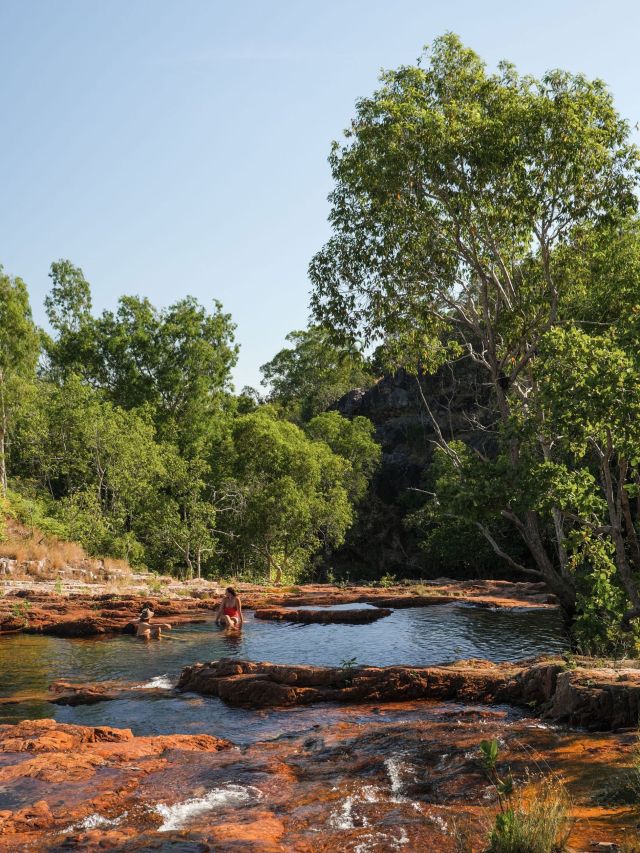
So few of Australia’s most beautiful places remain untouched, but that’s not true in the NT. Take a short hike through monsoon forest in Litchfield National Park (just over an hour’s drive outside of Darwin) to reach the secluded Cascades swimming area. Here, take a dip in the lower or upper cascade pools, both surrounded by rugged bushland. And you’ll probably have it all to yourself.