Camping on Moreton Island provides a front-row seat to the majesty of Mother Nature.
When you’re camping on Moreton Island, also known by its Indigenous name of Mulgumpin, the unspoilt coastline invites instant serenity. Part of the spectacular Moreton Island National Park, just a hop, skip and ferry ride from Brisbane, the world’s third-largest sand island is surrounded by turquoise blue waters and offers amazing activities for every holiday speed. From four-wheel driving and surfing sand dunes to chilled-out snorkelling and uninterrupted stargazing, kicking back your way is easy. Here are the basics to get you moving.
How to get to Moreton Island
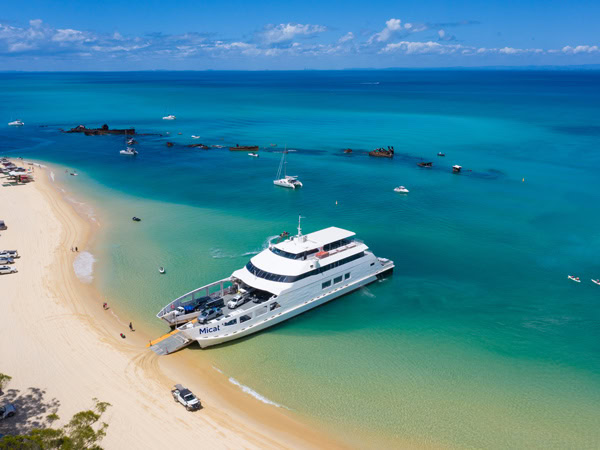
Let’s get familiar with paradise. Located 40 kilometres offshore from Brisbane, Moreton Island is mostly accessed via the Micat ferry, which takes about 90 minutes and departs from the Port of Brisbane, the city’s main shipping port. If you’re making the trek from Brisbane’s CBD to go camping on Moreton Island, it’s a 30-minute drive north-east of the city.
It’s worth noting that Micat is a passenger and vehicle ferry, and the only option for visitors who plan on taking their 4WD with them (which is highly advised). Ferry scheduling fluctuates depending on the season, but during peak periods, it can run up to five times each day. Check the website for up-to-date information.
Make sure you book well in advance, too. School holiday periods attract serious crowds, which cram those regular runs right up. We advise securing tickets at least four weeks in advance, no matter when you’re visiting, and if you’re planning an Easter or Christmas trip, get organised six months in advance. Ticket pricing differs depending on when you’re travelling, but expect a minimum of around $79 each way if you’re taking your car. Passenger-only tickets are cheaper.
Permits and regulations
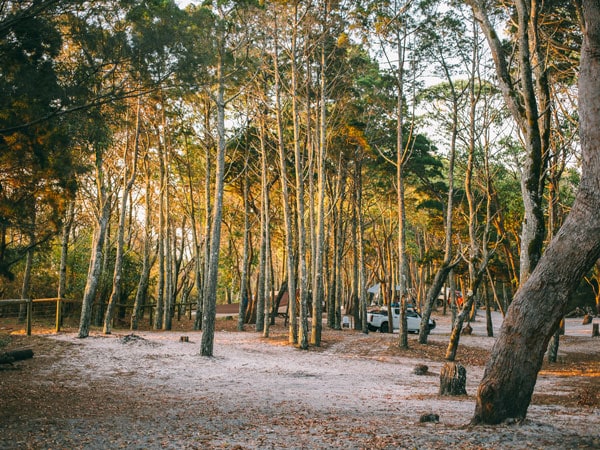
If you’re bringing your wheels, a vehicle access permit is a must. Furthermore, all campsites require camping permits, so you’ll need to sort them before you go, too.
The vehicle access permit must be clearly displayed within your vehicle so your booking number can be viewed at any time you’re camping on Moreton Island. It can be purchased as either an annual or monthly pass — there are no single trips. If you’re going for anywhere up to one month, you’ll need to fork out $61.80 per vehicle. If you’re adventuring for more than one month and up to one year, it’s $311 per vehicle.
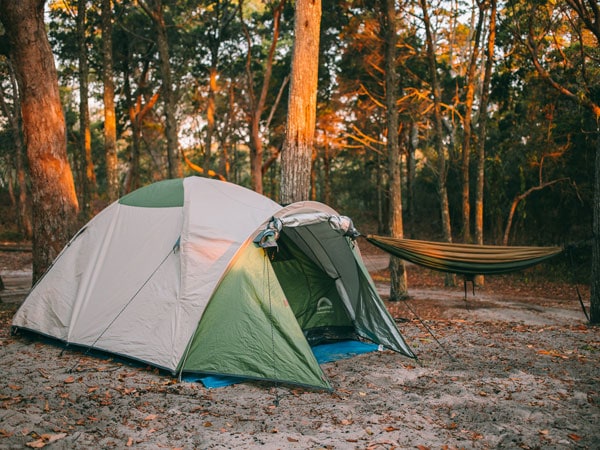
Camping fees are less steep. No matter where you’re setting up your tent (literally and figuratively) on Moreton Island, you’ll pay $7.75 per person, per night. Additionally, all sites, even the facility-free camping areas, require bookings in advance, so don’t assume you can just rock up and pay when you jump off the ferry.
You can also live out those dreams of roasting marshmallows as the sun sets, given many of Moreton Island’s camping grounds allow for fires, but you’ll need to BYO firewood.
Activities and attractions
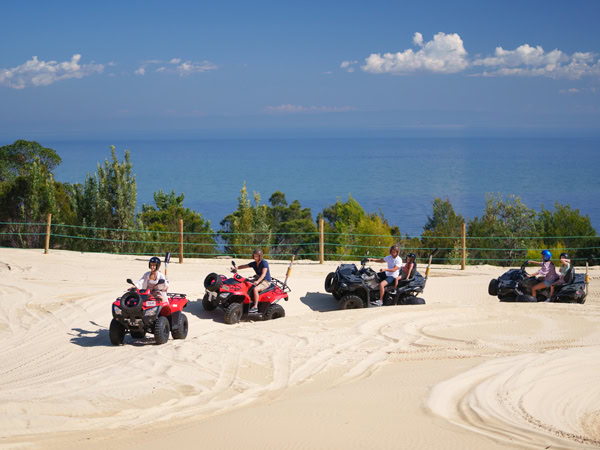
Adventure seekers will bask in four-wheel driving along nature’s highway, in addition to climbing the extraordinary sandstone formations of Cape Cliff and kayaking and snorkelling through crystal-clear waters.
Hiking is another popular pastime when you’re camping on Moreton Island, and Mt Tempest is the highest point to help you gaze adoringly at Mother Nature’s handiwork.
Tobogganing or sandboarding down Moreton Island’s dunes, some of the tallest examples in the world, is always a fun choice. The best spot is The Desert, located right behind Tangalooma Island Resort.
Those looking for restoration will enjoy observing the wide variety of wildlife on display, including birds, dolphins, whales and turtles. Relaxing at Honeymoon Bay, soaking in the natural Champagne Pools and dipping into the Blue Lagoon will also feed the soul effortlessly.
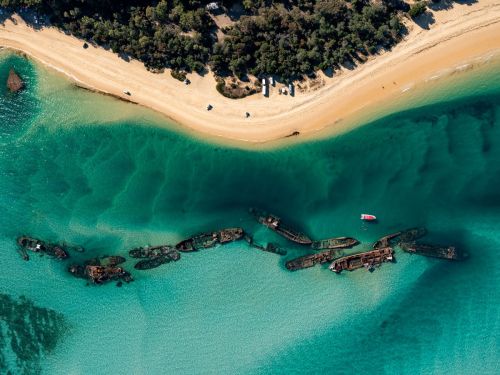
But Moreton Island’s most-visited attraction has got to be the Tangalooma Wrecks, a stack of ancient ships scuttled by the government to help recreational boaties anchor in safely during the 1960s, 70s and 80s.
Your inner explorer will delight in stickybeaking through the rusting bones of old ship hulls, transporting you to a thrilling bygone era without sacrificing those Instagram-perfect surroundings.
Best camping spots on Moreton Island
Yellow Patch Camping Zone
Surfers flock to the Yellow Patch Camping Zone as the exposed beaches offer sensational waves. 14 sites are dotted throughout the stretch, with some offering more exposed conditions than others. Choose your own adventure with various-sized sites and surf proximity. The North Point Camping Area is just a short drive from this area.
Address: It’s all that space on the western side of the island between North Point and Heath Island.
Facilities: None.
Accessibility: It’s reachable via 4WD, and you can park it beside your campsite. Camper trailers are welcome.
Dog-friendly? No.
Need tips, more detail or itinerary ideas tailored to you? Ask AT.
AI Prompt
The Wrecks Campground
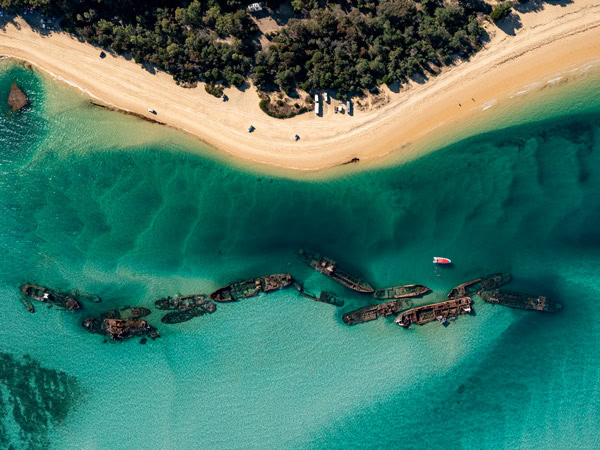
Set right off a sheltered bay and wrapped in a blanket of native trees and shrubs, The Wrecks Campground offers 21 sites. It’s near the main barge point, so anybody without a car can access it, but be prepared to walk a little to get to the actual sites.
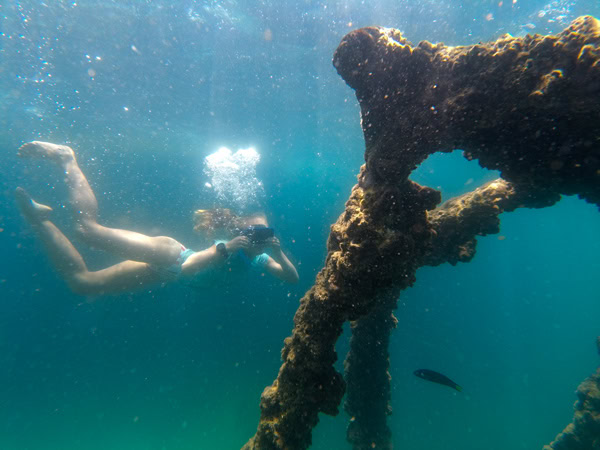
Nearby attractions include the Tangalooma Wrecks, and there’s also great snorkelling with coral growing on the ships themselves. Top-notch fishing is also on tap.
Address: Near the main barge landing point, where the ferries arrive.
Facilities: Cold showers, non-flush toilets, water (but treat before drinking), rubbish bins and wi-fi (but it’s extremely patchy).
Accessibility: Camper trailers aren’t supported as the Wrecks can only be reached via 4WD and boats. Even then, you’ve got to walk to the site itself because vehicles need to be parked on the beach.
Dog-friendly? No.
Ben-Ewa Camping Area
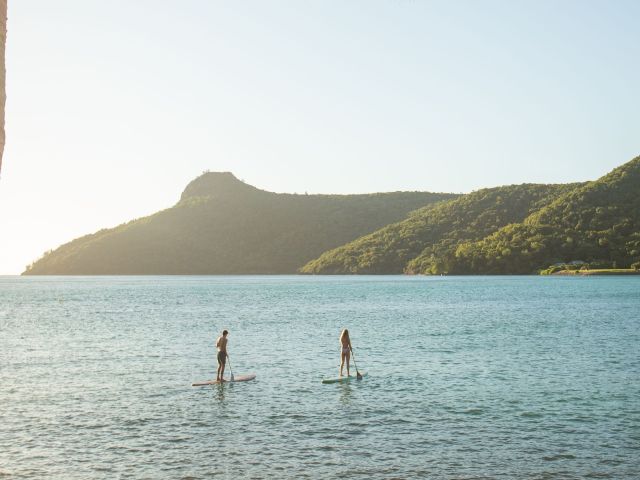
Hands down, the best option for first-time campers. A hit amongst families and school groups, the Ben-Ewa Camping Area provides sheltered waters right off shaded sites. Located north of The Wrecks on the western beach side of the island, just 12 sites are on offer. If you can nab one, you’ll spend your days dipping in dreamy waters, enjoying calm kayaking and SUP paddleboarding with fellow nature lovers. The conditions are perfect for it all.
Address: Just a short stroll north of the main barge landing point, where the ferries arrive.
Facilities: Water (but treat before drinking), hybrid toilets, a portable toilet waste disposal system and cold showers.
Accessibility: You can get to the campground in your 4WD with parking available either right next to or close to the sites themselves. Camper trailers are welcome.
Dog-friendly? No.
Comboyuro Point Campground
This beautiful spot is close to 4WD tracks that lead to some of the island’s main attractions. Boasting 49 camping plots of various sizes, the Comboyuro Point Campground offers plenty of shade and calm swimming conditions for the whole family to enjoy. Even better, the sunsets across the bay from this site are majestic.
Address: It’s located on the western side of Moreton Island, within walking distance of the Bulwer township.
Facilities: Water (but treat before drinking), septic toilets, rubbish bins, a portable toilet water disposal system and cold showers.
Accessibility: You can park your car right next to your site, and campervans are also welcome.
Dog-friendly? No.
North Point Camping Area
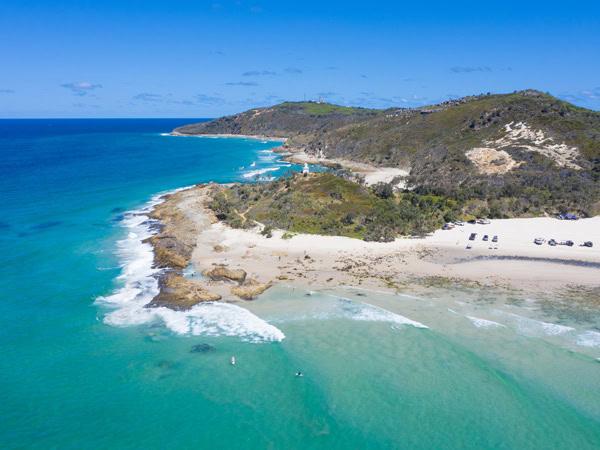
Want to be within walking distance of Honeymoon Bay and the Champagne Pools? North Point Camping Area is your go-to. The area offers a large grassy patch close to the beach, and there are 21 sites available.
Kids love it as the nearby swimming is shallow and calm. Note that open fires are not permitted.
Address: It’s found at the northern tip of Moreton Island, between Yellow Patch and Cape Moreton.
Facilities: Water (but treat before drinking), hybrid toilets, cold showers and pedestrian access to the beach.
Accessibility: It can only be reached by 4WD, and just four of the sites are suitable for camper trailers. It’s impossible to park next to your campsite.
Dog-friendly? No.
North-West Camping Zone
Ready to really rough it? The North-West Camping Zone is one of Moreton Island’s facility-free campgrounds, offering unadulterated connectivity to your natural surroundings. Fires are permitted, and generator use is green-lit between 8 am and 7 pm. This campground has a capacity of 76 beach campsites, all with fabulous access to calm bay waters. Some sites are even located a walk away from the Bulwer township.
Address: It’s anywhere between the Ben-Ewa Camping Area and the Comboyuro Point Campground.
Facilities: None.
Accessibility: You can park your 4WD beside your campsite, and camper trailers are welcome.
Dog-friendly? No.
Weekly travel news, experiences
insider tips, offers, and more.
Blue Lagoon Camping Area
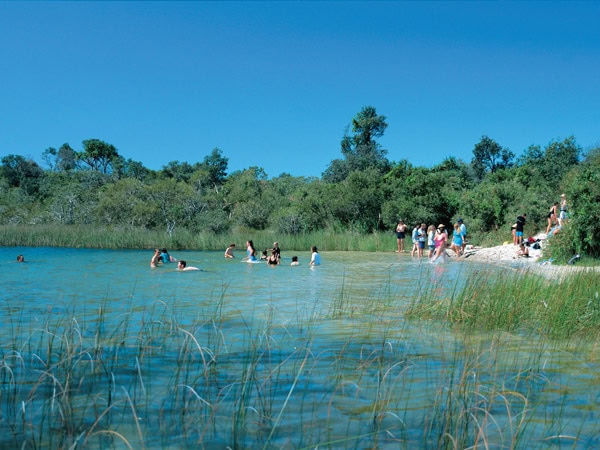
The beautiful, beach-centred Blue Lagoon Camping Area offers easy access to an ocean surf beach and scenic walking trails. Even sweeter, it’s just a stroll away from the Blue Lagoon, a natural freshwater lake renowned for heavenly swimming and birdwatching. There are 25 sites in total to choose from.
Address: You’ll find it on the eastern length of Moreton Island, between Middle Road and Cape Moreton.
Facilities: Water (but treat before drinking), septic toilets and cold showers.
Accessibility: It can be reached via 4WD, and parking is provided right next to the sites.
Dog-friendly? No.
North-East Camping Zone
Another completely stripped-back camping pick, the North-East Camping Zone offers 89 sites scattered beyond Middle Road and up towards Spitfire Creek on the Eastern beach. Secluded conditions equal exceptional surf beach views, but be mindful of the narrow, soft-sanded Middle Road if you’re bringing a camper trailer.
Address: The space between Middle Road and Spitfire Creek, so basically everything on the eastern side of the island.
Facilities: None.
Accessibility: It can be reached via 4WD, and parking is provided right next to the sites. Camper trailers are welcome, but plan cautiously as Middle Road’s soft sand makes life tough.
Dog-friendly? No.
South-West Camping Zone
Get your hands (and everything else) dirty at the South-West Camping Zone, the island’s most challenging region to access. But the rewards are priceless. This pick offers 24 (mostly tent) sites situated right by picture-perfect waters. The campground is even more exclusive, given that some of its sites are completely impacted by the tide, so be warned that some are only accessible during low tide.
Address: You’ll find it on the western side of Moreton Island from Tangalooma Bypass to Toulkerrie.
Price: Your camping permit, detailed in the section above, will cover you.
Facilities: None.
Accessibility: You can reach the sites via 4WD, on foot or via a boat or kayak. Some by-your-site parking is available.
Dog-friendly? No.
South-East Camping Zone
With 35 sites to choose from, the South-East Camping Zone presents killer digs to explore the exposed surf beaches between Middle Road and Rous Battery. You’ll need to be mindful in this neck of the woods, though, particularly if you’re towing a trailer, as high tide times can obstruct beaches.
Address: You’ll find it on the eastern side of Morton Island between Middle Road and heading south to Rous Battery.
Price: Your camping permit, detailed in the section above, will cover you.
Facilities: None.
Accessibility: It’s reachable via 4WD, and you can park it beside your campsite. Camper trailers are welcome.
Dog-friendly? No.
Want to see more stories from Australian Traveller in your Google search results?
- Click here to set Australian Traveller as a preferred source.
- Tick the box next to "Australian Traveller". That's it.