Catching the hatching: Mon Repos’s ‘turtle dance of life’

hero media
Bundaberg’s Mon Repos Beach is home to half the South Pacific’s nesting loggerhead turtles – and one of nature’s most ancient rituals of life.

How like a celebrity to keep you waiting? Herded together on the moonlit sand out of turtle sight, we watch Mon Repos’s rangers mill about like a diva’s PR team, phoning in updates.


“No, she’s not ready," ranger Cathy Gatley tells her walkie-talkie. “She’s still body-pitting." We’re here for the stars of a 100 million-year-old show. Every November to March, some 360 female turtles heave themselves ashore at 1.6-kilometre Mon Repos beach – the biggest turtle rookery on Australia’s east coast – to lay and bury their eggs, repeating a cycle of nature dating back to dinosaur days.


Body-pitting (flippering a shallow depression) is the prelude to egg-chambering (digging a laying hole with back flippers). Watching is verboten as turtles spook easily and often return to the sea before laying. When she’s finished we’re ushered into her moonlit presence – no lights allowed until the eggs are about to drop, and then sparingly.

Loggerhead turtle central

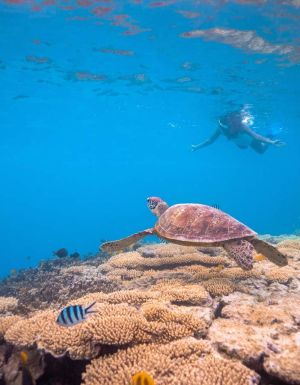
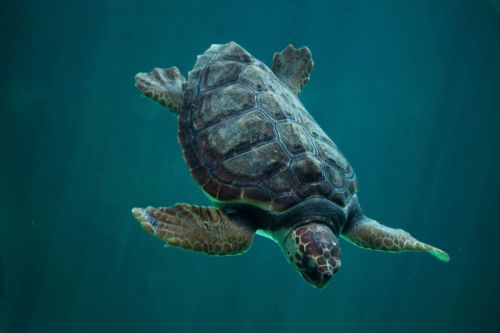
Like 95 per cent of local nesters, she’s a loggerhead, a huge-headed beast with a barnacled browny-yellow shell. A quick check of her tagged flipper – she swings her beak sideways in passing irritation – confirms she was first tagged in 1998, making her at least 50 years old (they first nest at about 30).


This is her second clutch (of four, on average) this season but it’s in serious trouble: she’s laid below high-tide and saltwater dunkings are lethal. “They’re creatures of instinct," explains Cathy. “Their behaviour isn’t learned and sometimes they just get it wrong."


On prehistoric automatic pilot, the turtle’s indifference to us is astounding. Bereft of fight or flight instinct, she starts to lay, and we each have a close-up view of the wet, white eggs slipping from leathery hindquarters into the sand-pit. A below-tide nest would be doomed on another beach, but already rangers and trained volunteers are egg-chambering up in the tussocked dunes, scooping out a safe house beyond the waves.


Finished, the turtle covers up and, puffing and flailing, readies to aim seaward. The rangers waste no time digging up the 101 eggs. There’s a literal deadline – after two hours, handling will tear newly formed embryonic membranes, with fatal consequences.

Need tips, more detail or itinerary ideas tailored to you? Ask AT.

AI Prompt

Helping to move the eggs

“Who wants to help relocate the eggs?" Cathy asks. Uh, that’d be everyone. We’re handed two eggs each, soft leather ping-pong balls, which we reverently carry to the alternative nest, then follow Mama Turtle rowing herself down the beach. When she hits the waves, everyone breaks into spontaneous, heartfelt applause.


It’s 9.30pm and most people are satisfied, but the show goes on for rangers, scientists and diehard sightseers. Later, walking along the sand with ranger Shane O’Connor, we spy a noticeably different turtle track.


“Looks like we’ve got a flatback," he says, tracing it to a dark-coloured turtle with a shell less domed than the loggerhead’s, and with an upturned rim. Largely tropical in range, flatback turtles are very rare arrivals here.


Shane gets on the radio to turtle expert Dr Col Limpus, somewhere along the beach. “He won’t wanna miss this."

Mon Repos turtles guy

Indeed, Col doesn’t miss anything on Mon Repos. He hasn’t missed a season since 1956 and began scientific research here in 1968. He’s behind many a famous turtle fact, such as the discovery that they return to their birthplace (or nearby) to nest.


He’s also worked tirelessly to save Mon Repos’s turtles from offshore shrimp trawling, feral foxes and even more feral property developers. Suddenly looming from the dark, portable ultrasound in hand, Col is delighted to find this isn’t just any flatback. It’s K10534.


“One of my superstars," he says; a source of much data. “She’s got one more clutch," he says, after examining the egg follicles. With laying done, 10 eggs are borrowed for weighing and measuring.


For all Mon Repos’s conservation triumphs, its loggerheads are at high risk of becoming fishing bycatch in South American waters, where they spend years before returning to nest. “Recruitment of youngsters is dropping off," Col points out. First-time nesters are rarely seen – most arrive already tagged – which suggests the species’ future remains precarious.


Meanwhile, 70 centimetres below the sand, 101 embryonic loggerheads are alive and well – thanks to us, which feels damn good. In a couple of months, they’ll pop up to scurry desperately seawards.


And maybe – just maybe – one will be that one-in-a-thousand survivor that hauls herself from Mon Repos’s gentle breakers three decades from now, drawn irresistibly across the Pacific to her birthplace to continue the prehistoric turtle dance of life.

Weekly travel news, experiences
insider tips, offers, and more.

Details: Mon Repos turtles, Bundaberg

Getting there: Mon Repos is a 15-minute drive east of Bundaberg, Queensland, or 10 minutes from the coastal town of Bargara.


Playing there: Turtle viewing at Mon Repos Regional Park runs between November and March each year during the hours of 7pm and 1am, by ranger-led, pre-booked tour. Hatching starts January.


Staying there: Offering one, two and three bedroom apartments, the luxury 4.5-star resort Manta Bargara is one of several beach-side bliss-out options along the Esplanade at Bargara.

Want to see more stories from Australian Traveller in your Google search results?

  1. Click here to set Australian Traveller as a preferred source.
  2. Tick the box next to "Australian Traveller". That's it.
hero media

Wine, dine and vintage gems: 8 things you didn’t know about Toowoomba

    Kassia Byrnes Kassia Byrnes
    There’s more to Australia’s Garden City than meets the eye.

    With Victorian-era and traditional Queenslander buildings, an abundance of manicured gardens and the famous Carnival of Flowers painting the streets in vibrant colours each spring, Toowoomba is one of the most charming regional cities in Queensland Country.

    While its beauty alone is reason enough to visit, there are lesser-known sides to Toowoomba that locals love most, from its burgeoning culinary scene to its artistic flair. Located just a 90-minute drive from Brisbane (or a direct flight from Sydney), it’s all too easy to discover on a long weekend away.

    1. There’s an awesome local arts scene

    tour group walking in front of toowoomba street art
    Find incredible works of art around Toowoomba’s streets. (Credit: Nathan McNeil)

    Australia’s second largest inland city is a flourishing arts and culture hub waiting to be discovered. Over 100 vibrant street art murals and graffiti works decorate the city, and they’re best viewed along Bank Lane and Searles Walk.

    Regional Queensland’s oldest public art gallery can also be found in Toowoomba – it’s home to 20th-century Australian works created by Queensland artists and those connected to the Toowoomba region.

    2. It has world-class farm-to-table dining

    rosalie house aerial toowoomba secrets
    Stop into Rosalie House to wine and dine.

    As a regional city, Toowoomba has direct access to incredibly fresh produce that’s shaping its culinary scene. At sunset, head to the verandah at Rosalie House Cellar Door Restaurant for a grazing-style dining experience and to discover Queensland’s underrated wine scene. Indulge in dishes such as Warilba lamb rump and roasted pumpkin with ginger-roasted potatoes and lime yoghurt, paired with their delicious cool-climate wines.

    For a more relaxed affair, sweet tooths should make a beeline for award-winning The Baker’s Duck. Be sure to try their cult favourite strawberry cheesecake danish; you’ll learn why 35,000 of these treats are sold annually.

    3. Small bars are doing big work

    table spread at Uno Más small bar in toowoomba secrets
    Pop into small bars like Uno Más.

    Toowoomba doesn’t disappoint with fantastic pubs, but discerning drinkers can take happy hour to the next level at one of the city’s impressive small bars. Savour Spanish-style bites paired with a thoughtful line-up of wines at the newly opened Uno Más Tapas & Wine Bar. On Thursdays, head to Cork & Lever to tap your feet to live music over creative cocktails made with their all-Australian gin collection. And enjoy elevated toasties and premium drops at the cosy Press’d Coffee & Wine. Or try newly opened The Book Pour.

    4. There’s no shortage of fabulous stays

    Bunnyconnellen
    Chill out in beautiful surrounds at Bunnyconnellen. (Credit: Salt Media)

    Whether you prefer the buzz of the city centre or retreating to the hinterland, there are stylish stays aplenty to settle into in this idyllic corner of the world. Apartment-style living can be found at Quest Toowoomba; partly housed in a heritage church building in the city, it’s a comfortable and convenient base. And at The Arbour Boutique Apartments, spacious rooms are injected with old-world charm.

    In the hinterland, enjoy bucolic bliss at the boutique Bunnyconnellen, where an 1880s farmhouse and self-contained cottage are backdropped by rolling hills. And at the secluded Ravensbourne Escape, one-bedroom studios, two-bedroom chalets and three-bedroom holiday homes overlook Ravensbourne National Park and the Brisbane and Lockyer Valleys.

    5. It’s a nature-lovers paradise

    extinct volcanic peak Table Top Mountain
    Tackle Table Top Mountain. (Credit: Ariana Potamianakis)

    Toowoomba is hugged by national parks, making it a haven for nature lovers. On its doorstep you’ll find the extinct volcanic peak Table Top Mountain, where keen hikers can tackle the challenging two-kilometre return trail which rewards them with 360° views of the Lockyer Valley and surrounds.

    For a more gentle experience, Ravensbourne National Park offers peaceful walking trails within lush rainforest. It’s a top spot for bird watching as there are over 110 bird species that call the area home, including the paradise riflebird. Crows Nest National Park is home to platypus and koalas, and its refreshing natural swimming spots, like Kauyoo Pool, are a great place to beat the heat.

    6. Wellness enthusiasts are well looked after

    Toowoomba’s cool and calm energy lends itself to a wellness-focused getaway. Slated to open in August 2026, soak in the serenity at Vikasati Toowoomba, a bathhouse oasis with outdoor hot and cold magnesium pools, ice baths and Finnish saunas. Rest and recharge at City Cave Toowoomba, which offers float therapy, infrared sauna and massage services, or visit Kalm Springs for LED therapy, cryotherapy and float therapy.

    7. It’s preserved its 19th-century charm

    inside Queensland Museum Cobb + Co
    Learn all about the history of Cobb+Co.

    History buffs can step back in time at Toowoomba’s fascinating cultural and historical museums.

    Explore 50,000 years of Darling Downs and Toowoomba history at the Queensland Museum Cobb+Co; it’s known for its impressive National Carriage Collection of 47 restored horse-drawn vehicles, which were put to use for Queensland’s urban expansion. Visitors can also try their hand at blacksmithing or leadlighting in heritage workshops, refuelling with traditional scones at the onsite cafe.

    Train enthusiasts can celebrate the golden era of rail travel on a heritage steam locomotive thanks to the volunteer-driven, community-led organisation DownsSteam Toowoomba. Vintage train rides range from a two-hour journey between Toowoomba Station and DownsSteam Railway Museum to an overnight adventure from Toowoomba to the Southern Downs and Granite Belt

    8. There are vintage gems waiting to be found

    Whether it’s to pick up a unique piece for your home or a one-of-a-kind accessory for a loved one, you’re guaranteed to find something special in one of Toowoomba’s antique and vintage stores. Range Antiques sells everything from furniture, rugs and lamps to fine porcelain, jewellery and art, while Toowoomba Antiques & Collectables is a treasure trove of Art Deco, farmhouse, retro and mid-century modern pieces.

    Start planning your weekender of a lifetime in Queensland Country region at queenslandcountrytourism.com.au.