hero media

It’s dingo pup season on K’gari: here’s the safety advice you need to know

Credit: Reuben Nutt

K’gari is a slice of paradise, but it’s important to be aware of the local wildlife.

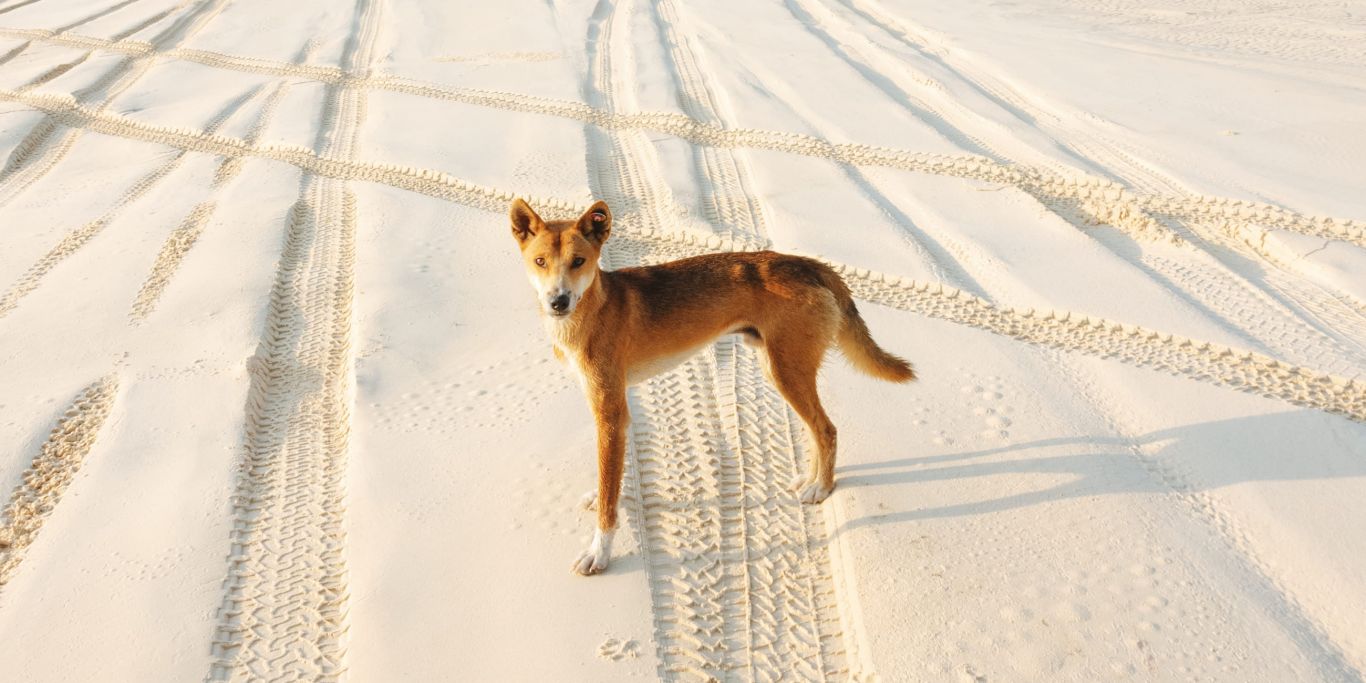
K’gari is one of the most beautiful islands in Australia – float in remote swimming holes, hike through lush rainforests, take exhilarating 4×4 drives on white-sand beaches and dive into a crystalline perched lake. But among all this beauty lives the island’s wild dingo population. They may resemble a pet dog, but as opportunistic scavengers and hunters, the apex predators play a key role in maintaining the island’s ecological balance. Sadly, there have also been tragic encounters between travellers and dingoes.

This has prompted the Queensland Government’s Department of Environment and Science to issue a fresh warning to families travelling to K’gari during school holidays to be aware of an increased safety risk when encountering dingoes at this time of year.

Having been there very recently myself, I want to make it clear that with a little awareness and following simple safety protocols, seeing a dingo in the distance is a small thrill, rather than a scary experience. Just as it is with crocodiles in the north of Australia, or bears in Canada.

Here’s what you need to know to remain safe around K’gari’s dingo population while enjoying this beautiful part of Australia.

What is the increased risk?
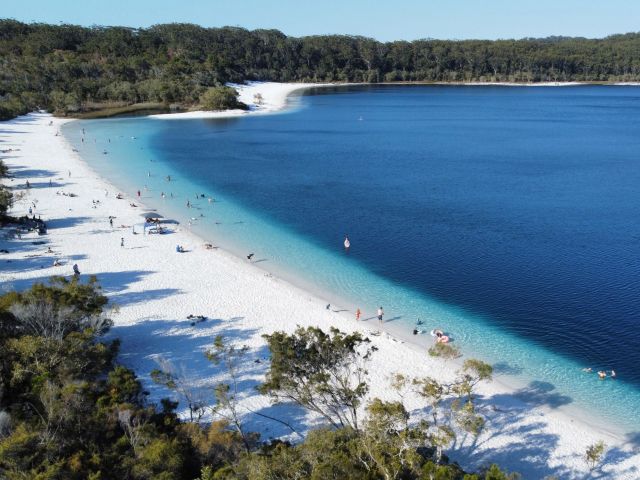
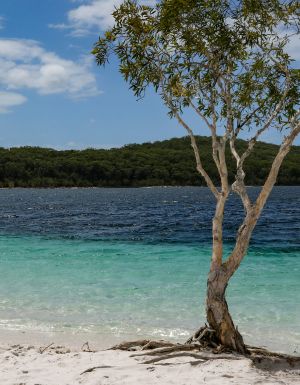
beach goers on Lake McKenzie k'gari
Don’t let the news headlines deter you from visiting this beautiful place. (Credit: Geoff Aquino)

In a nutshell, most incidents between humans and dingoes occur during spring, when there are more dingo pups running around. Their protective mamas are also foraging further afield to feed their young, so visitors are more likely to come into contact with them.

How to stay dingo-safe on K’gari
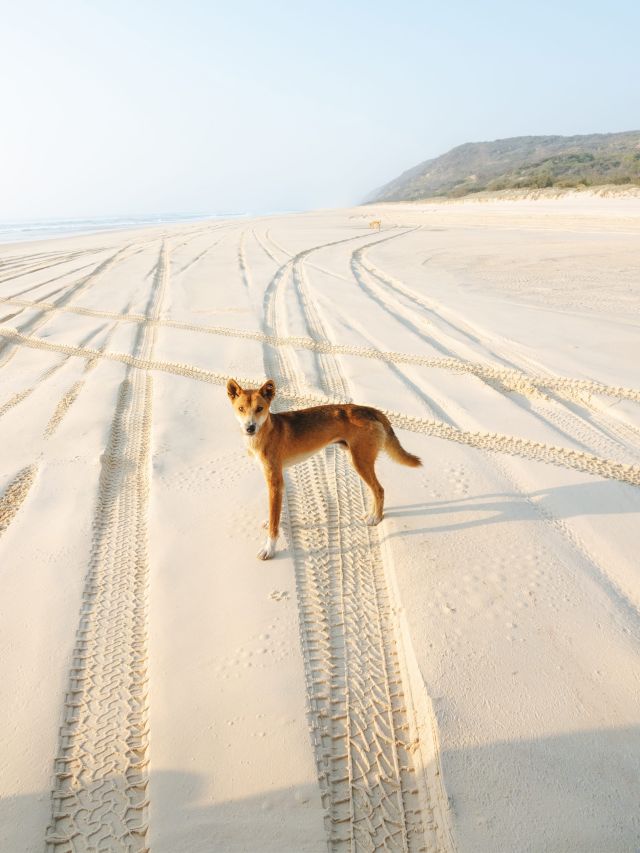
dingoes on k'gari
More vigilance is required during pup season. (Credit: Reuben Nutt)
  • For starters, never feed the dingoes. That includes keeping all food locked up when you’re not eating, even on a boat.
  • Make sure all your rubbish, fish and bait are secured so they can’t be accessed by dingoes.
  • And never store food, food containers or anything that might smell like food in tents.
  • Always stay in a group. If you’re travelling with kids or even young teenagers, that’s especially important as they can be easier targets for dingoes. Keep them within arm’s reach at all times.
  • You’ll see signs around K’gari warning visitors to carry a stick. Follow these guidelines, as that stick can help ward off a dingo that gets too close.
  • Sleep in a fenced-in area wherever possible. The island’s hotels, like Kingfisher Bay Resort, have fences. Not all campsites do, so be mindful, especially during this spring period.
  • If you do come across a dingo, do not run. As with a lot of wild animals, running or even jogging can trigger a prey response in dingoes.
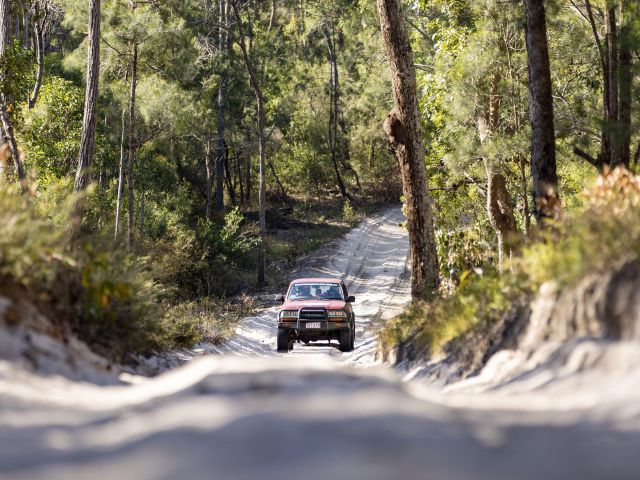
Book one of several tours to explore the island. (Credit: The Edit Suite)

Additionally, the Department of Environment and Science have said Queensland Parks and Wildlife Service (QPWS) rangers will be on the ground, ready to offer advice and guidance during the school holidays period.

You can also check the government’s website for more in-depth details on understanding dingo behaviour before you go. And if you’re still feeling too nervous to explore on your own, there are several incredible guided tours to help you comfortably see more of K’gari with a local operator.

Armed with the right information and careful planning, there is no reason you can’t remain safe while holidaying on K’gari.

Want to see more stories from Australian Traveller in your Google search results?

  1. Click here to set Australian Traveller as a preferred source.
  2. Tick the box next to "Australian Traveller". That's it.
Kassia Byrnes
Kassia Byrnes is the Native Content Editor for Australian Traveller and International Traveller. She's come a long way since writing in her diary about family trips to Grandma's. After graduating a BA of Communication from University of Technology Sydney, she has been writing about her travels (and more) professionally for over 10 years for titles like AWOL, News.com.au, Pedestrian.TV, Body + Soul and Punkee. She's addicted to travel but has a terrible sense of direction, so you can usually find her getting lost somewhere new around the world. Luckily, she loves to explore and have new adventures – whether that’s exploring the backstreets, bungee jumping off a bridge or hiking for days. You can follow her adventures on Instagram @probably_kassia.
View profile and articles
hero media

Can’t handle the cold? Hamilton Island serves a slice of summer in winter

(Image: Hamilton Island)

When the winter chill settles in, an escape to Hamilton Island’s year-round tropical shores is the only acceptable coping mechanism.

As a heliophile with the cold tolerance of a Mediterranean house cat, the arrival of winter tends to spark a particular panic. How will I survive? Must I really start layering? What do you mean, Aperol season is over? But there are far better ways to spend the cooler months than sulking in the depths of your doona.

Enter, Hamilton Island. With its year-round sunshine and permanent on-holiday atmosphere, this Whitsundays favourite promises a veritable slice of summer in winter.

Think salt-stiff hair and the smug pleasure of devouring seafood beside the water while friends back home are defogging their windscreens. Here’s why Hamilton Island should figure into your winter plans.

1. Year-round summer weather

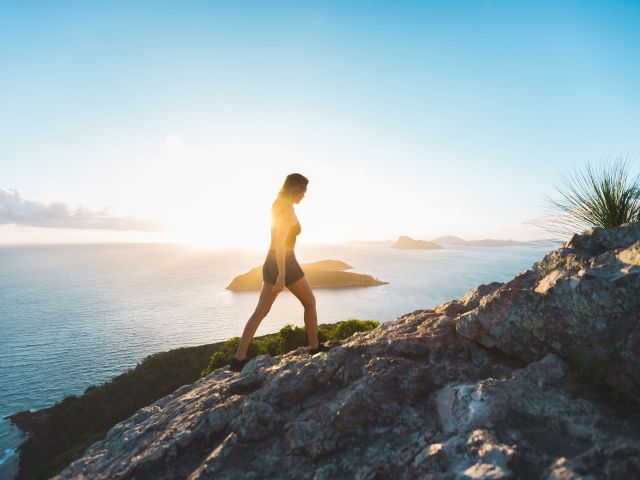
A woman hiking along the Passage Peak trail on Hamilton Island.
Hike under sunny winter skies on Hamilton Island. (Image: Andrew Caitens)

In the crisper months, Hamilton Island offers perfectly mild, sunny weather (17-24°C) that lends itself to morning swims and afternoon spritzes. Better still, you can enjoy the island’s outdoor adventures – from hiking to mountain biking – without the humidity or rain you’ll often find in summertime. With direct flights from most major Australian cities offering ease of access, Hamilton Island is the ideal place to flee the cold.

2. Getting active without the humidity

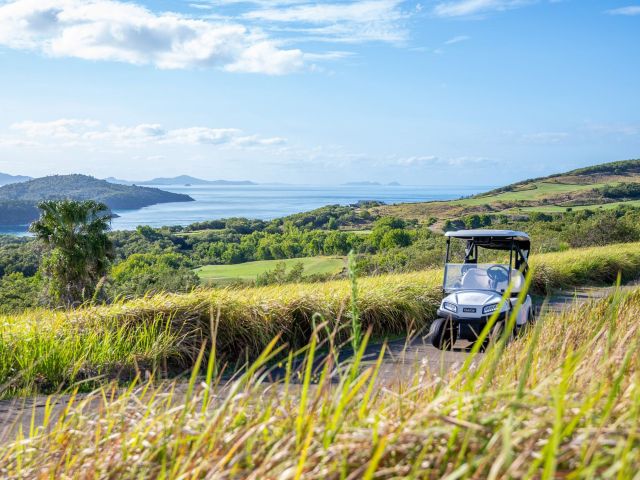
A buggy parked overlooking Hamilton Island’s golf course, with sweeping views of the sea at Whitsundays in winter.
Zip around Hamilton Island by buggy. (Image: Hamilton Island)

Whether you’re hiking up to Passage Peak or exploring the island by buggy, tropical Queensland humidity is nobody’s friend. The one way to guarantee you will avoid the inevitable stickiness and fluffy hair? Visit during winter. There’s plenty to be enjoyed, from sunrise yoga at The Sundays (exclusive to guests of The Sundays) to playing golf on Dent Island.

3. Hamilton Island Race Week

Yachts racing across the sparkling Whitsundays during Hamilton Island Race Week.
Feel the thrill of Hamilton Island Race Week. (Image: Salty Dingo)

Taking place in August, Hamilton Island Race Week is a destination in its own right that attracts spectators and racers from around the globe. Boating enthusiasts and thrill-seeking holidaymakers flock to the island, which is palpably energetic as the first yachts set off for Dent Passage from Hamilton Island Yacht Club. The annual action-packed week, taking place from 15 to 22 August in 2026, offers an exciting calendar of on- and off-water events – spanning everything from celebrity chef dinners to golfing comps and wine tastings.

4. Best time for snorkelling

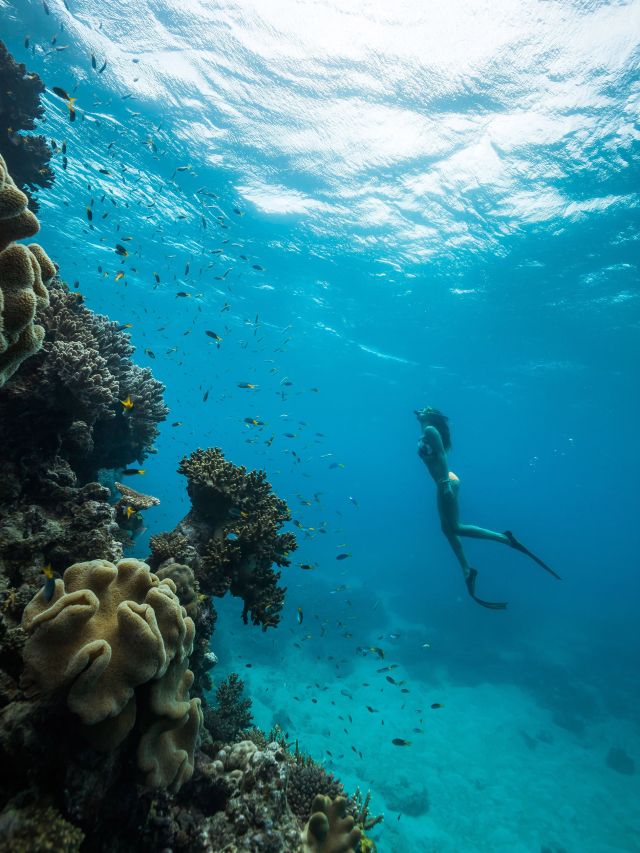
A woman snorkelling in the crystal-clear waters of the Great Barrier Reef.
Explore Hamilton Island’s winter waters. (Image: Andrew Caitens)

While the crowds on Hamilton Island may disperse with the cooler weather, the marine life certainly doesn’t. Winter is widely considered one of the best times to snorkel and dive in the Whitsundays.

It’s down to a number of reasons: excellent water visibility, higher chances of seeing whales as they migrate north and – best of all – no nasty stingers. This means no need to wear those notoriously unflattering full-body wetsuits visitors have to wear in warmer months. On top of all this, you’ll find calm seas ideal for sailing and Great Barrier Reef tours.

5. Fewer crowds

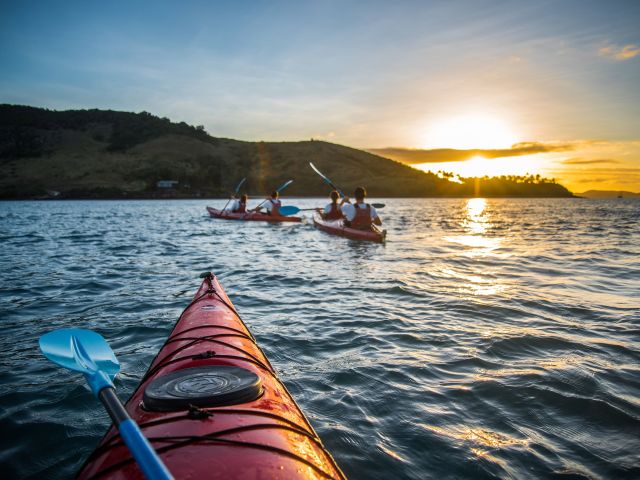
People kayaking.
Experience a quieter Hamilton Island on a kayaking adventure. (Image: Hamilton Island)

Winter is often the quietest time to visit Hamilton Island, with the peak season crowds thinned to a relaxed trickle. You can snorkel or dive straight off the reef-laced waters of Catseye Beach, then swap fins for a buggy and zip between One Tree Hill, the marina and sunset cocktails without the usual summer queues. Active days stretch from kayaking, sailing and jet skiing to hopping over to famous Whitehaven Beach to witness those breathtaking white swirls of silica sand. You won’t have to elbow your way to the front of the crowd to get a good snap.

6. Delicious dining

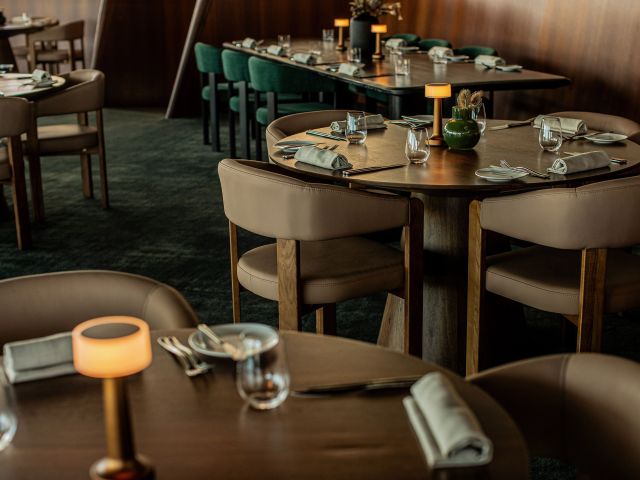
The interiors of Bommie Restaurant, featuring modern coastal design with warm lighting and elegant detailing.
Treat yourself to Bommie Restaurant’s fine dining featuring fresh, seasonal Aussie produce. (Image: Nikki To)

The food on Hamilton Island tastes just as good any time of year, and winter is still perfect weather for sundowners. Start with an iced tea Negroni at harbourside Bommie Deck, before transitioning to Bommie Restaurant for a fine-dining feast centering on seasonal Aussie ingredients. Or perhaps enjoy a more casual poolside evening at Sails Restaurant, where plates of chermoula chicken skewers, baked cauliflower steak and crispy sumac squid come served with ocean views. From family-friendly pub meals to elevated wine tastings, there’s something for everyone.

5. Clear skies for idyllic views

The golden hour across the Whitsundays in winter.
End your day with golden Hamilton Island sunsets over the water. (Image: Hamilton Island)

Never let a cloud rain on the parade of Hamilton Island’s spectacular scenery. Winter brings clearer skies and more stable weather to the Whitsundays, meaning your picture-perfect sunset at One Tree Hill is likely to remain that way. And after putting in the legwork to hike to a scenic lookout, the last thing you want is a vista hidden behind low cloud and haze.

To learn more about travelling to the Whitsundays in winter, visit hamitlonisland.com.au.