Only 40 people a day can hike Australia‘s largest island national park

hero media
Just 40 people are permitted to camp on this idyllic island at any one time.

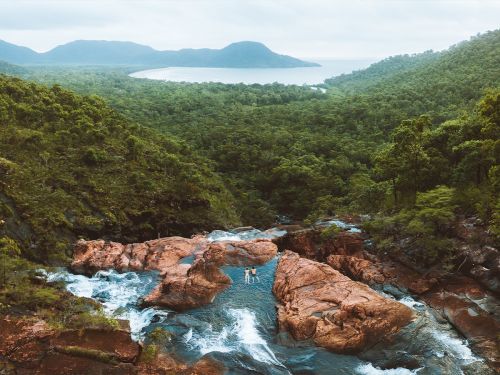
Australia is home to many spectacular national parks. From the vast Uluṟu-Kata Tjuṯa National Park to the lush Daintree, a diverse range of landscapes offers unique experiences for nature lovers, adventure seekers and cultural enthusiasts alike. Australia’s largest island national park, Hinchinbrook Island, offers verdant peaks, golden shores, expansive mangroves and cascading waterfalls just waiting to be explored. 

Where is Hinchinbrook Island
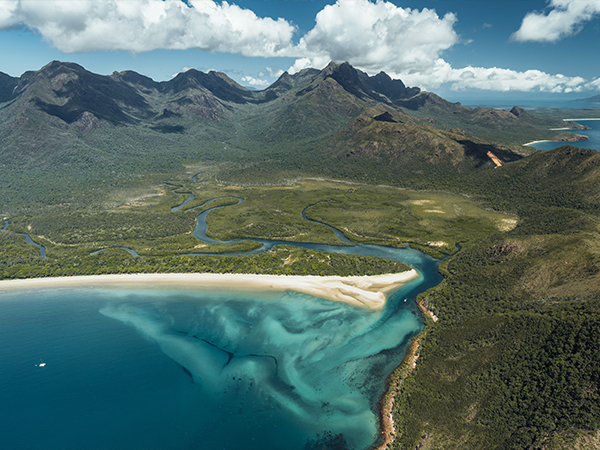
An aerial view of Hinchinbrook Island.
This lush island lies approximately eight kilometres offshore. (Image: Tourism and Events Queensland)

Hinchinbrook Island is located in Tropical North Queensland on the Cassowary Coast Region. Sitting between Cardwell and Lucinda, it’s separated from the north-eastern coast of Queensland by the narrow Hinchinbrook Channel and lies approximately eight kilometres offshore.

How to get to Hinchinbrook Island
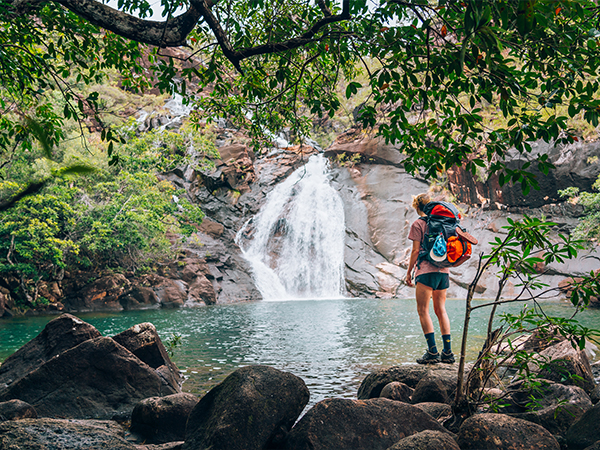
A waterfall on the The Thorsborne Trail.
The Thorsborne Trail is one of Queensland’s great multi-day hikes. (Image: Tourism & Events Queensland)

You can reach Hinchinbrook Island by an approximately one-hour ferry ride from either Lucinda or Cardwell, or by private vessel. Absolute North Charters offers daily ferry rides from Lucinda to the northern and southern ends of Hinchinbrook Island as well as from Cardwell to Ramsay Bay the northern access point for the Thorsborne Trail. There are no cars on this 393 kilometres-squared island, so the main way to get around is either on foot or by boat.

Things to do on Hinchinbrook Island

This uninhabited destination welcomes a maximum of 40 hikers and campers at any one time and is a playground for wildlife and nature enthusiasts. 

Thorsborne Trail
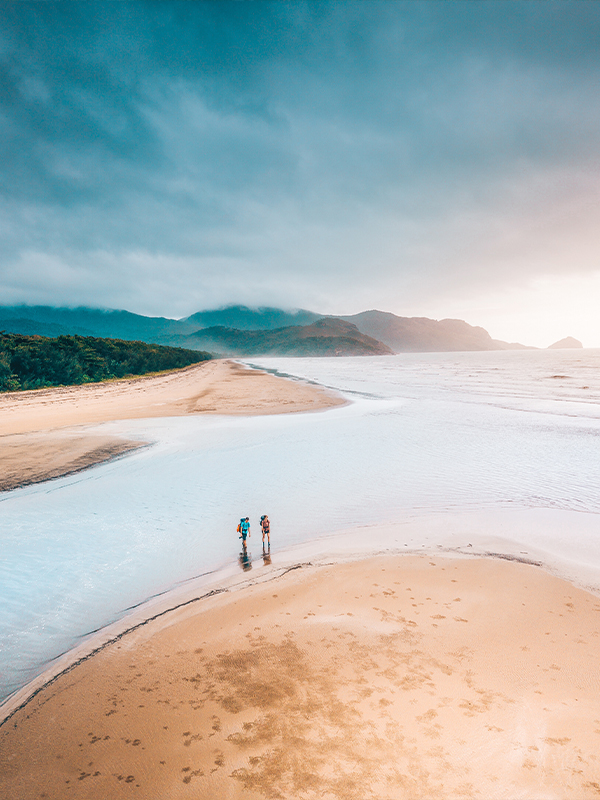
An aerial view of the beaches at Hinchinbrook Island.
The hike takes you to secluded beaches. (Image: Tourism and Events Queensland)

The hiking season runs from 1 March to 31 December each year, and the 32-kilometre Thorsborne Trail is both the island’s most popular activity and one of Queensland’s greatest multi-day hikes. The hike takes you through lush rainforests, past mangrove swamps, over rocky headlands and to secluded beaches. Reaching an elevation of 939 metres, this challenging hike typically takes three to five days to complete. However, it can be done in a single day, with an average walking time of around eight and a half hours from start to finish.

There are designated camping areas with toilets along the way and a maximum of two nights’ stay per site for $7.25 per person per night. Permits and campsite bookings are required and can be obtained through the Queensland Parks and Wildlife Service .

Those who don’t want to commit to the entire hike can choose to undertake a specific section. The Ramsay Bay to Little Ramsay Bay route spans five kilometres of rocky headlands and sandy beaches, while the 4.8-kilometre Ramsay Beach to Nina Bay walk, which includes a rocky ascent of Nina Peak, offers rewarding views stretching over Missionary Bay.

It’s worth noting that dogs are not allowed on the trail, and to make sure to be aware of saltwater crocodiles and marine stingers. Check the QWildlife app for recent crocodile sightings.

Zoe Falls

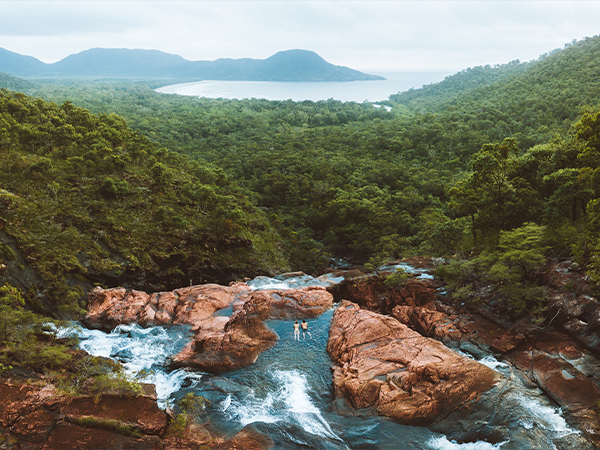
An aerial view of Zoe Falls.
Zoe Falls is one of Australia’s most beautiful natural pools. (Image: Tourism & Events Queensland)

Also accessible via the Thorsborne Trail is the spectacular Zoe Falls, one of the most photographed spots on the island. A cascading series of waterfalls flows into a crystal-clear freshwater pool that’s surrounded by rainforest. 

At the top of the falls, you’ll find a stunning infinity pool with pristine waters, perfect for a refreshing splash, along with sweeping views of Zoe Bay and the Coral Sea. Access to the pool requires a short but steep climb from the base of the falls.

Those not wanting to undertake the full Thorsborne Trail hike can access the falls via a 30-minute walk from the Zoe Bay campground. There are picnic tables at the site for a post-swim snack.

Wildlife and bird watching

The island offers excellent opportunities for wildlife spotting. Keep a keen eye out for endangered dugongs and turtles, saltwater crocodiles, and a variety of seabirds such as Brahminy Kites, honeyeaters, and White-breasted Sea Eagles.

Rachael Thompson
Rachael Thompson is Australian Traveller's Evergreen Editor and a self-proclaimed cheese and Chablis connoisseur. In her role, she creates and manages online content that remains relevant and valuable over time. With a background in publishing and e-commerce in both interior design and travel, Rachael is dedicated to curating engaging content that informs and inspires. She began her career at Belle magazine, then went on to become Senior Content Producer at Homes to Love focusing on Australian House & Garden and Belle, followed by Editor at Bed Threads. Her work has also appeared in Qantas Travel Insider. When she's not writing, editing, or optimising content, Rachael enjoys exploring the city's newest restaurants, bars, and hotels. Next on her Aussie travel wish list are Uluṟu-Kata Tjuṯa National Park and Lord Howe Island.
See all articles
hero media

An insider’s guide to Noosa’s best-kept winter secrets

As the cooler weather rolls in, head to this popular Sunshine Coast destination to enjoy stunning natural beauty, culinary wonders and mild temperatures.

As southern Australia’s weather starts to cool – the frost visiting every morning and the evening chill descending at dusk – you might reach for your thickest cable knit sweater and warmest blanket. But why not reach for your suitcase and sunglasses and book a ticket to Noosa in winter instead?

Sure, it’s a favourite destination for sun-seeking summer travellers. But as locals will readily tell you, winter is the best time to uncover hidden gems across the region – not only is the weather mild and enjoyable, but the beaches and hinterland are picture-perfect, too. You might even spot a whale or two if you visit from June to September.

Discover how to spend your winter surrounded by Noosa’s stunning natural beauty.

Noosa Rivermouth And Main Beach
Make the most of mild temperatures of Noosa in winter.

Where to eat in Noosa

Known for its dynamic cuisine, Noosa is an overflowing foodie destination. Whatever your tastebuds fancy, the region has it covered.

There are the classic eateries, like lively beachfront Bistro C (try the caramelised pork belly), popular Season Restaurant on Hastings Street (order the spanner crab pasta) and stylish Locale (our pick is the slow roasted White Pyrenees lamb shoulder).

There are also chic new restaurants offering tasty dishes, like the Mediterranean fare at Pelis , Cantonese-inspired dim sums at Sabrosa , organic sourdough pizza from El Capitano , traditional recipes and tequila at Dona Cocina Mexicana and modern Italian-Australian creations from Lucio’s Marina .

diners at Lucio's Marina in noosa in winter
Taste modern Italian-Australian at Lucio’s Marina. (Image: Nickolas May)

Where to stay in Noosa

Once you’re full, you’ll need to find a place to lay your head, and Noosa has no shortage of accommodation options. From five-star resorts with palm-fringed lagoon pools to self-catered apartments and family-friendly budget options, stays in the heart of the action on Hastings Street to sleeping steps from the beach or in more spacious and relaxed accommodation along the river, Noosa offers something for everyone.

There’s the laid-back luxury of Netanya Noosa overlooking Noosa Main Beach, which offers studios, two- and three-bedroom apartments, or the family-oriented Ivory Palms Resort in Noosaville, with its three pools, jumping pillow and playground. Guests also love the versatile RACV Noosa Resort and its numerous pools, waterslides and tennis courts.

For a wildlife experience, hop on a ferry and travel to the eco-friendly Senses Noosa North Shore . Surrounded by 16 hectares of native bushland, the beautiful architect-designed property blends indoor and outdoor living and offers three stunning pools and a spa. Guests can even spot kangaroos and rainbow lorikeets from shaded verandahs.

a beachfront swimming pool at Netanya Noosa
Gaze over Noosa Main Beach at Netanya Noosa. (Image: Lumea Photo)

Things to do on land

There’s no denying it, the main beach – with its creamy-coloured sand, consistent breaks and epic coastline views – is Noosa’s shining star attraction. Bordering this is the wildly popular Noosa National Park, where you can explore over 15 kilometres of walking tracks, including options like the Coastal Walk, Tanglewood Walk and Palm Grove Walk.

A short stroll away is busy Hastings Street, which is full of life during the day and long into the night. Enjoy a little shopping, a late brunch, dinner out and a cocktail as the sun goes down.

Climb onto a fully electric tuk tuk with Noosa e-TukTuk to get an insider’s tour of the region. For a more in-depth exploration, book a bespoke tour with Joel’s Journeys and head to the lush green hinterland, or discover the rugged landscapes of Great Sandy National Park with Sunny Jeeps to spend the day with the wind in your hair and sand underfoot.

woman enjoying the view after hiking through Noosa National Park, noosa in winter
Take in views of the beautiful Noosa Hinterland. (Image: Demy Gavin)

Things to do in the water

Noosa isn’t just about the beach, the national parks and shopping; one of the most popular ways to embrace winter is to explore on water.

You could brave the waves on a surfboard, explore the languid Noosa River on a stand-up paddleboard or even head to the Noosa Everglades for a day adventuring on a boat, canoe or kayak.

Enjoy the winter sunsets aboard the newly launched HV Stillwater , a luxury, hybrid-powered catamaran that glides silently along Noosa’s waterways. You can also book a table on the only floating restaurant on the river – Noosa Cruiser – and dig into freshly cooked cuisine.

For a little more adventure, head out with Kingfisher Safari Co and cruise around the Noosa River Inlet and Lake Cootharaba. Or search for whales and dolphins (from June to September) on a small charter boat tour with WhaleSongs Noosa ; with an onboard researcher to explain what you’re seeing, as well as a hydrophone, you’ll be able to listen to the haunting songs of some of the world’s biggest animals while enjoying a winter’s day in the sun.

women kayaking through Noosa everglades noosa in winter
Explore the gorgeous Noosa Everglades. (Image: Emily Redfern)

Book your winter getaway in Noosa at visitnoosa.com.au.