This giant coral chest could save the Great Barrier Reef

hero media
If one of the world’s most important ecosystems fails, this clever insurance policy may prove to be its saving grace; take a look inside the world’s first living coral biobank.

It’s the most peaceful nursery I’ve ever seen. Never mind that the babies constantly feed, incessantly tussle and never properly go to sleep. But, then again, it’s hard to sleep when you don’t have a brain.

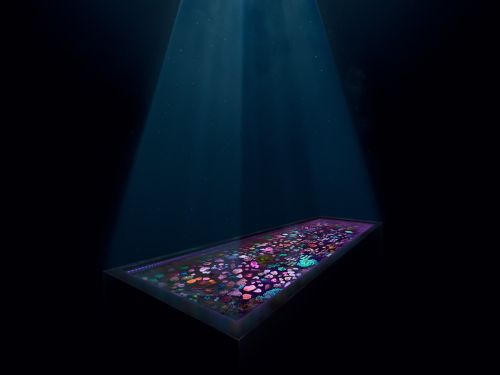
In three raised ‘cribs’ in the Cairns Aquarium, 392 small pieces of coral resembling tiny trees, sticks of scored calamari dipped in beetroot sauce, and clumps of marshmallow-pink hair billowing in the breeze sit neatly side by side. Attached to metal plates, they grow bigger and stronger every day, thanks to their uncanny ability to clone themselves.

Maintaining life inside a coral chest

The corals live a charmed life, gently rocked by a wave machine, cleaned regularly by their fishy friends, and made to feel at home with lights that mimic sunrise, sunset and cloud cover over the Great Barrier Reef. The only bother is when their neighbour gets too close and they offer a backhanded sting to mark their territory.

“Hmm, we might need to move that one," observes our guide Makayla Grady, as her discerning eye notices the thin tentacle of a fluoro-green coral giving its tank-mate a swift whip on the backside (in a Chucky-like twist, this kind of nursery play can result in fatalities). “We love them, but they can get a bit competitive."
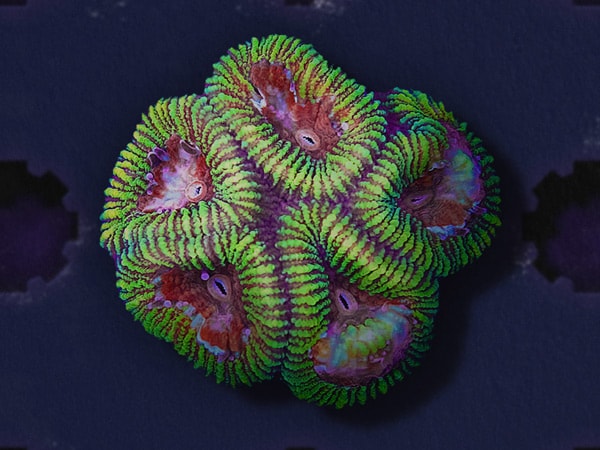
a coral fragment in the Forever Reef Project
Fragments of mature corals from the Great Barrier Reef blossom in the Cairns Aquarium.

Though the little corals in front of us are animals, akin to an upside-down jellyfish – or, most commonly, hundreds or thousands of animals called polyps clustered together, who are peas in a pod with their algal best mates called zooxanthellae (what were their parents thinking) – they’re not babies as such.

Rather, they’re fragments of mature corals living on the Great Barrier Reef, surgically removed by a team of divers (don’t worry, the upside of no brain is no pain), then DNA tested and microchipped like the family dog, so it’s clear who they are and where they come from.

The state-of-the-art nursery they’re subsequently placed in is the world’s first living coral biobank – a facility designed to insure one of the world’s natural wonders. Because, as most of us are aware, climate change is posing a significant threat to reefs worldwide, and time is running out.
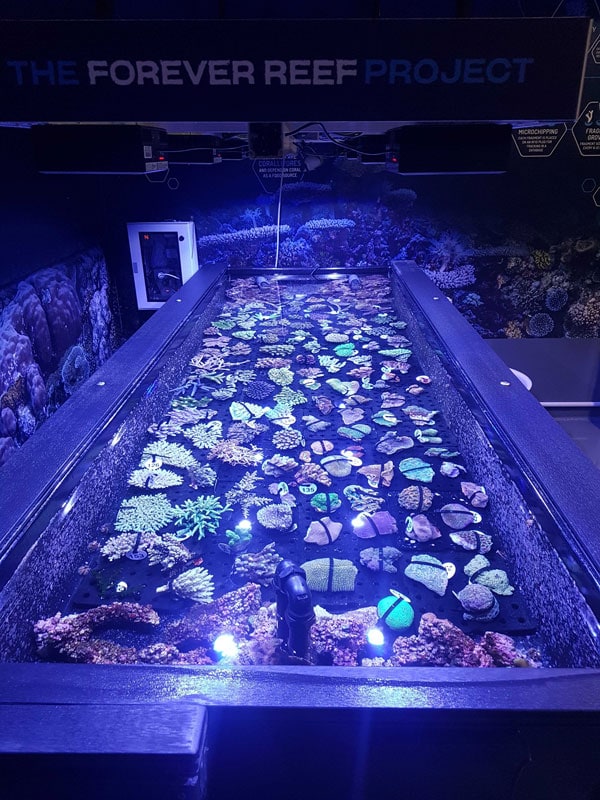
the most recent coral collection for the Forever Reef Project
The recent coral collection is secured in the quarantine tank.

A giant ‘coral ark’ in the making

The Cairns living coral biobank, established as part of the Great Barrier Reef Legacy’s Forever Reef Project , aims to ultimately protect all 415 species of hard coral on the Great Barrier Reef, later expanding to include soft and international corals. The full collection is planned to lodge in a giant ‘coral ark’ (inspired by Noah) in Port Douglas, with smaller biobanks run by traditional owner groups dotted along Queensland’s coastline.
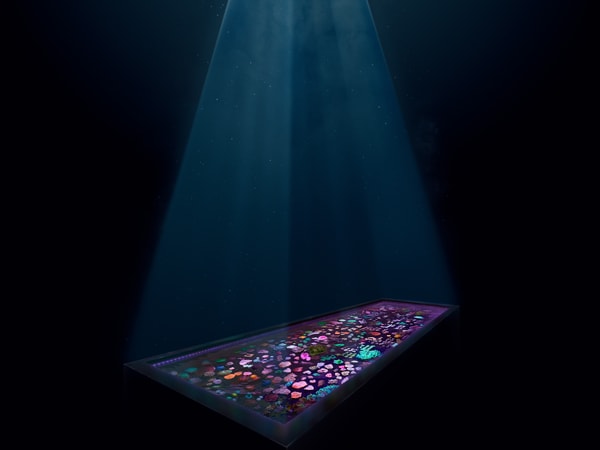
the Forever Reef Project coral facility
The coral specimens are preserved in a living ‘coral ark’.

In a similar vein to the seed vault tucked into a snowy mountain in the Norwegian archipelago of Svalbard – a repository for millions of important seeds from around the world – the biobank will keep our precious corals safe, and they can be replanted on the reef if things go belly up in the big blue.
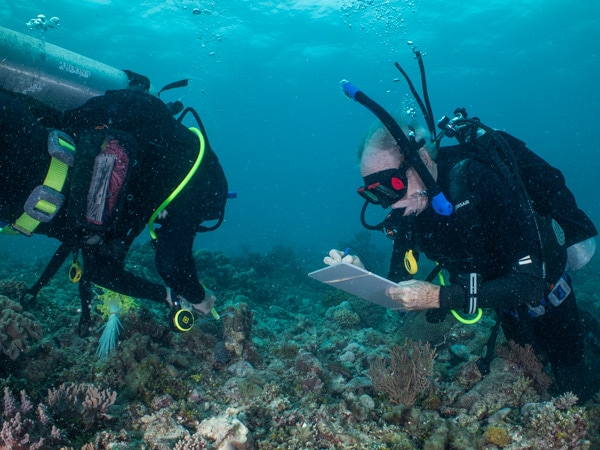
collected corals being brought up to the vessel
Divers bring coral specimens to the vessel.

Biobank tours at Cairns Aquarium

Though the giant ark is still a few years away, the Cairns Aquarium is letting visitors get acquainted with the biobank by offering 30-minute tours through its on-site holding facility. The aim is to help people understand more about the fascinating, but arguably underrated, creatures that underpin the entire ecosystem of the Great Barrier Reef. In short, without coral, the aquatic empire breaks down, impacting everything from the fish, to the sharks, to the whales, to the adorable pygmy seahorses.
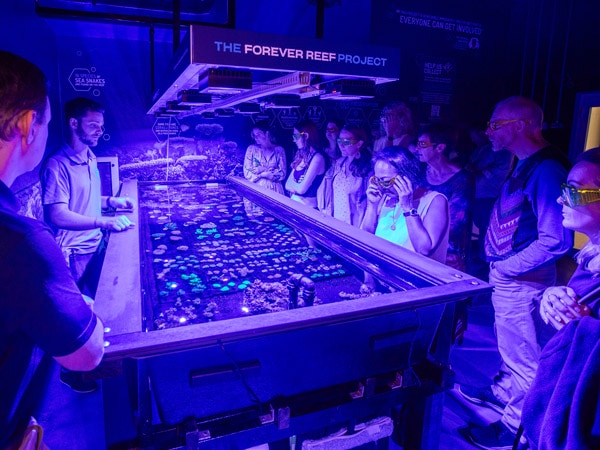
the world's first behind-the-scenes tour of A Living Coral Biobank (the Forever Reef Project)
Visit the world’s first living coral biobank in Cairns.

The ongoing threat to the Great Barrier Reef

Despite their indisputable importance, the flamboyant gardens that landscape the sea received little attention until a mass bleaching event on the Great Barrier Reef in 2016 highlighted their fragile nature.

“Pre-2016, the only real questions I got asked [from guests] were where to find Nemo or how long a turtle lives for," says Great Barrier Reef Legacy operations manager Paul Myers, who has spent 15 years on the reef as a dive instructor. “After the biggest bleaching event on record, the questions became a lot more educated and were more centred around, ‘tell me about the health of the reef, tell me about coral bleaching’."
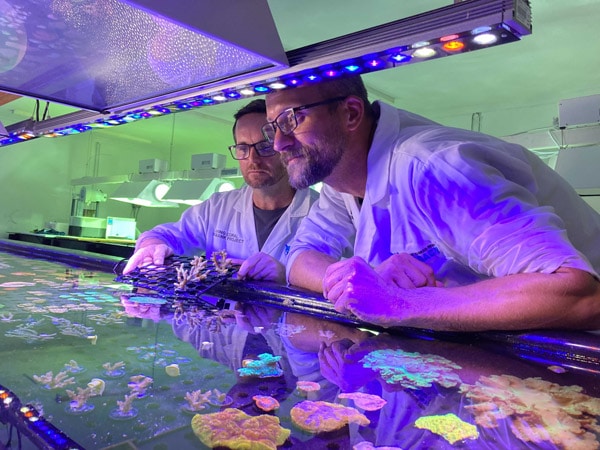
Paul Myers and Cameron Bee inspecting corals in the facility
Paul Myers and Cameron Bee inspect corals in the facility.

Though bleaching became a hot topic, the nuances of the corals it impacted remained largely elusive, with Dr Charlie Veron, a key collaborator on the Forever Reef Project, still one of the few people worldwide who can identify corals to a species level underwater.
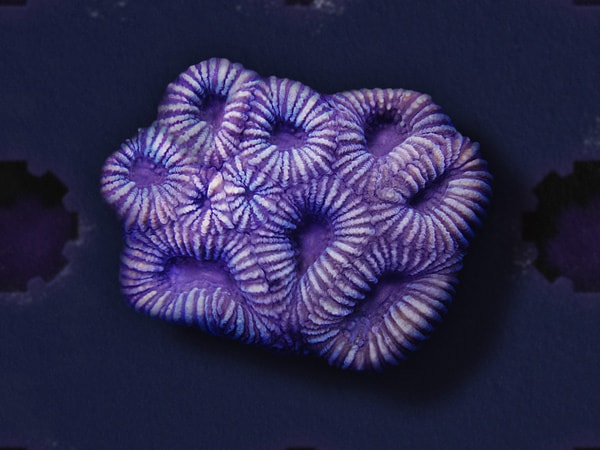
a coral fragment in the Forever Reef Project
The Forever Reef Project is home to precious corals collected from the Great Barrier Reef.

“About two years ago, I did a course on coral ID and there were about 30 people in the room," says Myers. “All of us had been working on the reef for more than 10 years, but none of us knew anything about coral identification. Firstly, it is so tricky, but also, you just don’t get asked."

That’s where the living coral biobank tours play an important role, not just in safeguarding the reef’s corals, but to help educate people on their importance and vulnerability, and, in turn, the importance of tackling climate change. As Cairns Aquarium founder and CEO Daniel Liepnik says, “Addressing climate issues requires changes to human behaviour, and getting people to care is the first step."
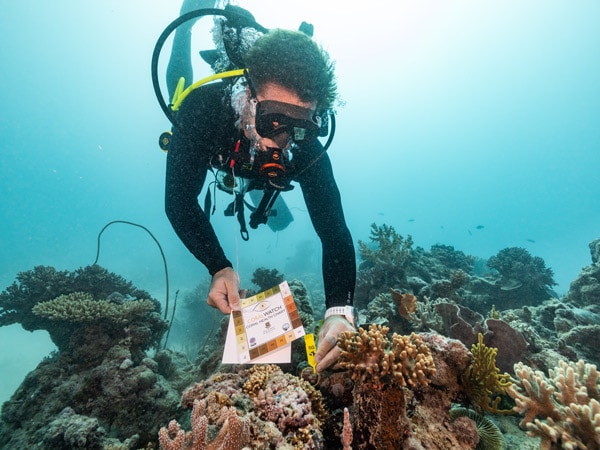
Dr. Dean Miller tagging corals and checking health before collecting
Dr. Dean Miller evaluates the health of the corals prior to collection.

Growing hope for the future of the reef

Unfortunately, climate change is a complex, long-term problem to resolve – and in the context of the Great Barrier Reef and more frequent extreme weather events, time is not on our side. This leaves the biobank as one of the few signals of hope that suggest things might work out okay. “It’s not the solution, but it’s adding resilience to the system," says Myers. “Because if we lose the reef, it’s gone forever."

So although the little, brainless corals in the biobank can never sleep peacefully, knowing they’re tucked away safe and sound in their quiet, comfy cribs means that we can.
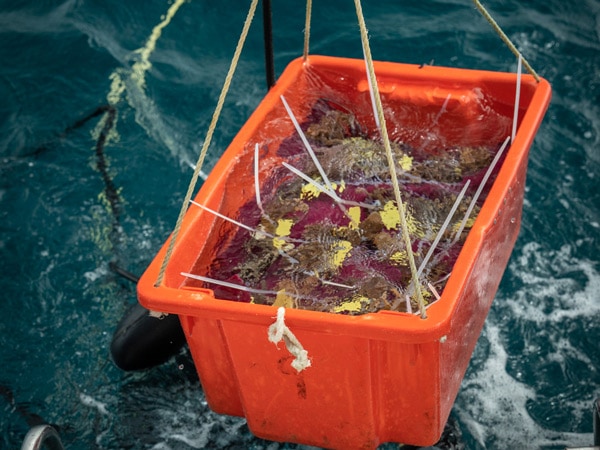
Collected corals being brought up to the vessel
The freshly collected corals are carefully brought up to the vessel. (Image: Martin Stringer)

Living coral biobank tour fees

On top of the regular admission fee, living coral biobank tours at the Cairns Aquarium  are $20 per adult and $14 per child, with all tour fees donated to the Forever Reef Project.

For more travel inspiration, news and tips, read our travel guides on the Great Barrier Reef and Cairns.
Emily McAuliffe
Emily McAuliffe is a Melbourne-based freelance travel writer. She is on the board of the Australian Society of Travel Writers and her writing and photography has featured in many titles in Australia and abroad. She loves nothing more than touching down in a new destination or approaching a familiar place with fresh eyes.
See all articles
hero media

Embrace that Sunday feeling at Hamilton Island‘s newest resort

This new, family-friendly Hamilton Island resort embraces life in the slow lane.

White sand beaches, gentle waves and getting on ‘island time’ have always made Hamilton Island the first spot that comes to mind when thinking of Queensland’s Whitsundays. Always a place to recharge and relax, modern wellness travel here means so much more than a spa treatment or green juice. And a new kind of tropical island stay has now arrived on Hamilton Island.

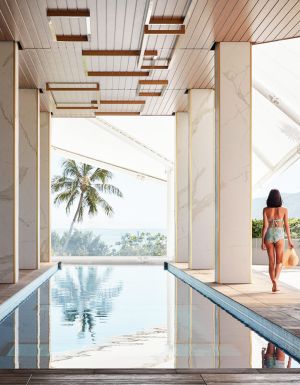
pool at The Sundays Hamilton Island
Learn to slow down and rejuvinate. (Image: Kara Rosenlund)

The Sundays reimagines laid-back luxury, combining boutique, beachfront accommodation with an encouragement to slow down and appreciate life’s simple pleasures so every day feels like Sunday.

Laid-back luxury

The Sundays is nestled into the picturesque gardens on the northern end of Catseye Beach. Despite a feeling of being away from it all, the resort is a conveniently short walk from Hamilton Island’s main resort centre and restaurants, so guests can have the best of both worlds.

This new boutique stay is all about savouring the now. From complimentary sunrise yoga to moonlight movies for kids and a daily sundae ritual by the beachside pool, it makes a compelling case for doing less, better.

Even the architecture is designed to harmonise with the surrounding tropical landscape, pairing soft curves with a grounded coastal style that shows off the panoramic Coral Sea views and adds to the hotel’s calm aesthetic.

Plus, with direct flights to Hamilton Island from Sydney, Melbourne and Brisbane in under two and a half hours, as well as complimentary hotel transfers from the airport or marina, getting here is as easy as the vacation itself.

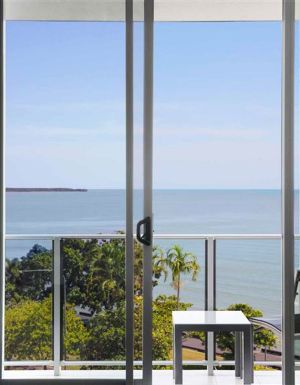
balcony view from room at The Sundays
Enjoy fantastic views from your balcony or terrace. (Image: Sharyn Cairns)

Perfectly designed rooms with amazing views

Every small detail has been considered in the creation of the 59 guest rooms and suites, from in-room amenities by LEIF to walls adorned with custom artworks by First Nations andHungarian artist Tiarna Herczeg. There’s even a signature in-room scent by The Raconteur.

Designed by Hamilton Island’s own designer, Carrie Williams, the result is relaxed Australian style using natural textures and soft hues to lull guests into a mellow state. This soothing palette runs throughout the resort, from its sun lounges to the shaded cabanas.

Every room and suite has been built with a balcony or terrace, perfectly framing postcard-perfect views of the surrounding reef and lush greenery.

inside a room at The Sundays
Stylish rooms feature natural, soothing tones. (Image: Sharyn Cairns)

Excellent activities and amenities

Each day has been planned with a relaxed structure, so guests can get involved in as much or as little as they wish.

Greet each day with morning yoga, pilates and island walks. Recharge with daily (and deliciously complimentary) sundaes by the pool. Wind down with moonlight movies twice a week and take advantage of family-focused features.

Guests have complimentary access to a range of water sports – from stand-up paddle boards to catamarans – so they can get their blood pumping before relaxing by the resort pool.

Or take a few extra steps to set up for a day on the sand without any crowds at the exclusive, guest-only beach. Settle in with a poolside aperitif for a front-row view of the stunning Catseye Bay.

aerial shot of The Sundays pool and catseye beach
Find picturesque Catseye Beach on your doorstep. (Image: Kara Rosenlund)

Delectable dining

What is rejuvenation if not a hearty choice of fresh, delectable dishes? That’s what guests will discover at The Sundays’s onsite restaurant, Catseye Pool Club .

Open all day for hotel guests and lunch and dinner for island diners, this relaxed yet elevated menu was created by acclaimed culinary duo, Josh and Julie Niland. It celebrates that community feeling of mealtimes while championing seasonal Australian produce.

“The vision behind [Catseye Pool Club] reflects so much of what I value – bringing people together to create memories in beautiful surroundings,” explains Josh.

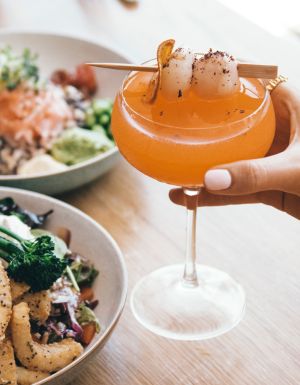
table spread including a lobster dish from Catseye Pool Club, The Sundays
Enjoy classic Aussie meals with a twist at Catseye Pool Club. (Image: Kara Rosenlund)

Based on elevated versions of classic Aussie family dinners, expect refined simplicity. Think roasted Sun Farms Sommerlad chicken with sides like chicken fat roast potatoes, gravy and tomato and grilled bread salad, or barbecued line-caught Bowen coral trout with garlic saltbush and Warrigal greens.

A day spent by the pool can be complemented by a dedicated poolside menu, featuring wood-fired souvas. Don’t want to leave the room? Kick back and soak in the views with tasty treats delivered straight to your door, whether you’re after a full breakfast or late night snack.

view from catseye pool club at The Sundays hamilton island
Enjoy dinner and a view. (Image: Kara Rosenlund)

Exploring the island

While daily life at The Sundays is very much about the art of staying still, guests who seek more can explore the island with ease.

Take a day trip to the striking Whitehaven Beach, or see the iconic Heart Reef from above on a helicopter tour. Pop over to Hamilton Island’s championship golf course for a hit, or explore over 12 kilometres of the island’s stunning nature and wildlife. Later, slow the pace back down with a visit to Spa wumurdaylin .

Looking for more tasty treats? Visit one of the island’s restaurants – there are more than 20 to choose from.

Hikers on passage peak hike on hamilton island
Take on the beautiful hikes of Hamilton Island. (Image: Nick Leary)

Book your stay at The Sundays through hamiltonisland.com.au.