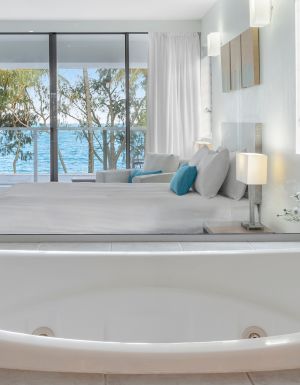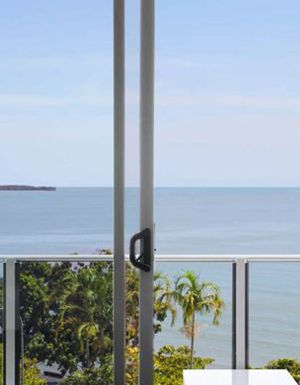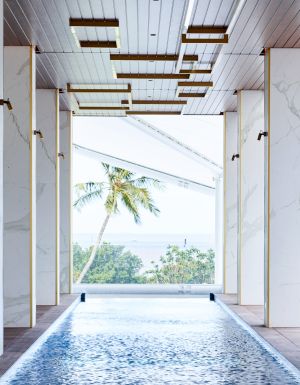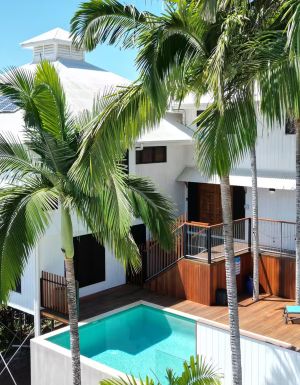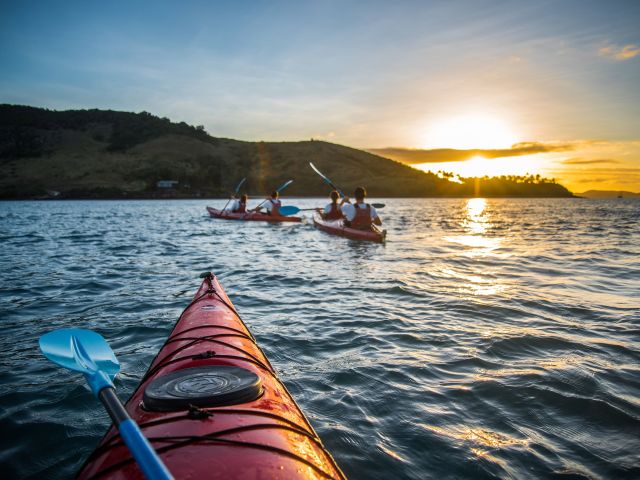
Tropical North Queensland presents like a large-scale triptych with sequential stays at three key Luxury Lodges of Australia properties.
An outback stay at Mt Mulligan Lodge
From a distance, Ngarrabullgan (Mt Mulligan) looms large, like a giant crouching on the grassy plain. The monolith is starting to glow golden as I floor the accelerator of my all-terrain Kubota, impatient to arrive at its southern end, known as The Branch, before dawn.
The land here in Djungan Country is thirsty and heavy rains have made the surface of the tabletop mountain appear slick and vibrant, as if it’s had a fresh coat of paint applied. I follow the lead of my American-born guide Hannah-Jo Rogers and screech to a halt beside a large rift in the earth, where the landscape grows steeper and wider over the Hodgkinson Valley. Hannah-Jo, who hails from Jackson, Tennessee, swings out of her vehicle and sweeps her arm skyward towards the magnificence of the monolith.
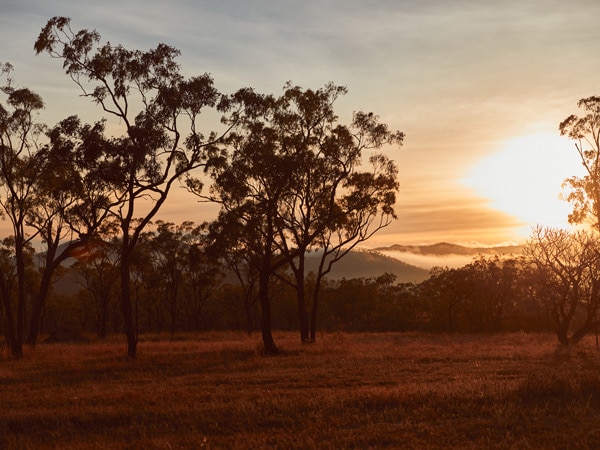
“As you can see, Ngarrabullgan is a very special place. The reason we’re here so early is to watch the sun beam light onto the mountain and see all the birds and animals waking up and the landscape come to life," says Hannah-Jo, whom I dub Hoonah-Jo because of the fearless way she cuts loose around the corners in her RTV.
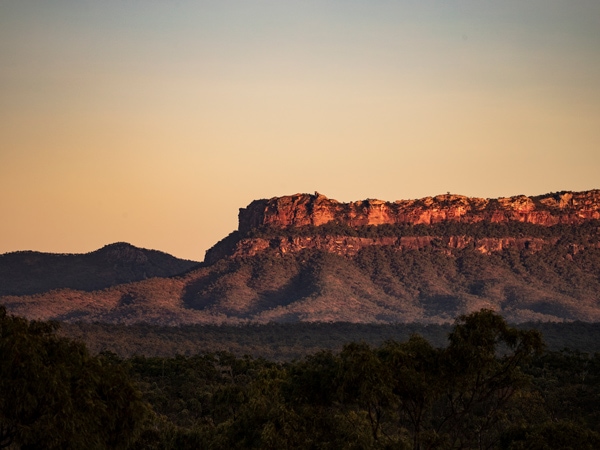
“To think you could fit about eight Ulurus inside Mt Mulligan gives us a real indication of its size. The southern end is so beautiful, because you get to see the western side of the mountain, which is very dramatic," says Hannah-Jo.
Exploring the captivating landscape of Djungan Country
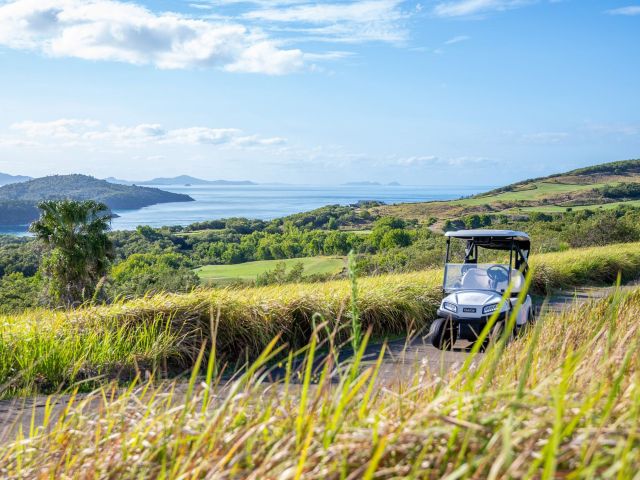
Today, Hannah-Jo leads a convoy of Kubotas on the Branch Outlook ATV Tour, which see us bouncing through dry boulder-strewn creeks that rush with water during the wet season. And stopping to observe the ghostly white Brahman cows that lurk amid a blur of gum trees on the fringes of the 28,000-hectare working cattle station.
Our small group includes a family of four from Colorado and a grazier and his wife who flew here in their Cirrus SR20 from Central Queensland. “This tour is designed around Branch Creek, which was named by the Irish-born surveyor James Venture Mulligan when he visited in 1874 to explore the land after the discovery of gold. One of the party of prospectors named the mountain after Mulligan because he was the one in charge of the expedition looking for gold," she says.
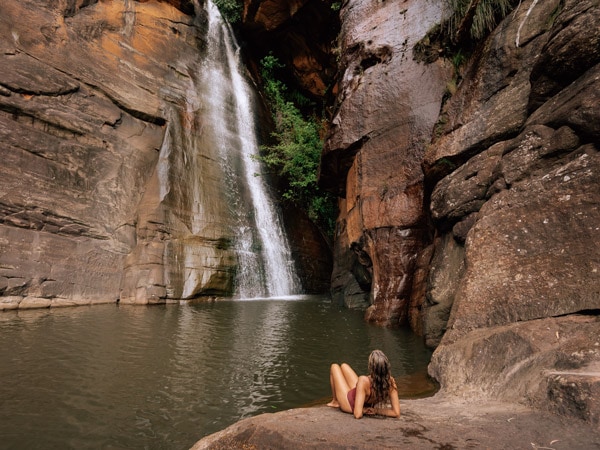
Ngarrabullgan is 18 kilometres long and 6.5 kilometres wide and Hannah-Jo acknowledges it as a site of great significance to the Djungan people, whom archaeologists believe first inhabited the land about 37,000 years ago. The Traditional Owners were awarded Native Title Determination in 2012 and Hannah-Jo respectfully reminds visitors they are forbidden to climb to the summit of Ngarrabullgan.
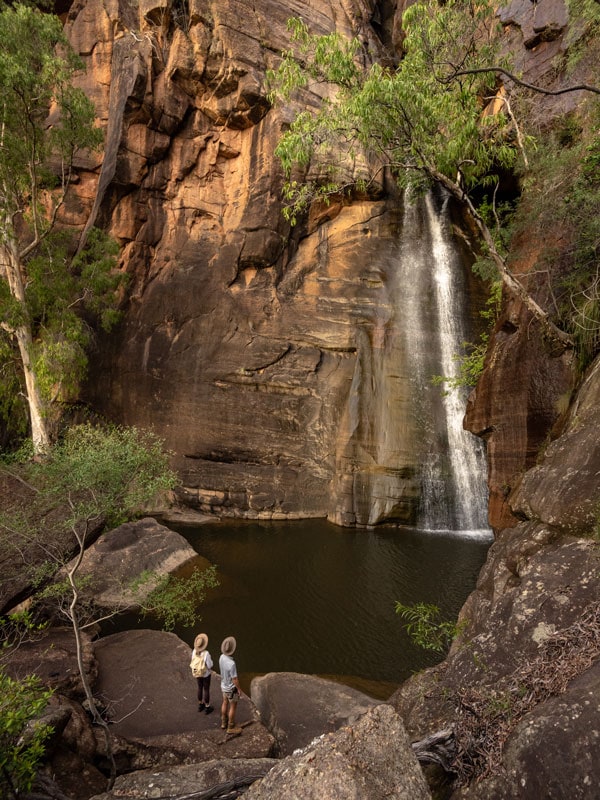
Ngarrabullgan also forms the backdrop on The Old Township, Coal Mine & Cemetery Tour near to the original Mt Mulligan mine entrance, where Hannah-Jo shares a tragic story about the worst coal-mining disaster in Queensland’s history. “It was on September 19, 1921, when the coal mine here exploded, killing 75 underground workers. There were only 360 people in the town of Mt Mulligan at the time, so this was a significant event," explains Hannah-Jo as we peer into the mouth of the mine.
“Frank Grant was one of the victims of the disaster and according to his wife Mary Wardell’s journal accounts, the local lore men came to the community the day before the accident and said, ‘You need to leave Ngarrabullgan and let it be’. The next day, the third largest mining disaster in Australian history happened," she says.
An upscale and intimate stay
Mt Mulligan Lodge is named after the mining town that sprang up west of Mareeba in 1912 and today comprises a homestead that was the former hospital, a chimney stack, electricity generator and tumble-down cemetery of tombstones.
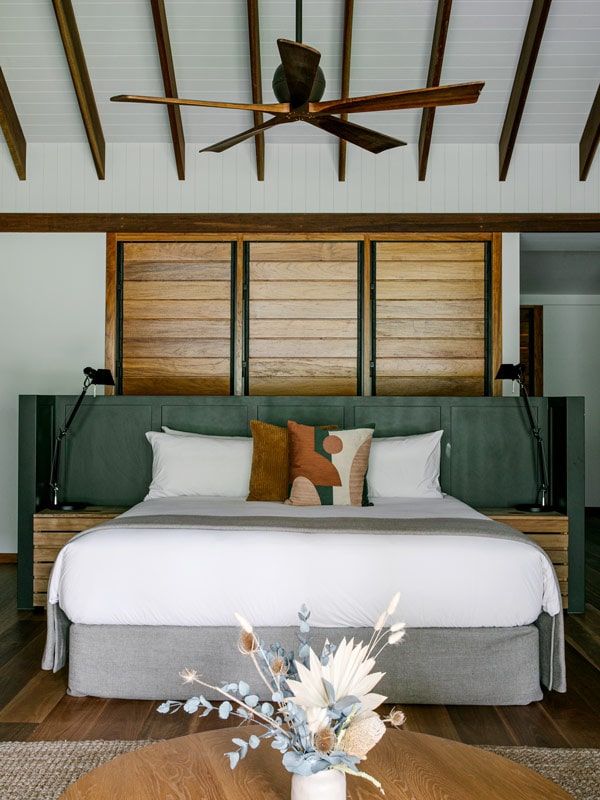
Navigating the landscape with a guide as knowledgeable as Hannah-Jo is one of the real luxuries of a stay at the five-star Mt Mulligan Lodge, which accommodates just 28 guests. Signature experiences here also include the Mt Mulligan Station Tour. Or fishing for barra under the shadow of Ngarrabullgan, which is reflected in the mirror-like calm of the weir.
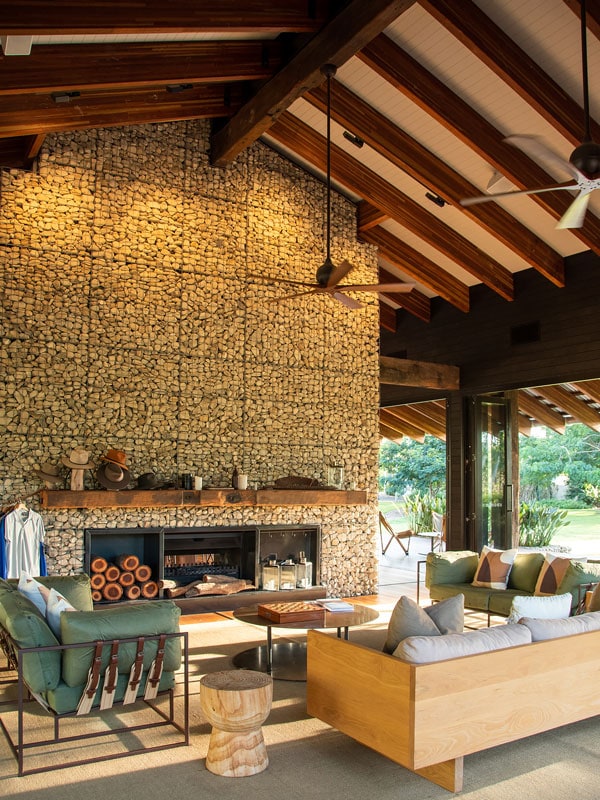
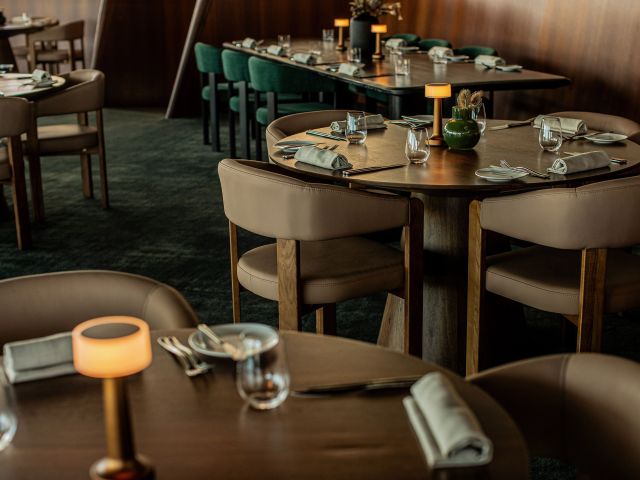
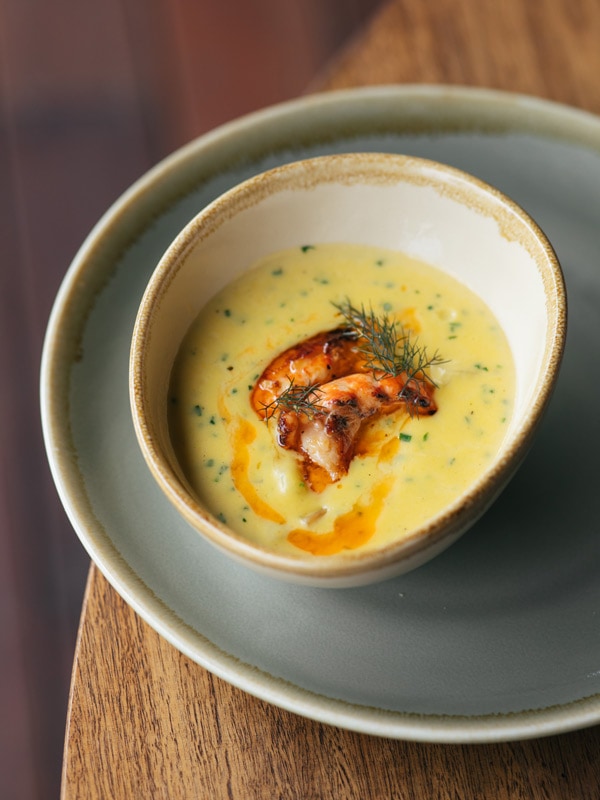
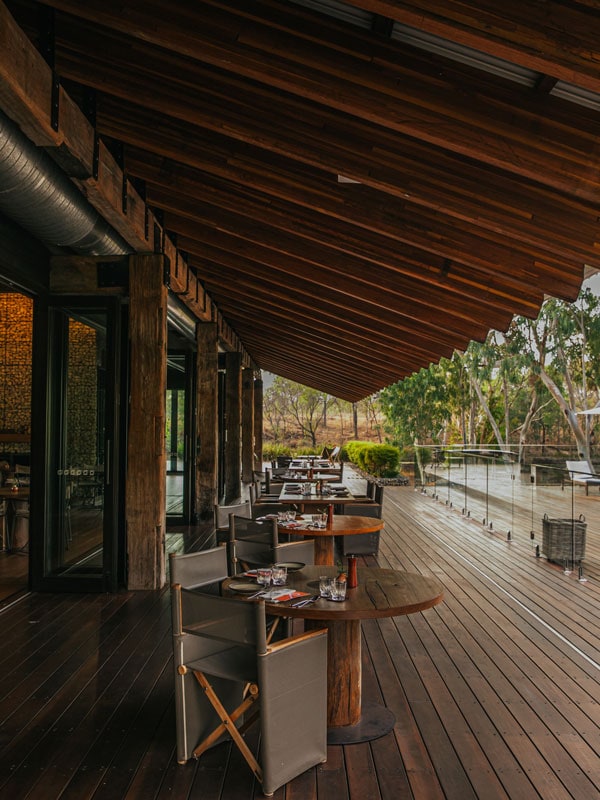
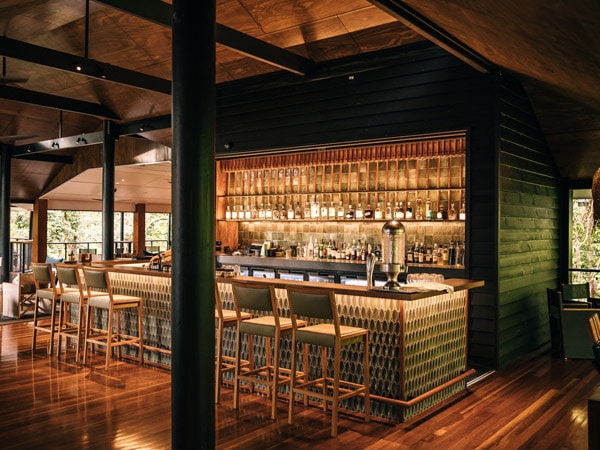
There are also rounds of complimentary G+Ts at the tin-and-timber Sunset Bar and dreamy degustation dinners enjoyed while looking up at the spine of the mountain.
Enjoying a soak in the deep corrugated outdoor bath listening to the orchestrated ruckus of frogs and crickets during a torrential downpour also creates a lasting memory.
Need tips, more detail or itinerary ideas tailored to you? Ask AT.
AI Prompt
The laidback luxury of Lizard Island resort
It’s just a half-hour helicopter ride from Mt Mulligan back to Cairns before my flight departs from the East Air Terminal bound for secluded Lizard Island, where the colour wheel spins from terracotta to turquoise.
Exclusive access to the Great Barrier Reef
From above, on a crisp, blue-sky day, Lizard Island is all bleached-out blues and whites, like an overexposed Kodachrome print. The island comes into focus when we touch down at Lizard Island, known as Dyiigurra to the Dingaal people and recognised as a National Marine Park.
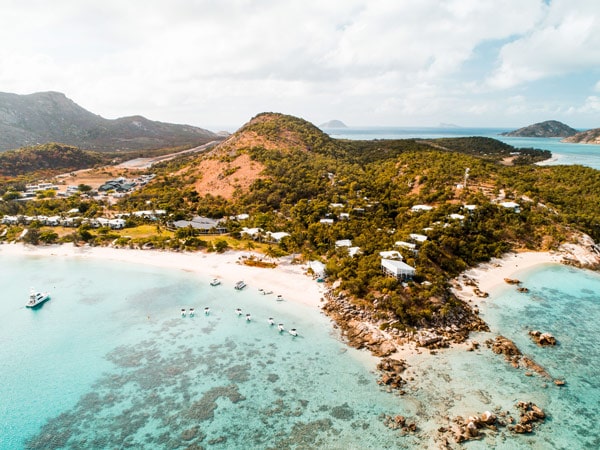
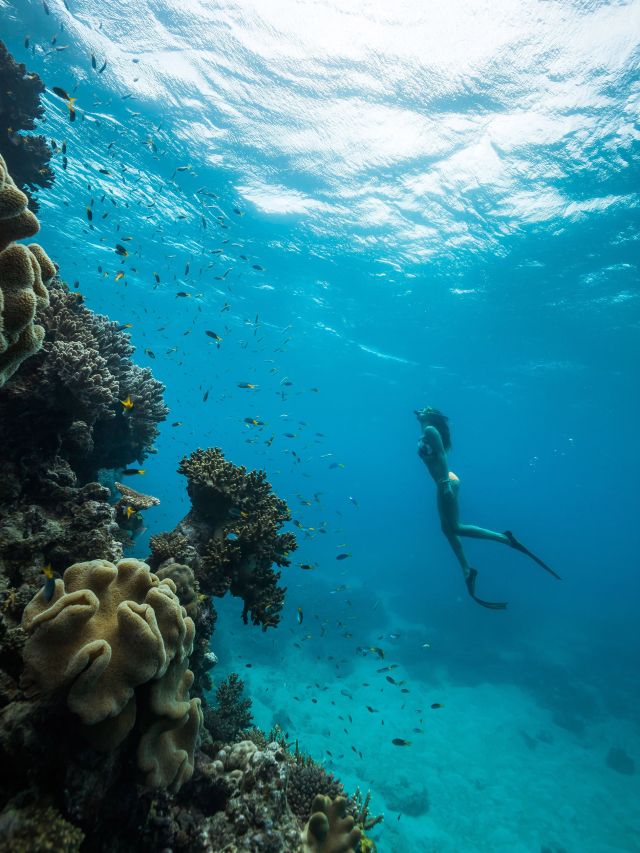
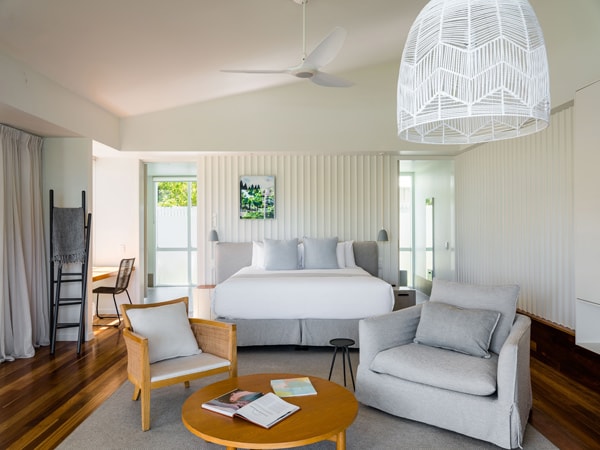
Again, the luxury associated with Lizard Island resort has a lot to do with exclusivity of access to an extraordinary location. Being able to walk 50 metres down a sand track from my boutique shack and flipper straight out onto the Great Barrier Reef makes this experiential luxury at its best.
My visit to Lizard Island coincides with the arrival of Steve Wilson, son of the island’s original developer, John Wilson, who first established a lodge on Lizard Island in 1970. The Brisbane-based entrepreneur is staying in The House at Lizard, which hugs the hillside on the only parcel of land that wasn’t sold to Andrew ‘Twiggy’ Forrest when the Australian businessman bought the leasehold in 2021.
While booking The House and adjacent Cottage is out of reach for most of the population (rates start at a cool $18,000 per night for a minimum four-night stay), the nearby resort co-founded by the Wilsons remains accessible for everyday Australian and international guests.
Incredible nature experiences await
“Lizard Island resort is about fishing, hiking, or going to a private beach to drink Champagne and think about the meaning of life," says Steve.
“Lizard Island is the breeding ground for some of the biggest sea creatures in the world. Marlin, whales and mackerel come here to breed, and sharks follow them. It’s my goal for people to come here and have one of the greatest bucket-list experiences of their lives. There’s always some kind of amazing nature experience happening here," says Steve, who makes The House and The Cottage available for visitors to book for nine months of the year.
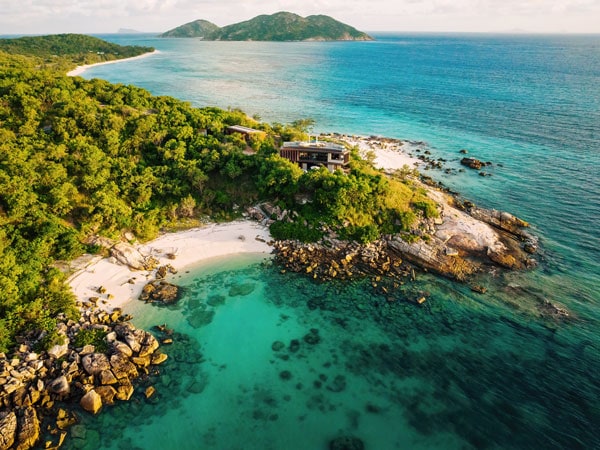
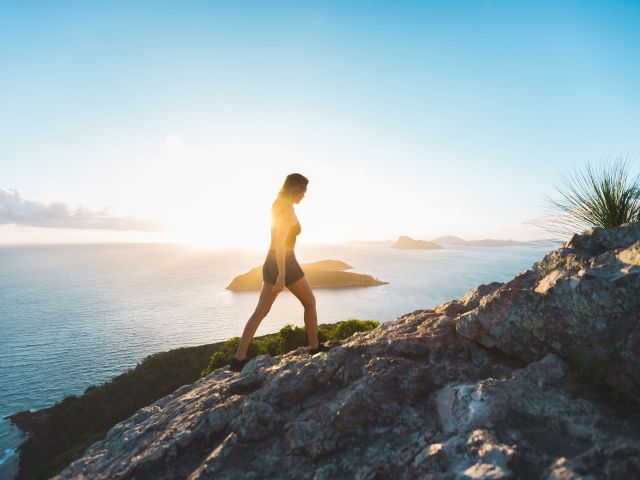
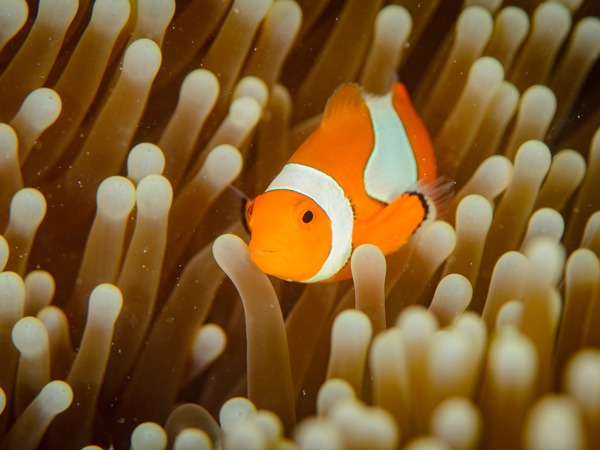
While staying at Lizard Island, I take time to snorkel off Hibiscus Beach and hike up to the highest point on the island through a pristine pocket of national park. I also swim alongside green sea turtles off Watsons Bay, enjoy a snorkel in the azure waters of Blue Lagoon and visit a giant clam garden around the corner from Anchor Bay.
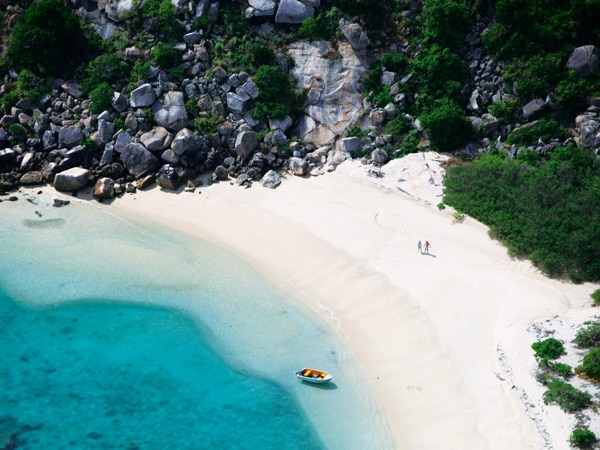
Time to take it all in
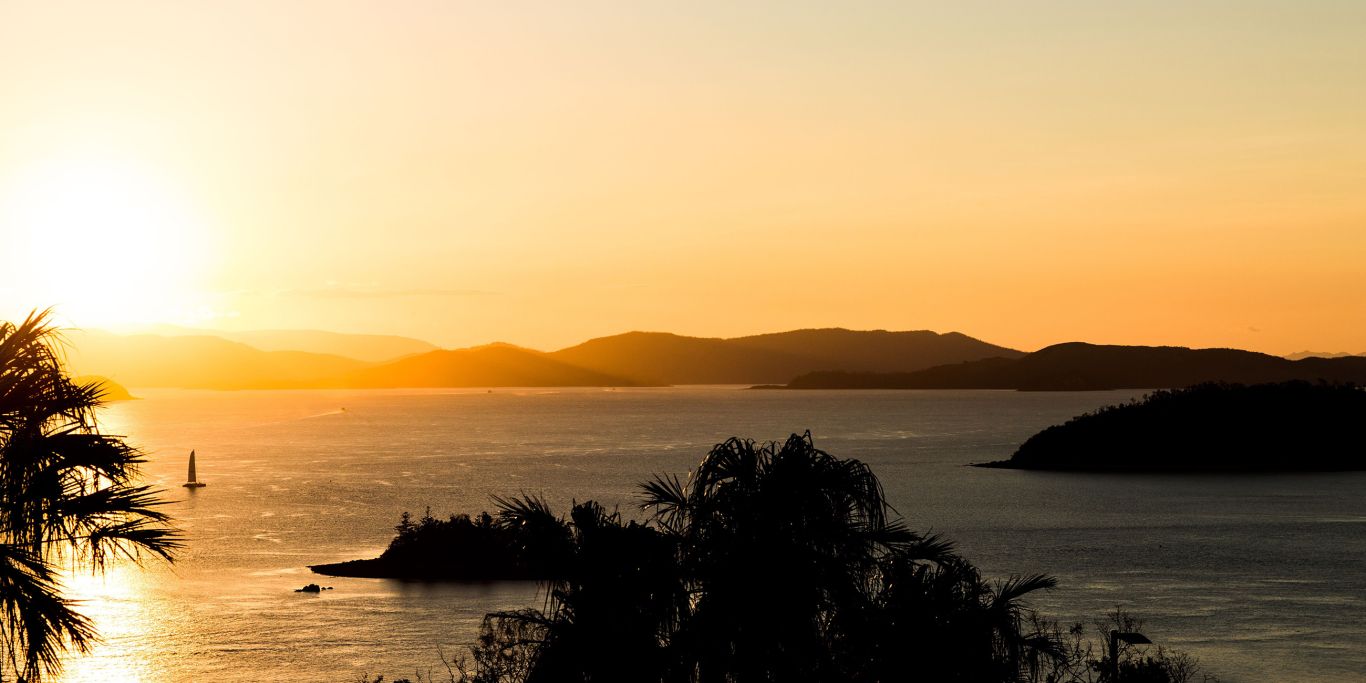
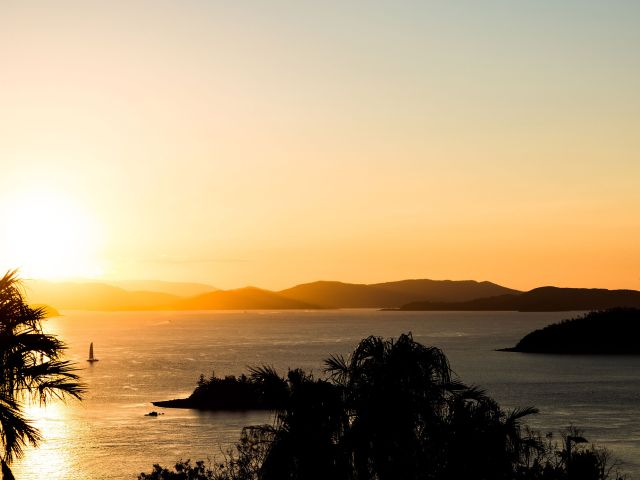
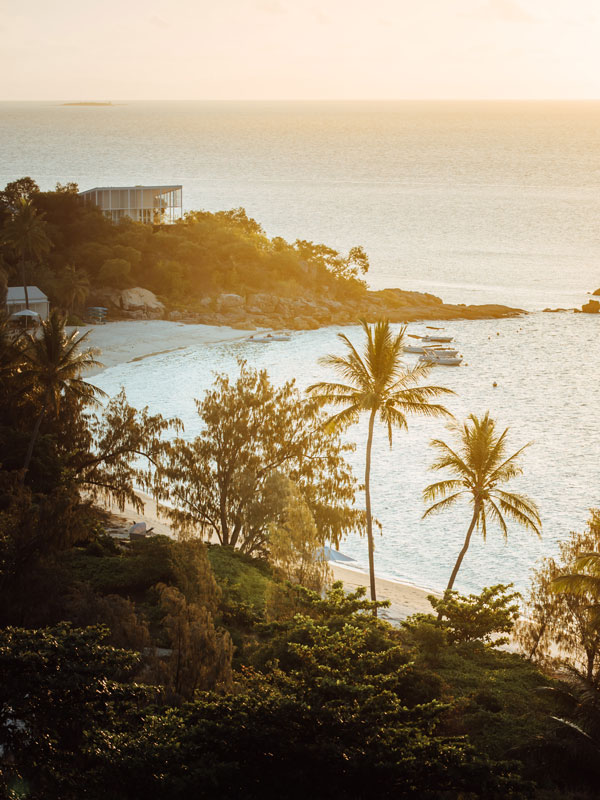
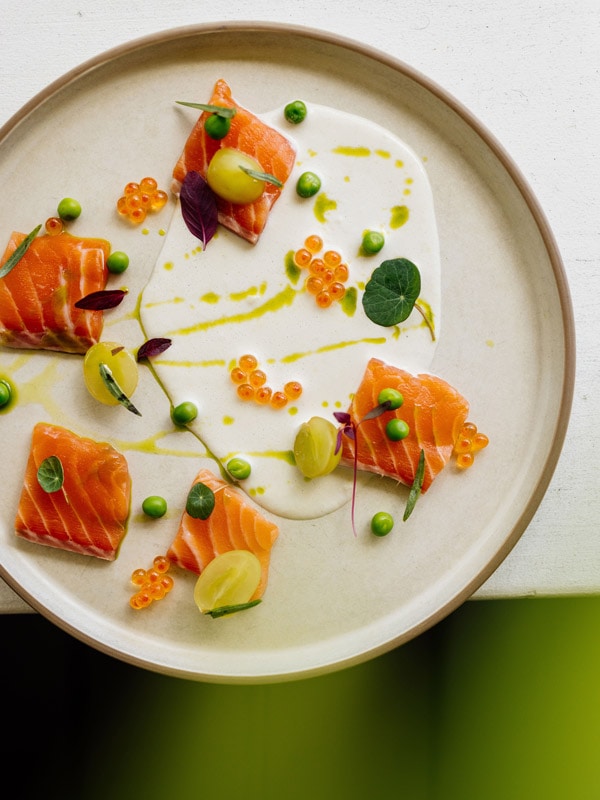
The exclusive island retreat also has a spa designed for day treatments, a restaurant serving sustainable seafood caught in Australian waters and a bar for gin flight tastings. When I’m not launching myself into the Lizard Island landscape, I’m holed up at my luxury shack, grateful for my beach view at dusk when the sun starts to shade the contours of the island.
A distinctively Australian escape at Silky Oaks Lodge
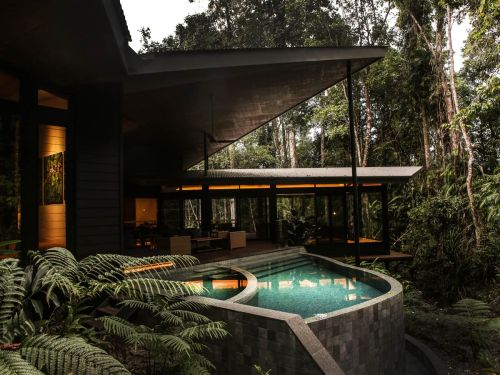
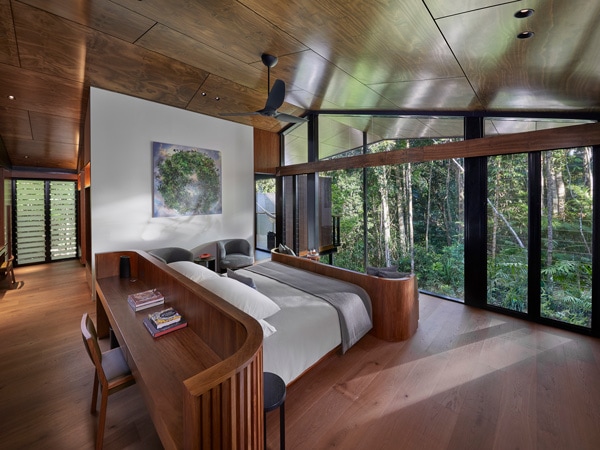
After two days lounging on Lizard, I arrive at Silky Oaks Lodge via an hour-long return flight to Cairns and chauffeured transfer to the Daintree. I’m staying in a treehouse suite at the new-look luxury eco lodge overlooking the Mossman River, which rushes over the large granite boulders below.
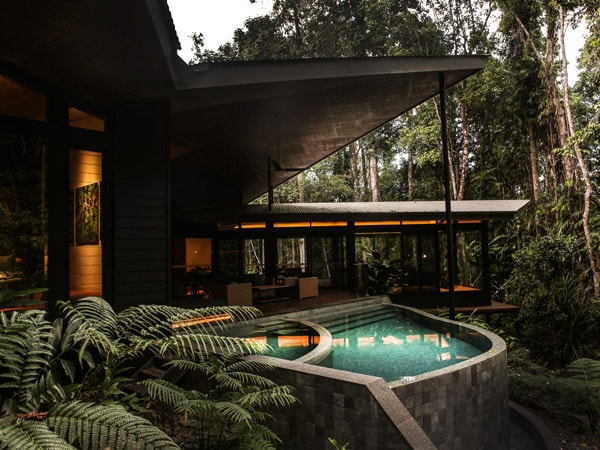
Yes, it would be tempting to luxuriate in my hammock after my kahuna massage in the Healing Waters Spa. Or to swing in my hammock until my dinner in the Treehouse Restaurant. But I’m keen to delve deeper into the World Heritage-listed rainforest and have signed up for a curated excursion with Levi Williams, a knowledgeable Kuku Yalanji guide from the Mossman Gorge Cultural Centre.
Weekly travel news, experiences
insider tips, offers, and more.
A Dreamtime Walk through the Daintree
Levi is an engaging storyteller, a larrikin, who fills the space between two worlds – his freewheeling childhood spent running around the dense rainforest and the Dreamtime stories and knowledge passed on by his Elders.
After a smoking ceremony to welcome and protect our group of visitors to the rainforest, Levi warns us to be on the lookout for cassowaries, which he describes as “the world’s most angry birds".
“My grandfather taught me that the cassowary plays an important role in the regeneration of the rainforest, which is 180 million years old. See those droppings? Those are from a cassowary. The birds disperse the seeds over a large area which ensures the diversity of different rainforest species," says Levi.
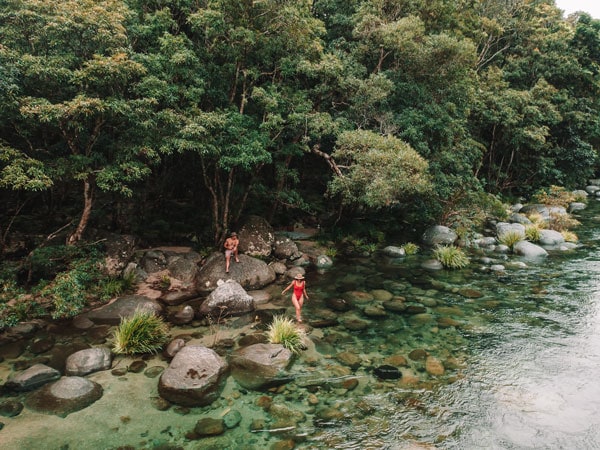
During the Dreamtime Walk, we spot an echidna, its short stubby legs moving slowly over the path before disappearing into the jungle. And stop for a paddle in the cool, clear waters of Mossman Gorge.
Levi also explains the significance of red cedar trees, which his ancestors used as signposts. We see examples of the towering trees where the bark has been split off in planks to make spears. Levi also uses a mix of black charcoal and red, white and yellow clay to paint his body in dots and stripes that he says are akin to his “personal ID and passport".
A deeper connection to place
As with all the Luxury Lodges of Australia, the riverside location of Silky Oaks Lodge is key. As is that overarching big-picture vision to connect people to place through immersive, sustainable and bespoke experiences and to ‘eat, drink and sleep well’.
A lesson in the region’s distinct landscapes
The colour palette in Tropical North Queensland is a study in contrast. Hinge together a triptych of the region’s distinct landscapes and it could be done using broad brush strokes and three bands of cinematic colour: turquoise, terracotta and emerald. And, whether you love nature, fine dining, relaxing in a spa or all of the above, being on the edges of these diverse environments presents an absorbing meld of scenes. Much like a triptych, it makes for a compelling composition.
A traveller’s checklist
Getting there
There are daily flights to Cairns from Brisbane, Sydney, Melbourne, Canberra, Adelaide, Perth and Darwin with Qantas, Jetstar and Virgin Australia.
Staying there
There are 19 Luxury Lodges of Australia resorts around the country, all of which offer all-inclusive packages. Head to Tropical North Queensland to experience Lizard Island, Mt Mulligan Lodge and Silky Oaks Lodge.
Playing there
A stay in one of Luxury Lodges of Australia’s Tropical North Queensland properties allows visitors access to immersive adventures from a luxurious base.
Want to see more stories from Australian Traveller in your Google search results?
- Click here to set Australian Traveller as a preferred source.
- Tick the box next to "Australian Traveller". That's it.