Tour the R.M. Williams Factory and leave with a pair of handmade boots

hero media
On the outskirts of Adelaide, Alexis Buxton-Collins discovers a pair of modern Australian icons – and comes home with a souvenir that will last a lifetime.

“What do you see?" asks Paul Mettner as he holds up an irregularly shaped piece of leather that looks like the silhouette of a Trojan helmet. Other answers for this tactile Rorschach test include a ghost from Pac-Man or Darth Vader’s head. But for hundreds of workers around us, this is the starting point for one of Australia’s most enduring style icons.

The making of an icon

On an otherwise unremarkable street in Adelaide’s northern suburbs, the R.M. Williams workshop turns out around 1500 pairs of elastic-sided Craftsmen boots a day, and Mettner is showing me around one of the production lines that he supervises. A paragon of simplicity, the design of the signature Craftsman boot has remained virtually unchanged since the shadows of The Great Depression, when Reginald Murray Williams collaborated on the design with an Adnyamathanha man named Dollar Mick.

Crafting each upper from a single piece of leather helps to make it durable, comfortable and almost endlessly repairable, though my guide chuckles that “the reason R.M. did it that way is because there’s less sewing – the lace up boots are far more work". But any energy saved in sewing is more than made up for on a production line where every boot will be shaped by 80 pairs of hands.

a variety of boot styles hang on display at R.M. Williams Factory in Adelaide
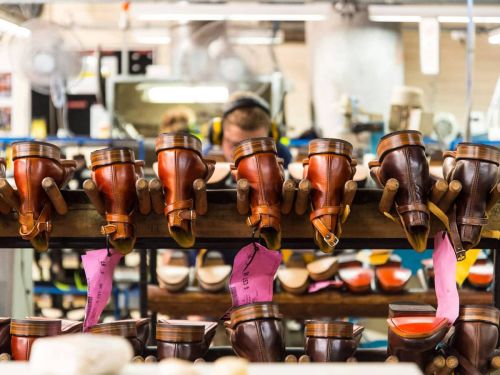
A variety of boot styles hang on display, but the iconic Craftsman is the most popular.

Machines with names such as inseam trimmers, welt beaters and lasters call to mind a Dickensian factory, but the workers here grin and crack jokes as they stretch, steam and stitch pieces of hide. Each job takes less than 10 seconds, well-practised hands moving swiftly but surely so that a single boot takes just three hours to make from start to finish.
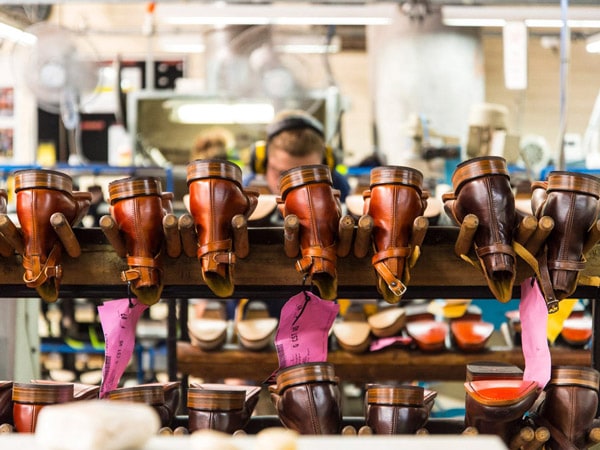
A worker making boots at R.M. Williams

The repairs station

Even more impressive is the repairs station, where shoes are stripped down entirely before being reshaped and resoled. “A few tools might look a little different, but this process hasn’t changed much since 1932," says Mettner. “And as long as you look after the upper, we can repair the boots three or four times."
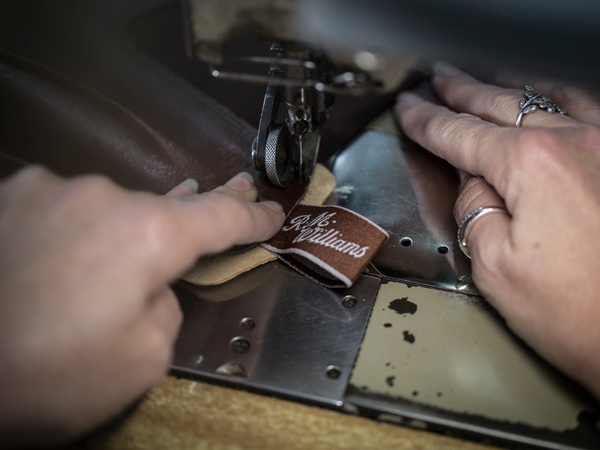
stitching a tug onto a boot at R.M. Williams Factory in Adelaide
A craftsperson stitches a tug onto a boot.

Unsurprisingly, the repaired boots offer a catalogue of shifting styles, from pointy toes and Cuban heels to scuffed Chelsea-style work boots whose owners have specifically requested they remain unpolished.
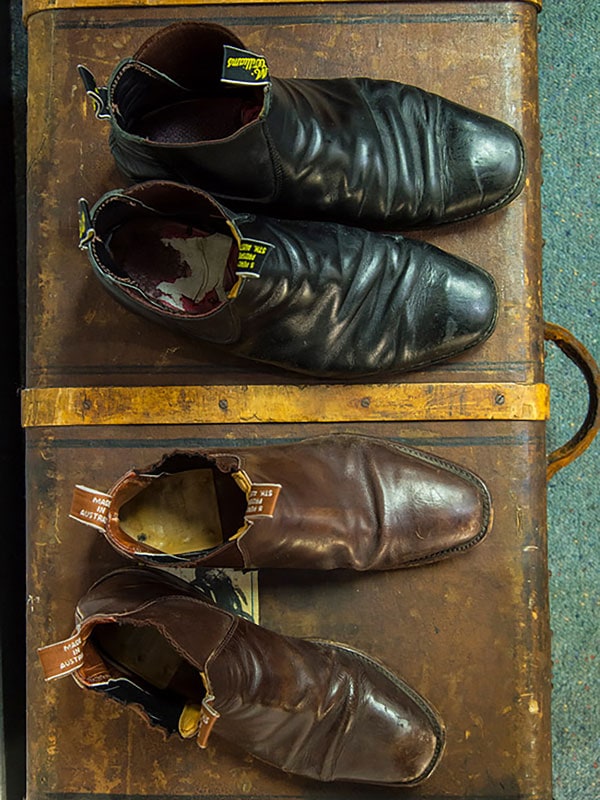
a table-top view of two pairs of R.M. Williams boots
R.M. Williams boots are made to last a lifetime, with a repair service available to renew worn-in pairs.

Need tips, more detail or itinerary ideas tailored to you? Ask AT.

AI Prompt

More than just boots

In the clothing and craft sections, workers skilfully stitch jeans and oilskin jackets, embroider shirts and painstakingly braid strands of kangaroo leather into belts with more than 1000 plaits, all of which are on display when we drive a few suburbs south to the brand’s Prospect showroom.
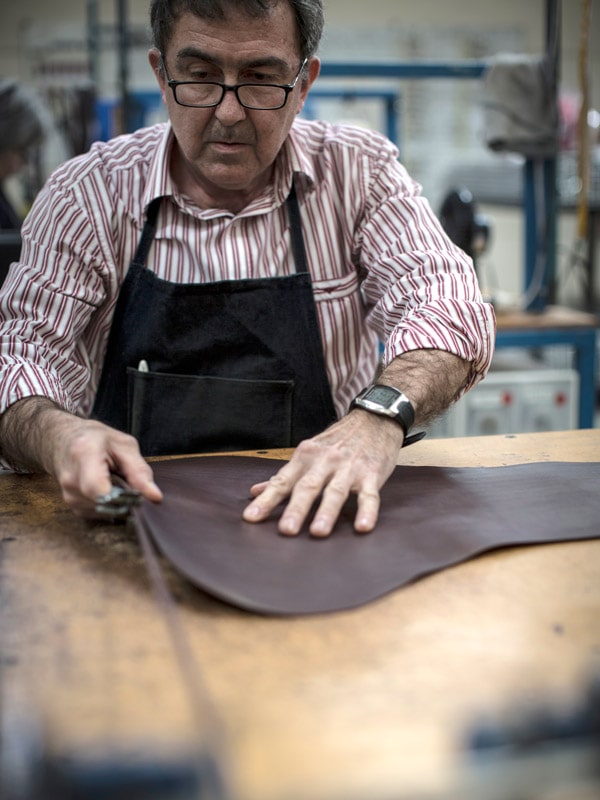
a craftsman shaping a boot at R.M. Williams Factory in Adelaide
At least 80 pairs of hands go into shaping each R.M. Williams boot.

History in the making

Presiding over the space is Rita Stenta, an energetic woman who tells me that after honing his craft at a small workshop in the northern Flinders Ranges, Williams moved production here in the early 1930s. Back then, he worked out of a tin shed behind his parents’ house, and “it still says Percy Street on every pair of R.M.s because this is where it all began."
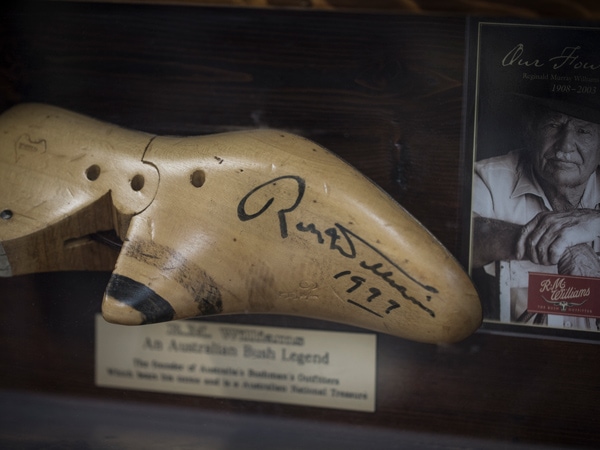
a wood shaped like a boot at at R.M. Williams Factory in Adelaide
A wooden last used for crafting the boots is signed by R.M. Williams and on display in the workshop.

When she started working here in 1980, the store was filled with saddles, bridles and whips. And while styles have changed as the clientele has shifted from stockmen to stockbrokers (with a few prime ministers and rockstars thrown in), the boots have remained a constant.

Stenta has fitted some 20,000 pairs in her time, and I can’t help but admire the workmanship of my finely polished chestnut Craftsman boots as I become number 20,001. In fact, they feel so good as I slip my feet in that I decide to keep them on while I visit another South Australian icon.

Weekly travel news, experiences
insider tips, offers, and more.

Another SA icon: Penfolds Magill Estate

A three-course lunch with matched wines gives me plenty of time to take in the views at Penfolds Magill Estate, where five hectares of shiraz vines grow in the shadow of the Mount Lofty Ranges. Then I get a chance to test out my new kicks as we stroll down to the cottage where Dr Christopher and Mary Penfold lived when they established Australia’s most storied winery in 1844.
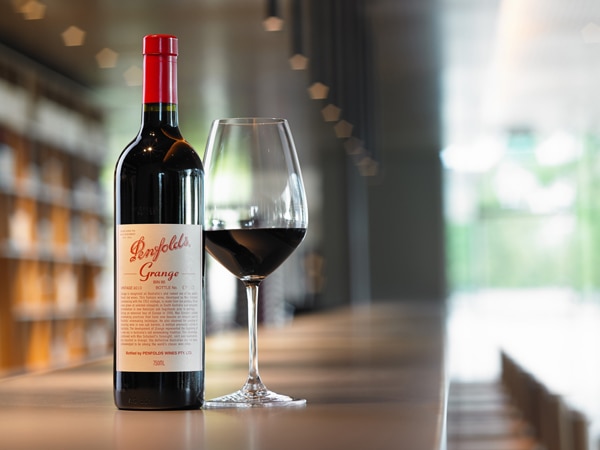
a bottle of wine at Penfolds Magill Estate
Penfolds Grange is arguably the best wine from the brand. (Image: Penfolds Magill Estate)

Just over a century later, legendary chief winemaker Max Schubert began developing a program of cellar-worthy reds that would change the Australian wine industry forever. As we enter the network of tunnels below the winery, our guide casually points out Schubert’s handwritten instructions for making Grange before showing us the indent where he erected a fake wall to hide his pet project from disapproving bosses.

Back at the cellar door, we taste ‘the white Grange’ Yattarna and elegant St Henri before moving on to the main event. Our guide explains that Grange has earned its place in the pantheon of Australian wines with a blend of ageability, quality and consistency. “Look after it well, and a bottle will last decades," she tells us. Add in a few notes of leather, I think, and she could just as easily be talking about another icon located within Adelaide’s city limits.
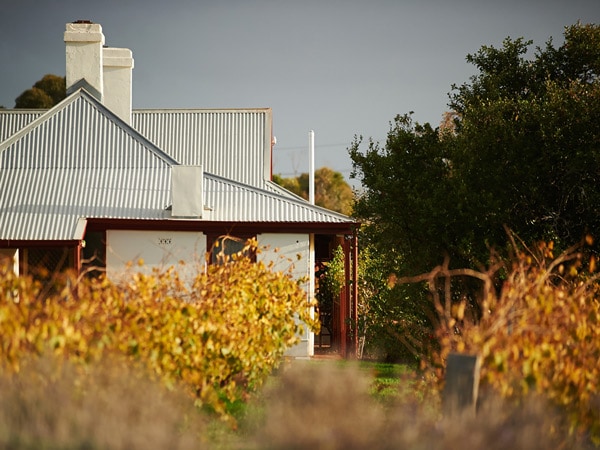
a scenic landscape at Penfolds Magill Estate
Take in scenic views of the winery. (Image: Penfolds Magill Estate)
The R.M. Williams Factory Tour is available exclusively through The Tailor Touring Co. Prices begin at $810 per person, including a personally fitted pair of boots to take home.
Alexis Buxton-Collins
Alexis Buxton-Collins spent his twenties working as a music journalist and beer taster before somehow landing an even dreamier job as a freelance travel writer. Now he travels the world from his base in Adelaide and contributes to publications including Qantas, Escape, The Guardian and Lonely Planet. Alexis has never seen a hill he didn't want to climb and specialises in outdoor adventures (he won the 2022 ASTW award for best nature/wildlife story for a feature on Kangaroo Island). When he's not scouring South Australia for the newest wineries and hikes, he's looking for excuses to get back to spots like Karijini and Ningaloo.
View profile and articles
hero media

What it’s really like to stay on the world’s largest sand island

    Kassia Byrnes Kassia Byrnes
    Exploring the world’s largest sand island starts with the perfect K’gari homebase.

    The morning light is still soft, but it’s already a perfect sunny day. We left our K’gari homebase at Kingfisher Bay Resort with our guide, Peter Meyer, at 9 am to make the most of our time to explore all that the world’s largest sand island holds. The size of K’gari is hard to grasp until you arrive here. This is no sandbar. Stretching 120 kilometres, unique lakes, mangrove systems, rainforest, 75 Miles of beach, historic shipwrecks, small townships and even one of Queensland’s best bakeries are all hidden within its bounds.

    But first, one of the island’s most iconic sights: the pure silica sand and crystal clear waters of Lake McKenzie.

    Laying eyes on it for the first time, I’m finally able to confirm that the photos don’t lie. The sand is pure white, without the merest hint of yellow. The water fades from a light halo of aqua around the edges to a deeper, royal blue, the deeper it gets (not that it’s particularly deep, six metres at most). The surface remains surprisingly undisturbed, like a mirror.

    Arriving with our guide before 10 am means that no one else is around when we get here. Which means we have the pleasure of breaking the smooth surface with our own ripples as we enter. As a self-confessed wimp with chilly water temperatures, my fears are quickly assuaged. Even in the morning, the water stays around 23 degrees – perfect for lazing about all day. But we have more sights to see.

    Exploring K’gari

    ariel of in lake mckenzie on k'gari fraser island
    Relax in the warm waters of Lake McKenzie. (Image: Ayeisha Sheldon)

    This was the Personalised 4WD tour offered by Kingfisher Bay Resort, and my absolute top pick of experiences. Over the course of the day, we had the freedom to create our own bespoke itinerary (plus a provided picnic lunch along the way), with an expert guide who had plenty of stories and local expertise to give context to what we were looking at. From the history of the SS Maheno shipwreck, which survived the First World War only to be washed ashore by a cyclone in 1935, to a detailed description of how an island made of sand could sustain such diverse flora.

    If it’s your first time to K’gari, the Beauty Spots Tour is another great option. Departing daily from Kingfisher Bay Resort (you’ll start to notice a trend, as many of the tours do start and end here), an air-conditioned, 4WD bus takes guests to the island’s most iconic locations, including the best places to swim, like Lake McKenzie and Eli Creek. The latter offers a gentle current, perfect for riding with a blow-up tyre out towards the ocean.

    The next day, for a look at a completely different side of K’gari, I joined one of Kingfisher Bay Resort’s Immersive Ranger-guided tours to kayak through the mangroves of Dundonga Creek. This long, snake-like stretch of creek winds its way inland from the ocean outlet we entered by, at times too narrow for three kayaks to be side-by-side. Small insects buzz from leaf to leaf, while birds call overhead. Occasional bubbles indicate we’ve passed some fish that call this place home.

    kayak tour through the mangroves at k'gari island
    Learn about the island’s mangroves from your Ranger. (Image: Reuben Nutt/ TEQ)

    If kayaking isn’t for you – or if, like me, you simply want more – other ranger-led experiences include nature walks and a dedicated Junior Eco Ranger Program for kids ages five to 12 (these run every weekend, and daily over the peak December holidays). Just ask for a timetable of upcoming tours when you check in.

    While during whale season, Hervey Bay Whale Watch & Charters operates tours from the hotel’s jetty to get up close to the famous Humpback Highway of Hervey Bay, from 7 November to 31 May, attention turns to the Aqua Oasis Cruise. Departing from the resort every Tuesday, Thursday, Saturday and Sunday for resort guests, adventure along the island’s remote western coast, pointing out wildlife like dolphins, turtles, flying fish and eagles along the way.

    The cruise drops anchor so guests can jump into the water using the boat’s equipment – from SUP boards to inflatable slides and jumping platforms. Then refuel with a provided lunch, of course.

    Unwind at sunset

    two people drinking cocktails at sunset bar, kingfisher bay resort
    Unwind at the Sunset Bar. (Image: Sean Scott)

    As much as days on K’gari can be filled with adventure, to me, the afternoons and evenings there are for unwinding. Sunsets on K’gari are absolutely unbelievable, with Kingfisher Bay on the west side being the best spot to catch the colours.

    The Sunset Bar, located at the start of the resort’s jetty and overlooking the beach, is the ultimate location for sundowners. Let chill beats wash over you as you sip on cool wines, beers and cocktails in a relaxed, friendly vibe. Personally, a cheese board was also absolutely called for. As the sun sinks, the sand, sea and horizon turn a vibrant shade of orange, with the jetty casting a dramatic shadow across the water.

    When the show is over, head back to the hotel for dinner at the Asian-fusion Dune restaurant, or the pub-style Sand + Wood. But if your appetite is still whetted for more lights and colours, the evening isn’t over yet.

    Settle into the Illumina stage for Return to Sky, an immersive light and sound show leading viewers on a captivating journey through K’gari’s stories and landscapes.

    Indulge and disconnect

    woman setting up massage room at kingfisher bay resort Island Day Spa
    Find bliss at Island Day Spa. (Image: Jessica Miocevich)

    Of course, there is a type of traveller who knows that balance is important, day or night. While Kingfisher Bay Resort offers more than one pool for guests to spend all day lounging by (they’ll even serve you food and drinks while you do it), you’ll find me at the Island Day Spa.

    The masseuses could match the magic hands of any big city spa, and I felt the warm welcome as I walked into the light, breezy reception. Choose from a range of botanical facials, beauty treatments and soothing massages using traditional techniques (obviously, I couldn’t go past a relaxing massage). All products used contain organic, native botanical ingredients with nutrient-rich plant extracts to soothe skin and mind. To really indulge, try out one of the packages, couples treatment or even a pre-wedding day offering.

    Getting there

    kingfisher bay resort 4wd tour driving passed ss maheno on k'gari island
    The world of K’gari awaits. (Image: Jessica Miocevich)

    Getting to K’gari is shockingly easy. Find daily flights into Hervey Bay from Brisbane, Melbourne and Sydney. Kingfisher Bay Resort offers a shuttle bus between the airport, their headquarters in Hervey Bay and the ferry to take you to K’gari.