Adelaide to Barossa Valley: the five ways to get there

hero media
Whether you’re cruising down a scenic route, hitching a bus ride, soaring through the skies, or using your mightiest pedal power, the journey from Adelaide to the Barossa Valley is worth every effort

Situated just over 75 kilometres north-east of Adelaide Airport, the magnificent Barossa Valley is bursting with some of the world’s best wineries, cellar doors and foodie experiences. And the good news is there are several ways to make the trip up there. Just one to one-and-a-half hours via car, and far less than that if you’re hopping on a light plane or helicopter, the journey from Adelaide to the Barossa Valley is rarely complicated.

Driving to the Barossa Valley from Adelaide

Got your own set of wheels? The most direct route from Adelaide to the Barossa Valley is via the Northern Connector, which will get you to Tanunda, central Barossa, and home to plenty of restaurants and shops, in around one hour.
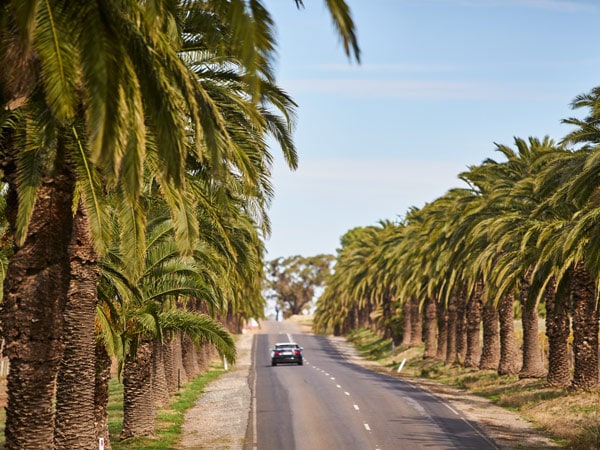
Car driving Seppeltsfield Road in the Barossa
If you want the most direct route, driving is your answer. (Image: South Australian Tourism Commission)

You can also get to Tanunda via Main North Road, which will take you through Lyndoch, home to some of the finest luxury accommodations in the Barossa Valley, before arriving in Tanunda. This route takes about one-and-a-half hours.

If you’re longing for scenery, get onto North East Road from Adelaide Airport and meander through Tea Tree Gully, Chain of Ponds and Williamstown before venturing into the Barossa Valley from the south. It’s another one-and-a-half-hour journey.
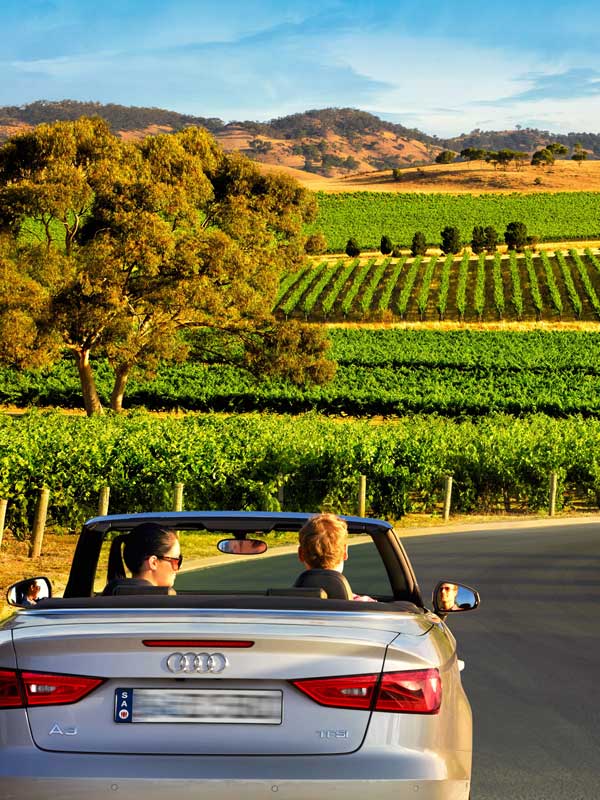
Convertible driving past Kellermeister Wines in the Barossa
There are some good scenic drives on the way to the Barossa. (Image: South Australian Tourism Commission)

Public transport

If you couldn’t manage a car, splitting a taxi from Adelaide Airport to the Barossa Valley between a group won’t set you back as much as you might think. Clocking in somewhere between $150 to $200, it’s obviously as direct a journey as going in your own vehicle.

More affordable, however, is the Adelaide Metro railway service. Catch a one-hour train from Adelaide Railway Station, right in the middle of Adelaide’s CBD, to Gawler Central before transferring to the Barossa via a local LinkSA bus. The 810 bus travels from Gawler Central to Nuriootpa, a top-notch destination for the region’s best winery experiences, via Lyndoch and Tanunda.

Although train and bus services run daily, the journey from Adelaide to the Barossa Valley via public transport is probably the trickiest way to go about things, so check all schedules via their websites just prior to departure day to ensure you’re on track.
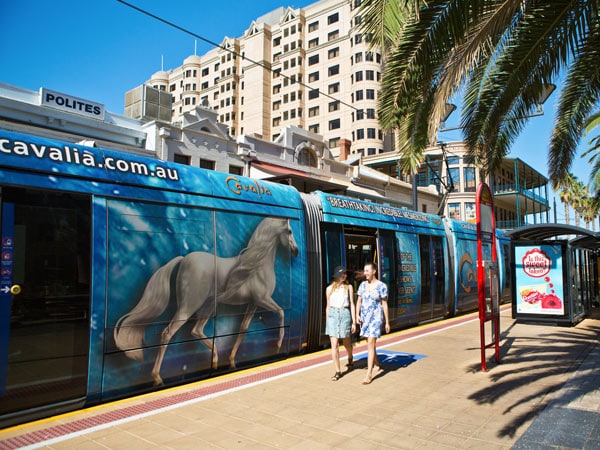
Two women hopping off tram at Moseley Square in Adelaide
Hopping on a train to the Barossa is the most affordable option. (Image: South Australian Tourism Commission)

Need tips, more detail or itinerary ideas tailored to you? Ask AT.

AI Prompt

By air

Getting to Adelaide from anywhere in Australia is easy given Adelaide Airport is serviced regularly with direct flights from cities right across the country. Fly in from Sydney, Melbourne, Brisbane, Perth, Hobart and more by checking the website of your preferred airline for flights. Once you’ve arrived at Adelaide Airport, you can choose from a range of public transport options, in addition to tackling the approximate one-hour journey in your own vehicle or hire car. You’ll find more information on all domestic and international routes, plus regional and charter services on Adelaide Airport’s website.

In the mood for something special? You can also travel via light plane to Parafield Airport, located 45 minutes south of the Barossa Valley and 18 kilometres north of central Adelaide. But if it’s the most luxurious of experiences you’re after, Australia by Air offers private chartered Barossa helicopters. And while we’re talking choppers, don’t miss a spin with Barossa Helicopters, who offer a range of food and wine experiences once you’re in wine country.
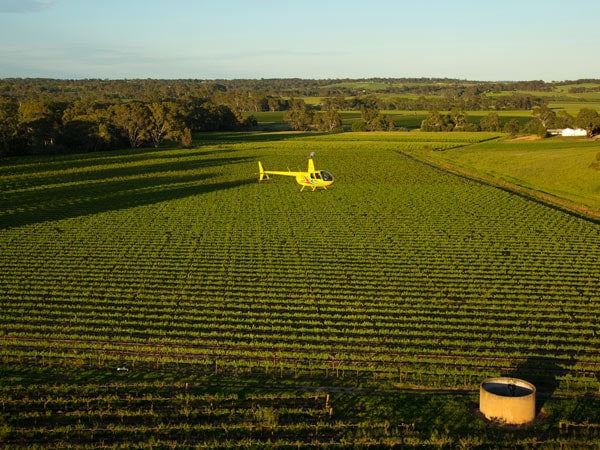
Barossa Helicopters flying above vineyards
There’s no better way to see the Barossa than from above. (Image: Dragan Radocaj)

Tours

Explore the best of the region with your own personal tour guide thanks to a range of brilliant tours that travel from Adelaide to the Barossa Valley. Adelaide Sightseeing is a reliable, highly rated option, offering full-day tours from the CBD to some of the region’s most well-known and best-loved wineries.

There’s also Barossa Unique Tours, which provides trips to and from Adelaide in a fleet of classic wheels; a 1966 Ford Mustang convertible, a Jaguar XF and a motorcycle trike. Barossa Taste Sensations dial the festivities up a notch with their ‘Multi-Day Food and Wine Tour’ of the region. You’ll need to book your own overnight accommodation, but these smooth operators are the ones to know if you’re looking for Barossa’s finest indulgences.
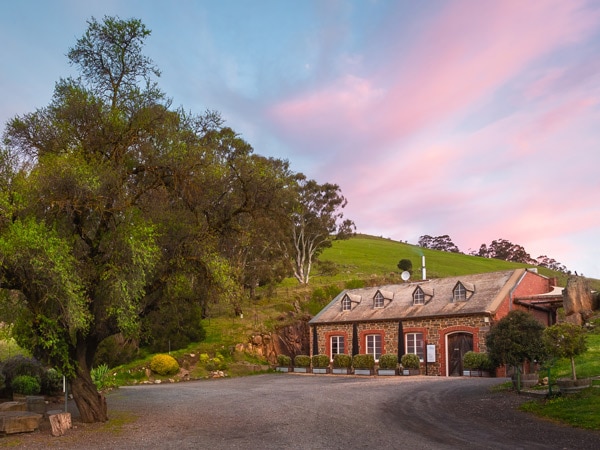
Bethany Wines in the Barossa at sunset
See the region’s best wineries through a tour. (Image: Michael Waterhouse Photography)

Weekly travel news, experiences
insider tips, offers, and more.

Bike

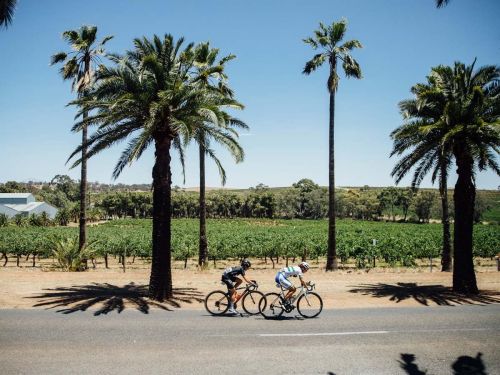
Work for your supper by making your way from Adelaide to the Barossa Valley on a bike. Offering the ultimate scenic route, hopping on two wheels is one of the greatest things to do in this neck of the woods, with various routes winding their way from central Adelaide to wine territory.
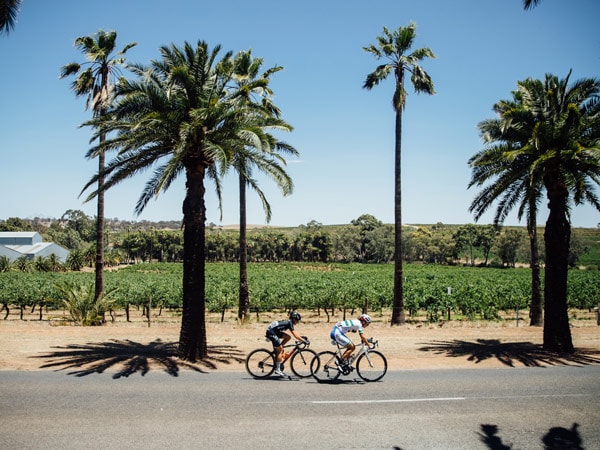
Cyclists riding past vineyards in the Barossa Valley
If you fancy a challenge, make your way from Adelaide to the Barossa Valley on a bike. (Image: South Australian Tourism Commission)

Jump on a train from Adelaide Railway Station in the CBD to Gawler and get on the 40-kilometre, car-free Barossa Trail to Angaston, offering stops in Tanunda and Nuriootpa. You’ll cover some of the region’s best wineries, plus a range of historical sites. There are also various rides from Adelaide along Gorge Road to Williamstown, plus another one along Lower North East Road that links up to Chain of Ponds Road. The South Australian Government offers all the details you’ll need via their ‘Cycle Instead’ initiative.
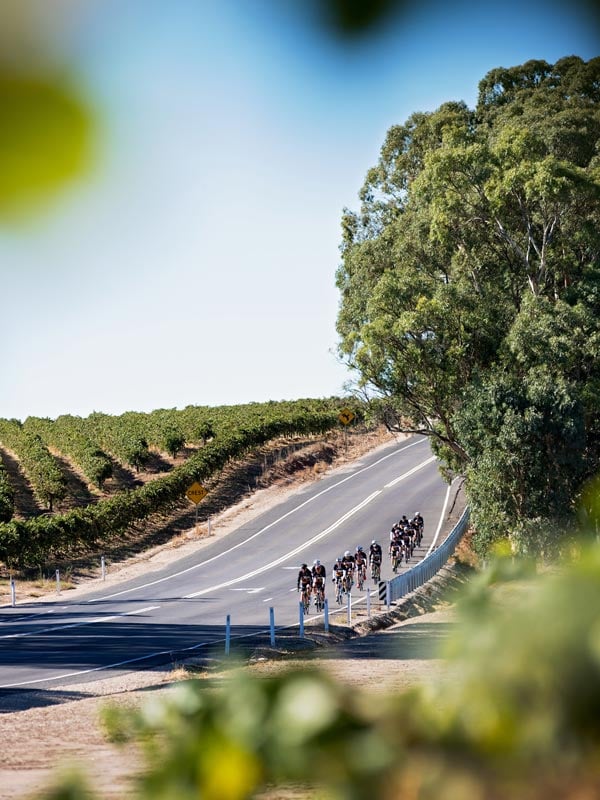
SuperCycle cyclists in the Barossa Valley
The ‘Cycle Instead’ initiative will have you working up a sweat. (Image: South Australian Tourism Commission)

Find more experiences, accommodation, eating and entertainment options in our Barossa Valley travel guide. 

Want to see more stories from Australian Traveller in your Google search results?

  1. Click here to set Australian Traveller as a preferred source.
  2. Tick the box next to "Australian Traveller". That's it.
Kristie Lau-Adams
Kristie Lau-Adams is a Gold Coast-based freelance writer after working as a journalist and editorial director for almost 20 years across Australia's best-known media brands including The Sun-Herald, WHO and Woman's Day. She has spent significant time exploring the world with highlights including trekking Japan’s life-changing Kumano Kodo Pilgrimage and ziplining 140 metres above the vines of Mexico’s Puerto Villarta. She loves exploring her own backyard (quite literally, with her two young children who love bugs), but can also be found stalking remote corners globally for outstanding chilli margaritas and soul-stirring cultural experiences.
View profile and articles
hero media

Mornington Peninsula’s storied past: war, shipwrecks and a runaway convict 

    Kellie Floyd Kellie Floyd
    The Mornington Peninsula is a coastline of contrasts, where convict and military history meets shipwrecks, wild seas and adventures above and below the surface.

    The Mornington Peninsula can be the kind of place where salt-tangled hair feels like a badge of honour – proof you’ve been somewhere wild, raw and real. Peel back the layers and you’ll discover stories that anchor this region to something other than its famed food and wine.

    This land is the traditional Sea Country of the Bunurong/Boon Wurrung people. Long before grapevines were planted and artisanal goods were crafted, the Bunurong Traditional Owners lived in deep connection with the land and sea. Today, places such as Mushroom Reef Marine Sanctuary echo that tradition, with families exploring its rockpools in search of colourful sea stars and crabs at low tide and learning how these fragile ecosystems have been cared for across countless generations.

    a group of people visiting the Port Nepean National Park
    Take in the rugged coastal landscape at Port Nepean National Park. (Image: Tourism Australia)

    A visit to Point Nepean National Park feels like stepping back through time. The fort, built in 1882, protected the narrow entrance to Port Phillip Bay until the end of the Second World War. It was here that the first Allied shot of the First World War was fired – at a German cargo ship trying to escape just hours after war was declared. Nearby, the old Quarantine Station, one of Australia’s first permanent quarantine facilities, established in 1852, still stands. Walking through the hospital and disinfecting complex evokes stories of those who arrived from faraway shores.

    Not far from here is a story of survival that inspired the Aussie phrase ‘you’ve got Buckley’s chance’. In 1803, escaped convict William Buckley vanished into the bush near what’s now Sorrento. Everyone thought he had no hope of surviving, but he reappeared 32 years later, having lived with local Aboriginal people.

    Even the waters here hold history. The infamous stretch known as The Rip, just three kilometres wide at the entrance of Port Phillip Bay, is among the most treacherous waterways. Countless ships were lost here in the 19th and early 20th centuries, and in 1967, Australia’s own Prime Minister Harold Holt disappeared while swimming off the coast, never to be found.

    a seal swimming in Port Phillip Bay
    A seal swimming in Port Phillip Bay. (Image: Tourism Australia/Two Palms/Harry Pope)

    But for all its danger, the sea here also holds extraordinary beauty. Dolphins are often seen near Sorrento’s cliffs, while below the surface, seagrass meadows and rocky reefs teem with life. Marine tours offer a viewing to this underwater wonderland, while back on terra firma, walking trails lead along beaches, through coastal scrub, and over rock pools.

    And if you think you’ll forget about the Mornington Peninsula once you’ve left? You’ve got Buckley’s chance.

    A traveller’s checklist

    Staying there

    the suite interior at InterContinental Sorrento
    Luxury interiors at the historic InterContinental Sorrento. (Image: Greg Elms)

    Point Nepean Discovery Tents is immersive glamping beside the historic Quarantine Station. Or upgrade to luxury at the 1875-built InterContinental Sorrento.

    Playing there

    an aerial view of Cape Schanck Lighthouse
    Make your way to the Cape Schanck Lighthouse. (Image: Tourism Australia/Two Palms/Harry Pope)

    Bayplay Adventure Tours offer eco-adventures from snorkelling with sea dragons to kayaking with dolphins and cycling Point Nepean. Cape Schanck Lighthouse is fascinating to explore on a guided tour, which takes you into the lighthouse and keeper’s cottage.

    Eating there

    Portsea Hotel is a beautifully restored 1876 Tudor-style pub right on the beach, serving seasonal local fare.