10 beautiful camping spots on Kangaroo Island

hero media
Camping on Kangaroo Island includes options that range from rustic log cabins and glampsites to pared-back places to pitch your tent.

Kangaroo Island has a mix of privately owned caravan parks, council-run sites and conservation areas and national parks where you can throw up a tent or pull in with your caravan. Here are some of the best Kangaroo Island camping spots.
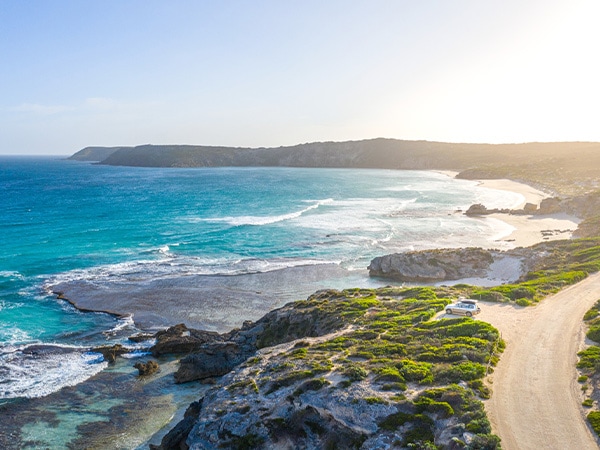
Pennington Bay, Kangaroo Island, South Australia, Australia
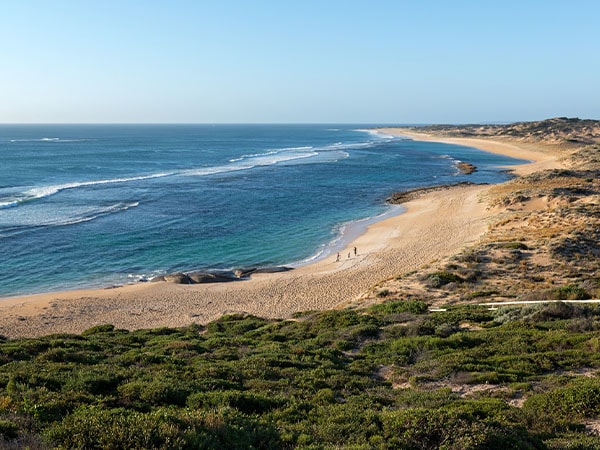
See amazing views of Pennington Bay on your camping trip. (Image: Isaac Forman)

1. Kangaroo Island Seafront Holiday Park

Roughing it has never been so appealing. Forget tinned spaghetti. Stock up on permaculture produce from Petite Provenance, and artisanal goods from Vivonne Bay General Store, one of the best places to eat on Kangaroo Island, before settling into your glamping tent at Kangaroo Island Seafront Holiday Park .
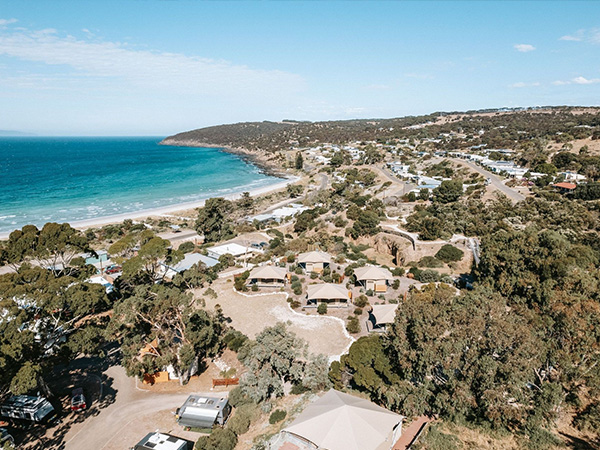
 

Glamp or camp at Kangaroo Island Seafront Holiday Park.

Located 300 metres from the SeaLink Ferry , the campground has views over Hog Bay Beach and the ruffled sea surging through Backstairs Passage.
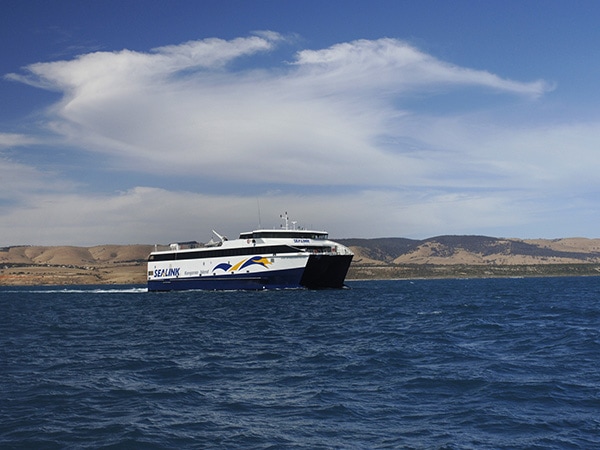
SeaLink Ferry, Kangaroo Island, South Australia
From the SeaLink Ferry, the campground has views over Hog Bay Beach. (Image: South Australian Tourism Commission/Adam Bruzzone)

Accommodation options include Eco Luxury Tents, Eco Family Tents and Oceanview Villas as well as powered campsites for caravans and camping.
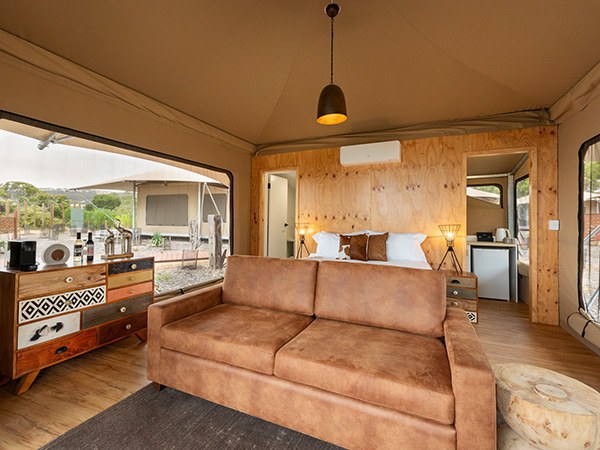
Inside an Eco Luxury Tent at Seafront Holiday Park.

2. Western KI Caravan Park & Wildlife Reserve

You will find your days start to vanish rather quickly when you’re out and about enjoying the wide, open spaces and nature trails that loop around the Western KI Caravan Park . The campground has powered and unpowered tent sites, as well as modern and well-maintained shower blocks and a children’s playground. Got a gammy back? Say goodbye to your sleeping bag and bunker down in the self-contained log cabins or luxury cabins.
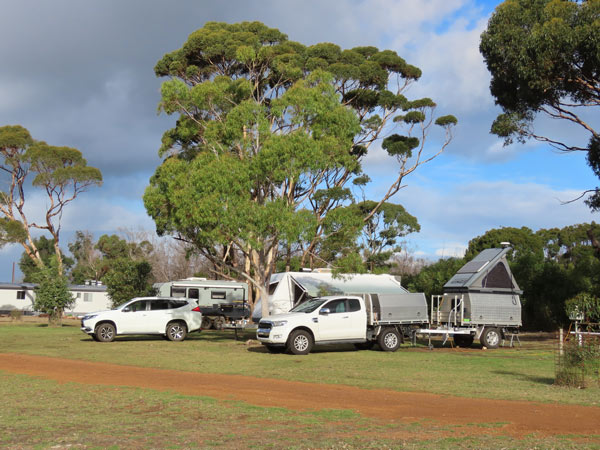
Western KI Caravan Park, Kangaroo Island, South Australia
Enjoy the wide, open spaces and nature trails.

Need tips, more detail or itinerary ideas tailored to you? Ask AT.

AI Prompt

3. Discovery Lagoon Caravan and Camping Grounds

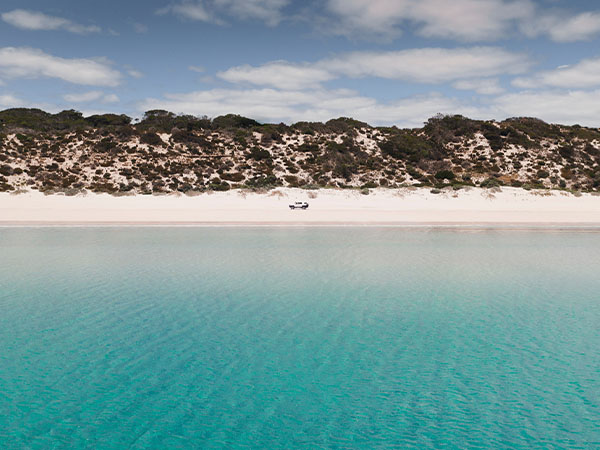
Eco campers and caravanners will appreciate the fact the Discovery Lagoon Caravan and Camping Grounds is run entirely on renewable energy. The campground is surrounded by red river gums on a 40-hectare property that is about three kilometres from Emu Bay Beach, where you can set sail on a fishing charter and see the sea open up. The campsite also has two one-bedroom eco glamping cottages which are designed for couples.
Emu Bay, Kangaroo Island, South Australia, Australia
Three kilometres from Emu Bay Beach, you can set sail on a fishing charter and see the sea open up. (Image: @jay.bevs)

4. Harveys Return

Harveys Return Campground is a short (steep) hike away from Harveys Bay, going from green to cyan as it traces the original horse cart track used by the Cape Borda lighthouse keepers on the northwest tip of the island. The bare bush campground has sheltered picnic tables, gas barbecue facilities and toilets and is surrounded by a grove of eucalyptus trees with leaves that flicker in the light. Walk through the scrubby grey-green terrain to get to the lighthouse, built in 1858.

5. American River Campground

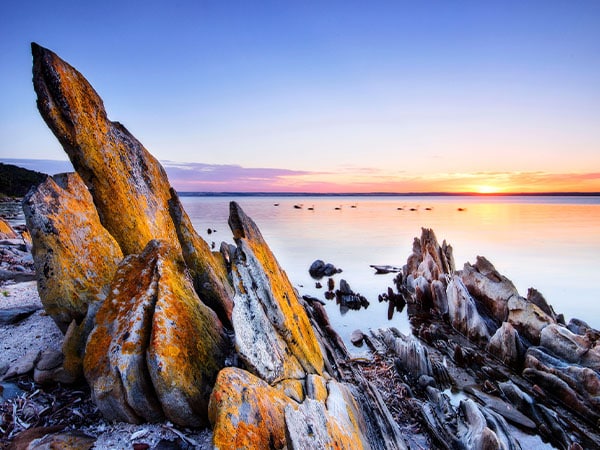
This council-run campground is located near a boat ramp near a narrow neck of the American River, which, incidentally, is not a river, and has capacity for just 15 or so campers. Like many of the campgrounds on Kangaroo Island, the American River Campground is basic, making it well suited for old-school campers: there are toilets and hot showers, sheltered picnic tables and powered and non-powered sites, too. Rise at dawn to cast a line in the ‘river’.
American River, Kangaroo Island, South Australia, Australia
The American River Campground is well suited for old-school campers. (Image: South Australian Tourism Commission)

6. D’Estrees Bay Campgrounds

There are five campsites scattered across four campgrounds located within the vast tract of wilderness at D’Estrees Bay. The Big Sand Dune Campground has just one campsite, and is the campground of choice for hard-core campers who like to sleep under a sky confetti’d with stars with not another soul around. It’s the stillness and solitude that is most luxurious at this site which accommodates camper trailers and tents and offers easy access to Southern Kangaroo Island Marine Park.

7. Duck Lagoon Campground

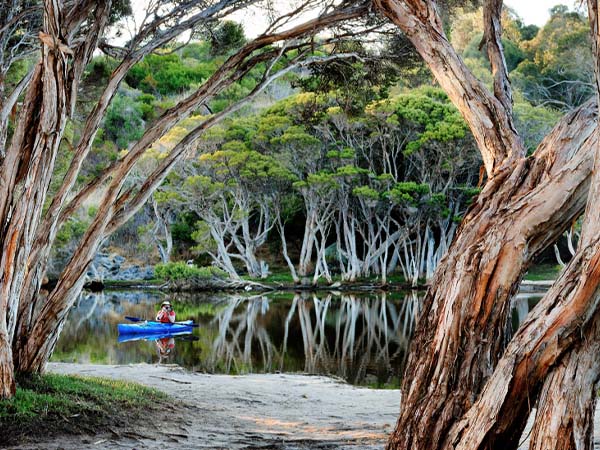
Bird-watchers will appreciate the purpose-built bird hide and observation platform at Duck Lagoon Camp Ground , a small reserve near Cygnet River that is a haven for migratory birds. Enjoy a quiet walk along the banks of the lagoon and read the interpretative signage about the area’s history as squadrons of birds (such as Australian pelicans) fly overhead. Walk along the shore and note the presence of pied oystercatchers, royal spoonbills and black swans in your little black bird book.
Duck Lagoon Campground, Kangaroo Island, South Australia, Australia
The Duck Lagoon is a haven for migratory birds.

Weekly travel news, experiences
insider tips, offers, and more.

8. Western River Cove Campground

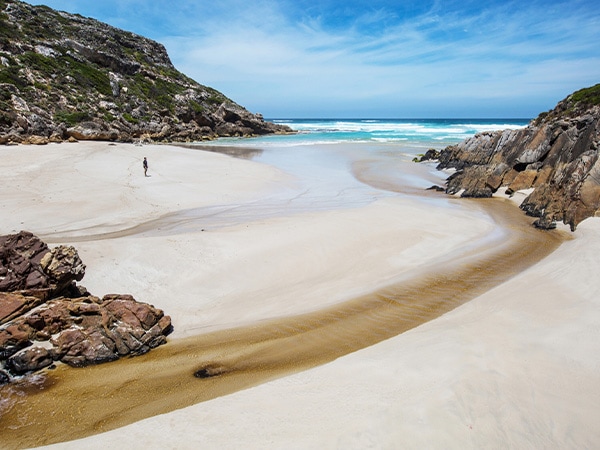
The Western River Cove Campground is situated on the rugged north coast of Kangaroo Island, about an hour’s drive from Kingscote. A footbridge runs like a corridor through the campground over the river that runs through it and down onto the white sand. The Western River Campground is not suitable for caravans and has no powered sites, but like all the council-run grounds, it is pet-friendly.
Western River Cove Campground, Kangaroo Island, South Australia
See the rugged north coast of Kangaroo Island.

9. Browns Beach Campground

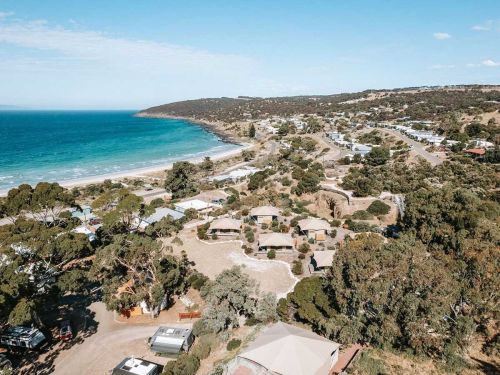
Browns Beach Campground occupies a prime piece of real estate on Nepean Bay, just 15 minutes’ drive from Penneshaw. Set up your camp chair, pour yourself a glass of Dudley Kangaroo Porky Flat Shiraz, and sit in the sunshine on your own private patch of sand on the dunes overlooking Brown Beach. The family-friendly beach is located on the north coast of Dudley Peninsula and is hard to beat for beachside camping nirvana.
Aerial view of Browns Beach, Kangaroo Island, South Australia, Australia
Sit in the sunshine on your own private patch of sand on the dunes overlooking Brown Beach. (Image: South Australian Tourism Commission)

10. Vivonne Bay Campground

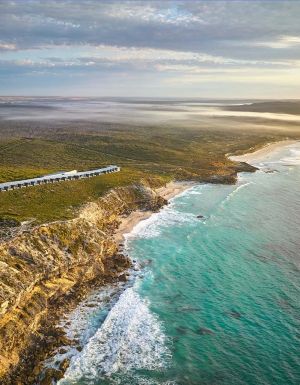
The six-kilometre U-shaped beach at Vivonne Bay is regularly ranked as one of Australia’s best. From above, the bay presents like a colour catalogue of all the possible blues and greens. Get amongst it by surfing, fishing, snorkelling, playing classic catches or beach cricket, just a few of the many excellent things to do on this corner of Kangaroo Island. Located about 45 minutes from Kingscote, the campground is accessible for caravans and has both powered and unpowered campsites.
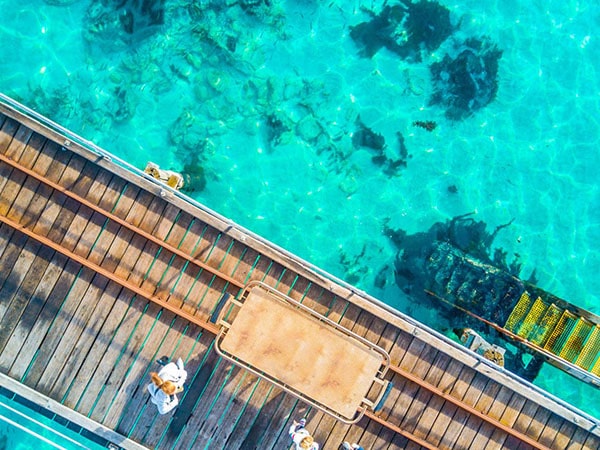
Vivonne Bay, Kangaroo Island, South Australia, Australia
Witness the colour catalogue of all the possible blues and greens.
If you are looking to mix up your stay on Kangaroo Island, spend a night at one of our luxury accommodation recommendations or one of our picks of best places to stay.
Carla Grossetti
Carla Grossetti avoided accruing a HECS debt by accepting a cadetship with News Corp. at the age of 18. After completing her cadetship at The Cairns Post Carla moved south to accept a position at The Canberra Times before heading off on a jaunt around Canada, the US, Mexico and Central America. During her career as a journalist, Carla has successfully combined her two loves – of writing and travel – and has more than two decades experience switch-footing between digital and print media. Carla’s CV also includes stints at delicious., The Sydney Morning Herald, and The Australian, where she specialises in food and travel. Carla also based herself in the UK where she worked at Conde Nast Traveller, and The Sunday Times’ Travel section before accepting a fulltime role as part of the pioneering digital team at The Guardian UK. Carla and has been freelancing for Australian Traveller for more than a decade, where she works as both a writer and a sub editor.
View profile and articles
hero media

Mornington Peninsula’s storied past: war, shipwrecks and a runaway convict 

    Kellie Floyd Kellie Floyd
    The Mornington Peninsula is a coastline of contrasts, where convict and military history meets shipwrecks, wild seas and adventures above and below the surface.

    The Mornington Peninsula can be the kind of place where salt-tangled hair feels like a badge of honour – proof you’ve been somewhere wild, raw and real. Peel back the layers and you’ll discover stories that anchor this region to something other than its famed food and wine.

    This land is the traditional Sea Country of the Bunurong/Boon Wurrung people. Long before grapevines were planted and artisanal goods were crafted, the Bunurong Traditional Owners lived in deep connection with the land and sea. Today, places such as Mushroom Reef Marine Sanctuary echo that tradition, with families exploring its rockpools in search of colourful sea stars and crabs at low tide and learning how these fragile ecosystems have been cared for across countless generations.

    a group of people visiting the Port Nepean National Park
    Take in the rugged coastal landscape at Port Nepean National Park. (Image: Tourism Australia)

    A visit to Point Nepean National Park feels like stepping back through time. The fort, built in 1882, protected the narrow entrance to Port Phillip Bay until the end of the Second World War. It was here that the first Allied shot of the First World War was fired – at a German cargo ship trying to escape just hours after war was declared. Nearby, the old Quarantine Station, one of Australia’s first permanent quarantine facilities, established in 1852, still stands. Walking through the hospital and disinfecting complex evokes stories of those who arrived from faraway shores.

    Not far from here is a story of survival that inspired the Aussie phrase ‘you’ve got Buckley’s chance’. In 1803, escaped convict William Buckley vanished into the bush near what’s now Sorrento. Everyone thought he had no hope of surviving, but he reappeared 32 years later, having lived with local Aboriginal people.

    Even the waters here hold history. The infamous stretch known as The Rip, just three kilometres wide at the entrance of Port Phillip Bay, is among the most treacherous waterways. Countless ships were lost here in the 19th and early 20th centuries, and in 1967, Australia’s own Prime Minister Harold Holt disappeared while swimming off the coast, never to be found.

    a seal swimming in Port Phillip Bay
    A seal swimming in Port Phillip Bay. (Image: Tourism Australia/Two Palms/Harry Pope)

    But for all its danger, the sea here also holds extraordinary beauty. Dolphins are often seen near Sorrento’s cliffs, while below the surface, seagrass meadows and rocky reefs teem with life. Marine tours offer a viewing to this underwater wonderland, while back on terra firma, walking trails lead along beaches, through coastal scrub, and over rock pools.

    And if you think you’ll forget about the Mornington Peninsula once you’ve left? You’ve got Buckley’s chance.

    A traveller’s checklist

    Staying there

    the suite interior at InterContinental Sorrento
    Luxury interiors at the historic InterContinental Sorrento. (Image: Greg Elms)

    Point Nepean Discovery Tents is immersive glamping beside the historic Quarantine Station. Or upgrade to luxury at the 1875-built InterContinental Sorrento .

    Playing there

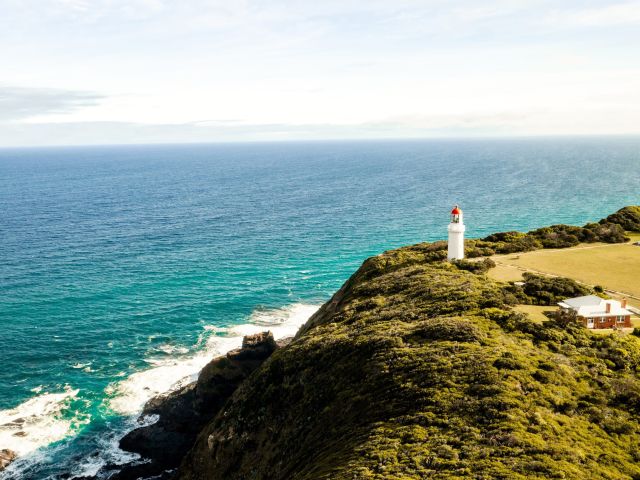
    an aerial view of Cape Schanck Lighthouse
    Make your way to the Cape Schanck Lighthouse. (Image: Tourism Australia/Two Palms/Harry Pope)

    Bayplay Adventure Tours offer eco-adventures from snorkelling with sea dragons to kayaking with dolphins and cycling Point Nepean. Cape Schanck Lighthouse is fascinating to explore on a guided tour, which takes you into the lighthouse and keeper’s cottage.

    Eating there

    Portsea Hotel is a beautifully restored 1876 Tudor-style pub right on the beach, serving seasonal local fare.