A guide to visiting Kangaroo Island Wildlife Park

hero media
Here’s what you need to know before making a trip to the famous South Australian wildlife centre.

Kangaroo Island (also known as Karta Pintingga – meaning ‘island of the dead’) has long drawn visitors with its incredible levels of biodiversity. Separated from the mainland of South Australia thousands of years ago, it has provided a home for animals such as its own species of kangaroo, the Australian sea lion and the tammar wallaby, as well as being a haven to mainland interlopers, like koalas and platypus.

And visiting the KI animal experts and their charges over at Kangaroo Island Wildlife Park is a must-do for any holidaymaker.

So, are you ready to get up close to a koala and pat a roo? We’ve answered all your questions about the Kangaroo Island Wildlife Park.
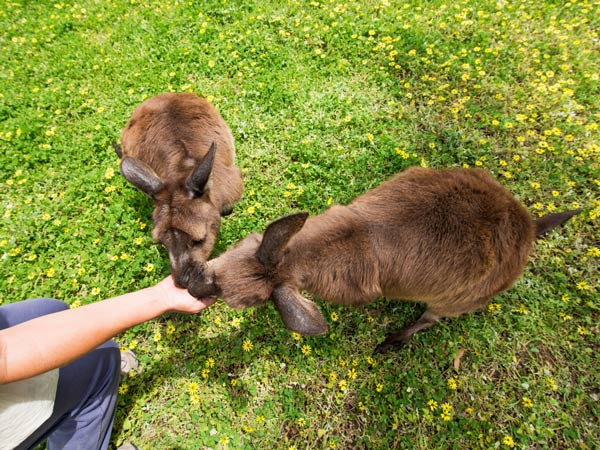
Feeding two kangaroos at Kangaroo Island Wildlife Park.
Get up close and personal with Kangaroo Island Wildlife Park’s animals. (Image: Julie Fletcher)

What is Kangaroo Island Wildlife Park?

KI Wildlife Park has been open for over thirty years. Today it is the home of over 150 native Australian species and more than 600 animals.

You can come here to feed kangaroos and wallabies, visit little penguins, interact with marmosets, spot pademelons, and even take a walk with a dingo!
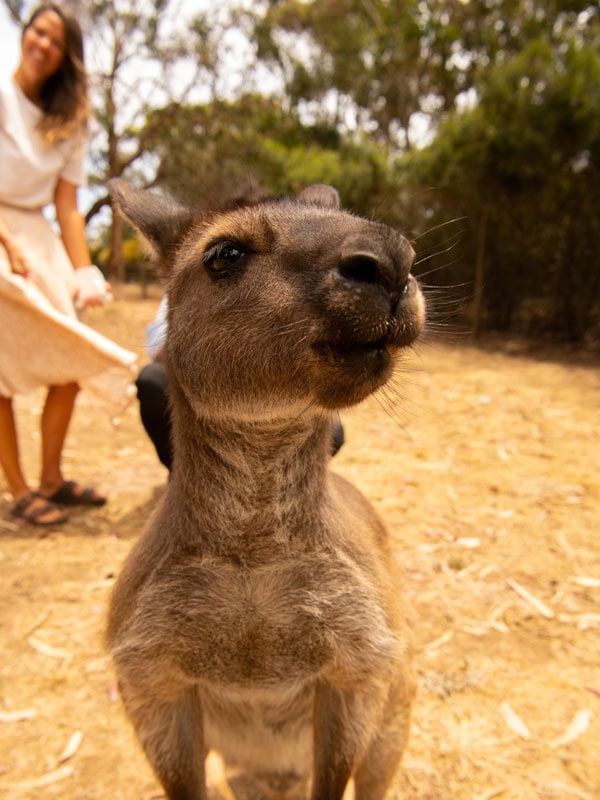
A close up of a kangaroo at Kangaroo Island Wildlife Park.
KI Wildlife Park is home to over 150 native Australian species. (Image: Tourism Australia)

Where is Kangaroo Island Wildlife Park?

It can be found in the centre of the island, three kilometres past the town of Parndana.

Has Kangaroo Island Wildlife Park recovered from the bushfires?

In 2020, the community of Kangaroo Island was rocked by destructive bushfires, which devastated the local wildlife population. While Kangaroo Island Wildlife Park was saved through firefighting efforts, sadly, many animals were killed and injured around the island.

Since then, the Kangaroo Island Koala and Wildlife Rescue Centre was established at the park. Hundreds of injured and orphaned koalas and other native Australian fauna sent there for rehabilitation, release, or long-term care in the park.

As well as visiting the park’s attractions, visitors can now donate to its rescue centre. They can even adopt their favourite animal; and help provide for its care and wellbeing, long after getting the ferry back to the mainland.
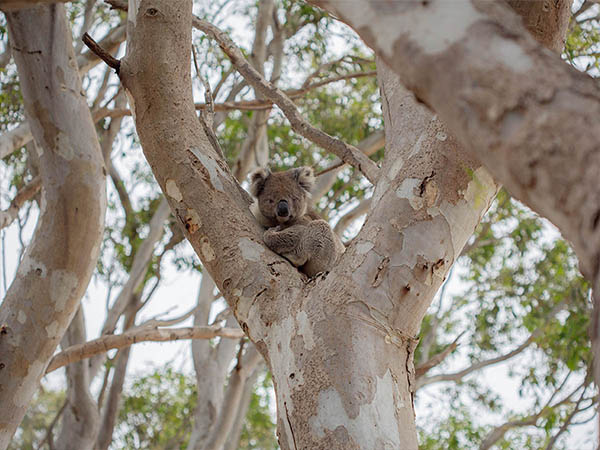
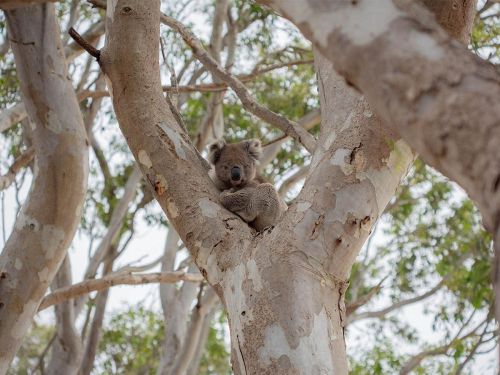
A koala rests in a gum tree at Kangaroo Island Wildlife Park
Hundreds of injured and orphaned koalas were saved after the bushfires. (Image: Tourism Australia.)

Need tips, more detail or itinerary ideas tailored to you? Ask AT.

AI Prompt

When is the best time to go to Kangaroo Island Wildlife Park?

The wildlife park is open daily, from 9.30am till 5pm, except Christmas Day. Owner Dana Mitchell says visitors might want to also tailor the timing of their visits according to the time of the year.

“In summer, the morning and afternoon are the best times to visit," she says. “Otherwise, any time of the day works."

Dana also explains that there are different park highlights that change between the seasons, such as in spring: “It’s baby season, which is exciting," she explains. “There are baby koalas, quokkas, birds and more."
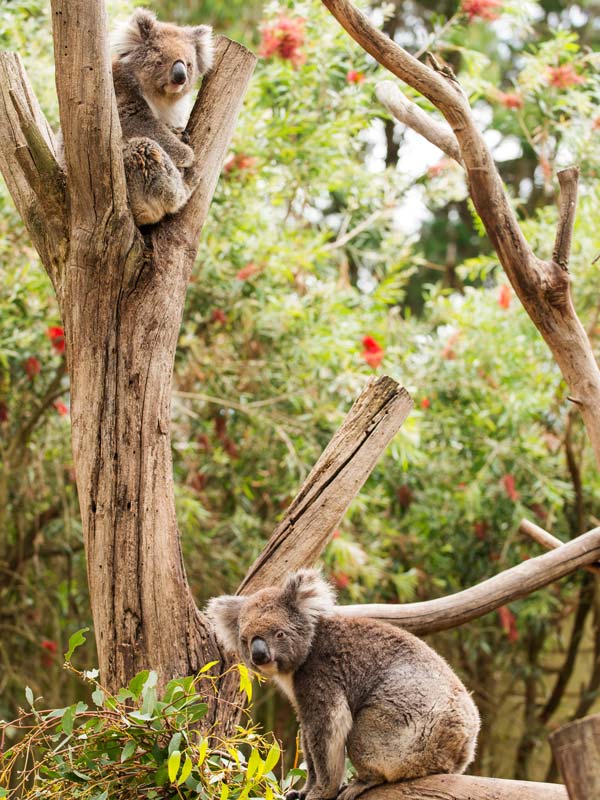
Koala's in the tree at Kangaroo Island Wildlife Park
Spend the day with these furry creatures. (Image: Julie Fletcher)

What other animals can I see at KI Wildlife Park?

Koalas might steal the show and melt our hearts, but there are many other, captivating animals you need to see at the park. Buy a bag of feed to get up close to wallabies and roos and feel the warmth of a snake’s body against yours, as you hold it close.

Now, you can even choose to take a walk like no other – with Loki, the dingo.

“Dingo walks are something that has been newly added," says Dana. “They’re a lot of fun."

There are also new exotic experiences, such as with meerkats and servals (a species of African cat). While all these can be booked individually on the KI Wildlife Park website, you can also organise a private tour for a more curated and personalised experience of the Kangaroo Island wildlife.
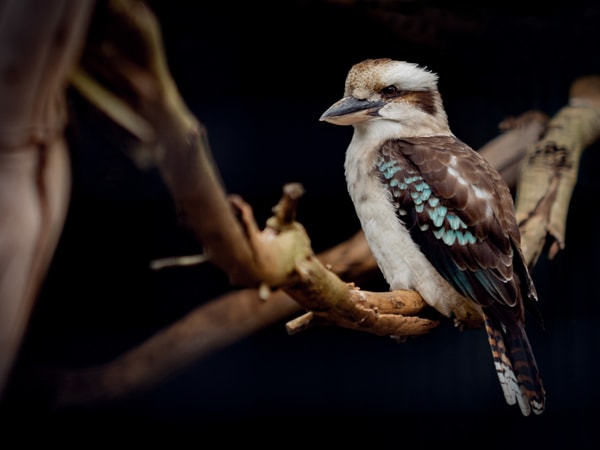
A kookaburra sits in a tree at Kangaroo Island Wildlife Park.
You can see lots of different animals in the park. (Image: Alana Jayne Elgazzar)

Weekly travel news, experiences
insider tips, offers, and more.

Is Kangaroo Island Wildlife Park good for families?

Th wildlife park is perfect for kids (and, it goes without saying, big kids too). There are plenty of educational activities, and chances for families to fall in love with the natural world. Note that there are some restrictions on what the littlies can do, such as needing to be strong enough to hold a koala for the petting section.
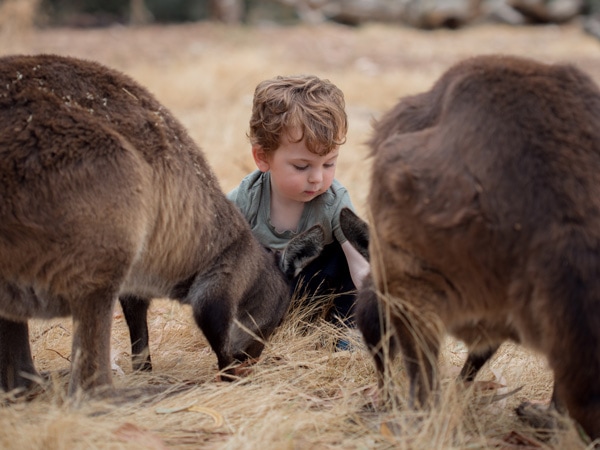
Child pats Kangaroo Island kangaroos.
Kids will love Kangaroo Island Wildlife Park. (Image: Alana Jayne Elgazzar)

Is there food at the wildlife park?

There is a small cafe at the wildlife centre, serving up ice creams and coffees. Nearby there is also a picnic area for BYO lunches. The perfect opportunity to devour a spread of KI produce, no? (You can read more about our favourite places to eat on Kangaroo Island here.)
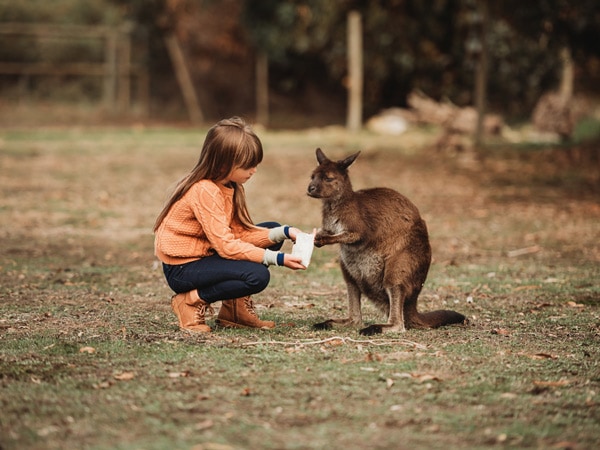
Little girl feeds a kangaroo at Kangaroo Island Wildlife Park.
There are plenty of opportunities for families to fall in love with the natural world. (Image: Megan Crabb)

How much does it cost?

Tickets cost $35 for an adult, $30 for a concession, $20 for a child and from $100 for a family ticket. To check out the full, up-to-date list, head to the park website.

Head to our Kangaroo Island travel guide for more on what to do while you’re there.
Kate Bettes
Kate Bettes is a freelance travel writer. Whether having a picnic in Vietnamese jungle with new friends, or partying in the back of a limousine in Hollywood, Kate’s experiences have left her with the sneaking suspicion that the best travel memories happen when you least expect. It’s this feeling - and how to get it - that she loves to write about.
View profile and articles
hero media

After dark: 6 experiences along the Murray lighting up the night

(Credit: Serena Munro)

    Gemma Kaczerepa Gemma Kaczerepa
    See the Murray region in an entirely different light by exploring its night-time experiences and attractions.

    By day, the mighty Murray River is a majestic and ever-changing sight, with river red gums and wetlands stretching along 2500 kilometres. But by night, its cities, towns, villages and landscapes totally transform.

    From Albury Wodonga to Mildura, and everywhere in between, you’ll be in for a multi-sensory and memorable treat encompassing mesmerising light shows, guided ghost tours and vibrant celebrations that capture the nocturnal magic of the river.

    This is no ordinary nighttime adventure; the region becomes an entirely different world when the sun sets. Discover six must-do activities along the Murray that can only be enjoyed after dark.

    1. Share in ghostly tales

    Port After Dark tour Murray at night
    Hold on to your nerve when learning local ghost stories. (Credit: Campaspe Shire Council)

    If you’re up for something a little more spine-tingling, Port After Dark in Echuca is your best bet. Rumour has it that the Port of Echuca Wharf and the buildings around it have long been home to lingering ghosts and mysterious events – like the vengeful woman said to haunt an old tramway bridge and spirits searching for stolen money through the town centre.

    You can hear all about them on this guided lantern tour, which takes place on Wednesday and Saturday nights after dark. The stories are atmospheric and intriguing – you may even spot a ghost or two yourself. If you’d like a more intimate experience, private tours are also available to groups of 15 or more.

    2. Wander art installations

    Bruce Munroe's Fibre Optic Symphoinic Orchestra Murray at night
    See Bruce Munro’s immersive art installation. (Credit: Serena Munro)

    Right near the Perry Sandhills, sits an experience that feels almost otherworldly. Artist Bruce Munro (of Uluru’s Field of Lights fame) has created a Fibre Optic Symphonic Orchestra, a network of 80 Hills Hoists illuminated with fibre optic light combined with the sounds of an orchestra. The clotheslines glow and pulse in time to the specially composed score, immersing you in a dreamscape of light and sound.

    For a different light experience, you’ll find stillness at Trail of Lights, also curated by Munro. Located just 30 minutes away on Lock Island in Mildura, thousands of lights stretch over the landscape, spotlighting both the river and a series of Munro’s sculptures. The trail is intended to be a peaceful and meditative setting for wandering and reflecting.

    3. Learn through lasers

    Heartbeat of the Murray at night
    Travel 30 million years into the Murray’s past at Heartbeat of the Murray. (Credit: Ewen Bell)

    Discover a fascinating history in this dual act of lights and projections on the banks of the Little Murray River. Legends of the Mallee is a multimedia show in Swan Hill combining lasers and lights, which tells the story of the region’s rich past. Learn about the Wamba Wamba and Wadi Wadi Peoples who first inhabited the area, as well as the figures and events that shaped the Mallee of today.

    The river steals the spotlight in the Heartbeat of the Murray, a multimedia spectacle inside the Pioneer Settlement encompassing lights, lasers, sound and special effects against the natural backdrop. Through a sequence of large-scale animated projections, you’ll go back 30 million years to explore the Murray River’s formation before travelling to the present to learn how it supports modern communities.

    4. Light up the lake

    Lake Mulwala Laser Light Show Murray at night
    Watch the lights and lasers of Lake Mulwala. (Credit: Mulwala Water Ski Club)

    Travelling with kids? Head to Yarrawonga Mulwala and nearby Lake Mulwala for the family-friendly Laser Light & Sound Show. Lights and lasers are projected over the lake and onto curtains of fog, creating a colourful and high-energy visual display. The show suits all ages and tastes, set to a mix of songs that everyone knows and loves.

    You can take in the spectacle from either the grassy banks of the lake or book a table at the Mulwala Water Ski Club’s Malibu Deck Cafe, serving pub-style food and refreshing drinks, including excellent classic cocktails. If you’re watching from the foreshore, the show is entirely free, making it a great budget-friendly option.

    5. Be captivated by local culture

    Bullanginya Dreaming Murray at night
    Soak in the culture of the Bangerang People. (Credit: Laser Vision)

    Set aside an evening to explore Bullanginya Dreaming in Cobram Barooga – you’ll want ample time to take in the stories and symbolism of this immersive laser light and sound trail. The 1.8-kilometre trail explores the storytelling and culture of the Bangerang People, who have long cared for the lands around Bullanginya Lagoon in Barooga. The trail features 12 activations – each telling a different story – and combines dramatic lights and lasers with water and fire.

    Intertwined with the visual displays are Bangerang narratives, giving you meaningful insight into the area’s Indigenous heritage. It’s designed to be explored over 90 or so minutes, encouraging you to move slowly and thoughtfully.

    6. Discover a winter glow

    winterglow festival
    See the streets of Albury Wodonga come to life after dark. (Credit: Visit Albury Wodonga)

    Albury Wodonga comes alive as the weather drops, with an annual celebration of the season on Saturday, 15 August. WinterGlow takes over the CBD and features a vibrant program of things to see, do, learn, eat and drink.

    Take part in hands-on workshops that let you try different art forms and crafts. Feast on street food and winter warmers from local eateries. Browse for artisan wares at the night markets. Watch musical acts on the main stage. Or get involved in different activations, including a silent disco and giant maze. Artificial snow will be falling to add to the festive atmosphere.

    Even wandering the streets and laneways and soaking up the late-night energy will leave you feeling enchanted.

    Start planning a day-to-night adventure along the Murray at visitthemurray.com.au.