A guide to the magical blue lakes of Mount Gambier

hero media
With its vibrant hue, Blue Lake Mount Gambier is celebrated for all the right reasons, but the good news? There’s plenty more where that came from. 

To visit Blue Lake Mount Gambier or Little Blue Lake Mount Gambier? It’s far from the only question you’ll be asking when you descend on this breathtaking patch of South Australia’s Limestone Coast, such as…

What exactly are the Blue Lakes of Mount Gambier?

It’s unusual that so many spectacular lakes should be concentrated so close to one another, but they’re the result of explosive volcanic activity rocking the earth some 5,000 years ago, creating a series of crater lakes.
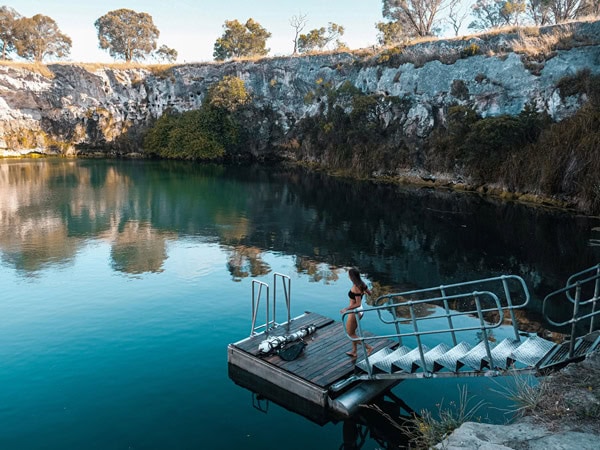
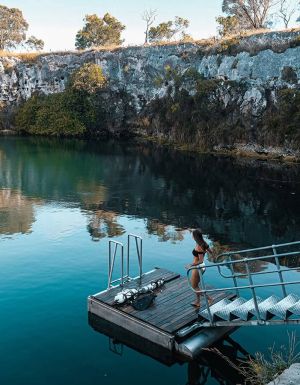
Little Blue Lake with its stairs and floating pontoon
The dazzling Little Blue Lake is around 47 metres deep. (Image: Lucy Adamopoulos)

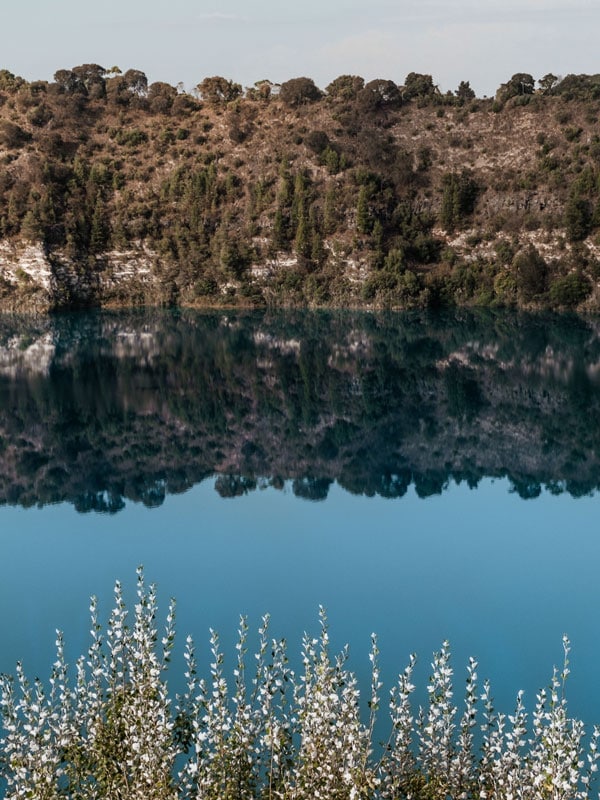
While Blue Lake/Warwar , celebrated for the mysterious way it turns a vibrant cobalt (and occasionally, turquoise) from November onwards before making the transition to steel grey come March, has become synonymous with Mount Gambier, it’s actually just one of several lakes that make up the Crater Lakes Precinct which includes Valley Lake/Ketla Malpi , Brownes Lake/Kroweratwari  and Leg of Mutton Lake/Yatton Loo .
the reflection of the Blue Lakes of Mount Gambier
The Blue Lakes of Mount Gambier are nothing short of spectacular. (Image: City of Mount Gambier/Czech Aus Out)

But wait, you forgot Little Blue Lake?

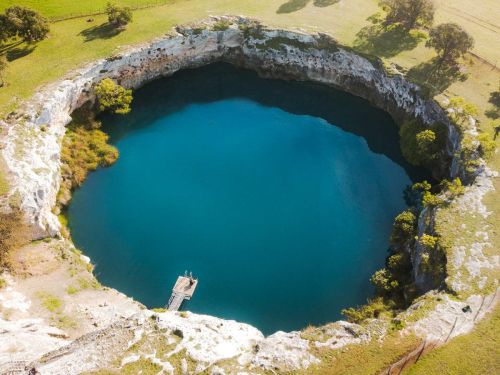
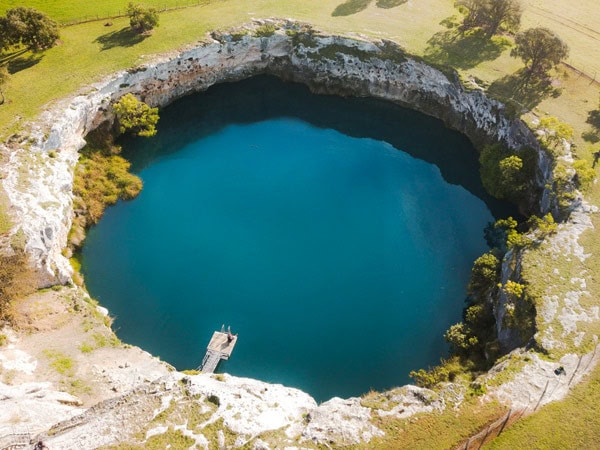
Disregard the ‘lake’ in its title, Little Blue Lake  – again, a dazzling body of water (some 47 metres deep) which turns a brilliant blue between November and March, is actually a sinkhole just 15 minutes from Mount Gambier.
the Little Blue Lake sinkhole in Mt Gambier
Little Blue Lake turns brilliant blue between November and March. (Image: Mitch Toft)

Popular with swimmers and cave divers (the latter only permitted for divers who hold at least the CDAA Deep Cavern grade dive rating, Little Blue Lake with its stairs and floating pontoon is one of Australia’s most accessible sinkholes.
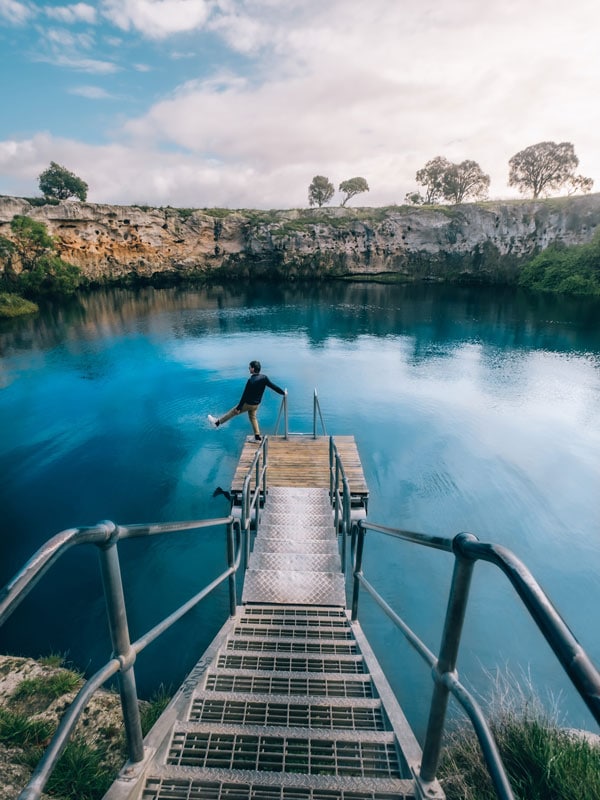
Go swimming or cave diving at Little Blue Lake. (Image: paulpayasalad)

Need tips, more detail or itinerary ideas tailored to you? Ask AT.

AI Prompt

What’s the best way to experience Blue Lake? 

Let’s start with how you won’t be experiencing it; as the lake serves as the city’s water supply, there is no swimming allowed. The good news? You can still enjoy this almost circular, one kilometre lake however by tackling the 3.6-kilometre walking trail that follows its rim, a 45-minute journey best started at the Pioneer Memorial (although you can start the walk from any point).
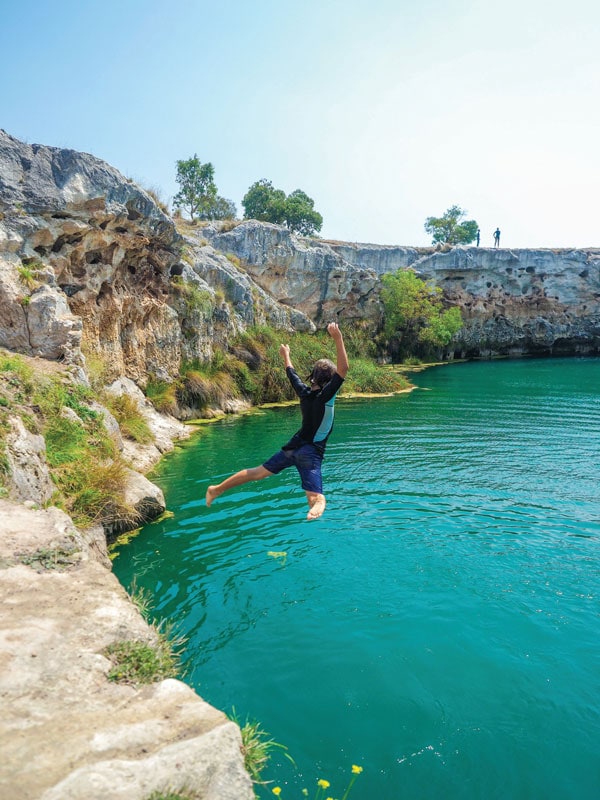
a man jumping into the Little Blue Lake, Mt Gambier
The turquoise lake beckons for a refreshing dip. (Image: Joanne Rogers)

Scenic lookouts are dotted around the lake, but keep an eye out for Rotary Lookout where you can view the Centenary Tower, the Pumping Station and Mount Schank. As mentioned, if you can time your visit to slot in neatly between November and March, you’ll see the lake at its vibrant best.
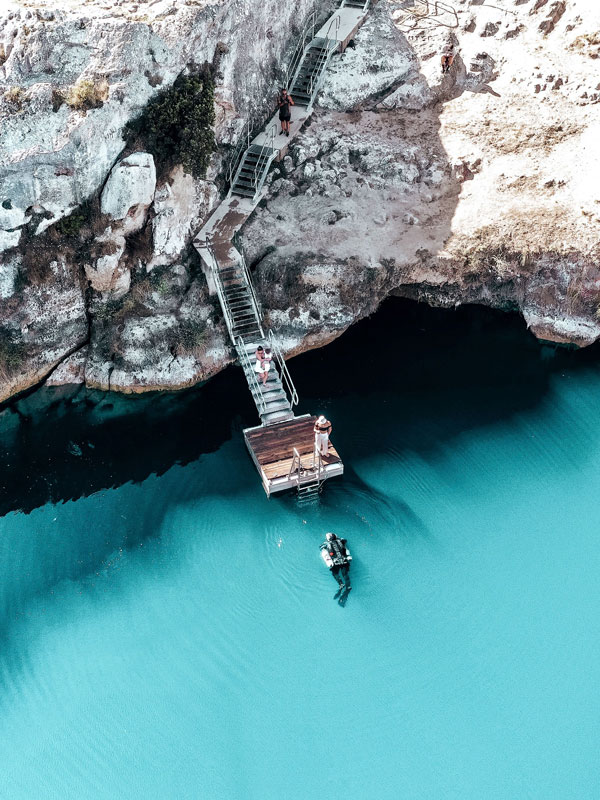
diving in the Little Blue Lake, Mt Gambier
See the Little Blue Lake at its vibrant best. (Image: Lucy Adamopoulos)

Which other lakes do you recommend around Mount Gambier? 

Take a short drive to the Crater Lakes where Valley Lake is home to a wildlife-filled conservation park heaving with native flora and fauna. While some choose to make the most of water sport options on the water, this is the ultimate spot for a relaxed picnic, a casual barbeque (there are free barbeque facilities onsite), or if you’re feeling active, a round or two of disc golf at the Crater Lakes Disc Course .
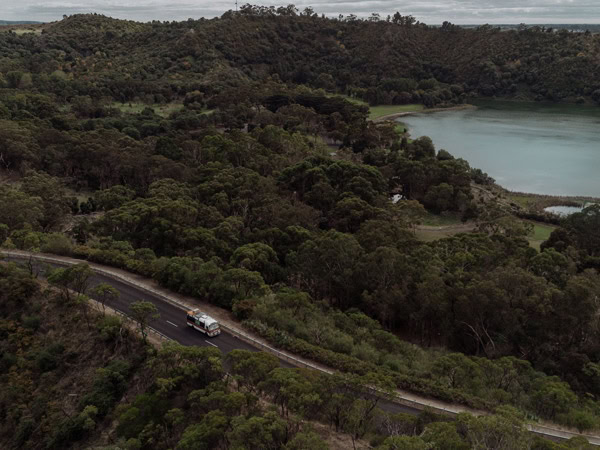
driving along the Crater Lakes, Mt Gambier
Be surrounded by native flora and fauna at the Crater Lakes. (Image: City of Mount Gambier/ Czech Aus Out)

Our recommendation? Set up a spot by Brownes Lake/Kroweratwari, the site of the original Mount Gambier Botanical Gardens and bring the kids: the adventure playground will thrill kids and kidults of all ages.
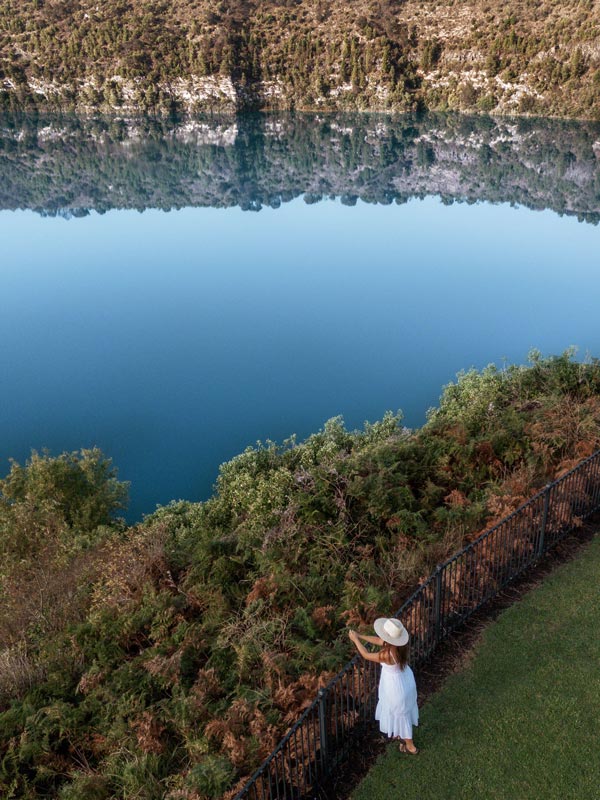
a woman sightseeing at the Little Blue Lake, Mt Gambier
Admire stunning vistas. (Image: City of Mount Gambier/Czech Aus Out)

Valley Lakes Recreation Area is particularly picturesque in the autumn months when the flame trees put on a spectacular show of vibrant yellow, red and burnt orange hues.
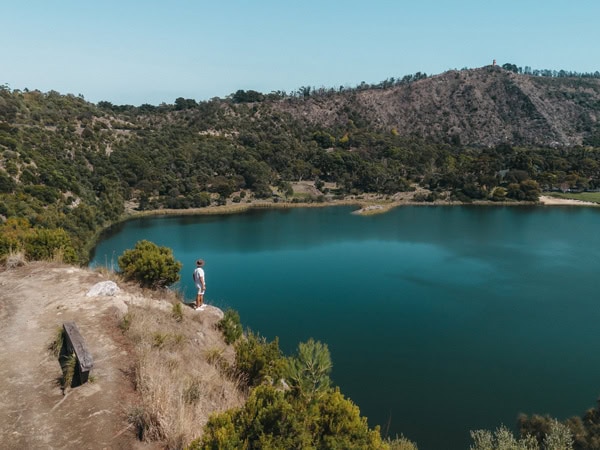
an aerial view of the Valley Lakes, Mt Gambier
Valley Lake is most picturesque come autumn. (Image: City of Mount Gambier/Czech Aus Out)

Be sure to also check out the curiously named Leg of Mutton Lake – for its shape which is, you guessed it, shaped like a lamb leg. Although it’s now dry due to reductions in the water table, the dramatic wooded area is an excellent location for hikes.
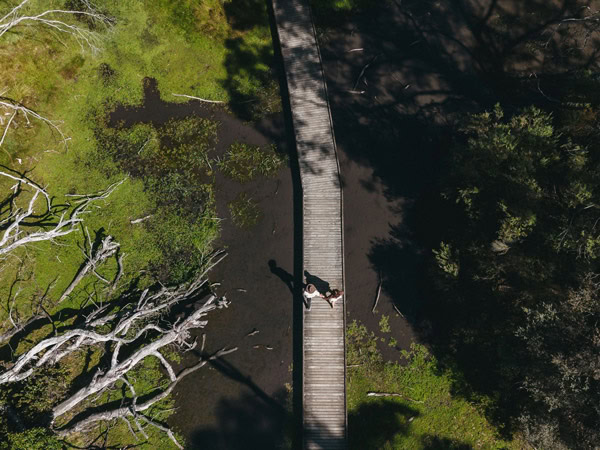
an aerial view of two people walking along the Limestone Coast
Tackle the scenic walking trail to the Blue Lake. (Image: City of Mount Gambier/Czech Aus Out)

Choose between the 4.2-kilometre Mountain Trail (begin at Mark’s Lookout and follow the track in an anti-clockwise direction for the best views), the moderate 1.7-kilometre Pepperpot Trail and Blue Lake Circuit, or for those who prefer something shorter, the Oaks, Blue Gum and the The Browns Lake walks.
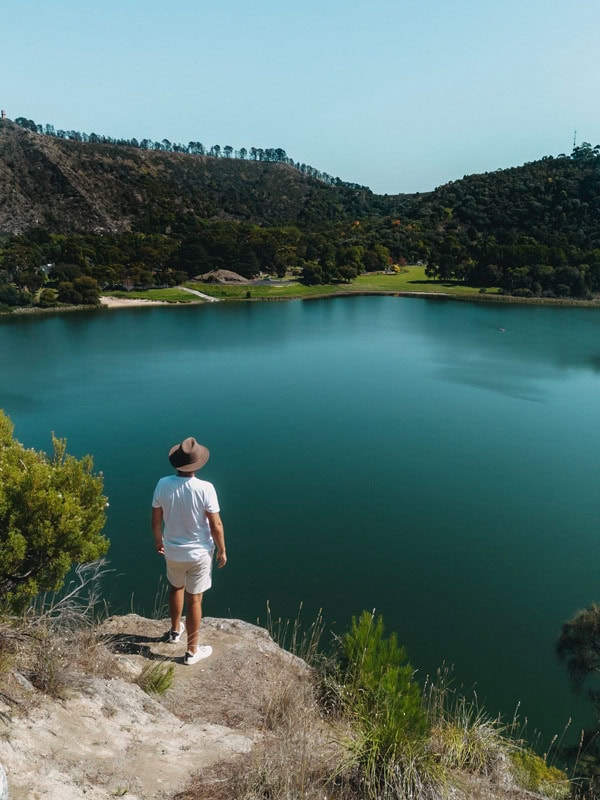
a man standing on the edge of a cliff at Valley Lake
The Valley Lakes Recreation Area is within the Crater Lakes precinct in Mount Gambier. (Image: City of Mount Gambier/Czech Aus Out)

Weekly travel news, experiences
insider tips, offers, and more.

Is there anything else I should know? 

Sure, you can either hire a car and make your way to each of the lakes to explore at your own pace, or you can book an Aquifer Tour  at Blue Lake, if you prefer a guided experience with a side of history.
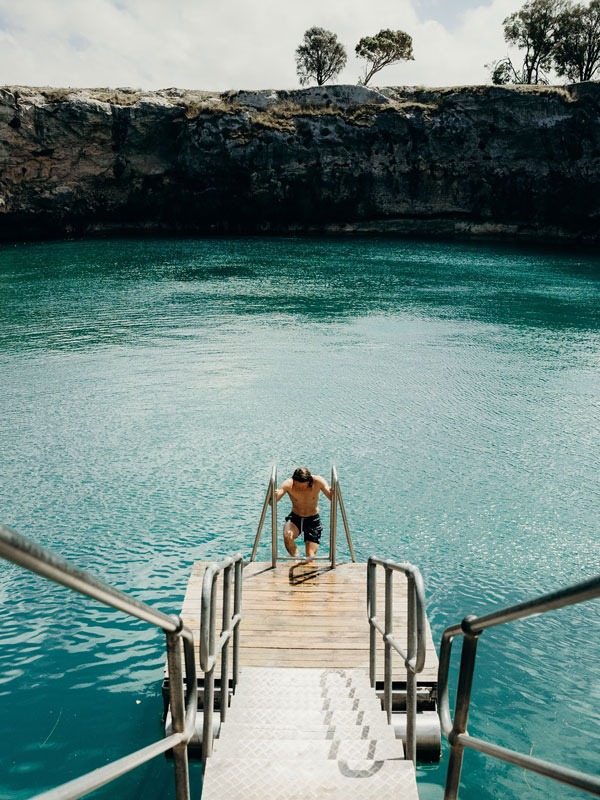
a man climbing up the stairs at Little Blue Lake, Mt Gambier
Cool off at the Little Blue Lake. (Image: South Australian Tourism Commission)
Head here for more tried and tested tips on visiting Mount Gambier.
Dilvin Yasa
Dilvin Yasa is a freelance journalist, author and TV presenter whose travels have taken her from the iceberg graveyards of Antarctica to the roaring rapids of Uganda. Always on the lookout for that next unforgettable meal, wildlife moment or 80s-themed nightclub, she is inexplicably drawn to polar destinations despite detesting the cold.
View profile and articles
hero media

This geological wonder is hiding in the heart of Victoria

    Michael Turtle Michael Turtle
    Mythical, historical and most of all, spectacularly beautiful, Buchan Caves demands you take your time – and a tour. 

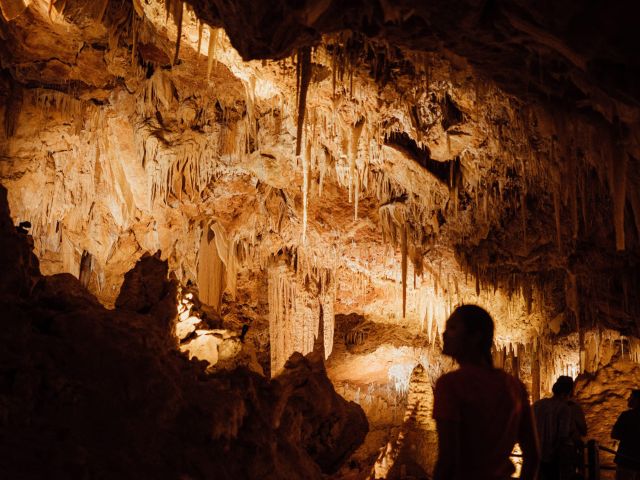
    In the pools of water, so still they could be mirrors, the reflections of the stalactites make these limestone towers seem even taller. Almost 400 million years ago, an underground river carved through the rock to create the Buchan Caves . Now, artworks created by dripping water adorn these subterranean galleries: stalactites hanging from the ceiling, pillars connecting some to the ground, even curtain-like wave formations clinging to the stone.

    Caves House
    Visit the caves for the day or stay onsite in the campground or at the self-contained Caves House. (Image: Ben Savage)

    “This is called the Fairy Cave because it’s full of fairy dust,” a guide tells visitors as they enter a cavern glittering with “calcite that’s solidified into thousands of tiny little diamond shapes”.  Buchan Caves is Victoria’s largest cave system, but Fairy Cave is a highlight and, along with nearby Royal Cave, is accessible only by tour. Naturally cold, naturally dark, these caverns deep below the surface light up as the local experts tell their stories. 

    couple walking in cave
    You’ll need to book a guided tour to see the caves. (Image: Tourism Australia)

    Among the hundreds of caves, some can be easily accessed from the surface. For instance, a casual stroll along the FJ Wilson Interpreted Walk, as kangaroos watch on from beneath acacia trees, leads into the 400-metre-long Federal Cave and its natural steps of white limestone. A slightly longer track, the Granite Pools Walk heads through soaring forest down into moss-covered gullies where the calls of lyrebirds trill through the leaves. 

    A quick history lesson on Buchan Caves 

    Buchan Caves
    Buchan Caves are a must-visit attraction in Gippsland. (Image: Tourism Australia)

    Among the geology and the nature are millennia of history. This part of East Gippsland connects the high country to the coast and was long a place of refuge for the local Gunaikurnai people on seasonal migrations to the mountains. Archaeological studies show humans lived here up to 18,000 years ago, with artefacts such as small stone tools found around the site. But not too far into the caverns – oh no! The Gunaikurnai didn’t dare venture deep into the dark at Buchan Caves, telling stories they were inhabited by gnome-like nyols (small grey-skinned creatures that could steal memories). 

    Buchan Caves Hotel
    The Buchan Caves Hotel was rebuilt after burning down in 2014. (Image: Jess Shapiro)

    By the early 1900s, more people had started to hear about these incredible caves and so the Moon family set up home at the site and started to run tours below ground for intrepid visitors. More than a century later, their historic residence is available as accommodation, with the three-bedroom house sleeping up to eight people and now equipped with modern amenities the Moons could only have dreamt of. 

    But whether you stay overnight or just spend the day here, it’s worth taking your time to explore more than just the main caves, to get a deeper understanding of one of Victoria’s fascinating geological attractions.