Pumphouse Point proves the best wilderness escapes just need a fireplace, a view and a lot of quiet.
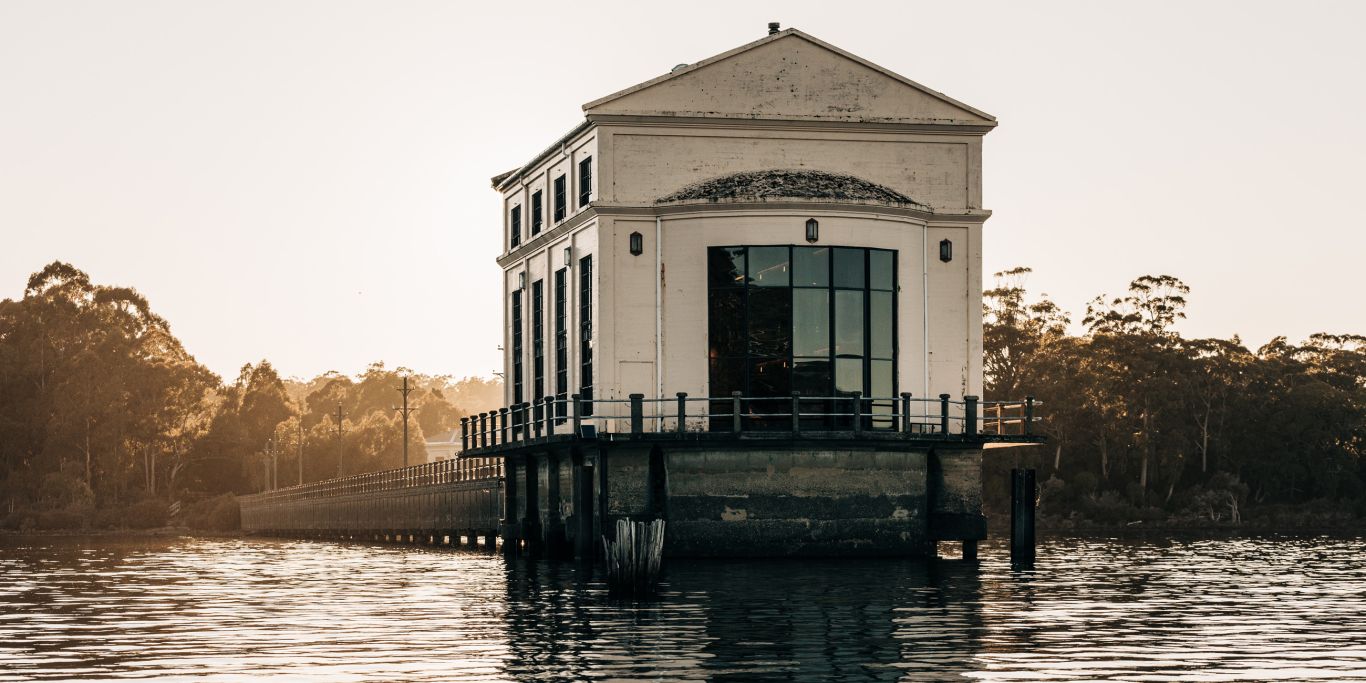
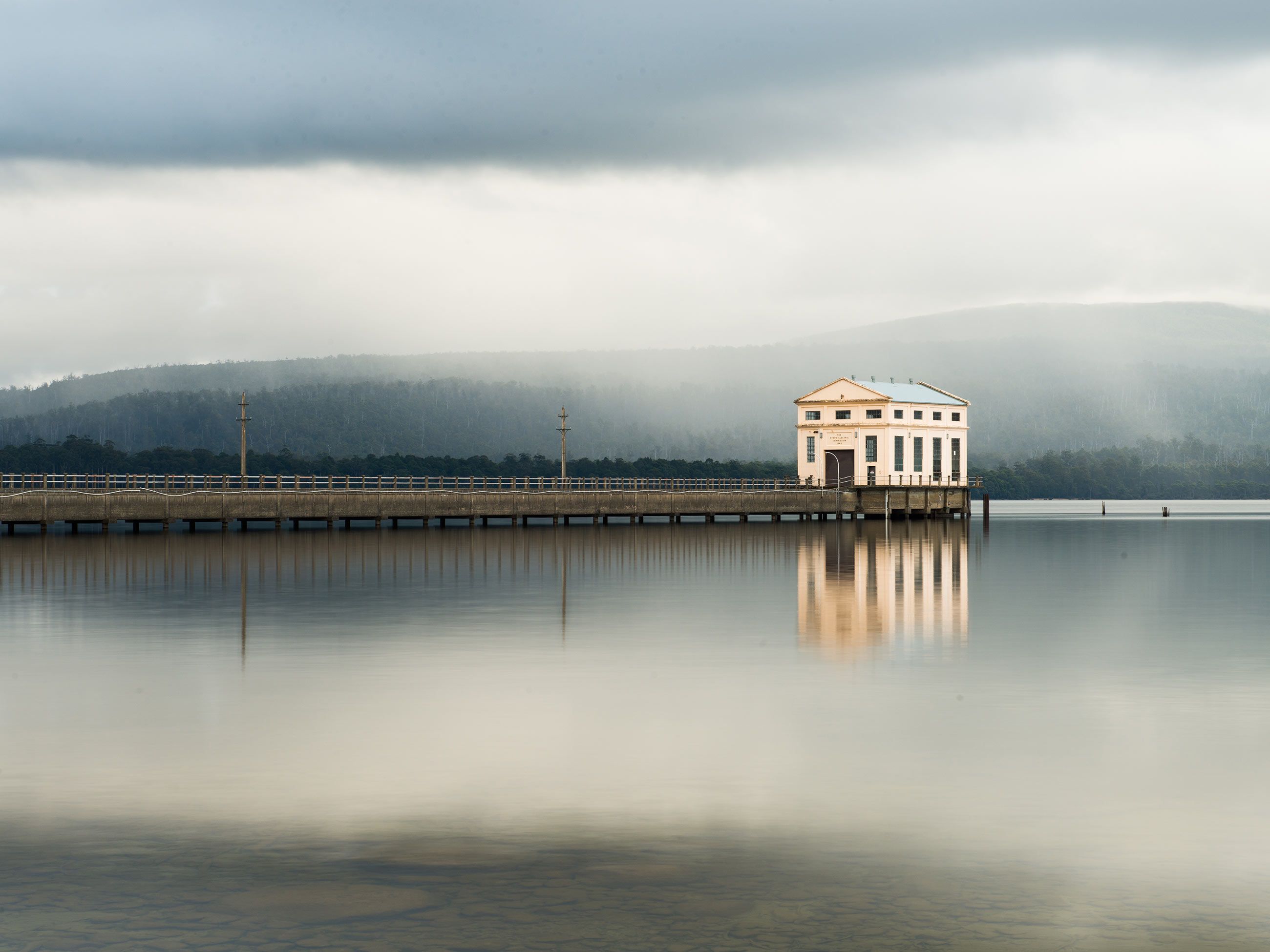
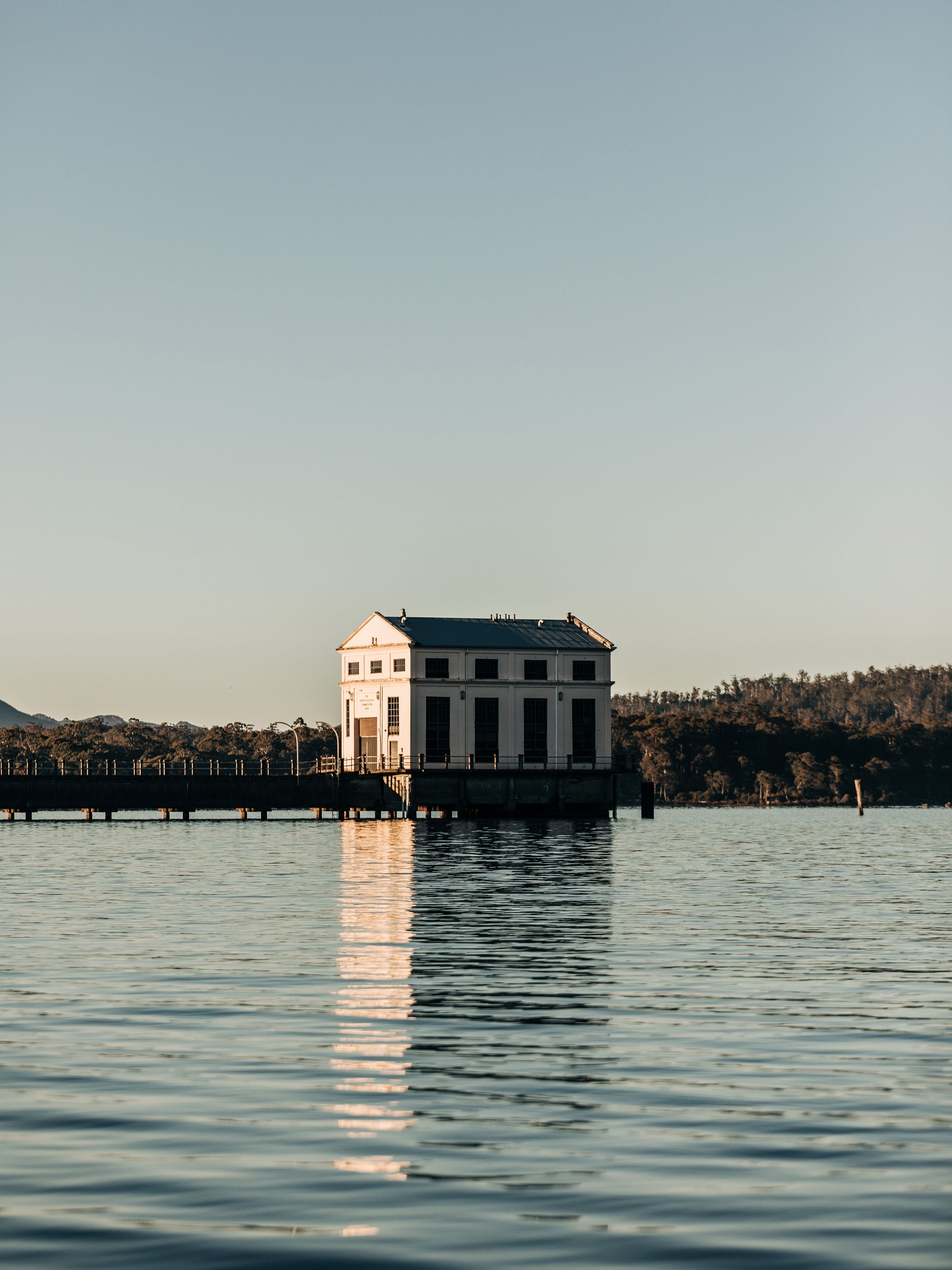
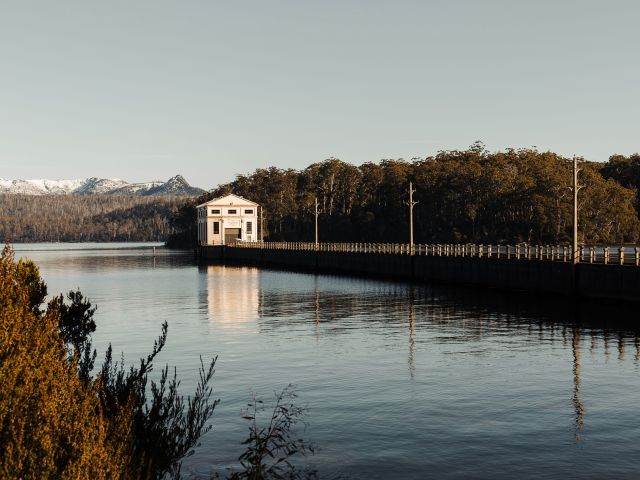
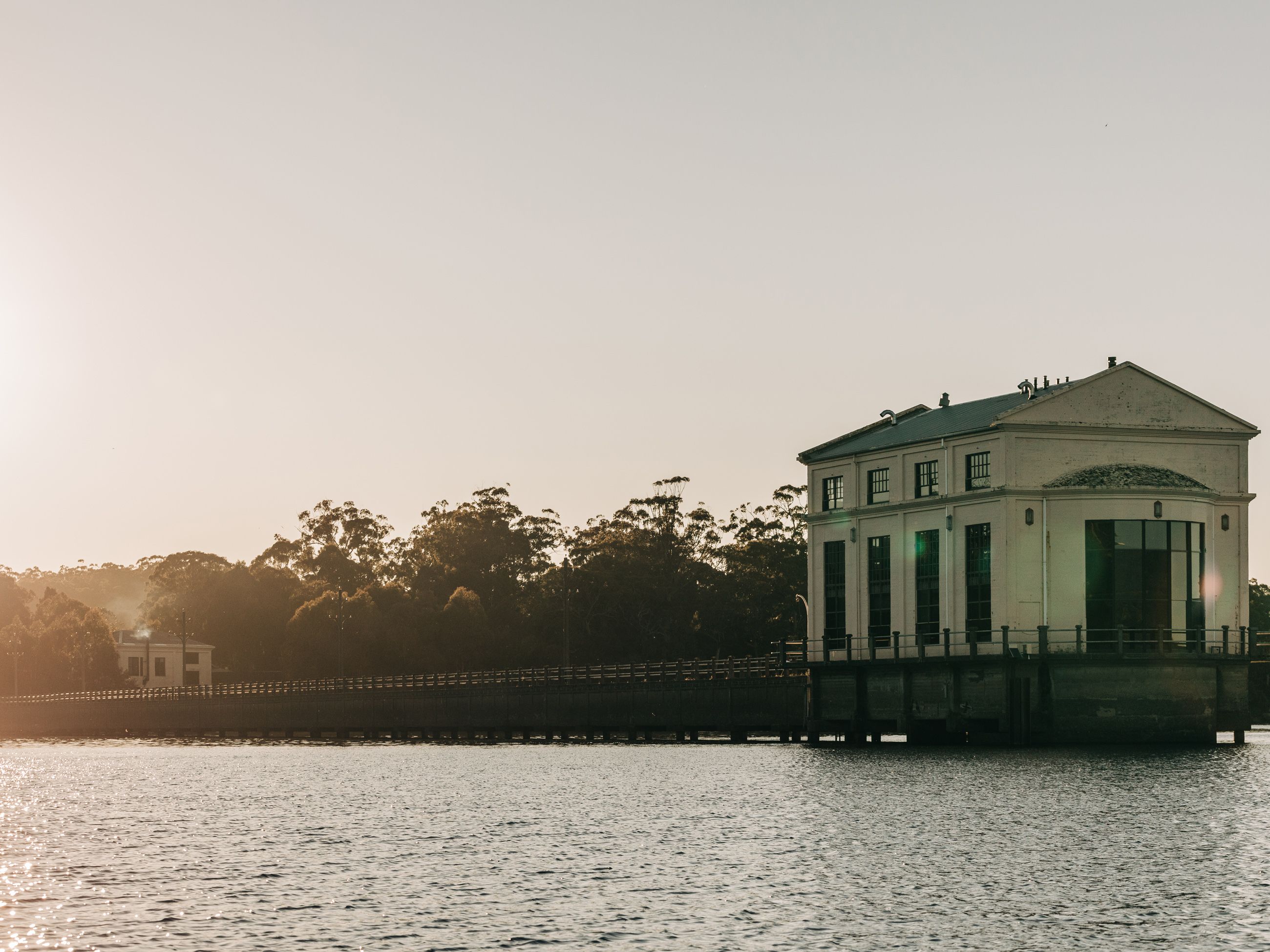
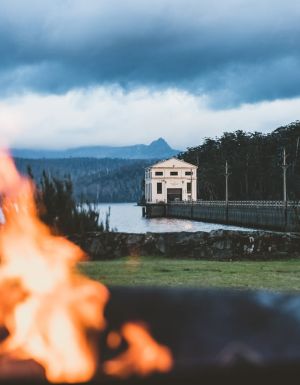
I’d seen the photos of Pumphouse Point for years before I ever made it there myself – that low, Art Deco building sitting out on Leewuleena (Lake St Clair) like it had grown there – and I still wasn’t prepared for how it feels to actually arrive. You drive down a gravel road through button grass plains and myrtle forest, the Cradle Mountain-Lake St Clair National Park closing in around you, and then the lake appears and so does the Pumphouse, floating 240 metres out on the water. No phone reception, no fanfare, just a golf buggy waiting to run your bags down to reception.
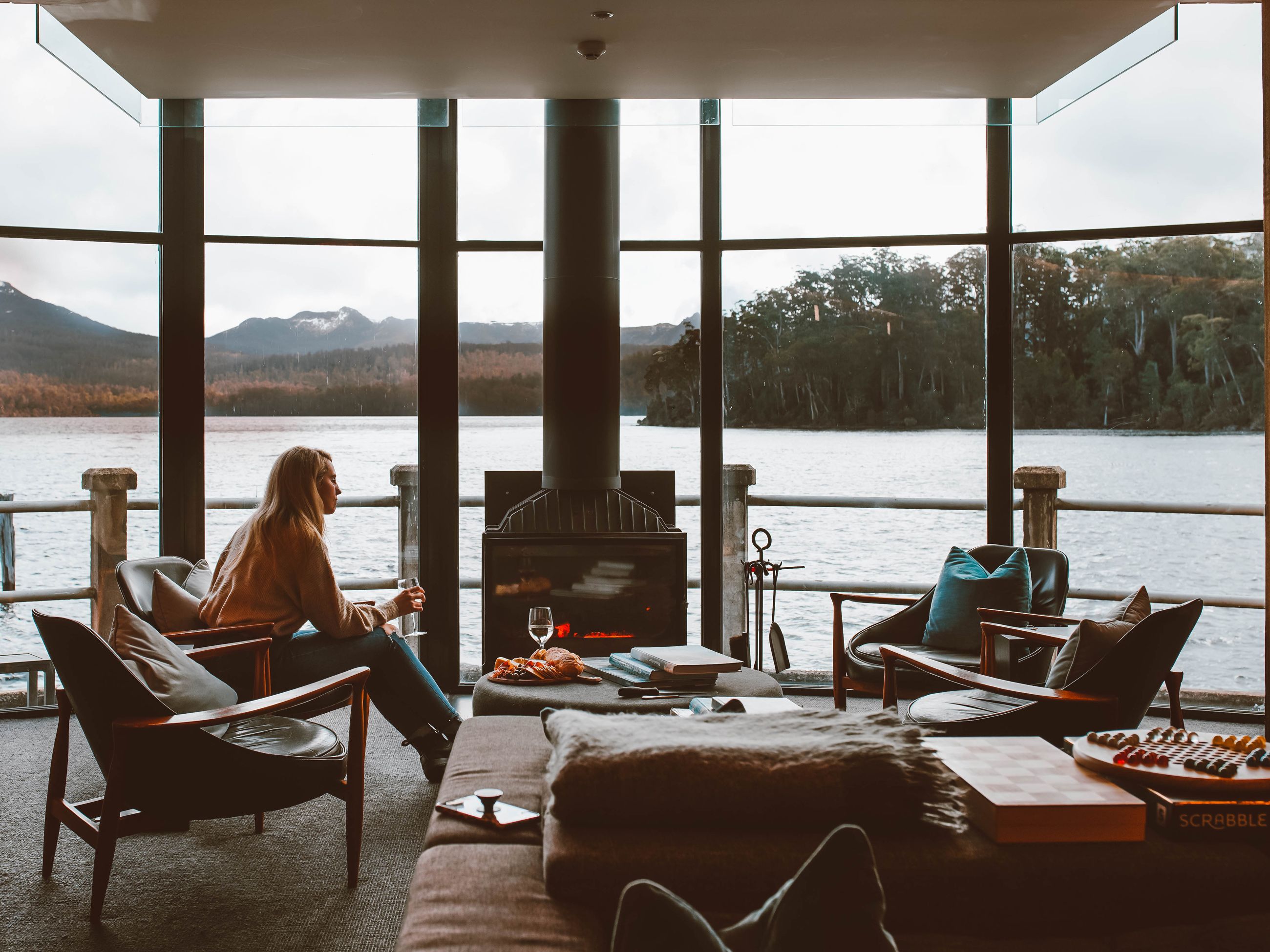
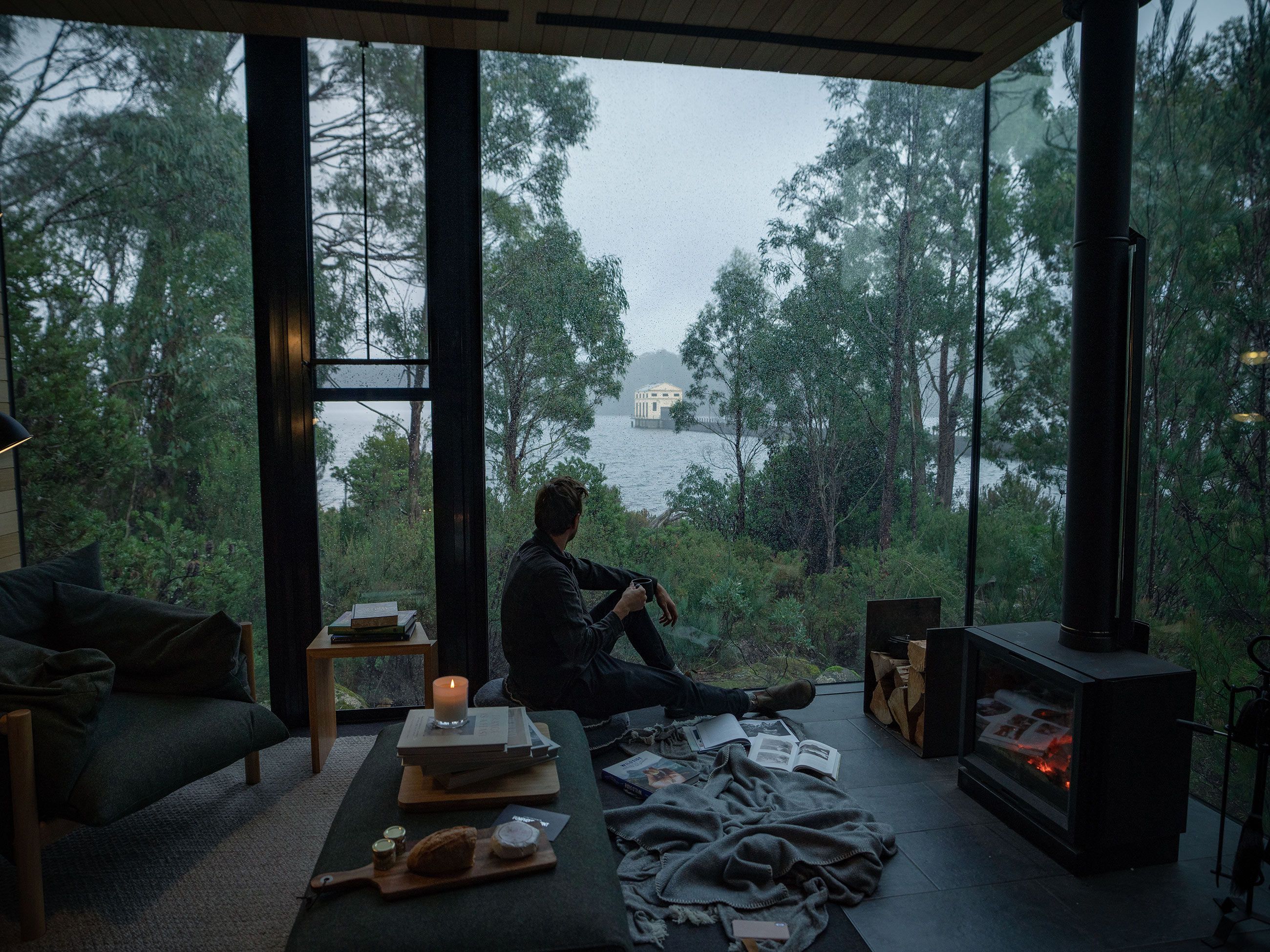
By the time I’d had my first fireside drink in the Shorehouse lounge, I understood why people come here to disconnect properly, not just say they did.
Perched on the edge of Australia's deepest freshwater lake, Pumphouse Point invites you to slow down. It's the kind of place where crackling fires, mist drifting across the water, and long, lingering meals make the cold feel like a luxury rather than something to escape.
Where is Pumphouse Point?
Lake St Clair is known to the Traditional Owners as Leewuleena, or 'sleeping water’. (Credit: Adam Gibson)
Pumphouse Point is at the southern end of the Cradle Mountain-Lake St Clair National Park. (Credit: Rob Mulally)
An unmissable accommodation on Lake St Clair. (Credit: Adam Gibson)
Pumphouse Point sits on Lake St Clair – known to the Traditional Owners as Leewuleena, or ‘sleeping water’ – at the southern end of the Cradle Mountain-Lake St Clair National Park, within the Tasmanian Wilderness World Heritage Area. It’s also the finish line for hikers coming off the Overland Track, so don’t be surprised if your fellow guests at dinner look like they’ve just walked 65 kilometres, because they probably have.
It’s a proper wilderness address: around three hours’ drive from Hobart and a similar distance from Launceston, with Derwent Bridge the nearest township. I lost signal well before I arrived, which felt less like an inconvenience and more like the whole point.
What is the style and character of Pumphouse Point?
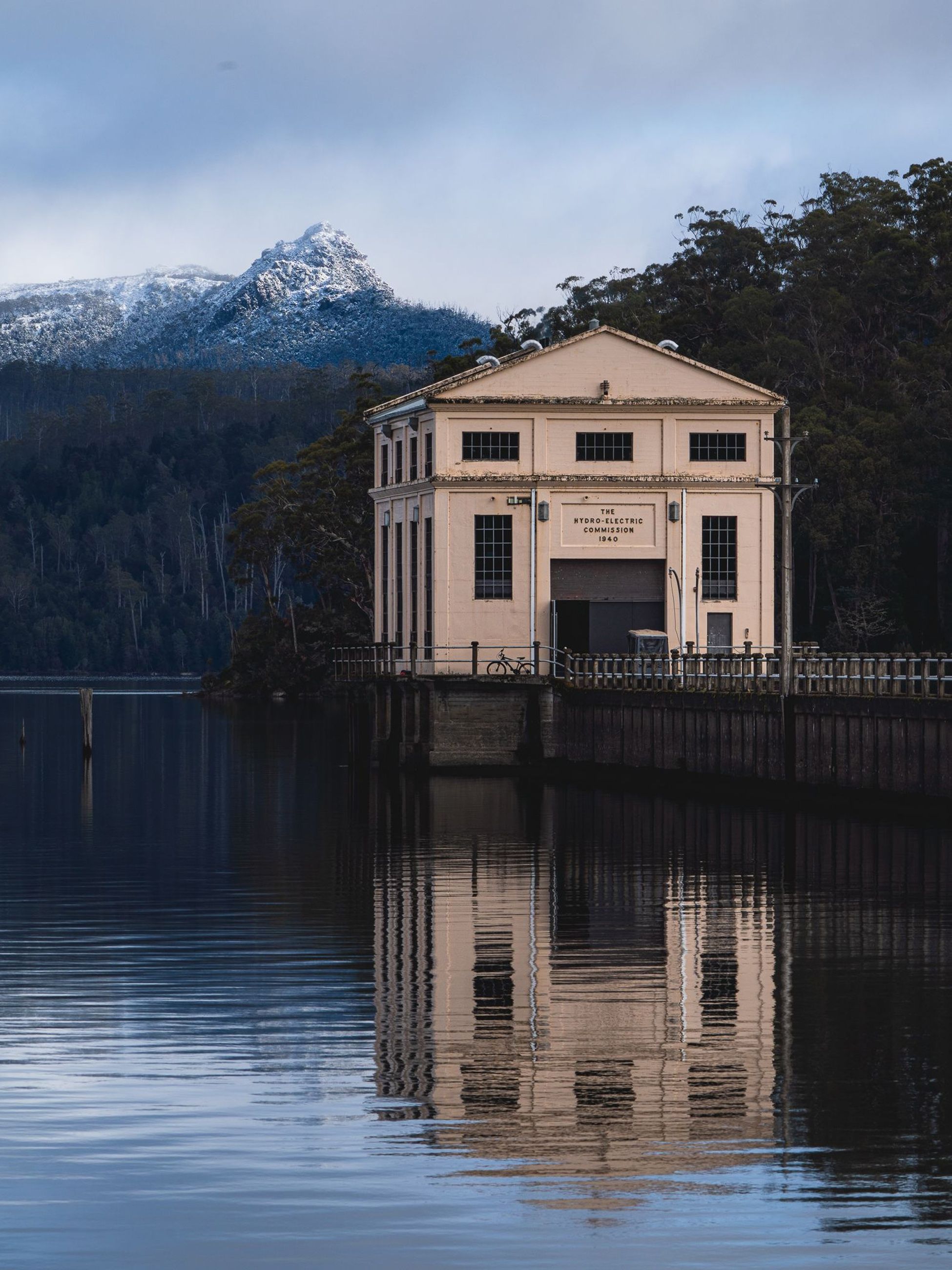
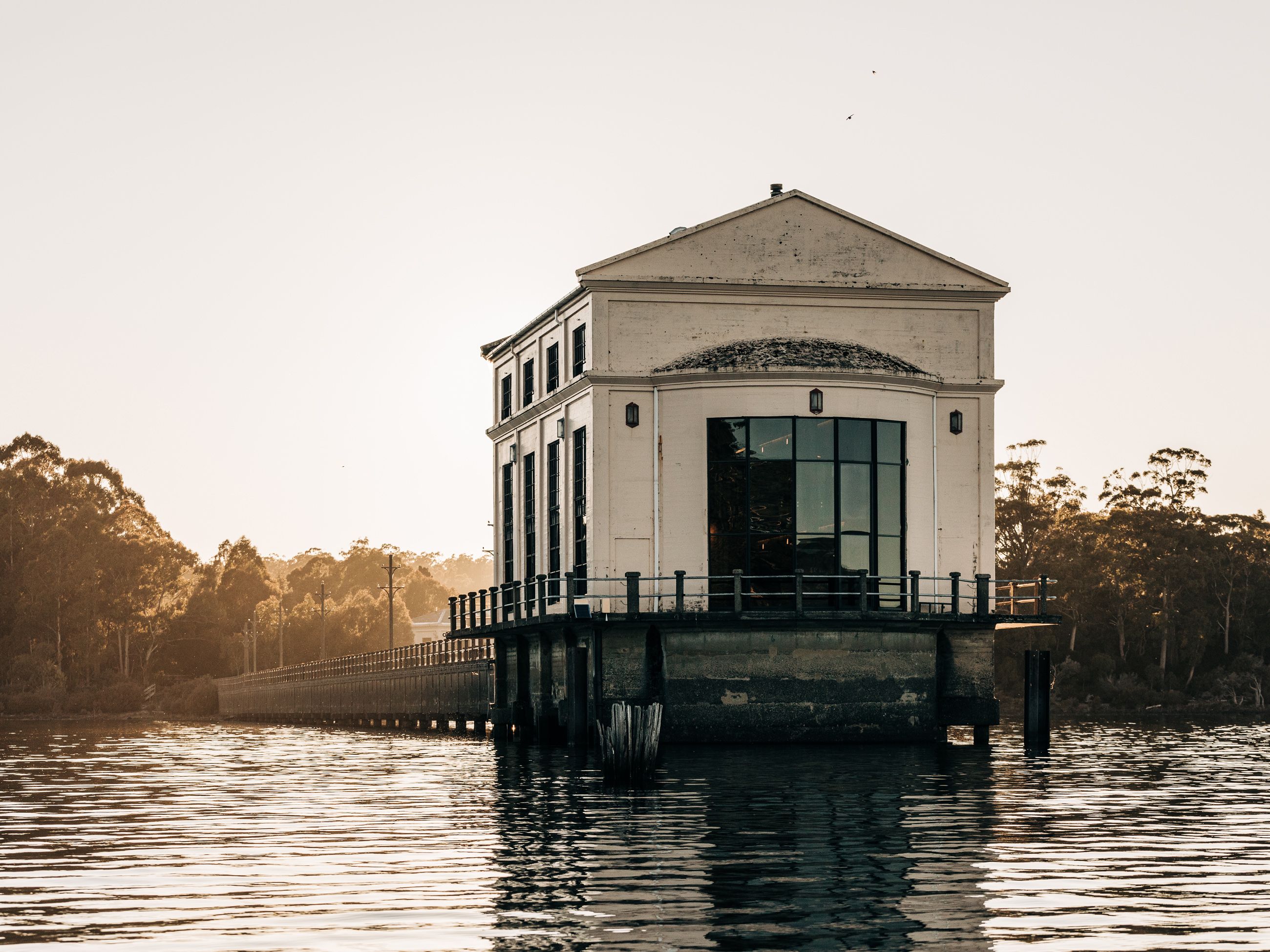
Pumphouse Point was reimagined as a boutique lodge in 2015. (Credit: Adam Gibson)
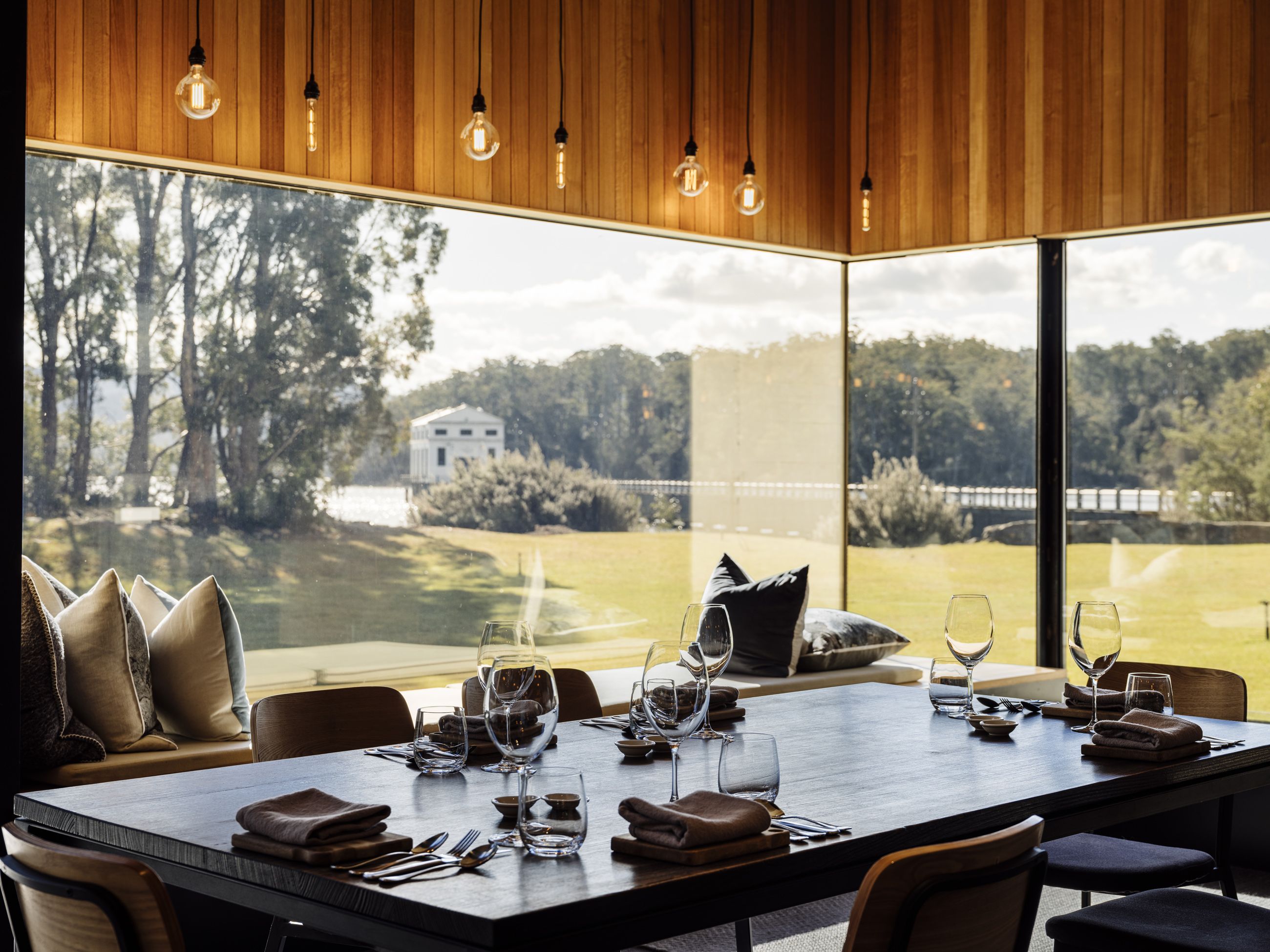
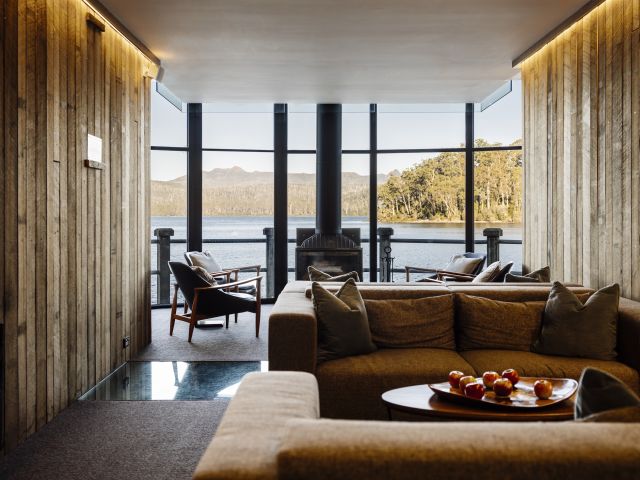
Every room and lounge is angled to frame the lake and the bush beyond. (Credit: Rachel Vasicek)
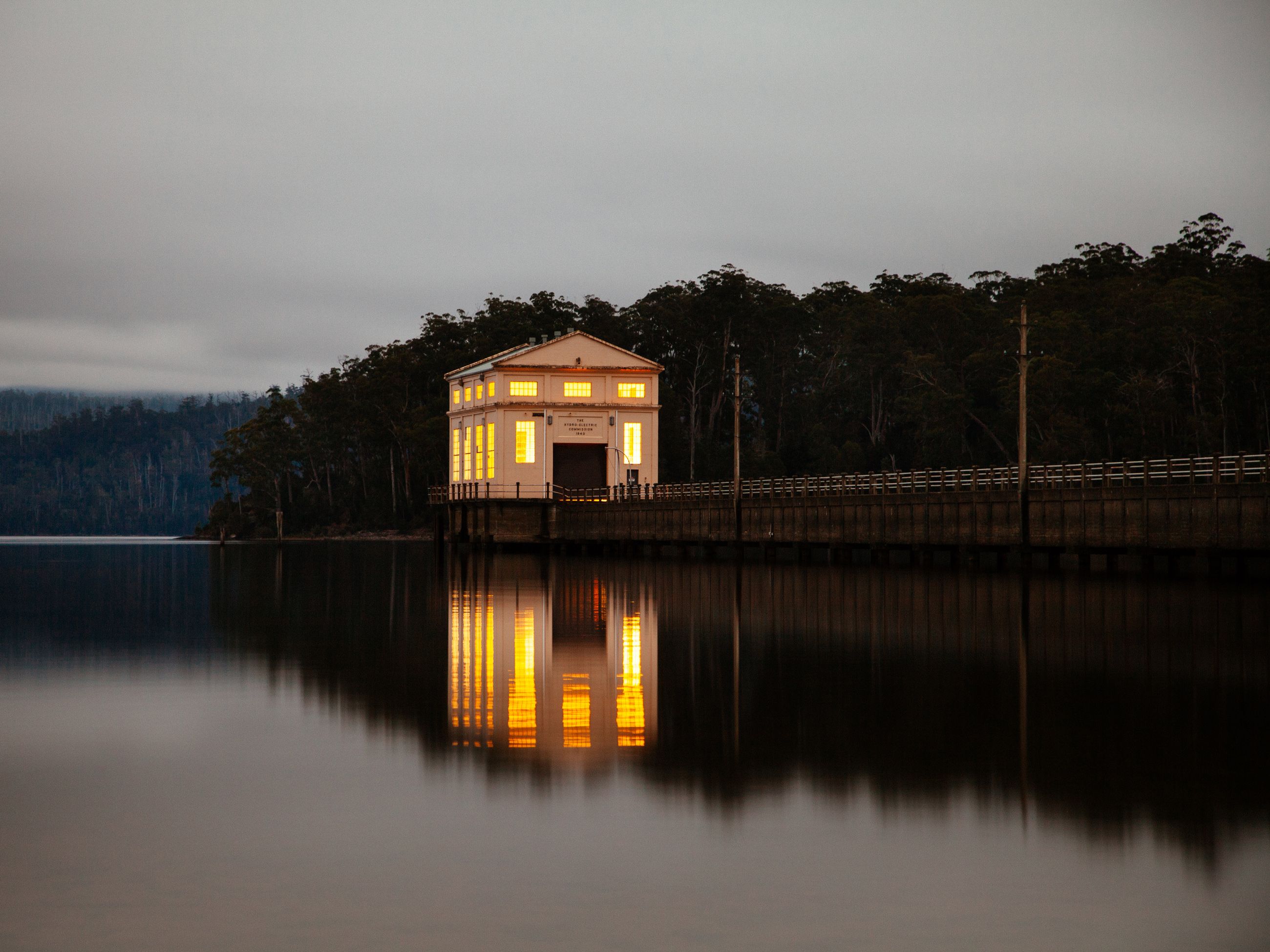
The industrial DNA is still very much present. (Credit: Adam Gibson)
Pumphouse Point began life in 1940 as a working hydro-electric pump station, decommissioned in the early 90s and left empty until it was reimagined as a boutique lodge in 2015. That industrial DNA is still very much present – exposed concrete, Art Deco glass bricks, a stairwell you’d expect in an old power station – but it’s been softened with Tasmanian oak, locally made furniture and a warm, unfussy palette that never tries too hard.
What struck me most is what’s missing: there’s barely any art on the walls. Every room and lounge is angled instead to frame the lake and the bush beyond, so the view does the decorating. It’s adults-only, which sets the tone before you’ve even checked in – this is a considered retreat for people who want stillness. Boutique, yes, but there’s not a shred of pretension in it.
What facilities does Pumphouse Point have?
Need tips, more detail or itinerary ideas tailored to you? Ask AT.
AI Prompt
My favourite spot to take in the lake views. (Credit: Natasha Mulhall)
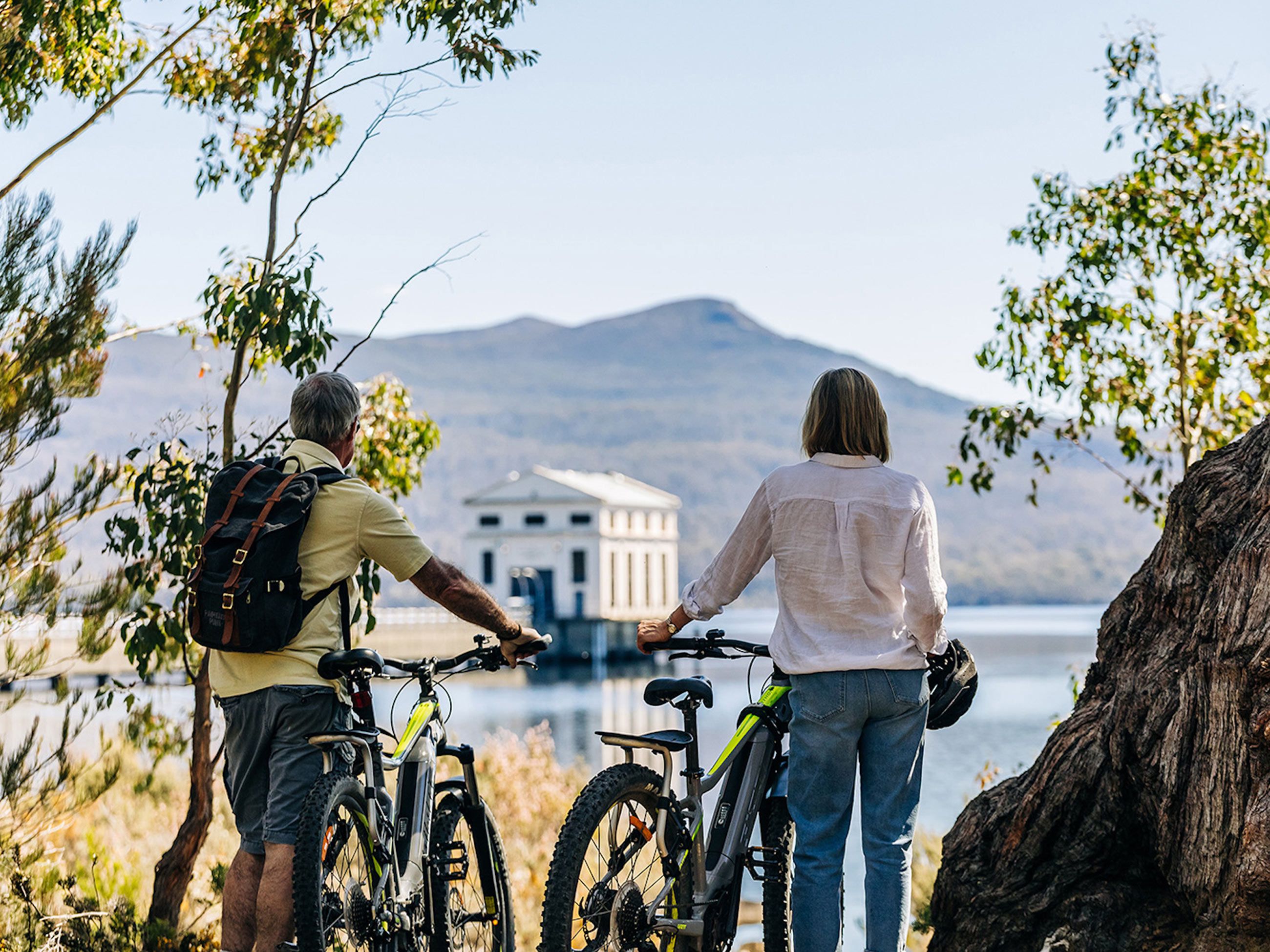
Explore the area by bike. (Credit: Adam Gibson)
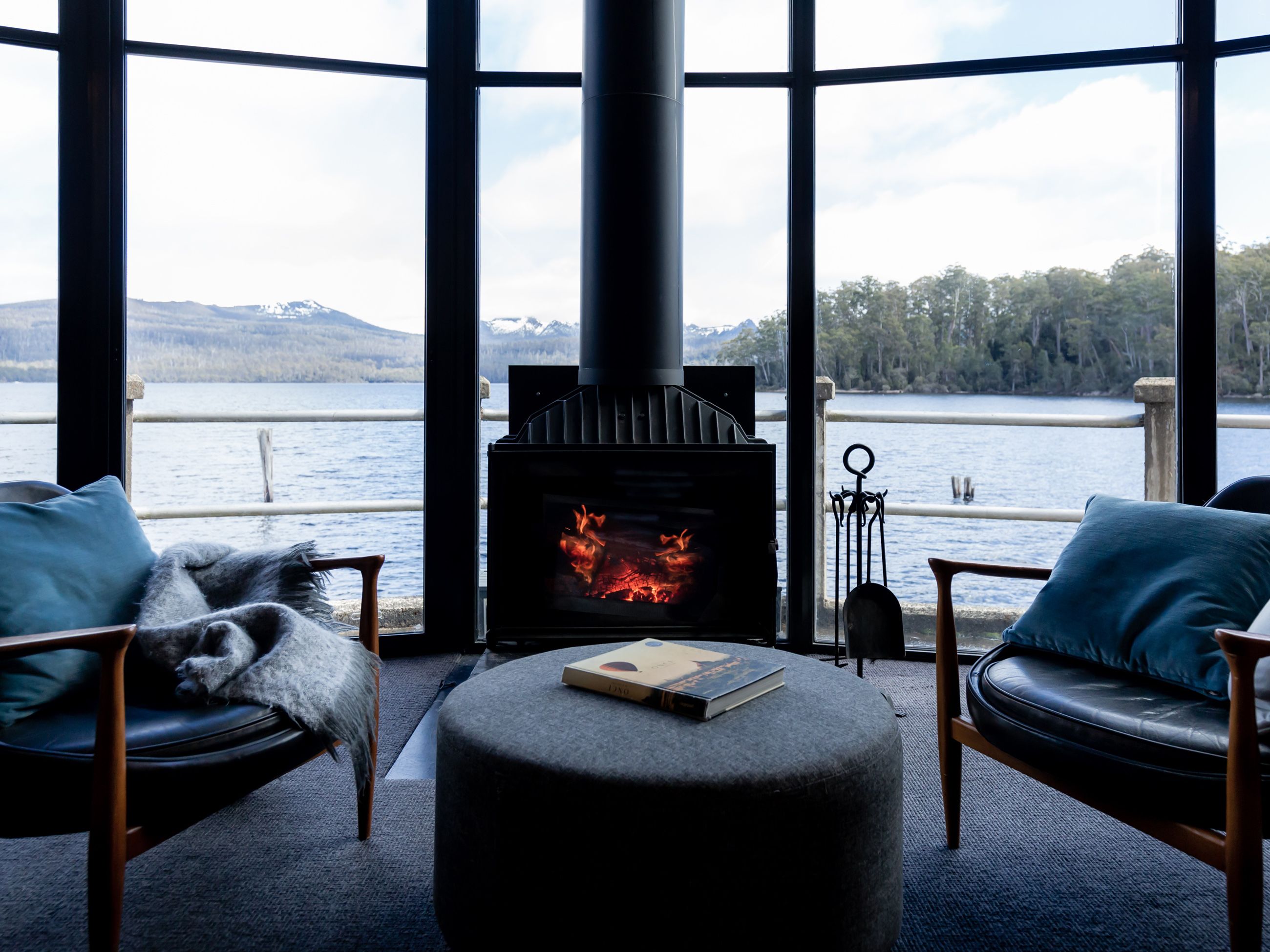
The facilities here are less about ticking boxes and more about giving you reasons to slow down. Communal lounges with roaring woodfires anchor both the Pumphouse and Shorehouse buildings, and e-bikes are included for exploring the tracks around the lake. There’s a dedicated massage studio in the reception cottage for a Highland Massage, a yoga pod for a self-led practice, and hosted tastings with House of Anvers chocolate and Sullivans Cove whisky if you want to build an afternoon around something other than a hike.
A daily history tour walks you through the building’s hydro-era past, and golf buggies ferry guests and luggage between buildings, which matters more than you’d think when the Pumphouse is a fair walk out over the water. With more than 100 kilometres of bushwalks on the doorstep, plus fishing and the Overland Track itself, the “facilities" here really are the wilderness.
What are the rooms like at Pumphouse Point?
The Pumphouse rooms sit out on the water. (Credit: Adam Gibson)
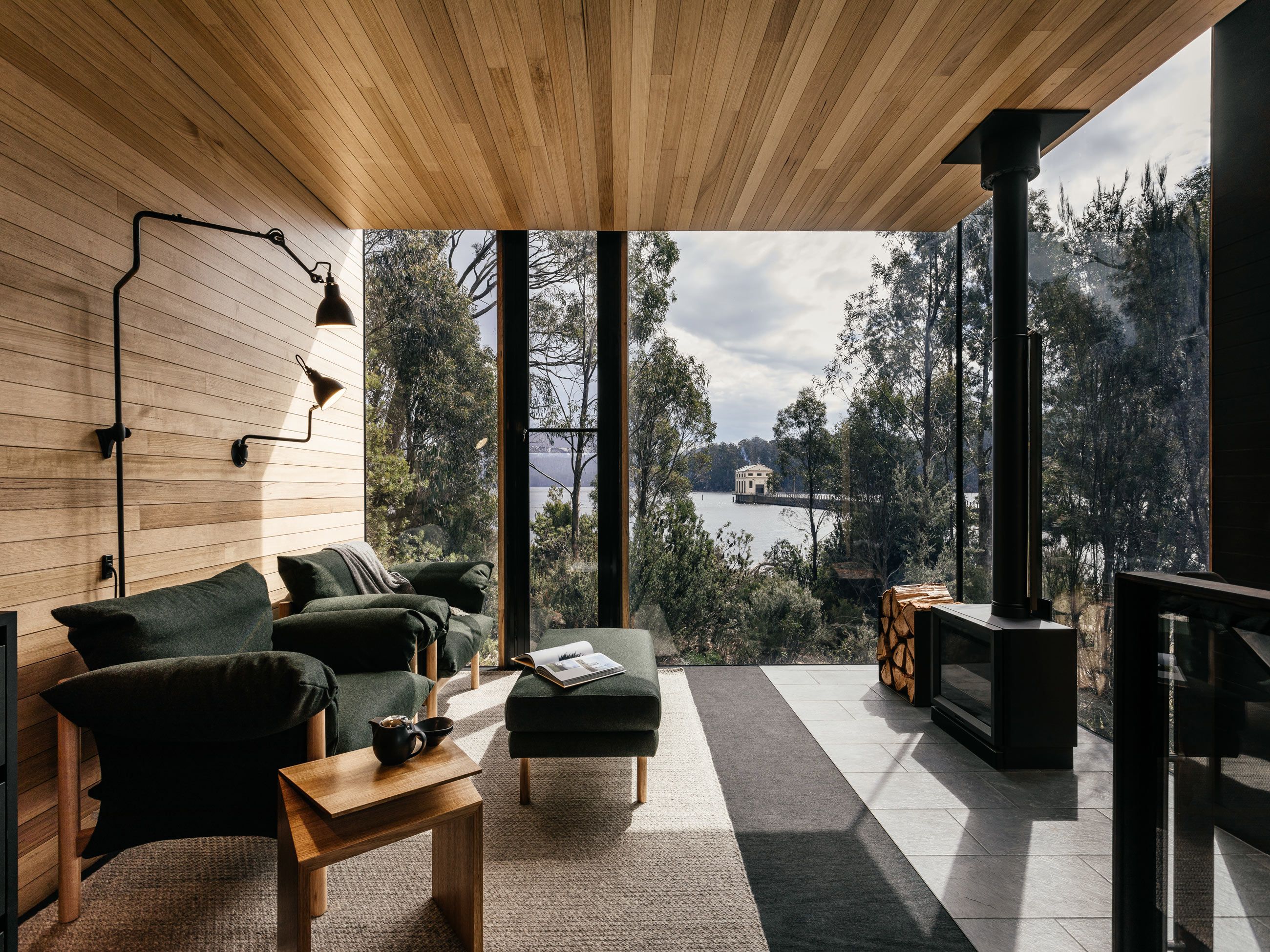
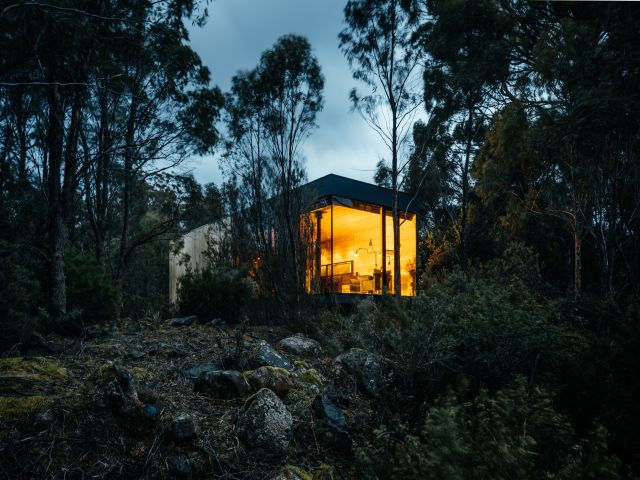
The Retreats are private, freestanding suites hidden in the bush. (Credit: Adam Gibson)
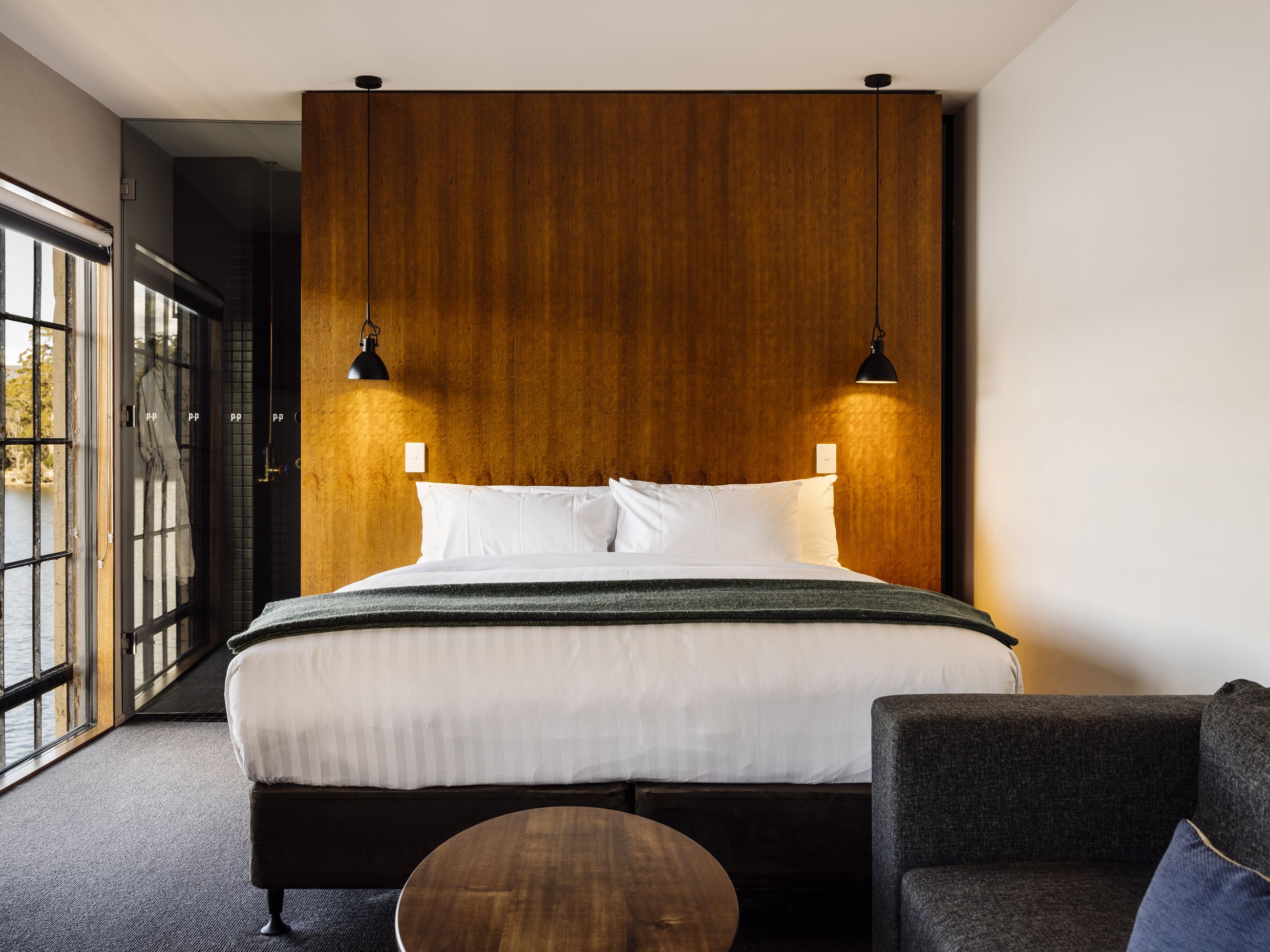
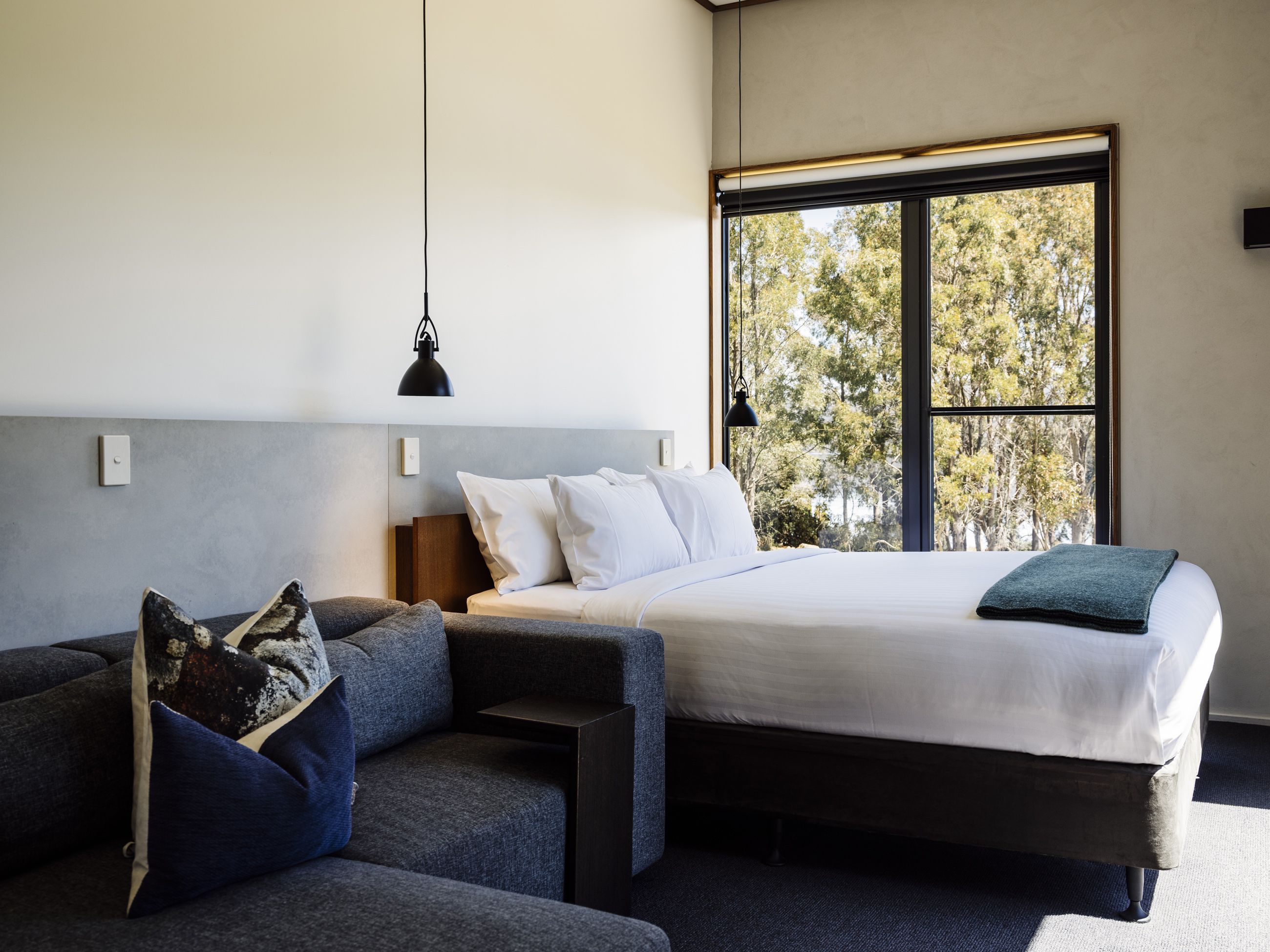
The Shorehouse rooms are back on land among the trees. (Credit: Adam Gibson)
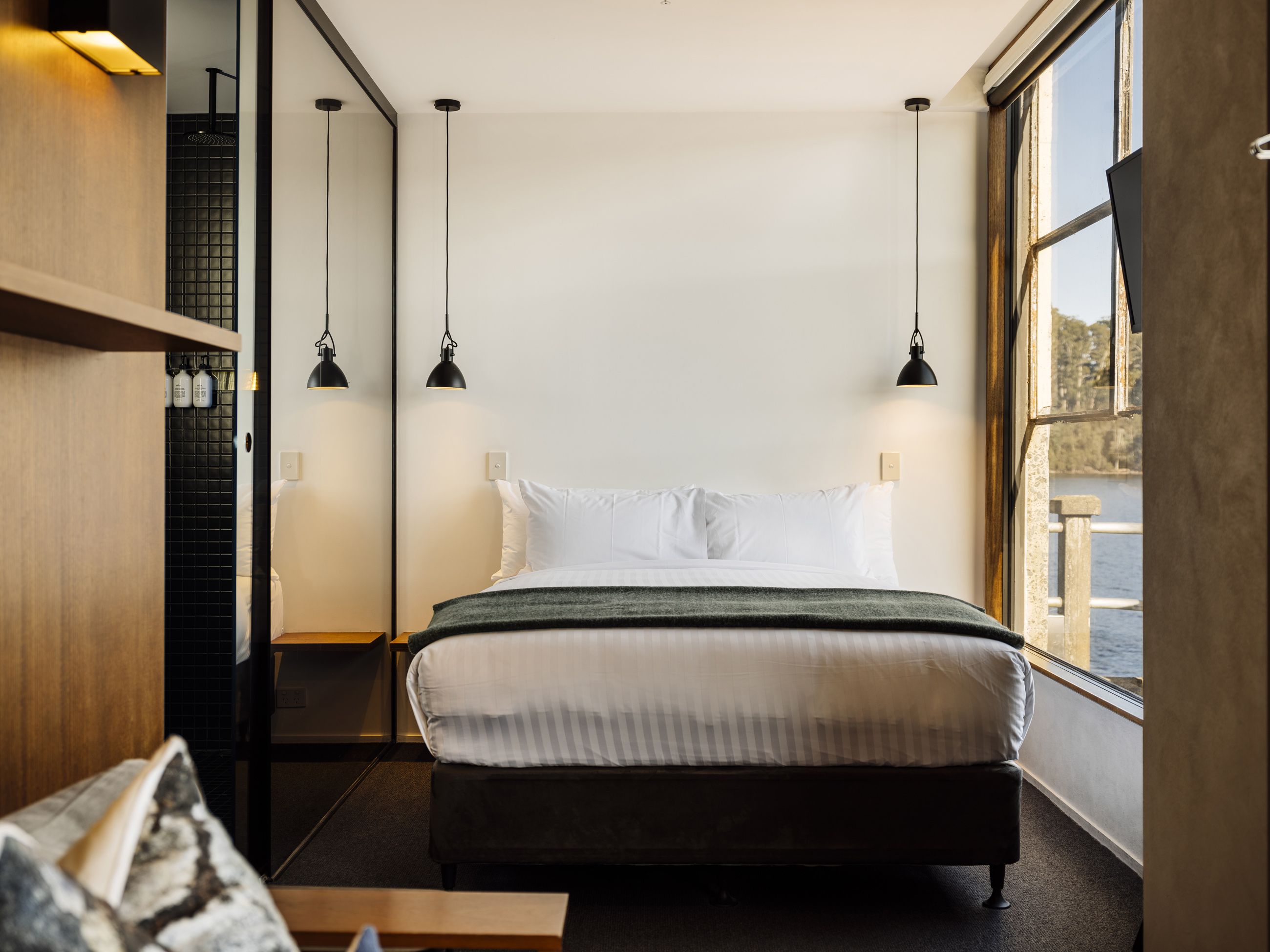
There are 18 rooms split across two heritage buildings, plus three standalone Retreats for those wanting to go all-in. The Pumphouse rooms sit out on the water across three levels, with big windows that make you feel like you’re floating; the Shorehouse rooms are back on land among the trees, with views across to the Pumphouse and the mountains beyond. Both are cosy without being cramped – think Tasmanian oak joinery, industrial light fittings and a queen or king bed you won’t want to leave.
If you can stretch to it, The Retreat is where the experience tips into properly indulgent: a private, freestanding suite hidden in the bush with its own woodfire, a deep indoor bathtub and an outdoor tub on the deck for a starlit soak, plus a stocked in-room larder of Tasmanian wine, cheese and charcuterie. Wherever you land, you’ll have access to all the communal lounges in both buildings – handy on the nights you fancy company by the fire instead of your own.
What is the dining like at Pumphouse Point?
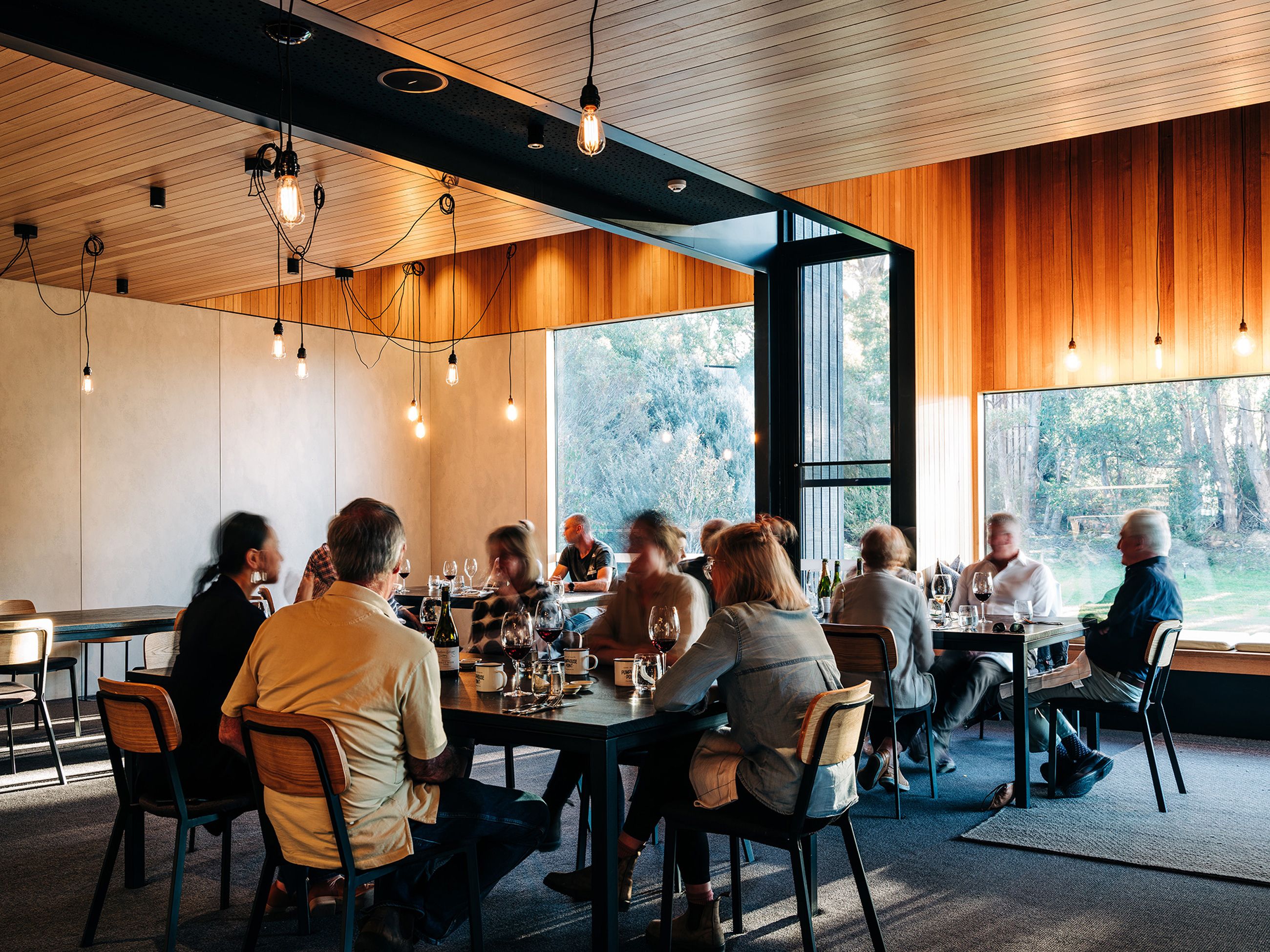
Dining at Pumphouse Point is built around connection. (Credit: Adam Gibson)
The communal tables were actually a vibe. (Credit: Adam Gibson)
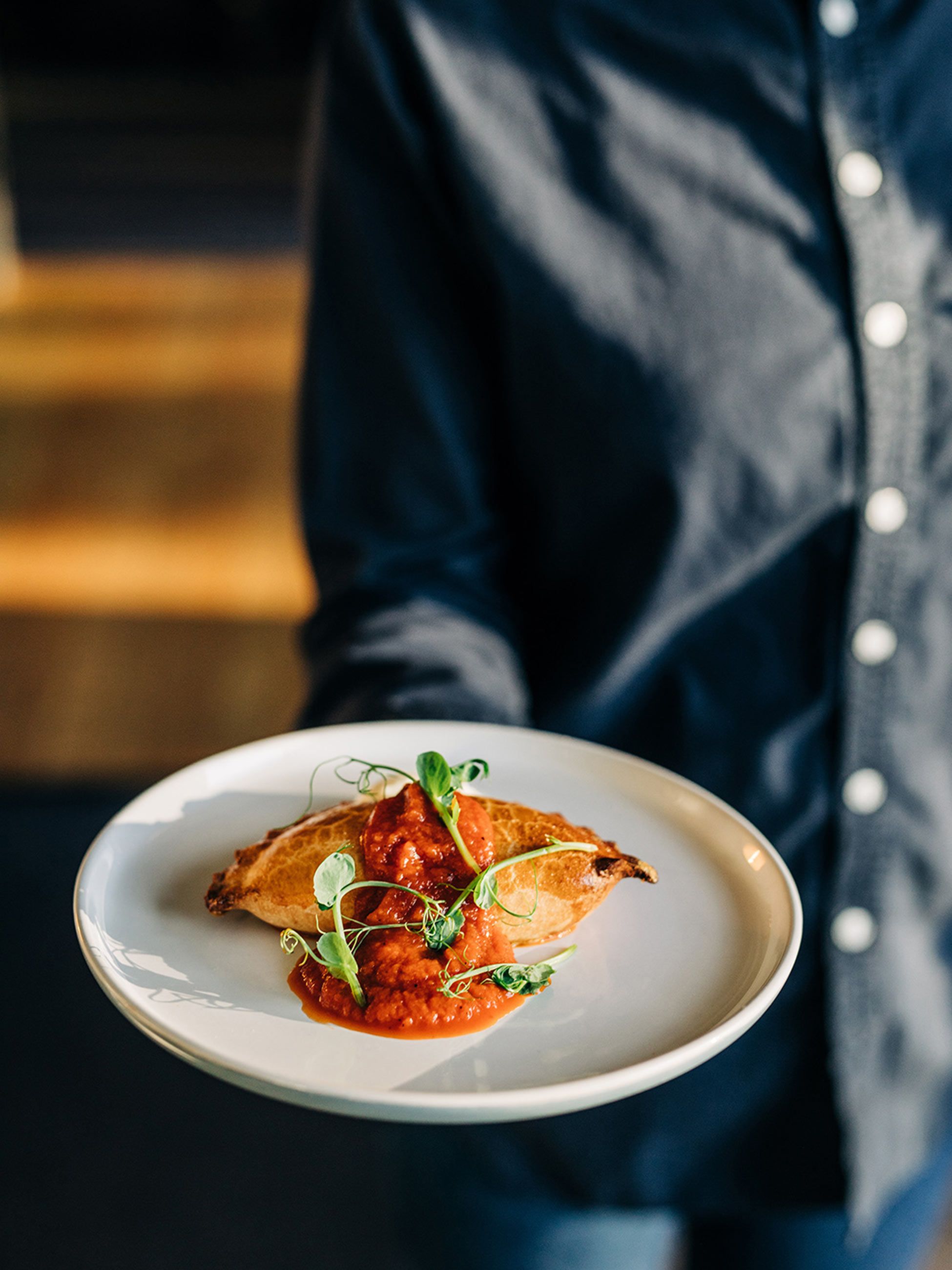
There’s a set menu every night. (Credit: Adam Gibson)
Dining at Pumphouse Point is all-inclusive and built around connection – guests gather at communal tables in the Shorehouse dining room each evening for a set-menu dinner of hearty, seasonal Tasmanian produce, though you can request a quieter table if you’d rather not chat over your lamb. Honestly though, I’m normally not too interested in communal dining, but some of my favourite conversations and laughs were had over dinner here.
Breakfast is included too, and a gourmet larder stocked with local produce covers lunch, so you can graze through the day rather than plan around mealtimes.A loaf of sourdough arrives warm every morning, and aperitivo hour has a distinctly Tasmanian accent – local wines, beers and spirits, poured fireside as the light shifts over the lake.
Does Pumphouse Point have access for guests with disabilities?
Accessibility has been carefully thought through rather than retrofitted as an afterthought. (Credit: Jemima Phelps)
Given the site’s heritage buildings, accessibility has been carefully thought through rather than retrofitted as an afterthought. All communal spaces – the lounges, dining room and alfresco area – are wheelchair accessible, the reception cottage has an accessible toilet and ramp access, and golf buggies transport guests and luggage around the property, including out to the Pumphouse. The Pumphouse itself has a lift servicing all three floors.
The two Pumphouse Top Floor Rooms have been designed with accessibility in mind, featuring roll-in showers and movable furniture, though the space around the beds is better suited to ambulant guests than full-time wheelchair users, so it’s worth calling ahead to talk through your specific needs. Staff are trained in disability requirements and emergency evacuation planning, so this isn’t just policy on a page.
Weekly travel news, experiences insider tips, offers, and more.
Is Pumphouse Point family-friendly?
Pumphouse Point is strictly adults-only. (Credit: Jason Charles Hill)
A stay here is truly peaceful. (Credit: Adam Gibson)
Feel like you're floating. (Credit: Adam Gibson)
Pumphouse Point is strictly adults-only, with no guests under 18 permitted at any time. That’s central to the whole experience, honestly. The hush of the communal lounges, the slow fireside evenings, the sense of having the wilderness to yourselves – it’s designed for couples, friends and solo travellers wanting proper quiet, not a splash-happy family break.
If you’re after a Tasmanian wilderness stay the whole family can enjoy, this isn’t it, but it makes for one of the best adults-only escapes – or hiking finish lines – I’ve come across.
The verdict
Thaw out by the fireplace. (Credit: Adam Gibson)
Pumphouse Point is warm, unpretentious and utterly committed to putting Tasmania’s wilderness front and centre, whether you’re soaking in an outdoor tub, thawing out by the Shorehouse fire, or simply staring out at Leewuleena from your window. For anyone craving real disconnection – the kind without a phone signal to fall back on – this is about as good as it gets.
Details
There are three standalone Retreats for those wanting to go all-in. (Credit: Adam Gibson)
Best for: Couples, friends and solo travellers after a genuine wilderness disconnect – including hikers finishing the Overland Track.
Address: 1 Lake St Clair Road, Lake St Clair, Tas
Phone: 0428 090 436
Cost: From around $700 per night for a Shorehouse standard room, but rates vary greatly depending on room type and season. The rates are all-inclusive of meals, and NRMA members receive discounts.
Want to see more stories from Australian Traveller in your Google search results?
Tick the box next to "Australian Traveller". That's it.
Emily Murphy is Australian Traveller's Email & Social Editor, and in her 4+ years at the company she has been instrumental in shaping its social media and email presence, and crafting compelling narratives that inspire others to explore Australia's vast landscapes. Her previous role was a journalist at Prime Creative Media and before that she was freelancing in publishing, content creation and digital marketing. When she's not creating scroll-stopping travel content, Em is a devoted 'bun mum' and enjoys spending her spare time by the sea, reading, binge-watching a good TV show and exploring Sydney's vibrant dining scene. Next on her Aussie travel wish list? South Australia and The Kimberley.
Overlooking the winding Tamar River, the Tamar Ridge & PIRIE Cellar Door is where two of Tasmania’s most acclaimed wine labels come together. Sip award-winning cool-climate wines and world-class sparkling while soaking up the vineyard views in one spectacular setting.
The fire crackles softly as you settle into a comfortable armchair, a glass of Tamar Ridge Reserve Pinot Noir warming your hands. Outside, rows of vines stretch across the Tamar Valley, their gentle contours framed by rolling hills and ever-changing skies. Or perhaps it’s a sunlit afternoon, and you’re on the terrace with a flute of PIRIE Vintage sparkling in hand, watching the valley shimmer beneath you as each crisp sip captures the freshness of Tasmania. At the Tamar Ridge and PIRIE Cellar Door, the setting in one of Australia’s most celebrated cool-climate wine regions is every bit as special as the wines.
The two brands now share a beautifully refurbished cellar door, giving visitors the opportunity to sample both still and sparkling wines from the Brown Family Wine Group’s luxury portfolio in a single stop. Alongside the shared tasting space, they’ve also introduced a range of premium experiences tailored to each brand.
Tamar Ridge’s story began in 1994, when vines were planted at Kayena in Tasmania’s Upper Tamar Valley. Guided by renowned viticulturist Dr Richard Smart – the “Flying Vine Doctor” – the vineyard quickly gained a reputation for quality, with a new winery established in 1998 and the Tamar Ridge label born.
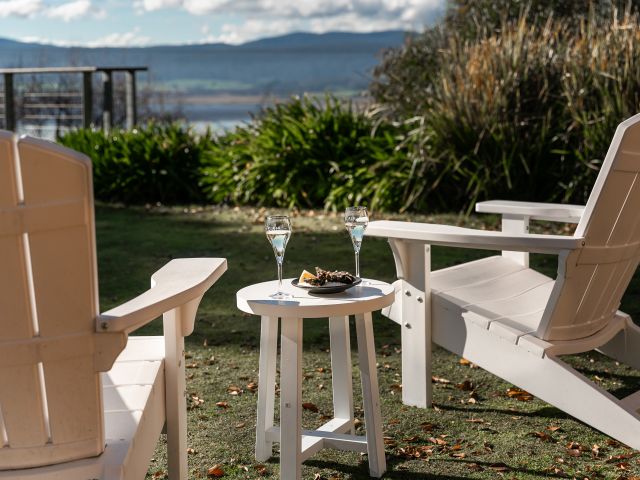
Sit outside to soak in the sun as you enjoy Tamar Valley views. (Credit: Natasha Mulhall)
Today, New Zealand-born head winemaker Tom Wallace leads the cellar, brings his passion for cool-climate winemaking to help shape Tamar Ridge’s reputation for elegant, expressive wines.
Founded by Dr Andrew Pirie in 1995, PIRIE helped prove the island’s potential for world-class cool-climate sparkling.
Crafted in the traditional method from hand-picked Pinot Noir and Chardonnay grown in the Valley, PIRIE Tasmania sparkling wines are celebrated for their fine beads, depth and elegance. With a collection of trophies, gold medals and top honours behind them, these rare vintages showcase the very best of the state’s sparkling wine.
Brown Brothers – now known as the Brown Family Wine Group – acquired Tamar Ridge, PIRIE and Devil’s Corner on the island’s east coast in 2010, extending the legacy of a family wine company founded in 1889 at Milawa in Victoria’s King Valley. The company has continued its pursuit of exceptional cool-climate vineyards, recognising Tasmania’s unique potential in a changing climate.
Location
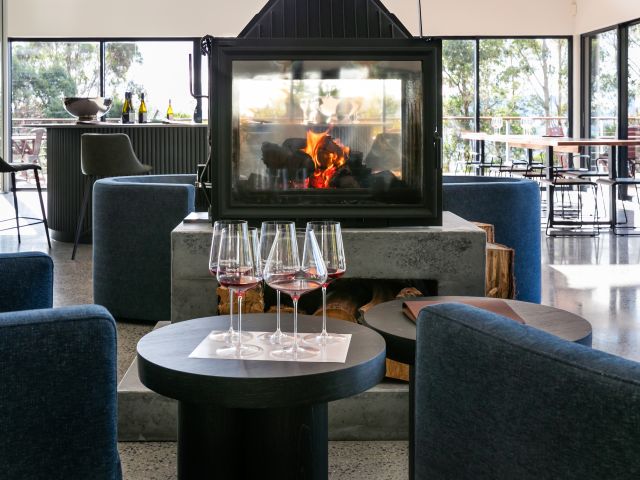
Get cosy by the roaring fireplace. (Credit: Natasha Mulhall)
Tamar Ridge & PIRIE Cellar Door is set on the west bank of the Tamar River, just 20 minutes north of Launceston and around two and a half hours’ drive from Hobart near the riverside village of Rosevears in northern Tasmania. Stretching more than 60 kilometres along the river, from the mouth near Launceston north towards Bass Strait, the Valley is a vast patchwork of vineyards, orchards, farmland and historic townships.
Style & decor
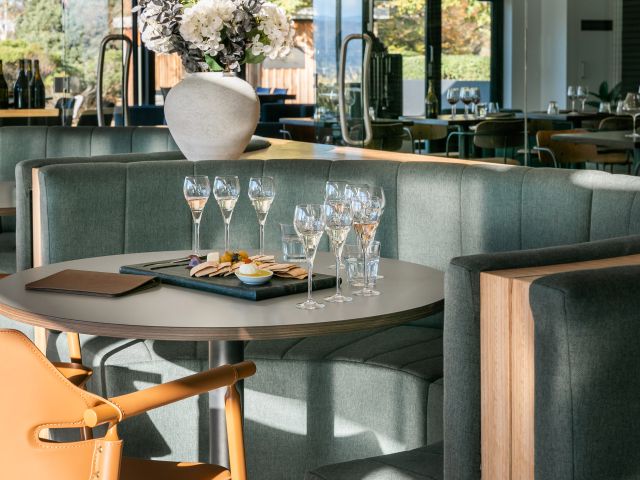
Come for a regular tasting, or book an experience. (Credit: Natasha Mulhall)
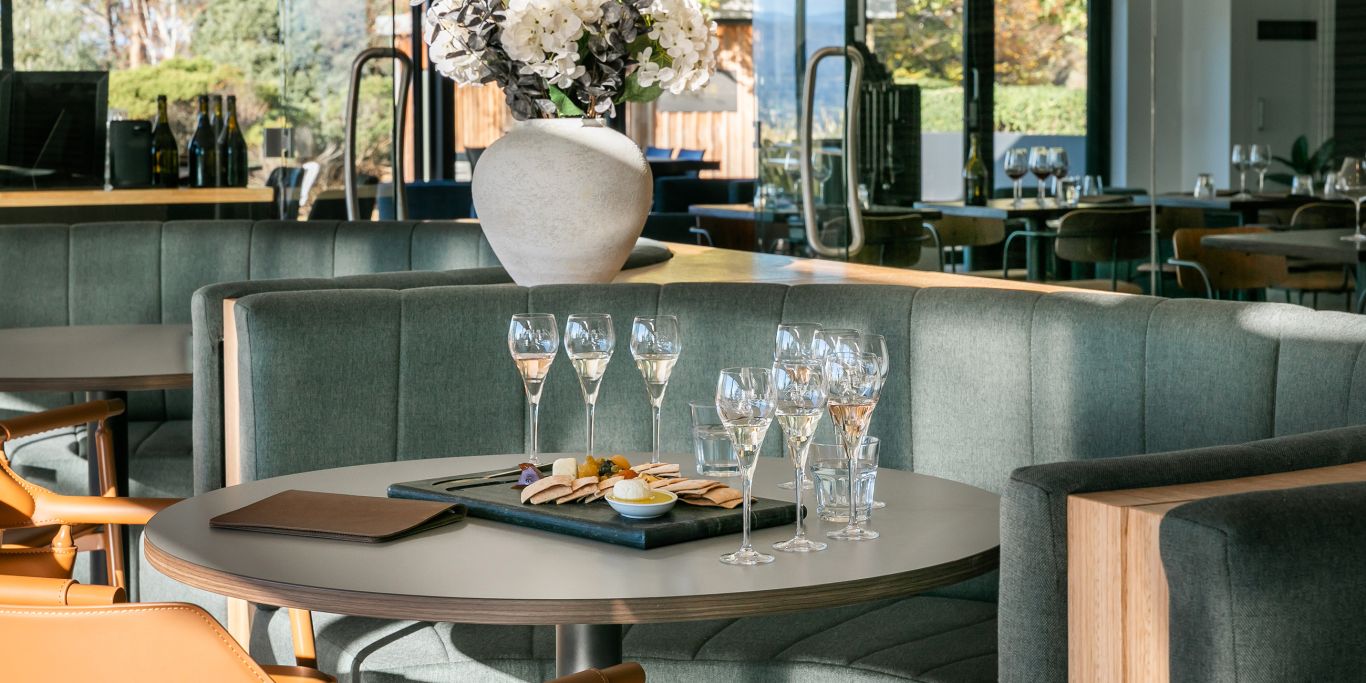
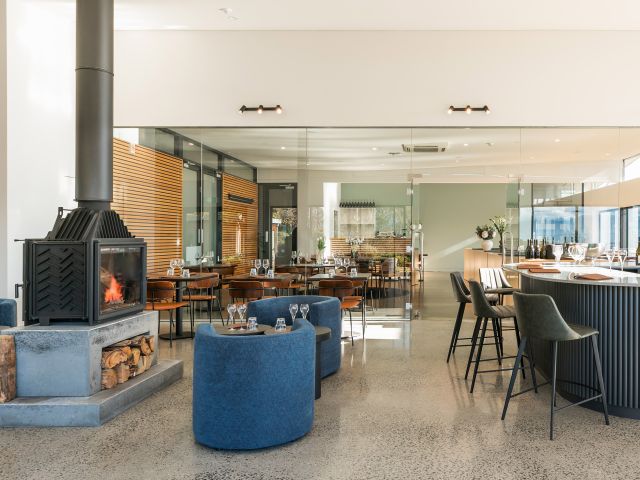
Floor-to-ceiling windows showcase panoramic views, while outdoor decks make the most of the surrounding scenery. Inside, the refined contemporary interiors strike a balance between modern luxury and the natural surrounds, with a double-sided fireplace to linger by. A Tamar River view creates a warm focal point. Natural wood accents add a sense of place, including a handcrafted 12-seat Tasmanian oak table that anchors the space with understated elegance.
Wine experiences
The cellar door’s curated wine experiences pair award-winning wines with local produce and the stories behind them. For those who prefer a leisurely visit without a set itinerary, the cellar door also offers cheese platters and small plates, best enjoyed with a glass in hand while taking in those Tamar River views.
Come for a taste, stay for an experience.
PIRIE & Oyster Experience
Taste the best of PIRIE matched with oysters. (Credit: Natasha Mulhall)
A true taste of Tasmania comes to life in the PIRIE & Oyster Experience, created in partnership with Tasmanian Oyster Co. Exploring the connection between merroir and terroir – the influence of the sea and soil on flavour – this guided tasting pairs three premium oysters from different Tasmanian growing regions with three expressions of PIRIE sparkling wine: the NV, 2021 Vintage and Blanc de Blanc.
As each oyster and wine pairing is revealed, guests discover how Tasmania’s unique landscapes shape flavour, from the mineral freshness of the ocean to the elegance and precision of cool-climate sparkling wine.
Pinot Noir Blending Experience
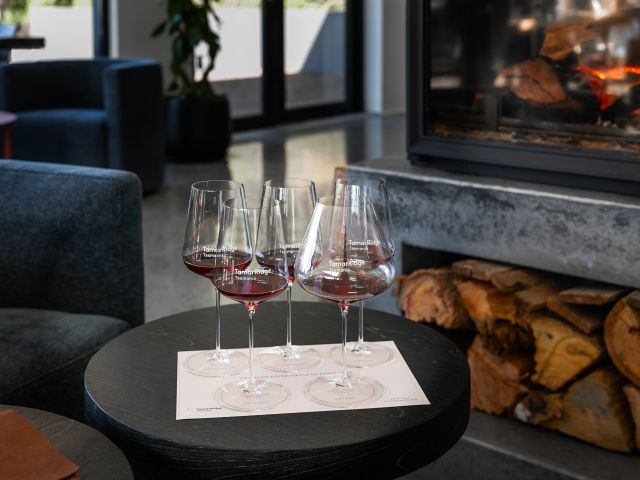
Try your own hand at mixing. (Credit: Natasha Mulhall)
For those who want to step behind the winemaker’s bench, the Pinot Noir Blending Experience offers a hands-on journey into the art of creating great wine.
Guests taste through three to four individual Pinot Noir clones from the previous vintage, each revealing its own personality through aroma, structure and character. Guided by the cellar door team, visitors explore how these individual components come together to create balance and complexity – before attempting their own blend.
Will you recreate the house style, or create something entirely original? This immersive experience offers a fascinating insight into the craft, creativity and precision that goes into every bottle.
Supreme Indulgence
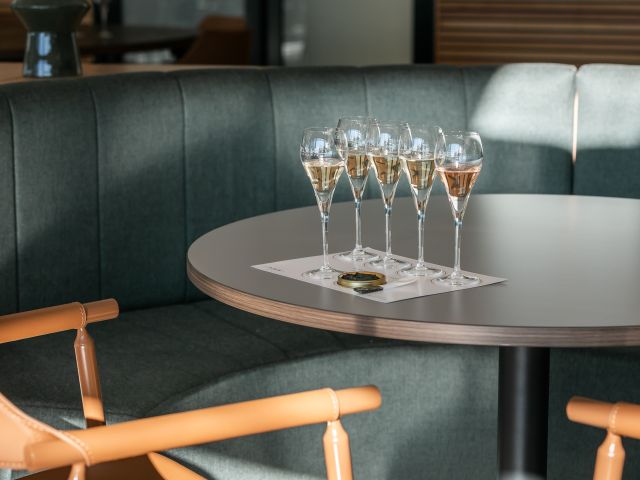
Settle in for true indulgene. (Credit: Natasha Mulhall)
The most elevated experience at the cellar door, the Supreme Indulgence (PIRIE Sparkling with Caviar tasting) is a celebration of luxury, refinement and Tasmania’s exceptional produce.
Priced at $99 per person, the tasting pairs PIRIE Tasmania’s most distinguished sparkling wines with carefully selected sturgeon caviar, chosen to enhance the elegance, texture and finesse of each cuvée. Hosted by an expert member of the team, the experience unfolds as a thoughtful exploration of fine bubbles, delicate flavours and the craftsmanship behind every bottle.