The waterfront summer shacks hiding in Tasmania’s beach towns

hero media
Tassie does shacklife like nowhere else, especially when summer rolls around.

It’s the first week of summer in Sisters Beach on the north-western coast of lutruwita/Tasmania and all is quiet. The shacks lining the streets have their curtains pulled and only a handful of people toddle down to the sand each morning and afternoon.

In a few weeks’ time, eskies will be packed, relatives rallied, and the annual pilgrimage of Tassie locals will see its streets transformed. Cars will materialise on the grassy verge in front of each shack, kids will ride their bikes down the sleepy streets, and the smell of sunscreen will linger in the air.
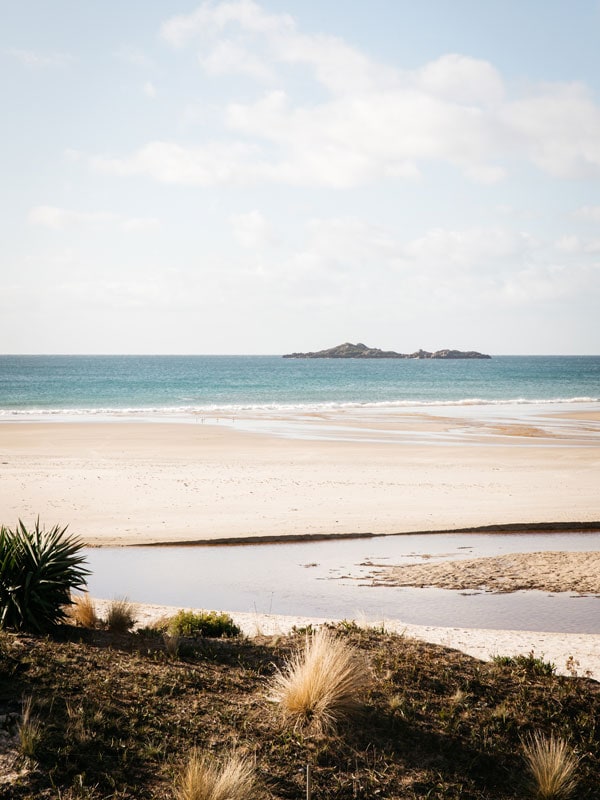
Sisters Beach in Tasmania - view from Arku House
Arku House has private access to Sisters Beach. (Image: Leanne Timms)

I try to imagine the scene as I sit with a sundowner under the ancient pine tree, in the front yard of Arku House . The white A-frame is perched right on the dunes with the beach out front and the creek running past its side; its tannin-rich waters whispering of off-grid adventure. A rope swing dangles from a paperbark tree.
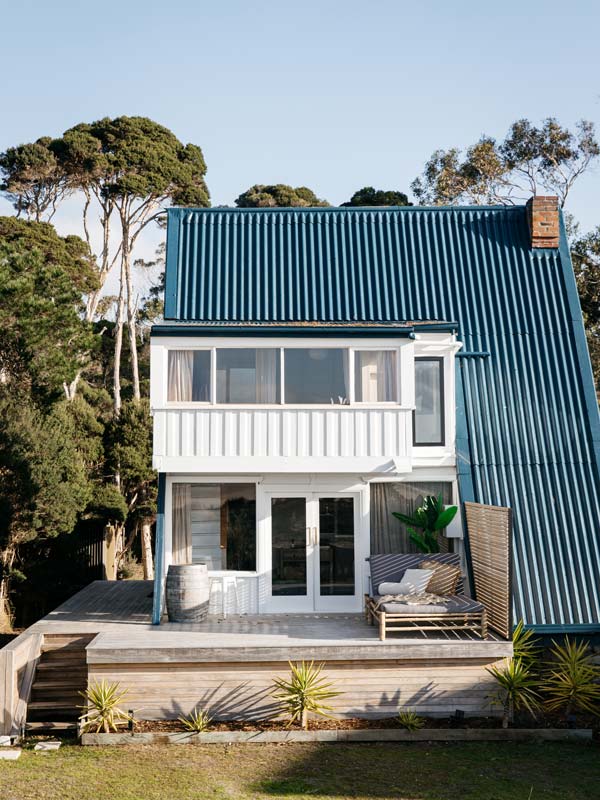
Exterior of A-Frame shack Arku House in Tasmania
The A-Frame shack was built in the 1960s. (Image: Leanne Timms)

Built in the ‘60s, Arku has been tinkered with over time and was completely renovated inside by Sydney-based owners, Emma Woods and Charlie Whittaker-Smith in 2022. While inside it’s all Venetian plaster walls and Mediterranean-inspired curves, the humble exterior stands as a beacon of summer to the generations who have played in its shadow. It’s an icon, as etched in the memories of those who grew up holidaying here as the old dirt road in and the hot crispy potato cakes from the local shop.
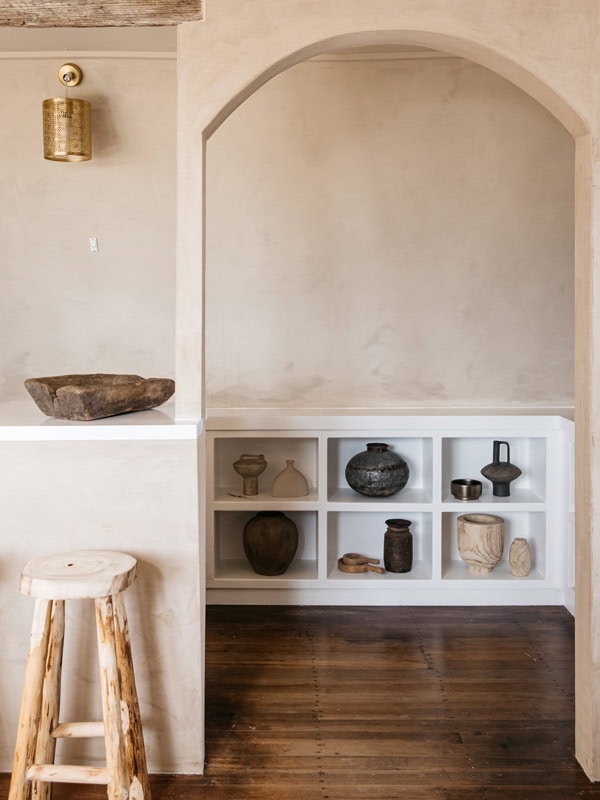
The earthy interiors of Arku House
Arku House is filled with earthy flotsum and jetsam. (Image: Leanne Timms)

The history of Tassie’s shacks

While they’re found in other states – usually in all-but-forgotten frontier towns – the shack is as quintessentially Tasmanian as Blundstones and scallop pies.

They started sprouting up in post-war years, when land was cheap – or in some cases, free. Often cobbled together with scrap materials, many had rudimentary amenities – electricity and plumbing were a luxury – and they were filled with hand-me-down furniture and mismatched crockery. The onus was on being outside, enjoying the natural environment, so it didn’t matter too much what they were like inside. As long as you had a place to sleep and knew how to catch a few fish, you were living the dream.
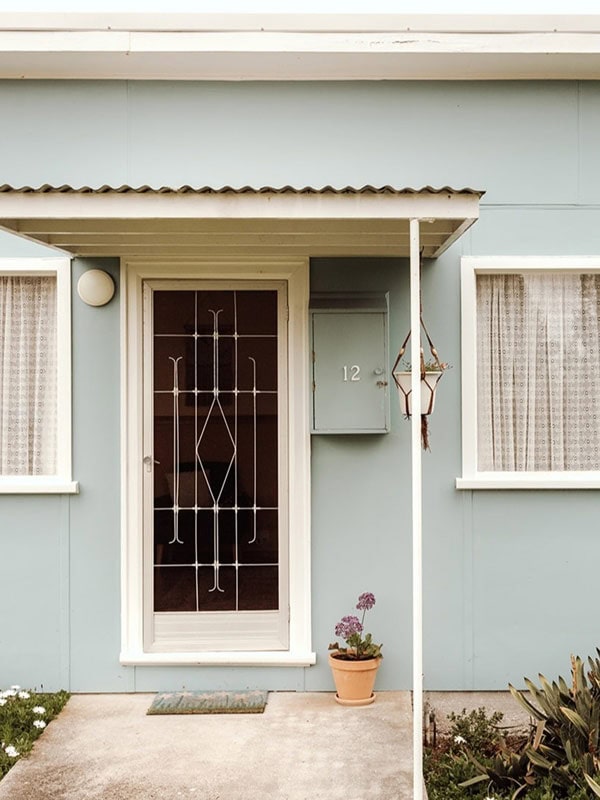
Exterior of The Lil Blue Shack in Sisters Beach Tasmania
The Lil Blue Shack beckons in beautiful Sisters Beach.

They were democratic back then, too. As great a leveller as the beach itself. You didn’t need to be rich to have a shack. Indeed the riches were found in the time spent there with family and friends.

“I grew up in a small seaside village in Northern Tasmania, the population around 1500 people, but during summer that number would triple with what locals referred to as “townies"," says Naomi Hume. “Everyone I knew locally would quite literally flee Boxing Day and head to their shacks."
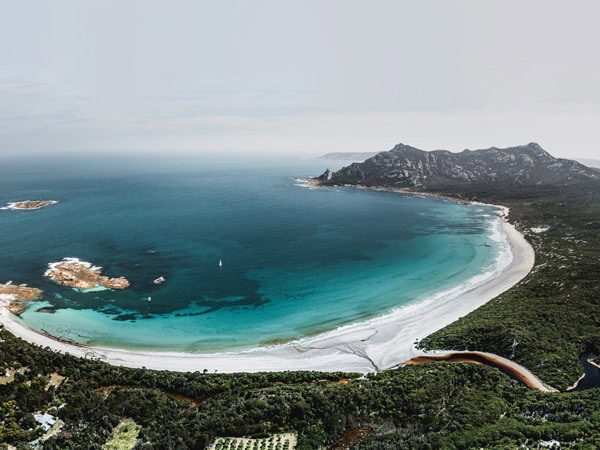
Aerial view of Killiecrankie Bay on Flinders Island
Crayshack is on spectacular Killiecrankie Bay on Flinders Island. (Image: Joe Chelkowski/ Chelko)

Growing up with shack culture ingrained in the everyday fabric of her life, Naomi felt called to start photographing the original shacks she loved as a way to preserve them, after seeing them increasingly being pulled down to make way for larger, more modern homes. Even shack-filled hamlets like Sisters Beach aren’t immune to modernisation with beach homes slowly ballooning in size, syphoning off some of the nostalgic charm in the process. Thanks to some enterprising owners refurbishing old shacks and opening them up to guests, however, the Tassie shacklife dream is still alive and well today.

How to experience Tassie’s shacks

What started as a creative outlet for Naomi eventually evolved into the platform Tasmanian Shacklife in 2017, a directory showcasing her favourite guest-friendly shacks. It’s an inspiring homage to these humble hideaways, whose very simplicity invokes such potent and visceral wanderlust.
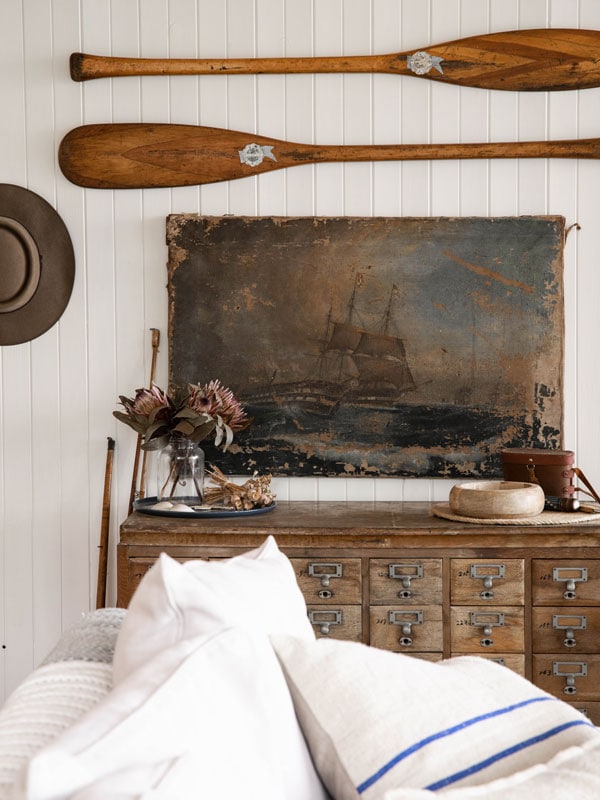
Lounge area ofChambls Shack, Verona Sands
Slips into 1970s shacklife at Chambls Shack in Verona Sands.

Those who feel the call are in luck — waterfront shacks are everywhere here. While there aren’t many places left in mainland Australia where you can find absolute waterfront positions (let alone afford them), that’s not the case in Tasmania. From the windswept streets of Nelson Bay on the west coast to east coast hideaways like Spring Beach and Verona Sands, and secret pockets of Bruny Island, original shacks are everywhere. And while simplicity is still the name of the game, it’s now typically accompanied by some carefully selected creature comforts — think wi-fi, linen sheets and designer coffee machines.
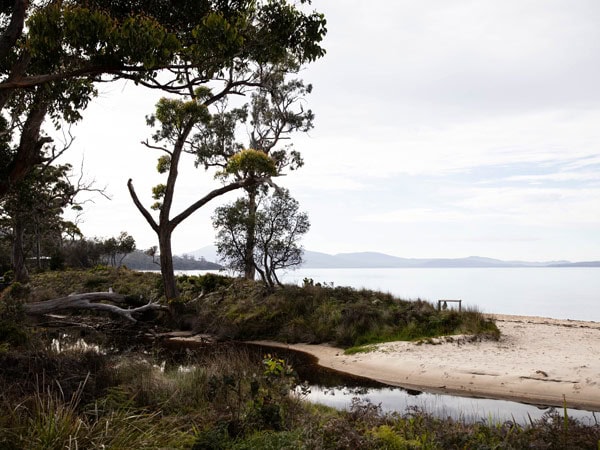
Verona Sands in Tasmania
Chambls is a 1970s shack that abuts Verona Sands.

Shacklife has been a part of Naomi’s family for generations and it’s both a place and a state of mind she feels passionate about handing down to her own children. To her, it’s “being able to see your children play in the bay from the windows, being completely off-grid, getting up with the sun and going to bed with it, sand in the sheets, eating your own catch of the day, sunkissed skin, and stories made.

“I spent the first nine summers of my life in a perfectly imperfect waterfront shack of my great grandmothers in Dover," she says. “When she passed away in 1991, my family decided to see if we could find a shack for us, closer to home. We were lucky enough to find the one that we still have at Ansons Bay, quite literally where the road ends and the ocean meets."

The simplicity of shacklife

At the end of a similar road, the furthest south you can drive in Tasmania for that matter, Cockle Creek plays host to a shack community that has long called to me. It’s where an iconic blue shack sits with its feet all but in the water of Recherche Bay.

I make a pilgrimage to swim out front and look back at its peeling cobalt facade. I think about what life would have been like for Rose Adams, who lived in the old millman’s cottage for 70 years, staying on long after her husband, Walter, passed away in 1967. Drawn here during the Great Depression, Rose lived a life of coastal beauty and bounty without electricity or running water. Shacklife was life for her, right up until she moved to a nursing home in 2003.

These days, the privately-owned shack serves mostly as a backdrop for photos shared on social media – a marker of having made it this far south. Yet this Instagram fame is at odds with the true spirit of shacklife — whether it’s Rose’s weathered abode, Arku House, or any of the other rustic structures lining the shores of the Apple Isle.
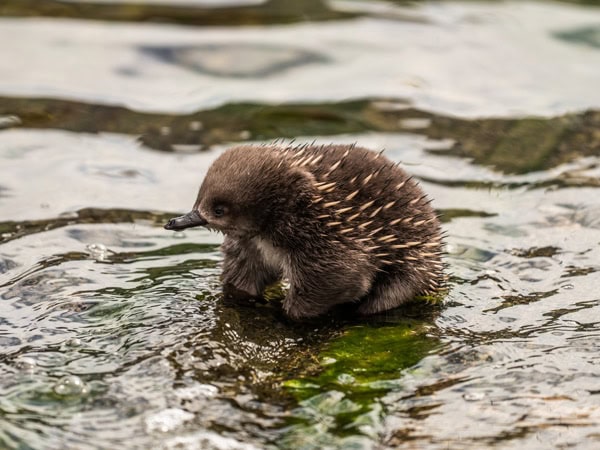
An echidna in Doo Town
Shacklife is slow enough to spot the echinda. (Image: Stu Gibson)

These shacks remind us of a bygone era, where pleasure was found in simplicity, not social media status. It’s no wonder then that as the modern world accelerates, many of us — me included — find ourselves increasingly drawn to these relics of a simpler time. It’s not just because they’re beautiful places to stay; it’s because they’re portals to a way of life that we don’t want to lose.

Here are just six of the best spots to live out your shacklife dreams…

Arku House, Sisters Beach

With a private cinema room, yoga mats for sunrise yoga on the deck, and a welcome drink on arrival, the adults-only Arku House on Tasmani’s north-west shores has certainly elevated the shack experience.
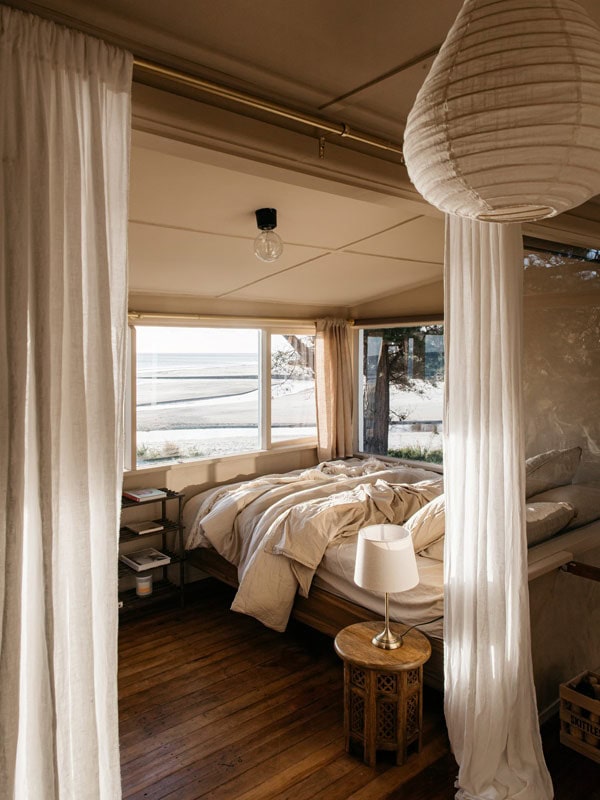
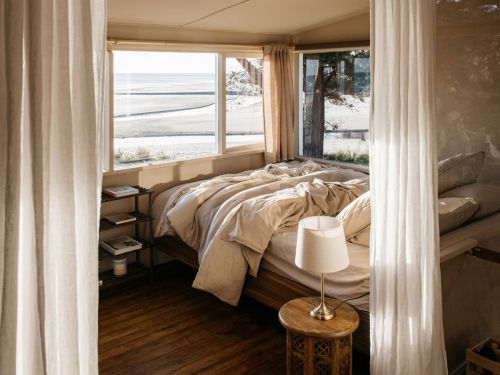
Views of Sisters Island from the bedroom of Arku House in Tasmania
The adults-only hideaway overlooks Sisters Island. (Image: Leanne Timms)

Lil’ Blue Shack, Sisters Beach

Set on a street running parallel to the sand, entering Lil’ Blue Shack is like stepping back into the ‘70s, except with Netflix and a Smeg coffee machine.
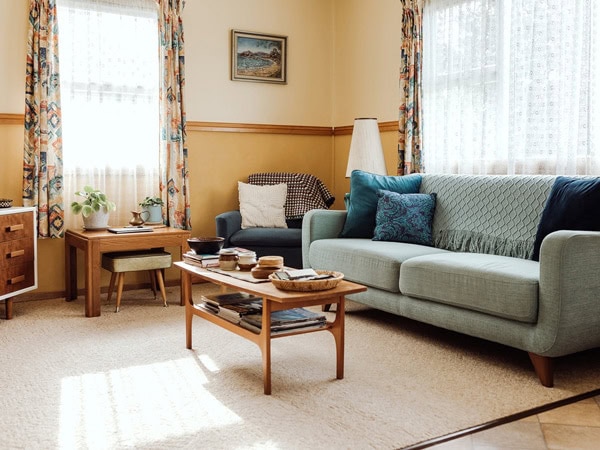
Interior of the Lil Blue Shack in Tasmania
The Lil Blue Shack has a relaxed retro vibe.

Drift Beach Shack, Weymouth

The Mid-Century Drift Beach Shack is filled with all the ingredients for a simple summer sojourn – outdoor shower for rinsing off the salt, turntable to spin your favourite retro tunes, and a fireplace to light should mother nature forget what season it is.
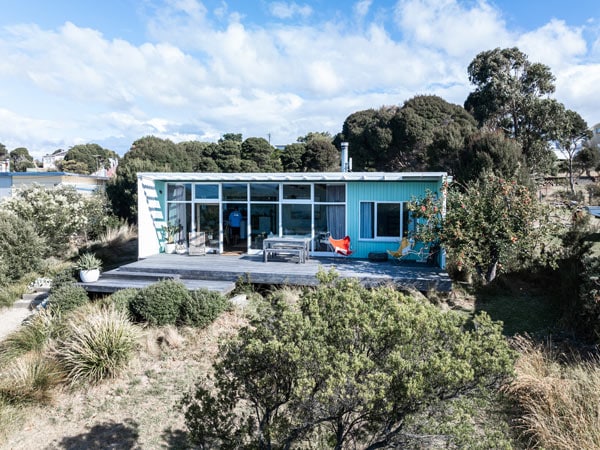
Exterior of Drift Beach Shack
Drift Beach Shack is set in the seaside hamlet of Weymouth. (Image: Krista Eppelstun)

Cray Shack, Flinders Island

It can be hard to retain the authentic shack vibes sometimes when mod cons are added, but even with Cray Shack ’s well-equipped pantry, outdoor baths and shower, and cosy indoor wood heater, the heart of this humble fishing lean-to remains intact.
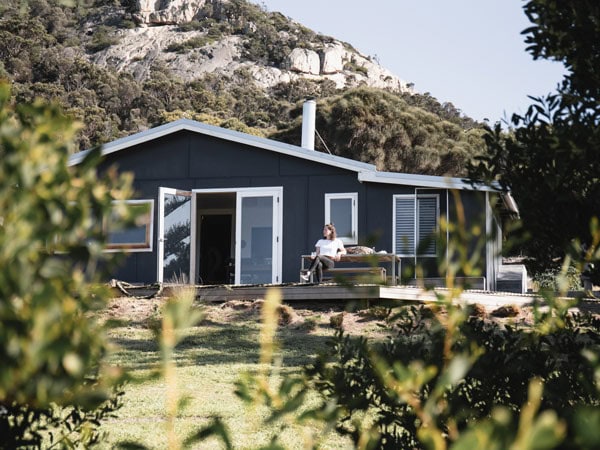
Exterior of Crayshack Flinders Island
The ocean beckons for guests at the Crayshack on Flinders Island. (Image: Liam Neal)

Chambls Shack, Verona Sands

Looking out over Verona Sands beach, the three-bedroom Chambls Shack embraces the beauty of its wobbly bits and is filled with recycled furniture and vintage decor so you can slip into shacklife like it’s 1975.
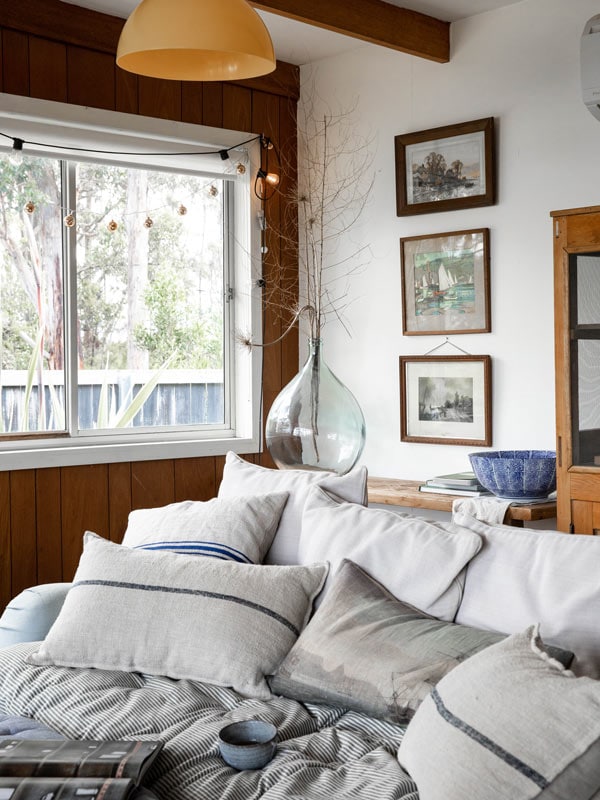
Interior of Chambls Shack in Verona
The three-bedroom Chambls is surrounded by bush and beach.

House of the Weedy Seadragon, Eaglehawk Neck

Spend your days at ‘70s fishing shack, House of the Weedy Seadragon , beachcombing and relaxing in the cedar barrel sauna and nights around the fire pit.
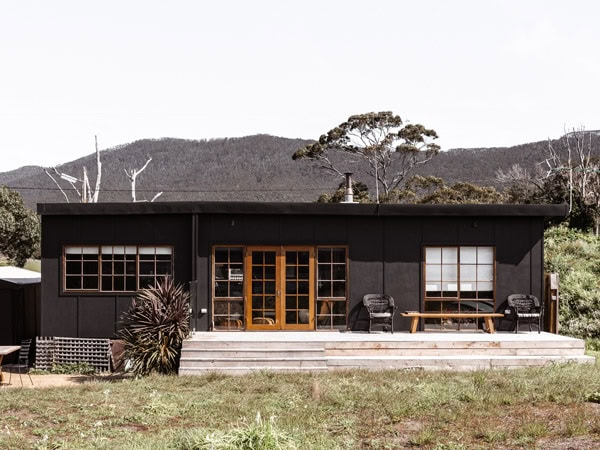
Exterior of House of Weedy Seadragon
The House of Weedy Seadragon overlooks the sand dunes of Tasmania’s Pirates Bay. (Image: Paul Yonna)
Celeste Mitchell
With visions of hosting Getaway, Celeste Mitchell graduated with a Bachelor of Journalism and entered the hard-hitting world of boy bands, puberty, and fashion, writing for magazines like Girlfriend, Total Girl, CLEO and TV Hits in the early noughties (there was a lot of Twilight references). Since switching gears to full-time freelancer in 2013, focused exclusively on travel, she’s criss-crossed the globe, opened a co-working space, lived in Mexico, and co-founded slow and sustainable site, Life Unhurried. The Sunshine Coast-based author (Life Unhurried & Ultimate Beaches Australia, Hardie Grant) and mum of two regularly pinches herself that she gets to explore new places and ask all the nosy questions she wants in the name of work.
See all articles
hero media

5 of the best day trips from Hobart

Hobart has quietly become our coolest capital, but the real wonder lies just beyond the city limits.

In the cool shade of Kunyani/ Mt Wellington, Hobart has earned a reputation. Home to culture-defining Dark MOFO, the city blends rugged, raw wilderness and rule-breaking galleries. But, step beyond the thrumming capital’s border and you’ll find a new perspective: historic towns, Jurassic-era cliffs and a UNESCO City of Gastronomy. With ALL Accor as your home away from home, fill your days with epicurean odysseys and wild scenery on the best day trips from Hobart.

Where to stay

Behind every good road trip is the perfect home base. Somewhere central to review your camera roll, make the most of Hobart’s dining scene and relax before setting off again.

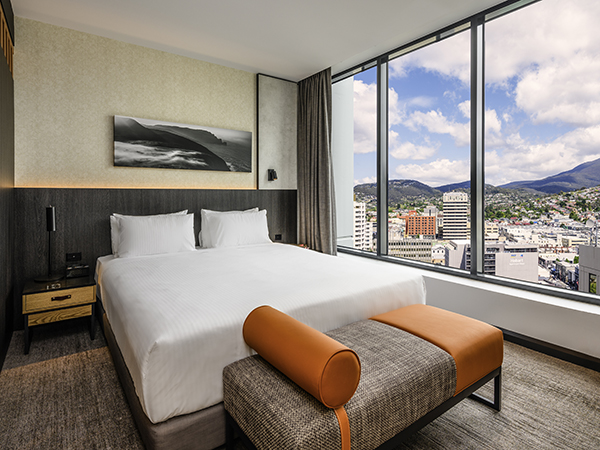
For modern, Tasmanian-inspired design, book a stay at the Movenpick Hotel Hobart . Standing at the Salamanca Markets, look to the Hobart skyline and the award-winning hotel will catch your eye. As the third-tallest building in the CBD, the views across the harbour toward Antarctica are totally unique to your room. Here, end each day at the daily free chocolate hour (plus a free Movenpick ice cream for the little ones).

For a more budget-conscious option, head to the picture book, sandstone buildings of Macquarie Street. Nestled along the buzzing, historic streetscape, you’ll find Tasmania’s biggest hotel: the Ibis Styles . Return home each day to defrost in one of the hotel’s two saunas. Make use of the proximity to MONA, or take an easy stroll to the candy-coloured cottages of Battery Point between your adventures.

A stylish, Tasmanian-inspired bedroom at Mövenpick Hotel Hobart, your perfect base for relaxing after the best day trips from Hobart.
Elevate your Hobart stay with sleek style at Mövenpick.

1. Bruny Island

Craggy cliffs and tropical-hued, white sand beaches signal your arrival to Bruny Island/ Lunawanna-Alonnah.

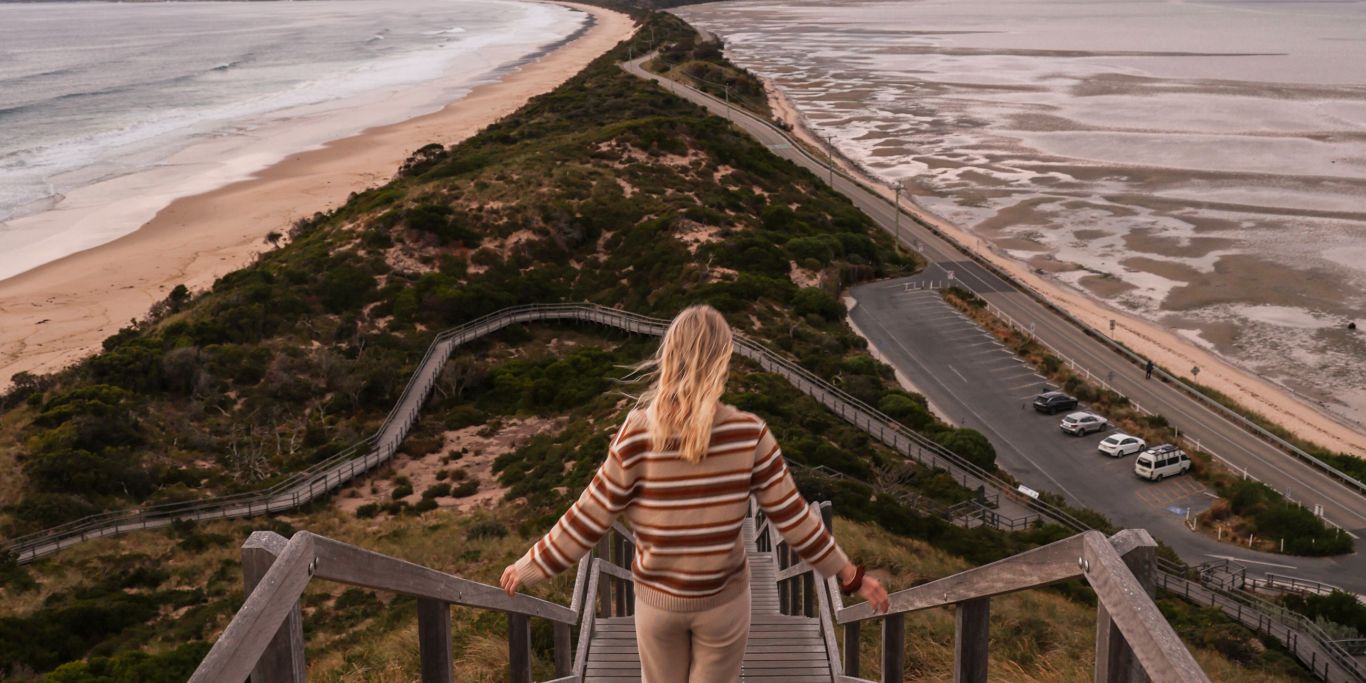
Start your day trip at the island’s most iconic spot, the Neck Game Reserve. Scale the Trunganini steps to gaze out over the teensy stretch of land that juts through the sea connecting the two ends of the island.

Catch a rare glimpse of the white furred wallabies that call Bruny Island home at Adventure Bay. Then, for ocean-fresh oysters, pull into the drive-thru window at Get Shucked . Sample Bruny Island cheese at the cellar door before catching the ferry home with an esky full of local produce.

Bruny Island Neck is an isthmus of land connecting north and south Bruny Island.
Begin your adventure with a climb and a view. (Image: Elise Weaver)

2. Mount Wellington

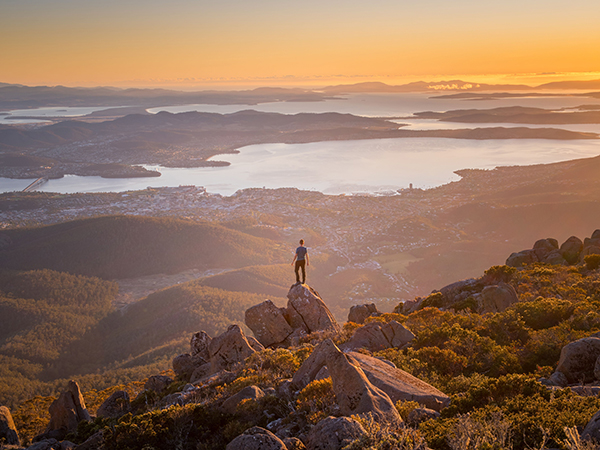
At 1271 metres, Mount Wellington watches protectively over Hobart. Follow the winding road to climb through alpine forest and tufts of snow to reach the summit. Gaze down over Hobart and out to sea, or over your shoulder to the southwestern wilderness.

Reset your adrenaline with a mountain bike ride back down. Or, make like the locals and head into the mountain on foot. Try the hike to the Jurassic-period Organ Pipes which slips under the mountain’s magnificent dolerite cliffs (perfect for families thanks to the trail’s minimal incline).

For a view of Mount Wellington itself, hike nearby Cathedral Rock.

No matter where you are in Hobart you are never far away from the City's beloved mountain, Kunanyi / Mount Wellington
Climb through alpine forest to the summit. (Image: Paul Flemming)

2. Port Arthur

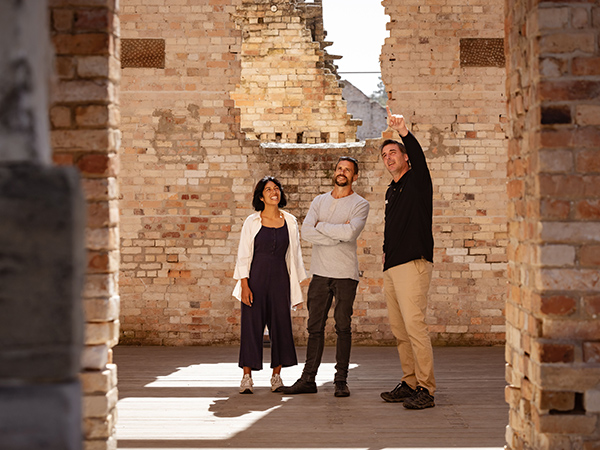
Constructed entirely by convicts, the manicured gardens and penal buildings of Port Arthur offer a day trip that practically hums with history.

The rugged, seagirt location was chosen for its difficult escape conditions. Now, you can cruise the coast below the towering, jagged cliffs of the Tasman National Park or wander the sloping fields of fragrant lavender.

Tickets to Port Arthur include a walking tour and harbour cruise. See the Isle of the Dead where 1000 men are buried in marked and unmarked graves. And Point Puer, Britain’s first prison for children.

The Port Arthur Historic Site is one of Australia's most important heritage sites and tourist destinations. Located on the scenic Turrakana / Tasman Peninsula in the south east of Tasmania, it offers a unique and essential experience for all visitors to the area.
Wander convict-built grounds and gardens. (Image: Dearna Bond)

3. Launceston

You’ll find Launceston at the confluence of three rivers after an easy 2.5-hour drive from Hobart. Launceston is a patchwork of old and new. Here, heritage streetscapes meet modern architecture.

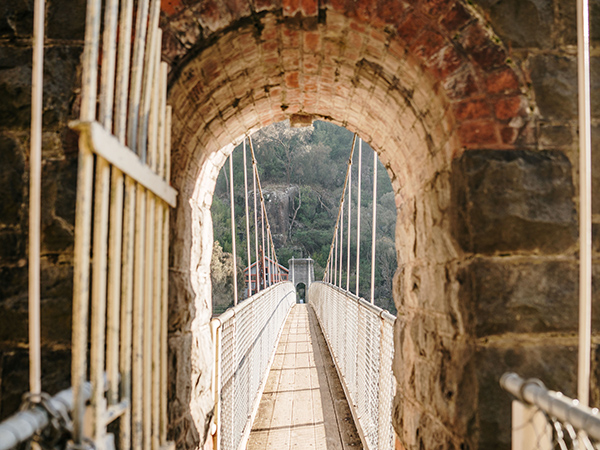
Visit Cataract Gorge, the green, sun-dappled heart of the town and sacred meeting point for Tasmania’s indigenous communities. Pull up at roadside produce stalls that dot the Tamar Valley, or dine out. Launceston is, after all, a UNESCO City of Gastronomy.

Should the local wine scene persuade you, simply extend your time in Launceston at Peppers Silo (but definitely at least stop by the onsite restaurant, Grain of the Silo , for a farm fresh menu) or Mercure Launceston before heading back to Hobart.

Walk the sunlit paths of Cataract Gorge. (Image: Nick H Visuals)

4. Bonorong Wildlife Sanctuary

Take a 35-minute drive from your hotel and you’ll find Bonorong Wildlife Sanctuary . This social enterprise is run by a team of extremely passionate Tasmanians with a mission to look after critically endangered species who have found sanctuary here after facing extinction on the mainland.

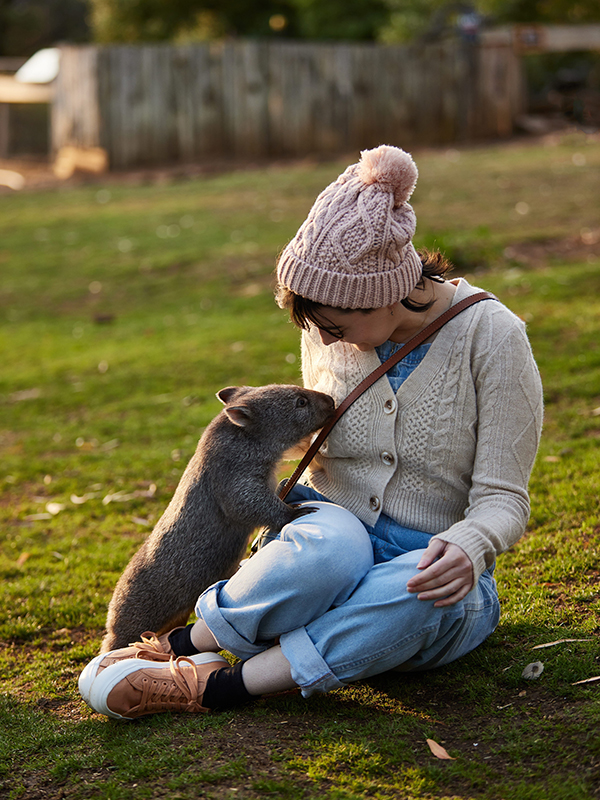
Choose to wander the sanctuary at your own pace or join a guided tour (free with your ticket) to come face to face with Tassie’s most iconic species. Tasmanian Devils, wombats and echidnas are part of the free tour. You can book up close encounters with your favourite animals, too.

Bonorong is a Sanctuary for wildlife run by a passionate team of like-minded people. We're a social enterprise: a little business with a big heart.
Snap a cuddle-worthy encounter. (Image: Tourism Australia)

5. Richmond Village & Coal River Valley

Richmond is a town that belongs in a snow globe. Fifty colonial-era, Georgian buildings have been painstakingly restored and turned into cafes, cosy restaurants and galleries. Visit Richmond Gaol , said to be the home of a prisoner so vile he inspired Charles Dickens to pen Oliver Twist’s Fagin.

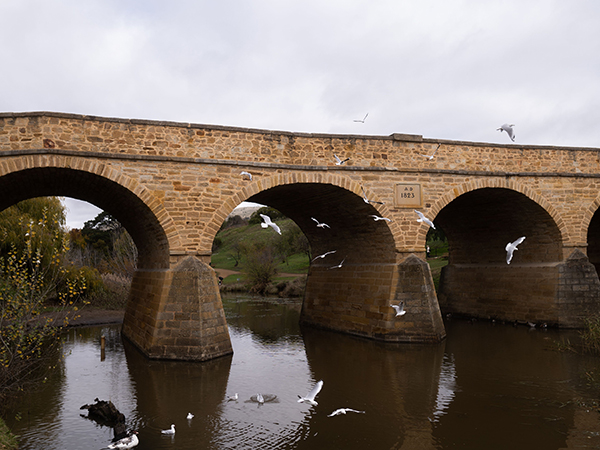
Then, follow the Coal River as it flows past grassy, duckling-dotted knolls and under the iconic Richmond Bridge, the oldest bridge in Australia. From the crest of the bridge, see the oldest Catholic Church in Australia. The river crawls past many cellar doors, perfect for a day of wine tasting.

Richmond is a picture-perfect town in the Coal River Valley wine region, offering a glimpse into early colonial life, one of the best day trips from Hobart.
Trace the river through history and wine country. (Image: Fin Matson)

Plan your trip to Hobart and beyond with ALL Accor at All.com .