Unforgettable gardens to visit in the Yarra Valley and its surrounds

hero media
How do those secret gardens grow? Wander through the lush gardens of these rolling hills and find out.

A popular escape for many Melburnians, the Yarra Valley is also thrillingly close to Melbourne. In a blink, the roads pass from suburbia to a verdant oasis. With hills gently rolling between more than 70 cellar doors, and fresh produce at every turn, it has long been an obvious weekend retreat for those living in Victoria’s capital. And much the same can be said about the neighbouring Dandenong Ranges.

But wineries and scenic landscapes aside, it’s the marvellous gardens of the Yarra Valley and the Dandenong Ranges that deserve a turn in the spotlight. Read on to uncover the best.
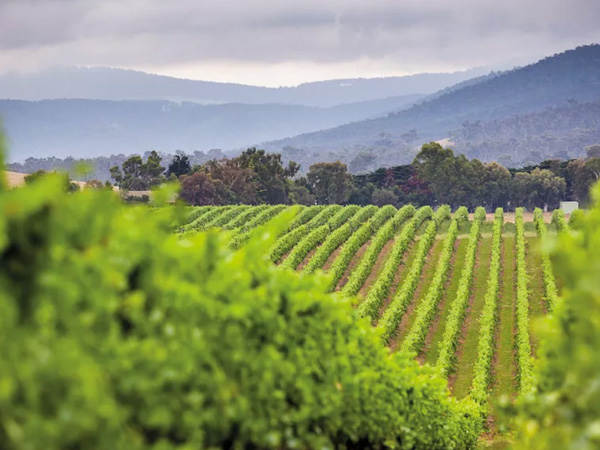
vineyard, Yarra Valley gardens
One of the many vineyards striping the fertile Yarra Valley.

The Yarra Valley

Coombe The Melba Estate

Open to the public since 2014, the manicured three-hectare gardens at Coombe Estate, Yarra Valley, were once a well-kept secret, hidden behind a notably lengthy cypress hedge (some 600 metres long, to be precise). Today, they’re accessible only via guided tour, which is bookable alongside morning or afternoon tea, or lunch at this beautiful winery estate.

Feted opera singer Dame Nellie Melba – whose face you might have seen on the $100 note – took shelter from the bright lights of the stage here in the early 1900s. And it’s not hard to imagine how she may have found sanctuary among the leafy grounds, with its rare plants and old-world trees.

Explore her ultimate secret garden and you’ll trace winding cobbled paths, venture through hedge tunnels, view a succession of terraced lawns, wander through a rose arbour, and visit native, Italian and vegetable gardens.

It’s little wonder Coombe Estate houses one of the Yarra Valley’s best gardens: the blueprint was drawn up by none other than William Guilfoyle, architect of the Victorian Royal Botanic Gardens.
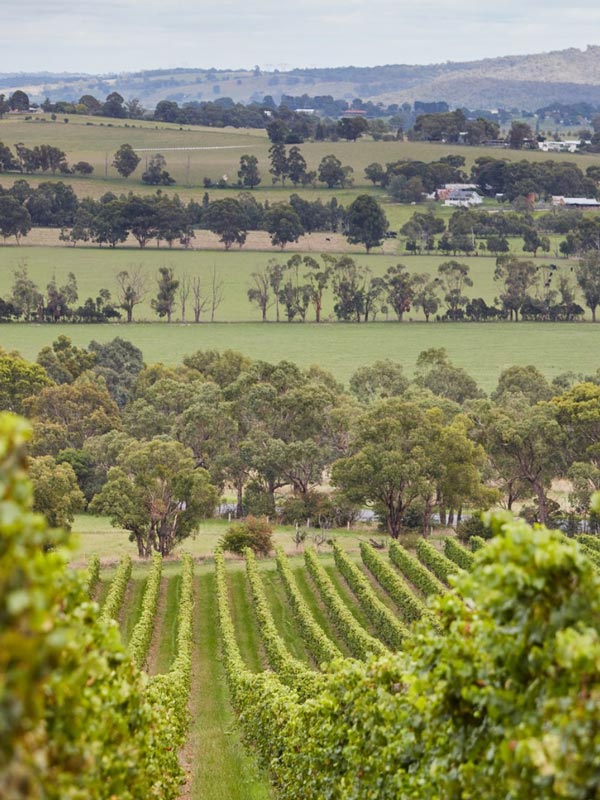
D - Block Pinot vines, Coombe Yarra Valley
Commanding views of Coombe Yarra Valley’s D Block Pinot vines. (Image: redfishbluefishphoto)

Alowyn Gardens

Alowyn Gardens is a two-decade dedication to creating almost three stunning hectares for visitors to enjoy. There are eight display areas here, including an edible garden, a French garden featuring a lavender field and a flower field, a birch and casuarina forest, a dreamy Instagram-friendly 100-metre-long wisteria arbour, and a mesmerising ornamental parterre garden that features box hedging laid out in symmetrical shapes.

So extensive and impressive are the grounds here, that you could easily dedicate an entire afternoon to their exploration.
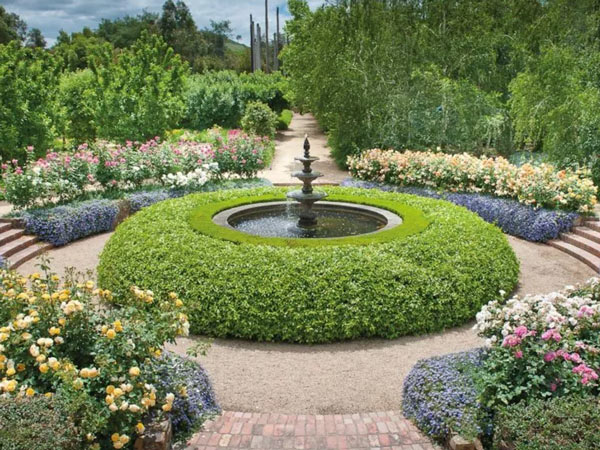
Alowyn Gardens
Take a refreshing walk along the beautiful Alowyn gardens.

Feeling inspired by the level of horticultural craftsmanship? Visit the Yarra Valley garden’s onsite nursery and pick up a few bulbs to plant at home.

Worked up an appetite from all the touring? Stop by Alowyn Gardens’ maple courtyard cafe and enjoy a freshly baked scone and a flat white.
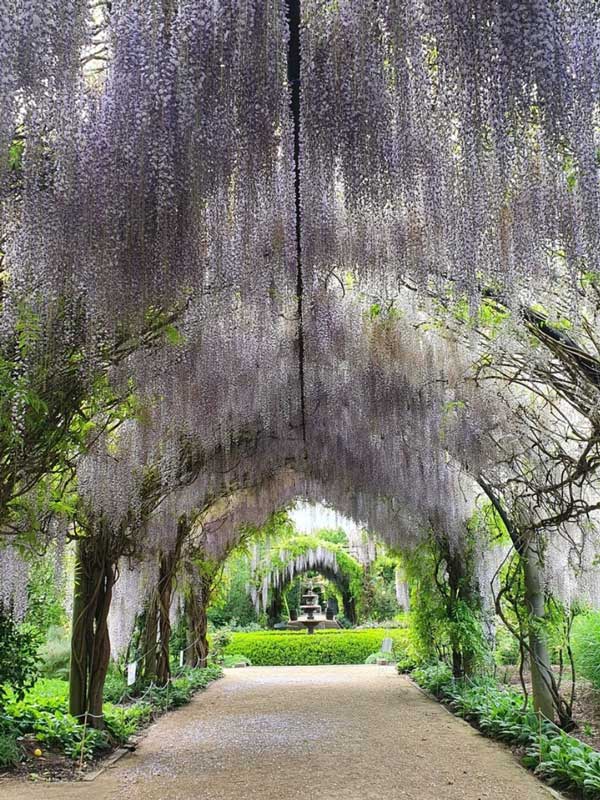
Wisteria Archway, Alowyn Gardens
Gaze in awe at the stunning wisteria archway of Alowyn Gardens.

The Dandenong Ranges

Dandenong Ranges Botanic Garden

Tucked alongside the small village of Olinda, the Dandenong Ranges Botanic Garden (formerly known as the National Rhododendron Garden) is no small patch of grass.

Nearly 40 hectares of rhododendrons, azaleas, camellias and other natives and exotics reside here, with the star of the show – the 15,000 multi-coloured Rhodies – popping into flower as spring reaches the Dandenongs and transforming the hillsides into a veritable sea of colour. It is, in fact, the largest collection of its kind in Australia.

This botanic garden is prime picnic real estate, so pack a hamper and set up a blanket on one of the lush green lawns.
And if you’d like to explore more of the park in your post-prandial daze (but don’t quite have the energy), hop on board the ‘Garden Explorer’ – a small electric open-air bus that offers a guided 25-minute tour of the grounds.
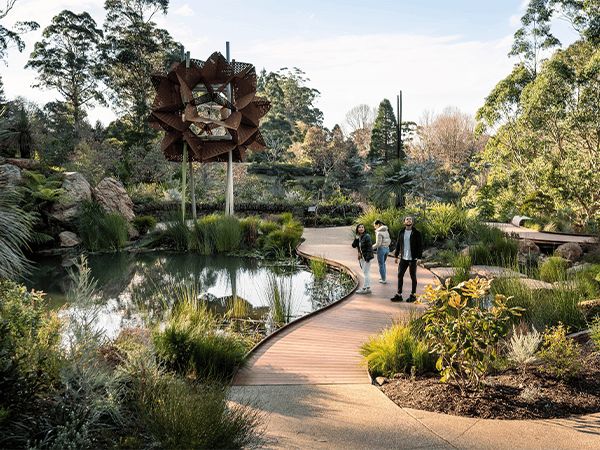
Dandenong Ranges Botanic Garden
Dandenong Ranges Botanic Garden is home to 15,000 rhododendrons, 12,000 azaleas, 3,000 camellias and 250,000 daffodils.

Need tips, more detail or itinerary ideas tailored to you? Ask AT.

AI Prompt

Cloudehill Nursery and Gardens

The hills come alive with bright flowers and woodlands at Cloudehill, which adjoins a nursery. The collection housed at this Dandenong Ranges garden is really rather eclectic, from giant 80-year-old European beech trees to Japanese weeping maples, cool temperate bamboos, so-called ‘wedding cake’ shrubs, ornamental grasses, bluebells and plenty more.
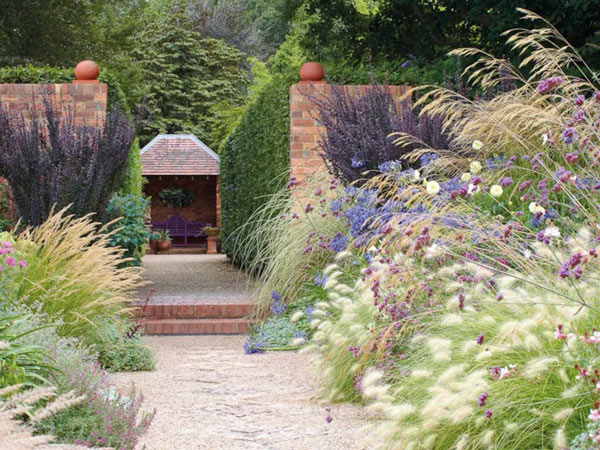
Cloudehill Nursery, Yarra Valley Gardens
Take a moment to unwind at the tranquil setting of Cloudehill Nursery and Gardens.

Between December and March, the venue hosts a number of twilight events, capitalising on the soft evening light that summer promises, not to mention the glorious green surrounds; in previous years the programme has included productions of Shakespeare, operatic performances, and string ensembles.

Cloudehill Nursery and Gardens is also home to a rustic restaurant, Seasons, that offers a beautiful outlook and promises fresh, seasonal produce grown in the property’s own kitchen garden.
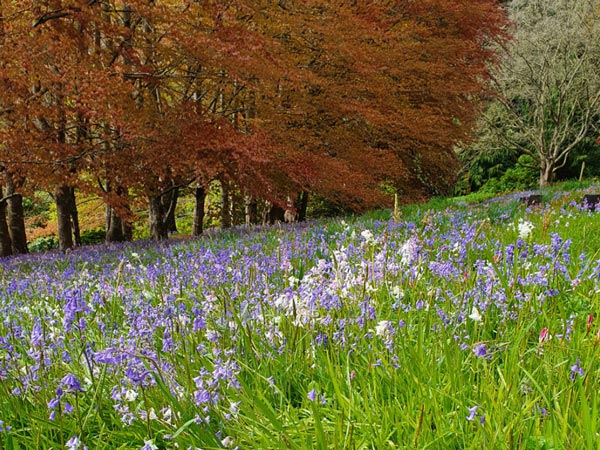
lavenders in full bloom, Cloudehill Nursery at Yarra Valley gardens
Lavenders in bloom at the sight of spring.

Skyhigh Maze

If you like views with your gardens, then you’re in luck at the hills’ (literally) top spot, overlooking the city skyline and the towering Dandenong Ranges National Park.
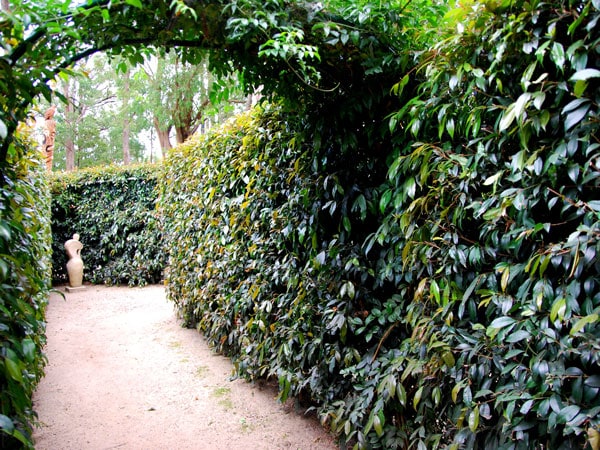
one of the entry points at SkyHigh Maze, Mount Dandenong
Uncover the secrets of SkyHigh Maze.

The maze has four secrets to uncover, including (spoiler alert) sculptures, butterflies and illusions; it’s like brain training inside a lilly pilly hedge puzzle. And besides its namesake attraction, SkyHigh is also home to an English garden with mature blackwoods.
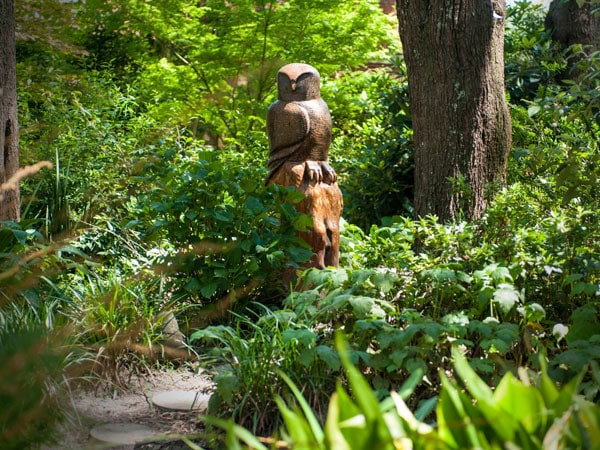
a wooden eagle sculpture at SkyHigh Maze, Mount Dandenong
You’ll find sculptures scattered across the maze.

If you’ve got kids then keep an eye on SkyHigh Maze’s website, as the Mount Dandenong attraction also hosts a series of ‘Children’s Festivals’ throughout the year that features activities and games.
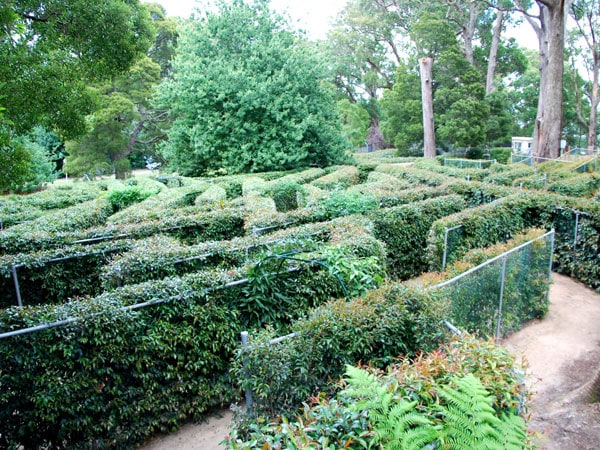
the SkyHigh Maze in Mount Dandenong
Sky High maze will tickle your fancy if you love solving puzzles.

Events to look out for

Tesselaar Tulip Festival

More fun than you can poke a tulip at, the Tesselaar Tulip Festival is home to more than a million flowering blooms, plus market stalls and entertainment.

This annual event typically takes place between mid-September and mid-October, and across its four weeks of opening there’s a host of different themes to choose from, such as Turkish Weekend (expect Turkish art, dance, music and food), Children’s Week (think live shows from Kung Fu Panda, craft workshops and a petting zoo), and a Food, Wine and Jazz weekend (featuring complimentary wine tastings, naturally).

There’s also a tractor-train ride available, aimed at those with limited mobility issues, and children. BYO picnic and graze away your day on the lawn while overlooking the sea of flowers.
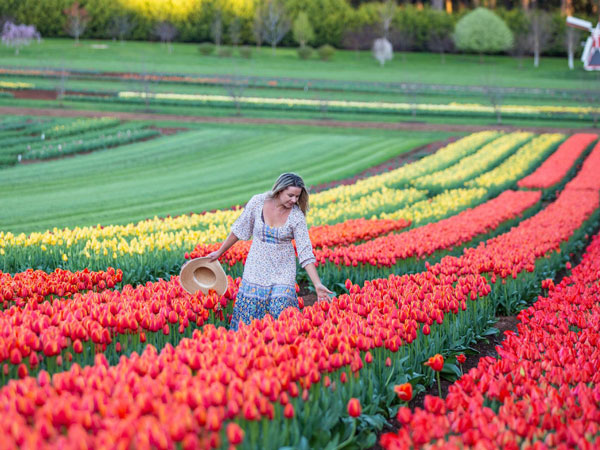
majestic floral carpet, Tesselaar Tulip Festival
Hundreds of colourful flower bulbs bloom during the Tesselaar Tulip Festival.

Warratina’s Harvest Lavender Festival

This four-hectare lavender farm in Wandin North, on the southernmost fringes of the Yarra Valley, plays host to a Harvest Festival every November to celebrate the start of the farm’s lavender season.

Aside from wandering through fragrant rows of the lilac plant, Warratina’s Harvest Lavender Festival also promises live music entertainment, a local maker’s market and more.
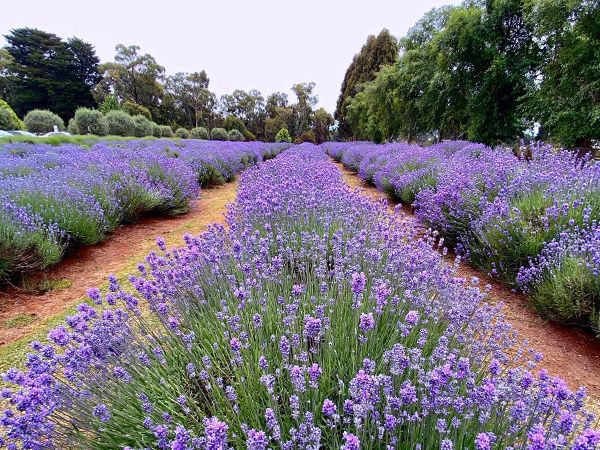
Warrantina's Harvest Lavender Festival
Lavender in full bloom.

Weekly travel news, experiences
insider tips, offers, and more.

Yarra Valley Spring Plant Fair

Only avid and aspiring gardeners need apply for this springtime event, held at Romantic Nursery in Wandin North.
More than 5,000 varieties of plants, many of them rare and not normally available to the general public, will be available to purchase during the two-day Yarra Valley Spring Plant Fair. The fair also offers a variety of talks by gardening experts and professional horticulturalists.
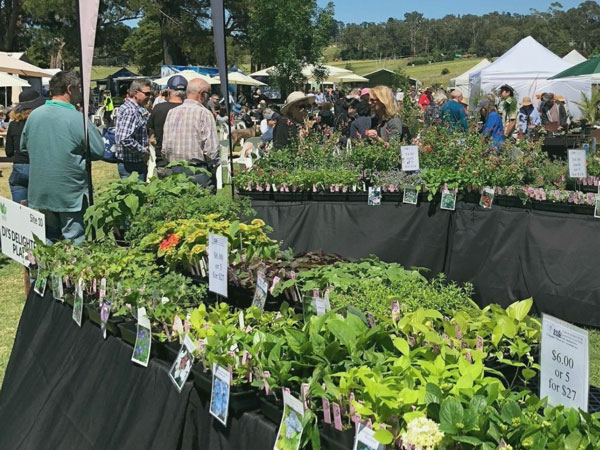
Yarra Valley Spring Plant Fair
Spruce up your space with some greenery from the Yarra Valley Spring Plant Fair.

Cherryhill Blossom Festival

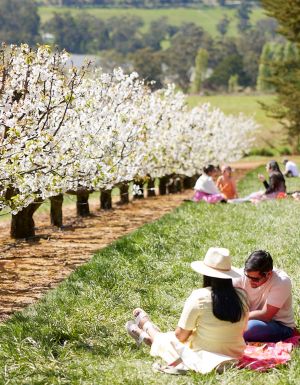
Forget Japan: this family-owned orchard is awash with a flurry of cherry blossom petals for just two fleeting weeks come spring, typically between late September and early October.

Visit CherryHill’s 34-hectare Wandin East orchard to witness these beautiful blooms in person, and enjoy the annual festival’s food vans, live music, craft stalls and house blossom gelato.
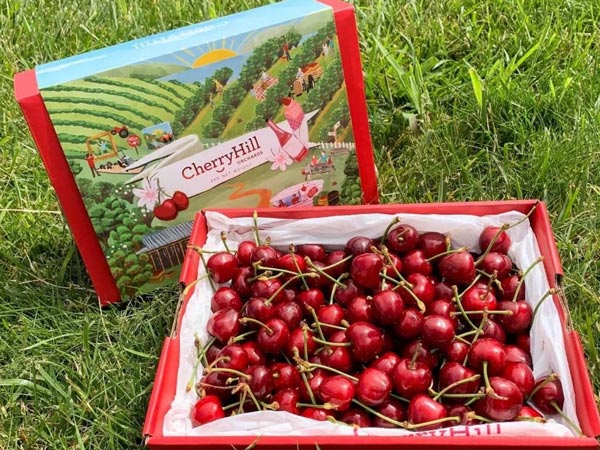
ripe cherries, Cherryhill Orchards
Sweet and ripe cherries freshly picked from Cherryhill Orchards.

Details

Getting there

The Yarra Valley lies to the northeast of Melbourne, and the Dandenong Ranges to the east. Both destinations are approximately an hour’s drive from Melbourne.

Staying there

Stick with the garden theme, plus added wine, at Chateau Yering Hotel, the grand dame of the Yarra Valley.
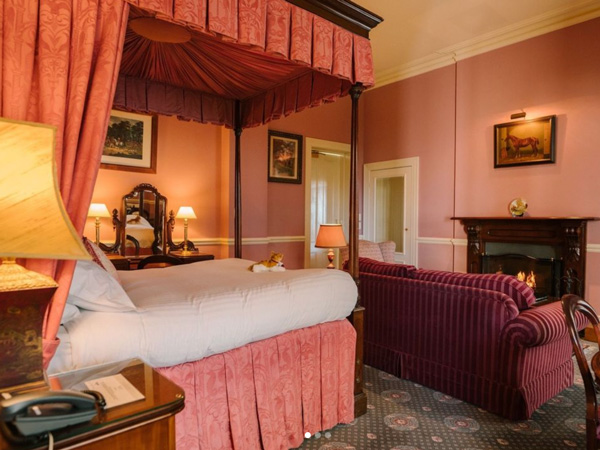
fancy suite, Chateau Yering Hotel
Sleep like royalty at Chateau Yering Hotel’s fanciest suite.

This historic homestead’s 32 suites all feature a hefty dose of country estate chic, many offering garden views from their private balconies and verandas. The jewel in the crown of this estate’s gardens is the towering Chilean Wine Palm, which is classified on the National Trust Heritage Register.

There are worse places to hole up in than Beechmont Garden Retreat. Located in lovely Olinda, this spacious and stylish four-bedroom, three-bathroom home features naturalist nods throughout (think wallpaper featuring dragonfly and butterfly prints, floral arrangements in each and every direction, plants dotted throughout the property, and cushion covers with floral motifs).

But better still, it’s planted on a four-hectare estate that accommodates formal and rambling gardens.
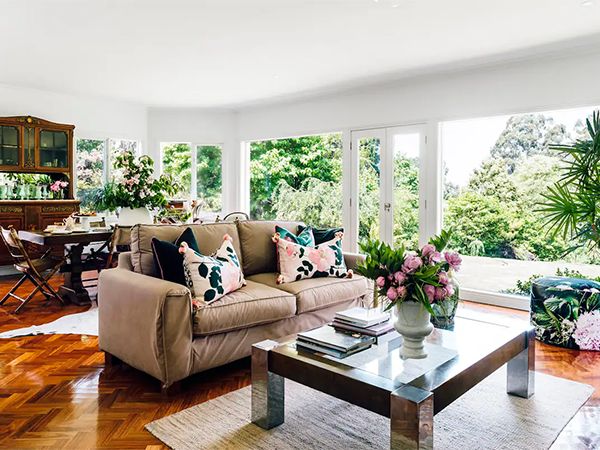
Beechmont Garden Retreat
Beechmont Garden Retreat is a charming oasis surrounded by lush greeneries.
Discover 18 of the best things to do in the Yarra Valley.

Want to see more stories from Australian Traveller in your Google search results?

  1. Click here to set Australian Traveller as a preferred source.
  2. Tick the box next to "Australian Traveller". That's it.
Chloe Cann
Chloe Cann is an award-winning freelance travel and food writer, born in England, based in Melbourne and Roman by adoption. Since honing her skills at City St George's, University of London with a master's degree in journalism, she's been writing almost exclusively about travel for more than a decade, and has worked in-house at newspapers and travel magazines in London, Phnom Penh, Sydney and Melbourne. Through a mixture of work and pleasure, she's been fortunate enough to visit 80 countries to date, though there are many more that she is itching to reach. While the strength of a region's food scene tends to dictate the location of her next trip, she can be equally swayed by the promise of interesting landscapes and offbeat experiences. And with a small person now in tow, travel looks a little different these days, but it remains at the front of her mind.
View profile and articles

This scenic Victorian region is the perfect antidote to city life

    Craig Tansley Craig Tansley

    Video credit: Visit Victoria/Tourism Australia

    The Grampians just might be the ultimate antidote for the metropolis, writes one returning Aussie ready to disconnect from the modern world and reconnect to the Great outdoors.

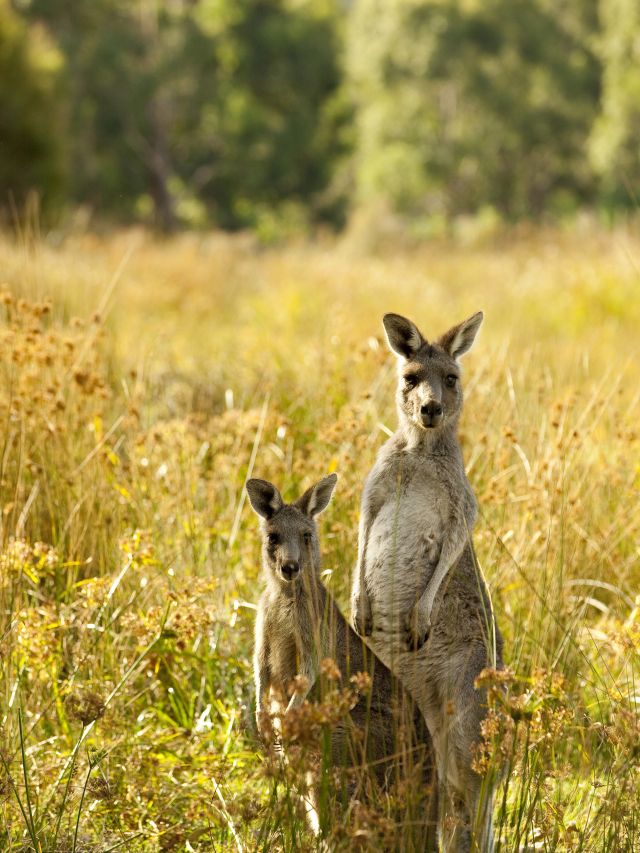
    There are no kangaroos back in Chicago: they’re all here in the Grampians/Gariwerd. In the heart of the Grampians National Park’s main gateway town, Halls Gap, pods of eastern greys are eating grass beside my parked rental car beneath the stars. Next morning, when I see the backyard of my rented villa on the edge of town for the first time, there are kangaroos feeding beside a slow-moving creek, lined with river red gums.

    Five hundred metres up the road, 50 or so of them are eating by the side of the road in a paddock. I pull over to watch and spot three emus. Yellow-tailed black cockatoos fly overhead towards the tall green mountains just beyond town.

    ‘Kee-ow, keee-oww’… their calls fuse with the maniacal cackle of a kookaburra (or 10). Gawd, how I’ve missed the sound of them. Far above, a wedge-tailed eagle watches, and there you go: the ‘great birds of Australia’ trifecta, all half a kay from the town limits.

    Exchanging city chaos for country calm

    kangaroos near Halls Gap, Grampians National Park
    The park is renowned for its significant diversity of native fauna species. (Image: Visit Victoria/Robert Blackburn)

    I’ve come to the Grampians to disconnect, but the bush offers a connection of its own. This isn’t just any bush, mind you. The Grampians National Park is iconic for many reasons, mostly for its striking sandstone mountains – five ridges run north to south, with abrupt, orange slopes which tumble right into Halls Gap – and for the fact there’s 20,000 years of traditional rock art. Across these mountains there are more than 200 recorded sites to see, created by the Djab Wurrung, Jardwadjali and Gunditjmara peoples. It’s just like our outback… but three hours from Melbourne.

    I’ve come here for a chance at renewal after the chaos of my life in America’s third-largest city, Chicago, where I live for now, at the whim of a relative’s cancer journey. Flying into Melbourne’s airport, it only takes an hour’s drive to feel far away from any concept of suburbia. When I arrive in Halls Gap two hours later, the restaurant I’m eating at clears out entirely by 7:45pm; Chicago already feels a lifetime ago.

    The trails and treasures of the Grampians

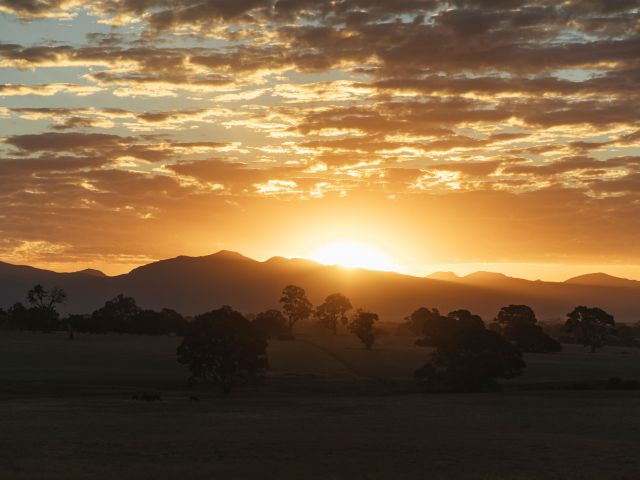
    sunrise at Grampians National Park /Gariwerd
    Grampians National Park /Gariwerd covers almost 2000 square kilometres. (Image: Ben Savage)

    Though the national park covers almost 2000 square kilometres, its best-known landmarks are remarkably easy to access. From my carpark here, among the cockatoos and kangaroos on the fringe of Halls Gap, it only takes 60 seconds’ driving time before I’m winding my way up a steep road through rainforest, deep into the mountains.

    Then it’s five minutes more to a carpark that serves as a trailhead for a hike to one of the park’s best vantage points, The Pinnacles. I walk for an hour or so, reacquainting myself with the smells and the sounds of the Aussie bush, before I reach it: a sheer cliff’s edge lookout 500 metres up above Halls Gap.

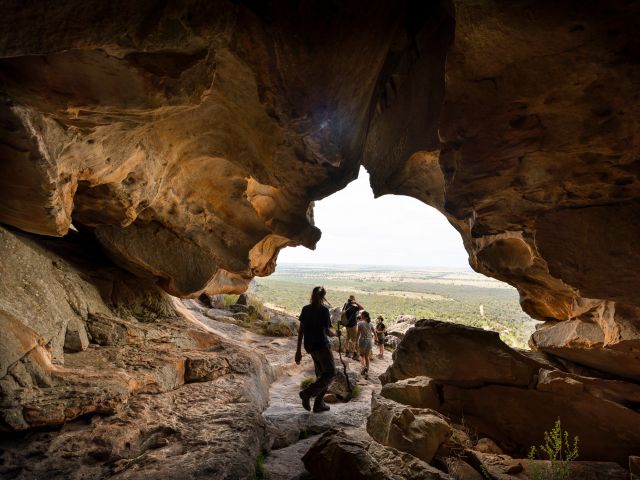
    walking through a cave, Hollow Mountain
    Overlooking the vast Grampians landscape from Hollow Mountain. (Image: Robert Blackburn)

    There are hikes and there are lookouts and waterfalls all across this part of the park near town. Some are a short stroll from a carpark; others involve long, arduous hikes through forest. The longest is the Grampians Peaks Trail, Victoria’s newest and longest iconic walk, which runs 160 kilometres – the entire length of Grampians National Park.

    Local activities operator Absolute Outdoors shows me glimpses of the trail. The company’s owner, Adrian Manikas, says it’s the best walk he’s done in Australia. He says he’s worked in national parks across the world, but this was the one he wanted to bring his children up in.

    “There’s something about the Grampians,” he says, as he leads me up a path to where there’s wooden platforms for tents, beside a hut looking straight out across western Victoria from a kilometre up in the sky (these are part of the guided hiking options for the trail). “There are things out here that you won’t see anywhere else in Australia.” Last summer, 80 per cent of the park was damaged by bushfire, but Manikas shows me its regrowth, and tells me of the manic effort put in by volunteers from town – with firefighters from all over Australia – to help save Halls Gap.

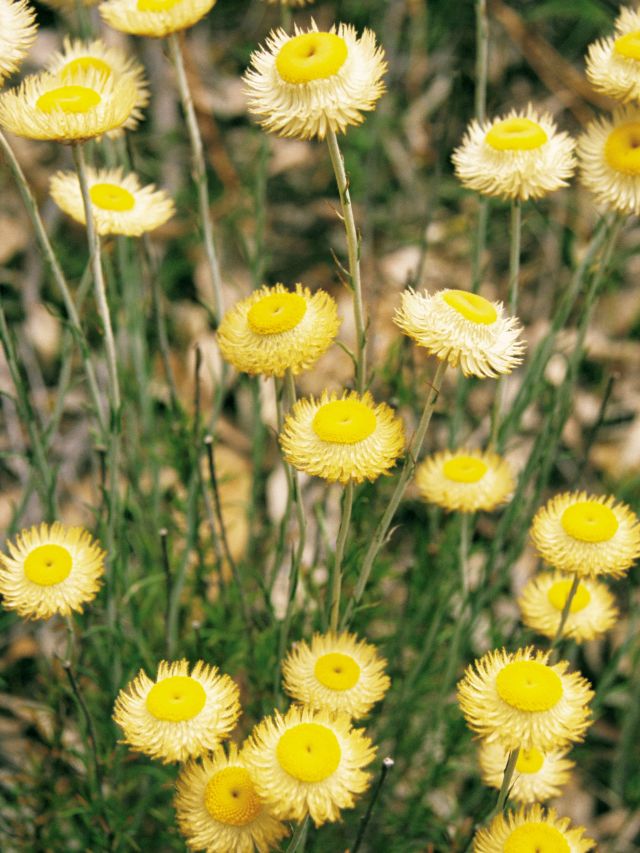
    wildflowers in Grampians National Park
    Spot wildflowers. (Image: Visit Victoria)

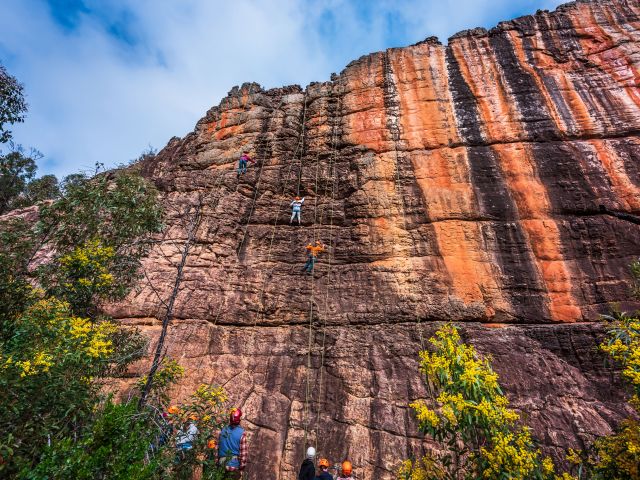
    We drive back down to Halls Gap at dusk to abseil down a mountain under the stars, a few minutes’ walk off the main road into town. We have headlamps, but a full moon is enough to light my way down. It takes blind faith to walk backwards down a mountain into a black void, though the upside is I can’t see the extent of my descent.

    Grampians National Park at sunset
    Grampians National Park at sunset. (Image: Wine Australian)

    The stargazing is ruined by the moon, of course, but you should see how its glow lights up the orange of the sandstone, like in a theme park. When I’m done, I stand on a rocky plateau drinking hot chocolate and listening to the Aussie animals who prefer nighttime. I can see the streets of Halls Gap off in the distance on this Friday night. The restaurants may stay open until 8pm tonight.

    What else is on offer in The Grampians?

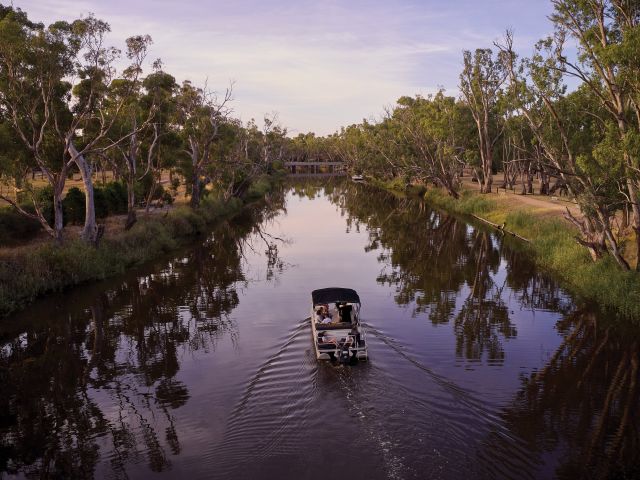
    a boat travelling along the Wimmera River inDimboola
    Travelling along the Wimmera River in Dimboola. (Image: Chris McConville)

    You’ll find all sorts of adventures out here – from rock climbing to canoeing to hiking – but there’s more to the Grampians than a couple of thousand square kilometres of trees and mountains. Halls Gap may be known to most people, but what of Pomonal, and Dimboola, and Horsham? Here in the shadow of those big sandstone mountains there are towns and communities most of us don’t know to visit.

    And who knew that the Grampians is home to Victoria’s most underrated wine region? My disconnection this morning comes not in a forest, but in the tasting rooms and winery restaurants of the district. Like Pomonal Estate, barely 10 minutes’ drive east of Halls Gap, where UK-born chef Dean Sibthorp prepares a locally caught barramundi with lentil, pumpkin and finger lime in a restaurant beside the vines at the base of the Grampians. Husband-and-wife team Pep and Adam Atchison tell me stories as they pour their prize wines (shiraz is the hero in these parts).

    dining at Pomonal Estate
    Dine in a restaurant beside vines at Pomonal Estate. (Image: Tourism Australia)

    Three minutes’ drive back down the road, long-time mates Hadyn Black and Darcy Naunton run an eclectic cellar door out of a corrugated iron shed, near downtown Pomonal. The Christmas before last, half the houses in Pomonal burnt down in a bushfire, but these locals are a resilient lot.

    The fires also didn’t stop the construction of the first art centre in Australia dedicated to environmental art in a nature-based precinct a little further down the road (that’s Wama – the National Centre for Environmental Arts), which opened in July. And some of the world’s oldest and rarest grape vines have survived 160 years at Best’s Wines, outside the heritage town of Great Western. There’s plantings here from the year 1868, and there’s wines stored in century-old barrels within 150-year-old tunnels beneath the tasting room. On the other side of town, Seppelt Wines’ roots go back to 1865. They’re both only a 30-minute drive from Halls Gap.

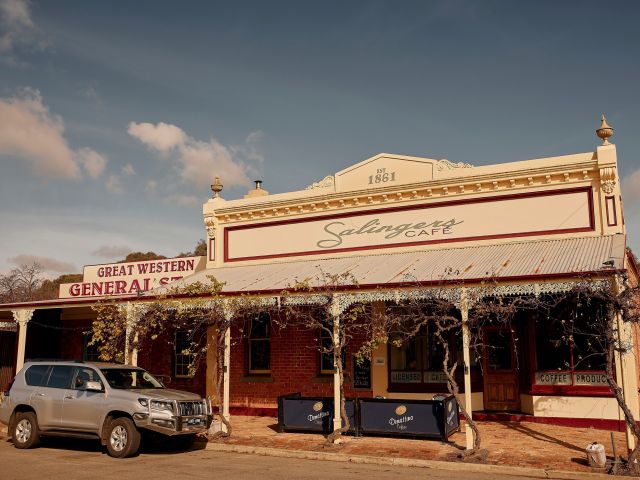
    Salingers of Great Western
    Great Western is a charming heritage town. (Image: Griffin Simm)

    There’s more to explore yet; I drive through tiny historic towns that barely make the map. Still part of the Grampians, they’re as pretty as the mountains behind them: full of late 19th-century/early 20th-century post offices, government offices and bank buildings, converted now to all manner of bric-a-brac stores and cafes.

    The Imaginarium is one, in quirky Dimboola, where I sleep in the manager’s residence of an old National Australia Bank after a gourmet dinner at the local golf club, run by noted chef and teacher, Cat Clarke – a pioneer of modern Indigenous Australian cooking. Just south, I spend an entire afternoon at a winery, Norton Estate Wines, set on rolling calico-coloured hills that make me think of Tuscany, chit-chatting with owners Chris and Sam Spence.

    Being here takes me back two decades, when I lived here for a time. It had all seemed as foreign as if I’d driven to another planet back then (from Sydney/Warrane), but there seemed something inherently and immediately good about this place, like I’d lived here before.

    And it’s the Australian small-town familiarity of the Grampians that offers me connection back to my own country. Even in the better-known Halls Gap, Liz from Kerrie’s Creations knows I like my lattes with soy milk and one sugar. And while I never do get the name of the lady at the local Ampol station, I sure know a lot about her life.

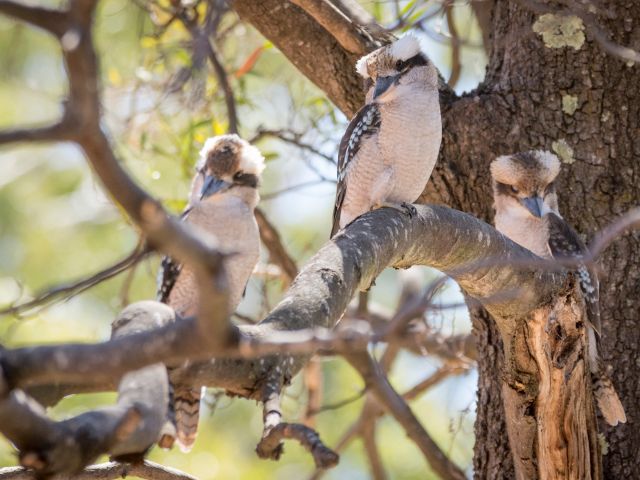
    Kookaburras on a tree
    Kookaburras are one of some 230 bird species. (Image: Darren Donlen)

    You can be a local here in a day; how good is that? In Chicago, I don’t even know who my neighbour is. Though each day at dusk – when the kangaroos gather outside my villa, and the kookaburras and the black cockatoos shout out loud before settling in to sleep – I prefer the quieter connection I get out there in the bush, beneath these orange mountains.

    A traveller’s checklist

    Staying there

    Sleep beside the wildlife on the edge of Halls Gap at Serenity.

    Playing there

    abseiling down Hollow Mountain
    Hollow Mountain is a popular abseiling site.

    Go abseiling under the stars or join a guided hike with Absolute Outdoors. Visit Wama, Australia’s first environmental art centre. Check out Dimboola’s eccentric Imaginarium.

    Eating there

    steak, naan bread and beer at Paper Scissors Rock in Halls Gap
    Paper Scissors Rock in Halls Gap serves a great steak on naan bread.

    Eat world-class cuisine at Pomonal Estate. Dine and stay at much-revered icon Royal Mail Hotel in Dunkeld. The ‘steak on naan’ at Halls Gap brewhouse Paper Scissors Rock, can’t be beat.

    Dunkeld Arboretum in Grampians National Park
    The serene Dunkeld Arboretum.

    For Halls Gap’s best breakfasts head to Livefast Cafe. Sip local wines at Great Western’s historic wineries, Best’s Wines, Seppelt Wines and Norton Estate Wines.

    two glasses of beer at Paper Scissors Rock in Halls Gap
    Sink a cold one at Paper Scissors Rock.