The true reward of a stay at Sal Salis is a reintroduction to the wonder of nature; leave your phone at home, forget about deadlines and prepare to dive in.
Conservation has been at the heart of Sal Salis Ningaloo Reef, since its inception. Travellers come here to swim with whale sharks, hike the ancient ranges of Cape Range National Park and fall asleep to the sound of waves crashing against the fringing reef.
The operators have always sought to conserve the region’s natural environment through educational and environmentally sound tourism operations. It’s this eco-centric approach that has seen it grow from a few tents scattered across the sand dunes to the luxury safari-style operation it is today.
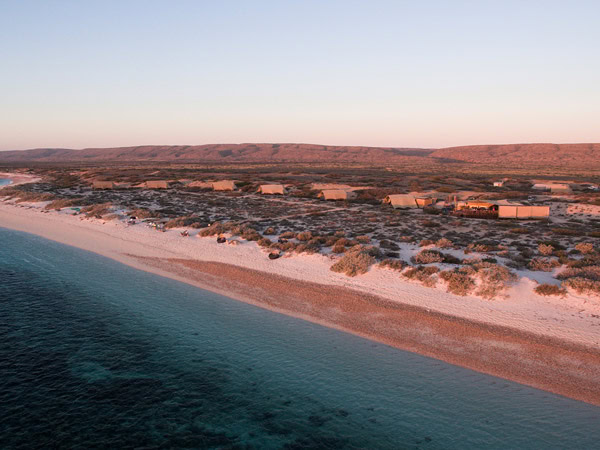
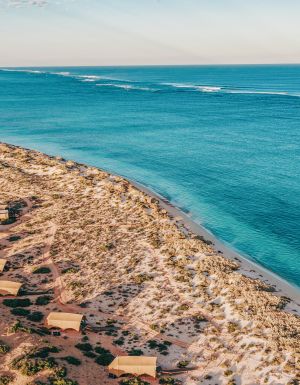
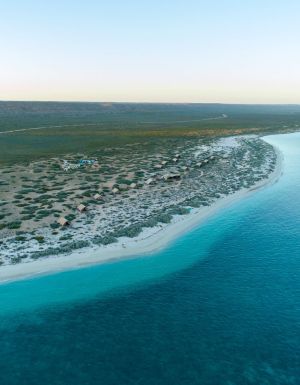
Everything about the camp is designed to connect you to the environment and wildlife around you. From the ocean-facing placement of its tents – built to capture the coastal breeze and create a channel for airflow – to its approach to light and noise pollution, allowing you to witness uninterrupted star-speckled skies, and of course its location alongside UNESCO World Heritage-listed Ningaloo Reef with its 500-plus species of fish, coral gardens and megafauna.
The camp is part of the Luxury Lodges of Australia collection, and its ‘experiential style of luxury’ taps into our deep desire for reconnection: to nature and each other. It’s what has kept guests returning year after year and placed it firmly at the top of bucket lists the world over. After three nights at Sal Salis, I can confirm it delivers all this and more. Rarely do I find a stay so unique that I immediately know I’ll return before I’ve left. But Sal Salis is one of those rare finds.
First impressions
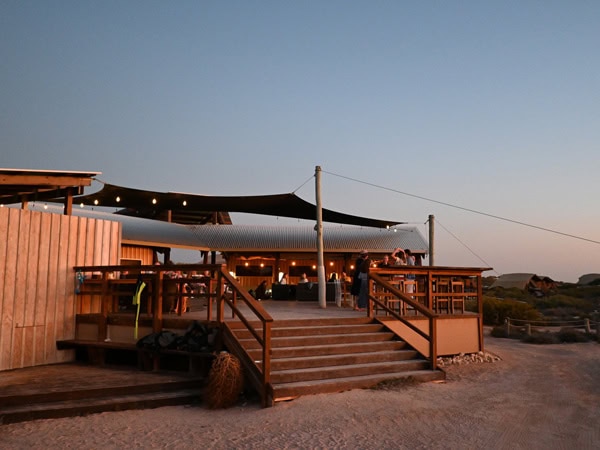
I arrive at Sal Salis by guest transfer from Learmonth Airport in Exmouth, and the group is quickly bundled into a buggy that winds its way through the sand dunes to deliver us to the lodge – the beating heart of camp life.
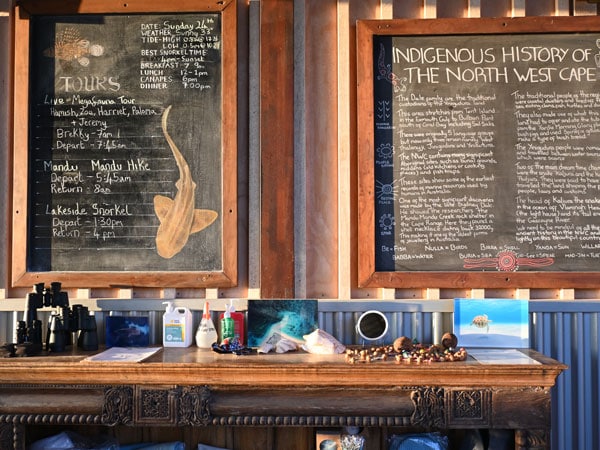
It’s here I find the daily included activities scrawled across the chalkboard; normally a combination of a guided snorkelling tour or a hike to nearby Mandu Mandu Gorge or Yardie Creek Gorge (more on that later).
Humpback whales can be seen breaching in the distance, evident from the faint blast of water on the horizon as we’re guided to our wilderness tent, a short walk from the lodge.
Sal Salis wilderness tents
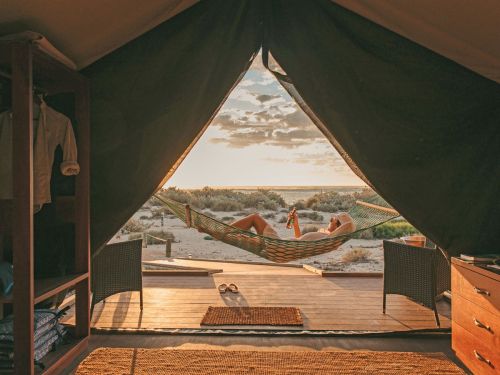
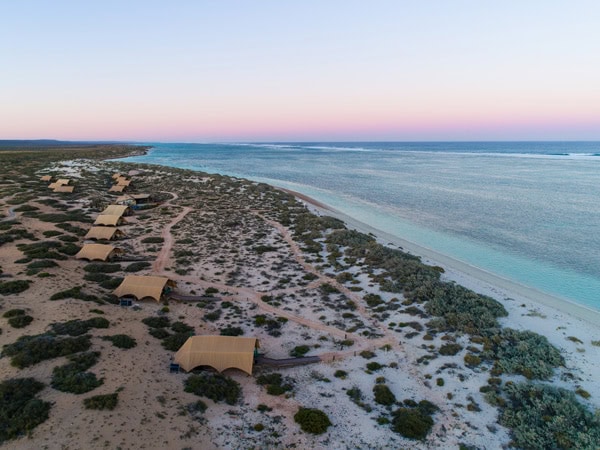
There are 15 wilderness tents at Sal Salis, plus one larger Honeymoon tent; each one blends into its surroundings and is positioned in the sand dunes to create a sense of seclusion and privacy. There is no need for devices. No bright lights. No mobile or internet coverage. Just the sounds of the ocean lull you to sleep at night, and the butcherbird’s song wakes you in the morning.
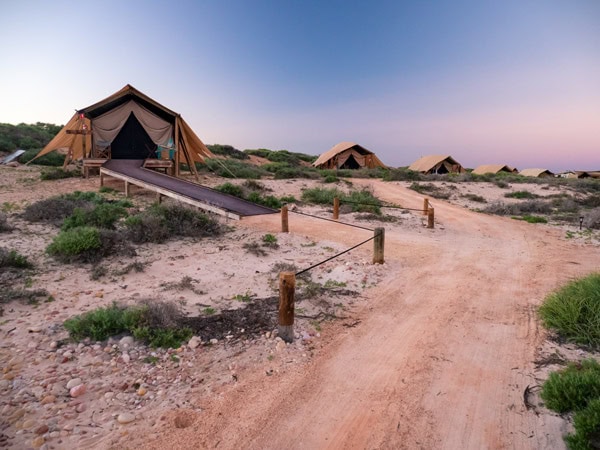
The eco wilderness tents accommodate two adults plus two children aged 10 and above sleeping in swag bedding. Each tent has its own bathroom with corrugated iron walls and a zip-up canvas shade that separates it from the bedroom.
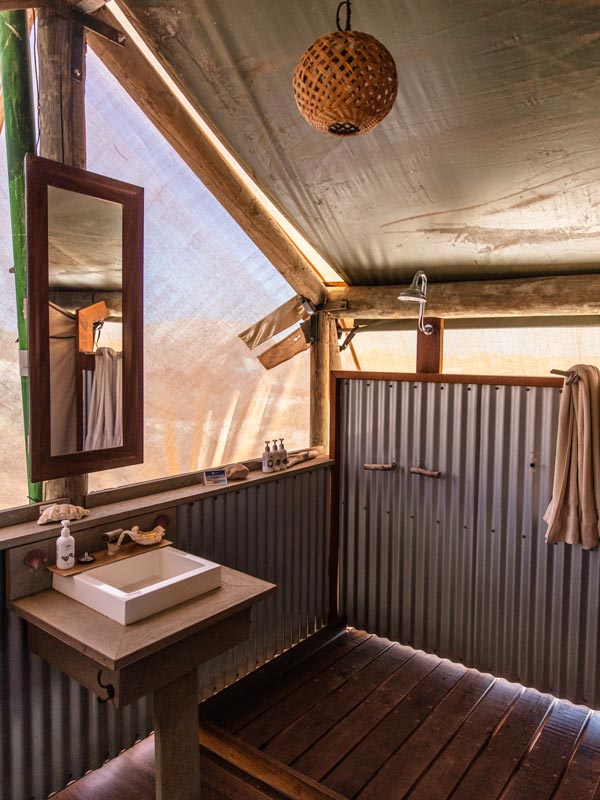
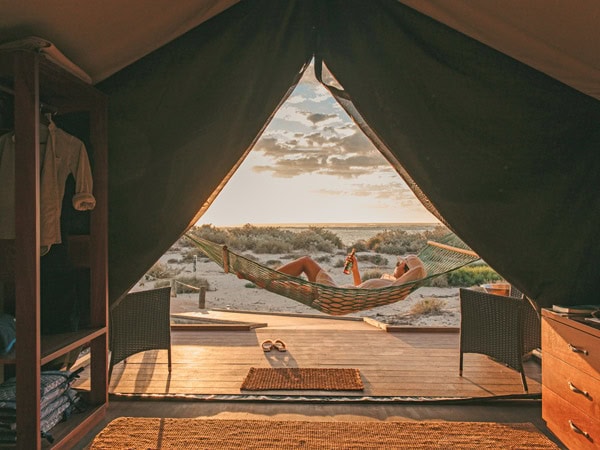
At first, it might seem at odds with the luxury price tag; you have no air-conditioning, no daily towel change, no fridge, no power points – just a USB phone charger, a maximum of 20 litres of water per guest per day, timed three-minute showers and a long-drop composting toilet. But there is not one thing I miss; Sal Salis strikes the right balance between essential and non-essential comforts: the bed is a dream to sleep in, the private deck features a hammock and chairs, the nature en-suite is fitted with all the essentials and there is always a cool ocean breeze that rushes through the tent, making air-conditioning superfluous during the months Sal Salis is open for guests (April to early November). Then there is the food and wine.
The food and drink
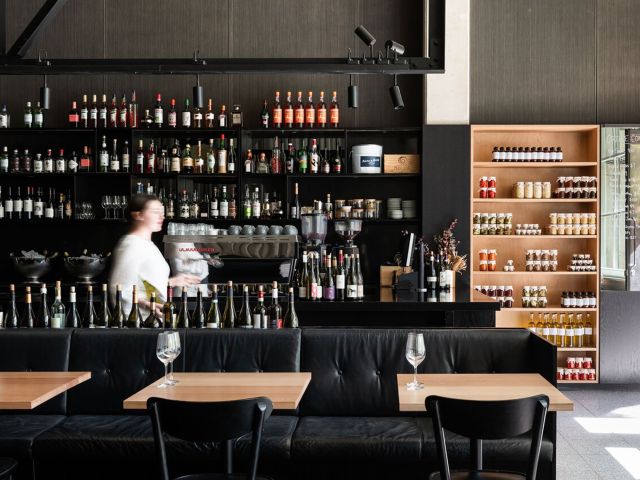
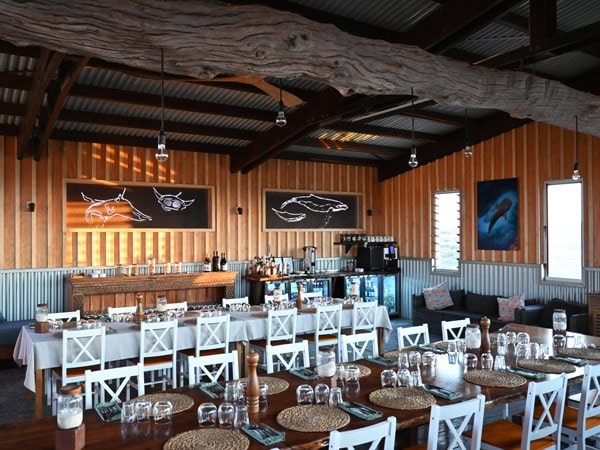
Meals are served at the long communal tables in the open-air lodge. There’s a 24-hour self-serve bar stocked with wine, beer and spirits from across Western Australia, as well as mixers and non-alcoholic beverages of all kinds, a barista-style espresso coffee machine and tasty snacks lined up in jars for the taking.
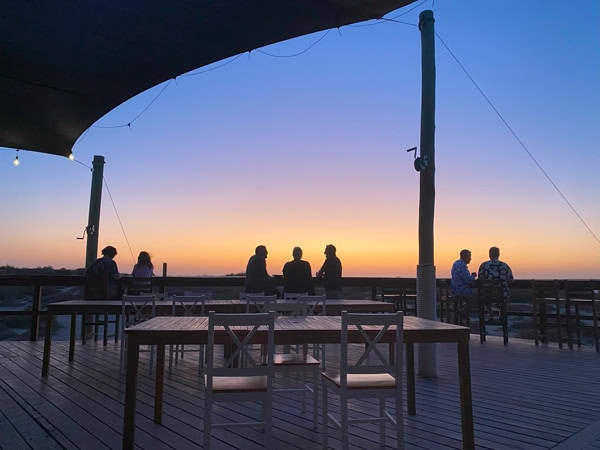
I join the other guests each evening for canapés on the deck to watch the sun slip into the ocean, and the sky erupts into fiery hues of red and orange before the colour drains from the sky.
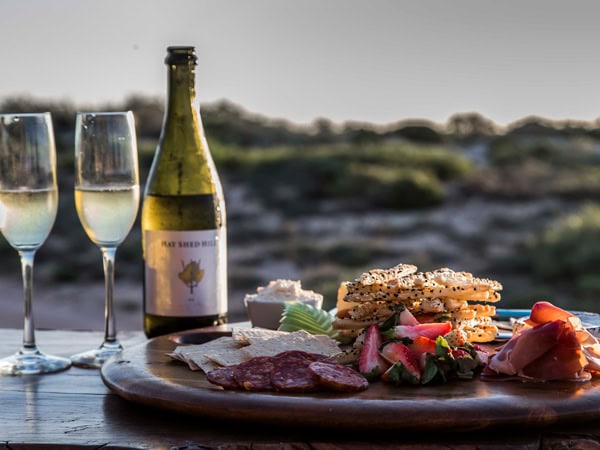
The season’s chef whips up five-star dining creations with a menu that wouldn’t be out of place in Sydney’s best restaurants. Breakfast runs the gamut from smashed avocado toast and eggs to acai bowls and banana bread, with mussels or a hearty pumpkin salad for lunch, but it’s dinner that steals the show: a three-course set menu paired with the state’s best wines. Think crab tortellini, crispy pork belly, seared scallops and lamb rump. It’s not long before the combination of wine, food and communal tables coaxes out wild tales from the day’s adventures.
Need tips, more detail or itinerary ideas tailored to you? Ask AT.
AI Prompt
Daily activities and experiences at Sal Salis
Days at Sal Salis are all about experiencing the wonders of your surroundings. Depending on the time of year, you’ll be swimming with whale sharks or humpback whales, watching turtles hatch or rising before dawn to explore Cape Range National Park on foot. The team arrange a daily roster of activities to suit the weather and tides that are included in your stay, but certain experiences are offered via local partners and need to be booked in advance.
Hike Cape Range National Park
Ningaloo Reef isn’t the only natural wonderland to explore from Sal Salis; with the campsite also set within Cape Range National Park, there is just as much to experience on land.
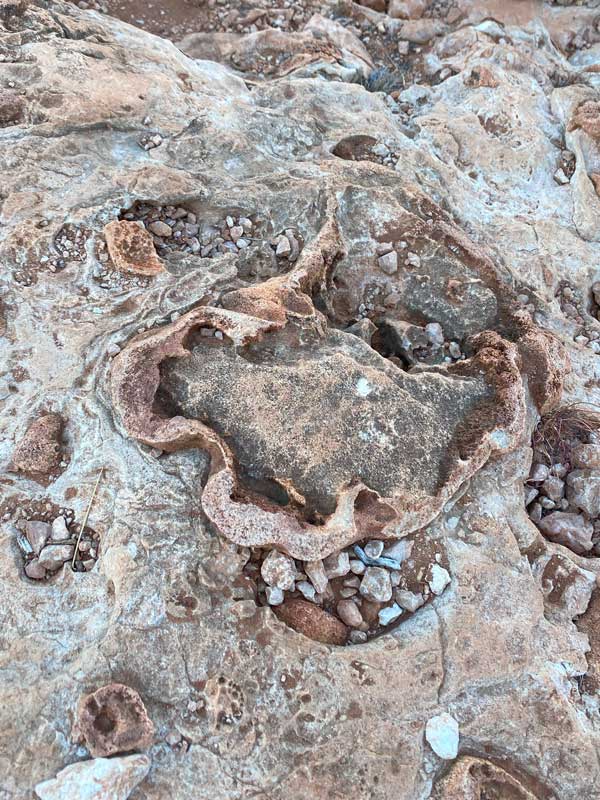
This landscape holds one of WA’s most treasured environments as well as being one of great cultural significance for the Baiyungu, Thalanyji and Yinigurdira people. The discovery of Mandu Mandu Creek Rock Shelter, one of the oldest reliable sites of human habitation, uncovered a shell necklace dating back 32,000 years. Marine fossils can also be seen underfoot, and mysterious creatures – like the blind cave eel and blind gudgeon fish – live underground in the unique limestone karst system that was once an ancient reef. Over 90 per cent of these species are found only in this region.
The camp runs two guided tours depending on the conditions. One is a hike to Mandu Mandu Gorge just two kilometres from camp, and the second is Yardie Creek Gorge, located a little further afield. Of course, the daily tours don’t take you into the cave system, but the wildlife and views above ground are just as fascinating.
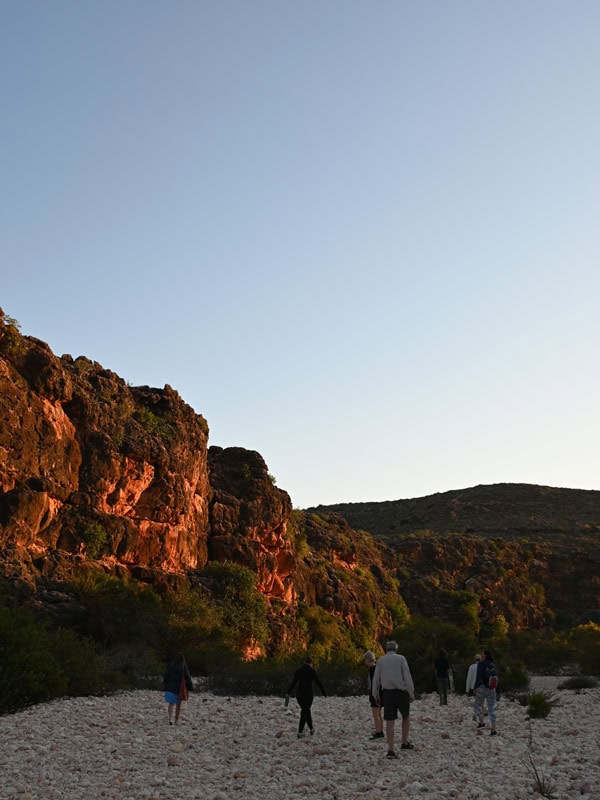
I set out with the group just before dawn along the Mandu Mandu Gorge trail. I only have time for one of the two hikes in my three days at camp. The moderately difficult three-kilometre trail traces its way through a stone-filled creek bed, and our guide points out several black-flanked rock wallabies perched on the surrounding red-stone cliffs.
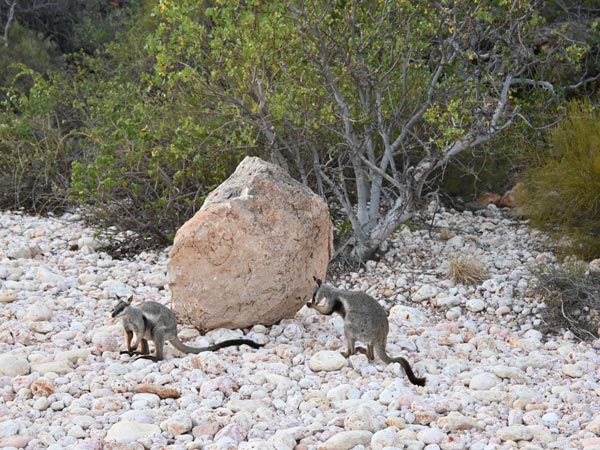
Two emerge from the bushes in front of us and unexpectedly start facing off in what can only be described as part boxing match, part tango, with the occasional headlock thrown in. The dance continues for five minutes before one surrenders and slinks back into the bushes out of sight.
The trek through the creek bed is followed by a steep climb to the gorge rim, and we spot fossilised coral as we walk and are met with spectacular views of Ningaloo Reef and the surrounding national park at the top.
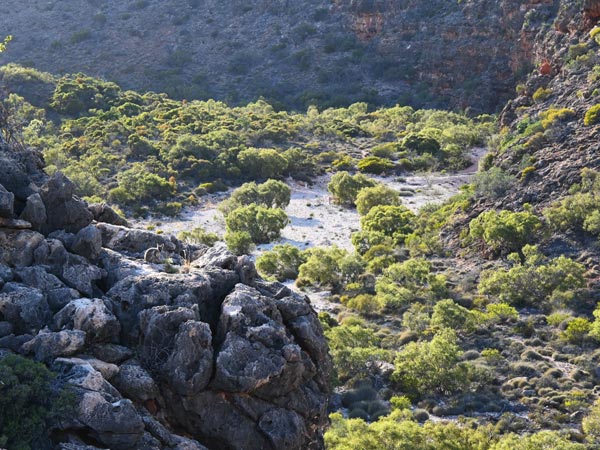
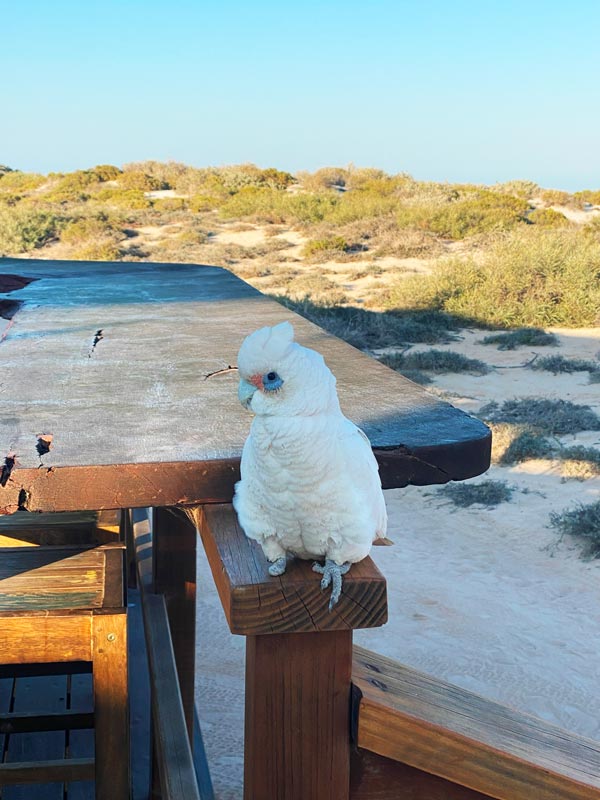
If you’re lucky, you’ll also spot raptors, spinifex pigeons, grey-headed and brown honeyeaters, pied butcherbirds, as well as little corella, rainbow-bee-eater and western bowerbirds, all of which frequent the gorge.
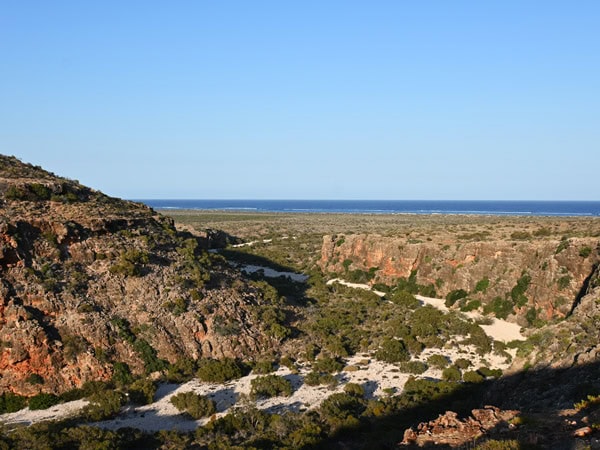
Sal Salis runs guided tours first thing in the morning or late afternoon.
Swim with megafauna onboard Live Ningaloo
Whale shark season is over, and my expectation of seeing these gentle giants up close is low. We have our sights set on swimming with humpback whales today and I’ve joined a small group tour with Live Ningaloo.
Live Ningaloo is the only operator that offers single-swim small-group wildlife interactions in Exmouth. The award-winning Eco Certified tour operator accommodates 10 guests for whale shark tours and seven guests for humpback tours to ensure minimal disturbance to marine life and a maximised experience for guests.
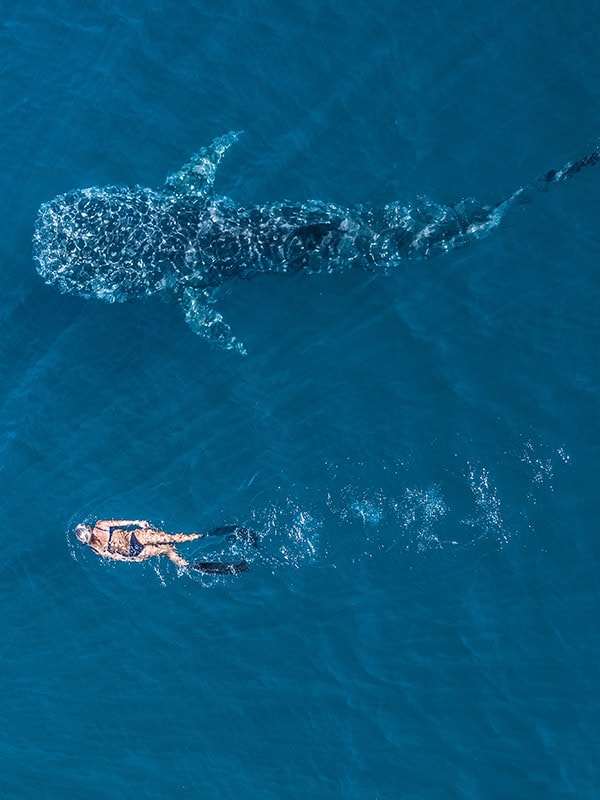
It’s not long into our journey out past the reef when the pilot circling the reef above radios to say she’s spotted a whale shark nearby. Gripping onto the rail as we race towards the sighting, one hand is not enough to keep me steady. An explosion of water appears ahead of us. A humpback whale breaches, a calf half her size follows her lead, spiralling into the air and flopping back down with gusto.
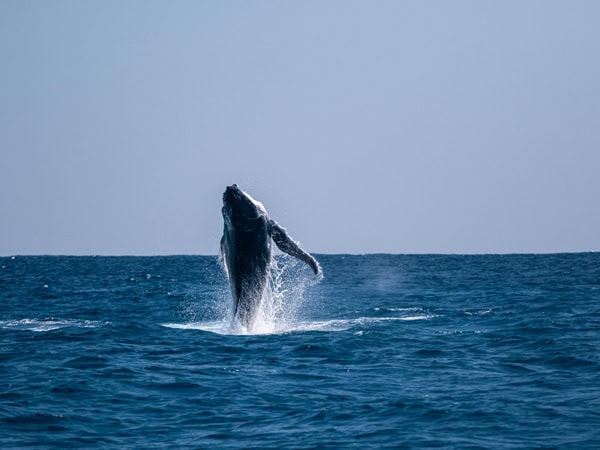
Our skipper reluctantly pulls us away from the humpbacks at play – our turn to swim with the whale shark is fast approaching. There are 15 operators with a licence to run swimming tours on the reef, and Live Ningaloo are one of the lucky few.
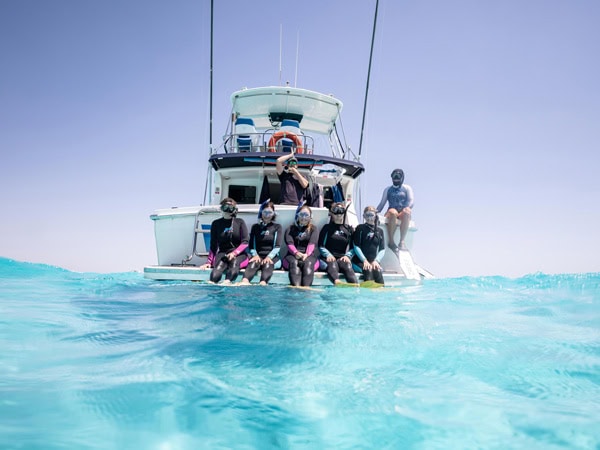
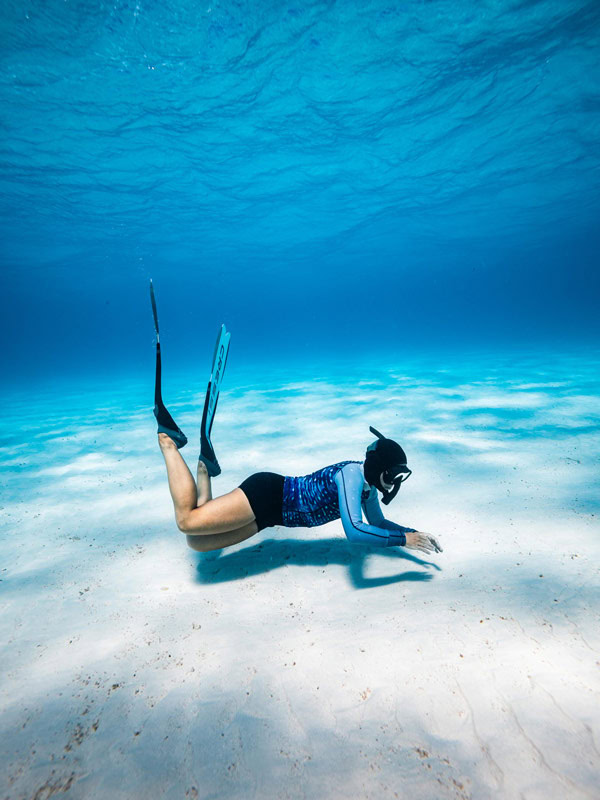
Now in position, four of us slip into the water after our in-water guide, following her lead as she directs us to kick into position. I stick my head underwater at her direction, and moments later, I see a grey figure start to take shape in the distance. A seven-metre whale shark is now directly in front of me. I start swimming to keep up, its tail effortlessly propelling it through the crystal-clear waters of the reef. I’m mesmerised by the white spots scattered in intricate patterns across its back, shimmering as they catch streaks of sunlight. Our guide signals that our time is up, and I reluctantly watch it swim out of view.
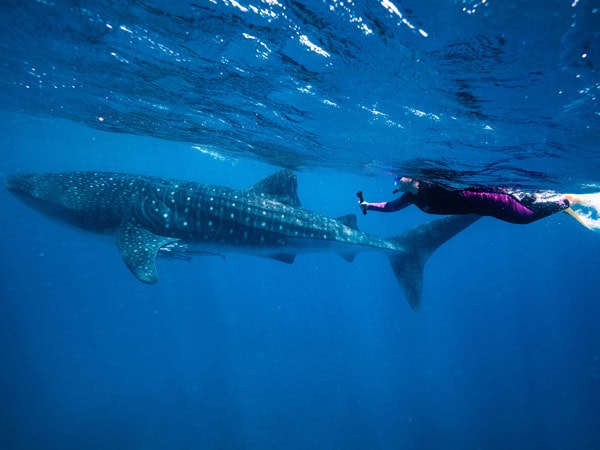
Whale shark season runs from March to July and humpback season from June to mid-October. Advance bookings for all tours are essential. You can also offset your trip’s carbon emissions for a small fee to support the operator’s sustainable practices and reduce your ecological footprint.
Weekly travel news, experiences
insider tips, offers, and more.
Snorkelling Ningaloo Reef
Grab a snorkel and some fins from camp and walk 50 metres to the beach. There’s no need to catch a boat; the marine life of the fringing reef can be experienced just offshore. You’ll find an array of colourful fish, turtles resting among corals, lagoon rays and harmless reef sharks. If it’s your first time snorkelling, the team can arrange a guided drift snorkel. Kayaks and stand-up paddleboards are also available to borrow when the conditions are right, or join a guided kayak tour.
Turtle nesting season
Nesting season for Green Sea Turtles happens between November and March; previously, Sal Salis served canapés to guests as they waited for turtles to hatch on the sand just a short walk from the lodge. It’s in moments like this when the true luxury experience of Sal Salis is revealed.
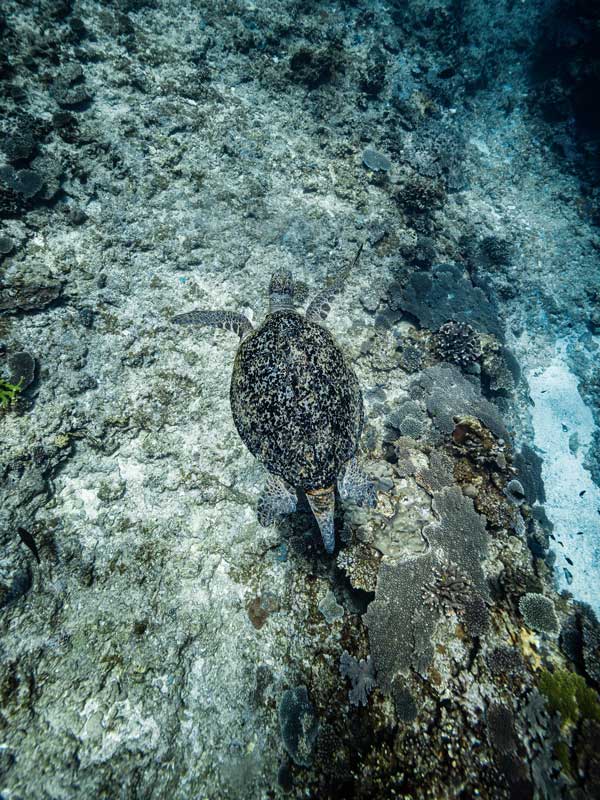
I’m visiting in late September, just in time for mating season at Ningaloo. Hundreds upon hundreds of them gather to mate just offshore at this time of year. If you’re lucky enough to witness this phenomenon, it’s important to keep your distance. If you disturb a female turtle resting on the beach, she’ll return to the water and likely drown.
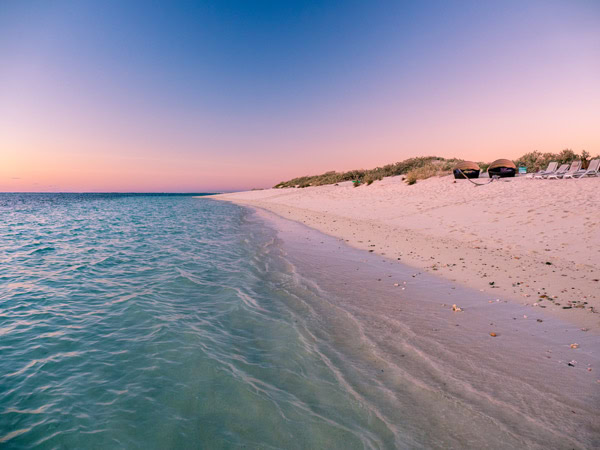
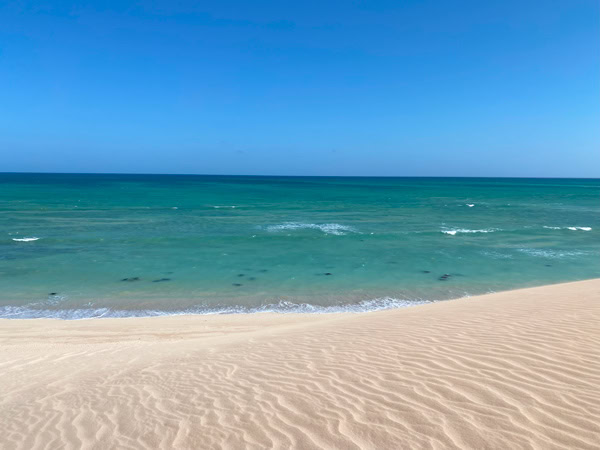
I follow our guide up the side of a sand dune, and the wind blows more fiercely the higher we climb. At the top, a perfect crescent-shaped stretch of sand greets turquoise waters filled with hundreds of turtles bobbing in the waves. I soon realise several of them are bobbing in piles of three or four. The females are mounted by multiple male turtles at a time. It’s a unique sight to behold, but there’d be no turtle-hatching season without it.
Sustainability and conservation
The ethos of the Eco Certified bush camp, its guiding principles of minimal impact and sustainability, are reflected in the measures Sal Salis has taken to protect its environment: construction of the camp is above ground level to protect the flora and fauna, power is solar-generated, water usage is carefully managed to avoid weed growth, and no waste material escapes into the surrounding ecosystem. Every detail has been thought of, even down to the reef-safe sunscreen and toiletries.
The camp operates in partnership with Western Australia’s Parks and Wildlife Service, and in addition to the park entry fees, five per cent of its turnover goes towards supporting the conservation work of Western Australia’s Department of Biodiversity, Conservation and Attractions, Parks and Wildlife Service. It’s a glowing example of how your tourism dollar can be put to good use.
Staying there
Eco Certified Sal Salis Ningaloo Reef offers 15 wilderness tents and one honeymoon tent built amongst the sand dunes in Cape Range National Park on the shores of Ningaloo Reef on the Coral Coast of WA. The season runs from mid-March to mid-November, and the all-inclusive stay covers all food and drink, activities and snorkel gear, and accommodation.
Getting there
Sal Salis is located 90 minutes by vehicle from Exmouth. Sal Salis operates scheduled guest transfers from Learmonth Airport if organised in advance.
Want to see more stories from Australian Traveller in your Google search results?
- Click here to set Australian Traveller as a preferred source.
- Tick the box next to "Australian Traveller". That's it.