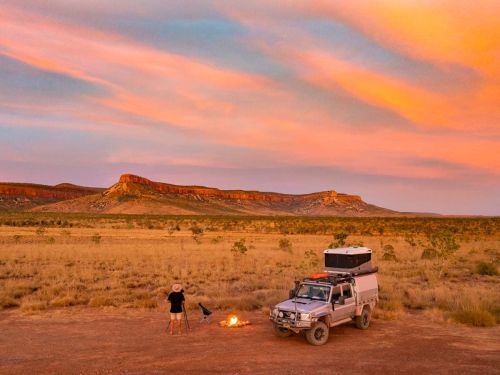
Whether you’re soaking in thermal springs beneath prehistoric palms, hiking through ancient gorges or taking scenic champagne flights to remote beaches, a journey to El Questro in WA’s East Kimberley combines classic outback adventure with a splash of luxury.
As we thunder along the red dirt road there isn’t a storm cloud in sight. No sign of the heavenly downpour that took place here just last week. Technically it’s the start of the wet season in the East Kimberley, but as our 4WD travels over thirsty earth, we leave a plume of dust in our wake.
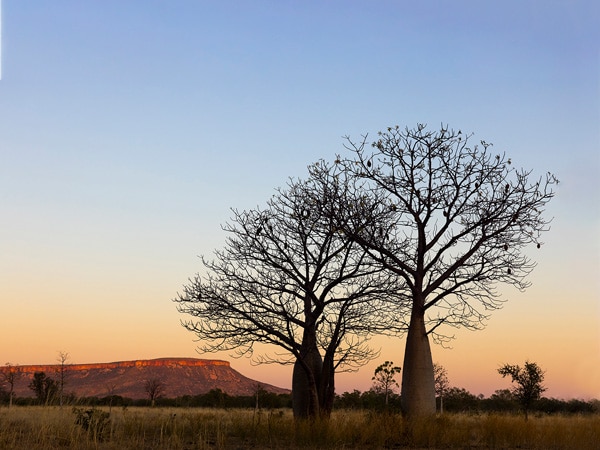
Later as we slow-weave our way deeper into the landscape, the majesty of Balanggarra Country is so close we can literally reach out of our open-style safari vehicle and touch it. As if reading our thoughts, our Akubra-clad guide, Todd Smith, looks back eagerly through the rear vision mirror. “Do you reckon you can keep a secret?" he asks with excitement brimming in his voice. “If so, I’ll show you something really special."
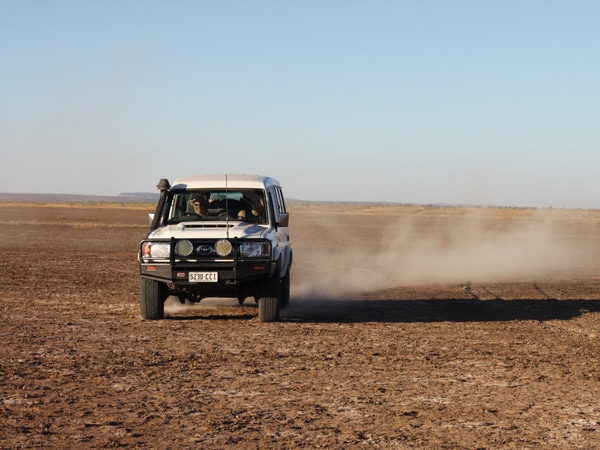
Traversing the El Questro Wilderness Park
It’s a big call in a place known for containing some of the country’s most remarkable outback treasures, and though I’ve promised not to reveal its exact location within the 284,000 hectares that make up El Questro Wilderness Park, I can confirm that the sighting of the bower is one of our most memorable moments.
Intricately crafted to attract a female mate, the male bowerbird’s elaborate courtship structure is a magnificent piece of avian architecture. The domed avenue of thatched twigs is striking – its entrance decorated with strategically placed bones, pebbles and other brightly coloured foraged objects, such as a button that’s presumably come loose from the shirt of a passing hiker.
Home to unique wildlife and more than 300 bird species, the Kimberley region is regarded as one of the last remaining true wilderness areas on Earth, with El Questro at the centre of its beating heart.
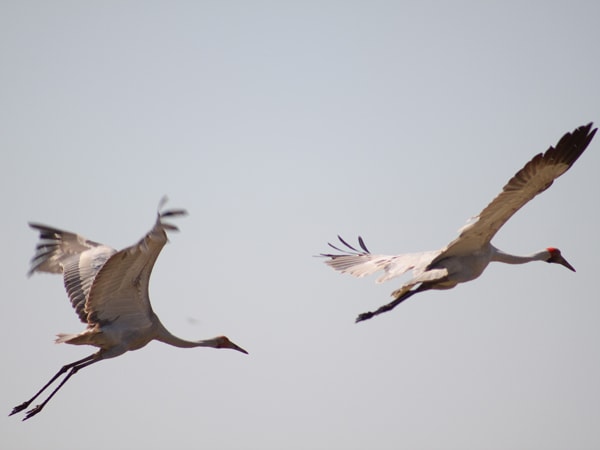
A station stay for road trip adventurers
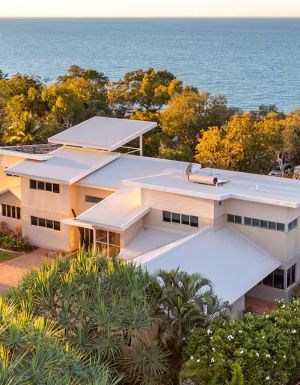
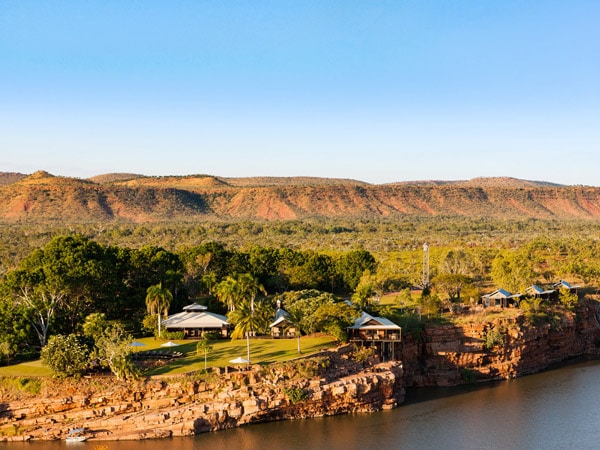
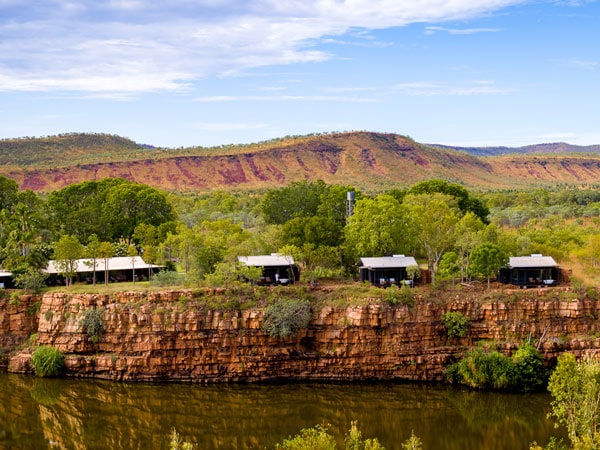
High on the wishlist of many Australian travellers, the former cattle property’s exclusive homestead overlooking the Chamberlain River provides some of the country’s most luxurious retreat-style accommodation, while The Station and Emma Gorge sites provide more modest facilities with access to highlights of its vast Wilderness Park. It’s a must-stop destination for road trip adventurers undertaking the iconic Gibb River Road.
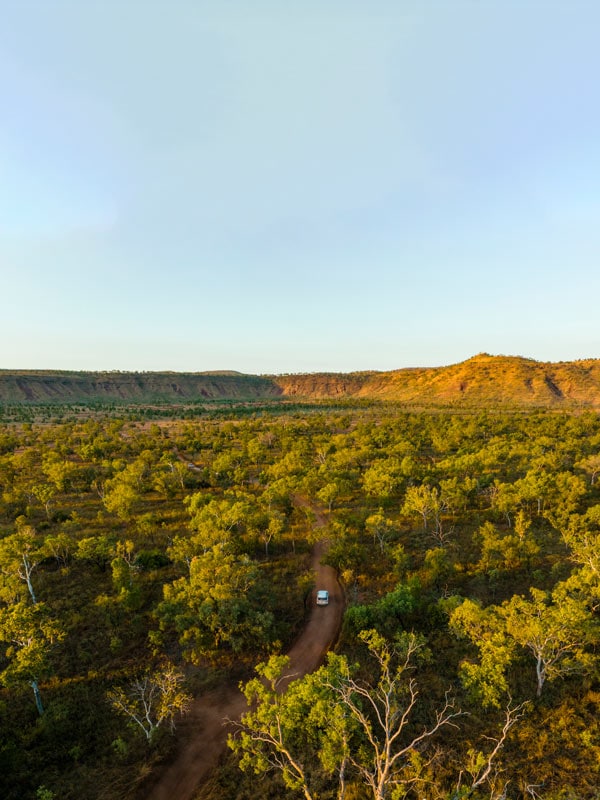
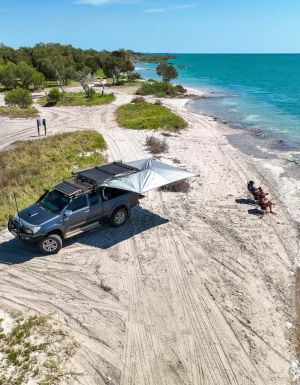
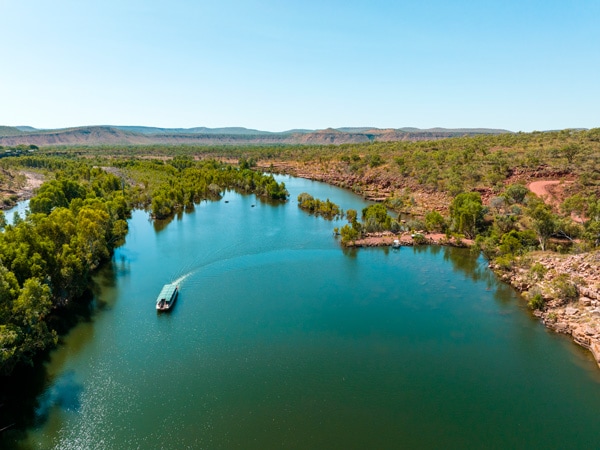
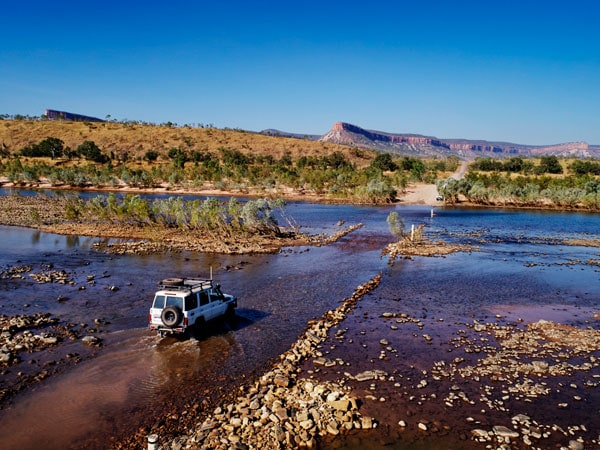
While this epic road is the heartland’s main artery, stretching 660 kilometres from Derby in the west to Kununurra in the east, our group of four have opted for the slightly easier route here to explore savannah grasslands, ancient gorges, winding rivers and cascading waterfalls within pockets of prehistoric rainforest – flying into the gateway town of Kununurra, before hiring a 4WD to take us 110 kilometres west; first along the Great Northern Highway, then a sealed section of the famed Gibb River Road with its legendary Pentecost River crossing, and finally a gravel track leading to El Questro Station.
Incredible things to do
Hike the scenic El Questro Gorge
Back at the bower, three loud squawks from the giant bowerbird are our cue to continue the morning’s adventures. Clearing a river crossing, we arrive early at the entrance to El Questro Gorge to beat the heat, but before setting off on the trail Todd makes an acknowledgement of Country to pay respect to the Balanggarra people, the Traditional Owners of this northern section of the Wilderness Park.
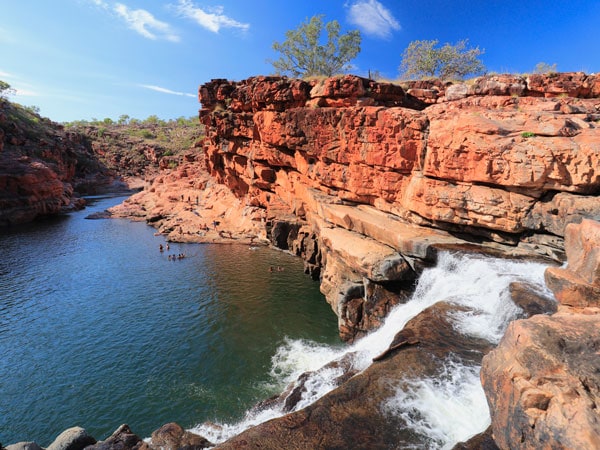
Important to local First Nations people, El Questro Gorge is also one of the Wilderness Park’s most popular day hikes, with the 7.2-kilometre return trip taking approximately three to five hours to complete and including stops to swim along the way at the aptly named Halfway Pool and MacMicking Pool, with its waterfall, at the end.
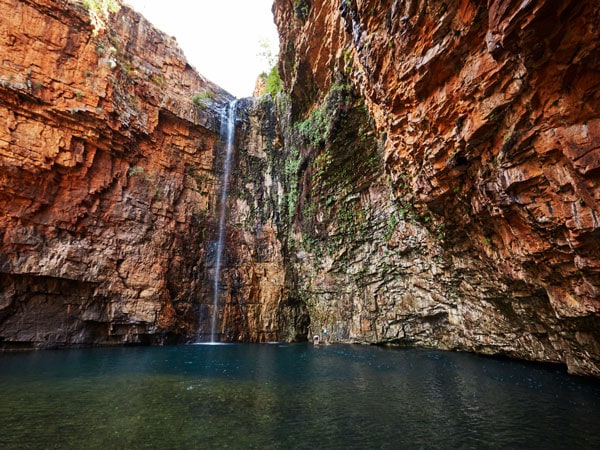
Cool off at Emma Gorge’s waterfalls
Another favourite is the Emma Gorge Trail which – being fortunate enough to have now visited this once-in-a-lifetime destination twice – I completed four years earlier. Known as one of the most challenging hikes in one of the most spectacular gorges in the Kimberley, I think back to the awe-inspiring experience of watching Emma Gorge’s 65-metre-high waterfall spill down the side of a chasm – droplets falling on my skin as I floated blissfully beneath.
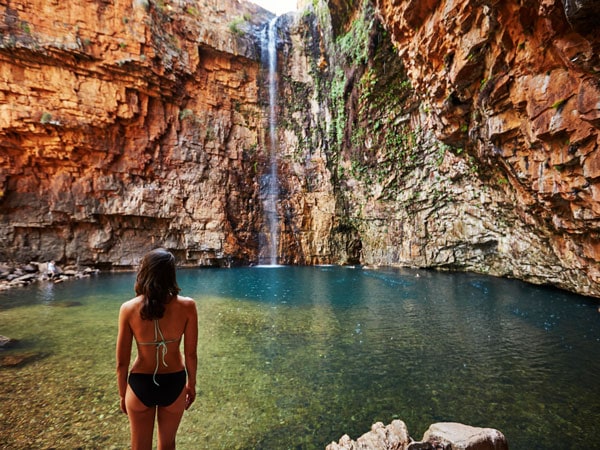
Sandwiched now between the towering cliff faces of El Questro Gorge, we follow the winding creek through its base. Eyes down as we rock-hop along, I remind myself to look up. And when I do, I marvel at the beauty of 1.8-billion-year-old Wunaamin Miliwundi sandstone with its gold and amber hues shifting in the sunlight like those within a cathedral.
Soft morning rays also filter through the rainforest’s prehistoric foliage. “The taller of these palms is the livistona which can reach up to 18 metres and the other is the pandanus spiralus which grows upwards in a spiral," Todd says before explaining how.
Need tips, more detail or itinerary ideas tailored to you? Ask AT.
AI Prompt
Explore the ‘jewel’ of the Kimberley: Lake Argyle
Just 40 minutes from Kununurra via the Victoria Highway and through the Carr Boyd Ranges, Lake Argyle is a must-visit on your East Kimberley road trip. And while the Kimberley’s first diamond deposit might have been discovered here in 1979, it’s not the only reason it’s known as the ‘jewel’ of the Kimberley.
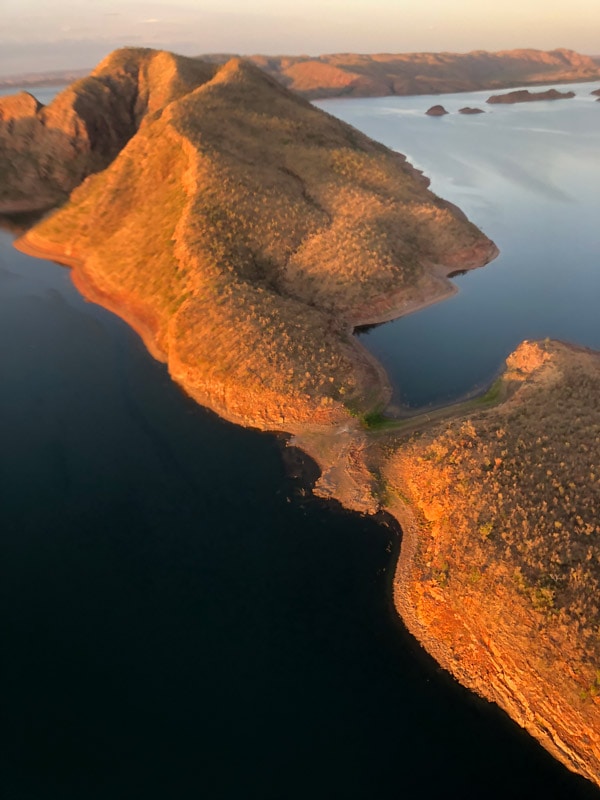
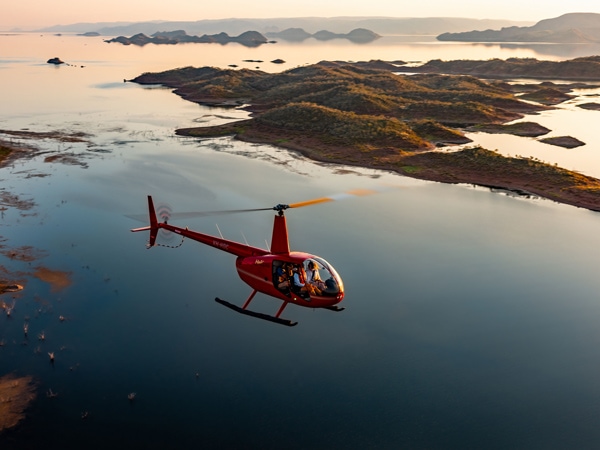
More than 18 times the size of Sydney Harbour, Lake Argyle is the second-largest freshwater reservoir in Australia, and though man-made, it is a haven for native wildlife and a playground for locals and visitors alike. Once home to Kimberley pioneering family the Duracks, Lake Argyle on Miriwoong Country is now home to more than 70 islands. With multiple opportunities to explore them (including bushwalking trails, and paddleboard and kayak hire), the best way by far is via helicopter and boat.
Kimberley Durack Sunset Explorer cruise
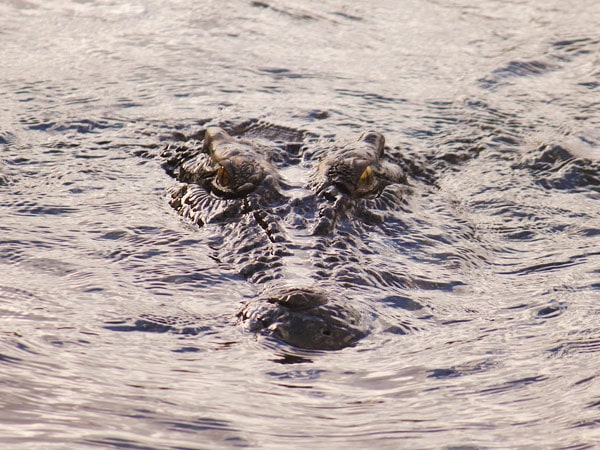
Departing from Lake Argyle Resort, take the Kimberley Durack Sunset Explorer cruise to learn about the lake’s history, spot wildlife, enjoy refreshments and swim in the company of over 30,000 friendly freshwater crocodiles.
Helispirit tour
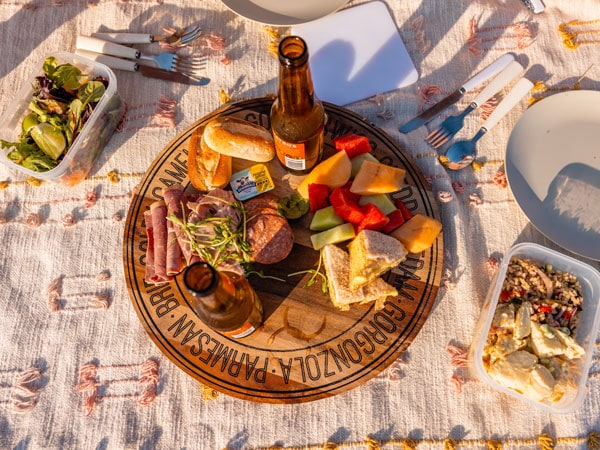
Alternatively, take to the sky for a scenic helicopter tour with Helispirit that includes stopping for a swim and picnic with bubbles at one of the island’s beaches.
Lake Argyle Resort has accommodation options including Deluxe Lakeview Cabins perched over Lake Argyle, a restaurant with live entertainment, and an infinity pool that could be Australia’s most instagrammable, giving good reason to stay and play longer.
Cross the rough trail along Pentecost River
After lunch, I’m ready for some downtime before the last outing of the day. Sitting on the private deck of my Riverside Room, I gaze lazily into wild tropical greenery and listen to the chorus of frogs and the babble of the Pentecost River flowing gently past.
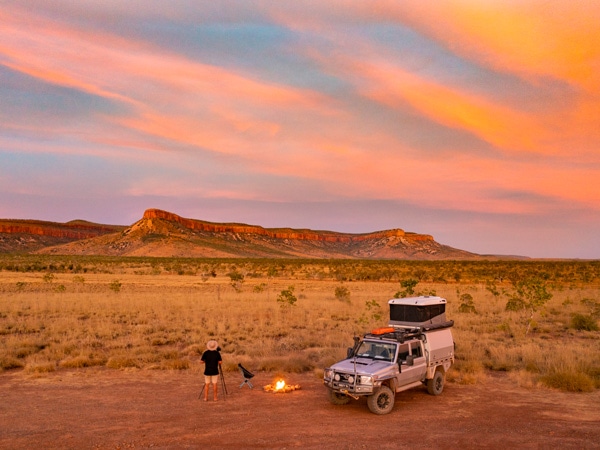
When late afternoon finally rolls around, so do we. Back in our 4WD, we bump across creeks and along a steep and winding section of track in search of a legendary lookout. Named in honour of former Kimberley rodeo champion, cattle driver and El Questro guide Buddy Tyson – who was known for his ability to crack a joke as fast as he could a whip – Buddy’s Point doesn’t disappoint.
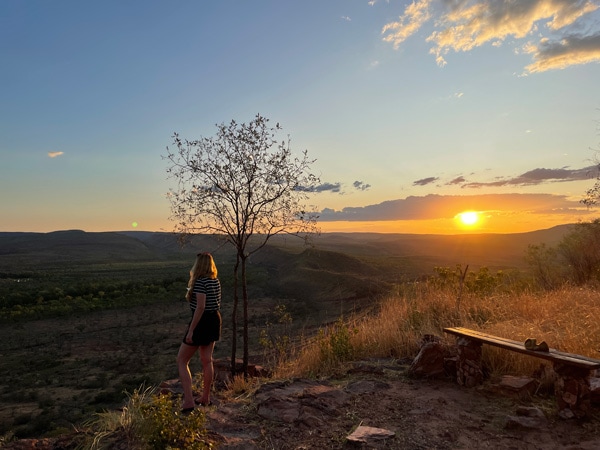
Popping open a bottle of bubbly, we drink in 360-degree views of the glowing landscape. Silence is golden, so they say, and here – as we look out over rivers and ranges, wrapped in sunset’s blanket – that saying certainly rings true. We are lost for words as a peaceful stillness takes hold, and like the red dirt that has already begun to seep into our skin, we know that by the time we leave, a piece of the Kimberley’s heart will have found a way into our own.
Weekly travel news, experiences
insider tips, offers, and more.
Preserving El Questro’s Indigenous charm
In a recently signed landmark agreement between the Western Australian Government and the Wilinggin Aboriginal Corporation (WAC), 165,000 hectares of El Questro Wilderness Park – including El Questro’s luxury homestead, its station, Chamberlain Gorge and Zebedee Springs – will be returned to the Traditional Owners of the land lying south of the Gibb River Road, the Wanjina Wungurr Wilinggin people.
The historic Indigenous Land Use Agreement will see the pastoral lease converted to freehold and El Questro’s cattle station turned into a nature reserve, with El Questro’s current operator, the G’day Group, able to continue its tourism activities after securing a 99-year lease with Traditional Owners in November 2022.
In a win-win for all, the G’day Group has revealed it is working with the WAC to include new First Nations cultural experiences for guests, plus employment and training for local Indigenous youth. The G’day Group has also stated the agreement will allow them to build sustainability and ecotourism credentials through the improvement of water, land and waste management systems, the purchase of carbon credits from the WAC to operate with ‘net zero’ emissions, plus the removal of livestock for the restoration of the natural environment.
Getting there
Fly direct to Kununurra from Perth, Broome or Darwin with Virgin, Qantas or Airnorth.
Staying there
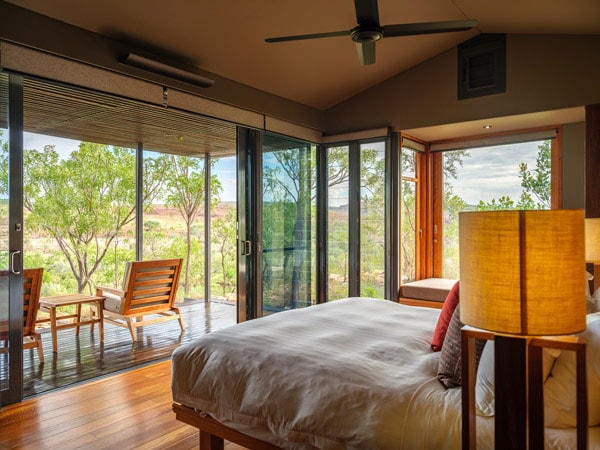
El Questro ’s season is from April to October. Accommodation includes luxury stays at The Homestead (from $2155 per night), safari-style tented cabins at Emma Gorge (from $350 per night), riverside and garden view rooms (from $395 per night) and camping (from $23 per night) at The Station.
Playing there
Take a scenic flight with Aviair over the tiger-striped domes of the Bungle Bungles in Purnululu National Park; view and buy art at Waringarri Aboriginal Arts and learn about the culture of the Miriwoong people ; and get a taste of the East Kimberley at Hoochery Distillery .
Good to know
The best way Australians can help the Kimberley tourism sector following the January floods is to keep their bookings and visit when the time is right; popular spots including Broome, Kununurra and El Questro are ready to welcome visitors for the 2023 season.