Forest bathing has long been part of Japanese wellness culture. A few days in WA’s Golden Outback suggest Australia has its own version: bush bathing.
Let’s get one thing straight: you haven’t experienced country life until you’ve had to wash horse crap out of your hair. I should know – I’ve scrubbed it off my clothes, scraped it out of my fingernails and wrung it from my roots.
Right now, the internet is riding high on ‘cowboy core’, pushing leather boots and suede fringe. But long before fashion editors rebranded farmwear as an aesthetic, I spent my weekends with the high school ag club, parading Hereford cattle around a ring at the Sydney Royal Easter Show. (Yes, I was that cool.)
My family didn’t run a 500-head cattle station but our acreage had horses, a bull named Bully, 15 chickens, three dogs and two white ducks called Daisy and Duke. That was a lifetime ago. At 18, I left Australia, burying that farm girl under a decade of international travel. But when I stand in Western Australia’s Golden Outback, red dust kicking up around me, I realise how much I like the bush – and how good it feels to be back in it.
Swapping city for outback
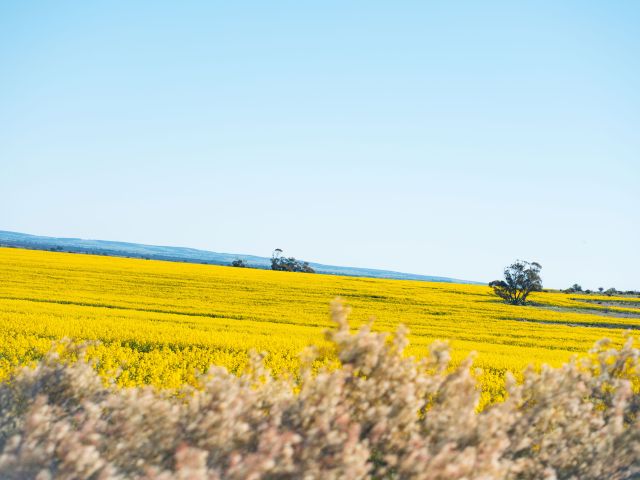
Vibrant bursts of canola butter the landscape along the Great Northern Highway. (Credit: Natasha Bazika)
The Golden Outback swallows a massive chunk of Western Australia, stretching east from Perth into the desert. My husband, Mak, and I leave the city and drive north along the Great Northern Highway, passing through small towns and seas of golden canola. About five hours in, the gold bleeds into red dirt and low scrub. Just before Yalgoo, a weathered sign makes it official: ‘The Outback Starts Here’. From this point on, we rely on local advice for navigation. “Look for the pink sign, turn right then watch for the metal bull," station owners Ian and Treasure Clark instruct us prior to our departure.
“There’s the bull!" Mak shouts, yanking the steering wheel right.
Mellenbye Station
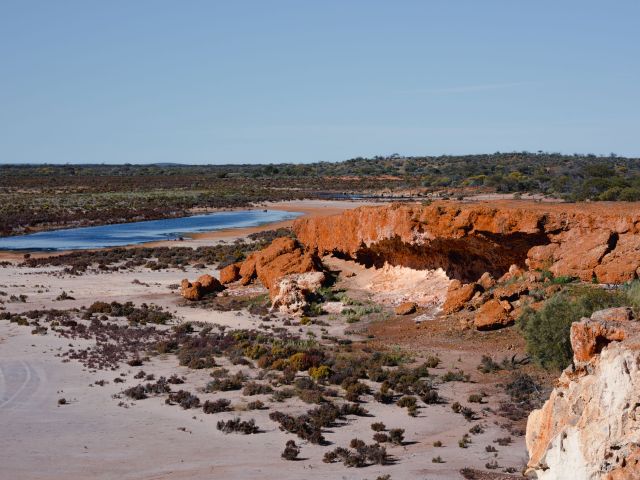
Millenia of erosian at Mellenbye Station’s The Breakway have exposed vivid swathes of red. orange and white topsoil. (Credit: Natasha Bazika)
Mellenbye Station spans almost 102,000 hectares of cattle country. We arrive as a herd of Droughtmaster and Shorthorn calves are being unloaded. “Hey there, I’ll just go grab your keys," shouts Nicola Clark, Ian and Treasure’s daughter, as she wipes dirty hands on her jeans. She gives us the keys and gets back to work, disappearing into the dust.
There are no $400 Stetson hats or shiny R.M. Williams boots here. Denim is a tool, dirty boots are mandatory and the cattle need moving. The station carries on whether visitors are here or not.
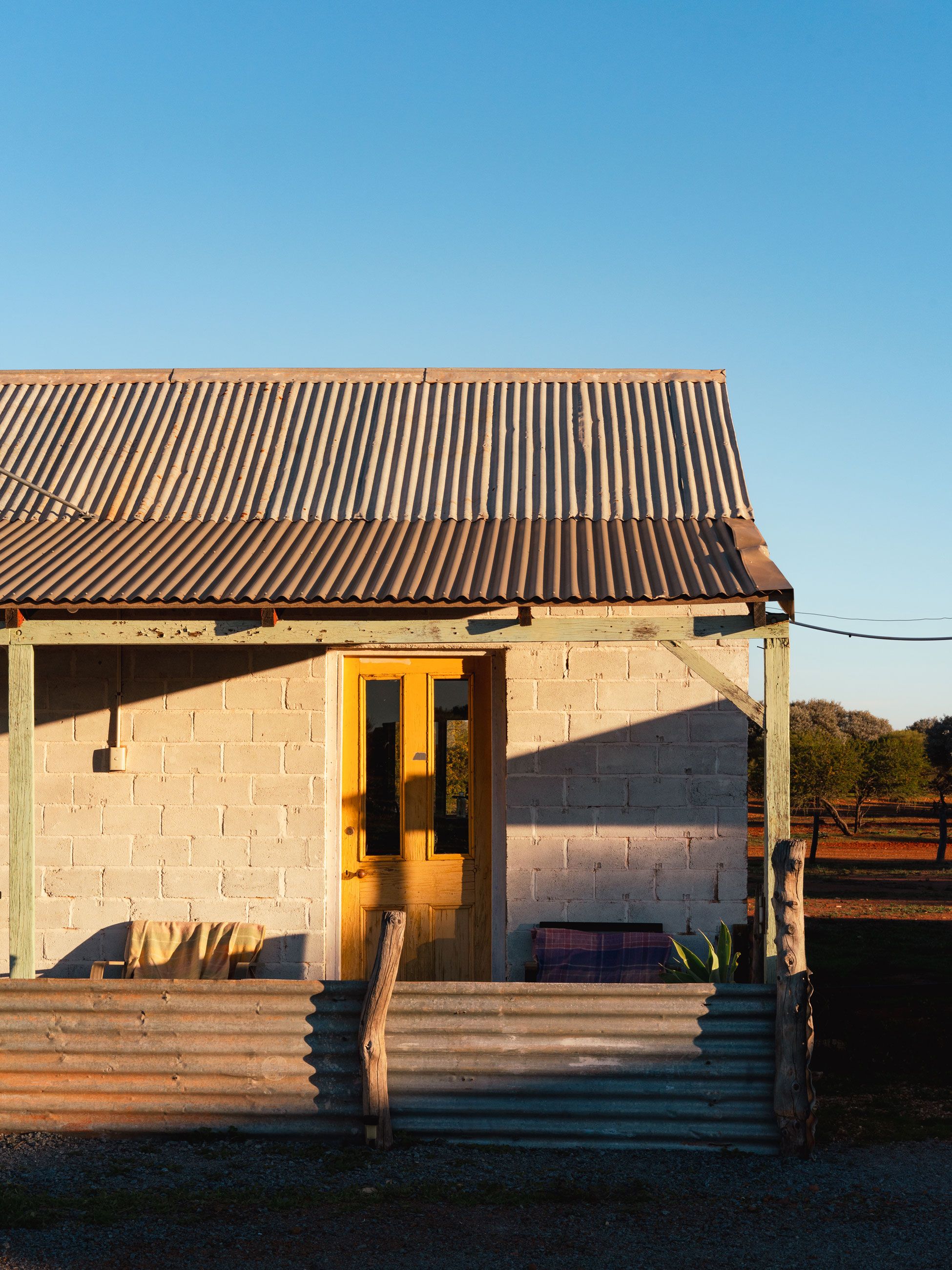
While the property accommodates campers, caravanners and families, we’re checking into The Manor, Mellenbye’s plush new dwelling. It’s a modern, fully equipped one-bedroom cottage with a big kitchen and glass doors framing the outback.
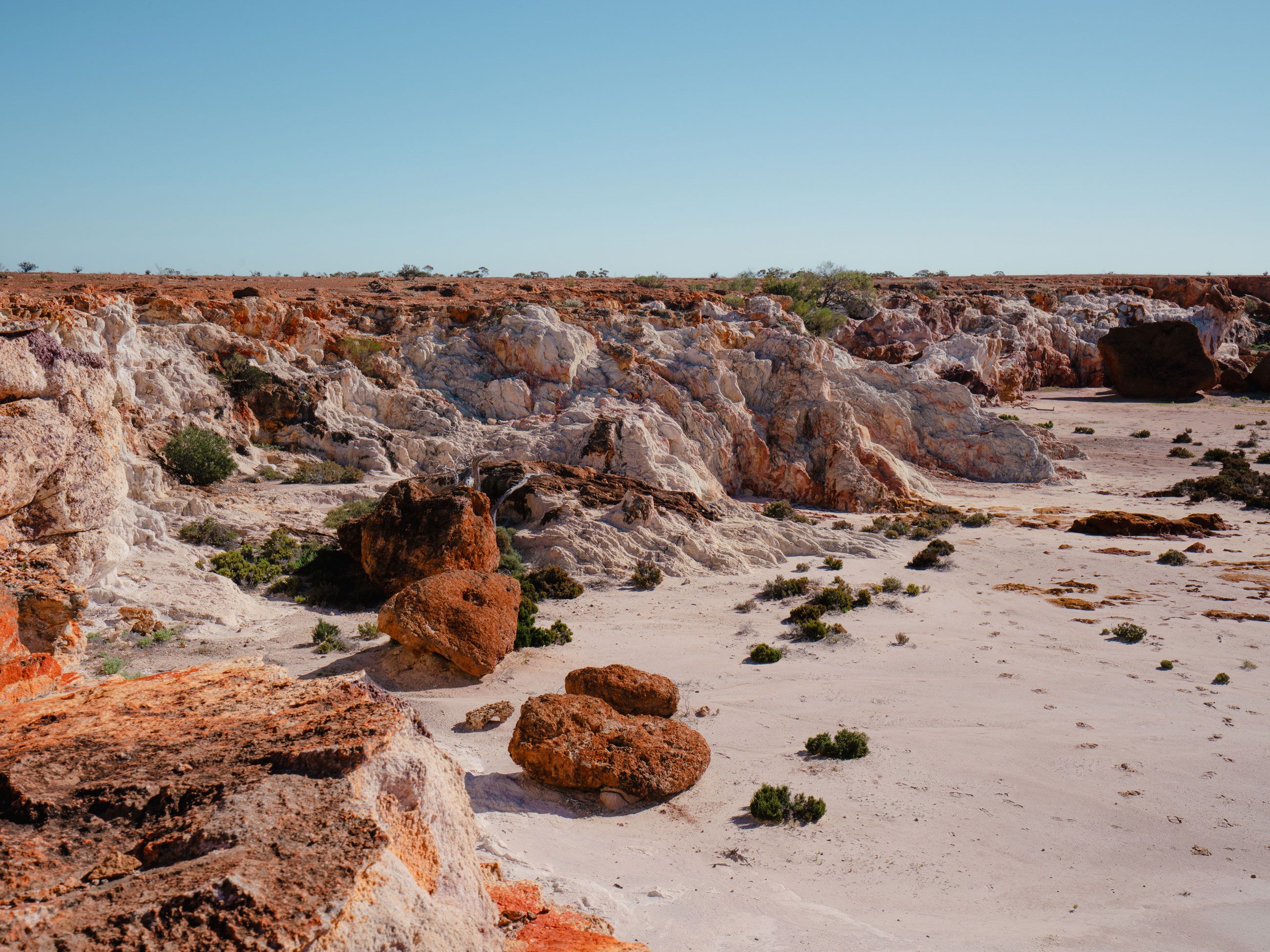
Erosion reveals the rugged texture of the outback. (Credit: Natasha Bazika)
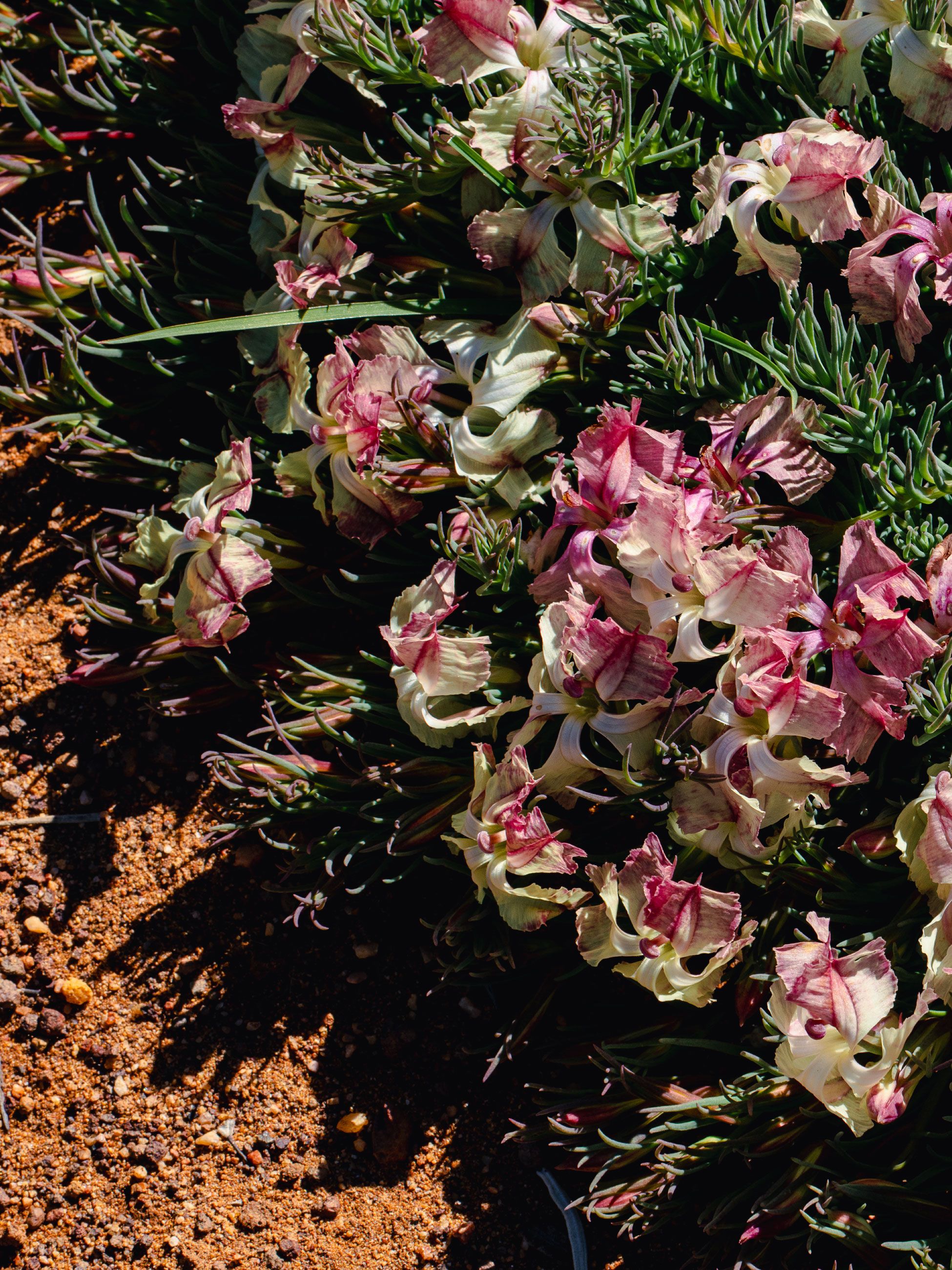
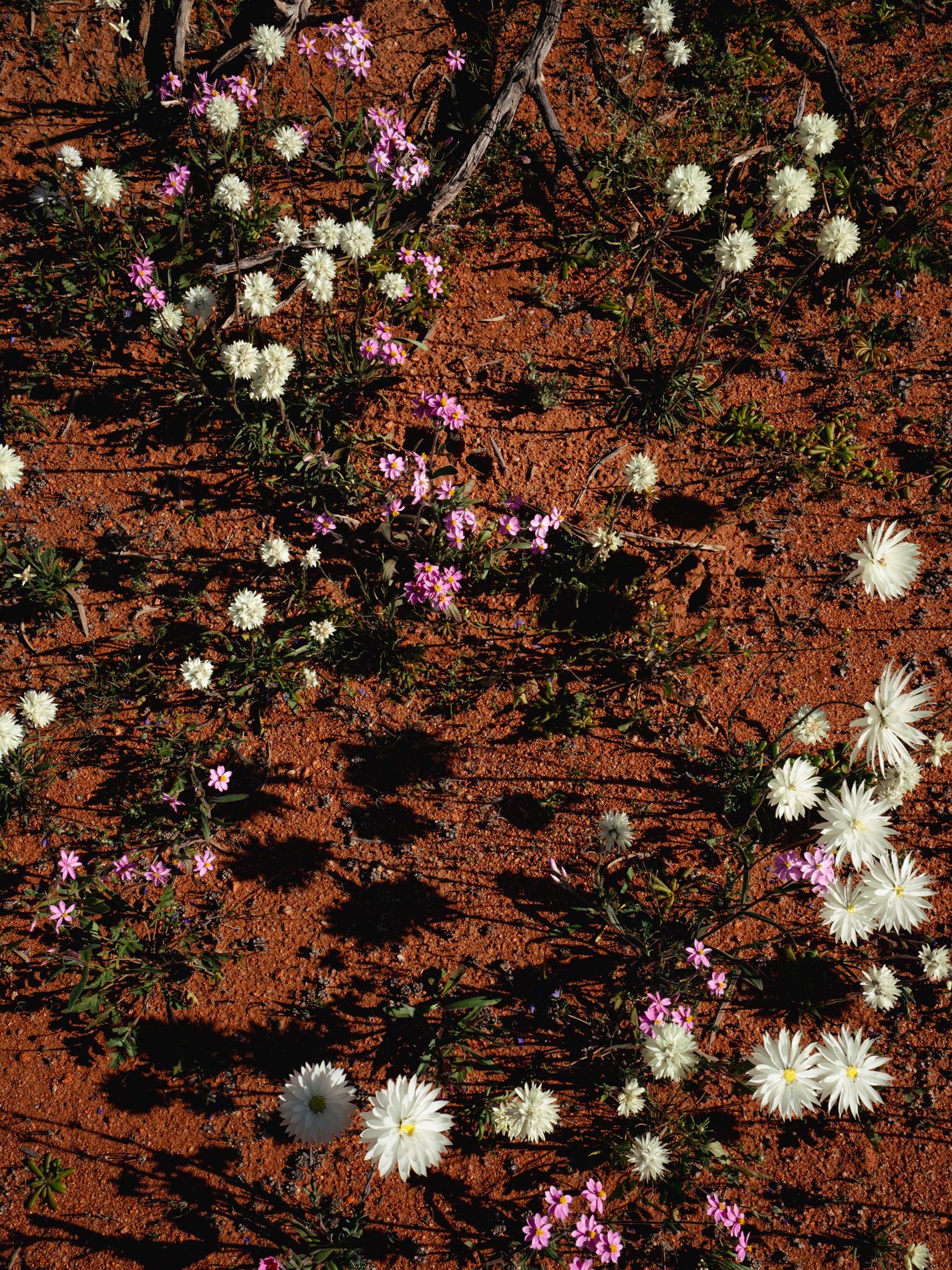
An ephemeral wreath flower sits flush against the gravel. (Credit: Natasha Bazika)
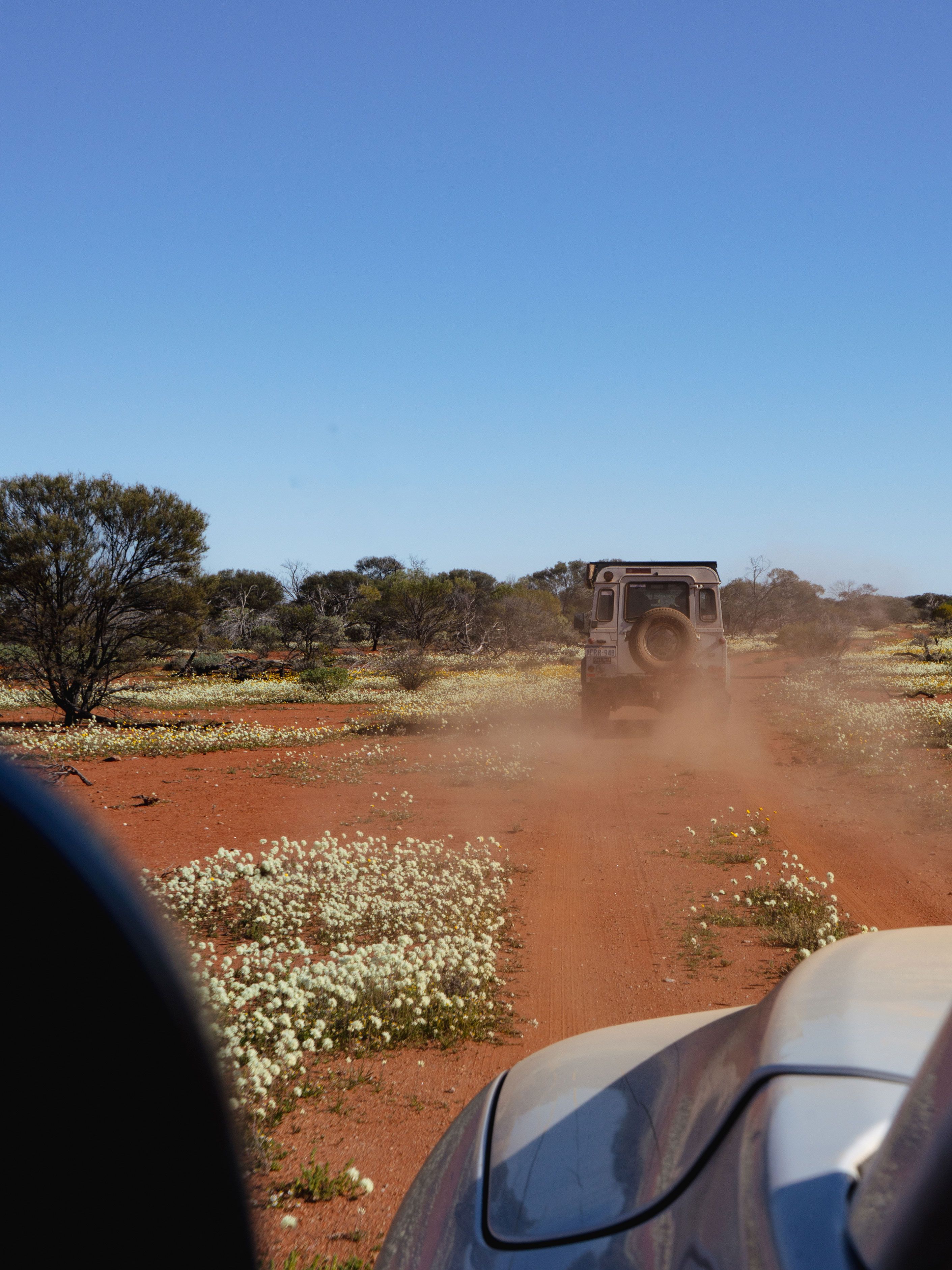
Stirring up clouds of red dust on a self-drive 4WD tag-along tour of Melangata Station. (Credit: Natasha Bazika)
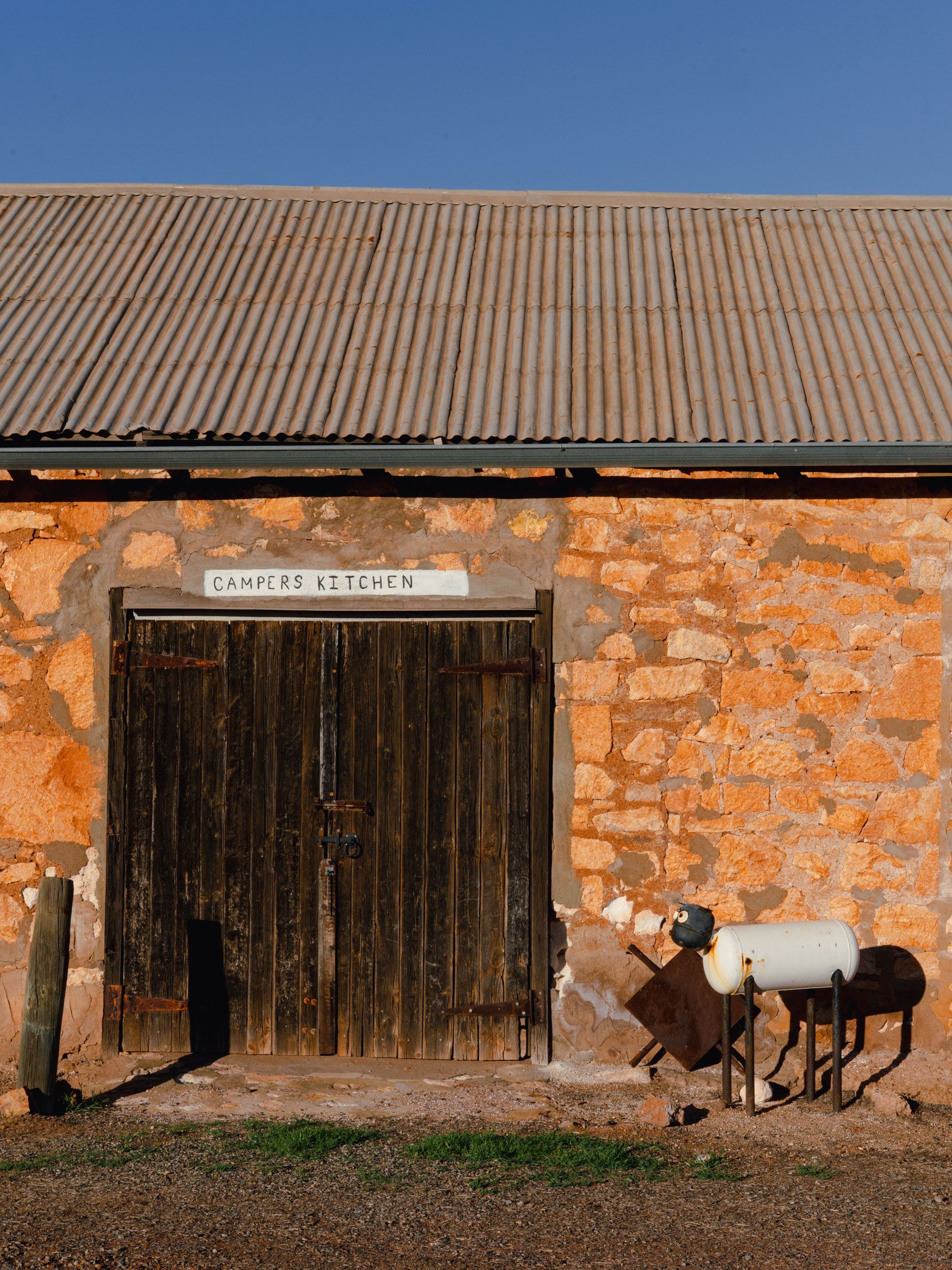
The old shearing shed has been converted into a camp kitchen. (Credit: Natasha Bazika)
Four hours of bouncing around in a 4WD with Ian and Treasure gives us an idea of just how massive Mellenbye really is (in that time, we see only a fraction of it). At Nicola’s favourite spot, The Breakaway, the soft topsoil has eroded over millennia, exposing swathes of red, pink, orange and brilliant-white earth. “If you have a self-contained campervan, you can stay here," Ian tells me. “As you can see, there’s no infrastructure around, so you need to be self-sufficient." For a view like this, I’d happily rough it.
Like any historic station, Mellenbye has its folklore. High on a rocky outcrop stands Go John, a black metal silhouette of a beloved racehorse that belonged to the station’s previous long-time owners.
It’s late July and the wildflowers are blooming early. Treasure takes us to the region’s crown jewel: the wreath flower. A perfectly symmetrical, low-lying ring of pink and white frills sits flush against the red gravel, as if someone dropped a bridesmaid’s headband in the dirt. I crouch in the dust, mesmerised.
Need tips, more detail or itinerary ideas tailored to you? Ask AT.
AI Prompt
Melangata Station
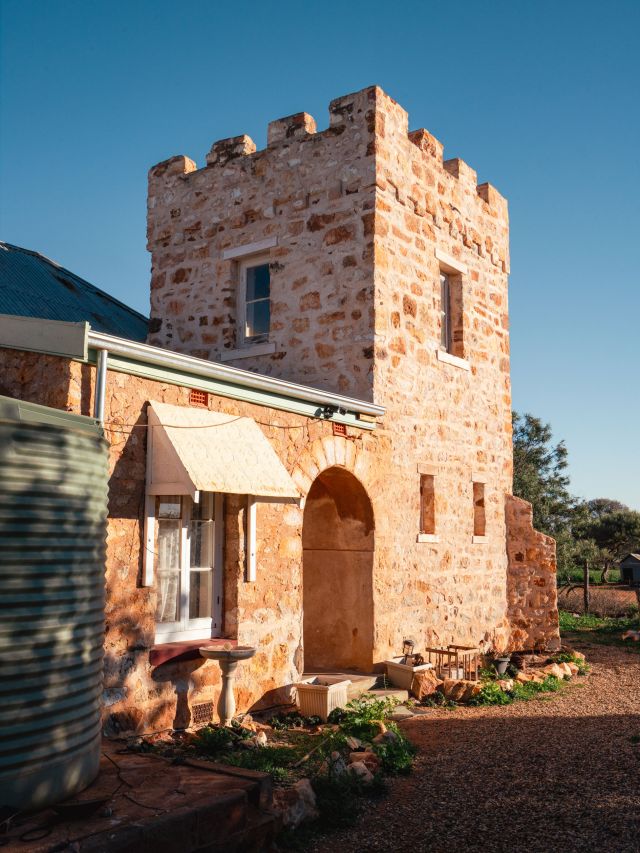
Melangata Station’s historic 1917 homestead features a locally quarried stone turret. (Credit: Natasha Bazika)
From Mellenbye, it’s a 150-kilometre drive north to Melangata Station – roughly two hours behind the wheel, or ‘just down the road’, as the locals describe it.
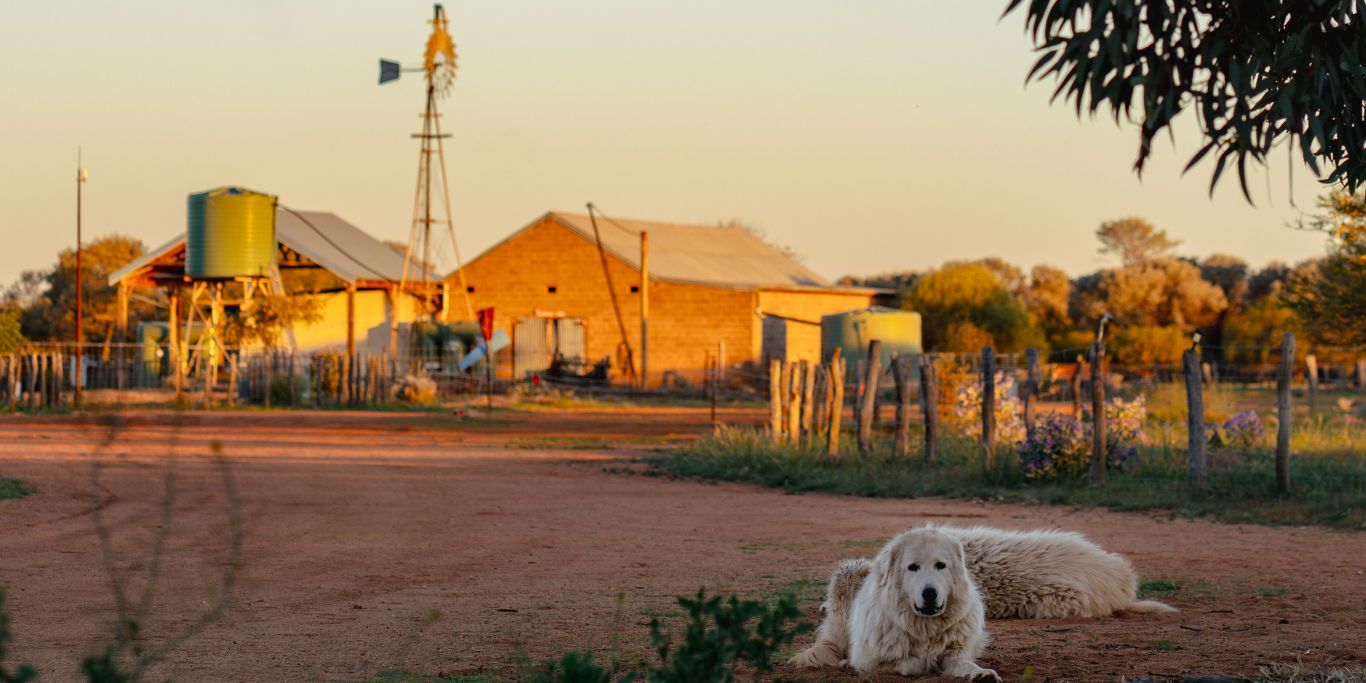
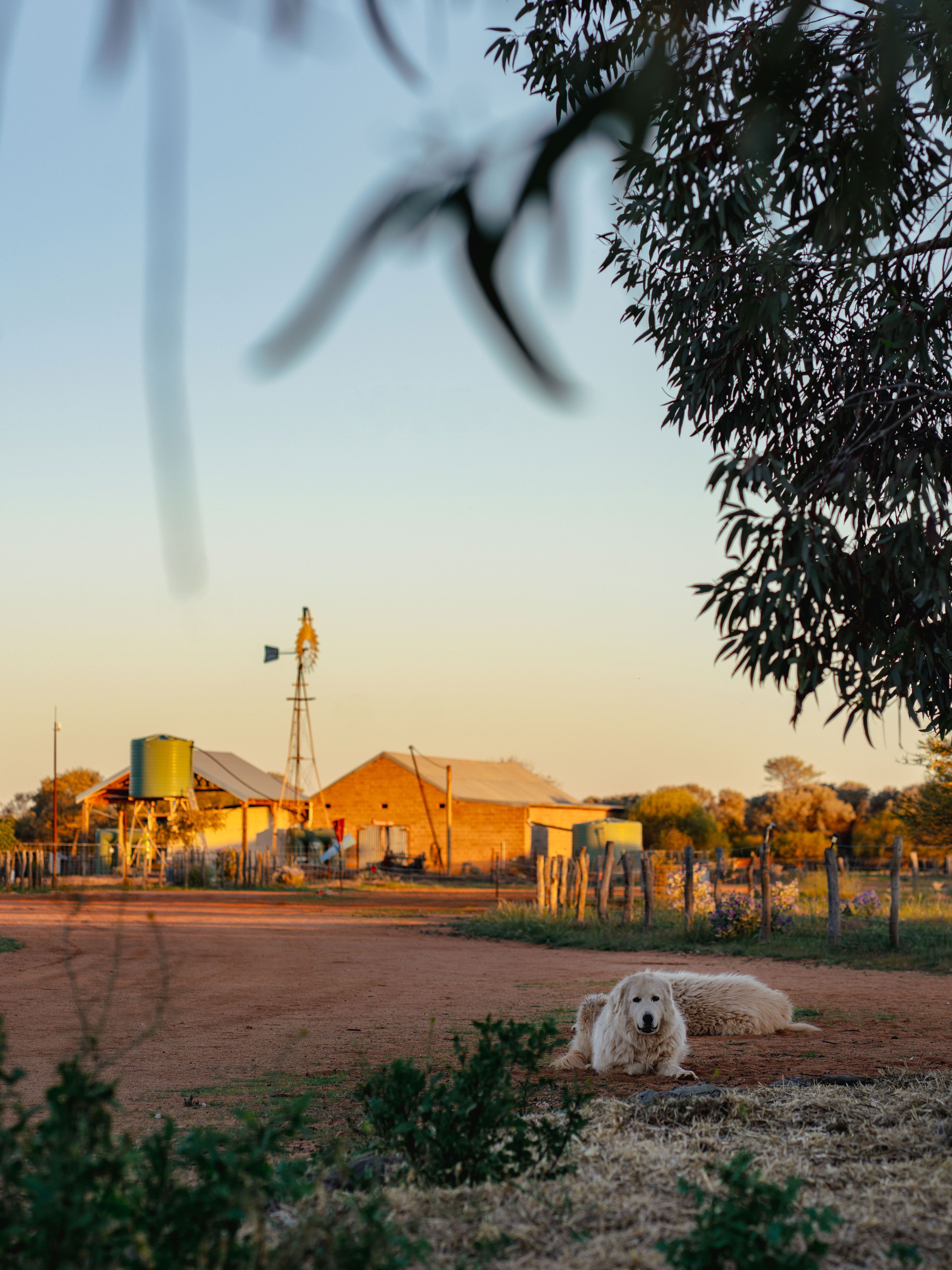
The 48,600-hectare property is run by Jo Clews and Ken Darnell and has an architectural claim to fame. Built in 1917, the homestead is the state’s only non-ecclesiastical building designed by Monsignor John Hawes, the priest-architect responsible for dozens of churches across the USA’s Mid West and the Bahamas. The thick turret constructed from locally quarried stone makes it look as if someone has left a mini English castle out in the scrub (the turret functions, Jo says with a laugh, as “Australia’s largest pantry"). Conveniently, the mini castle is our home for the next two nights, guarded by seven fluffy and fiercely loyal Maremmano-Abruzzese sheepdogs.
“Check the colour of their collar," Jo calls out. “That will tell you their name."
Meet the resident sheepdogs. (Credit: Natasha Bazika)
Sleep in a corrugated iron cottage at the secluded working farm. (Credit: Natasha Bazika)
Melangata Station is covered in wildflowers from August to October. (Credit: Natasha Bazika)
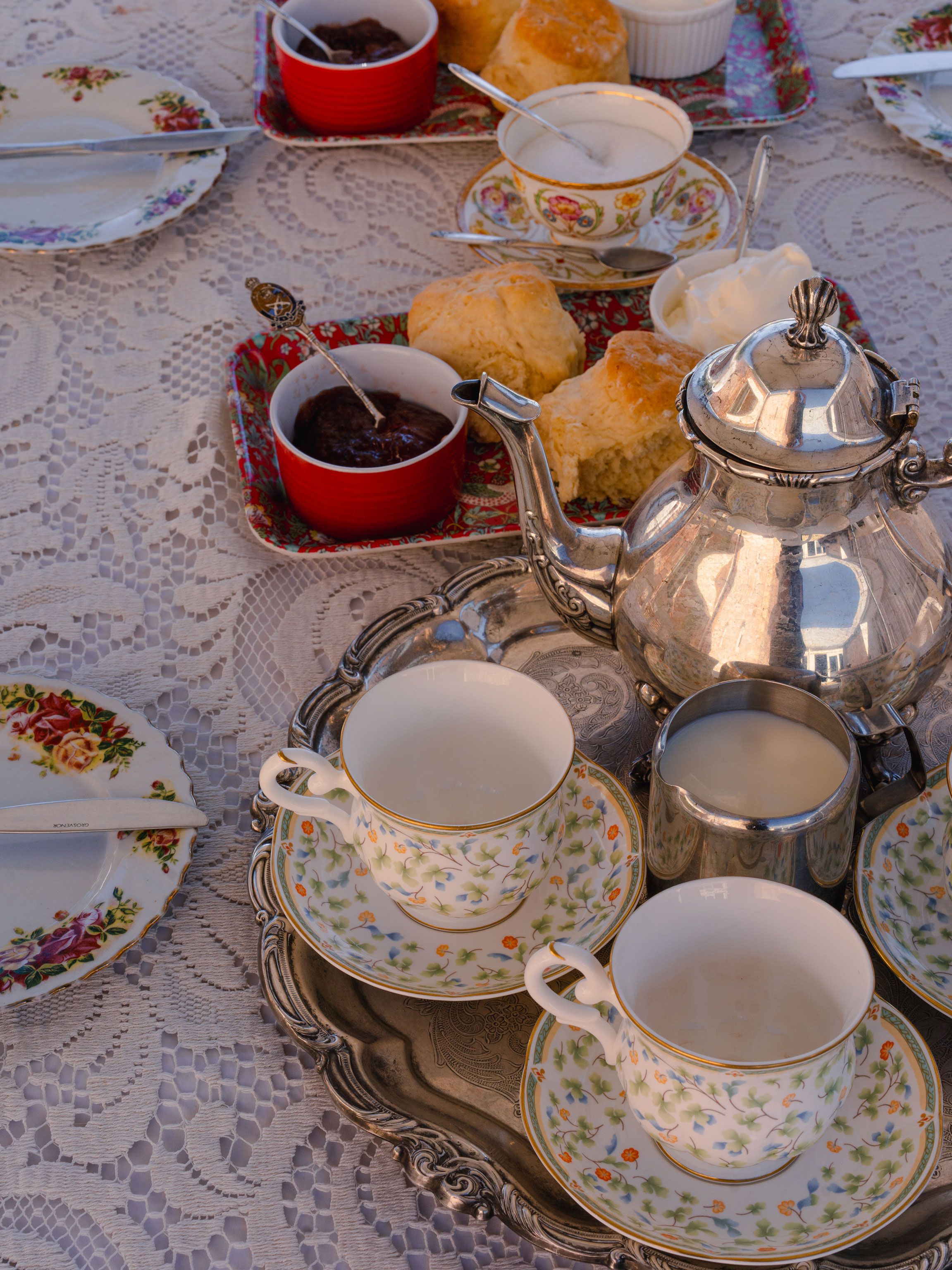
Morning tea at Melangata Station. (Credit: Natasha Bazika)
I get orange; Mak gets pink. When Jo got the dogs as puppies, she bought collars in different colours so she could tell them apart. “By pure laziness, I just decided to call them by the colour of their collar," she tells us. The only exceptions are Bella and Samson, the mum and dad of the pack, and Sunny, who wears a yellow collar.
Jo and Ken moved here in 2016, when the homestead was in rough shape. They’ve spent years painstakingly restoring it, but Jo says it’s still a work in progress. Now, they want to do the same for the landscape surrounding it.
We join Jo and Ken on a guided tour of the station alongside our fellow homestead boarders – a family from London on a bucket-list trip around Australia. They’ve already ticked off Sydney and the Great Barrier Reef; now they’ve come west, searching for an outback experience.
Melangata has about 600 to 700 sheep; the rest of the land has been set aside for ecological regeneration. I’d always associated the outback with flat, red earth, assuming emptiness was just the nature of things. But out here, I’m learning that red dirt can be a symptom of generations of overgrazing. Native bushland is the lifeblood of the ecosystem and for Jo and Ken, every patch of green is a win.
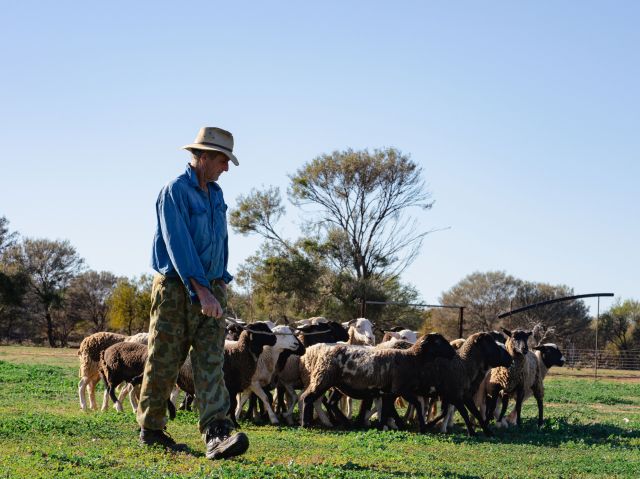
Sheep farmer Ken Darnell tending to his flock. (Credit: Natasha Bazika)
“This 16-hectare section has been completely fenced off to keep kangaroos and livestock from eating the grass," says Ken, pointing at a field of dense bush, wildflowers and trees. “This gives the native species a chance to flower, seed and spread."
The work is anything but simple. As Jo explains, it involves constant pest control, soil testing, talking to experts and seeing what works through trial and error. “I’m sick of looking at brown dirt," Jo replies candidly when a guest asks what drives her obsession. “We’re just trying to leave it better than we found it."
As we bounce along the station’s tracks, Jo and Ken point out shoots of new growth, grinning like they’ve struck gold.
Weekly travel news, experiences insider tips, offers, and more.
Bush bathing
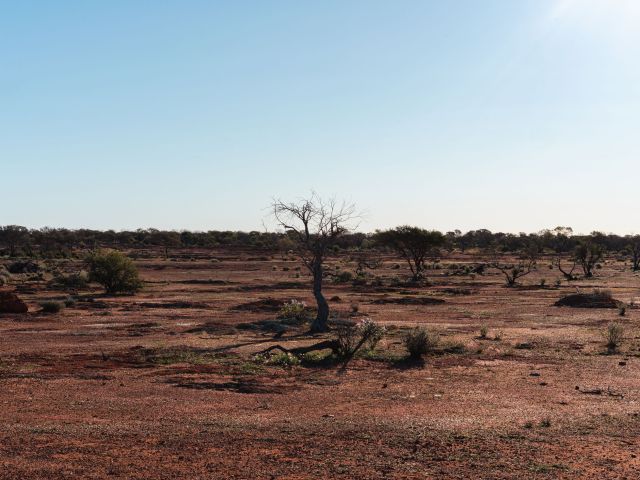
The sparse outback landscapes invites stillness. (Credit: Natasha Bazika)
As the sun dips below the horizon, our focus shifts back to the homestead. Dinner is strictly Jo’s domain and for good reason. A camp-oven master with a cookbook and TV appearances to her name, she serves up a feast of fresh bread and roasted meats and vegetables, plus apple turnover, which we enjoy around the fire.
Jo quizzes us on where we’ve come from and what brought us out here. Everyone around the table has the same answer: we’re here to escape the city. She sets down her empty plate and leans back in her seat as if she’s about to drop some wisdom. “Did you know in Japan they medically prescribe time in nature?" she asks.
“Forest bathing?" I call out.
“Yes," says Jo, grinning. “Well, out here, I call it ‘bush bathing’. We’ve completely lost touch with nature, so it’s about giving people the space to reconnect with something raw, wild and real."
I’d argue that if cowboy core is an urge to escape modern life, bush bathing is what happens when you pull it off. Neither station relies on strict schedules. At Melangata, Ken gives us a 30-minute warning before taking Chilli, a young sheepdog, out to round up a herd, asking if we want to watch. At Mellenbye, you’re free to roam the station’s tracks to see where they lead.
On our final evening in the outback, my husband and I stand with two dogs, watching 20 or so red-tailed black cockatoos soak in the twilight. The dogs are doing nothing, the cockatoos are doing even less and, for once, we are, too. Jo calls us inside for supper just as the silver crescent of the moon rises over the station.
Travel details
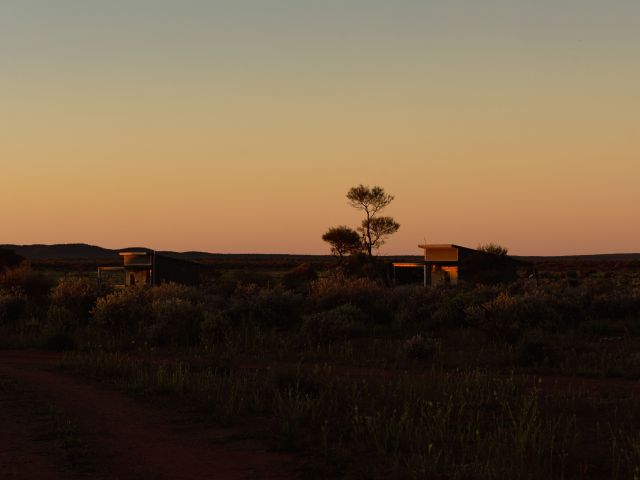
Cottages at Mellenbye Station. (Credit: Natasha Bazika)
Getting there
Mellenbye Station is about a 4.5-hour drive north-east of Perth, travelling along the Great Northern Highway. We recommend stopping in Carnamah for lunch at One L of a Good Feed, a church-turned-café. Melangata Station is 150 kilometres north of Mellenbye, a journey that includes unsealed dirt and gravel tracks, with occasional road trains and cattle on the road. A 4WD is essential for getting around the stations and travelling the unsealed roads. Download directions before setting off, as phone reception is limited. Ask your station hosts for detailed instructions before you set out, as Google Maps isn’t always accurate out here.
Staying there
There are plenty of accommodation options at Mellenbye Station Stay, including self-contained apartments, cottages, a family donga and campsites for campers and caravanners. Open year-round.
The choices at Melangata Station Stay are just as varied. Sleep in the heritage-listed homestead, a cottage, bell tent or refurbished 1970 Viscount caravan, or park your campervan at one of the unpowered sites. Open from mid-April to mid-November.
Want to see more stories from Australian Traveller in your Google search results?
Tick the box next to "Australian Traveller". That's it.
Natasha Bazika has spent over a decade collecting a global perspective, from living through the relentless energy of New York to slowing way down on the salty shores of Puglia. With a culinary track record spanning over 150 Michelin-starred restaurants, she operates on the belief that a life well-travelled requires a lot of grit, a bit of glamour, and a permanent appetite for the unexpected. She is happiest capturing the world through her camera and chasing the sweet spot where raw adventure meets incredible flavour, ideally at the end of a long, remote hike.
Trade early morning phone alarms and city chaos for bucolic serenity and gastronomic delights.
Peaceful birdsong and coastal winds meet rolling green hills and turquoise waters; there’s no better place to start your day than in Western Australia’s Denmark. This picturesque coastal town, a 4.5-hour drive from Perth along the pristine Rainbow Coast, offers bucolic bliss in spades.
A hidden retreat lies just a 10-minute drive from the town centre, inviting guests to slow down and connect with nature. At Heyscape Denmark, the ultimate refuge from the rat race and the perfect setting for a rural escape await.
Whether it’s for a refreshing weekend away or a regenerative week-long sojourn, this idyllic pocket of the world will leave you feeling anew.
Where to stay
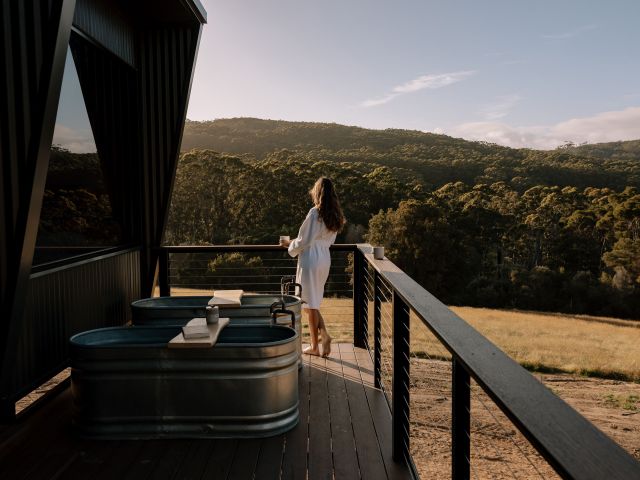
Make the most of outdoor baths. (Credit: Jarrad Seng)
Located on the 880-acre Raintree Estate, Heyscape Denmark is an award-winning, off-grid cabin retreat ideal for anyone craving time in nature while also enjoying sustainable, luxury comfort. Just 15 are sensitively embedded in the rural environment, ensuring privacy and the perfect setting to switch off. Choose from one-bedroom, two-bedroom or 4-person cabins. Four-legged friends can also join in on the fun with pet-friendly cabins available.
Check in, to check out.
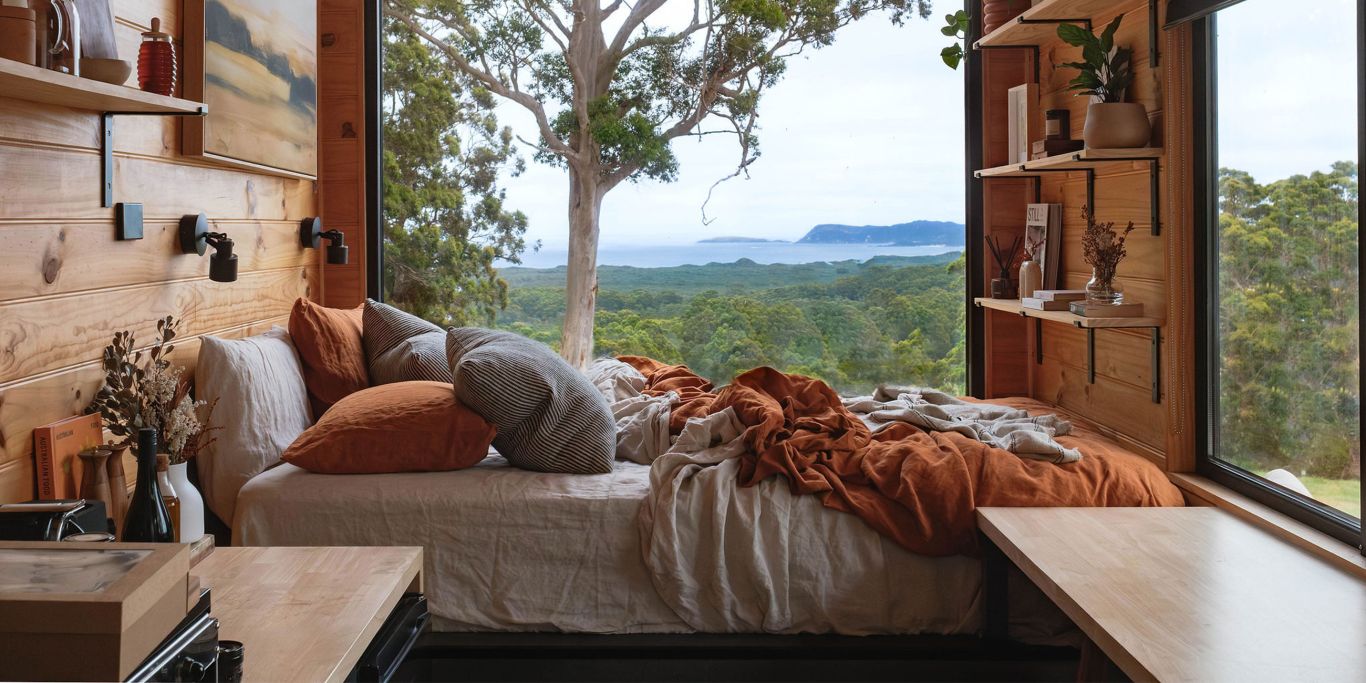
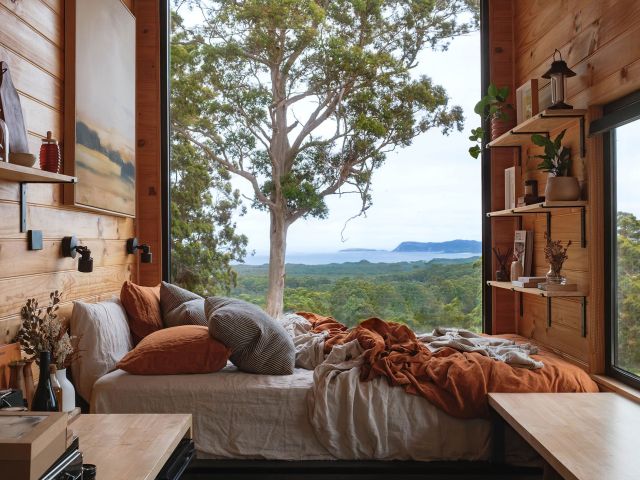
The modern accommodations are well-appointed with queen beds dressed in lush linen and pillows; a bathroom with a warm shower, flushable toilet and botanical shampoo and conditioner; and an indoor kitchenette with a Nespresso coffee maker. Outside, find timber decks with seating to spot resident kangaroos from, Heston Blumenthal barbecues for whipping up delicious meals using local produce, and outdoor baths to soak up incredible nighttime skies – Denmark’s lack of light pollution makes it an exceptional spot for stargazing and viewing the Milky Way. Floor-to-ceiling windows frame sweeping Great Southern Ocean, William Bay National Park and Karri tree views.
Wellness is at the forefront of Heyscape Denmark with thoughtful touches including Note to Self prompts, gratitude cards and a botanical sleep spray ready to help you unwind. And for the ultimate weekend of R&R, two-bedroom cabins are fitted with saunas.
Where to eat
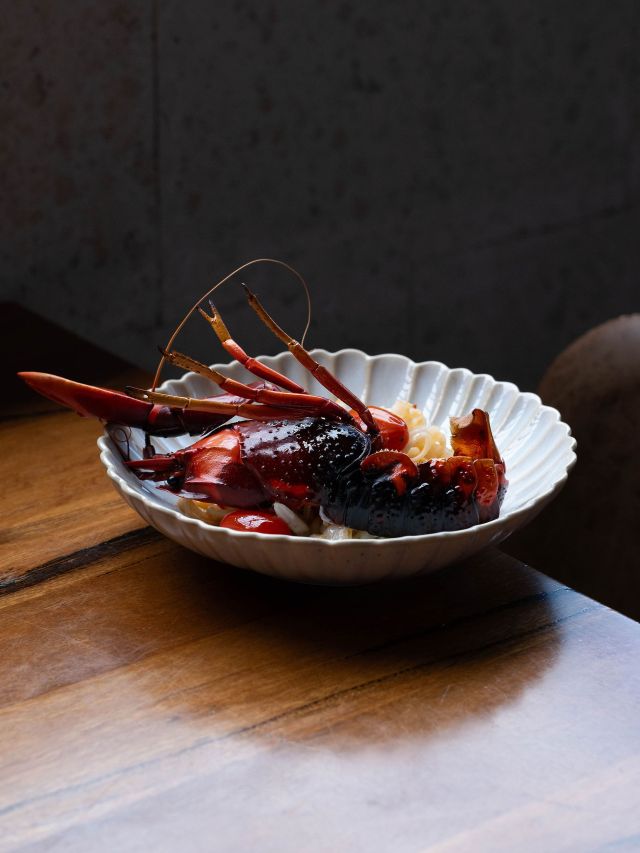
Catch your own freshwater crayfish, then have a chef prepare it for you.
The Great Southern region’s Mediterranean climate and nutrient-rich soils make for some of the most incredible produce in the world – and a stay at Heyscape Denmark lets you sample the very best of it. The estate farms over 200 black Angus cattle, marron – a freshwater crayfish endemic to the South-West of Western Australia –, hemp and French black truffle.
Just steps from these cabins sits the estate’s paddock-to-plate restaurant, The Dam. Featuring lofty jarrah ceilings, polished concrete and expansive windows revealing calming dam views, it’s a stunning spot for lunch or dinner, alongside an outdoor playground to keep little ones happy and busy.
Acclaimed chef Jason Jujnovich utilises ingredients from Raintree Estate’s regenerative farm in his hyper-local, Modern Australian menu. Seasonally changing dishes include the likes of wagyu beef lasagna and pistachio crumbed chicken cotoletta. Or join in for pizza night on a Friday, where the mushroom and truffle pizza is an easy winner.
Meals are designed to be paired with sips from the property’s innovative Cannabis Botanical Distillery, which concocts house-made hemp spirits and seltzers using ingredients grown onsite. Taste unique drops such as the Sativa Gin with warm citrus and pepper notes and the Pineapple Passion seltzer.
Another stand-out gastronomic offering is Heyscape’s Marron Catch & Cook Experience, which lets you hand-catch freshwater crayfish from the property’s pristine dams and have them prepared and cooked to perfection for you by chefs. Those wanting to enjoy a meal from the comfort of their cabin can fire up the barbecue and grill their fresh catch or order a gourmet dinner box with mouthwatering wagyu steak and antipasti against golden peaceful sunset views.
Things to do
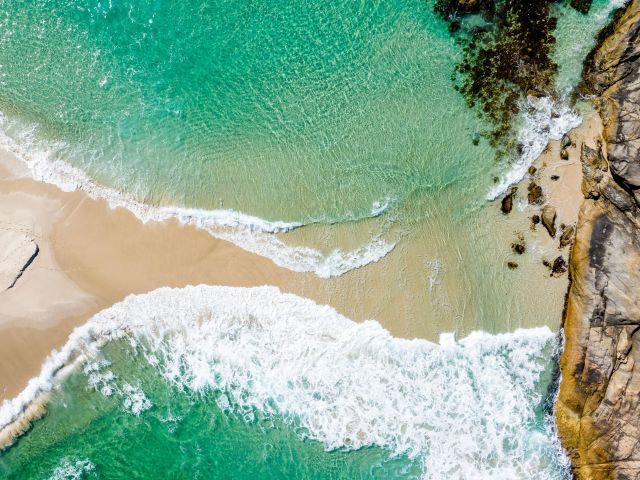
Spend a day enjoying the idyllic Lights Beach. (Credit: Tourism WA)
There’s no shortage of things to do in Denmark, and basing yourself at Heyscape Denmark puts you within easy access to it all. Nature lovers are spoiled with unbeatable spots for swimming and snorkelling, plus coastal hiking trails at William Bay National Park – a protected coastal reserve with approximately 1734 hectares of stunning landscapes ready to be explored.
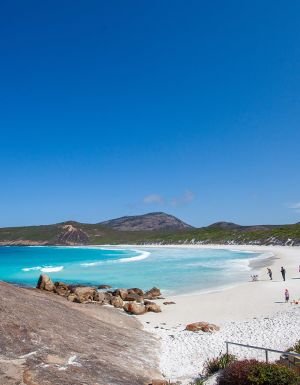
Hire an e-bike from the property and cycle just 15 minutes to the unbelievably clear waters and white sands of Greens Pools, a naturally sheltered beach. Or the idyllic Lights Beach, which features three beaches, dunes, natural wading pool and scenic walking trails. Keen surfers should turn their attention to Ocean Beach with its world-class surf breaks.
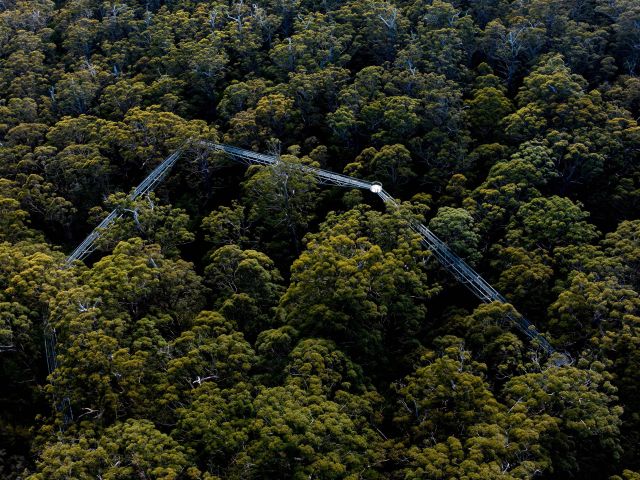
Wander the Valley of the Giants Tree Top Walk. (Credit: Tourism WA)
Stroll past towering Karri and giant Red Tingle trees on the Valley of the Giants Tree Top Walk. The 600-metre walkway rises 40 metres above the ancient forest floor and meanders through the hardwood trees, endemic exclusively to the Great Southern region.
Denmark is also a haven for creatives, and Butter Factory Studios is a must-stop on any itinerary. The contemporary art gallery, working artist studio and gift shop are housed within a historic building where workshops and exhibitions support and showcase creators from the region.
With the winning trifecta of delicious food, a pristine environment, and secluded accommodation, Denmark proves to be the ultimate destination for relaxation.