Little National: the Canberra hotel with a big personality

hero media
The sophisticated Little National in the country’s capital is perfect for your next quiet getaway.

From a distance, the Little National Hotel in Canberra resembles a rather brutal black box. But get up close to the architecturally designed building and you will see it presents as the ultimate 21st-century escape. The hotel is wrapped in perforated panels of dark metal that enable ventilation and provide partial views of the interior. Then, when day turns to night, strips of bright orange LED lights give the facade a futuristic glow-up.

The Australian capital really is starting to feel cutting edge, partly thanks to a raft of new design-led hotels, architecturally considered on the outside and carefully curated within. The Little National Hotel has, in part, helped change the city’s fortunes. Let’s take a look inside.

Location

The Little National Hotel is a little like Canberra: small but perfectly formed, and with an eye on things to come. It’s located within the city’s Realm precinct, home to some of the city’s best restaurants and cafes.

While the lobby occupies the entire ground floor, all 120 rooms are arranged around the top fifth and sixth floors. The rest of the building takes the form of a carpark, so discreetly hidden you’d never know it was there.
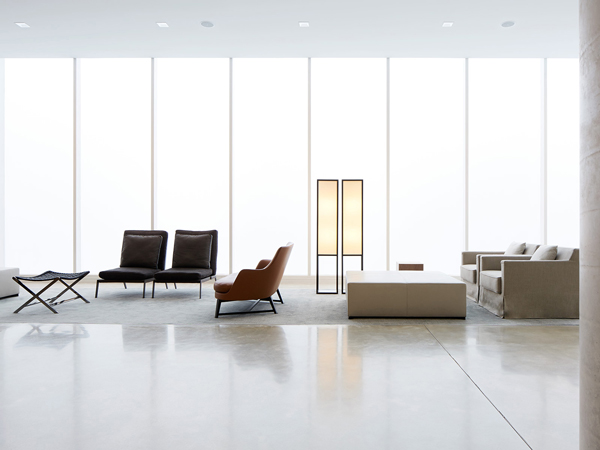
a look inside the living room interior at Little National Hotel, Canberra
Little National Hotel exudes simplicity and charm.

Style and character

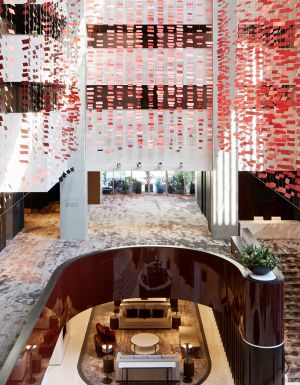
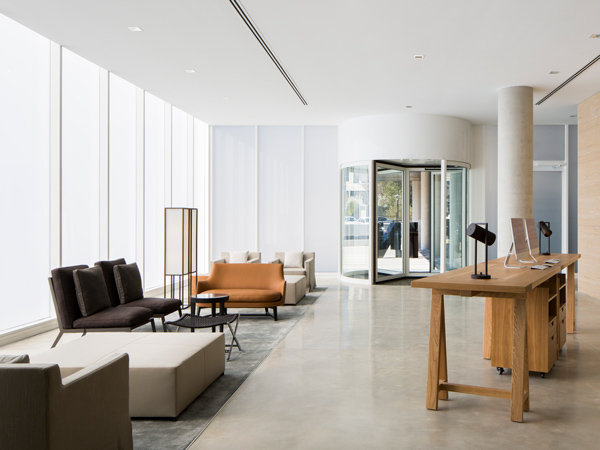
Mathieson Architects have been ingenious with their use of space. The light-filled lobby immediately sets the tone and echoes that of the National Gallery down the road. It has polished concrete floors and is all minimalist chic with travertine walls and translucent glass.

A friendly staff member from guest services efficiently processes my arrival from behind an oversized trestle table. The low-key design of the lobby is deliberate and aims to reinforce the brand’s commitment to ‘affordable luxury’. The hotel is also conveniently located near some of the major Canberra attractions.
the lobby inside Little National Hotel, Canberra
The lobby looks spacious and luxurious.

My room, like the building, is a masterclass in space management and simplicity. Wide, dark-timber floorboards provide a welcome natural texture underfoot and earthy tones complement a contemporary scheme of muted greys.

Two blinds are activated by bedside switches; one brings down a cream canvas that evokes a traditional Japanese rice paper wall, while the other blocks the light completely. An oriental tea set greets you by the bed. And what a bed it is: a king that fills the space from wall to wall.

Need tips, more detail or itinerary ideas tailored to you? Ask AT.

AI Prompt

Facilities

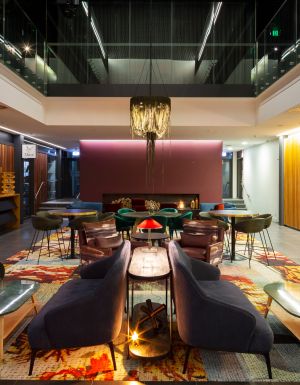
It may be suggested by the name, but Little National is far from small. The remarkable hotel includes two wonderful shared spaces perfect for guests to rest and recharge in: the lounge and the library. Both offer complimentary T2 tea, coffee facilities and water for guests.
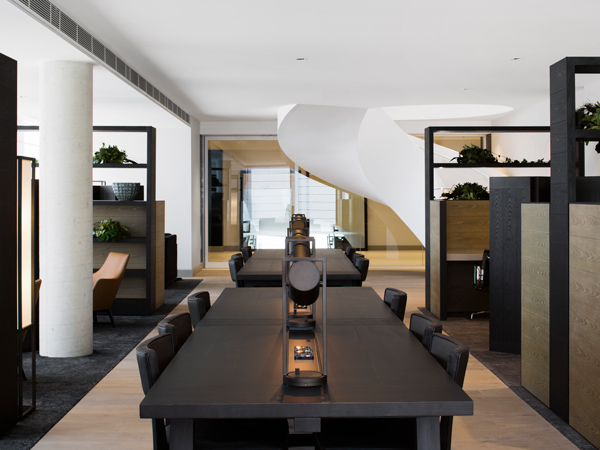
a co-working space at Little National Hotel
You can set up your meetings here.

Surrounded by floor-to-ceiling glass, both offer views of Capital Hill and are perfect spots to read in one of the comfy armchairs. Most of the hotel’s weekday guests are visiting Canberra for parliament, so the space has been designed as an extremely luxe co-working space that can accommodate meetings.

Paper sculptures by artist Benja Harney, inspired by the life cycle of the golden sun moth, adorn the adjoining corridors. The library is decked out with black-stained joinery and a black granite dual fireplace that divides the lower lounge area from the upper velvet-clad lounges.
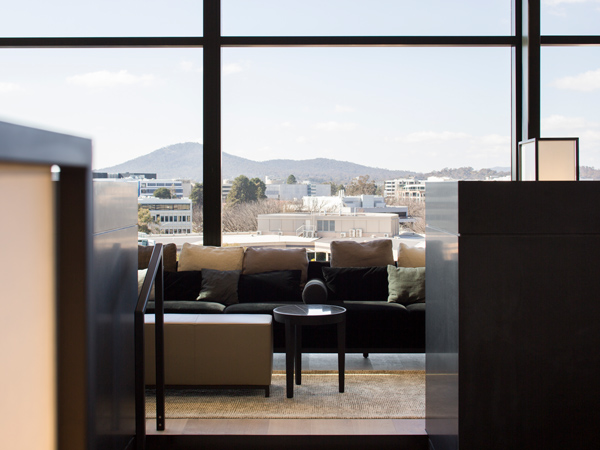
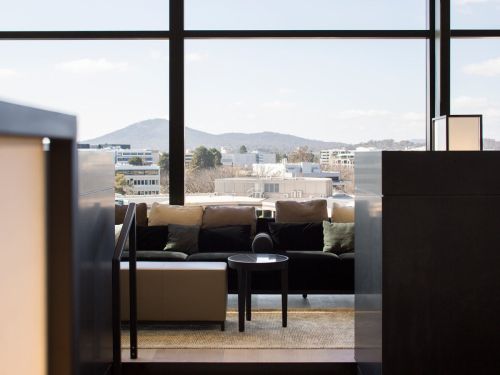
scenic mountain views from the lounge area at Little National Hotel
With views of the city, the lounge is the perfect reading spot.

Little National Hotel guests also have access to classes at Hale Gym, home to a state-of-the-art wellness centre featuring Technogym equipment, pilates and PT training. You’ll also have access to Hale Spa, where you can undergo a relaxing treatment or unwind in the sauna after a big day.

Rooms

The rooms inside Little National feel somewhat futuristic, like a Far Eastern utopia. In my suite, a window takes over one whole end of the room, affording views of a bamboo garden, yet somehow the space remains completely private.
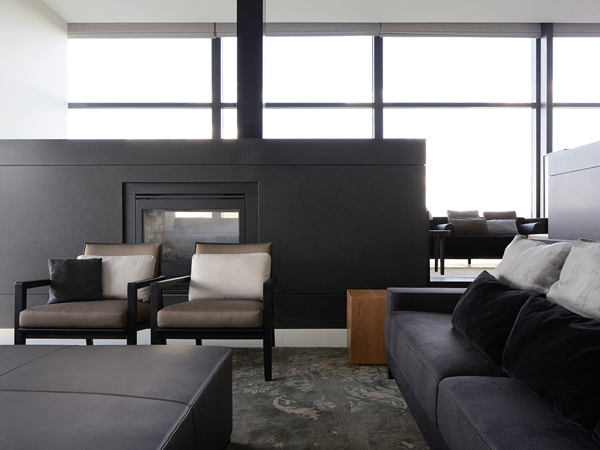
a black sofa set inside Little National Hotel, Canberra
Sit back and relax on the couch.

The bed was so comfortable I found it hard to avoid napping when I should have been strolling around the sculpture garden at the National Gallery of Australia or exploring the city’s myriad hip and happening bars. It turns out that the Arms of Orpheus bed is custom-made by A.H. Beard for and the plush mattress is so popular it’s available to purchase.

There are also free movies to watch on a TV from bed that invite me to extend my sleep-in. A sleek bathroom with a rainfall shower and Apelles products completes a very stylish pad indeed.
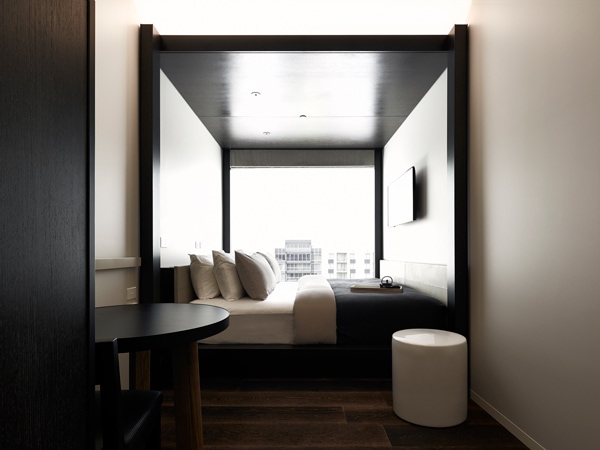
a bed with a view at Little National Hotel, Canberra
Sleep with a view at Little National Hotel.

Weekly travel news, experiences
insider tips, offers, and more.

Food and drink

Ritual Café is located on the ground floor of the Little National. It’s a top spot if you want to talk politics over a power breakfast or lunch. The cute cafe is known for its toasted sandwiches and consistently good coffee. The all-day breakfast menu will appeal to those who like a lie-in.
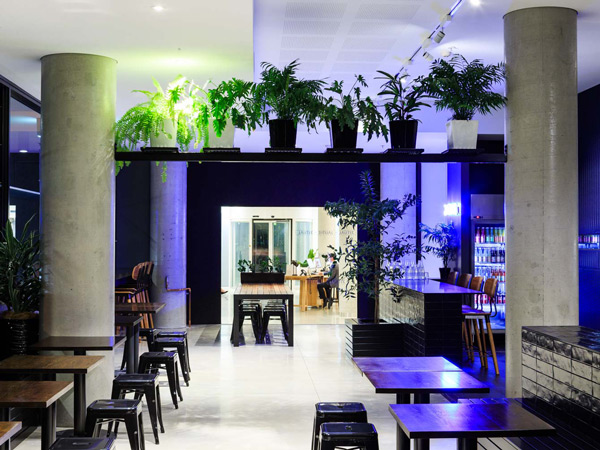
the dining interior at Ritual Café
Pop in Ritual Café for breakfast.

Guests of the Little National Hotel will have to head outside to the hotel’s sister properties to find further food and beverage offerings. Try the Burbury Hotel’s rooftop Leyla Bar, or go for beer and bites at Ostani, in Realm Hotel.
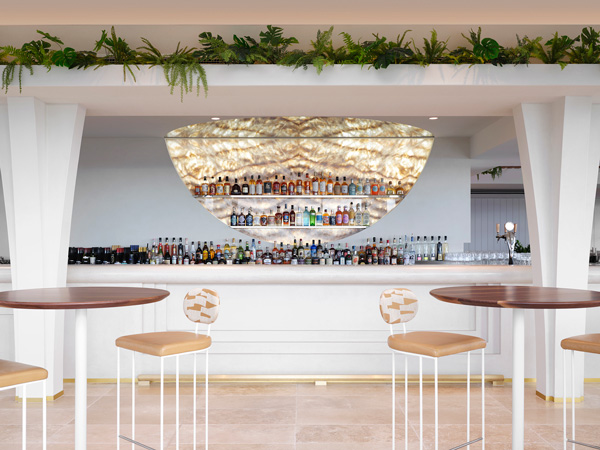
rooftop space at Leyla's Canberra
The bright and stylish rooftop space at Leyla’s. (Image: Pew Pew Studio)

Does Little National have access for guests with disabilities?

Both the Little National’s lobby and common areas are accessible for those with mobility needs. The hotel’s website also provides floor plans for each room so guests can determine the best option for them.

Is Little National family-friendly?

While the hotel offers family-friendly rooms, it does not specifically cater for families and children. Little National is tailored more towards couples, solo travelers and professionals seeking a quiet stay in the city.

Details

Best for: Guests looking for a quiet, sophisticated stay that’ll leave them feeling relaxed and rejuvenated.

Address: 21 National Circuit, Barton ACT

Phone: (02) 6185 1988

Cost: Prices range per night; check the website for details.

Want to see more stories from Australian Traveller in your Google search results?

  1. Click here to set Australian Traveller as a preferred source.
  2. Tick the box next to "Australian Traveller". That's it.
Carla Grossetti
Carla Grossetti has written across print and digital for Australian Traveller and International Traveller for more than a decade and has spent more than two decades finding excuses to eat well and travel far. A prestigious News Corp cadetship launched her career at The Cairns Post, before a stint at The Canberra Times and The Sydney Morning Herald gave way to extended wanders through Canada, the US, Mexico, Central America, Asia and Europe. Carla was chief sub editor at delicious and has contributed to Good Food, Travel & Luxury, Explore Travel, Escape. While living in London, Carla was on staff at Condé Nast Traveller and The Sunday Times Travel desk and was part of the pioneering digital team at The Guardian UK.
View profile and articles

From coast to bush: these are Gippsland’s best hikes

    Michael Turtle Michael Turtle

    Video credit: Tourism Australia

    From coast to mountains, hiking in Gippsland offers a stunning array of landscapes, with trails that take you deep into the region’s heritage.

    I step out onto the sand and it cries out underfoot. Kweek! I take another step and there’s another little yelp. Screet! Picking up the pace, the sounds follow me like my shadow, all the way down to the water. It’s obvious how this spot got its name – Squeaky Beach – from the rounded grains of quartz that make the distinctive sounds under pressure.

    For many, Wilsons Promontory National Park is the gateway to Gippsland, and the best way to explore it is by walking its network of hiking trails, from coastal gems such as Squeaky Beach through to the bushland, among the wildlife. But it’s still just a taste of what you’ll find on foot in the region.

    Venture a bit further into Gippsland and you’ll discover the lakes, the rainforest, and the alpine peaks, each changing with the season and offering summer strolls or winter walks. Just like that squeaky sand, each step along these trails has something to tell you: perhaps a story about an ancient spirit or a pioneering search for fortune.

    The best coastal hikes in Gippsland

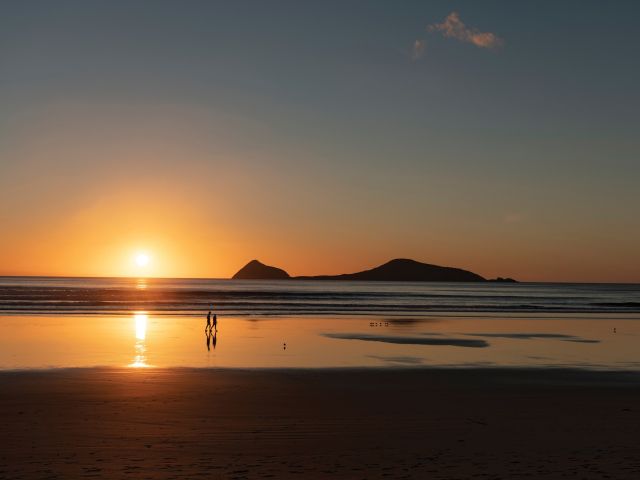
    sunset at Wilsons Promontory National Park
    Wilsons Promontory National Park is a sprawling wilderness with many coastal bushland trails. (Image: Mark Watson)

    Wilsons Promontory National Park (or ‘The Prom’, as you’ll end up calling it) is an easy three-hour drive from Melbourne, but you might ditch the car when you arrive, with much of the park’s 50,000 hectares accessible only by foot. From the inky water of Tidal River (dyed dark purple by abundant tea trees), I like the easy walks along the coast, among lichen-laden granite boulders, to golden beaches and bays.

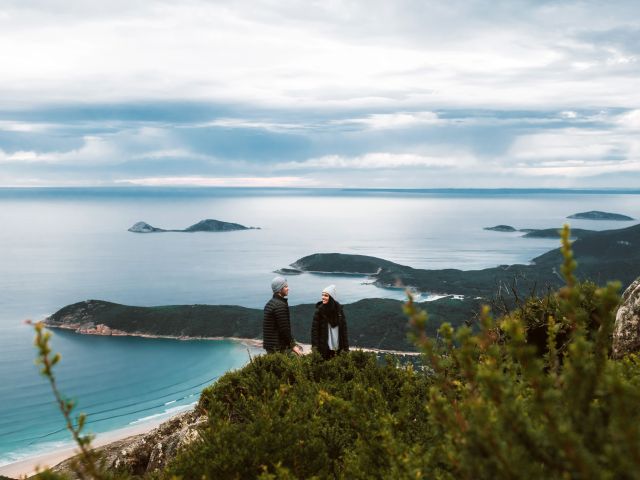
    a couple on Mount Oberon
    Panoramic views from the summit of Mount Oberon. (Image: Everyday Nicky)

    The trail to the panoramic views at the summit of Mount Oberon is a bit harder, up steep timber and granite steps, but it’s a popular 6.8-kilometre return. The more remote hikes are found through the open banksia and stringybark woodland of the park’s north, or along the multi-day Southern Circuit, which ranges from about 35 to 52 kilometres, with sunrises and sunsets, kangaroos and cockatoos, and maybe even whales.

    a golden sand beach at Wilsons Promontory National Park
    Walk ‘The Prom’s’ golden sand beaches. (Image: Tourism Australia/Time Out Australia)

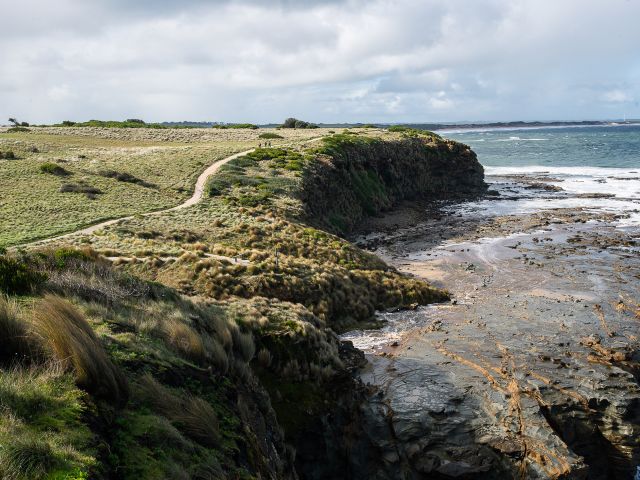
    You might also see whales on the George Bass Coastal Walk, even closer to Melbourne on the western edge of Gippsland. This dramatic seven-kilometre trail along the clifftops takes in sweeping views of the wild ocean, occasionally dipping down from grassy green hills to coastal gullies and a secluded beach. It also now links into the Bass Coast Rail Trail for an extra 14 kilometres.

    the George Bass Coastal Walk
    George Bass Coastal Walk trails for seven kilometres along clifftops. (Image: Visit Victoria/Time Out Australia)

    Over at the eastern edge of Gippsland, in Croajingolong National Park, you can wander along the lakeshores beneath koalas and around goannas (I keep my distance since one chased me here!). For those who are even more adventurous, the park is also the starting point for the 100-kilometre Wilderness Coast Walk, usually done over seven days.

    the Croajingolong National Park, Gippsland
    Wander along the lakeshores in Croajingolong National Park. (Image: Tourism Australia)

    The best bush hikes in Gippsland

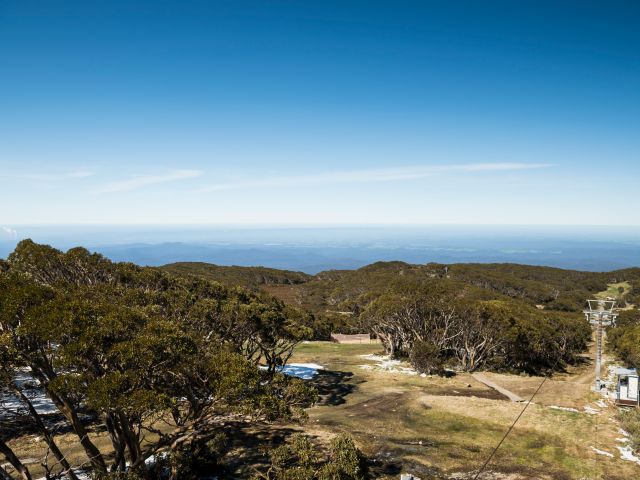
    the Baw Baw National Park
    The alpine heath of Baw Baw National Park. (Image: Everyday Nicky)

    Deep in the Long Tunnel Extended Gold Mine at Walhalla, mining guide Richard tells me how this small town in the mountains east of Melbourne boomed when prospectors found gold here in 1862. These days, you’ll find most of the town’s treasure – its heritage – above ground, with the Walhalla Tramline Walk a wonderful way to explore it.

    Just seven kilometres long, the walk takes you through decades of Gold Rush history, following the original rail trail from lush bushland to the mining sites, and through the charming village of just 20 residents with its wooden cottages and old shopfronts adorned with turn-of-the-century advertising posters. Blazing a trail where trailblazers once opened up the region, this is also the starting point for the 650-kilometre Australian Alps Walking Track.

    Nearby, Baw Baw National Park has walks through gnarled snow gums and alpine heaths that show off the colourful wildflowers in summer and the pristine carpet of white in winter. Several trails are perfect for snowshoes, including a 45-minute route from St Gwinear up to vast views across the Latrobe Valley.

    Further up into the mountains, the Toorongo and Amphitheatre Falls Loop Walk is an easy 2.2-kilometre path that serenades you with the sound of flowing water as you pass mossy rocks and tree ferns en route to two sets of waterfalls cascading over boulders in the remote wilderness.

    The best cultural hikes in Gippsland

    the Mitchell River National Park, Gippsland
    Hike the Mitchell River National Park. (Image: Parks Victoria/Grace Lewis)

    Across a pool in a natural sandstone amphitheatre, deep within a cave behind a waterfall, it’s said the Nargun has its lair. A fierce creature, half human and half stone, that abducts children and can’t be harmed by boomerangs or spears, the story of the Nargun has been told around the campfires of the local Gunaikurnai people for generations.

    As a culturally significant place for women, hikers are asked not to go into the Den of Nargun, but a 3.4-kilometre loop walk leads you through a rainforest gully to the entrance where you can feel the powerful atmosphere here in Mitchell River National Park, along Victoria’s largest remaining wild and free-flowing waterway.

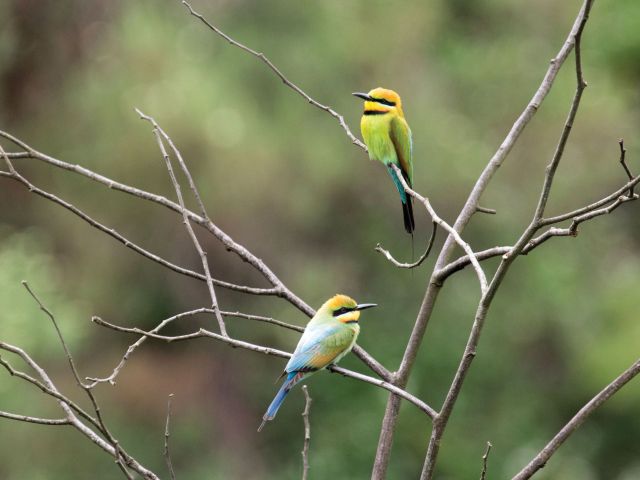
    the bee-eaters at Mitchell River National Park
    Bee-eaters at Mitchell River National Park. (Image: Parks Victoria/Grace Lewis)

    The Den of Nargun is part of the Bataluk Cultural Trail, a series of important traditional Gunaikurnai sites through central Gippsland. Another location is Victoria’s largest cave system, Buchan Caves Reserve, with trails to important archaeological sites of human artefacts up to 18,000 years old. The FJ Wilson Interpreted Walk includes the naturally sculpted white limestone steps of the 400-metre-long Federal Cave, while the Granite Pools Walk goes among tall timber and moss-covered gullies.

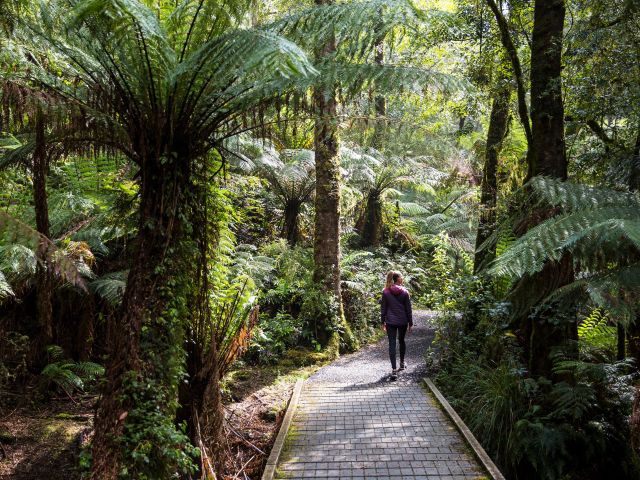
    the ancient rainforest of Tarra-Bulga National Park
    The ancient rainforest of Tarra-Bulga National Park. (Image: Josie Withers)

    Also important to the Gunaikurnai people is Tarra-Bulga National Park, known for its ancient myrtle beeches and enormous mountain ash trees. Just 40 minutes return, the Tarra Valley Rainforest Walk offers a taste of this verdant landscape, while the Grand Strzelecki Track takes you deep into the lost world of forest giants on an epic 100-kilometre trail rich with tradition.

    A traveller’s checklist

    Staying there

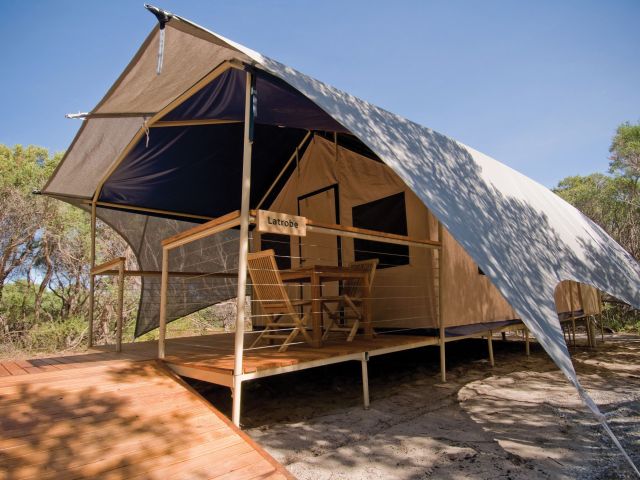
    the WildernessRetreats in The Prom
    Wilderness Retreats in The Prom. (Image: Christian Pearson)

    Wilderness Retreats in Wilsons Promontory offers glamping-style tents with luxurious queen beds. Star Hotel is a reconstruction of a Gold Rush-era hotel from 1863 in the heart of heritage Walhalla. Caves House is a historic three-bedroom house with views over the Buchan River.

    Eating there

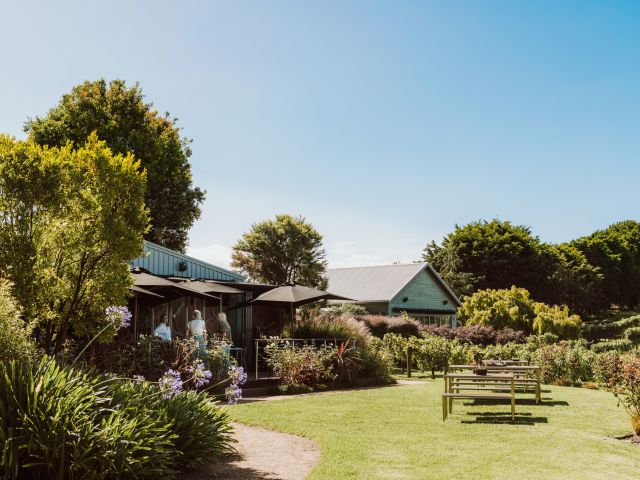
    the Carrajung Estate, Gippsland
    Enjoy a post-hike lunch at Carrajung Estate. (Image: Everyday Nicky)

    Kilcunda General Store serves great coffee and meals of local produce at the George Bass Coastal Walk. Alpine Trout Farm is located near Toorongo Falls in Noojee. Fish for your own lunch and barbecue it with the provided cookware.

    Carrajung Estate is a short drive from Tarra-Bulga National Park. The winery’s restaurant offers a seasonal menu of regional ingredients and you can stay at The Lodge.

    a seafood feast at Carrajung Estate, Gippsland
    The table is set for a seafood feast at the estate.

    Video credit: Tourism Australia