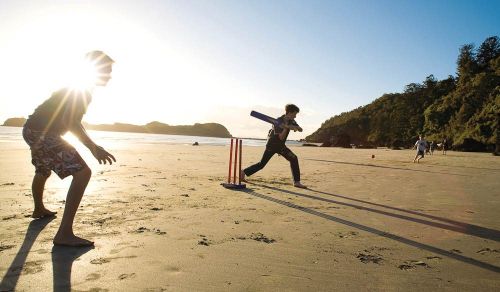
1: Have a bash at beach cricket

hero media

The satisfying ‘thwack’ of a wet tennis ball; the spray of the surf on sun-warmed skin; the cries of “Ooooouuuut!" If you haven’t played beach cricket, you haven’t
experienced a true Aussie summer.

Beach cricket combines all the best elements of our favourite season – long lazy days, test matches, sun, surf and sand – into the ultimate beach pastime. All you need is a nice flat stretch of beach; some stumps (well, something resembling stumps); a bat and ball; and as many players as you like.

Swap cricket whites for boardies and bathers, grass for sand, Shane Watson for Uncle Jim, and away you go. Beach cricket is democratic – anyone can play, regardless of their age or skill level. It’s also adaptable: you can use sticks or an esky lid for stumps, a tennis ball instead of a cricket ball, and a plastic bat if you don’t have the real thing. Players can opt in and out, too, taking a break while somebody else fills in.

While you can squeeze in a session between surfs, the best beach cricket games are the true epics that begin mid-morning, break for lunch, and continue through until dinner (or when the mozzies become too much). Slather on the sunscreen (or go for old-school white zinc for extra coverage), and dip into the ocean whenever the sizzling summer sun gets too hot. Just get out there and have a bash!

Try these

Beach tennis: Great for two people and much easier than the ‘real’ version!

Beach volleyball: Perfect for bigger groups. Some beaches have nets already set up.

Catch: Use a Waboba, a special ball that skims fast along the water, for extra zip.

Frisbee: Look for a clear stretch of beach to avoid knocking the ice-cream out of someone’s hand.

Hula hoop competition: Get your wiggle on!


Great Ocean drives of Australia >> 2

Back to 101 Unforgettable Coastal Experiences

Want to see more stories from Australian Traveller in your Google search results?

  1. Click here to set Australian Traveller as a preferred source.
  2. Tick the box next to "Australian Traveller". That's it.

How a $1 deal saved Bendigo’s historic tramways

The passionate community that saved Bendigo Tramways has kept the story of this city alive for generations.

It was an absolute steal: a fleet of 23 trams for just $1. But such a fortunate purchase didn’t happen easily. It was 1972 when the Bendigo Trust handed over a single buck for the city’s historic collection of battery, steam and electric trams, which had transported locals since 1890.

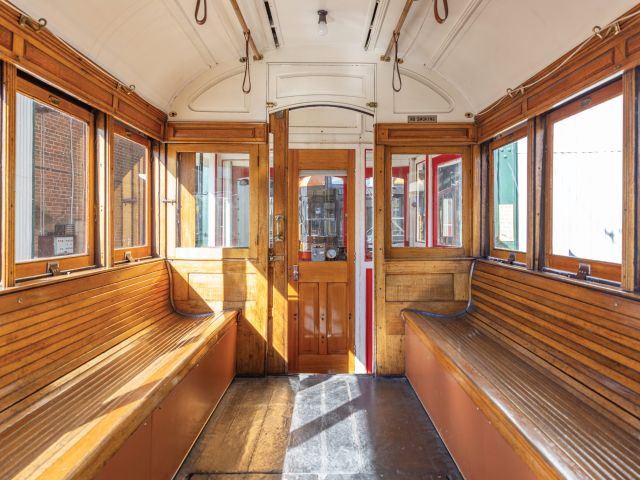
inside the historic Bendigo Tram
Bendigo Tramways is a historic transport line turned tourist service. (Image: Bendigo Heritage)

The city’s tram network had been declared defunct since 1970 due to post-war shortages in materials to upkeep the trams and declining passenger numbers as motor vehicles were increasing. However, determined locals would not hear of their beloved trams being sold off around the world.

The Bendigo Trust was enlisted to preserve this heritage, by converting the trams into a tourist service. The Victorian government approved a trial, however news spread that the Australian Electric Tramways Museum in Adelaide had acquired one of the streetcars for its collection.

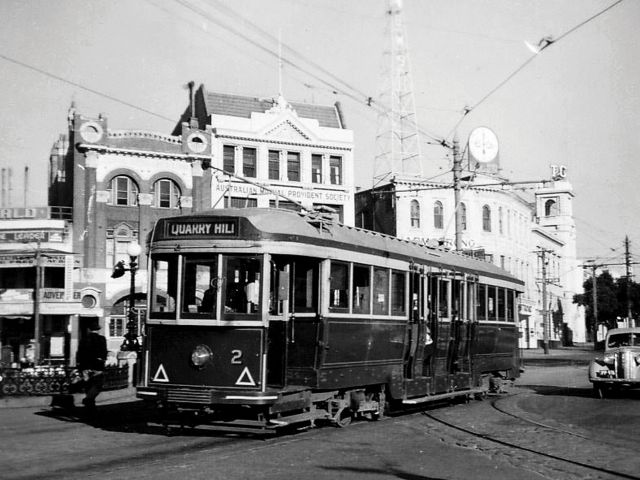
a tram heading to Quarry Hill in 1957
A tram on its way to Quarry Hill in 1957. (Image: Bendigo Heritage)

An impassioned group rallied together to make this physically impossible. Breaking into the tram sheds, they welded iron pipes to the rails, removed carbon brushes from the motors, and formed a blockade at the depot. The community response was extraordinary, and a $1 deal was sealed.

A new chapter for the city’s fleet

the old Tramways Depot and Workshop
The old Tramways Depot and Workshop is one of the stops on the hop-on, hop-off service. (Image: Tourism Australia)

Today, Bendigo Tramways welcomes some 40,000 passengers annually, operating as a hop-on, hop-off touring service aboard the restored trams. Fifteen of the now 45-strong fleet are dubbed ‘Talking Trams’ because of the taped commentary that is played along the route. The trams loop between Central Deborah Gold Mine and the Bendigo Joss House Temple, which has been a place of Chinese worship since 1871, via other sites including the old Tramways Depot and Workshop.

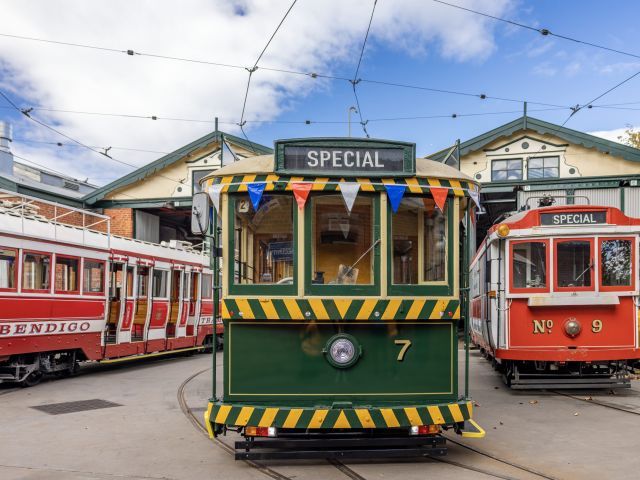
a Gold Mine Bendigo Tram
The fleet comprises 45 trams that have been restored. (Image: Visit Victoria/Robert Blackburn)

Keeping things interesting, throughout the year visitors can step aboard different themed trams. Tram No. 302 becomes the Yarn Bomb Tram, decorated both inside and out with colourful crochet by an anonymous group of locals.

During the festive season, Tram No. 15 operates as a tinsel-festooned Santa Tram, and the big man himself hides out somewhere along the route for excited children to find. And on selected dates, the adults-only Groove Tram runs nighttime tours of the city, accompanied by local musicians playing live tunes and a pop-up bar.

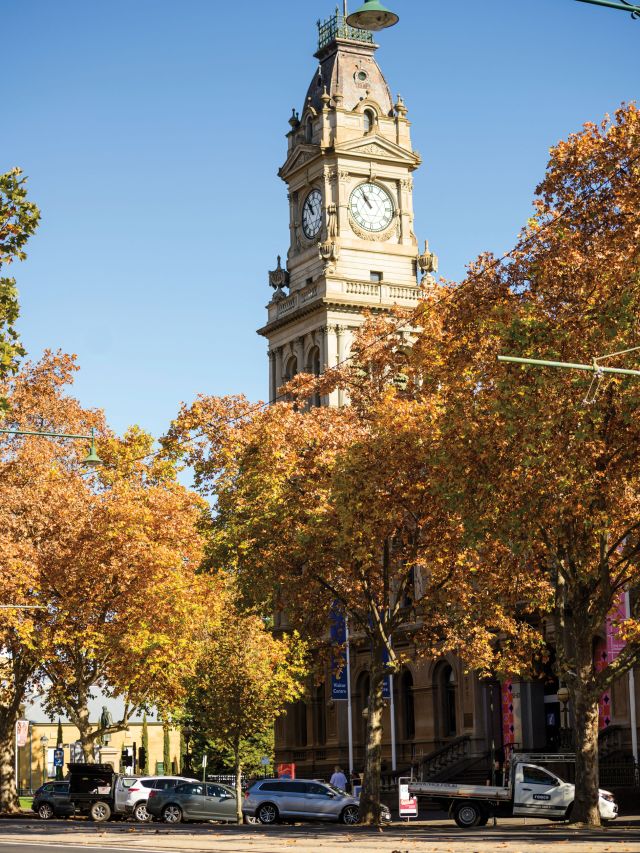
the historic post office turned visitor centre in Bendigo
Visitors can hop on and off to see the city’s sites such as the historic post office turned visitor centre. (Image: Tourism Australia)

As well as preserving the city’s history, however, the continuation of the tram service has kept the skills of tram building and craftsmanship alive in a practical sense. Bendigo’s Heritage Rail Workshop is world-renowned for restoring heritage trams and repurposing vehicles in creative ways.

Locally, for example, Tram No. 918 was transformed into the Dja Dja Wurrung Tram with original Aboriginal artworks by emerging artist Natasha Carter, with special commentary and music that shares the stories and traditions of Bendigo’s first people. You can’t put a price on preserving history. Nonetheless, it was a dollar very well spent.