7 landscapes Australians saved for their grandkids

hero media

Pat yourselves on the back, Australia – your children will thank you. Congratulations, you have saved some of the most stunning landscapes in this wide, brown land for the following generations.

Even in the midst of the all-powerful resources boom, sometimes communities put their collective feet down, taking on governments and industry to defend and conserve these stunning areas. Of course, there are still many battles being fought and to be fought. But in the meantime, here are seven triumphs – landscapes of great environmental, cultural and sentimental significance (and, of course, commercial value) that your grandkids and their grandkids can will be able to experience and enjoy. 

1. Koongarra, NT

Kakadu National Park’s boundaries were declared in 1979, but an area near the famous Nourlangie Rock (famous for indigenous rock art) was excluded from the park because of a large uranium deposit there. For years Jeffrey Lee, the senior Djok traditional owner of Koongarra, was courted by mining companies to use the land but he insisted it be incorporated into Kakadu. Finally, in 2013, the Kakadu Project Area Act was repealed and this extraordinary part of the region was included in the National Park and World Heritage Area.

2. Franklin River, Tasmania

Probably Australian environmentalists’ most famous battle and one that was ultimately successful. In 1982-83, 1272 people were arrested at Warner’s Landing, 6km from the junction of the Franklin and Gordon, during protests against the Tasmanian government’s plan to dam the Gordon. These concerted protests (during a federal election campaign) meant the river was saved in 1983 after actions by the Hawke Government and a High Court decision.

3. Arkaroola, SA

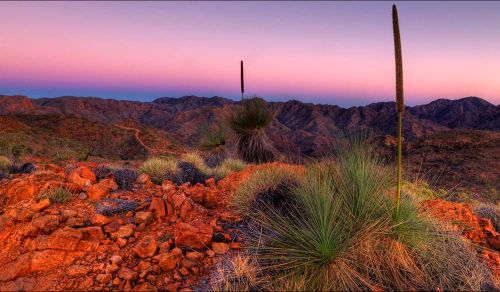
This wilderness reserve in northern Flinders Ranges, about 600km north of Adelaide, was described by Dick Smith as one of Australia’s finest arid landscapes. Sir Douglas Mawson also often brought his Adelaide University students here on field trips. Until 2011 the area was under threat from uranium mining, but after a community campaign in July of that year, the government announced that mining would be banned in Arkaroola, aiming eventually for a World Heritage listing.

Need tips, more detail or itinerary ideas tailored to you? Ask AT.

AI Prompt

4. Hattah Lakes, Victoria

Hattah Lakes wetlands, part of the Murray-Darling river system, did not experience a proper flood between 1996 to 2010. Too much water, mostly for irrigation, was being taken out of the wetlands (one of Australia’s most significant) for the natural floods, which are vital for the area’s birds and animals, to occur. Recently an environmental works program is bringing Hattah’s river redgums and animals back to life in this stunning series of freshwater lakes.

5. Mary River, Queensland

The Queensland government wanted to flood the Mary River Valley at Traveston Crossing, near Gympie, to shore up Brisbane’s water supply. The plan threatened the habitat of Australian lungfish, Mary River cod and Mary River turtle, and would have flooded large tracts of farming land. After a community campaign, then Federal Environment Minister Peter Garrett invoked Commonwealth environmental powers to stop the project.

6. James Price Point, WA

A plan to build a gas processing plant at James Price Point, 50km from Broome on the Kimberley’s coastline, faced opposition from environmentalists, who said the plan posed risks to whales, dugongs, bilbies and dinosaur footprints in the area. There was also a strong opposition from the land’s traditional Goolarabooloo owner Richard Hunter. But in mid 2013, after protracted court action, the gas project was shelved, the companies opting to obtain the gas from a floating platform out at sea instead.

7. Mt Everard, Harts Range and Fishers Ridge, NT

Some of Australia’s most arid landscapes, Mt Everard and Harts Range (near Alice Springs) and Fishers Ridge (NT, near Katherine) had been shortlisted as possible radioactive waste dump sites. But all three sites, of great environmental and cultural significance, have since been removed from consideration after various community campaigns.

Thanks to the Australian Conservation Foundation for use of information and resources.

Want to see more stories from Australian Traveller in your Google search results?

  1. Click here to set Australian Traveller as a preferred source.
  2. Tick the box next to "Australian Traveller". That's it.
hero media

Exploding supernovas & gold fever: discover the past at this outback Qld town

    Kassia Byrnes Kassia Byrnes
    Under wide-open outback skies, discover a fossicking gem that’s managed to slip under the radar.

    While the name Clermont may feel new to even the most intrepid traveller, its gilded history stretches back centuries. You’ll find it just off the highway, humming quietly under the hazy veil of Queensland’s outback sun. It’s here, hemmed in by mountains and perched atop soil heavy with the earth’s treasures, that one of Australia’s most accessible outback adventures awaits.

    Thanks to deposits of gold, copper and gemstones – souvenirs left by exploding supernovas and the heave of tectonic plates – Clermont became a centre point of Queensland’s Gold Rush. And now? Australia’s fossicking capital is yours to discover.

    Getting there

    car driving along Capricorn Way in queensland
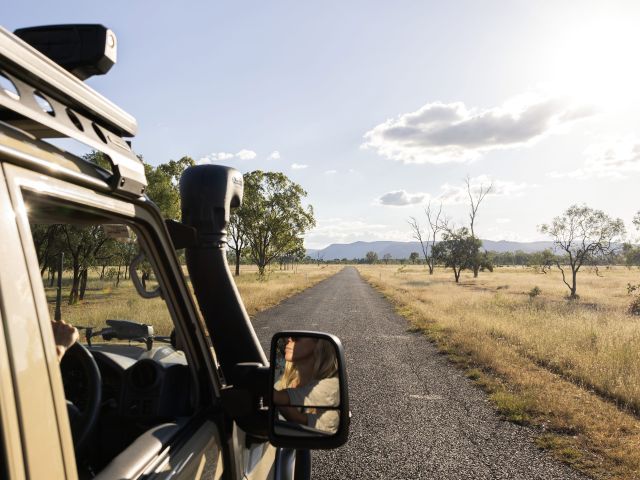
    Take a drive through Queensland’s Mackay Isaac region. (Image: Sean Scott/ TEQ)

    You’ll find Clermont in Queensland’s Mackay Isaac region. To get here, it’s an easy three-hour drive over sealed roads from Mackay. Or, if you’re heading from the Sapphire Fields of Emerald, the drive will carve out just over an hour from your day.

    Whether you’re road-tripping through outback Queensland or just tracing your way through all that Australia has to offer, Clermont is remote but easily accessible.

    Best accommodation in Clermont

    Theresa CreekDam in clermont
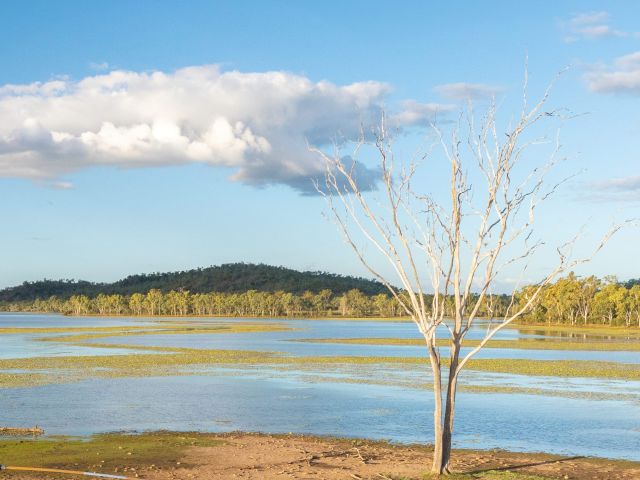
    Camp by Theresa Creek Dam. (Image: Riptide Creative/ TEQ)

    All accommodation comes with a generous helping of country hospitality here. The choice is yours between modern hotels, parking up the camper or pitching a tent.

    Theresa Creek Dam lies just outside town. Begin each day with crisp country air and bright outback sunrises. Spend the night under the sparkling country stars and your days out on the dam fishing or kayaking. Even if you aren’t camping, be sure to save space in your itinerary for an afternoon on the red dirt shore.

    To stay closer to town, opt for a central hotel to base yourself between exploring and fossicking, like Smart Stayzzz Inn and Clermont Country Motor Inn.

    Things to do in Clermont

    three people on a tour with Golden Prospecting
    Join a tour with Golden Prospecting.

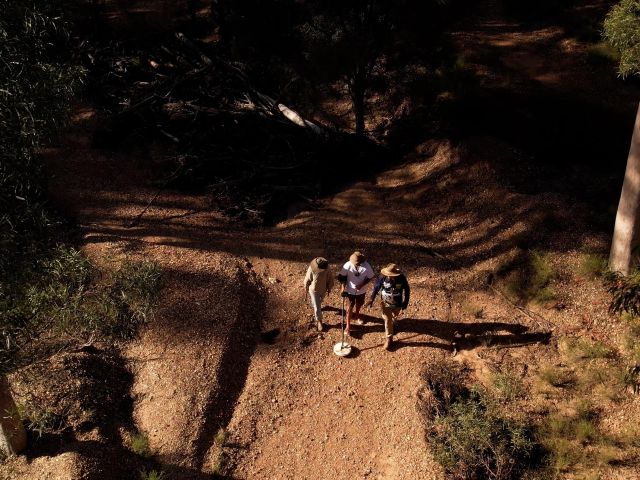
    One does not visit Clermont without trying their hand at fossicking. There are strict rules when it comes to fossicking, so stick to areas dedicated for general permission and make sure you obtain your license beforehand. Try your luck at McMasters, Four Mile, Town Desert, McDonald Flat and Flat Diggings. To increase your odds, sign on for a tour with the expert team at Golden Prospecting. They’ll give you access to exclusive plots and expert advice along the way.

    Once you’ve tried your luck on the gold fields, head to the Clermont Township and Historical Museum. Each exhibit works like an archaeologist’s brush to dust away the layers of Clermont’s history. Like the steam engine that painstakingly relocated the entire town inch by inch to higher ground after it was decimated by flooding in 1916. See the tools that helped build the Blair Athol mine, historic fire engines, shearing sheds and all sorts of relics that make up Clermont’s story.

    The historic Copperfield Chimney offers a change of pace. Legend has it that fossickers found a solid wall of copper here, over three metres high, kick-starting Queensland’s first-ever copper mine.

    Bush Heli Services flying over clermont queensland
    See Clermont from above with Bush Heli Services. (Image: Riptide Creative/ TEQ)

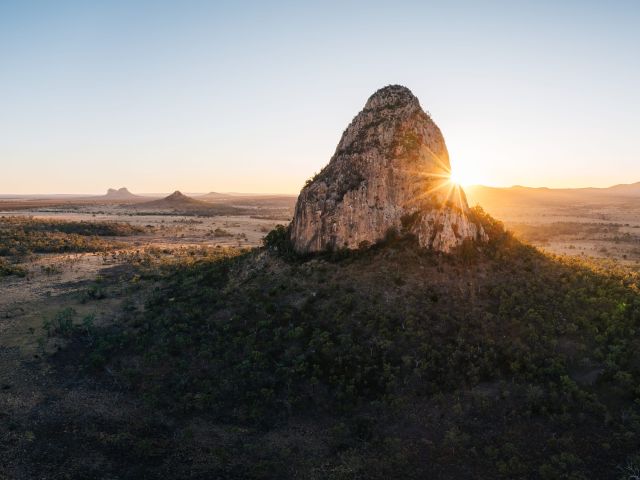
    For hiking, nearby Dysart is the best place to access Peak Range National Park. Here, mountainous horizons stretch across the outback as if plucked from another world. Set off for a scenic drive along the Peak Downs Highway for access to countless geological wonders. Like the slanting rockface of Wolfang Peak. Summit it, and you’ll find yourself looking out across a scene surely conjured up by Banjo Paterson. Dry scrub dancing in the warm breeze, grazing cattle, eucalypts and the gentle creak of windmills. Don’t miss visiting Gemini Peaks, either, for one of the park’s best vistas, and a blanket of wild flowers after rain.

    Then, take to the skies with a scenic helicopter tour with Bush Heli-Services. Shift your perspective and cruise above all the sights from your trip. Spots like Lords Table Mountain and Campbell’s Peak are best viewed from the skies.

    Before you head home, be sure to explore the neighbouring townships. Spend a lazy afternoon in the shade of Nebo Hotel’s wrap-around verandahs. The hotel’s 1900s dance hall has since been replaced with one of the area’s biggest rodeo arenas, so consider timing your trip to line up with a boot scootin’ rodeo. Or, stop by a ghost town. Mount Britton was once a thriving town during the 1880s Gold Rush. It’s been totally abandoned and now lies untouched, a perfect relic of the Gold Rush.

    Best restaurants and cafes in Clermont

    meal at Commercial Hotel
    Stop into the Commercial Hotel Clermont.

    Days spent fossicking, bushwalking and cramming on history call for excellent coffee and hearty country meals. Luckily, Clermont delivers in spades.

    Lotta Lattes Cafe is beloved by locals for a reason. Start your days here for the best caffeine fix in town and an impeccable brunch menu.

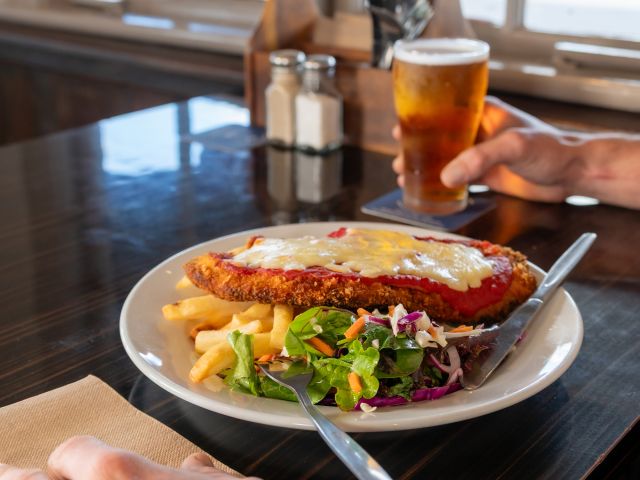
    For a real country meal, an icy cold beer and that famed country hospitality, head straight to the town’s iconic hotel: the Commercial Hotel (known endearingly to locals as ‘The Commie’). It’s been a staple in Clermont since 1877. The hotel even survived the flood of 1916 when it was sawn in two and moved to higher ground.

    Naturally, time spent in the outback must include calling into the local bakery. For delicious pies and a tantalising array of sweet treats, make Bluemac Bakehouse your go-to while in town.

    Discover more of The Mackay Isaac region, and start planning your trip at mackayisaac.com.