There are plenty of ways to spend your frequent flyer points: flights, accommodation and car rental is just the beginning in a multitude of offers.
Having said this, not all redemptions offer good value, and for most people it can be easy to make a poor value redemption without even realising. Personally, I aim to get at least two cents per point in value for each redemption I make with Qantas or Virgin Australia’s Velocity frequent flyer programs.
Although, often you can get much more than this. This guide aims to help you understand some of the best and worst value redemptions you can get when spending your points. All prices and points required for flights are quoted assuming a one-way trip.
The most questionable ways to spend frequent flyer points:
1. Redeeming points for products
Redeeming points for products is consistently one of the worst uses of frequent flyer points. It can be tempting to order the latest iPhone through an airline’s online reward store, but the amount charged often constitutes poor value when compared to flying with your points.
For example, you can pick up a Scanpan Techniq the Windsor saucepan online at the Qantas rewards store for 71,920 Qantas Points. Undoubtedly, this looks like a nice saucepan, but the sting comes when you take a closer look at that price point. I found the same pan online for $170 with multiple online retailers including Catch. This means that you would be valuing each point at around 0.24 cents, which is terrible value. For 3,500 fewer points you could redeem a Qantas business-class flight from Melbourne to Singapore.
2. Redeeming international economy flights
Typically, international economy reward seats offer poor to average value. Qantas economy flights from Melbourne to Hong Kong start at around $600 or 25,200 points and $138 in taxes for a points redemption. That means each point would be valued at around 1.8 cents. In comparison, a business-class redemption on the same flight works out to 4.5 cents per point.
3. Booking with Points Plus Pay
Most airlines offer an option to offset the ticket price of your flight using points. This means that you can use your points for any flight with available seats. As the points pricing is based on the cash fare, this method generally offers poor value in comparison to an award seat.
For example, using Qantas’s Points Plus Pay for a $249 economy flight from Melbourne to Perth (the cheapest Qantas flight on this route) would cost 37,900 points. This is especially poor value when considering that you could book two economy classic reward seats on the same flight for 1.9k fewer points!
Need tips, more detail or itinerary ideas tailored to you? Ask AT.
AI Prompt
4. Using points for hotel bookings
As you may have realised from previous redemptions, frequent flyer points often don’t stretch as far on the ground as they do in the air. Redeeming points for hotel bookings is no exception to this general rule.
Using dates in March, I found a four-night stay at the Sofitel Fiji Resort and Spa which booking direct was $864. Redeeming points for the same dates would have been a whopping 134,595 Qantas points or 135,100 Velocity points. That means you would be getting just 0.64 cents per point in value.
Some of the best ways to spend frequent flyer points:
1. Redeem for business not economy
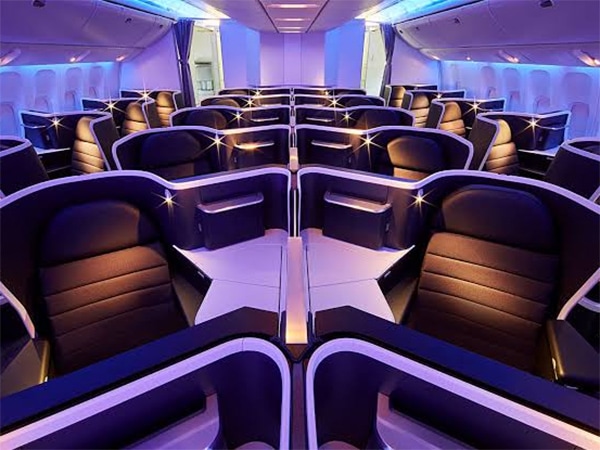
One of the best ways to maximise the redemption value of your points is to redeem for flights in business class as opposed to economy. Plus, flying in business means you get to enjoy travelling in comfort and style.
Using Virgin Australia as an example, a reward flight from Sydney to Hong Kong would cost 59,500 points plus $50 in taxes for business or 27,800 points plus $35 in taxes for economy. With cash, a business ticket is more than $3000 and economy starts at around $600. Essentially, this means you are getting five times the value for around twice the points by booking an award seat.
This is why flying business on points is incredibly popular among frequent flyers.
Weekly travel news, experiences
insider tips, offers, and more.
2. Family pool your points and status credits
Most airline frequent flyer schemes allow you to ‘pool’ points and status credits from family members into one main account.
Of the two main frequent flyer schemes in Australia, Virgin Australia’s Velocity has the best family pooling features. Velocity allows members to set up an automatic transfer of points and/or Status Credits with family members living at the same address, with up to six family members allowed in the pool. Unfortunately, Qantas does not offer anything similar but instead allows points (and not status credits) to be transferred between family members.
Pooling your points together into one account is a fantastic way to accumulate points for that dream redemption and to gain elite status with an airline quickly.
3. Upgrading from economy using points
Requesting an upgrade using points when booked on a paid economy fare is one of the best ways to get excellent value out of your points. Often it is relatively painless, however it does involve an element of luck in getting your request approved.
Upgrades are approved based on status, meaning higher-status customers are processed first. Unfortunately, it is unlikely that your upgrade request will be approved for international flights, due to increased competition on these routes. Although, it is always worth a try, especially if you hold high status. Most of the time this works best for domestic flights where there is less competition.
Summary
Something important to consider when thinking about spending your frequent flyer points is the value you are getting for your redemption. As mentioned, I normally aim for two cents per point at a minimum with both Qantas and Velocity frequent flyer programs. Although the questionable redemptions mentioned in this article often represent poor value, it is always good to work out the value for yourself as things can change from time to time.
Want to see more stories from Australian Traveller in your Google search results?
- Click here to set Australian Traveller as a preferred source.
- Tick the box next to "Australian Traveller". That's it.