Flax linen sheets with vineyard views? Al fresco hot tubs? Festoon lights and flat screens? Fleur Bainger explores how tiny cabins, holiday parks and select resorts are reimagining what’s possible in the affordable luxe space.
Never did we ever think we’d see a four-poster bed in a caravan park. And yet here we are, gazing with bewildered awe at white draping billowed by split system air conditioning, with views of a wooden deck sparkling with strung globes. There’s also a flat screen, a lumberjack-style wood-panelled kitchen with a microwave and a swish, en suite bathroom – all wrapped within canvas walls, and all from $179 per night.
Camping holidays used to mean rugged sleeps on hard ground after your air mattress betrayed you. Going off-grid tended to be code for ocean baths and smoke-fragranced clothing with a rubbish bag shoved in the boot. But none of it, it seems, is true anymore. Or at least, it doesn’t have to be.
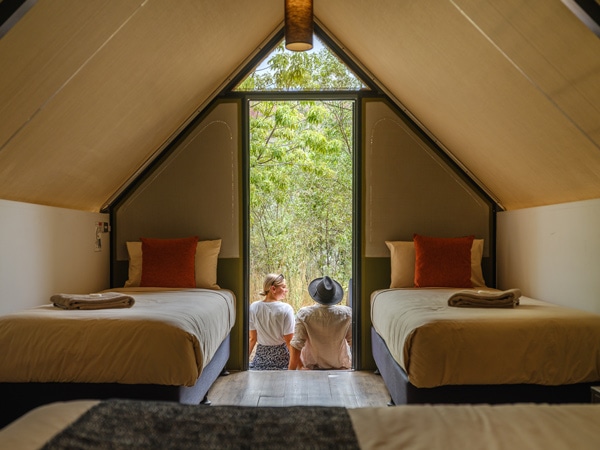
The basic options are still there, as are the high end, but for those searching for a more comfortable experience in a beautiful spot, without necessarily breaking the bank, holiday parks, tiny cabins and clever resorts are coming to the rescue. Campgrounds are adding ‘glamtainers’, designer cabins and even office pods to the mix. Tiny cabins provide adults-only, eco-luxe and chic stays with the luxury of not having to share a wall. Resorts are expanding access to all price points. These days if you can think it, you can probably find it. Here’s to a different kind of getaway.
Tiny cabin stays
Tiny cabins have been causing dilated pupils and heart-held sighs with their pocket-sized seclusion since the first low-impact accommodations came on the scene around 2017 in Australia. Since then, hundreds of solar-powered stays have been positioned on private farms, vineyards and bushland. Is there anything more luxe than gaining access to places you’d otherwise never get to step foot on? Actually, there is.
1. The Retreat House by Wikloe
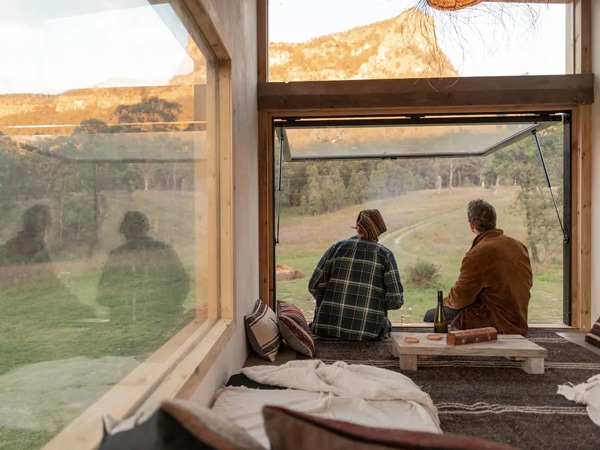
In NSW, recordings of yoga classes and guided meditations are provided at digital detox haven The Retreat House by Wikloe, along with picture-window views of Mount Marsden and furniture hand-built from salvaged timber (from $360 per night).
2. Henry by Hidden Cabins
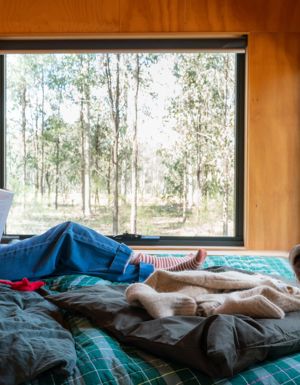
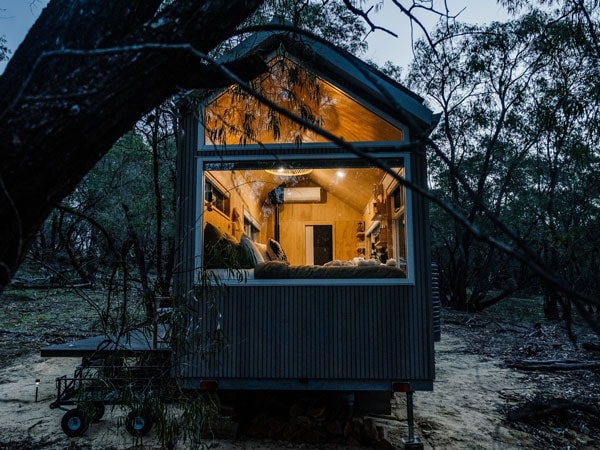
In Western Australia’s lesser-known Ferguson Valley wine region, Henry by Hidden Cabins has curated books on chasing the slow life, handmade ceramic crockery and a king bed swaddled in flax linen, all fit into 15 square metres (from $300 per night).
3. Into the Wild Escapes
Into the Wild Escapes has cabins of all shapes, styles and sizes in nearly every Australian state, many adorned with deck baths, fire pits and loft beds (prices start at $197 per night).
4. Heyscape – Tiny Cabins
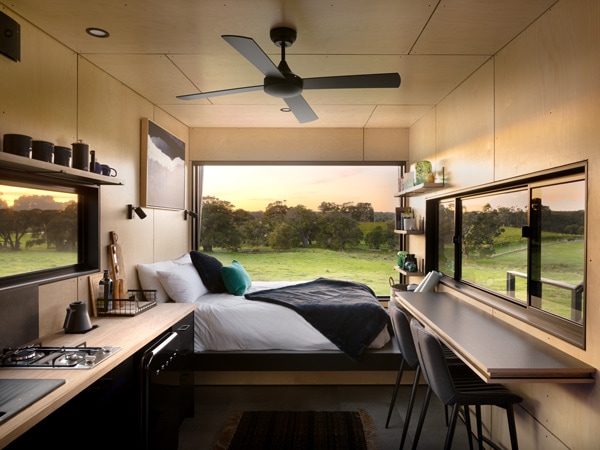
Beyond the compact cuteness, niche lures are being added to the mix. Heyscape, which has positioned 26 off-grid, eco boltholes across WA in just four years, has recently introduced ‘work from roam’ cabins, kitted out with high-speed wi-fi and good coffee in dreamy settings, as well as dog-friendly cabins, accessible cabins and fit-for-family cabins. Going a step further, Heyscape launched new premium iterations, including some in Margaret River’s coveted Yallingup that opened in June 2023, and others launching in Esperance in September.
“To have that room to breathe while retaining creature comforts is rare and quite unique," says Tenealle Harper, Heyscape’s guest experience manager. The family-owned company’s very comfortable standard cabins cost from around $300 per night, while the primo versions that might include a soaking tub made from a concrete wine vat, a motorised cinema screen for movies in bed and even a soon-to-open private airstrip, start at $590 per night. What began as affordable luxury is now diving into the high-end.
Need tips, more detail or itinerary ideas tailored to you? Ask AT.
AI Prompt
5. CABN X
It’s also happening in South Australia, where big player CABN is opening a collective of new, adults-only CABN X retreats in August 202. With each pod 30 metres apart, the four Barossa winery-positioned cabins are designed as a group getaway. Each is adorned with a private sauna and huge, scoop bath; they will set you back from $695 per weeknight – and significantly more on weekends. It’s steep but consider this: comparative neighbouring properties price themselves from $600 to $700 per night.
“When we launched CABN X, the concept was to bring the comfort of a five-star hotel room to nature, but with some key differences," says CABN CEO Michael Lamprell. “Luxury, off-grid accommodation that … is curated to encourage disconnection from everyday life and reconnection with nature and one another."
Meanwhile, regular CABNs kitted out with Weber Qs, solar air conditioners and indoor fireplaces cost from around $300 per night, granting the same level of ecotherapy for less. New eco-CABNs planned for 2025 will combine the best of both worlds. Future tiny homes, to be positioned along the 102-kilometre Cooloola Great Walk through Queensland’s Great Sandy National Park, will be graded into different categories, ranging from ‘minimalist’ to ‘sustainable luxury’.
Glamping spots
As Insta-worthy tiny cabins are amped with extras and the nightly rates climb accordingly, holiday parks and camping grounds are stepping in with zhuzhed-up options that cast new light on the traditional budget sector. These typically daggy places have long made sensational locations accessible to those on tighter purse strings, and now their sprawling proximity to beachfronts, iconic hiking trails and bucket-list sights is appealing to those who don’t fancy a night in a tent.
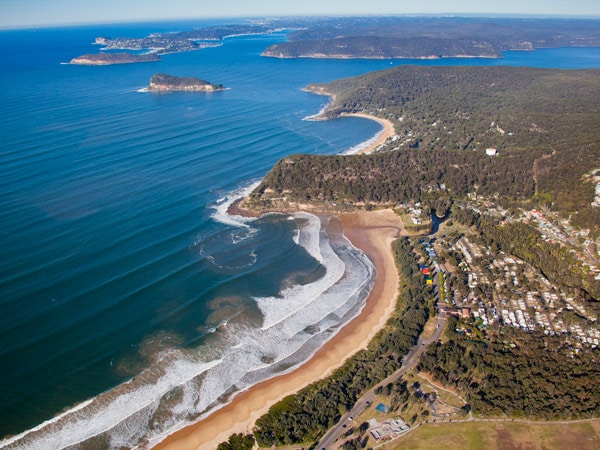
6. NRMA Parks and Resorts
NRMA Parks and Resorts has introduced glamtainers – fancy-pants sea containers – to its ringside Umina Beach location on the NSW Central Coast.
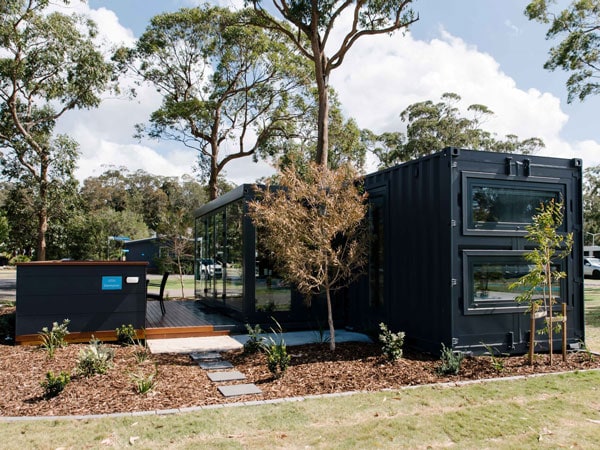
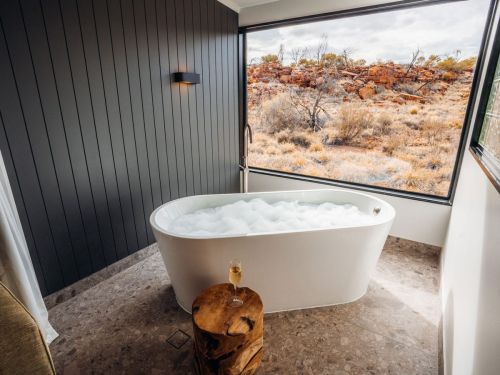
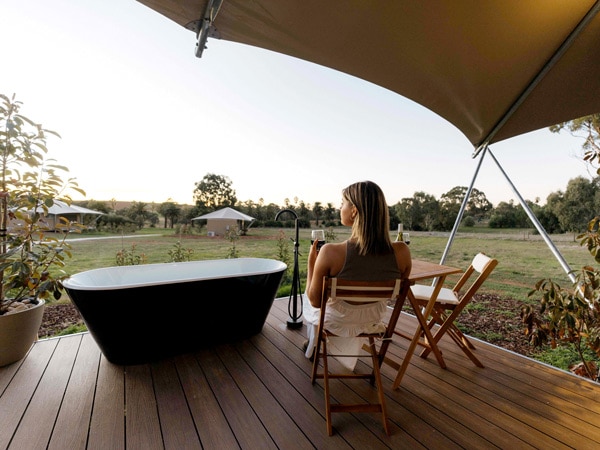
With styled furnishings, chic wood panelling and floor-to-ceiling glass, they’re a leap from the usual expectations of a holiday resort (from $149 per night). At its Merimbula Beach park, a claw-foot bath sits on the deck of a view-blessed safari tent (from $214 per night).
7. Tasman Holiday Parks
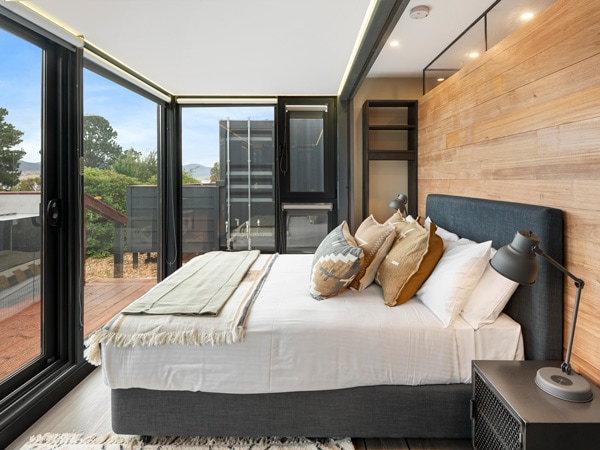
Rapidly expanding Tasman Holiday Parks is amping its Bendigo offering with a four-poster bed inside each of its new Glamping Miners Tents, along with the park pool, mini golf and movies beyond the zipper. There’s also a new office pod – one of many remote working spaces that Tasman plans to roll out at caravan parks in 2024, including Bright, Geelong, Racecourse Beach and Airlie Beach. “It’s at times great to be able to run meetings when you’re not sitting in your cabin or your glamping tent," says Tasman CEO Nikki Milne.
With its access to the Whitsunday Islands, Airlie Beach also has new, air-conditioned, en suite eco-glamping tents that include camping’s most breathtaking opulence: a regular-sized dishwasher (from $191 per night). Six tiny homes are also on the cards, alluring additions that are also planned for Queensland’s South Mission Beach and WA’s Yallingup.
8. Alpine National Park
By summer 2023, Bright’s Victorian alpine park will have two-storey modular cabins with picture windows and outdoor fireplaces. “People were actively seeking new experiences during Covid and it introduced a new customer to holiday parks," says Milne. “There’s just such intrigue in really high-end, beautifully finished tiny homes."
While parks can’t offer the people-free privacy of a typical tiny cabin, they make up for it with go-kart tracks, bouncy pillows, kayaking and coffee trucks. “In our business, you can access all the social amenities whether you’re spending $30 per night for a campsite, or if you’re spending at the top of the price point," says Milne. “You get a whole range of experiences that you simply wouldn’t get if you were in a traditional hotel complex." And while that price point is climbing north in tune with rising sophistication, Milne says it hasn’t weakened the thirst. “Sometimes your most expensive stock is the first to sell," she says.
Weekly travel news, experiences
insider tips, offers, and more.
9. El Questro and Kings Canyon Resort
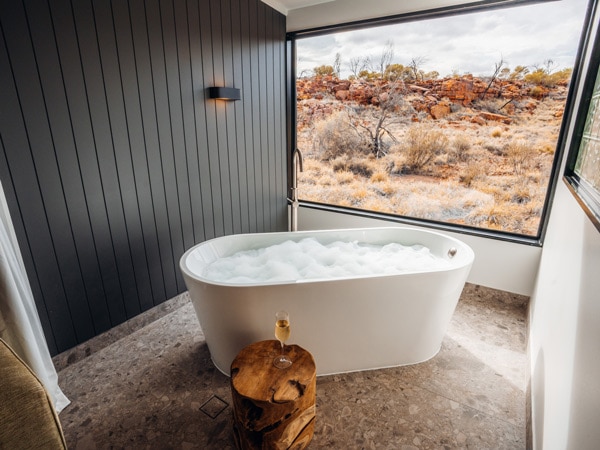
Iconic destinations such as the Kimberley’s El Questro and the Red Centre’s Kings Canyon Resort have long embraced the very Aussie, egalitarian approach of granting all visitors – from campers to top-tier travellers – access to the same natural beauties.
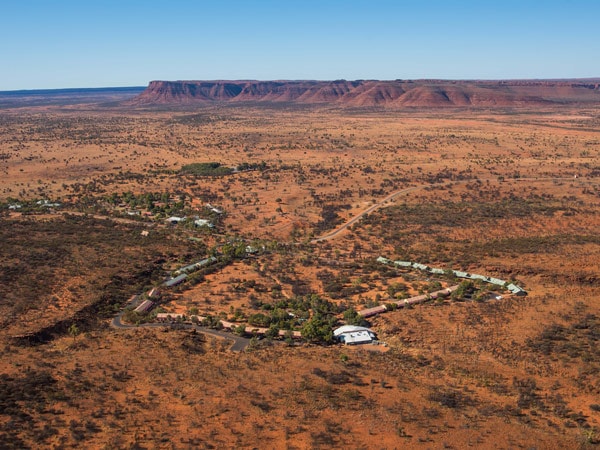
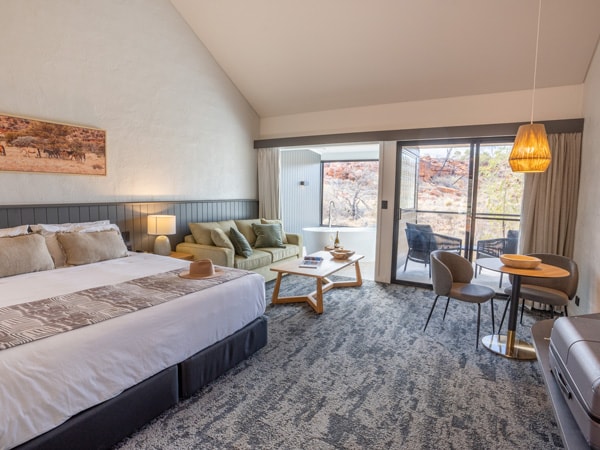
G’day Group, which acquired both properties in 2021, has since put some serious spit and polish into Kings Canyon’s 128 standard and deluxe resort rooms, building competition for its glamping tents.
10. Discovery Parks and Resorts
The G’day Group also owns regional holiday parks around Australia under the Discovery brand, which first dipped its toe into glamping with the new-build safari tent village, pool and bar-restaurant at Discovery Resorts – Rottnest Island in 2018.
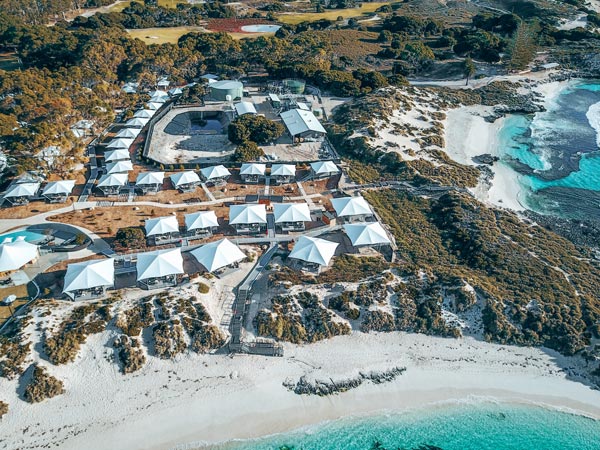
Wildly popular despite rising nightly rates (prices start around $289 and climb to $689, in low season), its fierce demand will no doubt be replicated at Discovery Parks – Broome, where a $15-million upgrade will see 30 new deluxe cabins, several pool-view studio cabins and a number of safari-style glamping tents – each with private balcony – open in October 2023.
They chase changes at Discovery Parks – Cradle Mountain, where new deluxe cabins opened mid-year with underfloor bathroom heating and gas log fireplaces (from $500 per night). The glam-factor will soon jump again when new designer-style cabins open in the Tassie forest with floor-to-ceiling windows, bathtubs and robes. The price point is expected to pinch, reflecting the conservation area location and its shortage of accommodation options. For those not wanting to pay it, camping and older cabins offer the same attributes, minus the luxe trimmings.
“This diversity of accommodation offerings in our parks, including elevated glamping facilities and upgraded cabins … present an appealing alternative that is attractive to all kinds of travellers," says G’day Group chief investment officer Amanda Baldwin. “[Including] some who may not have originally thought a holiday park would have an accommodation option that suited them."
What do we mean by luxury?
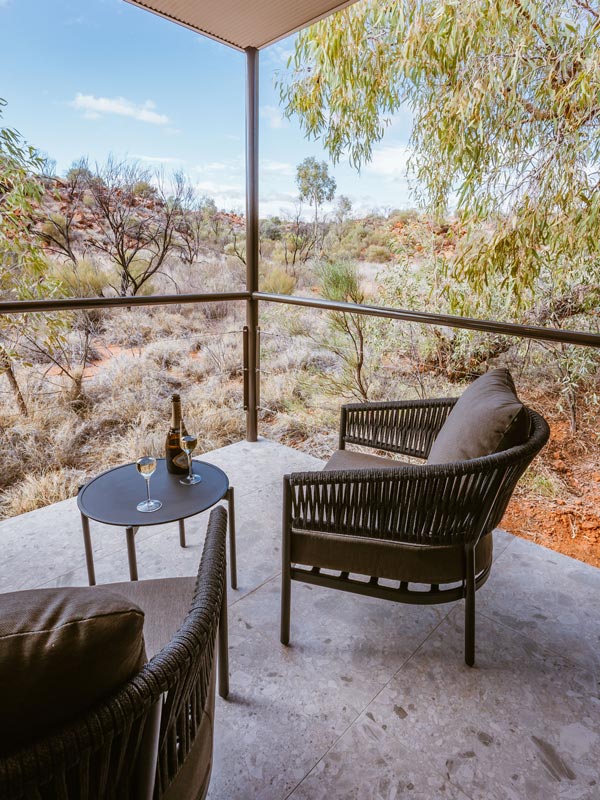
The ultimate luxury – be it affordable, high end or camping-cheap – is, of course, location. The ability to be so close to a beach you can hear the waves crash, positioned within a stone’s throw of a hike to a gaping gorge or ensconced in nature where no other humans tread is perhaps the most valuable thing of all. It’s this that unplugs us from the daily grind and resets us with a restorative perspective. And really, what price can you put on that?
Want to see more stories from Australian Traveller in your Google search results?
- Click here to set Australian Traveller as a preferred source.
- Tick the box next to "Australian Traveller". That's it.