hero media

Australia’s most loved hikes of the year revealed

Which hikes are you adding to your list in 2026?

Australia’s walking tracks are having a moment, and the latest data from AllTrails reveals exactly where hikers went in 2025. Based on user ratings from millions of walkers, the list highlights the highest-rated hikes in Australia right now, from alpine Tassie circuits to outback canyon climbs, and coastal cliff walks.

If you’re planning a hiking trip this year, these are the trails earning near-perfect scores.

1. Crater Lake, Marion’s Lookout, Lake Lilla and Dove Lake Loop, Tas
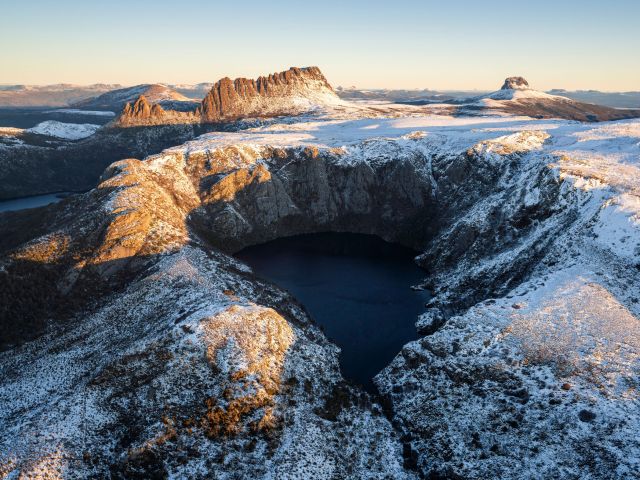
Crater Lake and Cradle Mountain
This Cradle Mountain classic packs a lot into one walk. (Image: Tourism Tasmania / Luke Tscharke)

Distance: 9.2km loop
Difficulty: Grade 3

One of Tasmania’s most scenic alpine circuits, this Cradle Mountain classic packs a lot into one walk. Expect glacial lakes, button grass plains and a steep climb to Marion’s Lookout, where jagged peaks and alpine valleys stretch into the distance. It’s demanding in sections, but the views make it one of the most rewarding day walks in the country.

2. Kings Canyon Rim Walk, NT

Would you stand on the edge of this breathtaking Australian landscape? It's all part of a guided Kings Canyon Rim Walk, through ancient red domes and towering cliffs in the heart of the Northern Territory.

Distance: 6km loop
Difficulty: Grade 4

This iconic Red Centre hike climbs out of the canyon via a steep staircase before tracing the rim high above the sandstone walls. Along the way, walkers pass waterholes and ancient rock formations, with sweeping desert views the whole way around. It’s short but challenging, especially in the heat.

3. Cradle Mountain Summit and Hansons Peak via the Overland Track, Tas
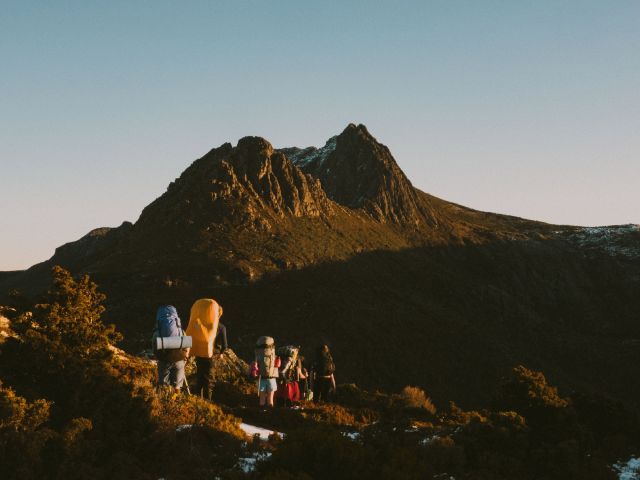
Cradle Summit Walk
The Cradle Summit Walk is for more experienced walkers. (Image: Tourism Tasmania / Matty Eaton)

Distance: 13km return
Difficulty: Grade 5

A tougher option for experienced walkers, this route uses sections of the Overland Track to reach two of the region’s most impressive lookouts. Weather can change quickly here, but on a clear day, the panoramic views over alpine wilderness are hard to beat.

4. North Gorge Walk, North Stradbroke Island (Minjerribah), Qld
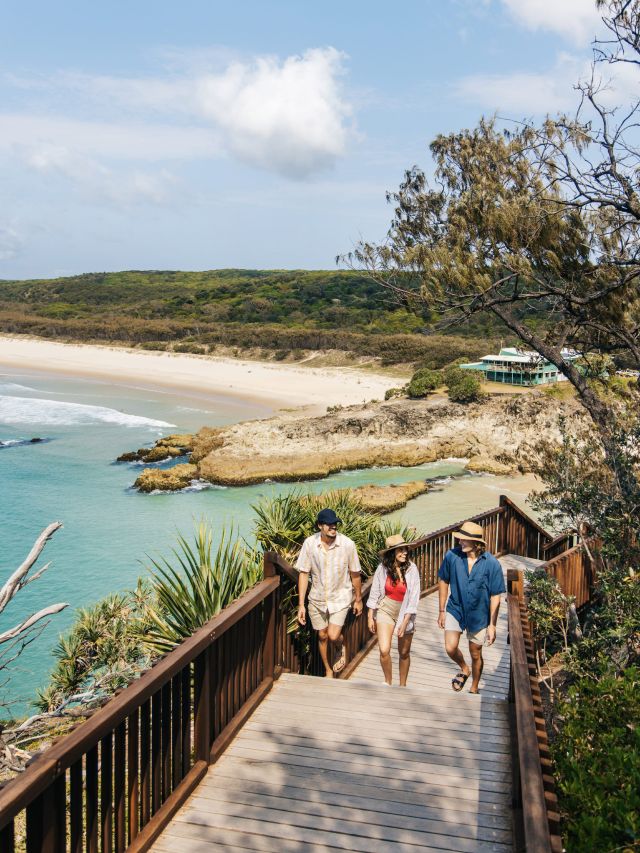
North Gorge Walk on North Stradbroke Island
The North Gorge Walk is an easy stroll. (Image: Tourism and Events Queensland / Jesse Lindemann)

Distance: 1.2km
Difficulty: Grade 2

This self-guided coastal circuit delivers big pay-off for relatively little effort. Clifftop boardwalks and rocky headlands frame turquoise water below, making the North Gorge Walk one of Queensland’s most photogenic short walks and a standout for travellers chasing scenery over distance. There are some sections with steps along the boardwalk and viewing platforms.

Need tips, more detail or itinerary ideas tailored to you? Ask AT.

AI Prompt

5. The Pinnacle, Grampians National Park, Vic
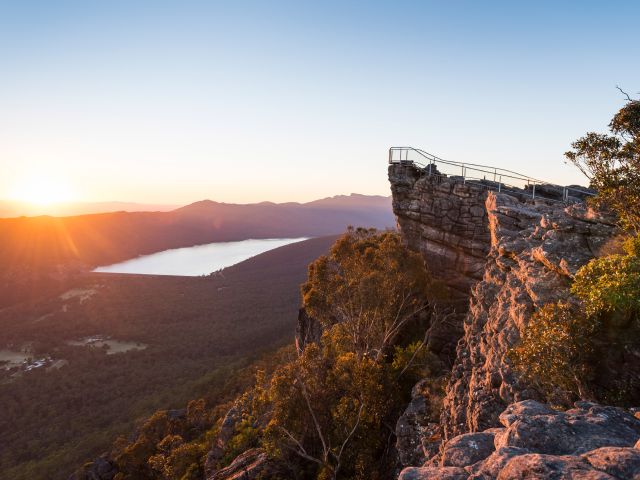
The Pinnacle in Grampians National Park at sunset
The Pinnacle is striking at sunset.

Distance: approx. 4.2km return
Difficulty: Grade 4

A steep climb through bushland leads to one of Victoria’s most dramatic viewpoints in Grampians (Gariwerd) National Park. From the summit, the rocky outcrop looks out over deep valleys and layered ridgelines, especially striking at sunrise or sunset.

6. Bald Head Walk Trail, Torndirrup National Park, WA
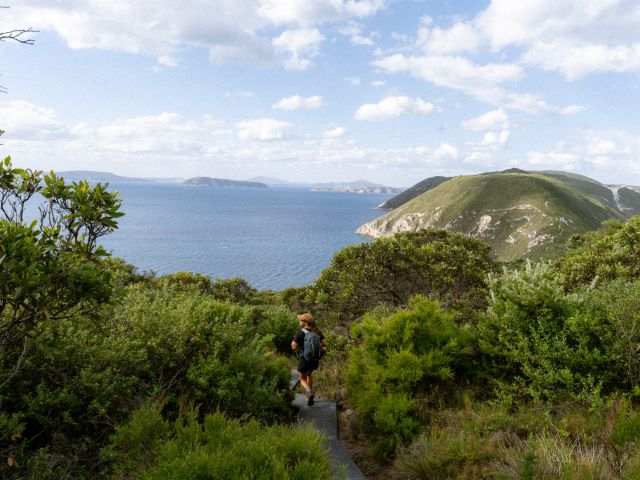
Bald Head Trail and Bluff Knoll, Stirling Range National Park
Bald Head Walk Trail is a memorable hike. (Image: Tourism Western Australia)

Distance: 12.5km return
Difficulty: Grade 4

This rugged coastal walk near Albany follows a narrow ridge between two beaches, with constant ocean views and wild southern coastline scenery, and during wildflower season, it’s covered in blooms. It’s exposed and windy in places, but it’s easily one of Western Australia’s most memorable day hikes.

7. Bungoona Walk, Bald Rock National Park, NSW
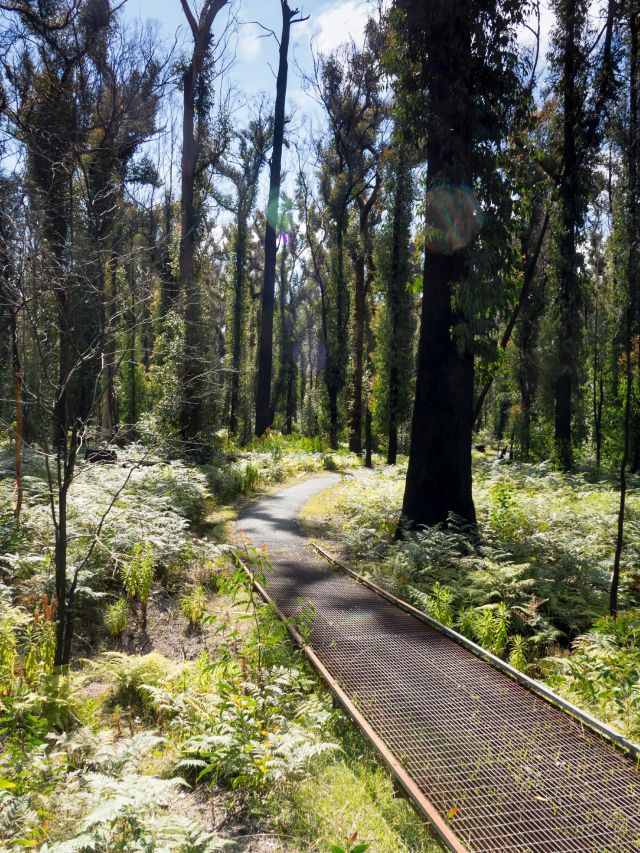
The Bungoona Walk in Bald Rock National Park, NSW
The Bungoona Walk rewards hikers with sweeping views. (Image: Leah Pippos / DCCEEW)

Distance: 5.7km return
Difficulty: Grade 3

Climbing Australia’s largest exposed granite rock, the Bungoona Walk rewards hikers with sweeping views across the New England region. 30 kilometres outside of Tenterfield, the final ascent is steep but well worth it, especially on clear days when the surrounding countryside stretches endlessly.

8. Grand Canyon Track, Blue Mountains, NSW (Second  year in a row)
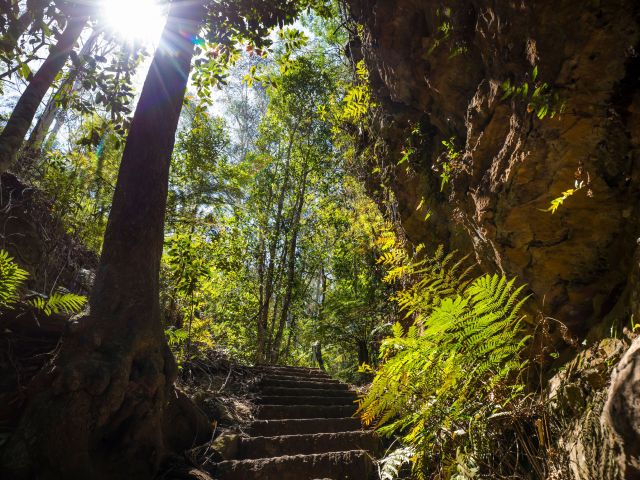
The scenic Grand Canyon Walking Track in the Blue Mountains National Park, Blackheath.
The Grand Canyon Track is always a favourite. (Image: Destination NSW)

Distance: 6.3km loop
Difficulty: Grade 3

A long-time Blue Mountains favourite, this shaded loop winds through lush rainforest, sandstone walls and fern-filled gullies. Waterfalls, creek crossings and cool canyon air make it a popular choice year-round. It is also the only walk on the list to have been awarded a spot on the most loved list for two consecutive years.

Weekly travel news, experiences
insider tips, offers, and more.

9. Bishop and Clerk Track, Maria Island, Tas
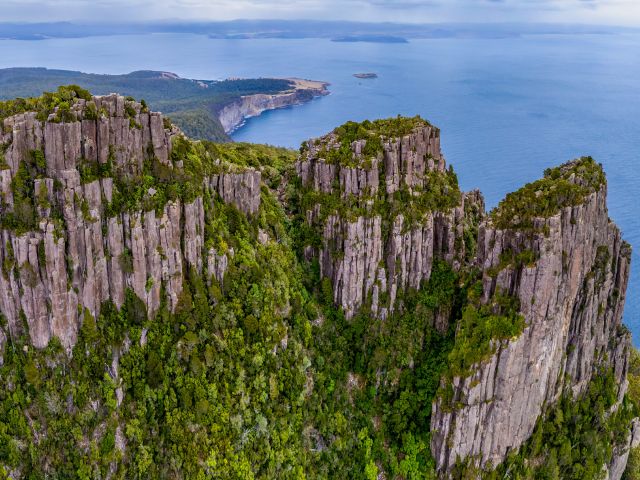
Views from Bishop and Clerk peak in Maria Island, Tasmania, Australia
The views from the Bishop and Clerk Track are unbeatable. (Image: Getty Images / estivillml)

Distance: 11km return
Difficulty: Grade 4

One of Maria Island’s most rewarding hikes, this track climbs steadily from the Darlington settlement to a rocky summit with sweeping views across the island and out to the Tasman Sea. Expect a mix of open woodland, coastal vistas and a final steep scramble to the top. Wildlife sightings, including wombats and kangaroos, are common along the way, making this a standout hike for walkers visiting the island.

10. The Pinnacle via Wonderland Car Park, Grampians National Park, Vic
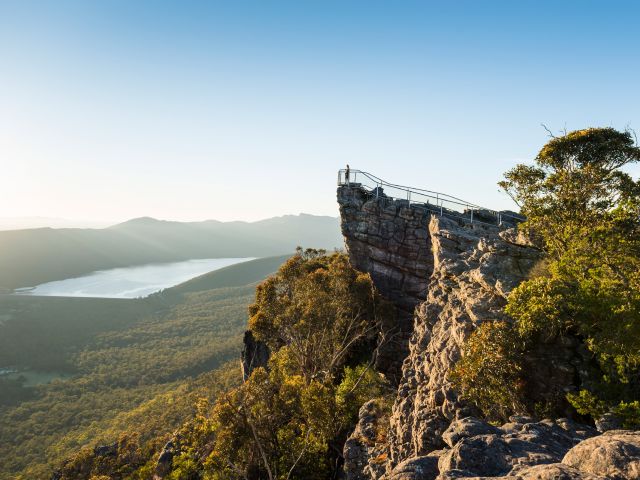
The Pinnacle in Grampians National Park
This slight variation of The Pinnacle also made the list.

Distance: approx. 4km return
Difficulty: Grade 4

A more demanding variation of The Pinnacle walk, this route adds steep rocky areas, which can be slippery in the wet and extra elevation before reaching the same jaw-dropping lookout. Ideal for walkers wanting a fun challenge.

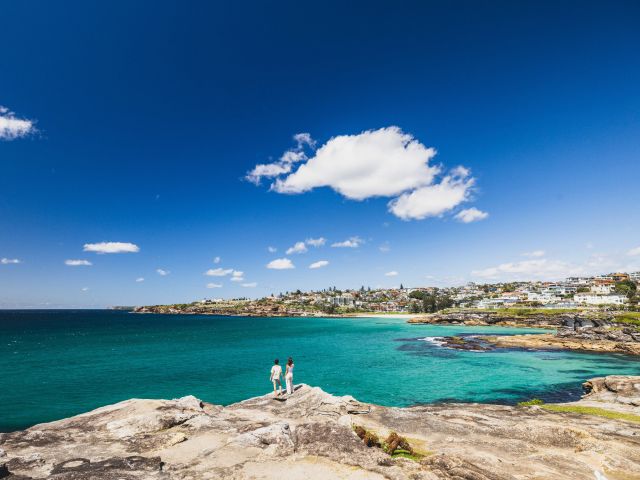
Couple enjoying the coastal view, Tamarama
The Bondi to Coogee Coastal Walk is Australia’s most popular hike. (Image: Destination NSW)

While the highest-rated hikes lean towards more remote and challenging terrain, AllTrails data also shows which walks Australians are actually tackling in huge numbers. These are the most popular trails of 2025.

  1. Bondi to Coogee Coastal Walk, NSW
  2. Wineglass Bay and Hazards Beach Circuit, Tas
  3. Grand Canyon Track, NSW
  4. Cape Byron Walking Track, NSW
  5. Werribee Gorge Circuit Walk, Vic
  6. Cape Woolamai Circuit, Vic
  7. Mount Ngungun Summit Track, Qld
  8. Twin Falls Circuit, Qld
  9. Lyrebird Loop Track, Vic
  10. Mount Lofty Loop, SA

Whether you’re chasing five-star ratings or well-worn favourites, this year’s AllTrails list proves Australia’s best hikes range from easy classics to serious wilderness adventures.

Want to see more stories from Australian Traveller in your Google search results?

  1. Click here to set Australian Traveller as a preferred source.
  2. Tick the box next to "Australian Traveller". That's it.
Emily Murphy
Emily Murphy is Australian Traveller's Email & Social Editor, and in her time at the company she has been instrumental in shaping its social media and email presence, and crafting compelling narratives that inspire others to explore Australia's vast landscapes. Her previous role was a journalist at Prime Creative Media and before that she was freelancing in publishing, content creation and digital marketing. When she's not creating scroll-stopping travel content, Em is a devoted 'bun mum' and enjoys spending her spare time by the sea, reading, binge-watching a good TV show and exploring Sydney's vibrant dining scene. Next on her Aussie travel wish list? Tasmania and The Kimberley.
View profile and articles
hero media

Taking the route less travelled along the Great Ocean Road

The Great Ocean Road has captured the hearts of Australians with its astounding scenery since 1932, but going off-course can enrich your experience with untouched nature, foodie delights and charming towns. 

It’s a chilly 16 degrees. My husband pulls on a steamer and jogs – as all seasoned surfers do – into the water. We’re at Bells Beach, the legendary break on Victoria’s Surf Coast that’s home to the Rip Curl Pro, the world’s longest-running event in competitive surfing. Each year, over the Easter long weekend, up to 40,000 people descend on the region for the event. Today, though, we have the beach almost to ourselves, and the less-than-favourable temperature doesn’t deter my husband from surfing this famous break.  

Bells Beach
Bells Beach is known for its epic surf break and is at the start of the Great Ocean Road. (Image: Tourism Australia)

Torquay to Anglesea and Aireys Inlet 

Split Point Lighthouse
The red dome of Split Point Lighthouse in Aireys Inlet. (Image: Tourism Australia)

The nearby surf town of Torquay marks the starting point for the Great Ocean Road. Unfolding our map, which we have marked out with a highlighted route for our children to follow, we set off for lesser-known Anglesea, a chilled-out town 20 minutes south of here. Its wide, sandy beach is a gentler swimming option for our young family. Groms can learn to surf here with Go Ride a Wave, which also runs stand-up paddle boarding on the Anglesea River.  

Split point lookout
The lighthouse overlooks the Shipwreck Coast. (Image: Tourism Australia)

After a couple of nights in Anglesea, we hit the road again, first stopping at Aireys Inlet. Here we stretch our legs at Split Point Lighthouse, which was made famous by the 1990s television series Round the Twist, before driving under the Memorial Arch that welcomes us, officially, to the Great Ocean Road.  

This 243-kilometre coastal road was built by returned First World War servicemen and serves as a permanent memorial to those who fought and died during the war. Carved into rock using hand tools and horse-drawn carts, it was a huge engineering feat and provided much-needed access to isolated coastal communities. 

Lorne to Birregurra 

Lorne is a delightful beachside stop for lunch and browsing boutique stores. It’s also the gateway to Great Otway National Park, which comprises a varied landscape of old-growth forests, cool-temperate rainforests, heathy woodlands and rugged coast. With the highest rainfall in Victoria, the region is home to many waterfalls – 10 of which are within 10 kilometres of Lorne.  

Turning slightly off the main drag, we wind along a gum-shaded road to Erskine Falls. Here, our son leads the way through the hyper-green rainforest and down 200-plus stairs to the cascade that drops 30 metres into a lush fern gully. We hop over large boulders to get closer to the falls, enjoying the entire place to ourselves; it’s worth the return climb.  

From Sheoak Falls Picnic Area, there are walking trails to Henderson Falls, Phantom Falls, Won Wondah Falls and Kalimna Falls, some of which follow an old timber tramway from forest-logging days, which only came to an end in 2008.  

Erskine Falls
Erskine Falls is one of many falls within a day trip of Lorne. (Image: Visit Victoria)

You can follow your appetite north to the town of Birregurra, which is part of the Otway Harvest Trail that connects farm gates, markets, wineries, breweries and distilleries. It’s home to three-hatted modern Australian restaurant Brae, helmed by celebrated chef Dan Hunter, set among native gardens and an organic farm, and Otways Distillery, which produces small-batch spirits using local produce and botanicals.  

Brae restaurant
Brae is a three-hatted restaurant in Birregurra. (Image: Tourism Australia)

Apollo Bay to The Otways 

Back on track, the cliff-hugging stretch between Lorne and Apollo Bay is breathtaking. At Teddys Lookout, we overlook the winding road ahead and St George River spilling into the ocean. We spend languid days in Apollo Bay, a buzzy seaside town that boasts a three-kilometre-long, crescent-shaped beach with a backdrop of rolling green hills. One evening, as the sun sets, we take the steep 10-minute walk to Marriners Lookout, which affords panoramic views of the ocean, hinterland and town.  

A 15-minute drive along the road, Maits Rest is a lush rainforest gully that has been protected since the early 20th century. Wandering along the 800-metre boardwalk, we inspect the delicate moss-covered forest floor and the gnarled roots of 300-year-old myrtle beech trees, then crane our necks to see their canopies, some 50 metres above us. It’s therapy in nature.  

Cape Otway to the Twelve Apostles 

Twelve Apostles
One of the famous Twelve Apostles, limestone sea stacks that rise from the Southern Ocean. (Image: Ben Savage)

The southernmost tip of Cape Otway is a delightful detour, home to the 1848-built Cape Otway Lightstation, the oldest surviving lighthouse on mainland Australia. We climb the narrow winding staircase to the gallery deck, explore the keepers’ quarters and telegraph station, and enjoy a coffee and some ‘famous’ scones at the charming onsite cafe.    

It’s a pinch-me moment to finally see the Twelve Apostles in person. This unmistakable cluster of limestone stacks rising abruptly from the sea were never 12, however. When coined this in the 1890s as a marketing ploy, there were only nine; today, only seven remain after two collapsed in 2005 and 2009. We admire these Aussie icons from the viewing platform, in awe of Mother Nature’s ever-evolving artwork.  

The Grotto
The Grotto is another natural attraction within Port Campbell National Park. (Image: Carmen Zammit)

Edging the wild Southern Ocean, this part of the coast – dubbed Shipwreck Coast – is made up of many sea-carved natural wonders including London Bridge, The Grotto and Gibson Steps. After exploring the lookout trails of Loch Ard Gorge/Poombeeyt Kontapool – its English name taken from the site of the 1878 shipwreck – we nestle into the sandy beach encircled by towering sandstone cliffs, as our children splash about on the water’s edge, and soak it all in.  

Port Campbell to Timboon 

Timboon Fine Ice Cream
Timboon Fine Ice Cream is part of a regional foodie trail. (Image: C McConville)

Just north of Port Campbell National Park, the region of Timboon is part of the 12 Apostles Food Artisans Trail, filled with purveyors of delicious foodstuffs such as Timboon Fine Ice Cream, Timboon Railway Shed Distillery and Apostle Whey Cheese. As an antidote to the indulgence, the 20-kilometre Poorpa Yanyeen Meerreeng Trail is a self-guided ride or walk between Port Campbell and Timboon through tall forests, over historic bridges and past sparkling lakes and farmland with grazing cattle.  

Warrnambool to Port Fairy 

Warrnambool building
A 19th-century building in Warrnambool. (Image: Peter Foster)

In Warrnambool, a town rich in maritime history, we take the four-kilometre Thunder Point Walk that traces the coast. The kids squeal when an echidna shuffles out from beneath the wooden boardwalk, and we stop to admire a seal lazing on a rock at the port.  

Further along, the streets of quaint fishing village Port Fairy are lined with 19th-century cottages, old stone churches and Norfolk pines. Follow the historic walking trail to see some of the 60-plus National Trust buildings. Port Fairy is also home to Port Fairy Folk Festival (6-9 March), one of the country’s longest-running music and cultural festivals. You could time your road trip with the event for a fittingly celebratory end to any journey.  

The Great Ocean Road can easily be done in three days, but we’ve spent a week on the road. The highlighted line on our now creased and well-worn map doesn’t follow the famous route precisely. It has sprouted branches in many directions, leading us to untouched rainforest and charming rural towns filled with culinary delights, and where we experienced some of our most memorable moments on the Great Ocean Road.    

A traveller’s checklist 

Staying there

Oak & Anchor
The Oak & Anchor in Port Fairy.

The Monty is a highly anticipated, newly refurbished motel with a chic Palm Springs-inspired aesthetic set across the road from the Anglesea River. Basalt Winery in Port Fairy grows cool-climate wines such as pinot noir and Riesling in rich volcanic soil. Stay among the vines in its tiny home, complete with a kitchen, lounge area and outdoor firepit. 

The Oak & Anchor Hotel has been a Port Fairy institution since 1857. Cosy up by the bar in winter or bask in the sunshine of the Lawn Bar in summer. The rooms are beautifully boutique with considered details, such as luxe baths for sinking into post-road trip. 

Eating there

The Coast in Anglesea is a modern Australian restaurant focused on local ingredients. Grand Pacific Hotel has been a local landmark in Lorne since 1879 and recently underwent a restoration. It serves a mix of traditional pub and Italian fare alongside ocean views.  

Graze is a cosy 40-seat dining room in Apollo Bay with a modern Australian menu complemented by regional wines. Apollo Bay Distillery offers tasting flights, a gin blending masterclass and serves woodfired pizzas.