The attractions you’ll find nowhere else but here.
Australia’s best, brightest attractions evoke a sense of place as well as a sense of wonder. From the ridged sand mountains of Stockton Bight to Australia’s most celebrated road trip and the voluptuous curves of Uluru, these are destinations that not only reflect our continent’s totally unique character, but that change us each and every time we interact with them.
Great Barrier Reef, QLD
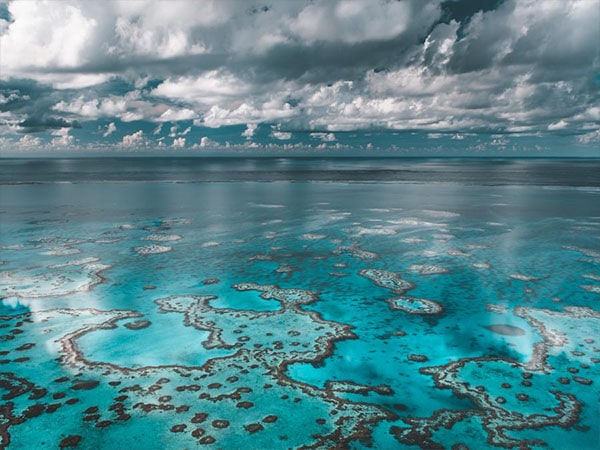
In this image taken from the air, the Great Barrier Reef looks exquisite, finished like a bejewelled work of art set in resin. This, one of the seven wonders of the natural world, stretches a whopping 346,000 square kilometres, which is equal to the size of 70 million football fields. And it is, according to the Great Barrier Reef Marine Park Authority (GBRMPA), “one of the richest and most complex natural ecosystems on Earth".
GBRMPA chief scientist Dr David Wachenfeld says while it’s impossible to talk about the Great Barrier Reef without touching on aspects of climate change, the reef is – after four years of relatively benign weather – “showing strong signs of recovery in many places".
GBRMPA works closely with scientists and tourism operators to protect the world’s largest reef ecosystem, which stretches from the tip of Queensland down to Bundaberg. Dr Wachenfeld is passionate about safeguarding this natural asset for future generations and says more visitors to Tropical North Queensland’s No. 1 attraction means even more focus on its conservation. “See the reef, love the reef, protect the reef."
Stockton bight Sand Dunes, NSW
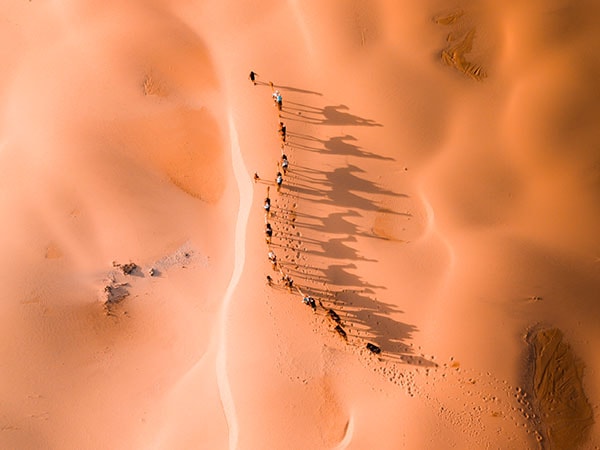
The ephemeral, shifting sands of Stockton Bight Sand Dunes, located at Anna Bay in Port Stephens, may present as if they have been transplanted from somewhere in the Middle East, but they are distinctively our own. The undulating dunes, which ebb and flow according to the winds, are where the Worimi people, the traditional custodians of the land here, have been gathering for millennia, and now form part of the 4200-hectare Worimi Conservation Lands.
“The Worimi Conservation Lands are one of Australia’s best-kept secrets and form part of the largest coastal sand dunes in the southern hemisphere," explains Andrew Smith, CEO, Worimi Local Aboriginal Land Council. “To the Worimi people, these are the cultural equivalent of Uluru and a national treasure. Occupational evidence is abundant and the stories have never left this land, but instead drifted across the landscape with the wind-blown sands, only to again be picked up and shared with all visitors by the Worimi, who have rightfully returned home to their mother." There is a range of council-approved adventure tours that traverse the dunes, riding everything from quad bikes to camels.
Great Ocean Road, Vic
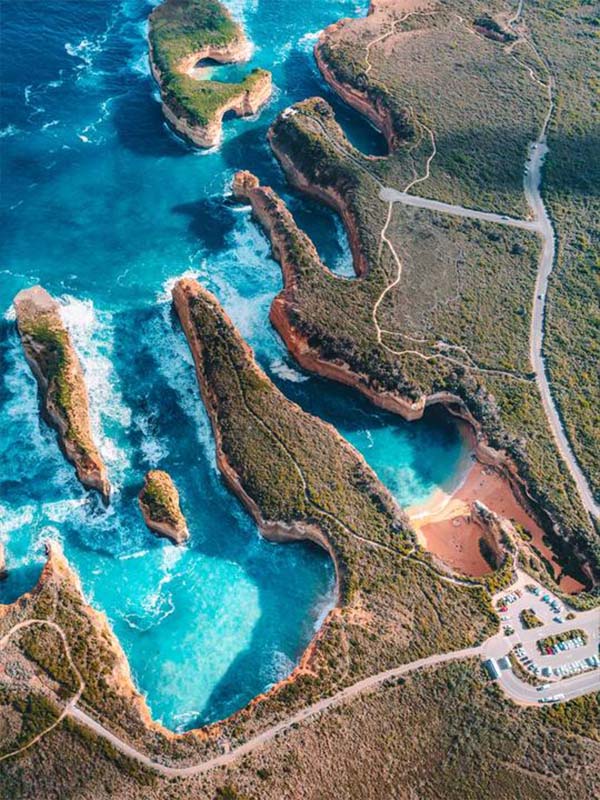
The beauty of the Great Ocean Road creeps up on you. Drive along the 253-kilometre coast road on a fine day as it dips, twists and turns around the Great Southern Ocean and you will see it catch the liquid blue of the sky and mix it turquoise. As well as being one of the most popular tourist attractions in Australia, this iconic length of asphalt also took out ‘World’s Most Beautiful Road Trip Route’ in 2021 on Instagram thanks to the 1,321,570 hash-tagged images shared on the social media platform. And while images of the so-called 12 Apostles (there are only eight left standing) are the most prominent landmarks featured in highlight reels, the itineraries on offer in this region have, in recent years, become ever-more-expansive, cementing the Great Ocean Road’s status as one of Australia’s greatest assets.
In addition to the landmark limestone cliffs and fingers of land that jut out into wild seascapes, Great Ocean Road marketing manager Lee Malady says this pocket of south-west Victoria also has “great surf breaks and family-friendly beaches, Indigenous tours, artisan producers, quirky cafes, breweries and distilleries. There are also farmers’ markets and farm gates, art galleries, wildlife parks, flora and fauna reserves and rainforest."
Need tips, more detail or itinerary ideas tailored to you? Ask AT.
AI Prompt
Uluru, NT
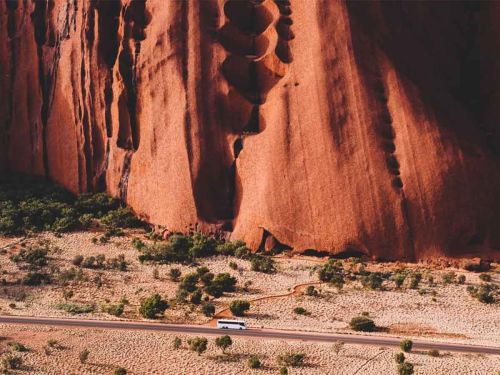
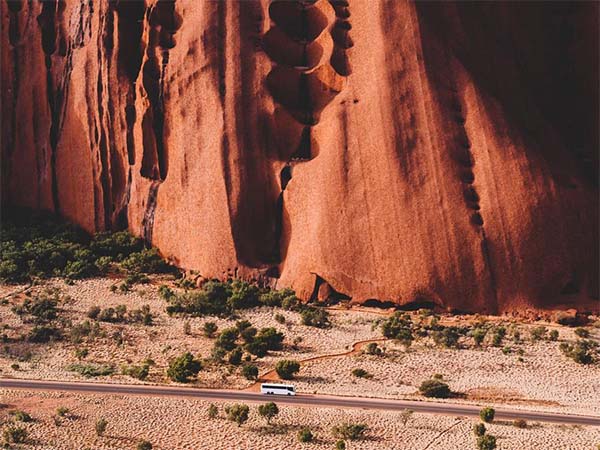
Uluru is an intriguing enigma, a mountain of voluptuous red rock that is so vast and dramatic that even repeat visitors remain awestruck – not just by the majesty of the largest monolith in the world but the magnitude of the landscape laid out around it. Visit this giant rock formation at dawn, before the heat starts to seep into the day, and you will see it blush pink, orange, then red. CEO of Voyages Indigenous Tourism, Matthew Cameron-Smith describes Uluru – which began to form about 550 million years ago – as “the spiritual heart of Australia". Enjoy an introductory talk by Uluru-Kata Tjuta National Park rangers before undertaking the Mala walk from Uluru to Kantju Gorge, where Indigenous rangers talk about the meaning of rock art and explain why the site is sacred to the Anangu people. You can also take an Indigenous-led tour with AAT Kings that traces the base of Uluru to find ancient alcoves and antechambers, immense arches and soaring columns all stuccoed in a rich, red ochre.
The (other) three sisters, QLD
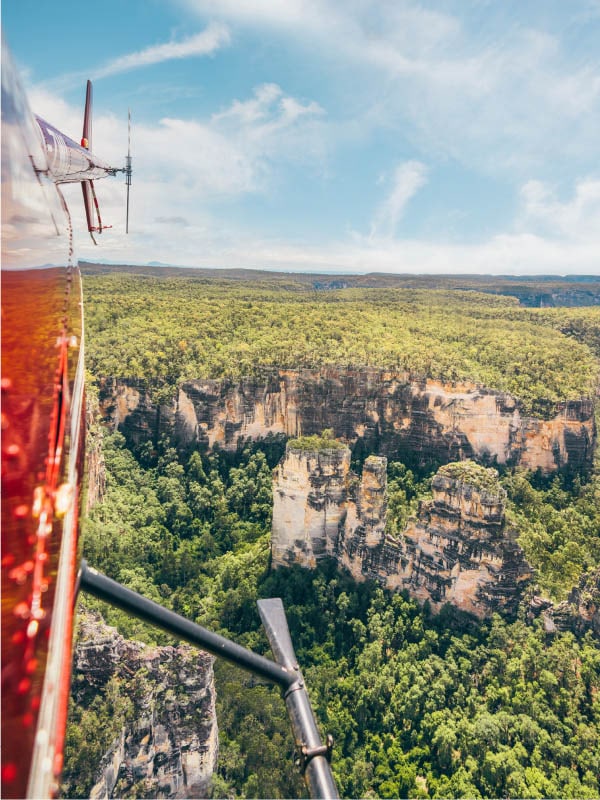
The immensity of Carnarvon National Park and surrounds are best appreciated from above. That’s according to Russell Nobbs, CEO and chief pilot of Heli-Central, who says exploring the stunning Maranoa region from the air provides the best opportunity to study its topography and understand the sheer size of its many landmark attractions. When Heli-Central takes visitors on a scenic flight in Queensland’s central highlands they set off from Bandana Station (about six kilometres from the entrance to Carnarvon Gorge), then head out towards the Moolayember Ranges and over farmland looking out to Arcadia Valley before taking in the views of the Three Sisters.
“When you head skyward, it’s magic. You get to see the great vastness of the Carnarvon with prehistoric cycads and towering cliffs the way it would have been millions of years ago when the dinosaurs roamed the Earth, untouched since the dawn of time," Nobbs says. The soaring sandstone formations are near to the outback oasis that is Carnarvon National Park, which has some 2000 examples of Aboriginal rock art and is a top spot for bushwalking as the biosphere is home to more than 175 bird species, 22 kind of frogs and 90 types of reptiles.
Kati Thanda-Lake Eyre, SA
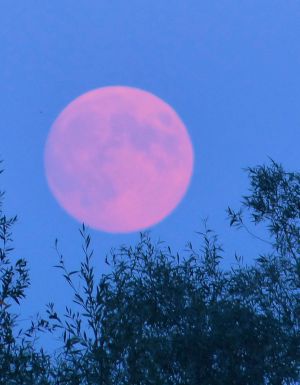
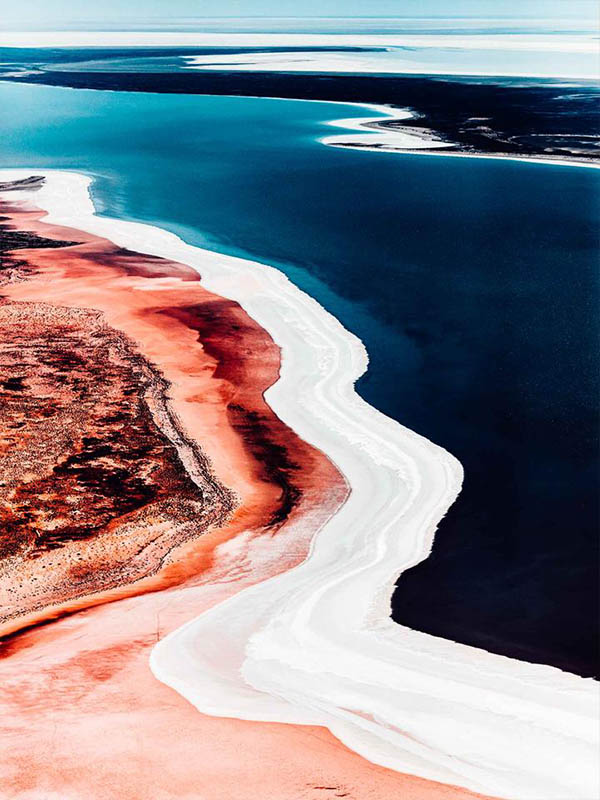
The landscape around Kati Thanda-Lake Eyre changes softly from daybreak to dusk, as sunlight pours over the surface and makes its navy edges burn white, then pink. Australia’s largest salt lake is some 700 kilometres north of Adelaide, in South Australia and it has, according to National Parks & Wildlife Service South Australia, “a catchment area from three states and the Northern Territory". Stand on the frayed fringes of the lake when it is dry and you will feel the rugged anatomy of the landscape. Every few years, when the rains and monsoon waters merge, the lake – which at 15 metres below sea level is the lowest point in Australia – takes on a pink hue caused by algae. It also becomes a breeding site for waterbirds that are tolerant of salinity such as pelicans, silver gulls, red-necked avocets, banded stilts and gull-billed terns.
Cradle Mountain, Tas
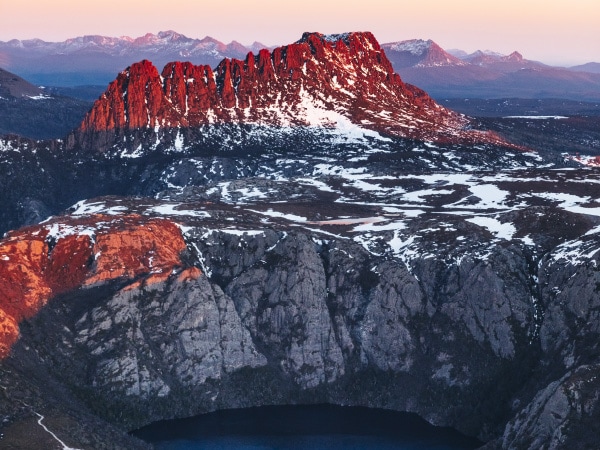
Mother Nature lavishes some of her finest work on Crater Lake, which is captured here at dusk as the sun paints the punchy peaks of Cradle Mountain and Mt Ossa (the highest peak in Tasmania) in the distance. Follow the 7.25-kilometre circuit of the lake, which is softened by vegetation, and you will find yourself surrounded by soaring, craggy bluffs under a narrow brow of lava basalt, which resembles a cradle, the mountain’s namesake.
World Expeditions guide Joe Lodge says the area in Cradle Mountain-Lake St Clair National Park received World Heritage status because it conserves a diverse range of both natural and cultural features of outstanding global significance. “It’s very humbling to be guiding people through an area that provides a very small snapshot of a much bigger story. This is a glacial landscape with an uplift of land that has been carved out by glaciers about 20,000 years ago. Cradle Mountain is as wild and rugged as it is beautiful and serene."
Weekly travel news, experiences
insider tips, offers, and more.
Hellfire Bay, WA
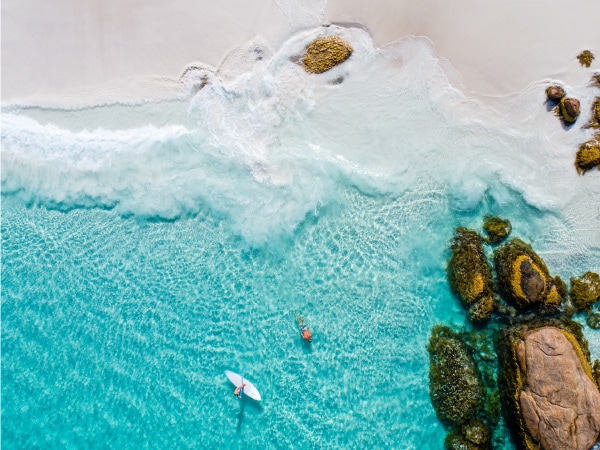
Hellfire Bay, near Esperance, is often rated as one of the most beautiful beaches in the world. And it has, according to the National Committee on Soil and Terrain, the second whitest sand in Australia behind Lucky Bay, which is also located in Cape Le Grand National Park. This stunning 600-metre-long crescent of powder-white sand is also surrounded by the most turquoise water imaginable in Western Australia’s Golden Outback. HeliSpirit pilot Jy Goyne choppers guests over the deserted beach, which is backed by a prominent granite peak, Mt Le Grand, which rises from the coastal plains in Cape Le Grand National Park. “We get a great perspective of Hellfire Bay during our scenic flight from Esperance. It’s one of the most stunning stretches of coastline in the world," says Goyne.
Sydney Opera House, NSW
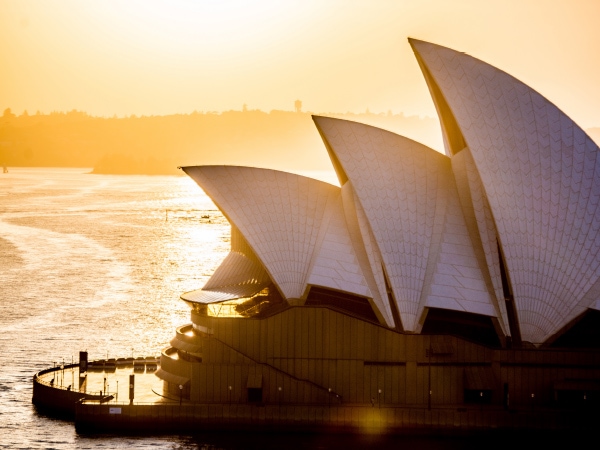
More than 10.9 million people visit Sydney Opera House every year, making it the country’s No. 1 tourist destination. This iconic masterpiece of 20th-century architecture was designed by Dane Jørn Utzon whose vision for the sculptural building took 14 years to complete (and not without controversy). Located on one of the world’s most beautiful harbours, the Sydney Opera House revels in the limelight, hosting more than 40 shows and experiences a week across opera, music, theatre, dance, comedy, talks and tours.
The Opera House is a World Heritage-listed masterpiece of ‘human creative genius’ where history has been made over about six decades by everyone from English theoretical physicist Stephen Hawking, who joined audiences via hologram, to pop star Prince in one of his final shows, and Australian comic Hannah Gadsby who flipped the concept of stand-up on its head with her arresting Netflix special Nanette.
Tiwi Islands, NT
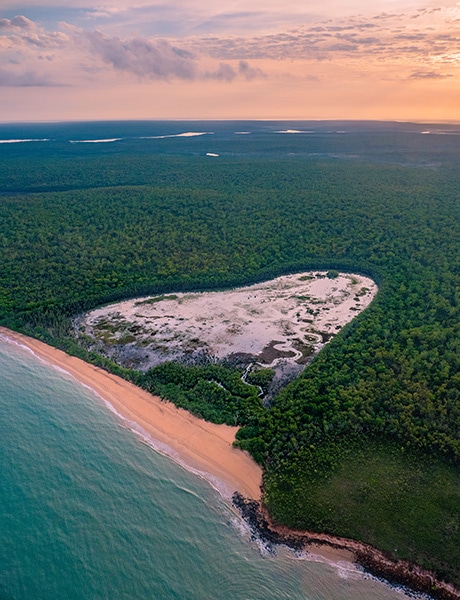
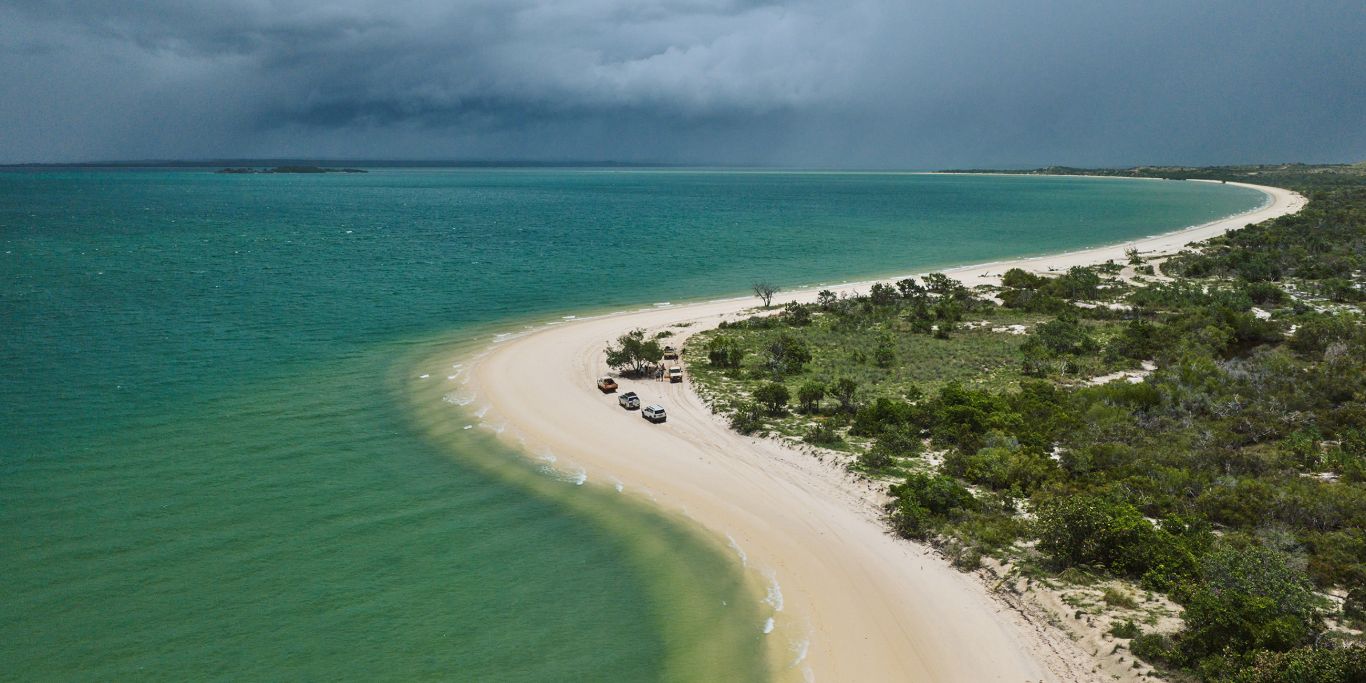
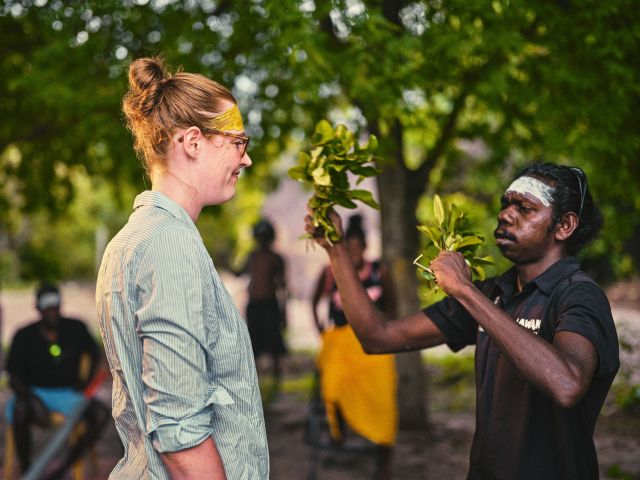
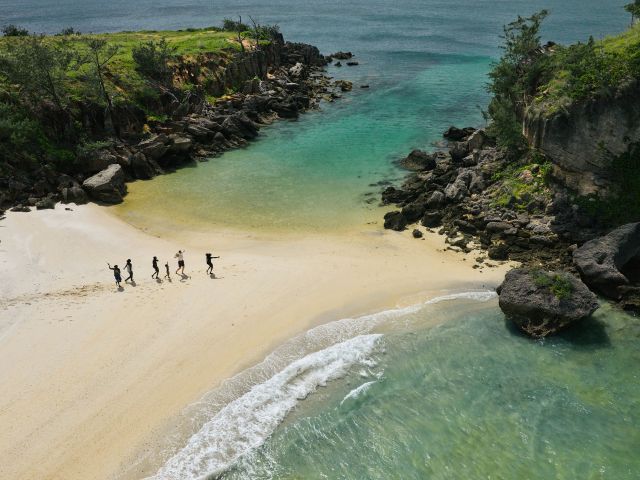
An archipelago of 11 islands located some 80 kilometres north of Darwin, the Tiwi Islands are an irresistible proposition: blissfully removed from the ordinary, steeped in an ancient culture, lavished with nature, and populated by locals so happy to be exactly where they are that their home has been delightfully dubbed the ‘Islands of Smiles’. The unbroken occupation, history and culture of the Tiwi people – and the pride they take in these – stretch back through millennia, a fact that makes visiting here such singular experience. You can fly or take a 2.5-hour ferry ride to reach the islands, the largest of which are Melville and Bathurst, but a permit is required by all visitors, ensuring visitors interact with the islands on the proud Tiwi people’s exacting terms.